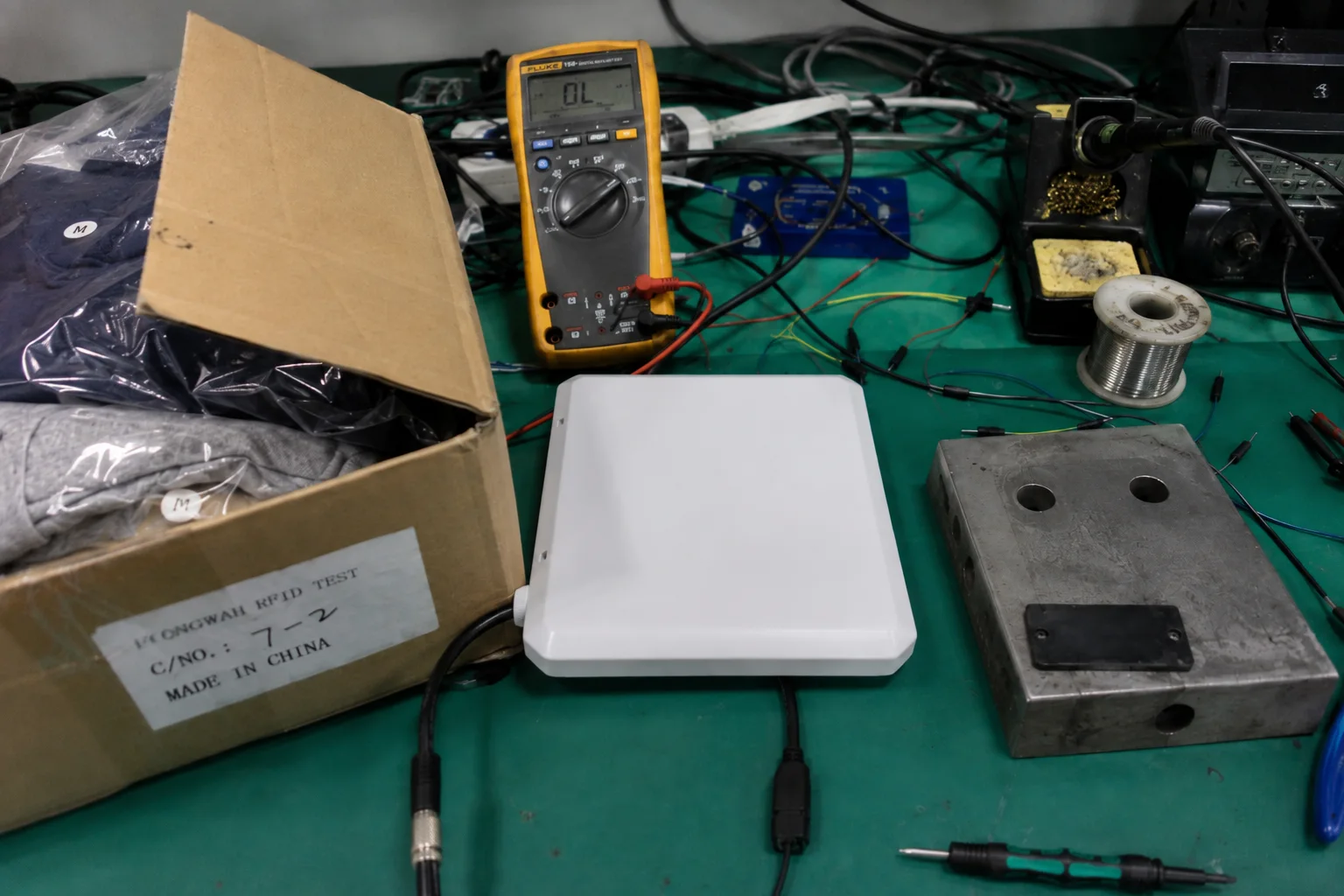
Lost inventory carries a direct cost, and manual counts are slow and error-prone. RFID automates identification and data capture, returning fast, accurate counts without manual handling.
Understanding what RFID technology is is the starting point; the examples below show where it pays off in practice.
A common real-life example of RFID is in retail inventory management. Stores apply RFID tags to clothing, which lets them scan entire boxes of apparel at once and track stock in real time.
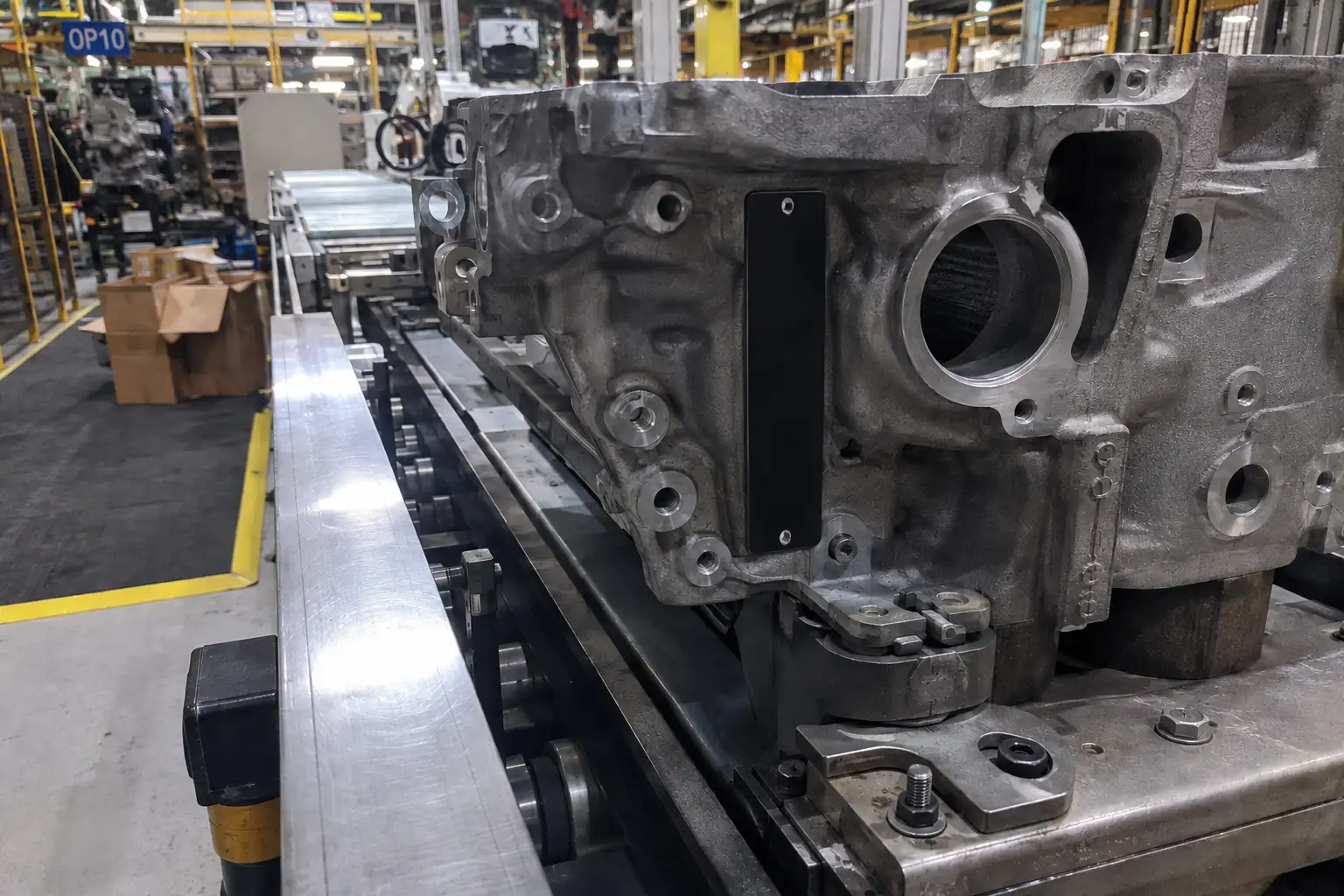
Retail is only one entry point. In industrial settings the same technology addresses operational problems that go well beyond stock counting—such as production downtime caused by misplaced tools on an automotive assembly line. Specifying RFID is therefore less about the tag itself and more about selecting a solution to a defined operational problem.
To go deeper, see our guide on how RFID works and what it can track in a B2B operation.
How does RFID improve manufacturing traceability?
Production lines involve many interdependent steps, and a missing or untracked part can cascade into delays. RFID gives each component a machine-readable identity, removing the manual effort from tracking and giving production managers a continuous view of status.
RFID improves manufacturing traceability by attaching a tag to each product. Scanners at key points automatically read the tag's unique ID. This creates a digital record of the item's journey without manual work.
The read itself is performed by a reader that powers the tag and captures its unique ID, which is why reader selection matters as much as the tag.
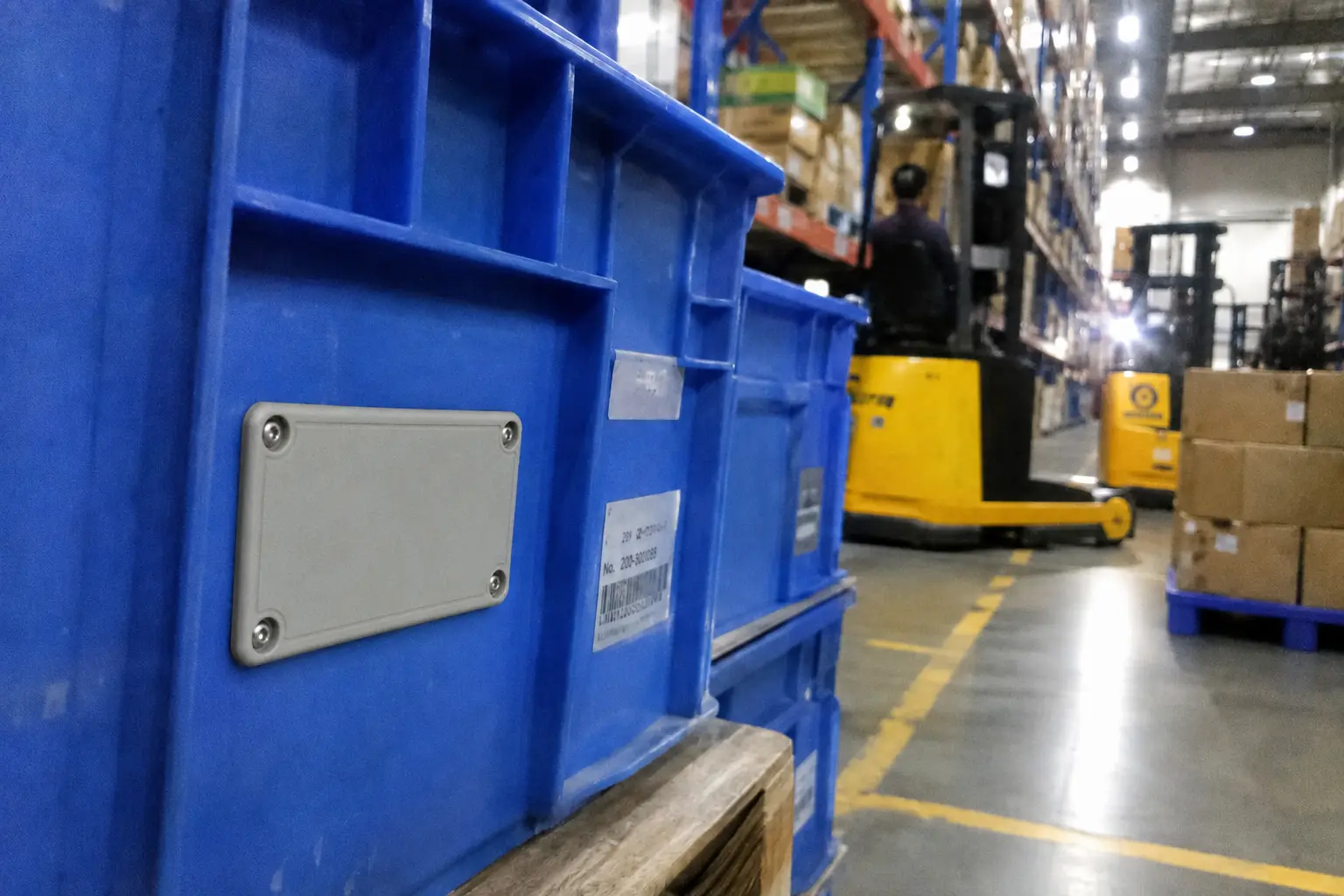
Effective traceability depends on the data architecture as much as on the tag. In a typical deployment for complex components, each part receives a tag—often a high-temperature variant capable of surviving heat treatment and chemical washes—at the start of the line. Readers at each station record the part's arrival and departure, and the data flows into a Manufacturing Execution System (MES). When a part fails a quality check, its full processing history—station, machine, operator, and timestamp—is retrievable, which supports root-cause analysis and process improvement. This end-to-end visibility is the core argument for the investment.
Breaking Down the Traceability Process
| Process Stage | Key Function | RFID Advantage |
|---|---|---|
| 1. Tagging | Assign a unique digital identity to each part. | The identity is machine-readable and durable. |
| 2. Data Capture | Automatically record the part's location and status. | Hands-free, real-time data collection without errors. |
| 3. Integration | Feed live data into MES/ERP systems. | Provides actionable insights for quality and control. |
Can RFID really prevent asset loss in large facilities?
Misplaced high-value equipment—medical devices, IT hardware, or mobile clinical gear—consumes staff time to locate and ties up capital in replacements. RFID supplies location data that removes the manual search.
Yes, RFID effectively prevents asset loss. By placing tags on valuable items and installing readers at chokepoints like doorways, you create a monitoring system. It triggers an alarm if an asset leaves without authorization.
A common pattern in healthcare is tagging mobile equipment such as infusion pumps, which are easily moved between floors, stored in random locations, or misplaced. A typical system uses active RFID tags that broadcast location periodically, fixed readers in hallways and at exits, and handheld readers for department-level spot-checks. Beyond stopping loss, such systems surface utilization data—which pumps are in use versus available—so inventory can be managed against actual demand rather than guesswork.
Designing an Effective Asset Tracking System
| Reader Type | Use Case | Coverage |
|---|---|---|
| Fixed/Portal | Monitor chokepoints like doors, elevators, and hallways. | Continuous, automated zone-level tracking. |
| Handheld | Pinpoint a specific asset's location or conduct inventory. | On-demand, room-level accuracy. |
| Vehicle-Mounted | Track assets across a large outdoor yard or campus. | Mobile coverage for large-scale areas. |
How is RFID revolutionizing logistics and supply chains?
Manual checks at every transfer point slow the flow of goods and introduce errors. RFID replaces step-by-step barcode handling with automated reads, extending transparency from the warehouse through to final delivery.
RFID revolutionizes logistics by replacing manual barcode scanning. Pallets and containers can be read instantly as they pass through dock doors. This accelerates loading, eliminates errors, and provides real-time tracking data.
Environmental blockers such as metal and liquids are covered in our review of what blocks RFID, and they apply to every sector above.
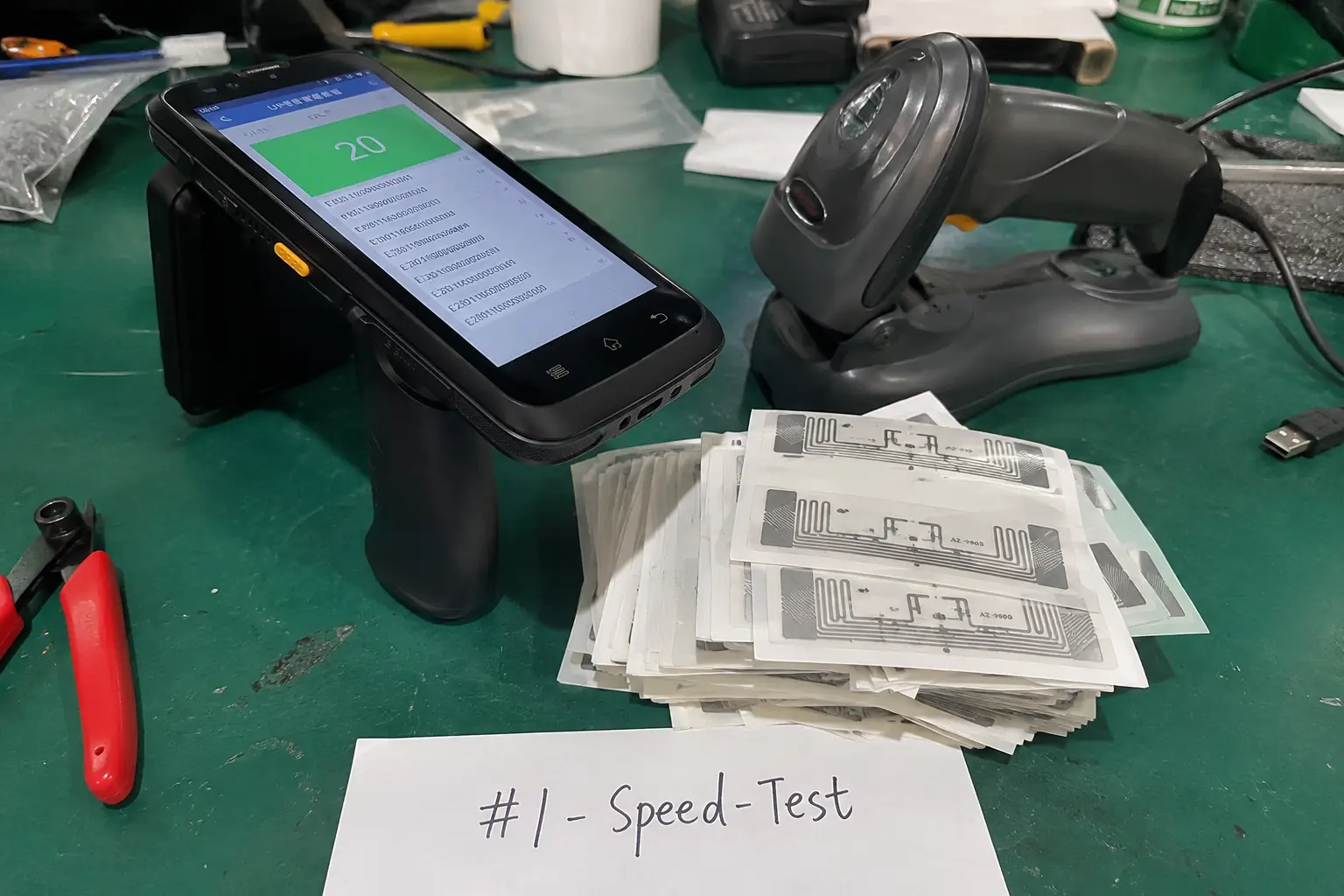
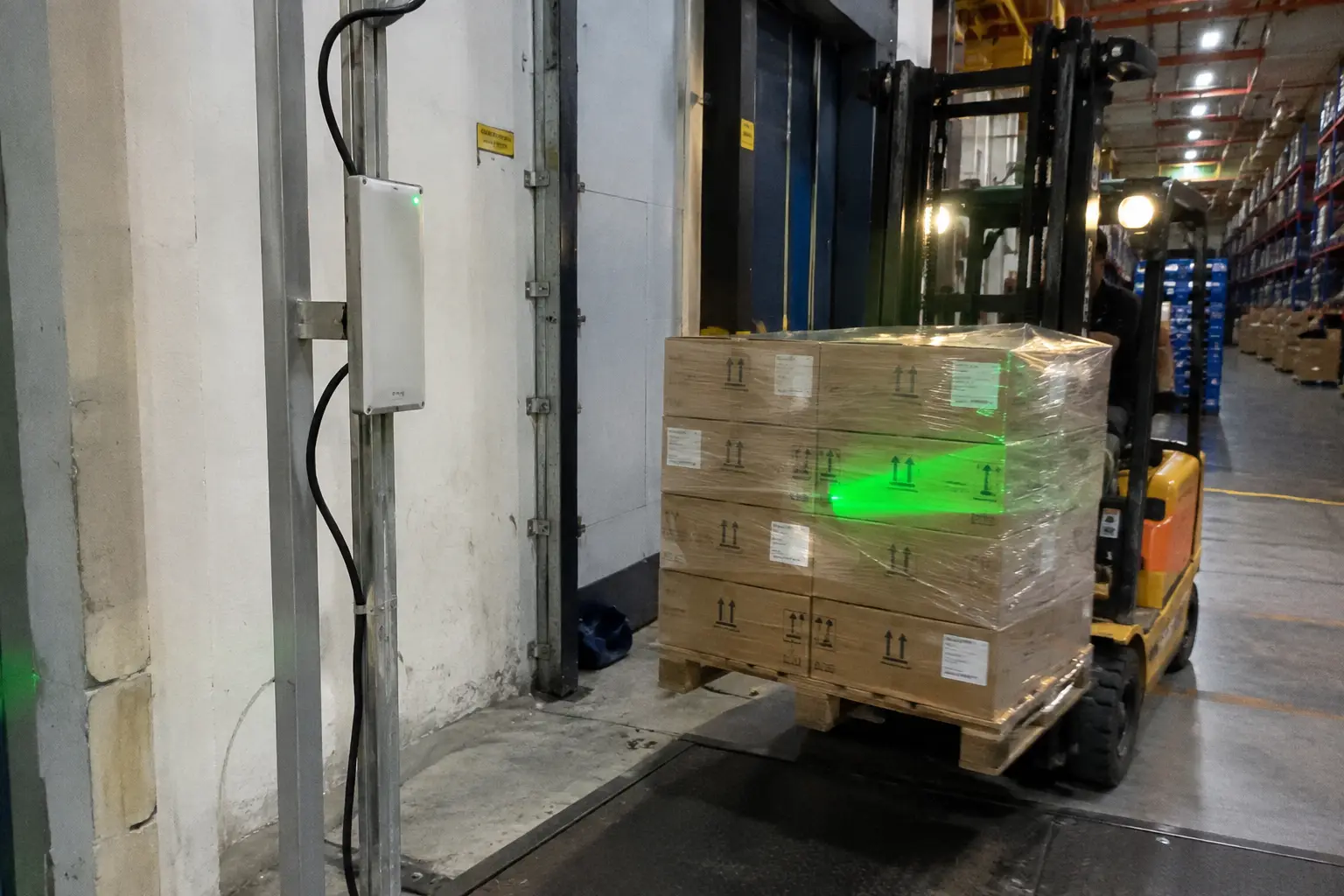
The larger effect appears across organizational boundaries. Where a third-party logistics (3PL) provider still relies on printed manifests and per-box barcode scans, dock-door RFID portals let an entire pallet be read in seconds as it is unloaded, and the system can verify the shipment against the advance shipping notice (ASN) automatically. Because the read event is shared, the manufacturer receives a receipt notification and downstream retailers see inventory in transit—a continuous digital thread rather than isolated scan points. For logistics buyers, this level of automation and data accuracy has shifted from optional to expected.
The Data Ecosystem: Beyond the Scan
| Feature | Barcode | RFID |
|---|---|---|
| Read Speed | One scan at a time, line-of-sight. | Hundreds of tags per second, no line-of-sight needed. |
| Data Capacity | Limited to a simple product identifier. | Stores unique serial numbers, lot data, and more. |
| Automation | Labor-intensive manual scanning. | Fully automated, hands-free data capture at portals. |
| Durability | Easily damaged by dirt or moisture. | Encapsulated tags are very durable and reusable. |
| Supply Chain Impact | Creates data silos at each scan point. | Enables a shared, real-time view of inventory movement. |
Conclusion
RFID is a general-purpose data-capture technology whose value shows up wherever accurate, hands-free identification reduces manual effort: retail stock counts, manufacturing traceability, asset loss prevention in large facilities, and shared visibility across the logistics chain.
Frequently Asked Questions
Q: How is RFID used in retail apparel inventory?
A: Stores tag garments so an entire carton can be read in seconds without line-of-sight, enabling real-time stock counts on the floor and in the back room.
Q: How does RFID improve manufacturing traceability?
A: Each component is tagged and read at every workstation, with the in/out records flowing into a Manufacturing Execution System (MES) for root-cause analysis. This builds a per-part history across the production line.
Q: How does RFID help prevent asset loss in hospitals or warehouses?
A: Fixed readers at doorways, handheld units, and vehicle-mounted readers detect active tags that broadcast location periodically, flagging assets leaving a defined zone. Medical infusion pumps are a common tracked asset.
Q: What is the difference between RFID and barcodes?
A: RFID reads many tags at once without line-of-sight and stores more data per tag, while barcodes need individual scans and are less durable. RFID also supports hands-free automation that barcode scanning cannot.
Q: How is RFID used at logistics and 3PL dock doors?
A: A portal reader at the dock door reads a full pallet in seconds and automatically cross-checks the tags against the advance shipping notice (ASN). This creates a continuous digital thread from receipt to shipment.