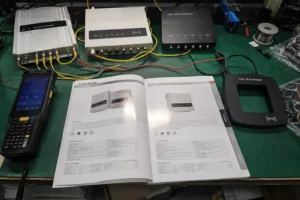
A logistics manager in Rotterdam opened her reader dashboard one Monday and watched 60% of an incoming U.S.-supplied pallet batch fail to register. The tags were intact. The readers were powered on. The only thing broken was the frequency. The shipment had been tagged and encoded in a Chicago warehouse using North American hardware, then read in Europe with the same mindset — and the band mismatch quietly degraded everything.
RFID frequency regulations by country define the exact UHF radio bands and power limits each government authorizes for RFID. They differ in almost every market you ship to.
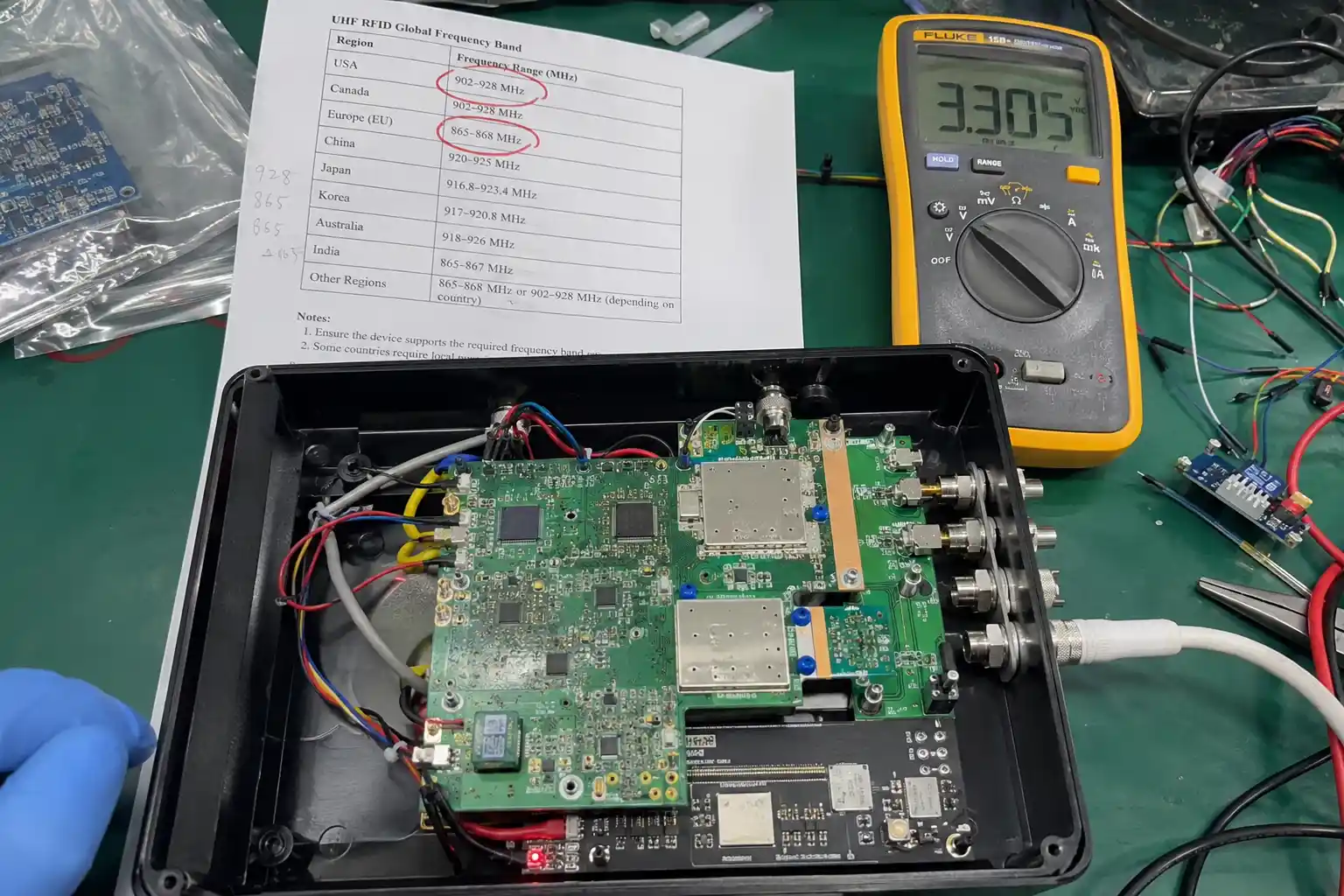
The short answer: in the United States UHF RFID operates under FCC rules in the 902–928 MHz band, in the European Union it runs on the ETSI 865–868 MHz band, and in China the allocated UHF band is 920–925 MHz (per MIIT/SRRC). Deploy hardware built for one region in another without checking, and you risk failed reads, shortened range, and customs or compliance penalties. RFID frequency regulations by country are not trivia for engineers — they decide whether your global rollout works on day one.
You already know the pain of "it worked in the lab." This guide promises the practical version: a country-by-country UHF band table you can act on, a decoder for every certification mark you'll meet at the border, and a no-nonsense checklist for picking a reader that actually travels. We'll cover the three dominant regions, the outliers that bite, and how a 20-year OEM/ODM manufacturer builds hardware that survives cross-border deployments.
Key takeaways
- The world runs on three UHF bands: FCC 902–928 MHz (Americas), ETSI 865–868 MHz (EU), and China 920–925 MHz (MIIT/SRRC). Hardware tuned for one rarely works in another without reconfiguration.
- Low Frequency (125 kHz) and HF/NFC (13.56 MHz) are harmonized worldwide. Only UHF carries real regulatory risk, and a band mismatch can quietly cut passive-tag read range by up to ~40%.
- Choose a multi-region reader with switchable firmware and pre-cleared certifications (FCC, CE RED, UKCA, SRRC, and more), then plan the certifications in parallel from day one.
When you're ready to shortlist hardware, our RFID reader buying guide walks through the selection criteria point by point.
To go deeper, see our guide on how RFID works and what it can track in a B2B operation.
Why RFID Frequency Regulations by Country Matter
Frequency rules exist for a simple reason: the radio spectrum is crowded. Wi-Fi, cellular, aviation, and industrial telemetry all compete for airspace, so every government allocates slices and caps power to prevent interference. RFID sits inside those slices, and the slice is different almost everywhere you land.
Legal and compliance risk
Run non-compliant gear and the consequences are concrete, not theoretical. Customs can hold a shipment. A retailer's receiving dock can refuse uncertified readers. Regulators can issue fines or order equipment disabled. In the EU, a reader without valid CE RED (Radio Equipment Directive) marking simply cannot be lawfully placed on the market. In the US, the FCC can levy penalties against unauthorized transmitters. None of this is rare for teams that buy "the cheap reader" and assume one model covers the world.
Read-range and performance loss
This is the quiet killer. A passive UHF tag is tuned to a band. Put a US-tuned tag in front of an EU-band reader and the antenna sees a mismatched load: energy reflects instead of coupling. The result is shorter reads, more dropped tags, and borderline reliability that looks like a hardware fault but is really a spectrum mismatch. (If you're new to how passive tags couple to a reader's field, our breakdown of active vs passive RFID explains why tuning matters so much.)
Interoperability across borders
Modern supply chains are never local. A garment tagged in Vietnam, read in a German DC, and sold through a U.S. store has crossed three regulatory zones before the customer sees it. Plan the frequency strategy up front, with tags, readers, and middleware together, and you avoid the "why does it only work here" meetings six months later.
The 3 Dominant UHF RFID Regions
Almost every deployment on earth maps to one of three regions. Learn these and you can reason about the rest.
North America — FCC 902–928 MHz
In North America, RFID frequency regulations by country place UHF RFID in the FCC 902–928 MHz band under Part 15.247. The U.S. Federal Communications Commission allocates this spectrum for RFID, with a maximum 4 W EIRP (36 dBm) and a frequency-hopping requirement across at least 50 channels to coexist with other users. Canada mirrors this under ISED (formerly Industry Canada) rules in the same band. This wide, high-power allocation is why North American UHF deployments often boast the longest read ranges — and why gear built for it struggles elsewhere.
This is the heart of what the industry calls RAIN RFID, the UHF flavor of EPC Gen2. If you want the bigger picture on the standard and why it matters for item-level tracking, see what is RAIN RFID.
Europe — ETSI 865–868 MHz
Across the EU, RFID frequency regulations by country center on the ETSI 865–868 MHz band governed by EN 302 208, the standard referenced by the EU's Radio Equipment Directive. The ceiling is 2 W ERP (33 dBm), lower than the FCC limit, and European rules mandate LBT (Listen Before Talk). The reader must sense the channel is clear before transmitting, which keeps UHF RFID polite around other spectrum users but also shapes how you design dense reader environments.
China — 920–925 MHz
For China, RFID frequency regulations by country allocate the 920–925 MHz UHF band under MIIT/SRRC rules, with an auxiliary allocation around 840–845 MHz for certain applications. Effective radiated power is capped near 2 W (33 dBm). Always confirm against the latest MIIT announcement before certifying a product — Chinese allocations have evolved and the current MIIT/SRRC notice governs. The 920–925 window is close to, but not identical with, either FCC or ETSI, so China almost always needs its own certification pass and its own reader configuration.
RFID Frequency Bands by Country — Comparison Table
Here is the operational table most teams actually need. It covers the 12 markets we're asked about most, with the UHF band, the maximum power, and the certification mark you'll present at the border. This is the fastest way to answer "UHF RFID allowed countries" for a rollout plan.
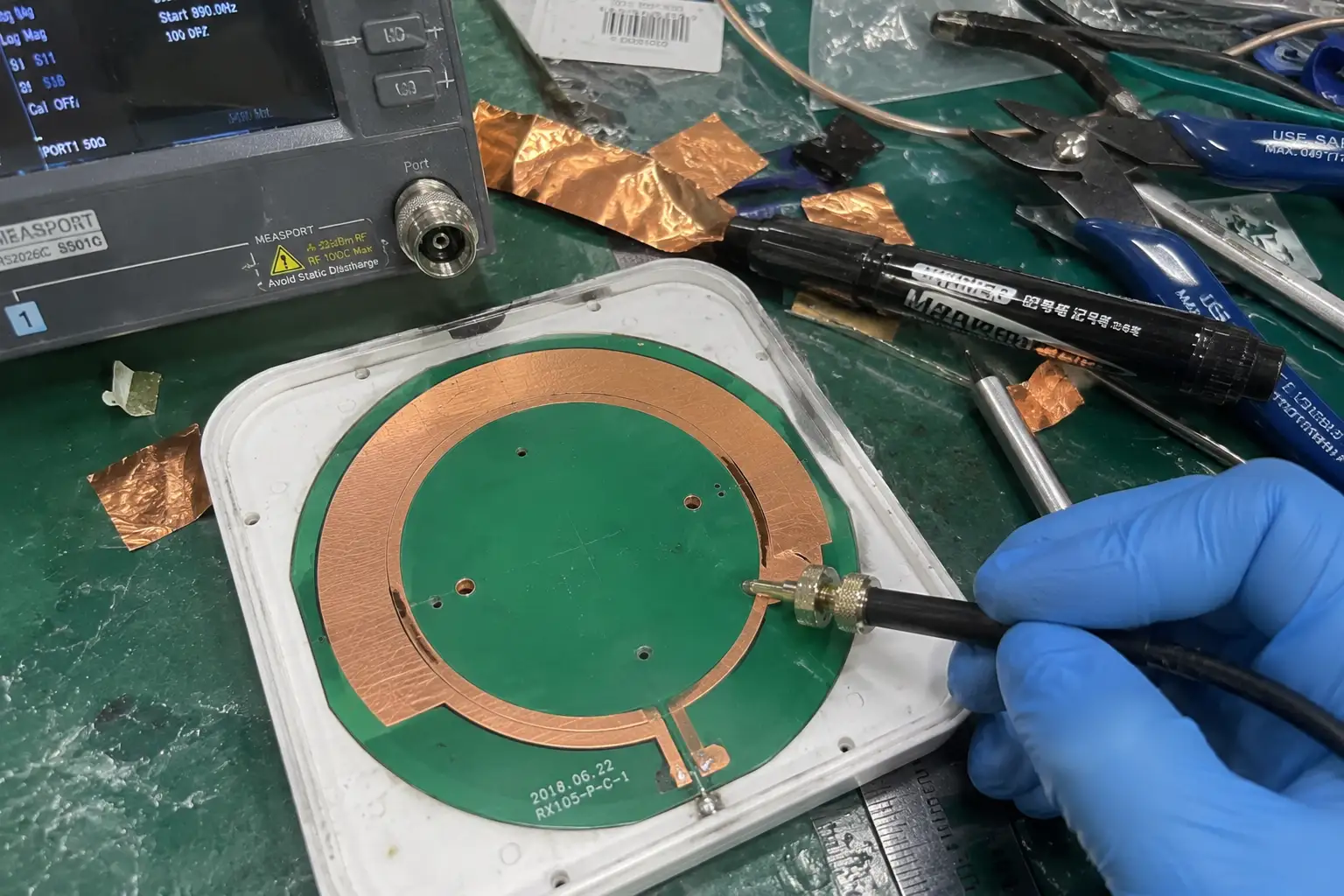
Data verified: July 2026. UHF allocations change, so always confirm against the latest FCC, ETSI, and MIIT/SRRC notices before certifying a product.
| Region / Country | UHF Band (MHz) | Max Power | Certification |
|---|---|---|---|
| United States | 902–928 | 4 W EIRP (36 dBm) | FCC Part 15.247 |
| Canada | 902–928 | 4 W EIRP | ISED RSS-247 |
| European Union | 865–868 | 2 W ERP (33 dBm) | CE RED / EN 302 208 |
| United Kingdom | 865–868 | 2 W ERP | UKCA / EN 302 208 |
| China | 920–925 (+840–845 aux) | ~2 W (33 dBm) | SRRC / MIIT |
| Japan | 916–921 (920–925 newer) | up to 4 W EIRP | MIC |
| South Korea | 917–923 | ~4 W EIRP | RRA |
| India | 865–867 | up to 4 W EIRP | WPC / DOT |
| Australia | 920–926 | up to 4 W EIRP | ACMA / RCM |
| Singapore | 866–869 / 923–925 | up to 2 W | IMDA |
| Brazil | 902–907.5 & 915–928 | up to 4 W EIRP | ANATEL |
| Mexico | 902–928 | up to 4 W EIRP | IFT |
One caveat before you certify: ERP and EIRP are not the same basis — they differ by about 2.15 dB, and national notices change. Always confirm the exact limit against the latest national source. Full references: GS1 UHF frequency allocations, FCC Part 15, and ETSI EN 302 208.
Notes on the outliers
A few markets deserve a closer look because they surprise people:
- Japan centers on 916–921 MHz (with 920–925 MHz provisions under MIC), up to 4 W EIRP. Don't assume the old 952–954 MHz legacy maps to modern RAIN hardware.
- South Korea uses 917–923 MHz under RRA, close to China but not the same config file.
- Brazil splits into 902–907.5 MHz and 915–928 MHz under ANATEL, a hybrid that needs careful channel planning.
- Singapore runs both an ETSI-like 866–869 MHz and a 923–925 MHz allocation, so a region-switchable reader earns its keep here.
LF & HF — Globally Harmonized Bands
Here's the relief: not everything is a regulatory minefield.
LF 125 / 134.2 kHz
Low Frequency RFID around 125 kHz (and 134.2 kHz for animal ID) is essentially harmonized worldwide. Power is low, range is short, and almost no country restricts it differently. If your application is a pet chip, an access badge, or a tool-tracking fob, frequency is rarely your problem.
HF 13.56 MHz / NFC
High Frequency at 13.56 MHz (including NFC) sits in a globally coordinated ISM band. It's the same everywhere, which is exactly why contactless payment, passport, and smartphone NFC "just work" across borders. Restrictions are minimal, and certification is far lighter than UHF.
Why UHF is the regulatory headache
UHF delivers the long range and fast multi-tag reads that supply chains love, but it lives in a slice of spectrum every nation allocated differently during the wireless boom. That historical patchwork is the entire reason this guide exists. Choose LF or HF and you can largely forget borders; choose UHF and frequency planning becomes a project in itself.
Compliance Certifications Decoded
Certification is where deployments stall. Each mark below is a separate test, a separate file, and usually a separate fee. There is no global "one and done."
FCC ID (United States)
An FCC ID proves your device complies with Part 15.247 for intentional radiators. It's mandatory for selling or operating UHF RFID readers in the US. The ID is publicly searchable and must appear on the label.
CE RED + EN 302 208 (European Union)
In the EU, the Radio Equipment Directive (RED) requires CE marking, and for UHF RFID the technical reference is ETSI EN 302 208 (currently V3.3.1). CE is a manufacturer's declaration backed by test evidence — not a single government stamp, but it must be defensible.
UKCA (United Kingdom)
Post-Brexit, the UK runs its own UKCA mark alongside CE for equipment placed on the Great British market. Technically the UK still references EN 302 208, so the engineering is close to EU work — but the paperwork is its own path.
SRRC / MIIT (China)
China requires SRRC type approval (under MIIT) for radio equipment. The model, firmware, and antenna set are all part of the approval, so changes later can force re-certification. Plan the hardware once and freeze it.
Other regional marks
The rest of the table needs their own stamps: MIC (Japan), ISED/IC (Canada), ANATEL (Brazil), RRA (South Korea), WPC/DOT (India), ACMA/RCM (Australia), and IMDA (Singapore). The critical lesson: an FCC certification does not make a device legal in the EU, UK, or China. Each market tests to its own standard. Budget for parallel certifications from day one of a global project.
What Happens When Bands Don't Match
Theory is cheap. The failures are expensive.
US-tuned tag in an EU reader
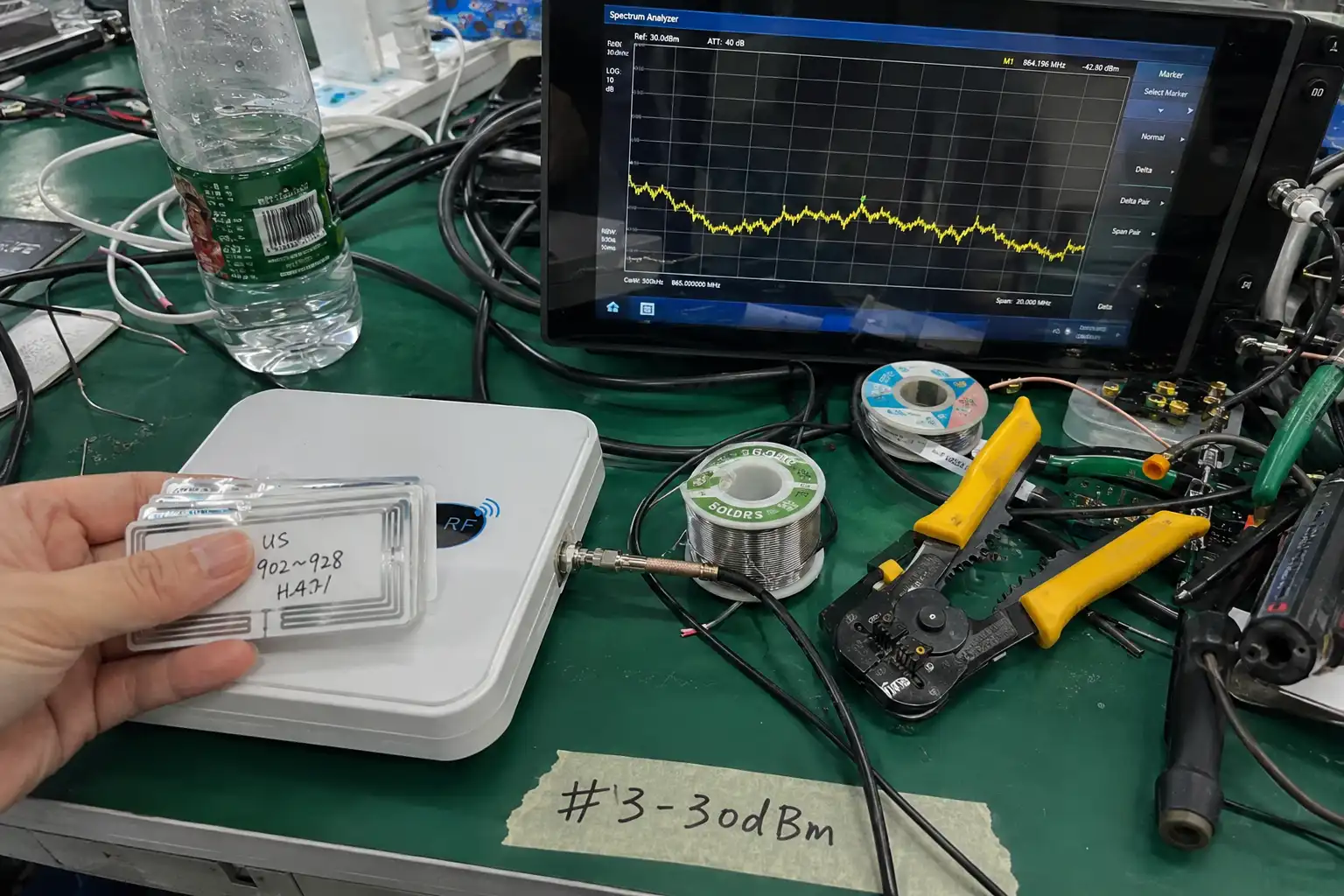
This is the Rotterdam story from the top. A pallet tagged with North American-tuned inlays met a European-band reader. The mismatch pushed the tag's resonant point off the reader's channel plan, and real-world testing shows passive-tag read range can drop by up to ~40% in such mismatches (an experienced-deployment figure, not a lab constant). Sixty percent of a batch failing isn't a glitch — it's a frequency problem wearing a hardware costume.
CE-only reader deployed in the US
Flip it around: a CE/ETSI-only reader shipped to a U.S. site violates FCC Part 15 because it transmits outside the authorized 902–928 plan and at a power basis the FCC doesn't recognize. Beyond poor reads, the operator is running unauthorized radio equipment — a compliance exposure that can get the unit ordered offline.
Two fixes work. Use multi-region (dual-band) tags tuned to cover both FCC and ETSI resonances, so the inlay performs across zones. And deploy region-switchable readers whose firmware selects the correct band, channels, and power per country. Pair the two and cross-border freight reads consistently from origin to shelf.
How to Choose a Multi-Region RFID Reader
This is the commercial heart of the guide: the checklist we give every integrator planning a cross-border rollout. Nail these four points and the frequency problem largely disappears.
Region-switchable firmware
Insist on a reader that stores multiple regional profiles (FCC, ETSI, China, and the outliers) and switches via software, not a hardware swap. The best firmware also enforces the local channel plan and LBT behavior automatically, so an operator in Germany can't accidentally transmit on a US-only channel.
Adjustable output power
Power isn't one number; it's a per-region ceiling. Your reader must dial down to 2 W ERP for Europe and up to 4 W EIRP where allowed, with the limit locked to the selected region. This single feature keeps you legal and protects nearby spectrum users.
Pre-certification checklist
Before you buy, confirm the exact marks you need: FCC ID for the US, CE RED/EN 302 208 for the EU, UKCA for the UK, SRRC for China, plus MIC, ISED, ANATEL, RRA, WPC, ACMA/RCM, or IMDA as your markets dictate. Ask the vendor for the certificate numbers, not a promise. Then validate the whole selection against our RFID reader buying guide. It expands each criterion with the questions to put to any supplier.
Ready to shortlist hardware that's already certified for your target markets? Explore Fongwah's UHF RFID readers built for multi-region deployments.
Antenna and channel-plan configurability
Finally, check the antenna port and channel configuration. Dense environments (a DC with dozens of readers) need fine-grained channel plans to avoid self-interference, and the ability to tune antenna gain per zone. A reader that hides these settings will fight you the moment you scale.
Fongwah Multi-Region Reader & Module Options
As a Shenzhen-based manufacturer with two decades of OEM/ODM RFID experience, we see the frequency problem from the factory floor up. Our UHF readers and embedded modules are engineered with regional profiles built into firmware (FCC, ETSI, and China bands selectable without opening the case) and we support the certification paperwork our partners need to clear customs and compliance in each target market.
For integrators building their own enclosures, our embedded RFID reader modules carry the same multi-region logic in a compact footprint, with OEM/ODM support for frequency planning, antenna matching, and SRRC/FCC/CE documentation. We're not here to push a box. We're here to hand you hardware that reads cleanly from a Chicago DC to a Shenzhen line to a Frankfurt cross-dock — no frequency fire drill at each border.
Frequently Asked Questions
Q: Do I need separate RFID tags for the US and EU?
A: Not necessarily. Dual-band (multi-region) passive tags are tuned to perform across both FCC and ETSI bands, so one inlay can travel; single-band tags underperform outside their home region.
Q: Can one RFID reader cover all regions?
A: Yes, if it is region-switchable: firmware that selects the correct band, channel plan, and power per country, plus the certifications for each market.
Q: Are HF/NFC (13.56 MHz) tags exempt from regional rules?
A: Largely yes. 13.56 MHz is globally harmonized, so HF/NFC deployments skip the UHF frequency maze; the complexity returns only with UHF.
Q: What is China's RFID frequency - 920-925 MHz?
A: China's primary UHF RFID band is 920-925 MHz under MIIT/SRRC, with an auxiliary 840-845 MHz allocation for some uses, capped near 2 W; always confirm against the latest MIIT announcement.
Q: Which certification do I need for global deployment?
A: There is no single mark. Expect FCC (US), CE RED/EN 302 208 (EU), UKCA (UK), SRRC (China), and market-specific marks such as MIC, ISED, ANATEL, RRA, WPC, ACMA/RCM, and IMDA.
Conclusion
RFID frequency regulations by country come down to three numbers you'll meet again and again: FCC 902–928 MHz, ETSI 865–868 MHz, and China 920–925 MHz. The 12-market table, the certification alphabet, and the read-range math all flow from those bands and the power and testing rules each government attaches. Get the band right and cross-border deployments read cleanly; get it wrong and you buy the same lesson twice.
Your next step is practical: map your deployment countries, list the certifications each requires, and pick a region-switchable reader with adjustable power and the right paperwork. Start with our RFID reader buying guide to turn this reference into a shortlist — then talk to our team about multi-region readers and OEM/ODM modules certified for your markets. The spectrum won't get simpler. Your hardware can.