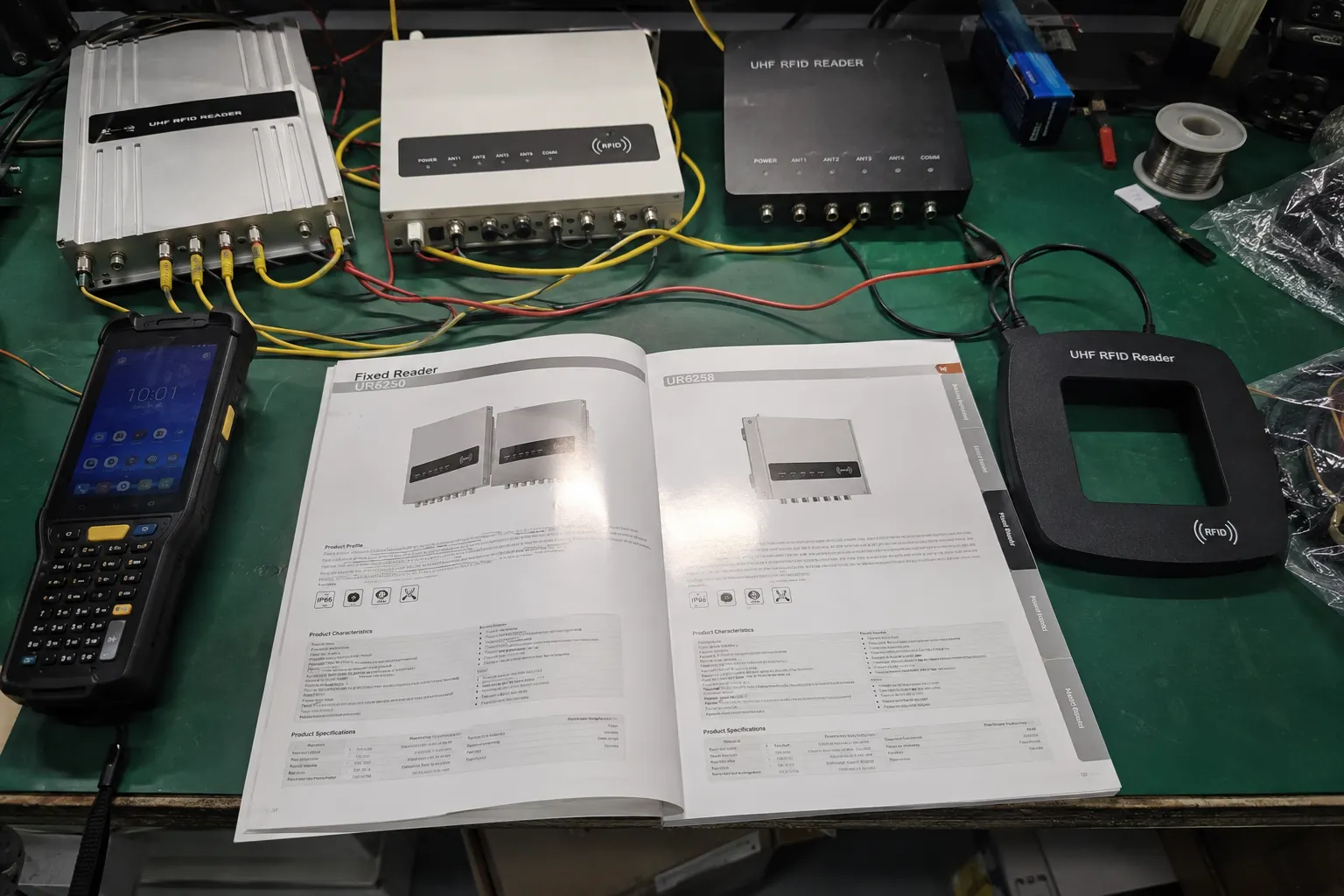
By the Fongwah Technical Team · Updated July 9, 2026 · 20 years designing and building RFID readers, modules, and tags.
A procurement manager at a mid-size apparel chain once told me his team burned through a six-figure budget on an RFID pilot that never scaled. The root cause wasn't the tags or the software. It was a reader the team didn't fully understand. They bought a UHF fixed reader and expected store staff to scan items with personal phones. UHF passive tags don't work that way, and the mismatch cost them months of rework. If you are staring at a spreadsheet of options and feeling stuck, this RFID reader buying guide is for you.
We won't push a specific model. As a manufacturer that has built RFID hardware for two decades, we'll give you the same neutral decision framework our engineers use when helping system integrators spec a deployment. By the end, you'll know exactly how to choose an RFID reader for your situation, whether that's retail inventory, warehouse portals, access control, or industrial asset tracking. Here is what we cover:
- The three frequency families (LF, HF/NFC, UHF) and the trade-offs nobody tells you about
- The five reader form factors and which scenarios each one fits
- A 7-step buyer checklist you can apply to any project
- A use-case decision matrix and a quick-reference cheat sheet
- The five most expensive mistakes buyers make, and how to avoid them
Quick answer
- Use UHF (RAIN) when you need meters of read range and fast bulk counting, such as pallets and inventory.
- Use HF or NFC (13.56 MHz) when staff need phone reads, tap interactions, or contactless cards.
- Use LF (125/134.2 kHz) when you must read through metal or liquid at close range.
- Pick the reader type by workflow (fixed, handheld, desktop, embedded), and always run a pilot before scaling.
One story shows why this matters.
A European logistics integrator came to us last year. They had already installed twelve UHF portal readers at a distribution center. Throughput looked good on paper. Then they tried to track reusable plastic totes moving through a steel conveyor lined with shelving. Read rates dropped below 40% near the metal. The fix meant relocating antennas and switching to on-metal UHF tags. That rework cost about three times the original hardware. The physical setup often matters more than the spec sheet, and this case proved it.
To go deeper, see our guide on what an RFID reader does.
1. RFID Reader Basics: What It Is and How It Works
Before comparing models, you need the mental model. An RFID system has two halves: the tag (a chip plus an antenna) and the reader. The reader is the active radio device that powers, talks to, and collects data from tags.
What is an RFID reader/writer?
An RFID reader is a transceiver. It emits radio energy through an antenna, listens for tag responses, and forwards the decoded data to a host system such as a PC, PLC, WMS, or cloud platform. A full RFID reader writer can also write data to a writable tag. It encodes a serial number, a lot code, an EPC, or a status flag. For most inventory and access applications you only need to read. Encoding at the source, during tag imprinting, is where a writer earns its keep.
Readers come in two logical flavors:
- Read-only readers decode tag IDs and pass them upstream. These are simpler, cheaper, and sufficient for tracking and access.
- Read/write readers (reader-writers) additionally program tags. They're useful for item-level encoding, rewritable loyalty cards, laundry or tool tracking where status changes hands, and commissioning new assets at intake.
If you're a brand retailer imprinting your own hang-tags, you'll want at least one reader-writer at the encoding station even if your floor readers are read-only.
Active vs passive RFID (and why it changes your reader choice)
This distinction matters a lot. It shapes which reader you buy before you compare any features.
| Feature Matrix | Passive RFID | Active RFID |
|---|---|---|
| Power source | Tag powered by reader's field | Tag has its own battery |
| Typical read range | LF: <0.5 m; HF: <1 m; UHF: 1–12 m | 30–100+ m |
| Tag cost | Cents to a few dollars | $10–$50+ |
| Reader cost | Lower; simpler RF | Higher; more complex |
| Battery maintenance | None | Battery replacement cycle |
| Best for | Item-level, access, inventory | Yard, container, vehicle, RTLS |
With passive RFID, the reader must supply enough energy to wake the tag. That's why passive UHF can reach several meters while passive LF stays at a few centimeters. With active RFID, the tag broadcasts on its own. The reader is more of a receiver, and the economics shift toward fewer, longer-range readers covering large areas.
Most buyers in retail, library, and access control live entirely in passive RFID. Active systems appear in yard management, mining, and vehicle tracking, where you need to see a tagged asset from across a lot. Pick the wrong one and your whole architecture is wrong before installation begins.
Key components: antenna, chip, firmware
Three internals define real-world reader quality:
- Antenna sets the radiation pattern and effective read zone. External antennas let you shape coverage (narrow beam for a portal, wide pad for a counter). Integrated antennas trade flexibility for convenience. Antenna gain and polarization also decide how well you read tags at angle or at distance.
- RF chip or module is the silicon that modulates and demodulates the signal. Better silicon means cleaner reads near interference and higher tag throughput under load.
- Firmware and SDK decide how the reader filters duplicates, handles anti-collision (many tags answering at once), and exposes data.
A reader is a system, not a single box. The antenna, RF front-end, and firmware together decide real-world performance long before the sticker price does.
2. RFID Frequency Bands Compared: LF vs HF vs UHF vs NFC
Frequency sets the boundaries of what your system can do. Choose wrong and every later decision fights the physics.
LF RFID (125/134.2 kHz)
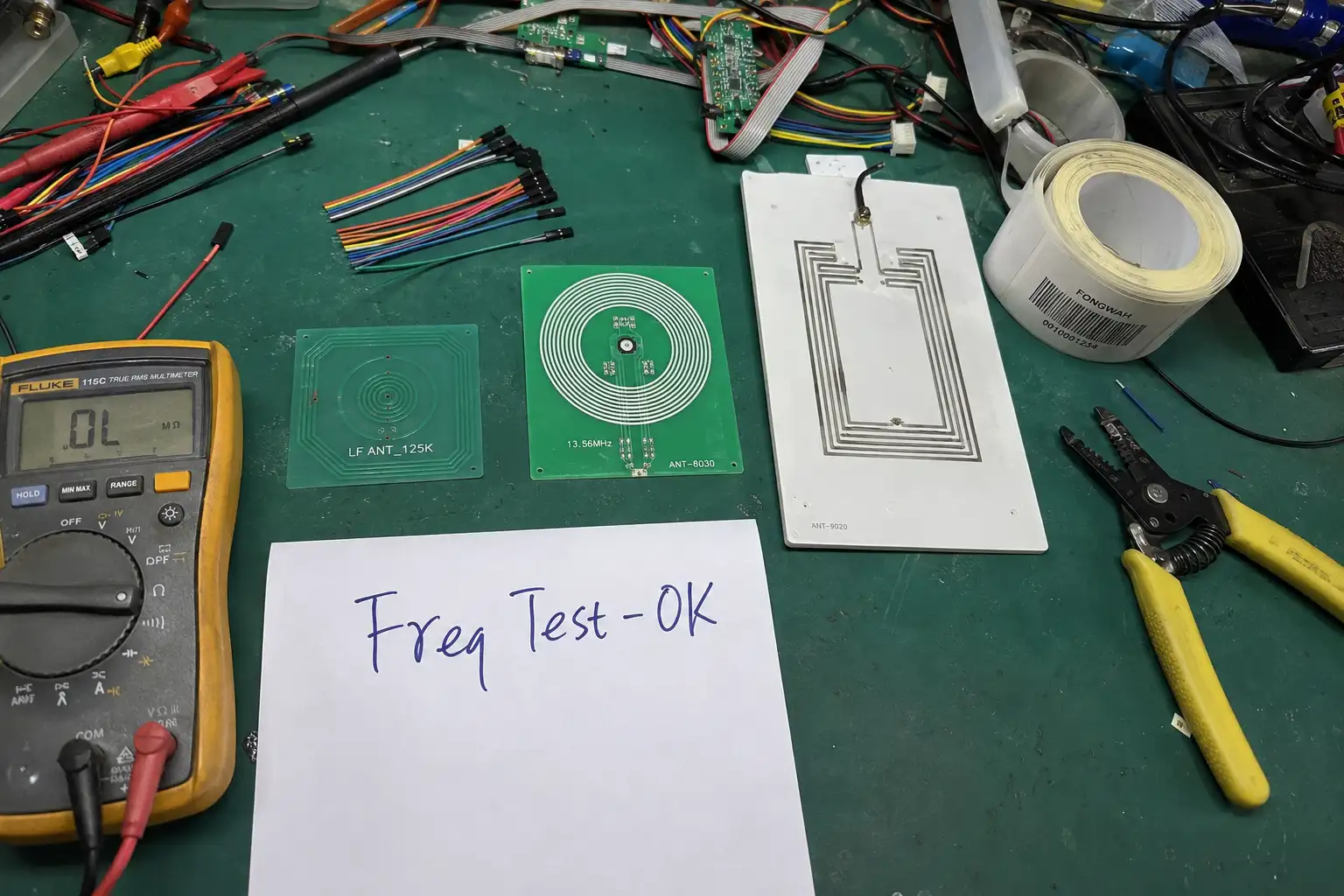
Low-frequency RFID operates at 125 kHz (and 134.2 kHz for animal ID). Range is short, typically under 10 cm and occasionally up to 50 cm with large tags. LF is slow and low-density, but it shines near metal and liquid where higher frequencies fail. You'll find LF in animal tagging, car immobilizers, and some industrial tool tracking where the tag sits next to steel.
HF RFID & NFC (13.56 MHz)
High-frequency RFID runs at 13.56 MHz and splits into two standard families:
- ISO 14443 (proximity, ~10 cm) covers contactless payment, access cards, and NFC.
- ISO 15693 (vicinity, up to ~1 m) covers library books, laundry tags, and asset labels.
NFC is a subset of HF at the same 13.56 MHz. The big difference is that NFC is built for two-way, phone-friendly interaction. Any modern smartphone can read and write NFC tags in reader mode. If your workflow depends on staff using personal phones, HF/NFC is usually the answer. That is the exact trap many first-time buyers fall into. Browse Fongwah NFC Tags Catalog if phone-readable tagging is on your roadmap.
When matching readers to Fongwah RFID Cards and Tags, always confirm the tag frequency matches your reader and your region. A 13.56 MHz reader cannot see a UHF tag, and vice versa.
UHF RFID / RAIN (860–960 MHz)
Ultra-high-frequency passive RFID, branded RAIN RFID, is built on the EPC Gen2 / ISO 18000-6C standard. This is the workhorse of supply chain and retail. Range reaches 1–12 meters. Read speed hits hundreds to over 1,000 tags per second, and tag cost is pennies at volume. UHF is why a pallet of 200 garments can be counted in a second. The catch is that UHF is sensitive to metal and water, so on-metal and on-liquid tag designs are essential in tough environments.
The RAIN air-interface standard is maintained by GS1. You can read the official specification here: GS1 UHF air interface protocol. For a plain-language overview of how RFID and RAIN work, see <a href="https://www.impinj.com/products/technology/about-rfid" target="_blank" rel="nofollow noopener">Impinj's overview of RFID and RAIN</a>.
Side-by-side comparison table
| Band | Frequency | Typical range | Read speed | Typical use | Metal/liquid resistance |
|---|---|---|---|---|---|
| LF | 125 / 134.2 kHz | <0.5 m | Low | Animal ID, tools, car keys | Excellent |
| HF | 13.56 MHz | 10 cm – 1 m | Medium | Access, library, payment | Good |
| NFC | 13.56 MHz | <10 cm (phone) | Medium | Phone interaction, loyalty | Good |
| UHF / RAIN | 860–960 MHz | 1–12 m | High (1000+/s) | Inventory, logistics, retail | Poor (needs special tags) |
Regional frequency regulations
UHF is not globally uniform. The same reader must be configured for local law.
- United States (FCC{:target="_blank"}): 902–928 MHz
- Europe (ETSI{:target="_blank"}): 865–868 MHz
- China: 920–925 MHz
- Japan: 916–921 MHz (and 952–954 MHz for some allocations)
- Other regions follow local rules, and several require dynamic channel hopping or listen-before-talk.
If you deploy across borders, buy readers whose firmware supports regional profiles and certification. A reader locked to FCC frequencies will break compliance in the EU, and customs or regulators may block it. This matters most for distributors and brand retailers shipping the same SKU to multiple markets. For the full country-by-country picture, see our guide to regional frequency regulations.
The legal backbone is documented in FCC 47 CFR 15.247 for the US and ETSI EN 302 208 for Europe.
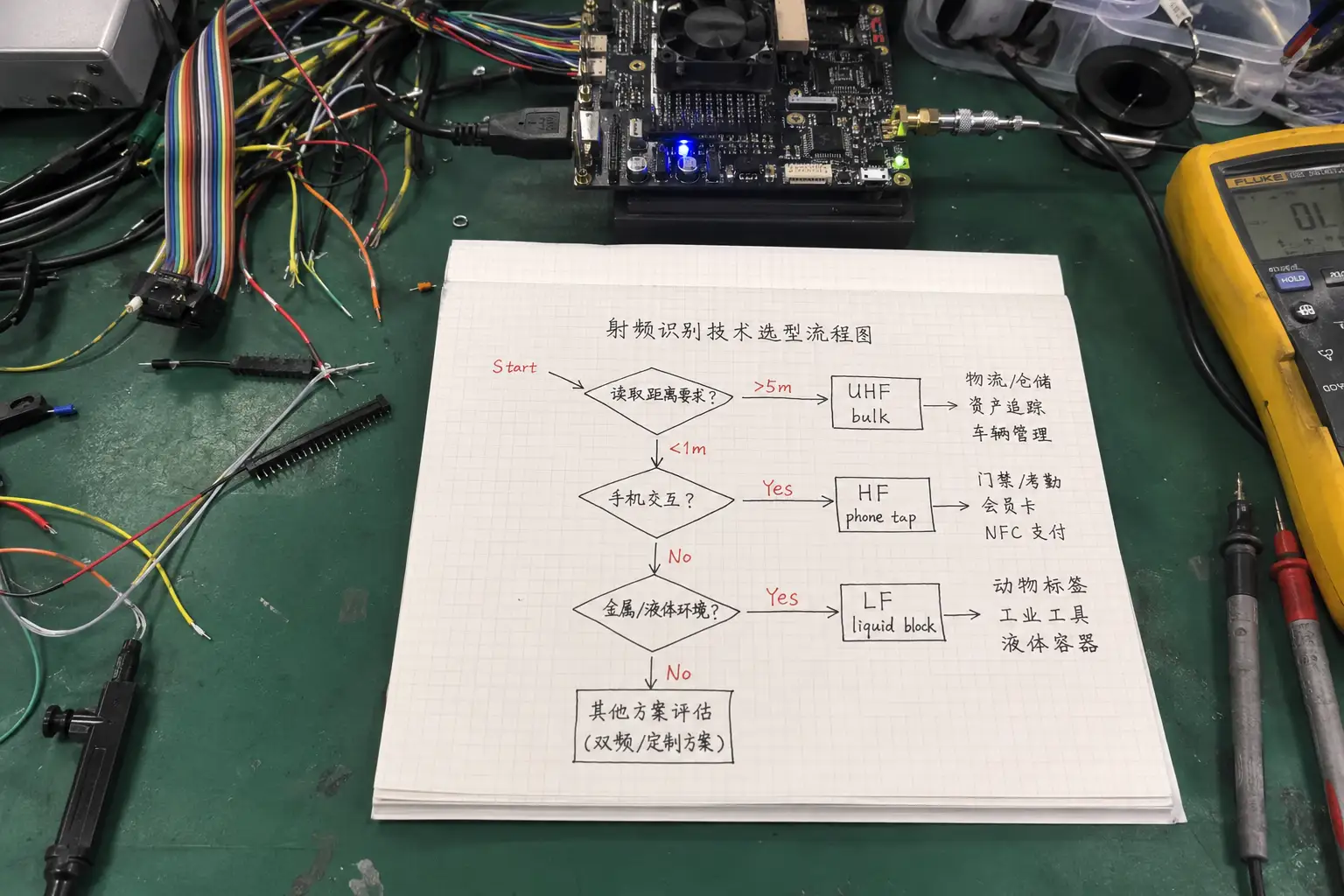
Remember this: Match frequency to physics, not marketing. Need phone reads? Choose HF/NFC. Need meters of range and fast bulk counting? Choose UHF. Need to read through metal or liquid at close range? Choose LF.
3. RFID Reader Types: Fixed, Handheld, Desktop, Embedded, USB
Form should follow function. Here is how the main reader types break down.
Fixed RFID readers
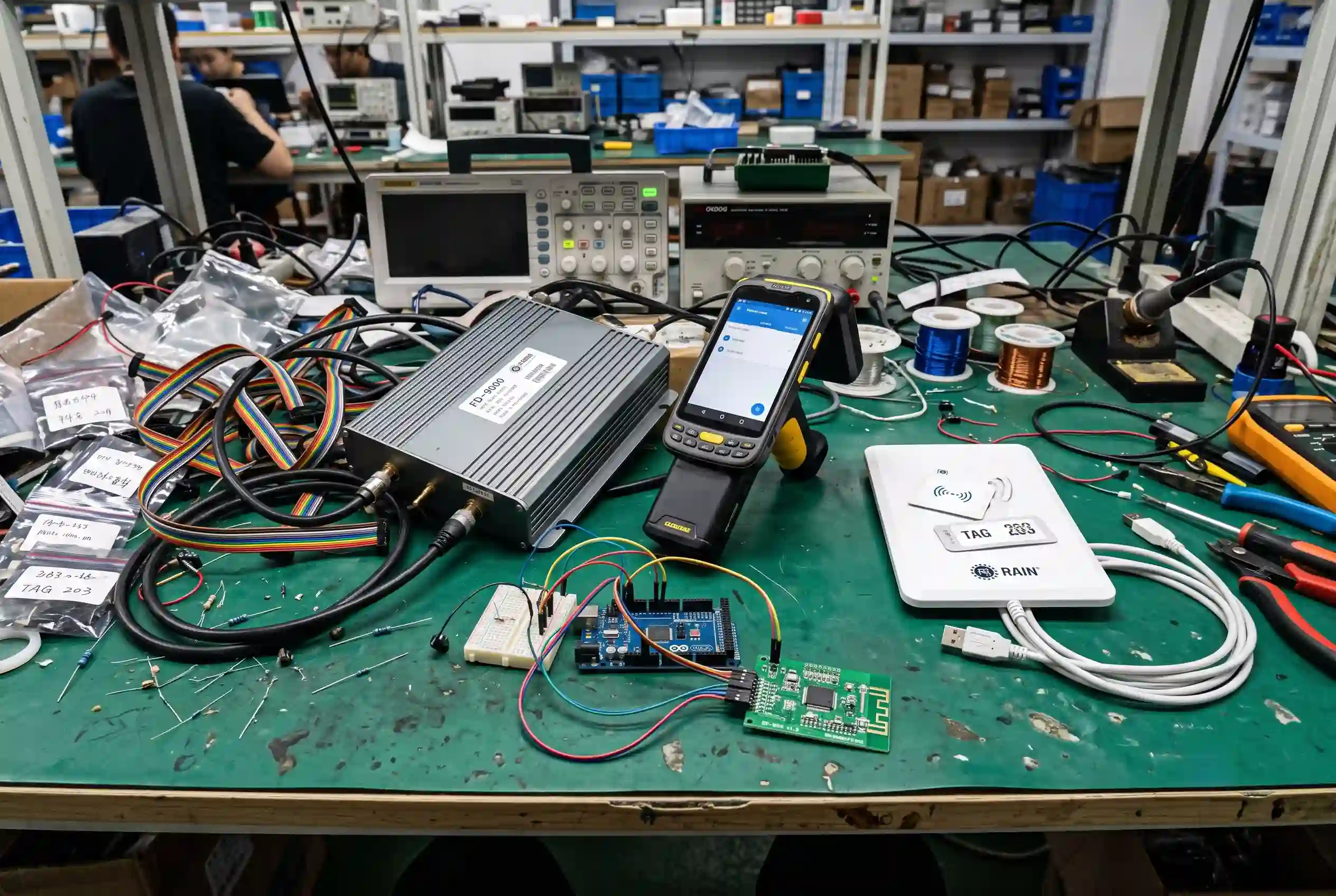
Fixed readers mount permanently on dock doors, conveyor portals, or shelving. They run continuously, connect over Ethernet or PoE, and handle high-volume, hands-free reading. These are the backbone of warehouse and retail-backroom automation. They cost more upfront but deliver the lowest cost per read at scale, and they don't depend on a human aiming a device.
Handheld & mobile RFID readers
Handheld readers put the antenna, chip, and a screen/battery in one device. They're essential for cycle counts, audits, and exception handling where you can't mount infrastructure. Many run Android and integrate with existing apps through standard SDKs. For a retailer doing weekly shelf audits, a handheld UHF reader is often the first and only purchase. There is no cabling, no IT project, and immediate value.
Desktop / USB RFID readers & writers
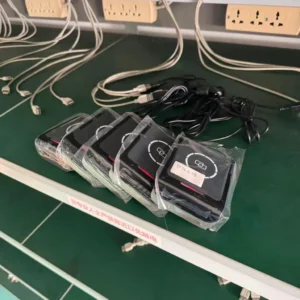
Desktop and USB units sit at a service desk or encoding station. A desktop RFID reader/writer encodes tags at the point of imprinting, verifies access cards, or registers assets at intake. They're low-cost, plug-and-play, and ideal for low-volume, attended operations. See Fongwah Desktop RFID Reader Writer Product Line models for encoding stations and front desks.
Embedded reader modules (OEM/ODM)
Embedded modules are bare-board readers you build into your own product, such as a kiosk, a printer, a medical device, or a vending machine. For original equipment manufacturers, Fongwah Embedded RFID Reader Module Catalog options let you integrate reading at the design stage rather than bolting on a box later. This is where OEM/ODM partnerships matter most, because the form factor, connector, and firmware can be tailored to your enclosure.
Comparison table: type vs scenario vs range vs price tier
| Reader type | Best scenario | Typical range | Price tier |
|---|---|---|---|
| Fixed | Dock doors, portals, continuous | 1–12 m (UHF) | >$1000 |
| Handheld | Cycle counts, audits, field | 0.5–6 m (UHF) | $300–1000 |
| Desktop / USB | Encoding, desk, access enrollment | <1 m | <$300 |
| Embedded module | OEM products, kiosks | Varies | <$300 (module) |
| RFID reader/writer | Tag encoding, verification | <1 m | <$300 |
Ready to see real hardware? Browse our RFID readers to compare fixed, handheld, desktop, and embedded options side by side.
4. How to Choose an RFID Reader: 7-Step Buyer Checklist
Here is the framework you can apply to any project, in order.
Step 1: Define use case & workflow
Start with the workflow, not the hardware. Ask who reads, where, how often, and whether it is attended or unattended. A library self-checkout and a warehouse dock door are different planets. Write the workflow down, including exceptions like damaged tags and returns, before touching a catalog.
Step 2: Pick frequency band
Use the physics from Section 2. Phone reads point to HF/NFC. Bulk range points to UHF. Metal or liquid at close range points to LF. This single choice eliminates 80% of unsuitable models and prevents the most common and most expensive mismatch.
Step 3: Choose reader type
Map the workflow to a form factor. Continuous infrastructure means fixed. Mobile audits mean handheld. An encoding desk means desktop or USB. Your own product means an embedded module. Don't over-buy. A $3,000 fixed portal where a $400 handheld does the job is wasted capital.
Estimate peak load, not average. A dock portal reading a 500-tag pallet needs UHF at 1000+ tags/sec. A badge reader needs one tag at a time. Match read rate to your busiest moment. Real throughput depends on tag orientation, spacing, and interference, so pilot to confirm.
Step 5: Environment: metal, liquid, IP rating
Walk the site. Steel racks? Pipes? Outdoor exposure? Choose IP-rated enclosures (IP65 for dust and water jets, IP67 for temporary immersion) for harsh areas. Use on-metal or on-liquid tags where needed. This is exactly where the European integrator in our story lost read rate, so don't repeat it. Also consider temperature range and vibration for industrial sites.
Step 6: Integration: protocols, APIs, WMS/ERP
The reader is useless if your software can't talk to it. Confirm supported protocols (LLRP, MQTT, HTTP, serial) and SDK quality. Ask for sample code and a clear API. Check whether your WMS or ERP already has a connector. Integration cost often exceeds hardware cost, so vet it early.
Step 7: Budget, TCO & OEM/ODM
Look beyond sticker price. Total cost of ownership includes cabling, antennas, tags, middleware, labor, and maintenance. For volume or product integration, an OEM/ODM partner can cut unit cost and tailor the form factor. Fongwah supports custom reader and module development for qualified B2B buyers, with more detail in the FAQ.
The one thing to nail: The right reader fits your workflow, environment, and integration, not the one with the longest spec sheet. Total cost of ownership beats sticker price every time.
5. Matching Readers to Use Cases (Decision Matrix)
Here is how the framework maps to real scenarios.
Retail inventory & cycle counts
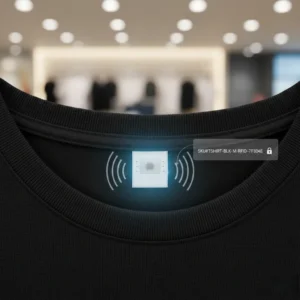
Retail lives on UHF. Handheld UHF readers for shelf audits plus fixed portals at the back room deliver fast, accurate counts and shrink visibility. NFC enters only if you want phone-based engagement or loyalty tapping. For most apparel and retail operations, a handheld UHF model is the best RFID reader for inventory because it covers both shelf audits and back-room receiving. Pair readers with Fongwah RFID Cards and Tags tuned for apparel and hanging goods, and you'll close the gap between shelf and system.
Warehouse & logistics (dock doors, portals)
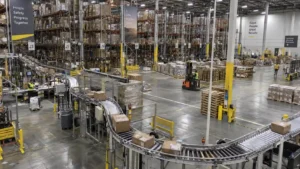
Fixed UHF portals at dock doors catch every pallet and carton. Conveyor-mounted readers handle sortation. This is the highest-volume, highest-ROI use of RFID, and it's where fixed readers earn their higher price through automation and error reduction.
Access control & NFC/contactless cards
Access is HF/NFC territory. ISO 14443 cards and NFC credentials at 13.56 MHz are the standard for doors, turnstiles, and logical access. Use desktop readers to enroll and verify credentials at the security desk.
Asset tracking & industrial/IT
IT assets, tools, and equipment often sit near metal. Use HF or on-metal UHF labels with handheld readers for audits. Consider active RFID for yard or vehicle tracking where range matters more than tag cost.
Library, laundry, healthcare
Libraries use ISO 15693 HF for books. Laundry tags survive heat and chemicals (HF or UHF, specially encapsulated). Healthcare tracks instruments, specimens, and patients. Staff often use HF/NFC for interaction, while UHF handles bulk linens.
A hospital linen service came to us after their first UHF rollout failed in the washing tunnel. Standard tags delaminated at 90°C. We specified encapsulated HF laundry tags and a handheld reader for cart-level counts. <a href="https://www.impinj.com/library/blog/how-tracking-linens-with-rain-rfid-keeps-hotels-and-hospitals-cleaner" target="_blank" rel="nofollow noopener">Read accuracy went from 70% to 99.5%</a>. Rewash labor dropped by a third. The right tag-and-reader pairing, matched to the environment, made the difference.
6. Common Mistakes to Avoid
Choosing UHF when you need phone/NFC
The most common mismatch. If staff must use personal phones, UHF passive won't cooperate. Use HF/NFC. This is the exact failure in our opening apparel story, and it's painfully expensive to fix after deployment.
Ignoring metal/liquid effects
UHF hates metal and water. Skip this and read rates crater near racking, pipes, or filled bottles. Use on-metal tags, reposition antennas, or drop to HF/LF where physics demands. Always walk the site before you spec.
Overlooking protocol/SDK compatibility
A cheap reader with a terrible SDK costs more in integration than a pricier one with clean APIs. Test the API and sample code before you buy volume. Your integrator's time is real money.
Focusing only on sticker price (TCO)
The $200 reader that needs $5,000 of custom middleware isn't cheaper. Calculate TCO: hardware, tags, cabling, software, labor, service, and replacement. The lowest upfront price is rarely the lowest lifetime cost.
Skipping pilot testing
An integrator we worked with skipped the pilot to hit a deadline. At go-live, metal racking between the reader and the conveyor cut reads to 40%. A two-week pilot would have caught it for a fraction of the rework cost. Pilot. Always pilot. Even a small, representative slice of your real environment surfaces the problems that spec sheets hide. Most failed RFID projects fail on environment, integration, or piloting, not on the reader brand. Spend your effort there.
7. RFID Reader Selection Cheat Sheet
Quick reference for fast decisions:
| If you need… | Choose | Reader type | Notes |
|---|---|---|---|
| Phone-readable tags | HF / NFC (13.56 MHz) | Desktop, embedded | Any smartphone reads |
| Bulk inventory at range | UHF / RAIN | Fixed or handheld | 1000+ tags/s |
| Reads through metal/liquid | LF or on-metal UHF | Fixed/handheld | Match tag to surface |
| Access control | HF / NFC | Desktop, fixed | ISO 14443 |
| Build into your product | Embedded module | OEM/ODM | Design-in early |
| Low-cost encoding desk | Desktop/USB writer | <$300 | Encode at source |
Decision flow: Need phone reads? Choose NFC. Need meters of range and speed? Choose UHF. Tough surface (metal/liquid)? Choose LF or on-metal UHF. Continuous infrastructure? Choose fixed. Mobile audits? Choose handheld. Build into a product? Choose an embedded module. Always pilot before scale.
8. Frequently Asked Questions
Generally no. Standard phones have NFC (HF, 13.56 MHz) but lack a UHF transceiver. To let phones read tags, use NFC or HF tags. Some specialized UHF reader sleds attach to phones, but the phone alone cannot read passive UHF.
RFID vs NFC — which do I need?
NFC is a type of HF RFID at 13.56 MHz focused on short-range, two-way, phone-friendly interaction. Choose NFC when phones or tap interactions matter. Choose broader HF or UHF when range, speed, or bulk reading dominate. The real question is which frequency and range fit your workflow.
A well-tuned UHF RAIN reader handles hundreds to over 1,000 tags per second depending on tag type, antenna, and environment. Real-world numbers vary with interference and tag orientation, so pilot to confirm your specific scenario.
Do I need a fixed or handheld reader for inventory?
It depends. Fixed portals excel at continuous, high-volume reads (dock doors, conveyors). Handheld readers excel at audits, exceptions, and areas you can't wire. Many retailers use both: fixed at receiving, handheld for cycle counts.
What certifications should an RFID reader have (CE/FCC/ROHS)?
For legal sale and safe operation: FCC (US), CE (Europe, covering EMC and radio), and RoHS (restriction of hazardous substances). Depending on market, also look for REACH, UL, or regional radio approvals. Buy certified readers for your target regions.
Can Fongwah provide OEM/ODM customization?
Yes. As a 20-year RFID manufacturer, Fongwah offers OEM/ODM for readers, modules, and tags, from firmware tweaks to custom form factors. Qualified B2B buyers can request tailored reader designs, regional frequency profiles, and private-label branding.
Conclusion
This RFID reader buying guide gives you a vendor-neutral framework you can reuse on any project. Choosing an RFID reader isn't about the flashiest datasheet. It is about matching frequency, form factor, environment, and integration to your real workflow. Start with the use case, pick the band by physics, choose the reader type by scenario, and always pilot before scale. Avoid the five common mistakes, and your deployment will read right the first time instead of becoming another cautionary tale.
Ready to spec your project? Browse our RFID readers or pair them with Fongwah RFID Cards and Tags tuned to your frequency. Need a custom design or volume pricing? Talk to our OEM/ODM team and download spec sheets to start your pilot today.