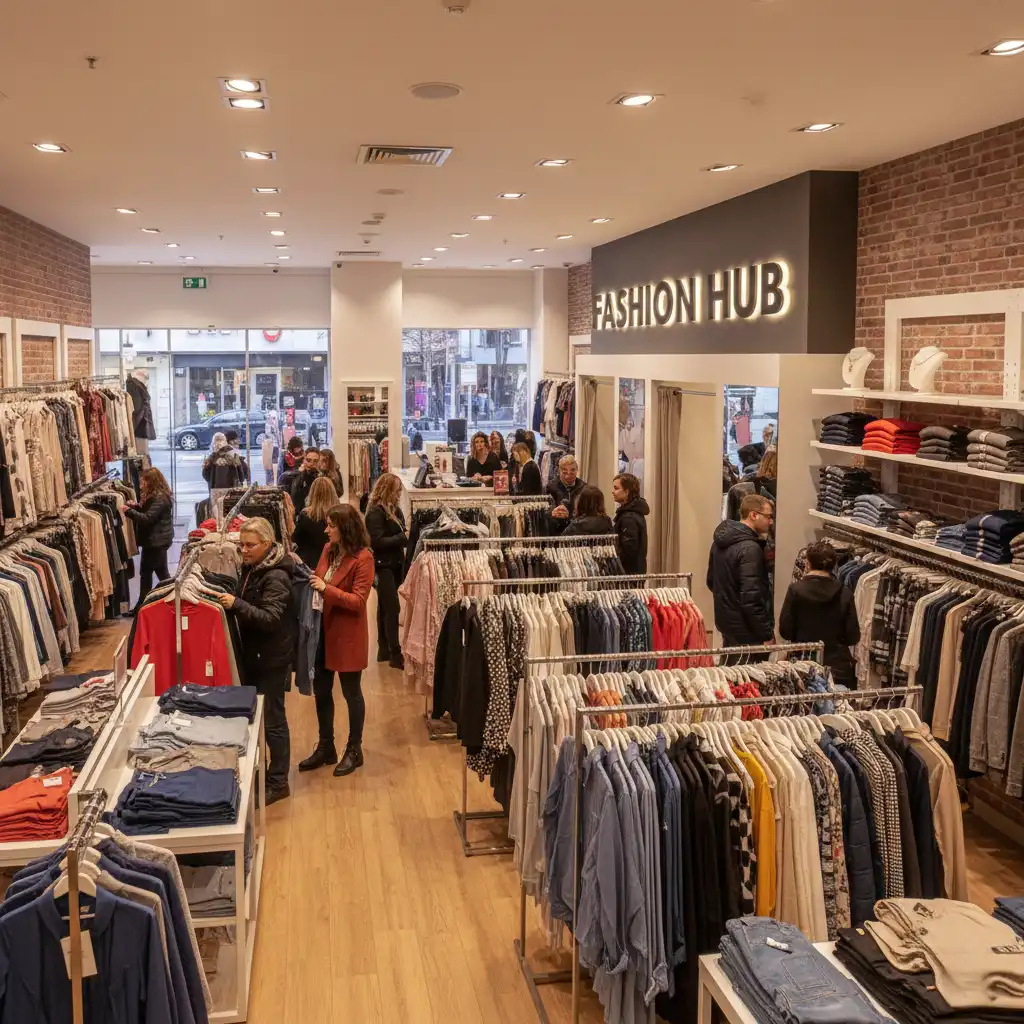
Empty shelves are the silent killer of apparel retail. When a shopper can't find their size, they don't wait — they leave, and the sale is gone. The root cause is almost never demand; it's inventory blindness: your POS says "in stock" while the shelf is empty, and replenishment runs on hope instead of data.
UHF RFID (860–960 MHz, EPC Global Gen2 / ISO 18000-6C) fixes this at the physics level. By tagging each garment with a unique electronic product code and reading hundreds of tags per second without line-of-sight, apparel retailers routinely reach 99%+ inventory accuracy and cut out-of-stocks by up to 50%. This guide covers the deployment reality — hardware, protocols, and the replenishment workflow that turns accurate counts into sales.

For the regulatory side of regional UHF bands and how RAIN RFID standards govern apparel tagging, see our breakdown of RAIN RFID standards for apparel loss prevention. This article focuses on the inventory-accuracy and replenishment half of the equation.
Why Manual Cycle Counts Fail Apparel Retail
Barcode audits are a structural mismatch for apparel. A single rack holds hundreds of SKUs across dozens of sizes; scanning each tag by hand is slow, and fatigue guarantees errors.
- Speed ceiling — A handheld barcode scanner processes one item at a time; a full-store count can take days.
- Accuracy floor — Manual audits typically land at 65–75% inventory accuracy, leaving "phantom inventory" (system says 5, shelf says 0).
- Labor cost — Repeated all-day counts pull staff off the sales floor.
- Line-of-sight — Barcodes must be visible and oriented; folded or mis-shelved items get missed.
A UHF RFID fixed reader or handheld reader reads 200–700 tags/second across a zone with no line-of-sight requirement. Walk a rack once and the count is done. Weekly or even daily cycle counts become practical, so replenishment orders reflect physical reality instead of stale guesses.

| Factor | Barcode / Manual Count | UHF RFID (EPC Gen2) |
|---|---|---|
| Scan speed | 1 item at a time | 200–700 tags/sec |
| Typical accuracy | 65–75% | 99%+ |
| Labor per count | Hours–days | Minutes |
| Line-of-sight | Required | Not required |
| Read range | Contact | Fixed: 3–8 m; Handheld: 0.5–3 m |
How UHF RFID Reaches 99%+ Inventory Accuracy
The accuracy gain comes from three technical facts:
- No line-of-sight, simultaneous reads — Passive UHF tags backscatter modulated energy from the interrogator. A circular-polarized antenna (6–9 dBi) captures tags at arbitrary orientations, which matters when garments are folded, stacked, or hung at angles.
- Anti-collision algorithms (Aloha / tree schemes) let one reader resolve hundreds of concurrently responding tags in a single dwell window without data collision.
- Unique EPC per item eliminates ambiguity — you know not just "5 blue shirts" but exactly which 5, enabling true item-level inventory.
Apparel presents low dielectric loss (textiles), so read ranges stay stable — unlike metal or liquid environments. The main failure mode is read-zone overlap: if two fixed readers' fields intersect, the same tag is counted twice. Solve it with read-zone de-duplication (suppress duplicate EPCs within a time window) or by gating antennas to distinct physical zones.
Real-Time Replenishment: Closing the "Last 100 Feet"
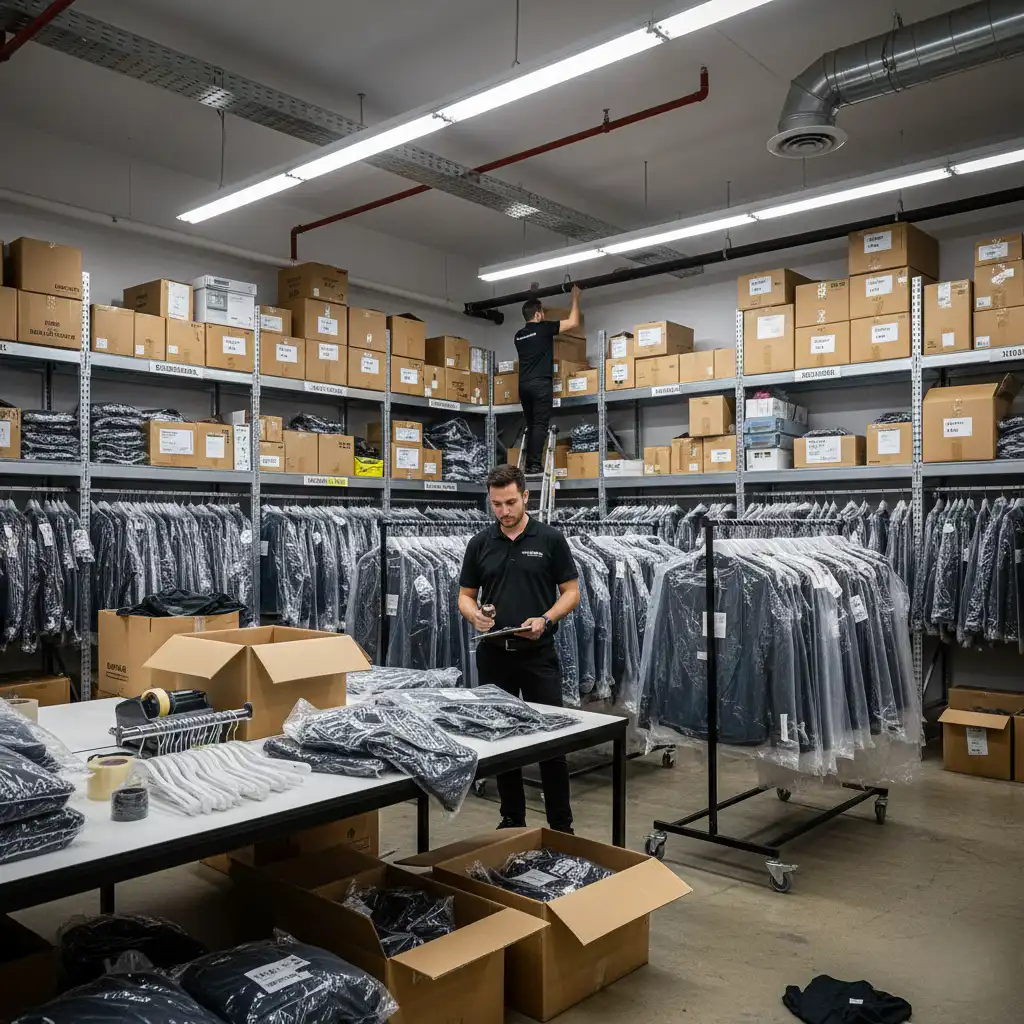
Most out-of-stocks don't happen because stock is missing from the building — it's sitting in the backroom while the floor runs empty. RFID closes that gap by linking the sales floor to replenishment in real time.
Workflow:
- A POS transaction decrements the floor count in the inventory system.
- When a size/style drops below a safety threshold, the system fires a replenishment alert to the handheld or fixed reader at the backroom–floor transition point.
- Staff pull the exact bin/rack — no hunting — and the floor is restored within minutes.
| Step | Traditional | RFID-Supported |
|---|---|---|
| Trigger | Visual empty-shelf check | Automatic threshold alert |
| Location | Search entire backroom | System identifies exact bin |
| Reaction time | Minutes–hours | Seconds |
| Outcome | Lost peak-hour sales | Continuous availability |
Integration is straightforward: Fongwah readers expose TCP/IP, RS232, USB, UART, and Wiegand host interfaces and ship with SDKs for C++, C#, Java, Python, and Android. Map the reader's tag events to your POS/WMS through the SDK, and replenishment becomes an automated logistics loop rather than a manual hunt.
Source Tagging at the Factory: Faster Inbound
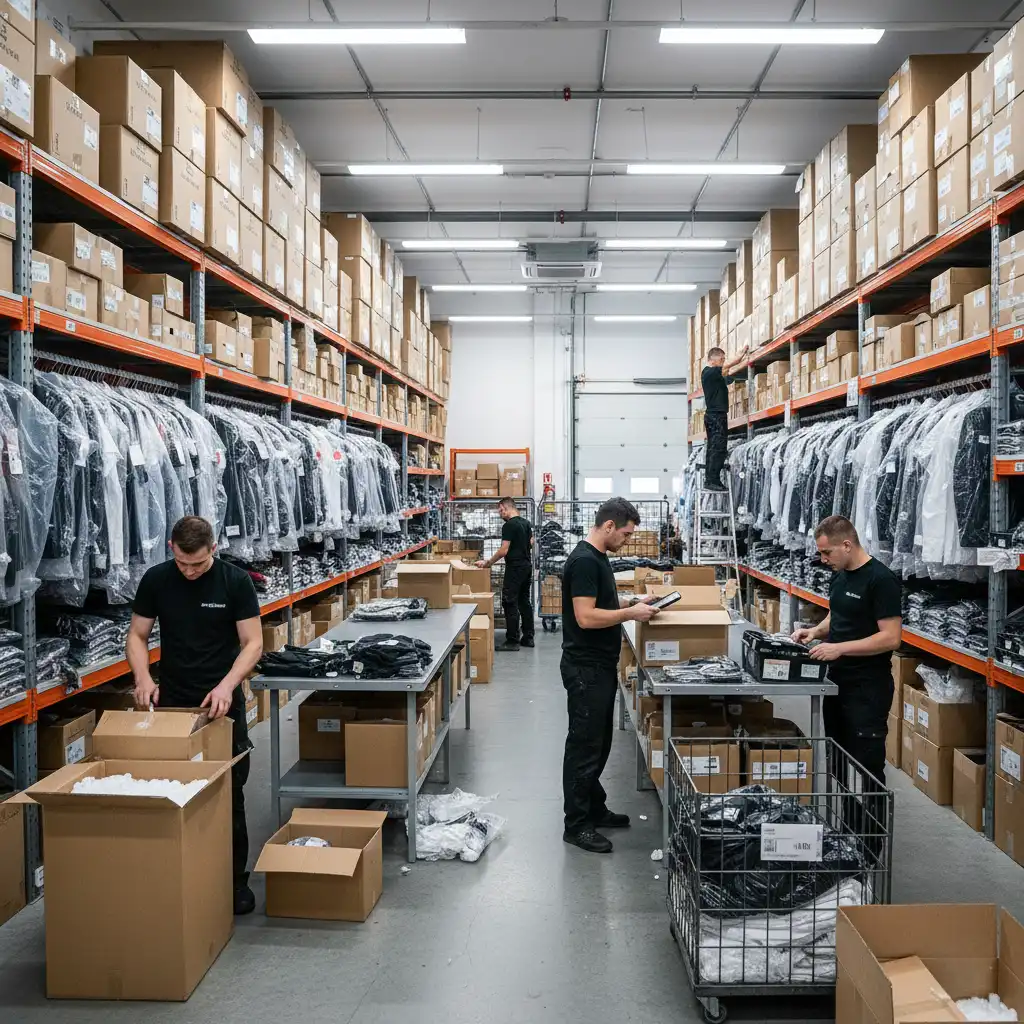
The fastest way to cut out-of-stocks is to stop bad data at the dock. Source tagging applies the UHF EPC label during garment manufacturing, so every item arrives pre-encoded.
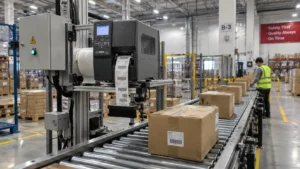
On delivery, you don't open cartons one by one. A high-performance UHF reader scans the closed box and verifies contents against the advance shipping notice (ASN) in seconds. Missing or wrong items are caught immediately, and fresh stock hits the floor in minutes instead of sitting on the receiving dock for days.
| Metric | Traditional Receiving | RFID Source-Tag Receiving |
|---|---|---|
| Verification | Open box, scan each item | Scan closed carton instantly |
| Time per box | 5–10 min | 5–10 sec |
| Data quality | High error rate | Near-100% verification |
| Floor availability | Delayed | Immediate |
Deploying RFID in a Live Apparel Store
A practical store deployment mixes two reader classes:
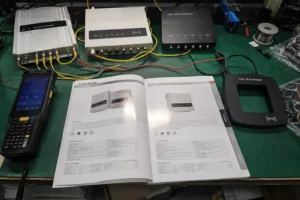
- Fixed readers at transition points (backroom↔floor, exit, counting stations) for continuous, hands-free tracking. Choose integrated UHF readers with 6–9 dBi circular-polarized antennas for apparel.
- Handheld readers for mobile cycle counts and exception handling — typically 0.5–3 m read range with a built-in or clip-on antenna.
Key specs to validate before purchase:
- Frequency — UHF 860–960 MHz, region-locked to ETSI (865–868 MHz) or FCC (902–928 MHz) per deployment market.
- Read rate — ≥200 tags/sec sustained for fixed readers.
- Air interface — EPC Gen2v2 / ISO 18000-6C with anti-collision.
- Interfaces — TCP/IP for networked fixed readers; USB/UART for handhelds.
- Thermal dissipation — fixed readers in enclosed ceilings need adequate heat management for 24/7 operation.
Why Fongwah for Apparel RFID
As an RFID hardware manufacturer, Fongwah supports apparel retailers and their system integrators directly:
- OEM/ODM customization — reader form factor, antenna, and firmware tuned to your store layout and tag mix.
- Full SDK support — C++, C#, Java, Python, and Android libraries for POS/WMS integration without a middleware tax.
- Free sample evaluation — validate read range and anti-collision behavior on your actual garments before committing volume.
- Factory-direct quality control — every module calibrated against spec at incoming inspection, with S-parameter reports available.
For module-level options, see the Fongwah RFID reader module catalog. For a broader selection framework, our RFID reader buying guide maps fixed, handheld, and integrated readers to deployment scenarios.
Conclusion
RFID doesn't just count faster — it makes inventory trustworthy. For apparel retail, UHF EPC Gen2 tagging plus a mixed fixed/handheld reader deployment delivers 99%+ accuracy and cuts out-of-stocks by up to 50%, directly protecting revenue on every peak-hour sale.
Contact Fongwah Technology through our factory-direct RFQ portal to request free samples and start a technical evaluation matched to your store layout.