
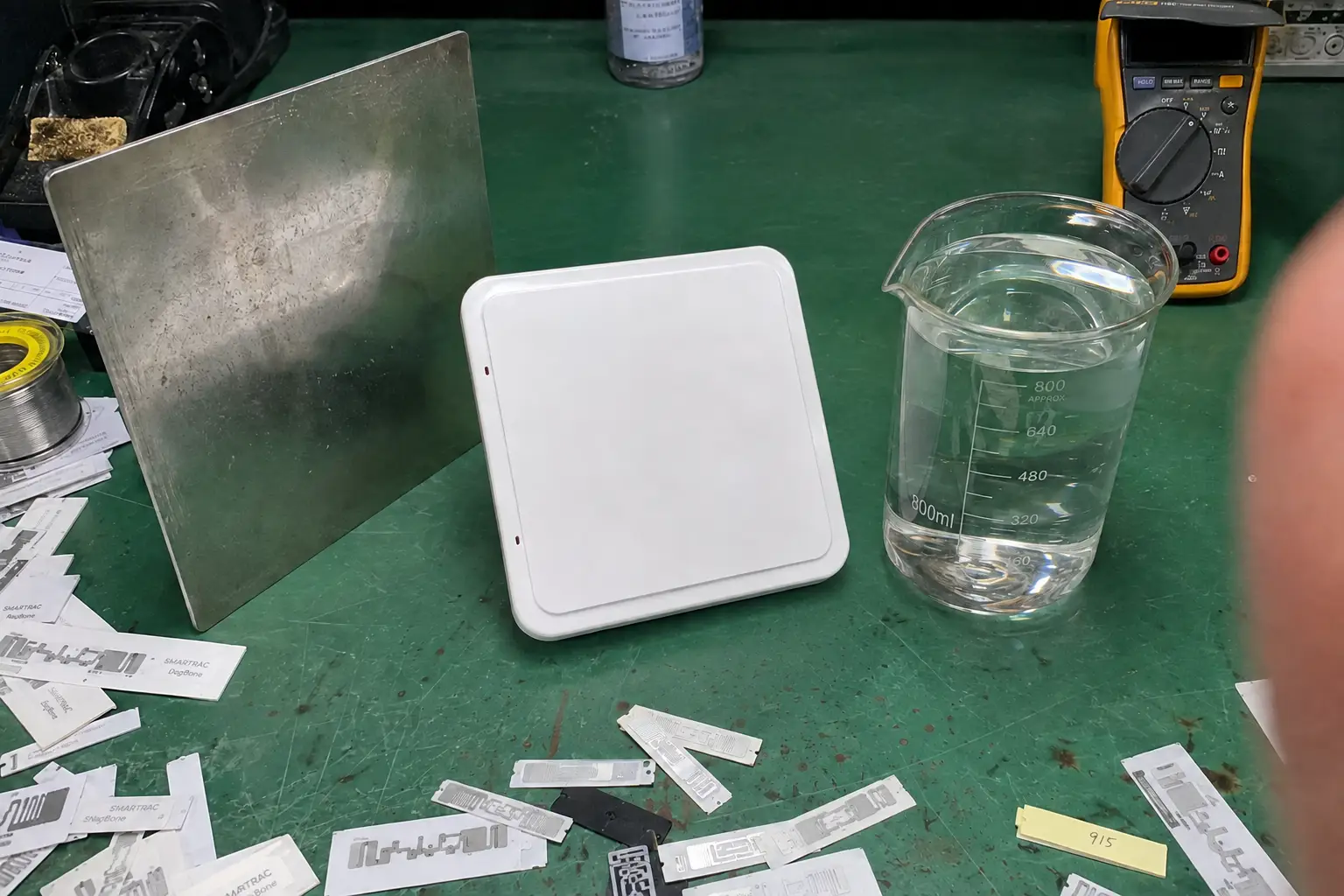
Failed RFID scans are usually traceable to signal blockage. Identifying the responsible material or condition is the first step toward a working design.
The main materials that block RFID signals are metals, especially water. Metal reflects radio waves, causing interference. Water absorbs radio wave energy, weakening the signal. Other dense materials and radio frequency interference can also disrupt RFID performance.
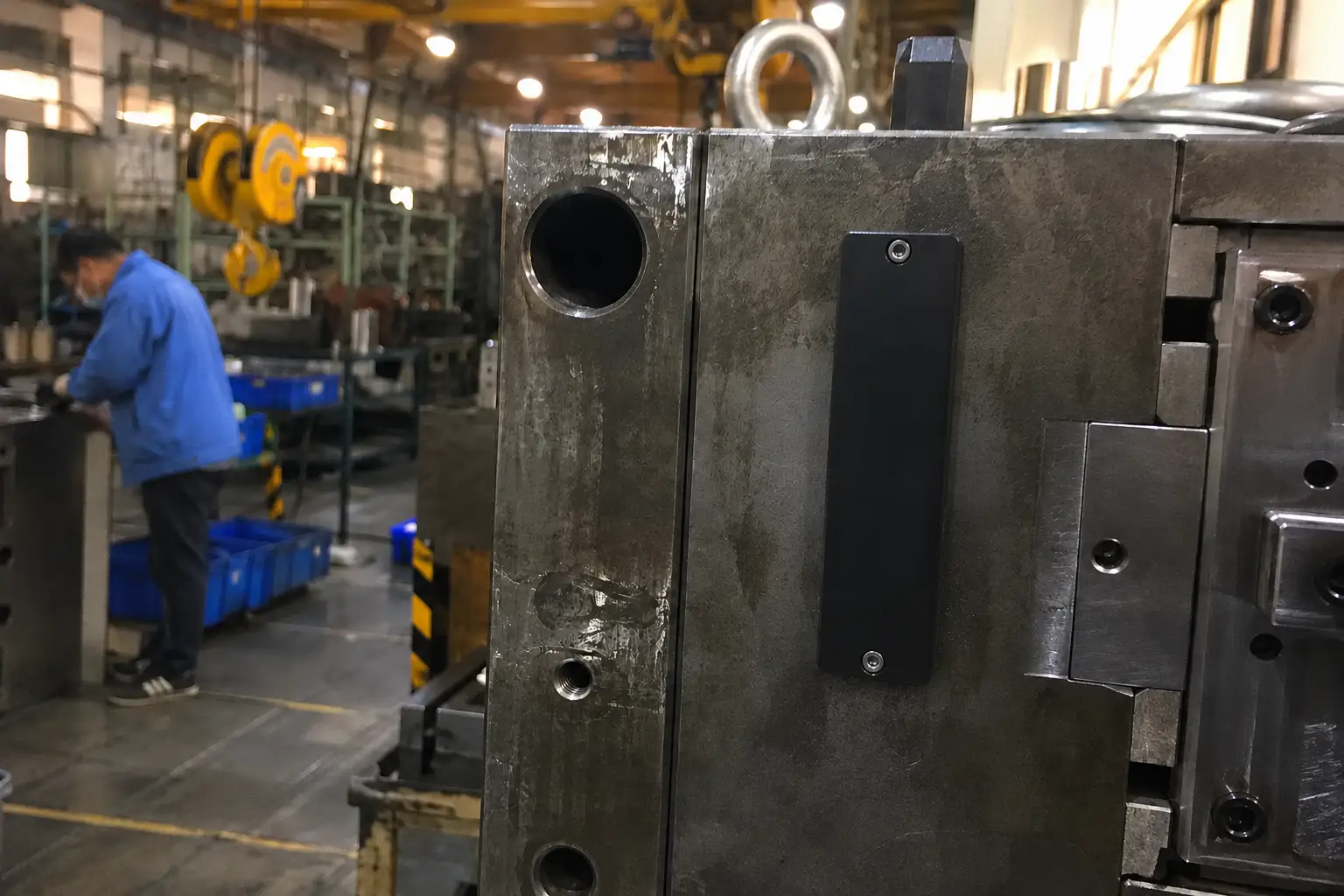
With the headline answer in place, each issue is worth examining in detail. Understanding the mechanism behind a failure is the most useful step in product selection, because it lets the correct tag and placement be chosen at the specification stage rather than discovered after installation. The sections below break down the causes.
Why Do Metals Interfere with RFID Signals?
A standard RFID tag mounted directly on a metal surface will typically return no reads, which is enough on its own to derail an asset tracking project.
Metal surfaces reflect the radio waves sent by an RFID reader. This creates signal chaos, preventing the tag's antenna from powering on and transmitting its data back to the reader.
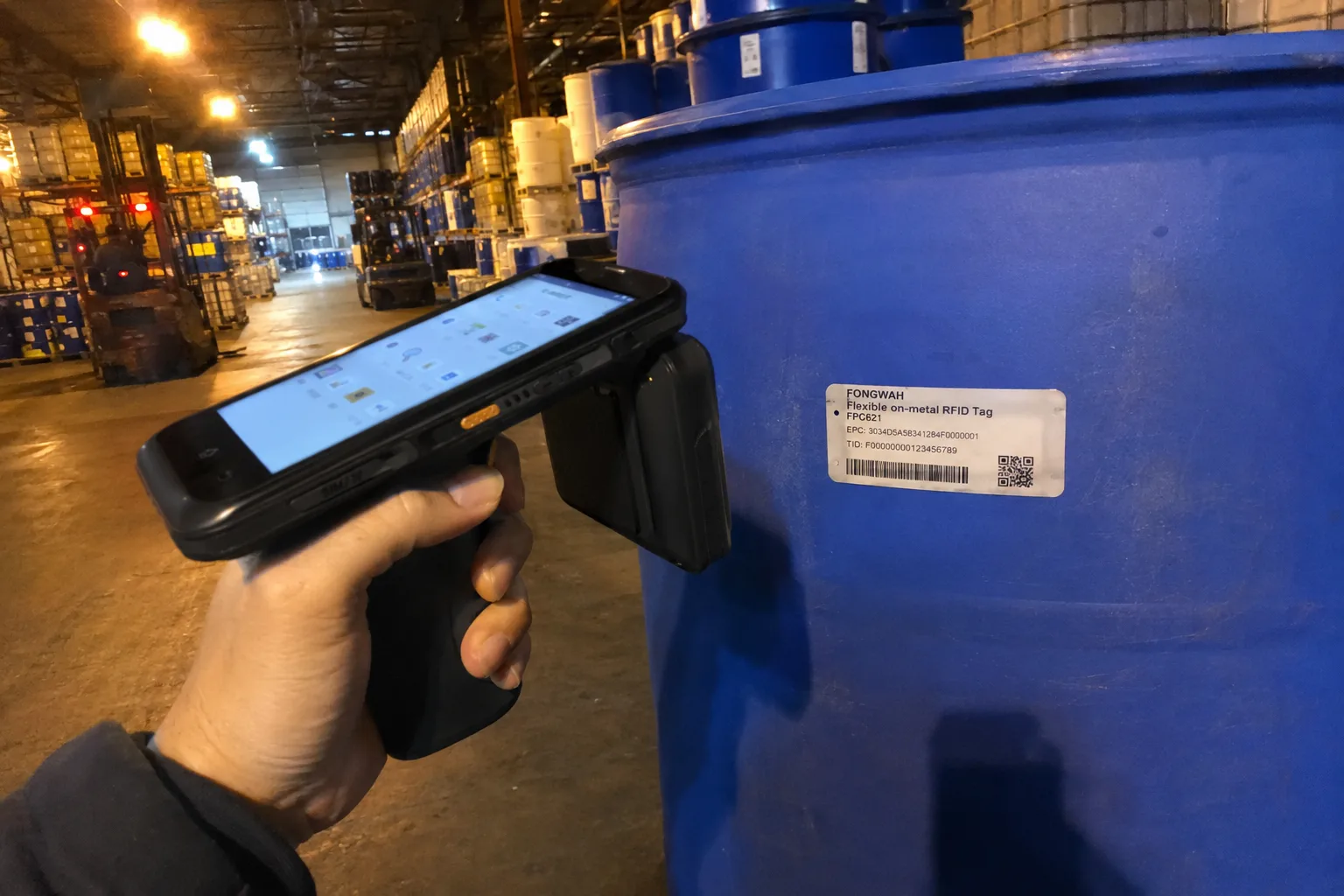
Metal is the most common obstacle in RFID deployments. The effect comes down to two mechanisms: reflection and detuning. When a reader emits a signal, a metal surface behaves like a mirror, scattering the waves in multiple directions. The tag receives disordered, out-of-phase energy and cannot power itself on. At the same time, the metal changes the electrical properties of the tag's antenna—it "detunes" it—so the tag no longer operates at its designed frequency.
The practical remedy is an on-metal tag. These tags incorporate a foam insulation layer and an antenna geometry that treats the metal surface as part of the system, often improving rather than degrading the signal. The takeaway for specification is straightforward: the mounting surface should be confirmed before tag selection, because it is the single most decisive variable in many RFID projects.
Tag Performance on Different Surfaces
| Tag Type | Mounting Surface | Expected Read Performance |
|---|---|---|
| Standard UHF Tag | Plastic Bin | Excellent |
| Standard UHF Tag | Wooden Pallet | Good |
| Standard UHF Tag | Metal Shelf | None to Very Poor |
| Anti-Metal Tag | Metal Shelf | Excellent |
Can Liquids and Other Dense Materials Block RFID Waves?
Items containing liquids—beverages, chemicals, or aqueous solutions—often show unexpectedly low read rates, which complicates inventory processes.
Yes. Liquids with high water content are very effective at blocking RFID signals. They don't reflect the signal like metal, but instead absorb its energy, greatly reducing the read range.
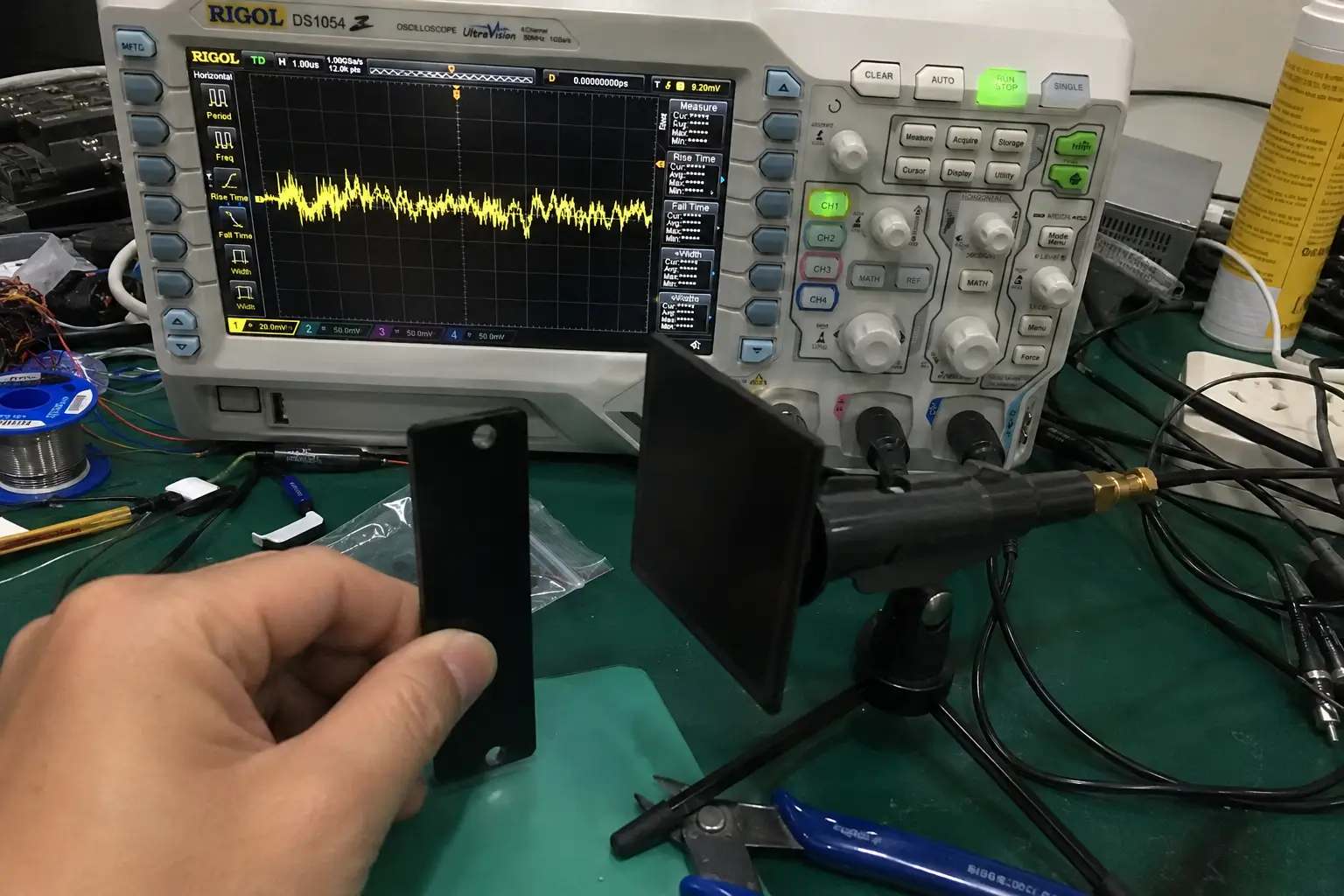
UHF RFID operates at frequencies that water molecules absorb readily. The radio waves from the reader strike the liquid and their energy is dissipated as molecular vibration, leaving little to power the tag. The result is a shortened read range or no read at all. This is why cases of water bottles are difficult to read while cases of oil—which has very low water content—are not.
Other dense materials can also attenuate the signal. Thick paper stacks or dense wood have a dampening effect, though usually far less than water. For products containing liquids, the usual approach is to select a tag suited to liquid-rich environments and to test placement; in many cases, mounting the tag on the outside of a case with a small air gap is enough to obtain a reliable read.
Signal Impact of Various Materials
| Material | Primary RFID Frequency | Effect on Signal |
|---|---|---|
| Water / Aqueous solutions | UHF (860-960 MHz) | High Absorption (Severe) |
| Water / Aqueous solutions | HF (13.56 MHz) | Low Absorption (Minimal) |
| Oils / Fats | UHF (860-960 MHz) | Very Low Absorption (Minor) |
| Dense Wood / Paper | UHF (860-960 MHz) | Low to Medium Absorption |
Are There Other Factors That Can Disrupt RFID Performance?
When tags are not near metal or liquid yet reads still fail, the cause is often environmental or application-specific and harder to diagnose on site.
Definitely. Tag orientation, distance from the reader, and interference from other radio frequency (RF) devices can all disrupt performance. A perfectly good tag can fail if it is not positioned correctly.
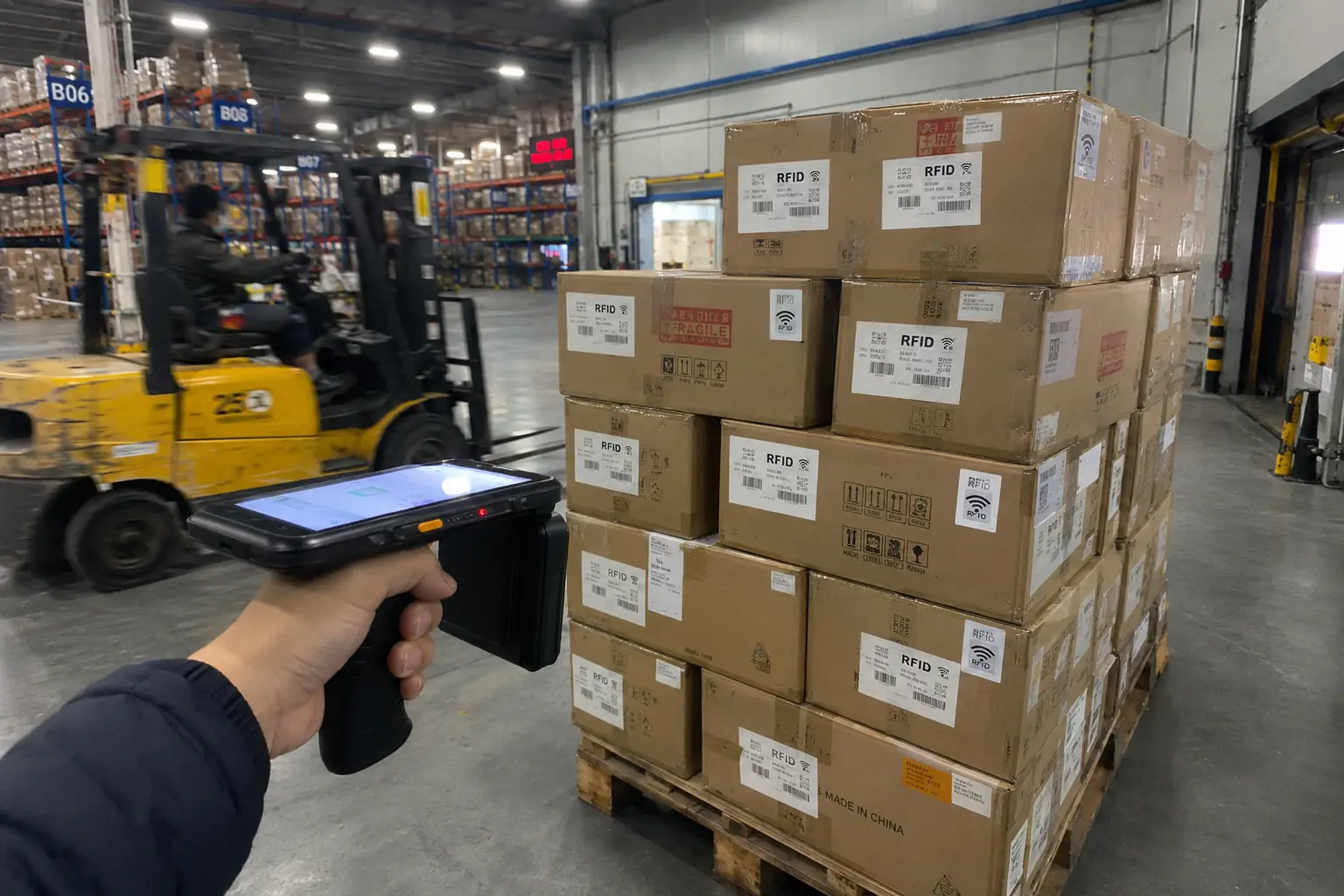
Beyond a tag's immediate surroundings, several environmental and application-specific factors affect read rates. Accounting for them during planning prevents performance problems after installation.
Tag Orientation
The antennas inside the reader and the tag must be aligned to some degree. Think of it like trying to have a conversation in a loud room; you need to face the person you're talking to. If a tag is facing the wrong way relative to the reader's antenna, the signal transfer will be poor, and the tag may not be read, even if it's very close.
Radio Frequency Interference (RFI)
Your facility is full of radio signals. Wi-Fi routers, cellular networks, and even large electric motors can create "noise" in the RF spectrum. If this noise is strong enough in the RFID frequency band, it can drown out the weak signal coming back from a tag, causing the reader to miss it.
Reader-to-Tag Distance and Obstructions
This is an obvious one, but it's still a factor. Every RFID system has a maximum read range. The signal gets weaker the farther it travels. Any physical obstruction between the reader and the tag, even if it's not metal or liquid, will reduce this range. A successful system design always includes a site survey to test ranges in the actual environment.
Common Environmental Troubleshooting
| Factor | Problem Description | Common Solution |
|---|---|---|
| Orientation | Tag antenna is not aligned with the reader antenna. | Test different tag placements and angles. |
| RFI | Other devices create RF noise, disrupting the signal. | Conduct a site survey; use shielded readers or cables. |
| Tag Collision | Too many tags in the reader's field at once. | Lower reader power; use a reader with good anti-collision algorithms. |
Conclusion
Most RFID read failures trace back to a short list of causes: metal reflection and detuning, liquid absorption, tag orientation, RF interference, and distance or physical obstruction. Selecting the correct tag for the mounting surface and material, then validating the design with a site survey, is what turns these known blockers into a reliable system.
Frequently Asked Questions
Q: Why does metal block RFID signals?
A: Metal both reflects the reader's radio waves and detunes the tag's antenna, so the tag cannot power on or transmit. The effect is strongest at UHF frequencies.
Q: Does water or liquid affect RFID performance?
A: Liquids with high water content absorb UHF radio waves and shorten read range, while oils absorb little and HF bands are far less affected. Placement away from dense liquid volumes helps maintain reads.
A: They use a foam spacer layer between the tag and the metal surface, which lets the tag treat the metal as part of its antenna and often gain signal. They are designed for mounting directly on metal assets.
Q: What causes RFID tag collision?
A: Tag collision occurs when too many tags are in the reader's field at once and respond simultaneously, preventing clean reads. Lowering reader power or using anti-collision algorithms reduces it.
Q: How do you verify RFID will work in a specific site?
A: A site survey measures actual read performance on location, accounting for metal, liquid, RF interference, and tag orientation. Real-world testing is recommended because interference varies by environment.