RFID terminology can be difficult to navigate when specifying equipment. A basic understanding of how the technology works is a practical prerequisite for selecting the right components.
A plain explanation of what RFID technology is helps before the components.
RFID uses radio waves to send information between a tag and a reader. The reader sends a signal, which powers the tag. The tag then sends back its unique data. It's a wireless conversation.
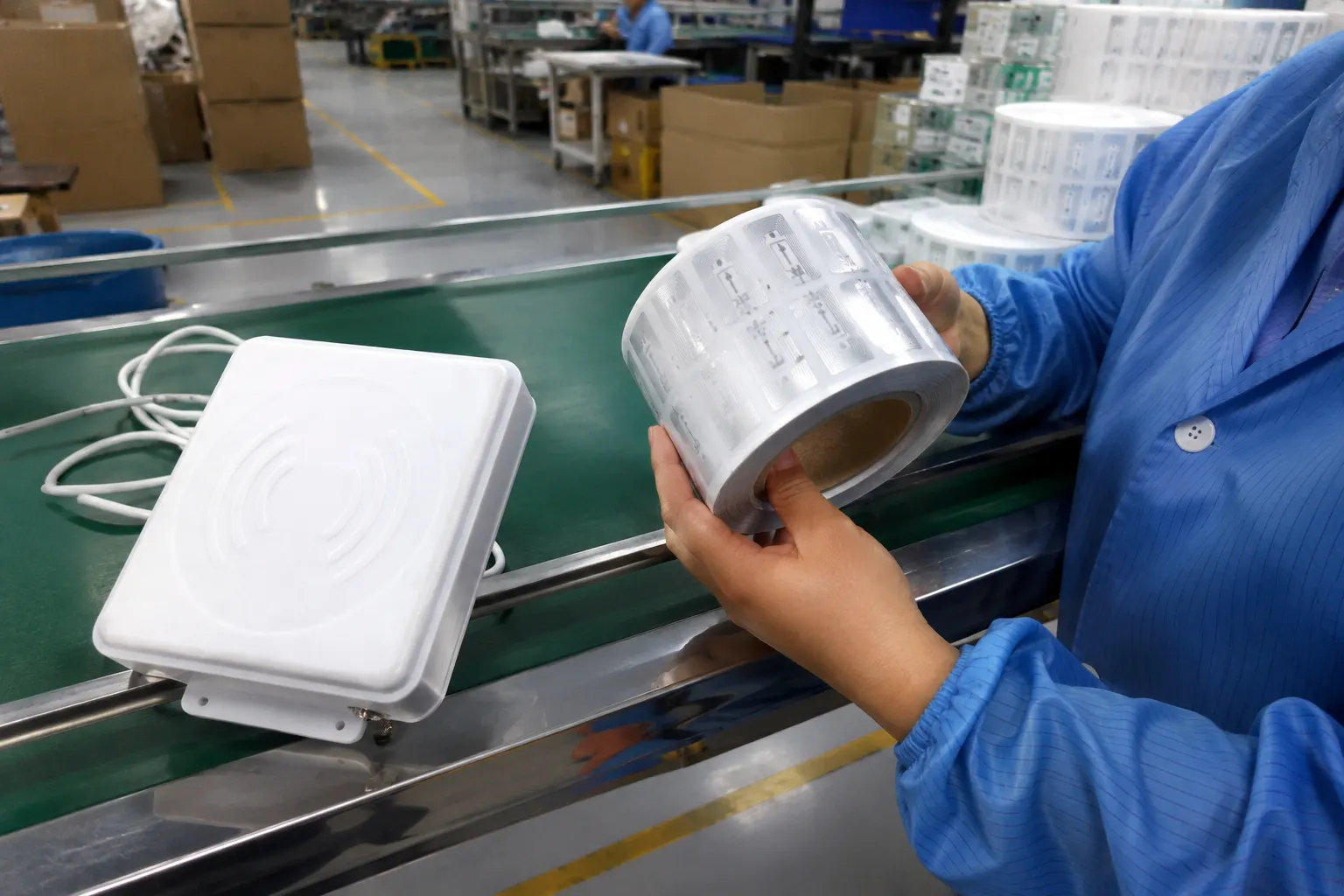
That is the high-level model. To make sound purchasing decisions for a specific project, it helps to understand the individual parts of that exchange. An RFID system is more than a tag and a reader; each element has distinct requirements, and getting the details right is what separates a working deployment from a costly one. The sections below break down the essential components.
To go deeper, see our guide on how RFID works and what it can track in a B2B operation.
What are the core components of an RFID system?
An RFID system is built from three main parts. Specifying the wrong component for the application is a common way to overrun budget or miss performance targets, so it is worth reviewing each one's role before purchasing.
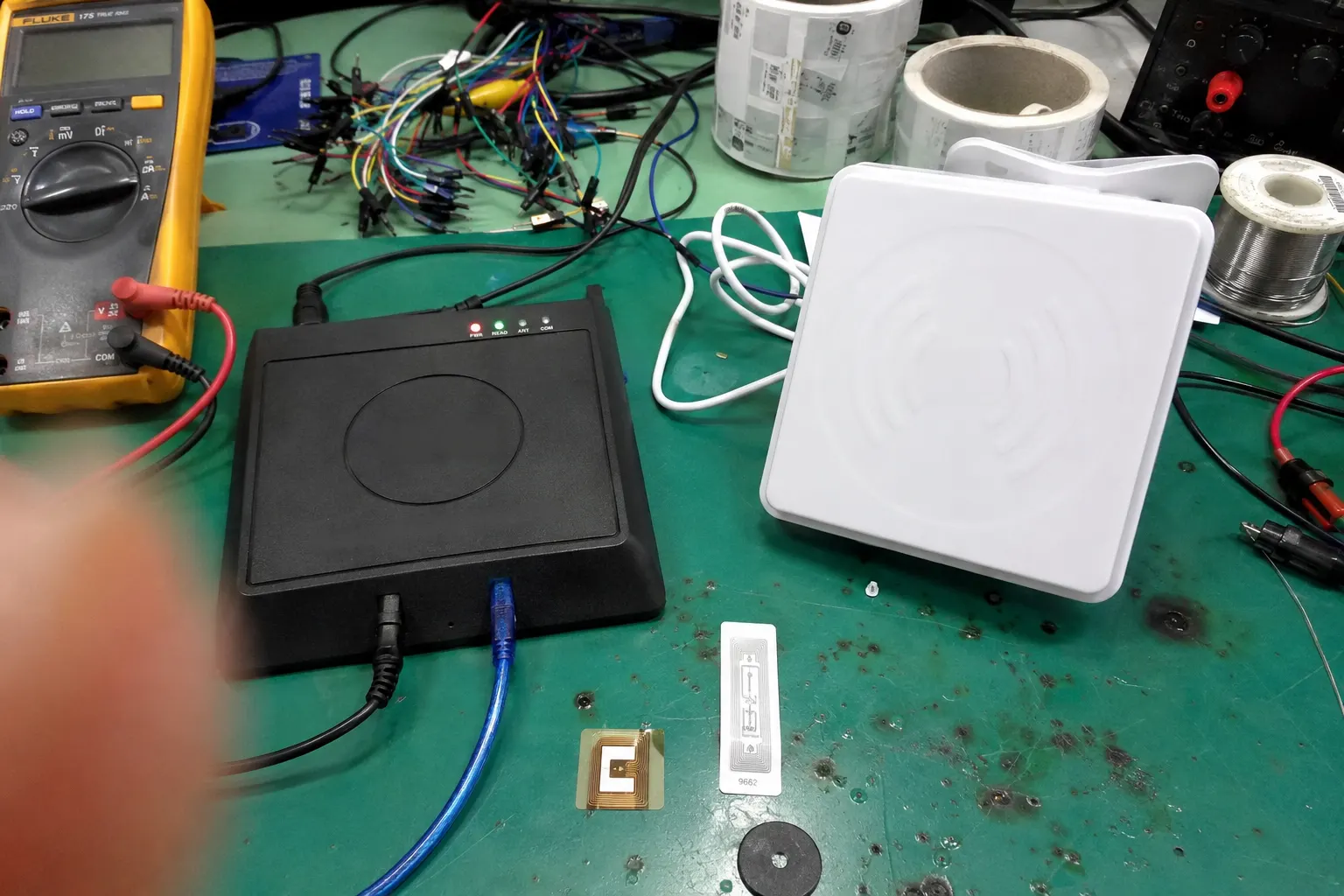
An RFID system has three main parts: the RFID tag, the RFID reader (or interrogator), and the antenna. The tag holds the data, the reader reads it, and the antenna sends and receives the radio signals.
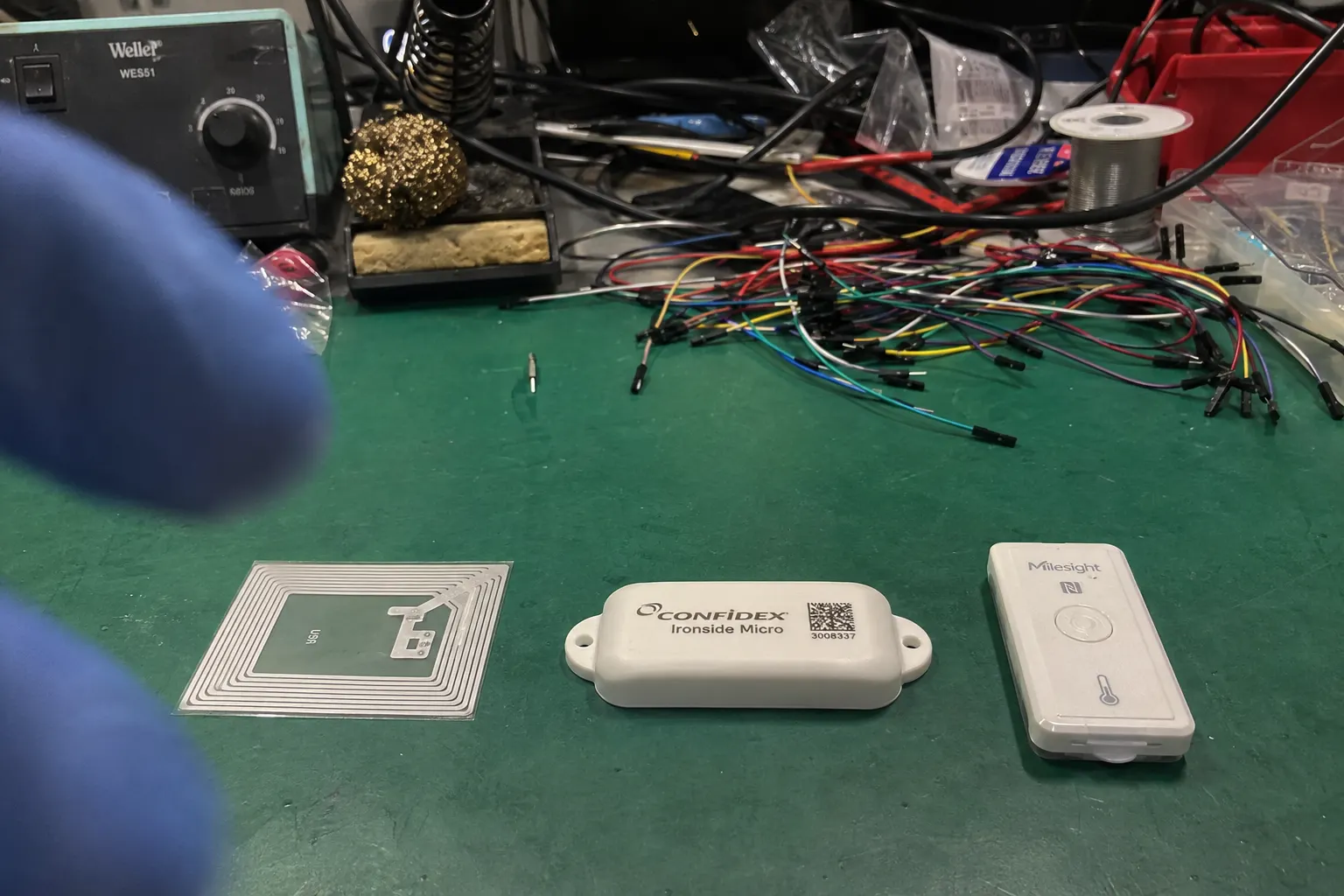
Each component is simple in isolation but critical in operation; a mismatch between them—such as a high-end reader paired with a low-grade, incompatible antenna—is a frequent cause of underperforming systems. Understanding what each part does is the first step to avoiding that pitfall.
The Tag (Data Carrier)
The tag is the heart of your data collection. It's a small microchip attached to an antenna, usually on a label or inside a hard case. Its only job is to store a unique identifier and send it when asked.
The Reader (The Brain)
The reader is the brain of the operation. It generates the radio waves that the antenna sends out. It then listens for the tags' responses, decodes the data, and sends it to a computer or other system.
The reader powers the tag and reads its data, as detailed in our dedicated guide.
The Antenna (The Messenger)
The antenna is the bridge between the reader and the tag. It converts the reader's electrical signal into radio waves and broadcasts them. It also captures the faint radio waves coming back from the tag.
| Component | Primary Function | Key Buying Considerations |
|---|---|---|
| RFID Tag | Stores and transmits a unique ID | Memory size, physical form, environment resistance |
| RFID Reader | Powers tags and reads their data | Fixed vs. mobile, connectivity options, power output |
| Antenna | Transmits and receives radio waves | Frequency, polarization, physical size, and gain |
Tag selection starts with the power source, because it directly determines read range and unit cost. The two main categories behave very differently in the field.
RFID tags get power in two main ways. passive RFID tags are powered by the reader's radio waves. active RFID tags have their own internal battery. This difference is critical for determining a tag's read range and cost.
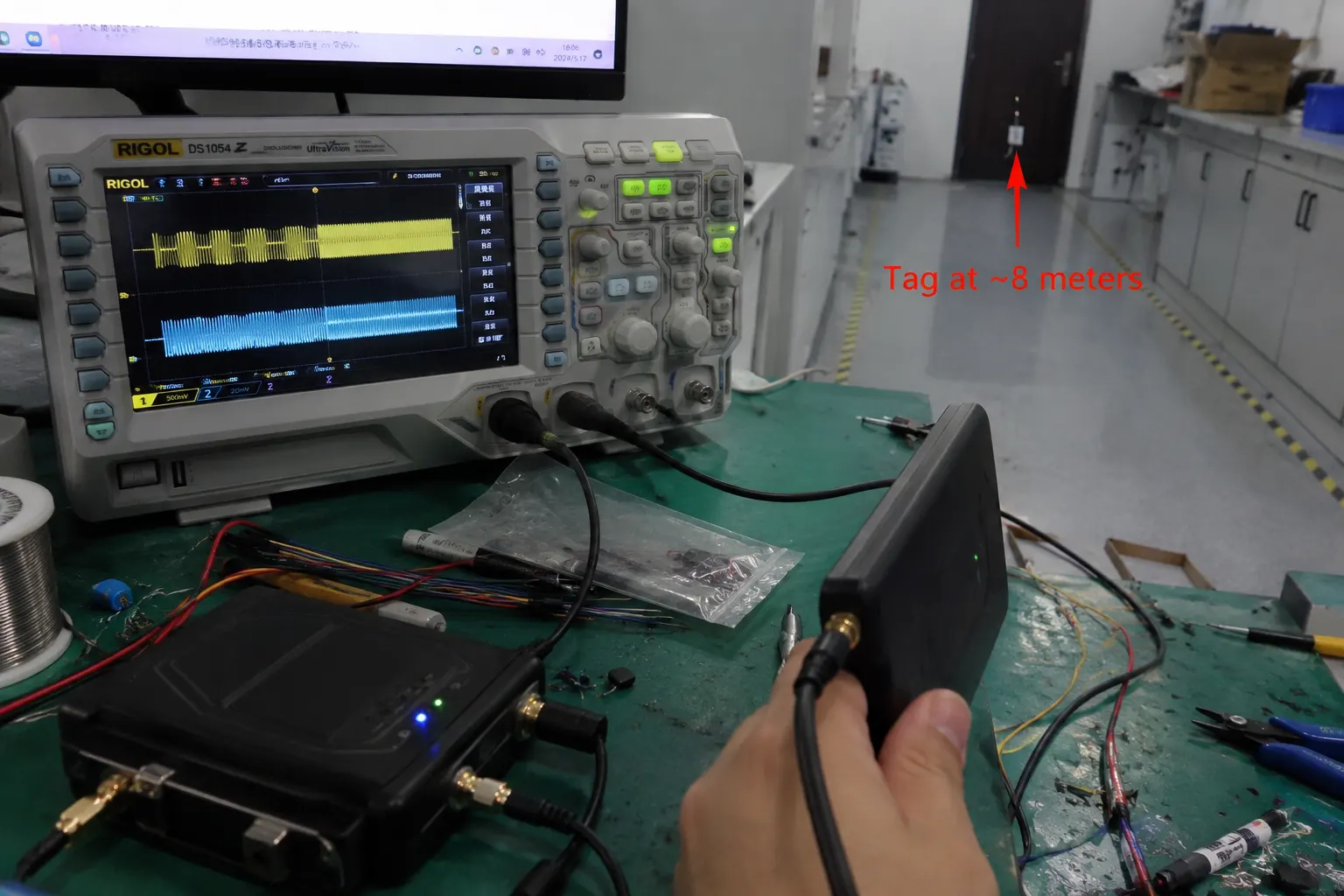
A frequent deployment failure is applying passive tags to a long-range use case—such as tracking large equipment across a storage yard—where the read distance drops to a few feet and the system becomes effectively unusable. The application requirement and budget almost always point to the correct choice: a long-range active tag is unnecessary for a checkout-counter scan, just as a passive tag will not serve a wide-area asset-tracking project.
Passive Tags
These are the most common and cheapest tags. They have no internal power source. They wait for a signal from a reader. The reader's signal is strong enough to momentarily power the tag's chip, which allows the tag to send back its information.
Active Tags
These tags have their own battery. Because they have an internal power source, they can broadcast their signal over a much longer distance. They are larger, more expensive, and have a limited lifespan because the battery will eventually die.
Semi-Passive (BAP) Tags
There is also a hybrid category. A semi-passive tag, or Battery-Assisted Passive (BAP) tag, uses a battery. But the battery is only used to power the chip, perhaps for a sensor. The tag still uses the reader's signal to communicate back. This gives them a longer read range than passive tags but a longer battery life than active tags.
| Feature | Passive RFID | Active RFID |
|---|---|---|
| Power Source | Harvested from the reader's signal | Internal battery |
| Read Range | Short to medium (inches to ~30 feet) | Long (up to 300+ feet) |
| Cost Per Tag | Very low ($0.05 - $1) | High ($5 - $50+) |
| Lifespan | Very long (20+ years) | Limited by battery (3-10 years) |
| Best For | Retail, supply chain, access control | High-value assets, container tracking, tolling |
What affects the read range and accuracy?
Inconsistent reads render an RFID investment unreliable. Several factors—some tied to hardware choice, some to the physical environment—govern system performance.
Read range is affected by the tag type (active vs. passive), reader power, and antenna design. Accuracy is impacted by environmental factors like metal and liquids, and by tag orientation. Choosing the right components for your environment is key.
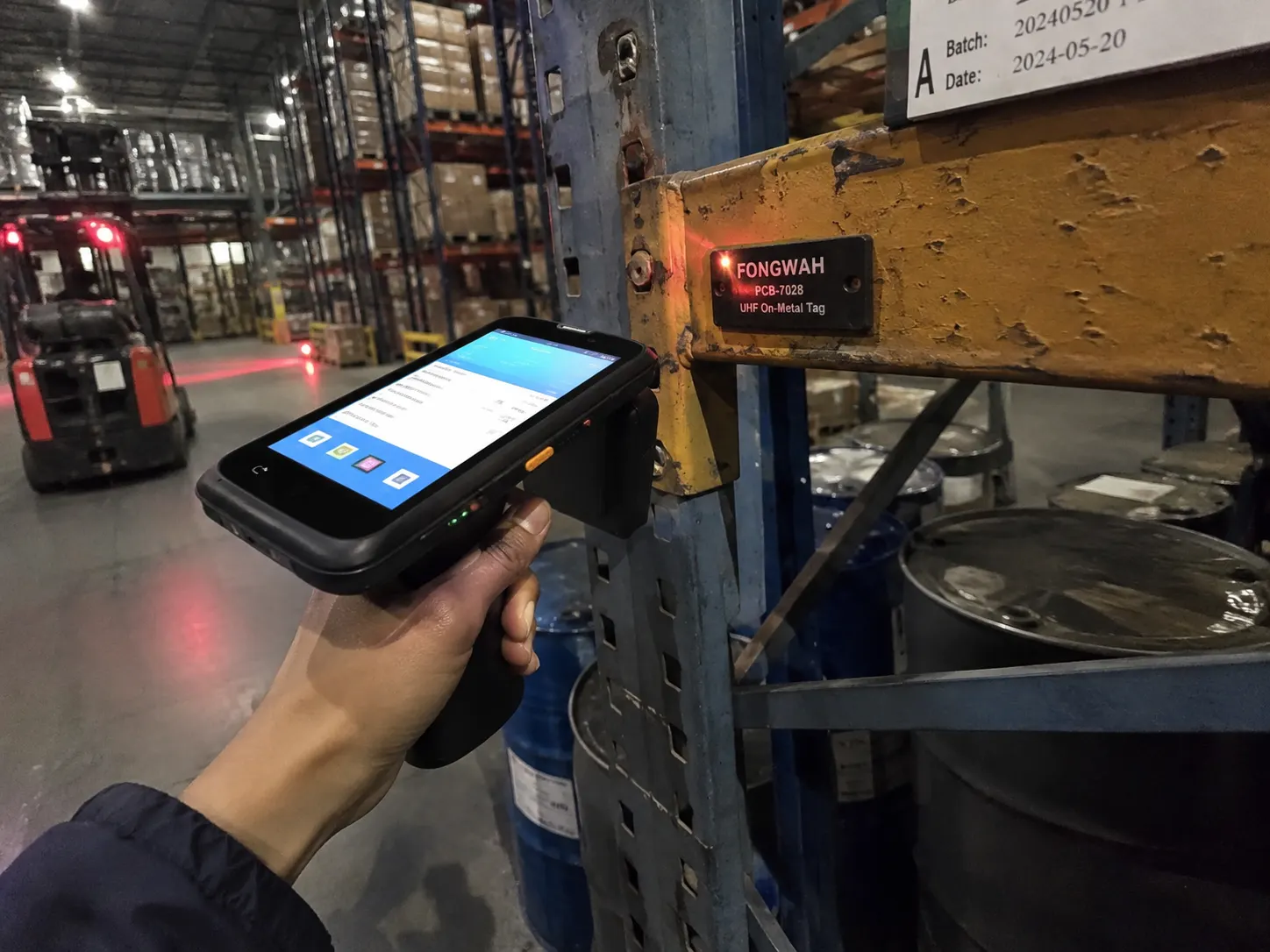
Metal is one of the most common sources of read failure. Tracking metal industrial parts without the right tag produces near-zero read rates, because the radio waves are reflected or absorbed by the metal surface. The standard remedy is to use anti-metal tags engineered for such surfaces. In practice, the single most useful detail a buyer can give a supplier is a precise description of the operating environment—Fongwah treats this as the first input when scoping a deployment.
Component Factors
The hardware you choose is the foundation. A powerful reader can't compensate for the wrong tag frequency. UHF (Ultra-High Frequency) gives you a longer read range, but it's more sensitive to interference. HF (High Frequency) has a shorter range but works an inch from metal and water. The antenna's size and polarization also have a huge impact.
Environmental Factors
This is where most projects run into trouble. Metal surfaces will reflect radio waves, creating dead zones where tags can't be read. Water and other liquids absorb radio waves, which can dramatically reduce read range, especially with UHF systems. Even having many tags crowded together can cause "tag collision," where the reader struggles to read them all at once.
| Factor | Impact on Performance | Buyer's Tip |
|---|---|---|
| Frequency (UHF vs. HF) | UHF has a longer range and faster read speed. HF is better near metals/liquids. | Match the frequency to the items you are tracking and the environment. |
| Metal Surfaces | Reflects and interferes with radio waves, severely reducing read range. | Always use specially designed "anti-metal" or "on-metal" tags. |
| Liquids (Water) | Absorbs UHF radio waves, acting as a barrier. | For liquid items, test thoroughly or consider using HF technology. |
| Antenna Polarization | A mismatch between tag and reader antenna alignment reduces signal. | Use circular polarized antennas when tag orientation is unpredictable. |
Environmental blockers such as metal and liquids are covered in our review of what blocks RFID. |
Conclusion
The operating principles above—component roles, passive vs. active power, and the environmental factors that govern read range—form the baseline for component selection. Matching tag type, frequency, and antenna to the specific application and environment is what turns these basics into a reliable deployment.
Frequently Asked Questions
Q: What are the three main components of an RFID system?
A: An RFID system is built from three parts: a tag that stores a unique ID, a reader that powers and reads the tag, and an antenna that transmits and receives the radio signals. A mismatch between these components is a frequent cause of underperforming systems.
A: Passive tags have no battery and are powered by the reader's radio waves, while active tags carry their own battery to transmit over a longer distance. For the full operating mechanism, see how RFID tags work.
A: Passive tags typically read from a few inches up to about 30 feet, and active tags reach 300 feet or more. Range also depends on the frequency band and reader power.
A: Passive tags generally cost between $0.05 and $1 per unit, while active tags run from $5 to $50 or more. The battery and longer-range electronics drive the active-tag premium.
A: Passive tags can last 20 years or more because they have no battery to fail, whereas active tags are limited to roughly 3–10 years by battery life.