Most RFID programs do not collapse because the silicon failed. They collapse because someone treated the rollout like a software install and skipped the work that decides whether the hardware ever performs in the real world. The pattern repeats across every sector we ship to. Spec sheets look identical, yet one deployment ships in a quarter and the other slips two. The difference is almost always the planning discipline described here.
The three mistakes that sink RFID rollouts are an unmanaged RF environment, data that never reaches the host system, and a workforce that quietly reverts to manual methods. Each one is preventable with a pre-deployment checklist that assigns an owner, a gate, and a pass criterion before a single reader is mounted.
A checklist only works if it has teeth. The version below is built around the idea that no phase closes until a named person signs off against a measurable standard. That is what turns a generic plan-better lecture into a budget-protecting control.
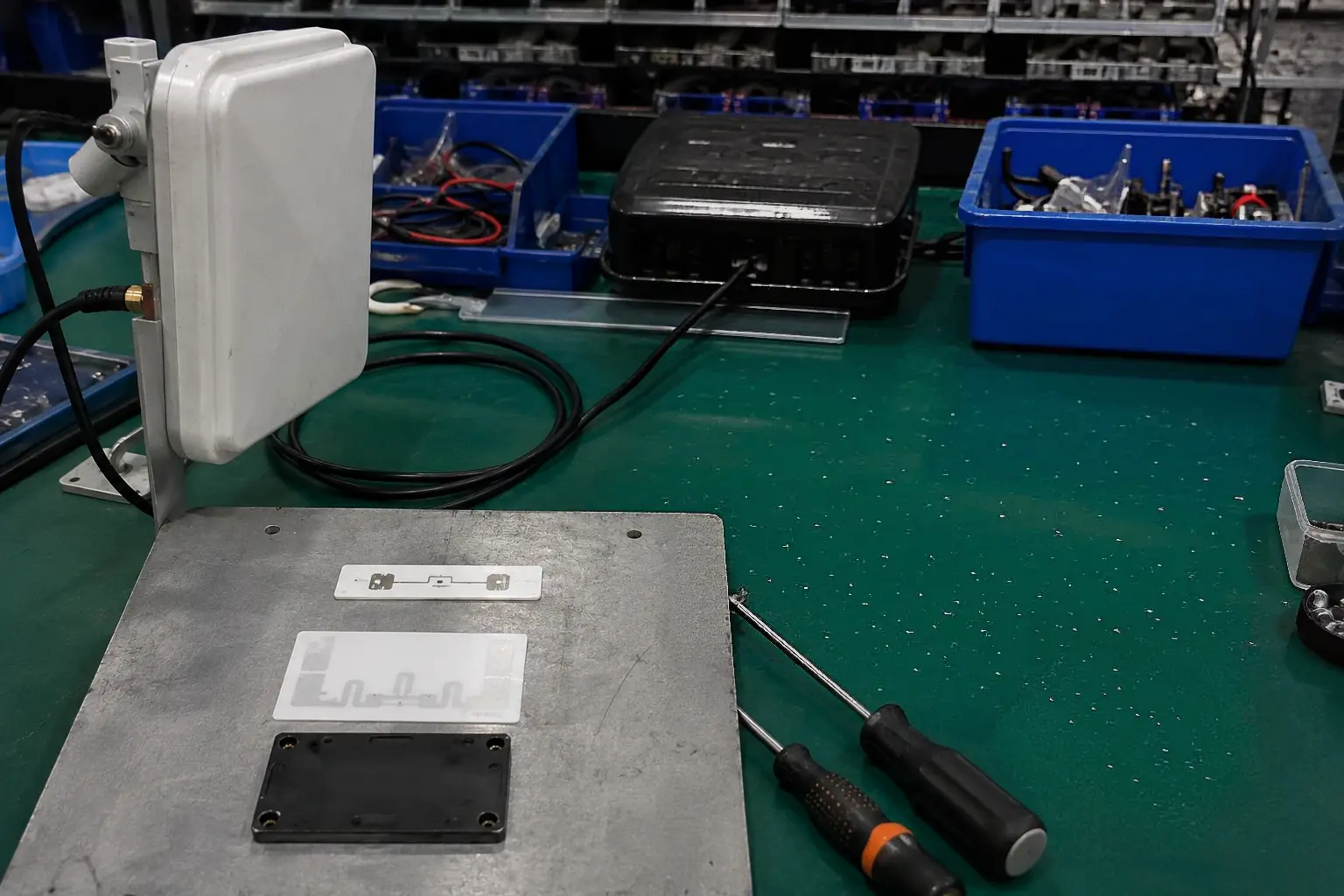
Mistake 1: The RF Environment Blind Spot
A reader behaves one way on the bench and another way three meters from a metal rack. Teams that skip an on-site survey pay for that gap in rework and downtime.
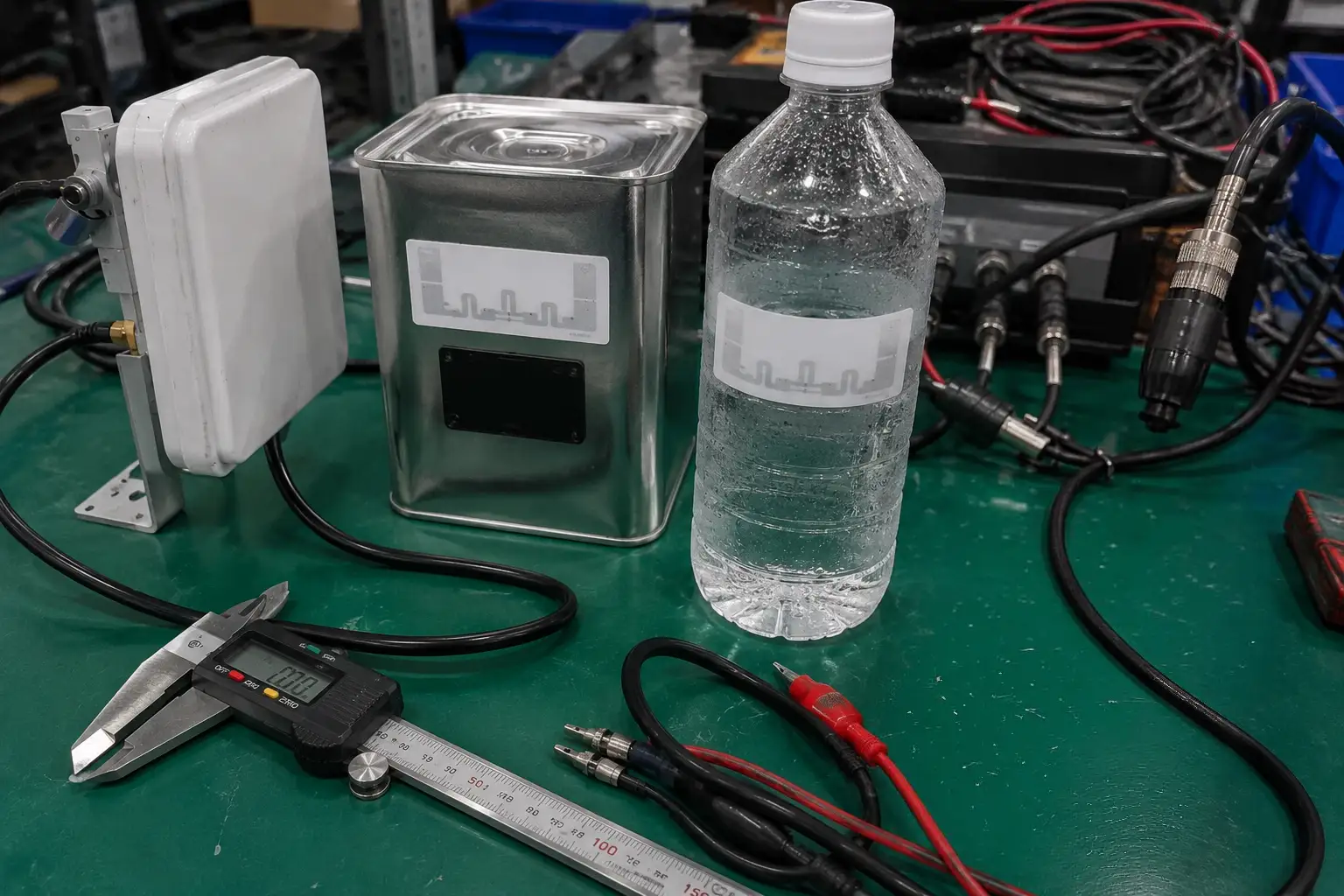
Metal, liquids, and moving machinery distort UHF and HF fields in ways a lab test never reveals. Run a documented RF site survey that maps reflection, absorption, and null zones before procurement, or accept read-rate collapse after go-live.
A module that reads a tag cleanly at 6 meters in the lab can drop to under 30 centimeters against a stainless steel conveyor. The reason is physics, not firmware. UHF energy reflects off metal and is absorbed by water, so the same inlay changes behavior the moment it sits on a liquid carton or a steel tote.
The expensive version of this mistake shows up after installation. A distributor in our network reported a portal that missed 14 percent of pallets on week one. The cause was a steel support column sitting inside the read zone, creating a null the original layout never accounted for. Re-pointing antennas and adding one extra port cost them roughly two weeks of partial operation and about USD 9,000 in overtime and reshipping. A half-day survey would have found it for free.
A practical survey does not need a lab. Walk the space with a calibrated handheld and a representative tag, log RSSI at a grid of points, and mark any location where signal drops below the reader's usable threshold. That grid is the input to antenna placement and power settings.
The gate for this phase is simple: no reader is ordered until an RF map exists. The pass criterion is a documented read rate of at least 99 percent on a representative tag sample, measured at the worst-case location, not the best one. Our guide on how RFID reader antennas impact large-scale deployment performance breaks down antenna placement math if you want the detail behind the survey.
Mistake 2: Data Silos That Strand the Investment
Hardware that collects data nobody can use is just an expensive blinking box. The second failure mode is treating the reader as an endpoint instead of a feed into your ERP, WMS, or MES.
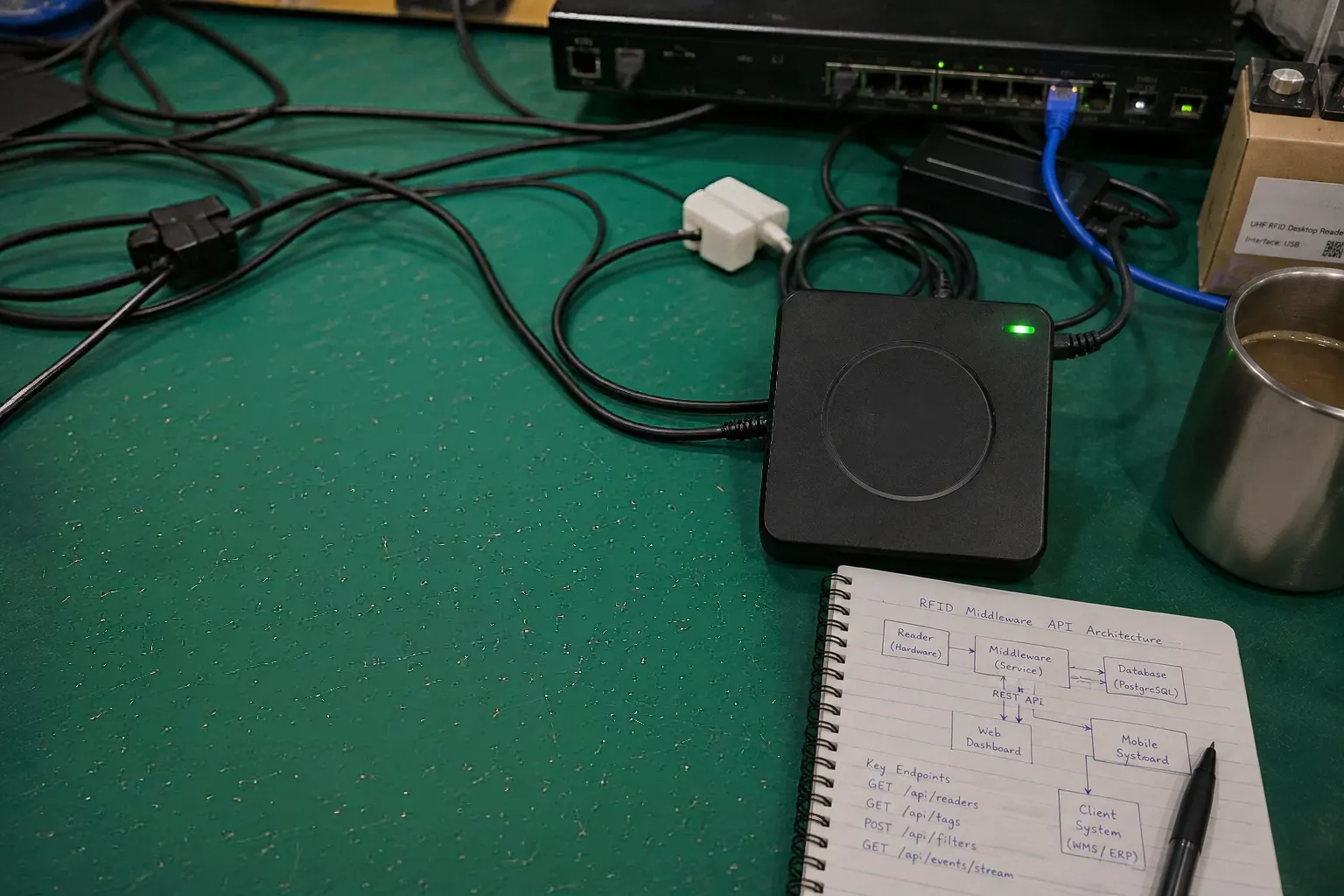
RFID delivers value only when tag events flow into the host system in a format it understands. Define the data model, the API contract, and the validation rules before mounting hardware, or you build a silo that forces manual re-entry.
The concrete cost here is integration labor. A system integrator we support estimated that a middleware-first approach cut their deployment scripting time from about 11 weeks to 4 weeks on a 12-site rollout. The reverse, bolting integration onto a finished install, burned roughly 600 engineer-hours at a blended rate near USD 95 per hour, about USD 57,000 of avoidable cost on a single mid-size project.
Pick the transport to match the hardware class. Fixed portals usually speak TCP/IP or Modbus, while desktop issuers often bridge through a virtual COM port. Agree on this with IT before encoding so the host binding is tested, not discovered, during rollout.
The structural fix is to treat the software bridge as phase one. Map your EPC or UID fields to the master SKU before any tag is encoded. Agree on the transport, whether that is TCP/IP, MQTT, or a virtual COM bridge, and validate it with dummy events under load. If your WMS rejects an unmapped code, operations stop at the dock door. Our explainer on how RFID tags work covers the memory banks you will be writing to, which matters when you design the mapping.
The gate: no site goes live until a test event from a real reader lands in the host system and triggers the correct workflow. The pass criterion: a parsed record, not a raw UID string, with field-level validation passing on 100 consecutive test scans.
Mistake 3: User Adoption Left to Chance
New hardware unsettles routine, and routine wins unless someone owns the change. The third mistake is handing out readers with a ten-minute demo and calling it training.
Staff revert to pen and paper when training is generic and no internal owner is accountable for the workflow. Role-based training plus a named system owner keeps the new process in daily use and protects the read accuracy the hardware was specified to deliver.
This is the softest number to quantify but often the largest hidden cost. In one apparel rollout, handheld read accuracy fell to 82 percent for the first month because operators covered the antenna with their palm and held the unit at the wrong angle. The fix was a 40-minute role-specific session and a printed SOP at each station, not new hardware. Lost productivity during that month was estimated at USD 6,500, and the credibility hit with store managers outlasted the money.
Measure adoption the same way you measure read rate. Track the exception rate at each station for the first two weeks and treat a spike as a training gap, not a hardware fault. The owner reviews the log weekly until it flattens.
Adoption is also a specification input, not an afterthought. If your SOP still says scan barcode, the tag read never becomes the official step. Assign one person as the RFID system owner, responsible for SOP updates, firmware checks, and exception handling. Our buyer's guide to the 4 core components of an industrial RFID system puts people and process alongside antenna, reader, and tag so the decision covers the whole loop.

The Pre-Deployment Checklist
Most teams already know these risks. What they lack is a way to enforce them when a deadline pressures the schedule. The table below makes each risk someone's named responsibility with a binary pass or fail.
Before shortlisting hardware, confirm which type of RFID technology fits your environment, and review our guide to choosing a UHF reader for industrial efficiency so the spec matches the workload.
| Phase | Owner | Gate (blocks next phase) | Pass criterion |
|---|---|---|---|
| RF survey | Integration lead | No reader PO until done | 99 percent read rate at worst-case location on sample tags |
| Data model | Software architect | No encoding until mapped | 100 consecutive test events parsed correctly by host |
| Pilot zone | RFID system owner | No site rollout until signed | 98 percent field accuracy over 1 week, SOP posted |
| Training | Operations manager | No go-live until delivered | Role-specific session completed, signed attendance |
| Handover | Project sponsor | No closure until audit | Exception log reviewed, owner named, docs stored |
A stage-gate like this is what separates a rollout that ships on budget from one that bleeds. The RFID reader buying guide folds environment, integration, and adoption into the original equipment decision, so the three risks are designed out before procurement.
When a range problem appears after launch instead of before, our troubleshooting checklist for sudden read-range drops helps you separate hardware failure from environmental interference. That article is for fixing; this one is for not needing to.
Conclusion
Avoid the RF blind spot with a survey, design the data path before you encode, and train by role with a named owner. A stage-gated checklist turns the three classic mistakes into signed, measurable checkpoints. The hardware is the easy part to buy and the hard part to justify after a miss, so spend the planning effort up front.
If you want a second review of your environment, integration, and training plan before you commit budget, contact Fongwah.
Q: What is the most common cause of RFID project failure?
A: Poor planning rather than the technology. The biggest traps are an unmanaged RF environment from metal and liquids, data that never reaches the ERP, and weak training that drives staff back to manual methods. Each is preventable with a stage gate applied before hardware is mounted.
Q: How do I prevent tag collision and false reads in a dense environment?
A: Run a pre-deployment RF site survey to map interference and null zones, then place antennas to avoid reflection and dead spots. Configure the reader for dense-tag scenarios and validate read rate at the worst-case location, not the open bench.
Q: Why is a middleware-first integration strategy important for RFID?
A: Defining the data model and API contract before mounting hardware prevents data silos and host rejection. Validating the bridge with dummy events under load catches mapping gaps early, when they cost hours instead of tens of thousands of dollars.
Q: How do I keep staff from abandoning the RFID workflow?
A: Give role-specific training instead of a generic demo, post a revised SOP at each station, and assign one internal owner for updates and exceptions. Adoption is a specification input, not a post-install task.