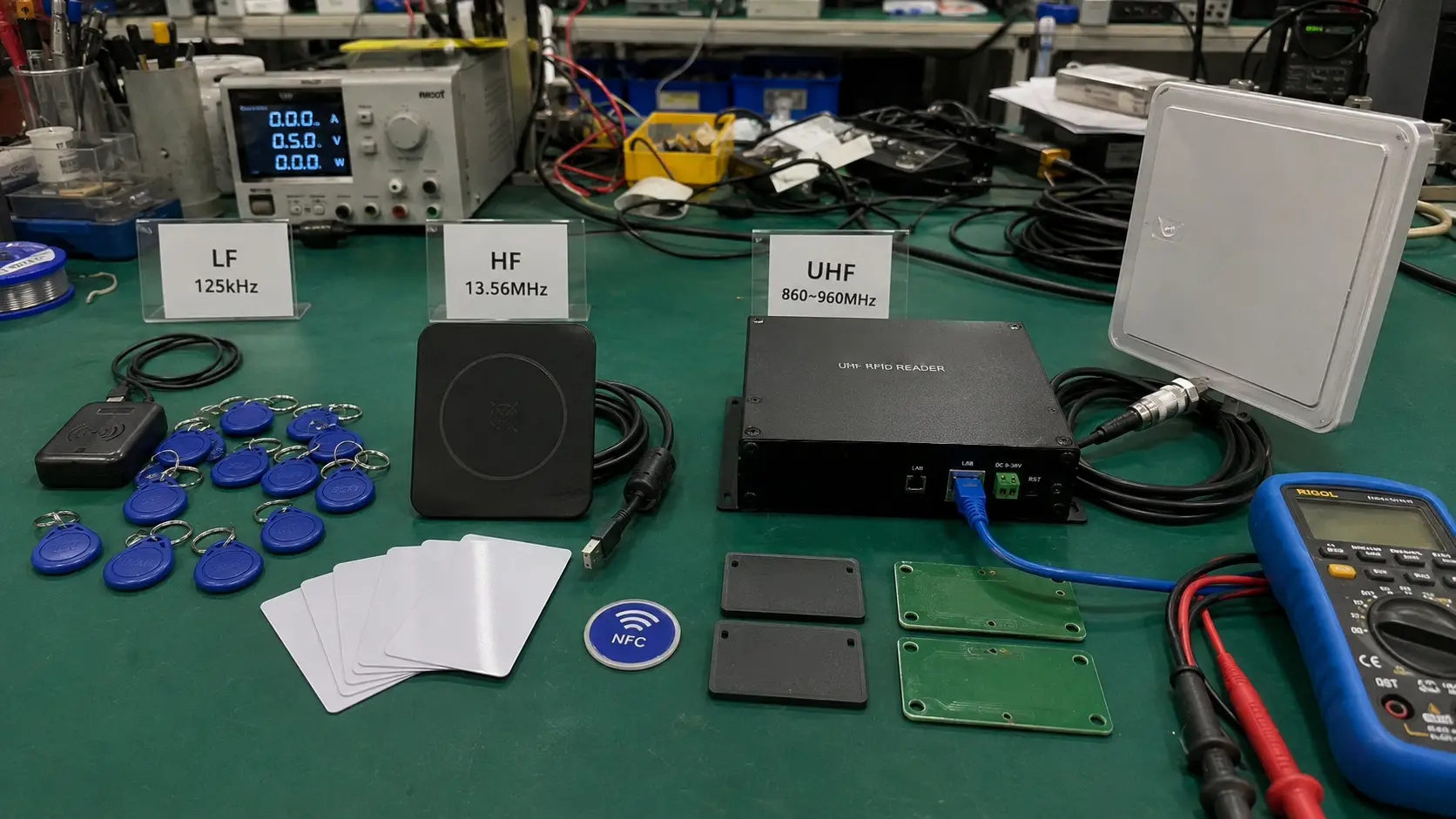
Choosing an RFID band before you understand the job is the fastest way to burn a budget. Many buyers pick a frequency because a competitor used it, then discover the tag will not read through a steel drum or the reader cannot keep up with dock-door volume. It is a function of four measurable constraints, and you can score it on paper before you buy a single device.
The framework below asks four questions in a fixed order. Environment first, then read range, then data requirement, then tag cost. Answer them in that sequence and the right band usually names itself. This is more reliable than comparing spec sheets from vendors who all claim their technology does everything.
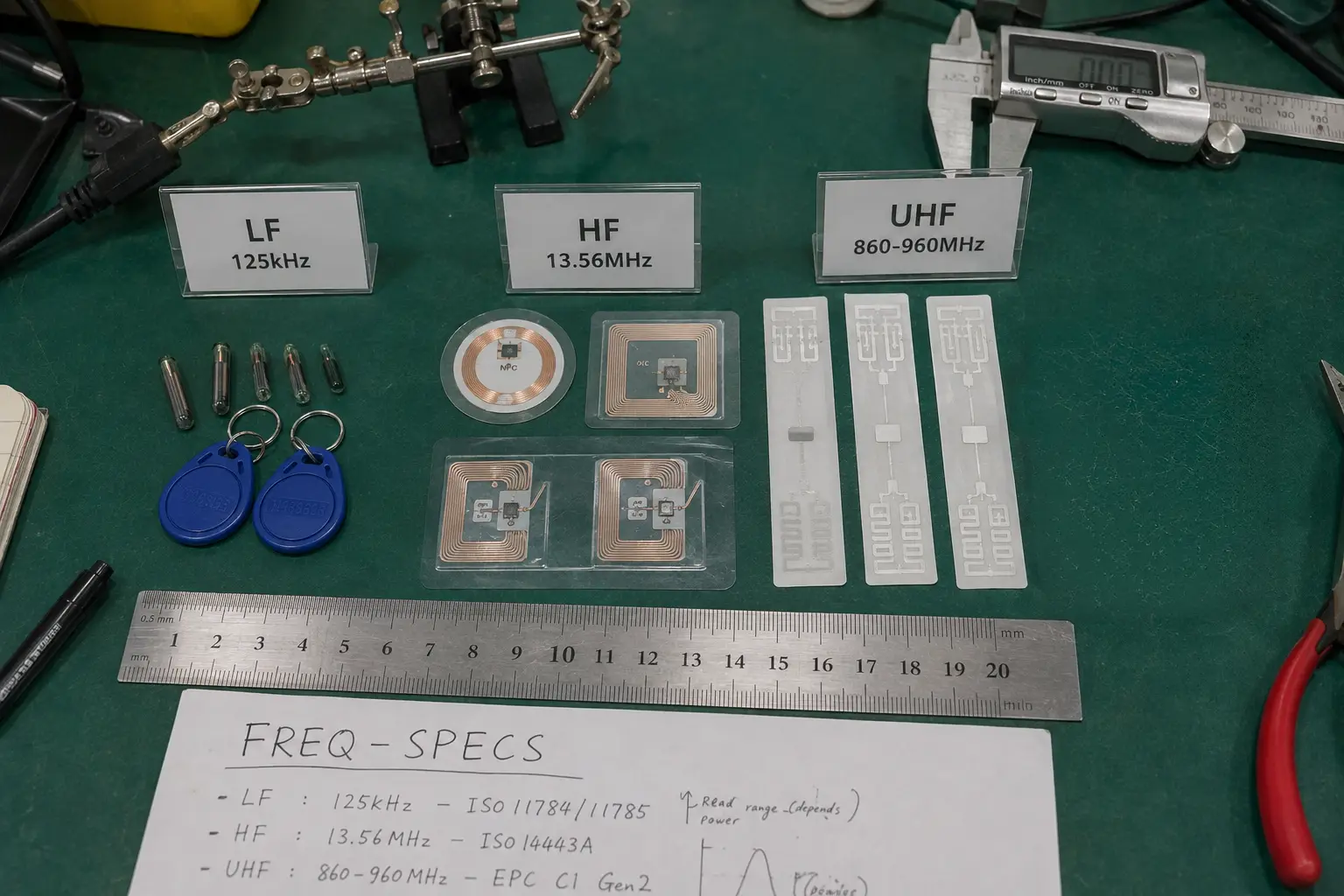
Does your environment contain metal, liquid, or rough handling?
High-frequency and ultra-high-frequency systems degrade quickly when the tag sits near steel, water, or foil. If your assets live in those conditions, the band choice is partly made for you before you consider anything else.
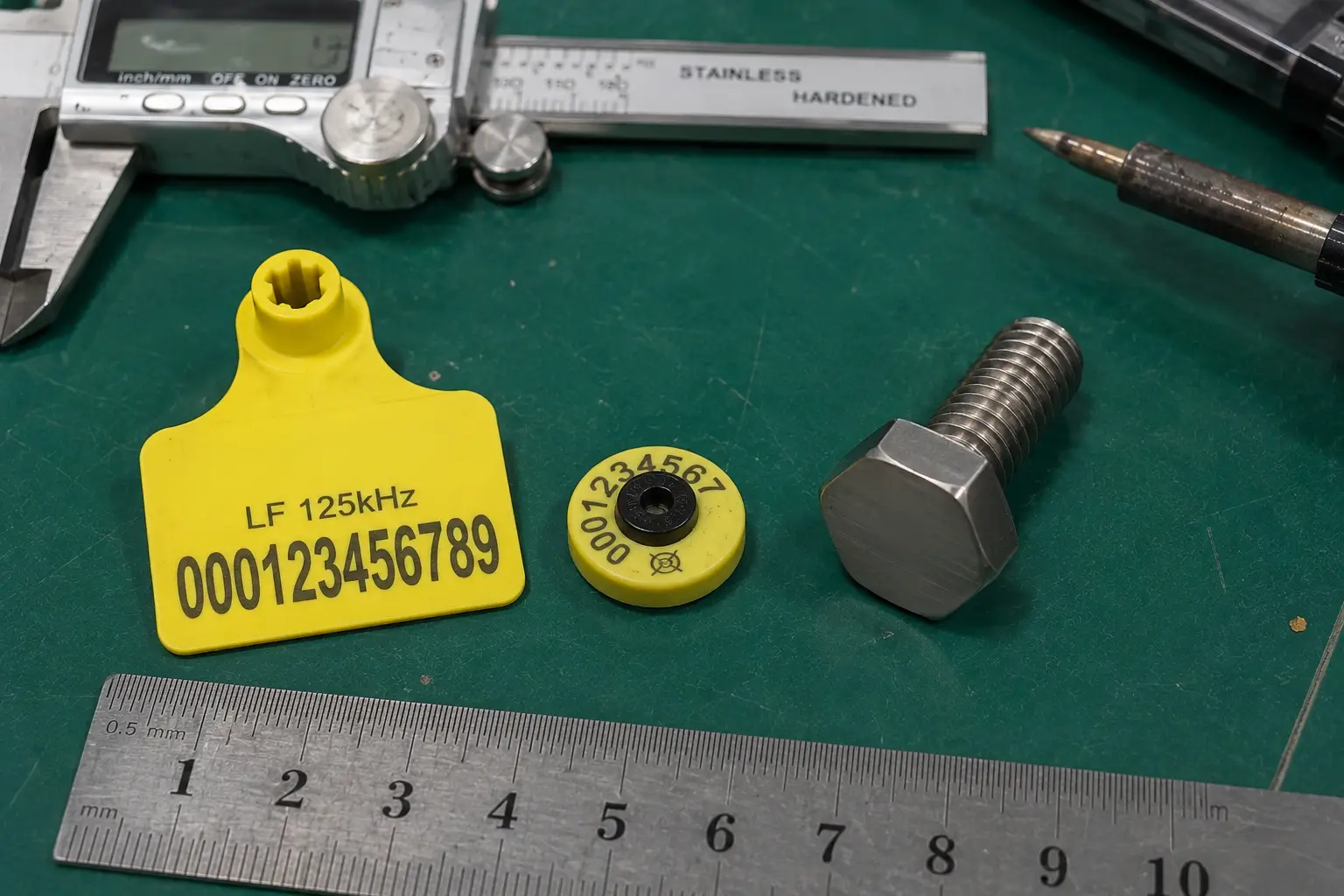
Low-Frequency (LF) RFID at 125 to 134 kHz is the only band that reads reliably near metal and liquid, because its long wavelength passes through materials that absorb or reflect higher frequencies. HF and UHF tags detune or lose range when mounted on a metal surface or immersed in liquid, while LF keeps working because the physics of the band are forgiving. That is why livestock chips, keg tracking, and tool control on a factory floor still default to LF.
Look at the material around the tag first. A tag on a plastic tote in a dry warehouse behaves very differently from a tag on a metal gas cylinder or a bottle of solvent. If you cannot move the tag away from the hostile surface, LF removes the interference problem instead of fighting it. HF can work near metal with special on-metal tags, but that raises cost and complexity. UHF near metal almost always requires engineered tags and careful placement.
The practical rule is simple. If the reader must work in a wet, metallic, or high-vibration setting, score LF as your baseline. You trade away long range and fast bulk reads, but you gain a system that does not silently drop tags. For a deeper look at how tags behave in different materials, see how RFID tags work.
How far does the read need to reach?
Range requirements separate the three bands more cleanly than any other single factor. Match the distance to the band instead of hoping a stronger antenna fixes a wrong choice.
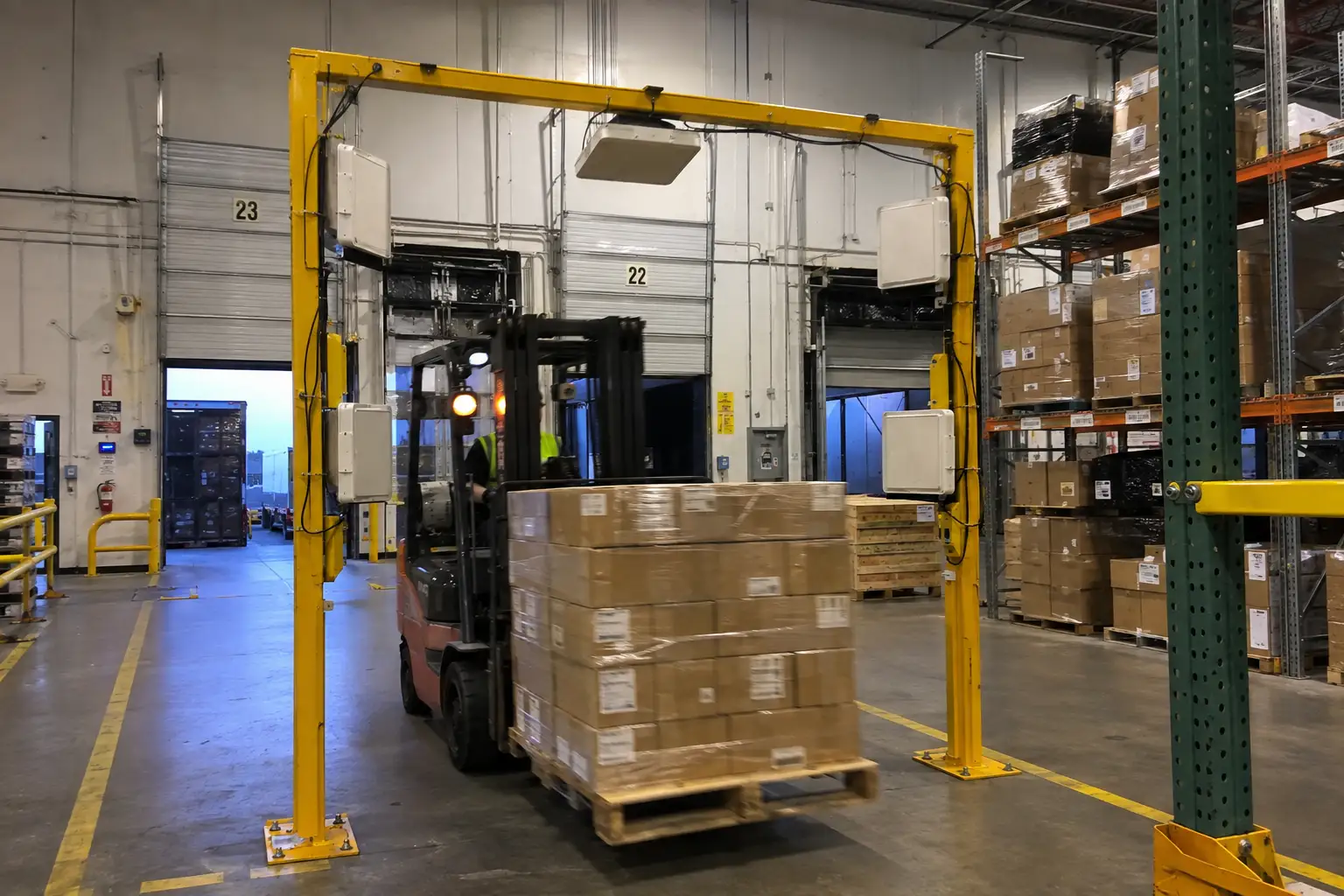
LF reaches about 10 cm, HF reaches about 1 meter, and UHF RAIN reaches up to 12 meters, so pick the band whose natural range fits your physical layout. LF's short range is a feature when you need positive close-proximity identification, such as a tool being checked out at a bench. HF's roughly 1 meter range covers a tap, a card presentation, or a nearby item scan. UHF is the only band that reads across a dock door or down an aisle without touching the item.
Think in terms of the gap between reader and tag. If the operator holds the item to the reader, LF or HF fits. If the item passes a portal at speed and nobody touches it, UHF is the realistic option. Do not expect LF to read a pallet moving through a doorway, and do not expect UHF to give you a precise one-item-at-a-time tap.
Range also interacts with your data freshness need. A 12 meter UHF zone reads every box on a pallet as it crosses, which is the foundation of automated receiving. A 10 cm LF read only tells you something when a person brings it close. The distance is not just convenience. It defines what workflow the band supports.
What data must the tag actually carry?
Some projects need only a unique ID. Others need credentials, records, or secure exchange stored on the tag itself. The data load changes which band makes sense.
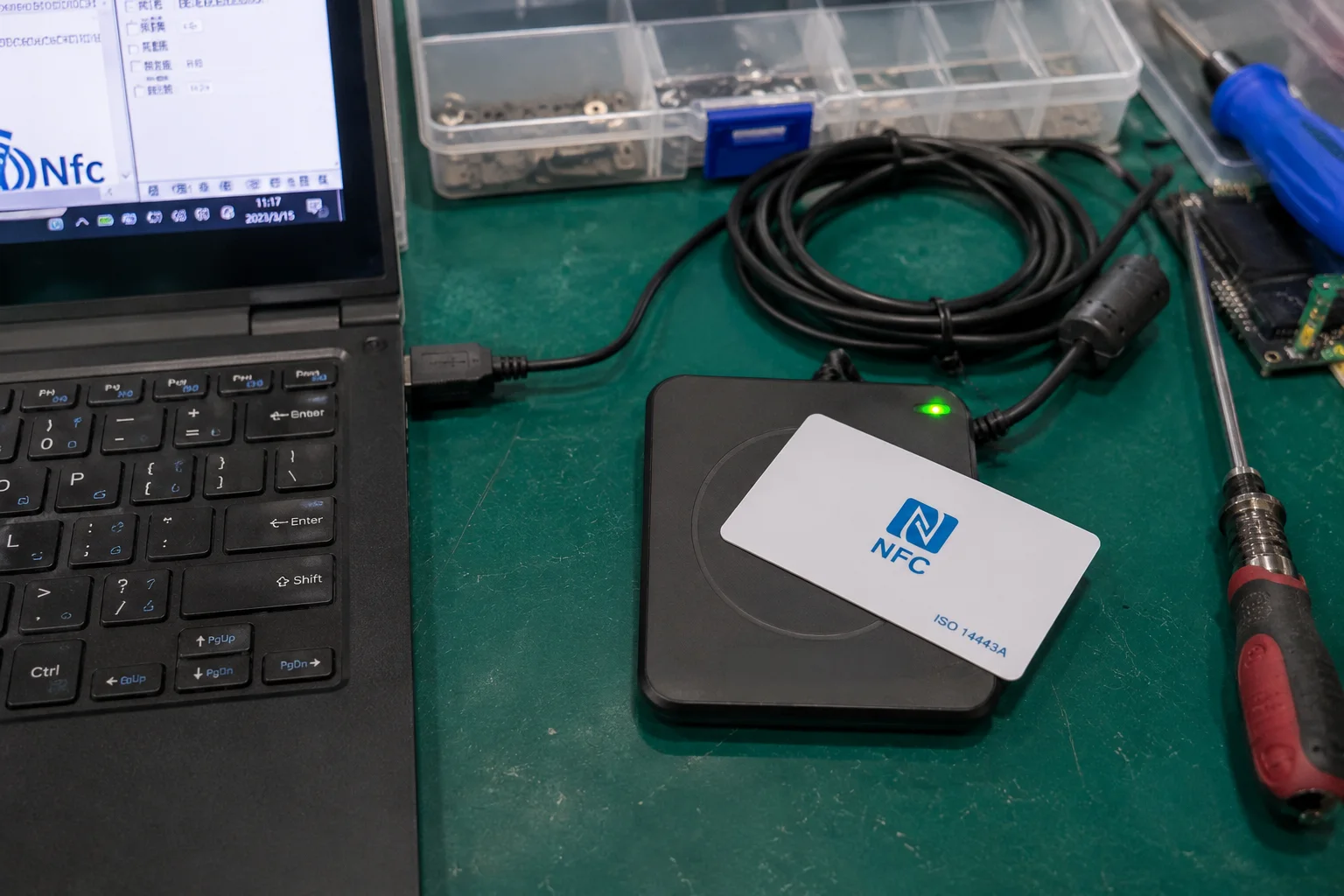
HF and its NFC subset at 13.56 MHz are the right choice when the tag must hold and exchange secure data, while UHF suits high-volume ID and LF suits simple identification. HF supports richer memory and stronger security commands, which is why payment cards, access credentials, and library loans run on it. UHF is built for speed and volume: a RAIN system can move toward 1000 tags per second in bulk reads, but the data per tag is usually a compact identifier.
Decide early whether the tag is a key or a label. If the tag must prove identity with encryption or carry a maintenance log, HF or NFC is the pragmatic path. If the tag is just a fast, cheap pointer to a database record, UHF wins on throughput and tag price. LF carries an ID well but offers little room for on-tag data or security features.
For buyers weighing tap versus long-range data, the RFID vs NFC comparison breaks down where NFC fits and where a longer-range band is required.
What is your tolerance for tag cost at scale?
The reader is a one-time purchase. The tags are a recurring cost that scales with every item you track. Tag economics often settle the debate between otherwise comparable bands.
UHF tags are the cheapest to produce at volume, often cents each, while LF and HF tags cost more per unit, so high-item-count projects should weigh UHF unless environment or data needs forbid it. When you tag a million cartons, the per-tag difference between UHF and HF becomes a six-figure line item. LF tags sit in the middle but rarely compete on price for massive deployments.
Balance tag cost against the constraints already scored. If environment forces LF, accept the tag cost as the price of reliability. If data forces HF, accept it as the price of security. Only when environment and data both allow should you let tag cost push you to UHF. The mistake is reversing the order and choosing on price first.
A useful exercise is to multiply your annual tag consumption by the per-tag delta between bands. That number often dwarfs the reader savings you thought you were getting.
How do you put the four answers on one matrix?
A checklist beats a feeling when two bands look similar on paper. Put the four answers side by side so the majority rules instead of your gut.
Score the four factors on one matrix where each row favors a band, then read the Pick-this-when row as your final filter, letting environment and range outrank cost when bands tie. The table below turns the framework into a single lookup you can hand to procurement.
| Factor | LF (125 to 134 kHz) | HF (13.56 MHz) | UHF (860 to 960 MHz) |
|---|---|---|---|
| Metal or liquid present | Strong | Weak without special tags | Weak without special tags |
| Read range needed | Up to 10 cm | Up to 1 m | Up to 12 m |
| Data requirement | ID only | Secure data, NFC | Bulk ID, fast reads |
| Tag cost tolerance | Moderate | Moderate | Very low per tag |
| Pick this when | Harsh, close-proximity ID | Tap, payment, secure item data | Long range, high volume |
Read the Pick-this-when row as your final filter. If two bands tie, the environment and range rows outrank cost. A system that cannot read in your conditions is useless no matter how cheap the tags are.
Do regional frequency bands change the decision?
The band you want may not be the band your market permits. Regulations split UHF into regional allocations that affect reader hardware and antenna tuning.
UHF operates under different regional bands such as FCC 902 to 928 MHz in the United States and ETSI 865 to 868 MHz in Europe, so your deployment region shapes which reader you can legally ship and run. LF and HF are largely global and unlicensed, which is one reason they appear in international products without re-engineering. UHF requires region-specific readers and certification, and a reader tuned for one band may break compliance in another.
Plan for the regions you sell into before you standardize. If your product ships worldwide, LF or HF avoids the certification maze, while UHF gives you the performance but demands a regional SKU strategy. Our RAIN RFID explainer covers the UHF standard and why regional bands matter for global rollouts.
Conclusion
The right RFID band is not a matter of taste. It falls out of four scored questions: environment, range, data, and tag cost, with regional rules as the final check. Score them in order and the band names itself, and you avoid the costly re-spec that follows a wrong first guess. When you are ready to turn the band into a reader class, our RFID reader buying guide maps each frequency to the hardware that fits your volume and setting. To match a band to your specific deployment, contact Fongwah.
Frequently Asked Questions
Q: Which RFID type is best for a harsh environment with metal or liquid?
A: Low-Frequency RFID at 125 to 134 kHz reads reliably near metal and liquid where HF and UHF lose range. Use LF for tools, kegs, and industrial assets in wet or metallic settings, accepting its short 10 cm range.
Q: How do UHF and HF read ranges compare?
A: HF reaches about 1 meter and suits taps and nearby scans, while UHF RAIN reaches up to 12 meters for dock doors and aisles. LF sits at roughly 10 cm. Pick the band whose natural range matches your layout.
Q: Can one reader handle UHF, HF, and LF together?
A: Generally no. Each band needs different radio hardware and antennas. A few hybrid devices exist, but most projects standardize on one frequency for cost and reliability rather than mixing bands in one reader.
Q: How do I choose RFID frequency by region?
A: Start from your use case, then confirm the permitted band. UHF uses FCC 902 to 928 MHz in the US and ETSI 865 to 868 MHz in the EU, while LF and HF are largely global and unlicensed.