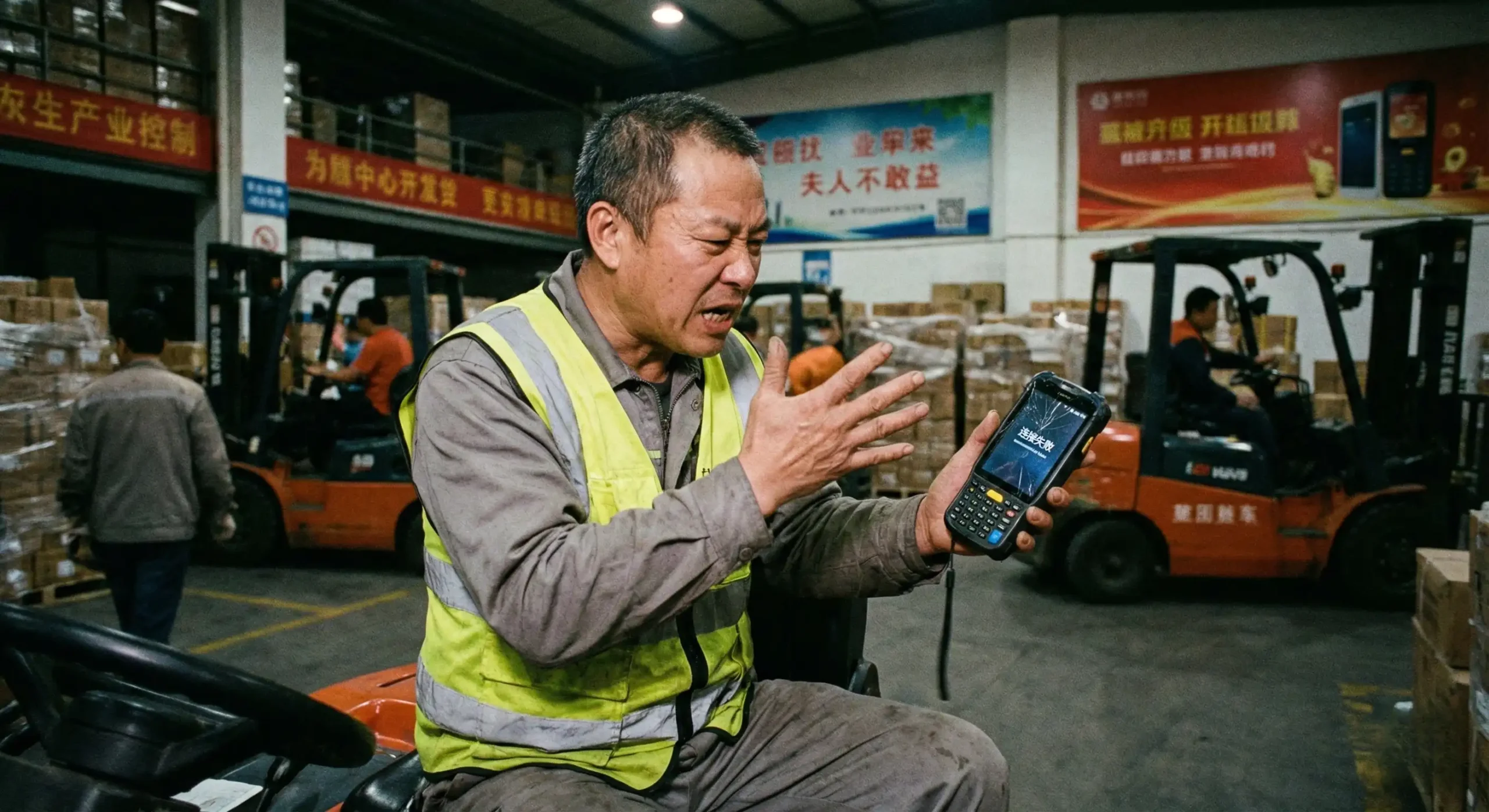
You purchased a 30dBm reader and a massive 12dBi external antenna. On paper, you should generate reads at 15 meters. In reality, on your warehouse floor, you barely get 4 meters. Your forklift drivers are frustrated, and your system integrator blames the tags.
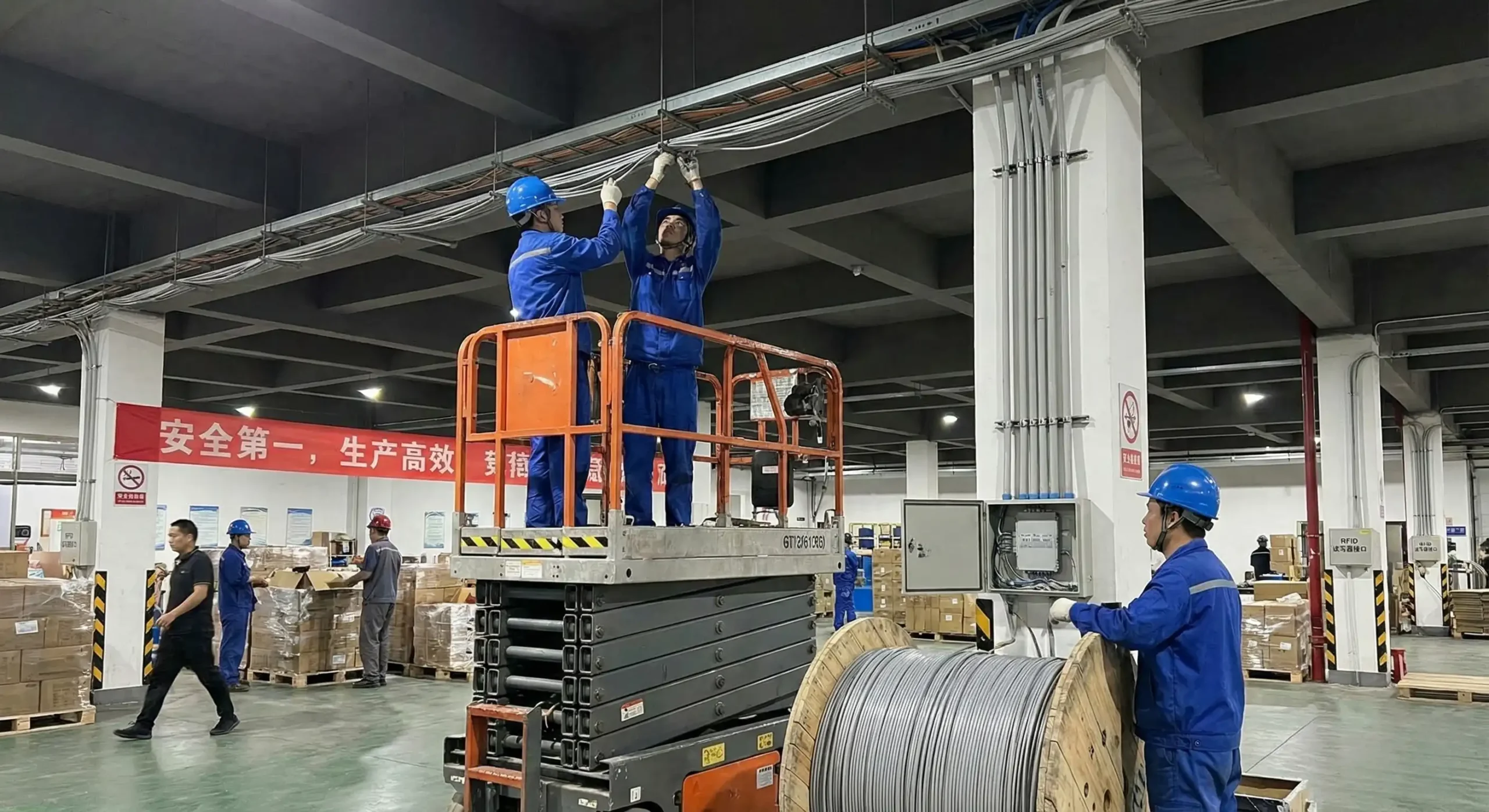
The silent killer of RFID projects is Cable Loss, also known as attenuation. Most buyers attempt to save money by purchasing a cheap fixed reader and running a long, low-quality coaxial cable to the antenna. This physical setup drains your power before it ever reaches the air.
What went wrong? The answer is usually physics, not the brand of the tag.
Does a Longer Cable Destroy Your Reader's Performance?
You try to save money by mounting a centralized reader and running wires everywhere. This decision kills your efficiency before you even turn the power switch on.
Coaxial cables suffer from attenuation, meaning signal strength drops over distance. A 30dBm reader connected via ten meters of standard cable might only deliver 20dBm to the antenna. You effectively pay for power that never leaves the wire, drastically reducing your read range regardless of the antenna's gain.
Here is the physics reality that many sales sheets hide. Every meter of cable eats your power. We call this attenuation. When you buy a reader, the specification sheet says "30dBm Output." That number is true only at the port of the device. Once the signal enters a copper wire, it meets resistance.
Think of your RFID signal like water flowing through a leaking hose. If the hose is short, most of the water gets to the nozzle. If the hose is 20 meters long and has holes in it (poor shielding), the pressure at the end is weak. You can put a giant nozzle (high-gain antenna) at the end, but it does not matter if there is no water pressure left.
In the radio frequency world, we measure this loss in decibels (dB). This is a logarithmic scale. A loss of 3dB means you have lost 50% of your power. A standard RG58 cable can lose significant power over a long run. So, you might think you are blasting a strong signal to penetrate a pallet of water bottles, but your antenna is actually whispering.
This problem works both ways. It is not just about the Reader-to-Tag signal. The tag must reply. The tag's signal (backscatter) is incredibly weak. If your cable lost your strong transmission, it will definitely kill the weak reply from the tag. The reader will never "hear" the inventory.
| Component | Rated Power | Real Scenario (10m Cable) | Result |
|---|---|---|---|
| Reader Output | 30dBm | 30dBm | Strong Source |
| Cable Loss | - | -3dB to -6dB | Power acts like 24dBm |
| Connector Loss | - | -0.5dB per plug | Further reduction |
| Effective Power | 30dBm | ~23dBm | Range Decreased by 50%+ |
How Does the U6-IE-02 Integrated Reader Solve Signal Loss?
We fixed the physics problem by removing the wire. Designing the radio module and antenna into one single unit guarantees zero transmission loss and maximum efficiency.
The Fongwah U6-IE-02 places the RF module directly behind a high-gain 8dBi Circular Polarized antenna. This integration ensures that the adjustable 6-32dBm output is delivered 100% to the air interface. It also processes 100 tags per second, making it ideal for bulk inventory scanning.
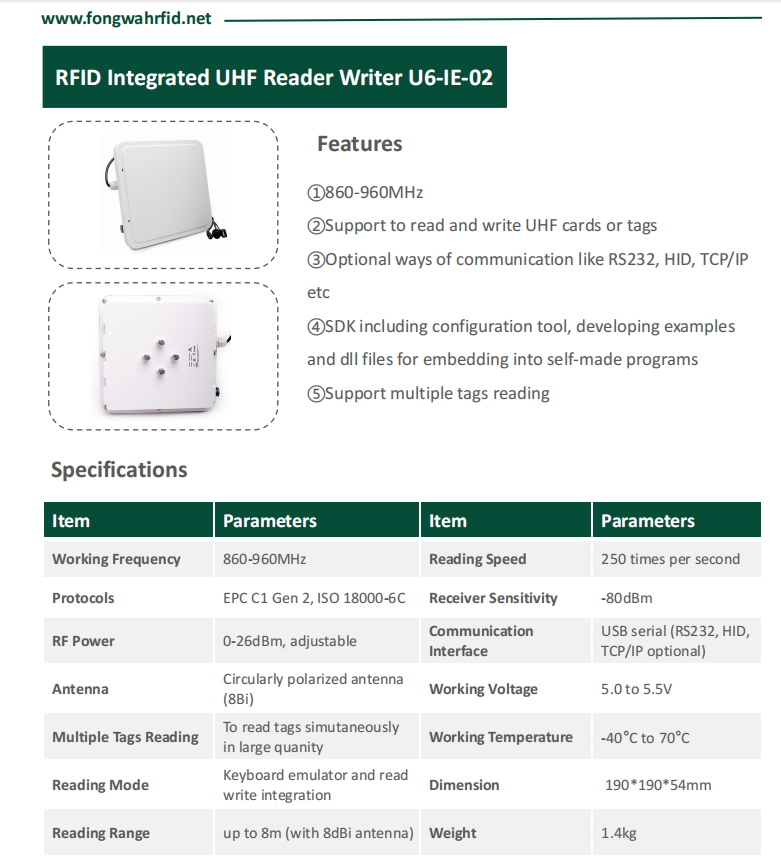
The smartest fix is to eliminate the cable entirely. This is why we developed the Fongwah U6-IE-02 UHF Integrated Reader. We took the brain (the reader module) and the voice (the antenna) and put them in the same waterproof housing.
Because the connection distance is measured in millimeters inside the circuit board, there is zero transmission loss. When you set the software to 30dBm, you get 30dBm of pure scanning power. This efficiency means you do not need a massive, ugly antenna to get results.
We also addressed the "orientation" problem. In a warehouse, boxes turn. Pallets spin. If you use a Linear antenna (common in cheap setups), the tag must line up perfectly with the reader. If the tag is horizontal and the antenna signal is vertical, you get no read. The U6-IE-02 uses an 8dBi Circular Polarized antenna. The signal spins. It catches tags regardless of their position.
This device is not just about range; it is about speed and data flow. It can process up to 100 tags per second. For a conveyor belt or a forklift passing through a dock door, this speed is essential. You connect it via a single Ethernet cable. This creates a clean installation. You do not need RF engineers to calculate cable loss. You just mount it, plug it in, and it works.
| Feature | Separated System | U6-IE-02 Integrated Reader |
|---|---|---|
| Cabling | Coaxial (High Loss) | Internal (Zero Loss) |
| Installation | Complex (Reader + Cable + Antenna) | Simple (One Unit) |
| Polarization | Often Linear | Circular (Reads any angle) |
| Maintenance | High (Cables degrade) | Low (Rugged IP65) |
Can Replacing Cabling with Integrated Units Double Your Range?
A client managing a parking lot nearly fired their system integrator. The gate would not open until the car was bumping against the barrier. The frustration was palpable.
By swapping a separated reader system with the U6-IE-02, we eliminated the signal loss affecting their barrier gate. The read range jumped from an unstable 1 meter to a solid 8 meters. This allowed the gate to open smoothly before the car stopped, solving the traffic bottleneck.
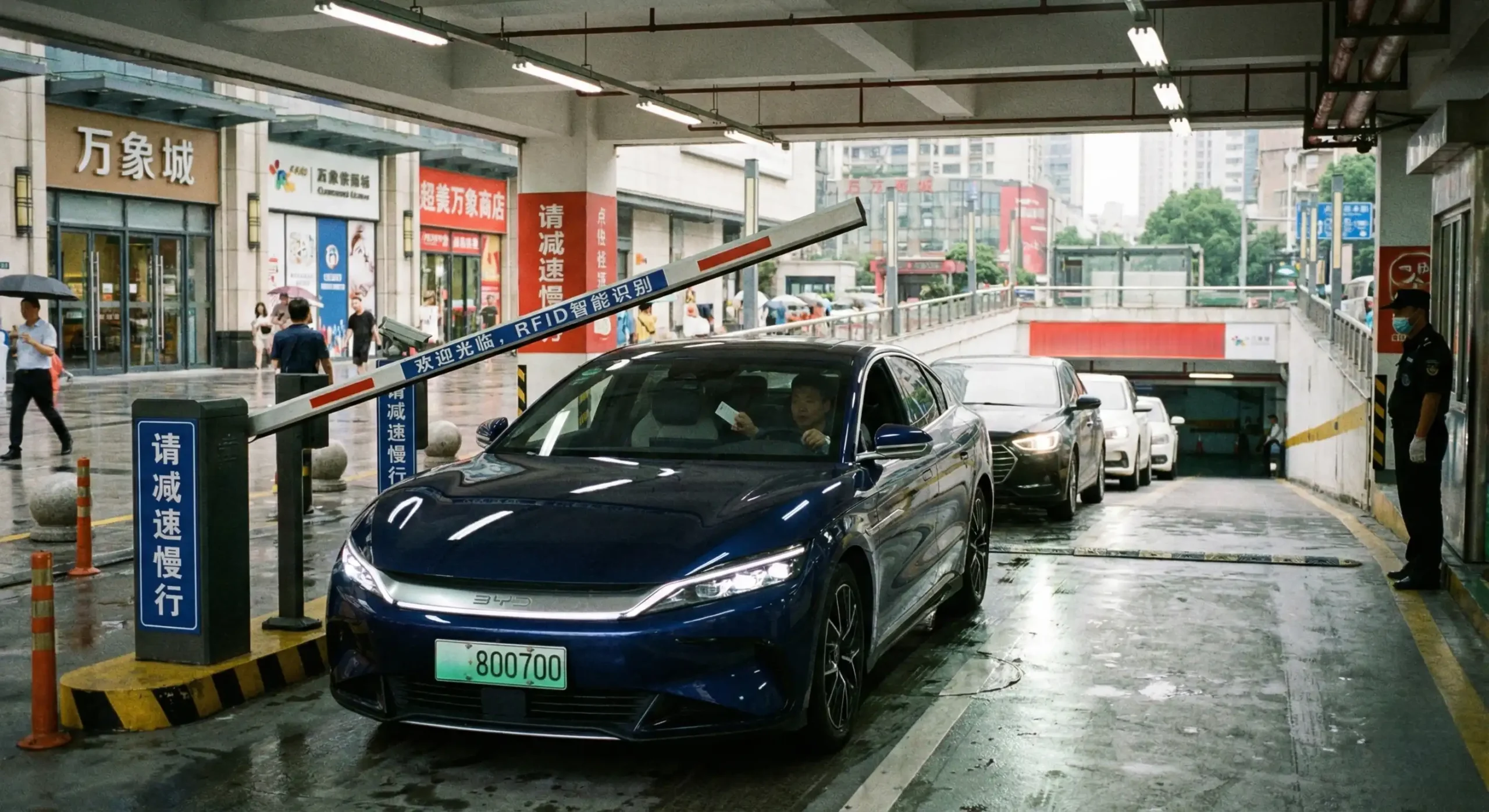
Let me share a recent case that proves this point. We helped a Parking Management client who was struggling with a separated reader setup. They had a nice looking kiosk. The reader was inside the metal kiosk for protection. The antenna was on a pole five meters away. The cable ran underground.
The result was a disaster. The barrier gate wouldn't open until the car was 1 meter away. Drivers had to brake hard. Some had to roll down windows and wave the card. The client thought our readers were broken. They blamed the windshield tags.
I looked at their setup. The underground cable was low quality and too long. The signal was dead before it reached the pole. I advised them to remove the underground RF cable. We installed one Fongwah U6-IE-02 Integrated Reader right on the pole. We ran a standard network cable (which does not lose signal strength for data) back to the kiosk.
The change was instant. The reading range stabilized at 8 meters. Now, the reader detects the car as it turns the corner. The gate opens before the driver even puts their foot on the brake. The flow of traffic became smooth. We did not change the power setting. We simply stopped wasting the power they were already using.
This logic applies to forklifts too. I have seen readers mounted inside the metal cage of a forklift with cables running to antennas on the forks. The cable gets pinched and bent. The signal dies. An integrated unit mounted high on the cage solves this immediately.
Conclusion
Don't let bad cabling kill your project's ROI. If you want stable, long-range detection for vehicles or pallets, stop guessing with separated components and switch to an Integrated Reader like the U6-IE-02.
Message me on WhatsApp today. I will send you the C#/Java SDK package for the U6-IE-02 so your tech team can verify the integration logic before you even buy the hardware.
---