A conveyor moving 1,200 cartons an hour is not a reading problem, it is a data-rate problem. Integrators who size readers by range alone discover this when the host database chokes on the event stream.
Complex data collection demands a reader that speaks the right protocols, filters at the edge, and buffers bursts before the host is ready. Size the reader by events per second and the integration bus, not by headline read distance.
The guidance below is how to spec those jobs.
The first step is deciding which type of RFID technology matches your throughput and environment before you size the reader.
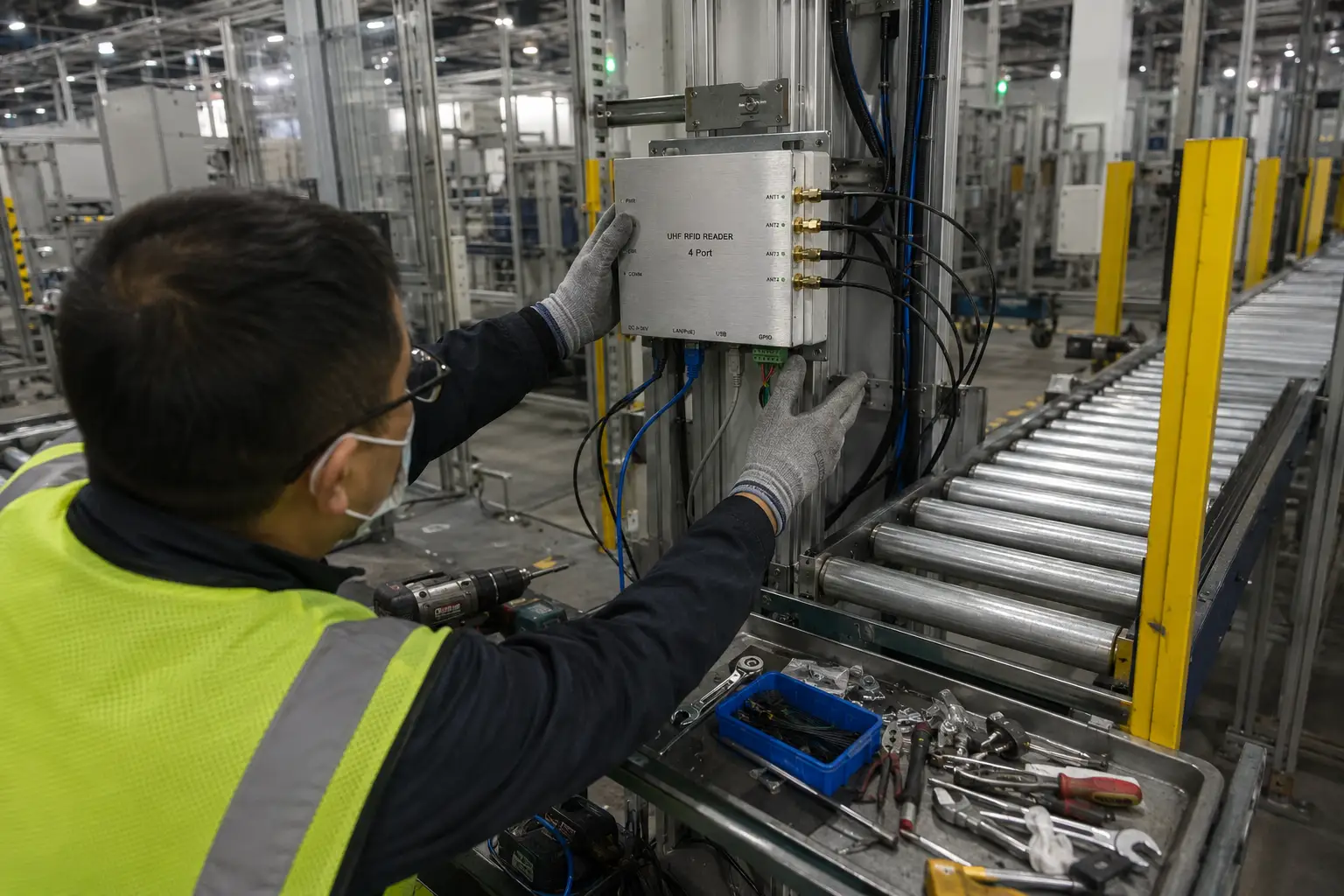
Why Event Velocity Breaks Naive Designs
A reader that reads far is useless if it drops tags the moment a hundred reply at once. The failure mode in complex collection is throughput under load, not open-field range.
Size the system by sustained events per second, not peak tag count. A reader rated at 500 reads per second with strong anti-collision handling holds a busy portal, while a 100 reads per second unit throttles and misses assets under the same load.
On a packaging line a single portal may see 30 to 60 tags in the read field at any instant, and a forklift crossing a dock door can present 200 plus tags in a second. A consumer-grade module rated for 100 reads per second simply cannot clear that field before the next load arrives. The symptom is not a dead zone. It is a quiet, partial miss rate that corrupts inventory counts. Our guide to the components of an RFID reader explains where the processing bottleneck lives inside the unit.
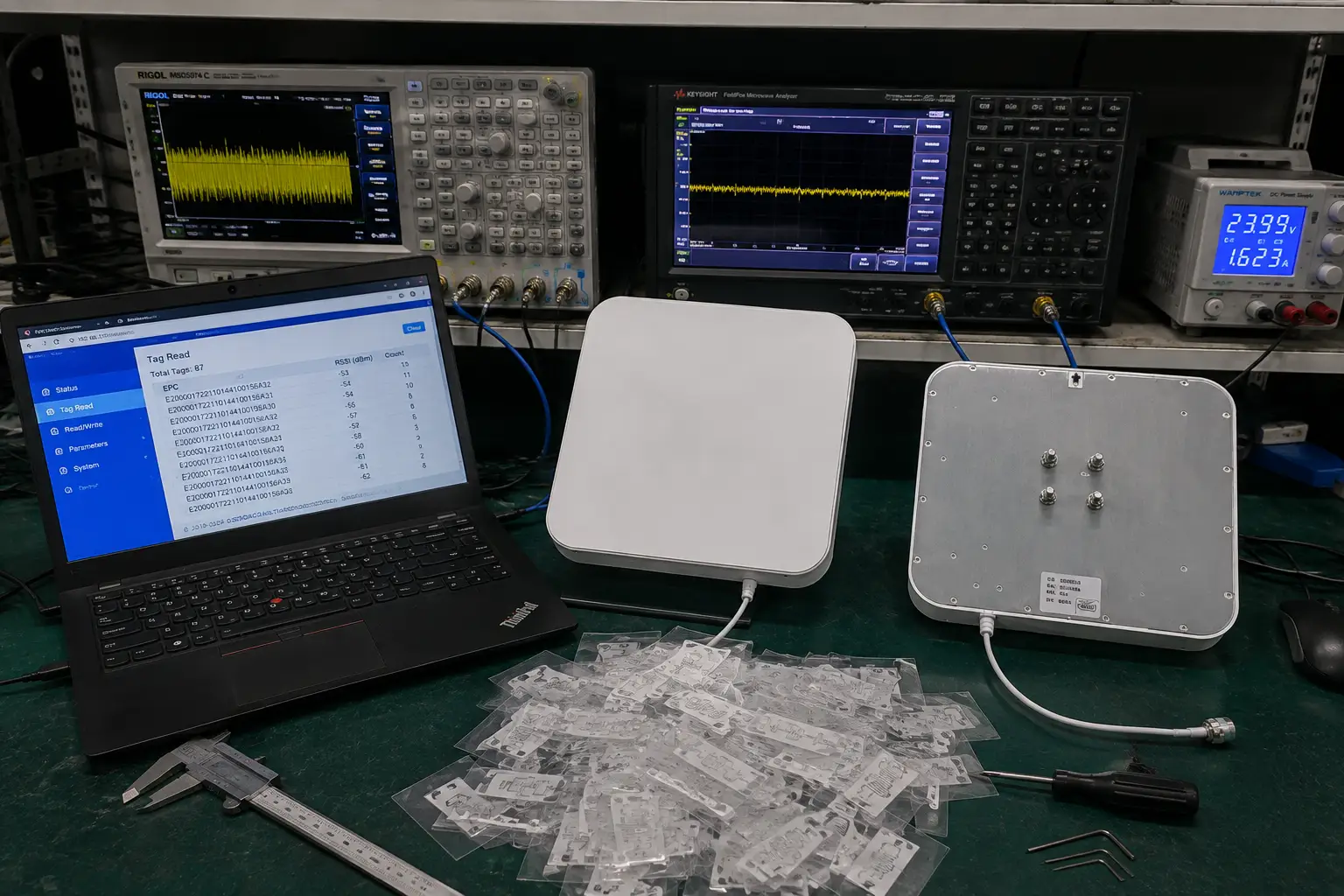
Multi-Protocol and Standard Support
Your host may expect EPC data, while a machine on the same line expects ISO conformance. A reader locked to one standard forces a workaround somewhere.
Specify a reader that supports EPC Gen2v2 and ISO 18000-6C for UHF, plus the HF standards your cards use, so one device serves inventory and access without a protocol translator. Dense Reader Mode also lets adjacent portals coexist without mutual jamming.
EPC Gen2v2 adds the authentication and memory features modern supply-chain programs require, while ISO 18000-6C is the interoperability baseline most middleware expects. If your site runs HF badges alongside UHF freight, a dual-standard reader avoids bolting two boxes onto one portal. Dense Reader Mode matters the moment you bracket a door with four antennas on one reader, because without it the ports interfere with each other.
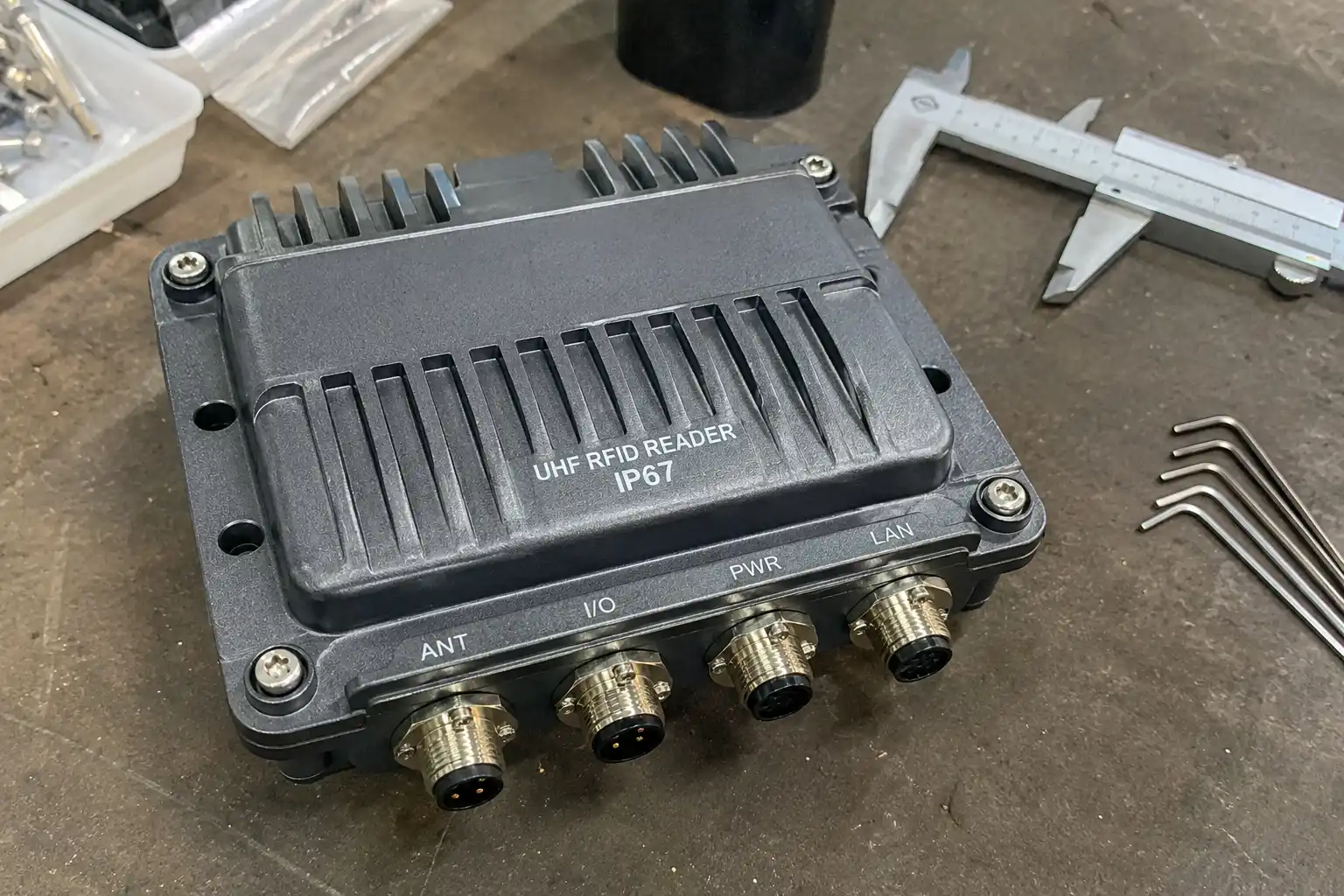
Edge Filtering and Buffering
Sending every raw read to the server is the fastest way to saturate a network. The reader should decide what matters before the cable.
Filter redundant reads at the edge and buffer bursts in firmware so the host receives state changes, not a firehose. This is the difference between a clean event log and a database buried in duplicate pings.
Edge filtering means the reader reports tag entered zone A once, not 40 times a second. Buffering means that if the network dips for two seconds during a load spike, the reader holds the events and forwards them when the link returns, instead of dropping them. The table below maps event tiers to the reader spec you need.
| Event tier | Typical events per second | What the reader must do |
|---|---|---|
| Light | Up to 20 | Basic read, forward on change |
| Moderate | 20 to 150 | Edge filter, RSSI gating |
| Heavy | 150 to 500 | Firmware buffer, multi-port anti-collision |
| Extreme | 500 plus | Multi-reader sync, OPC-UA push |
For warehouse-grade selection that feeds this tier model, our piece on selecting the best RFID receiver for your warehouse works through the same numbers from the receiving side.
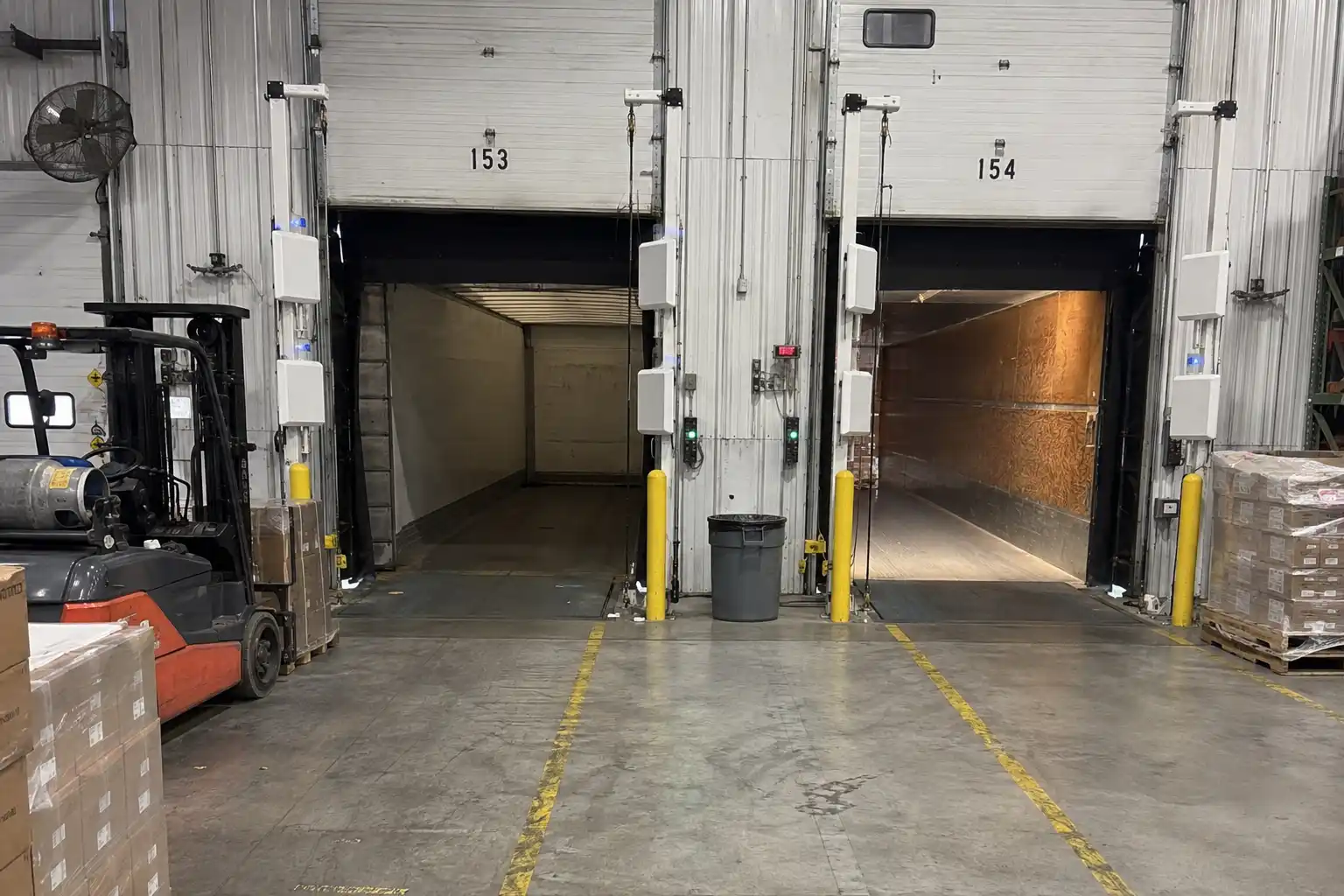
Integration Buses That Fit the Plant
A reader speaking only TCP/IP may not talk to a PLC that expects Modbus. The bus choice decides how much middleware you write.
Match the reader's output bus to your control layer. Use Modbus or OPC-UA to drop events straight into a SCADA or MES, and reserve TCP/IP or virtual COM for IT-side WMS binding, so you write less glue code.
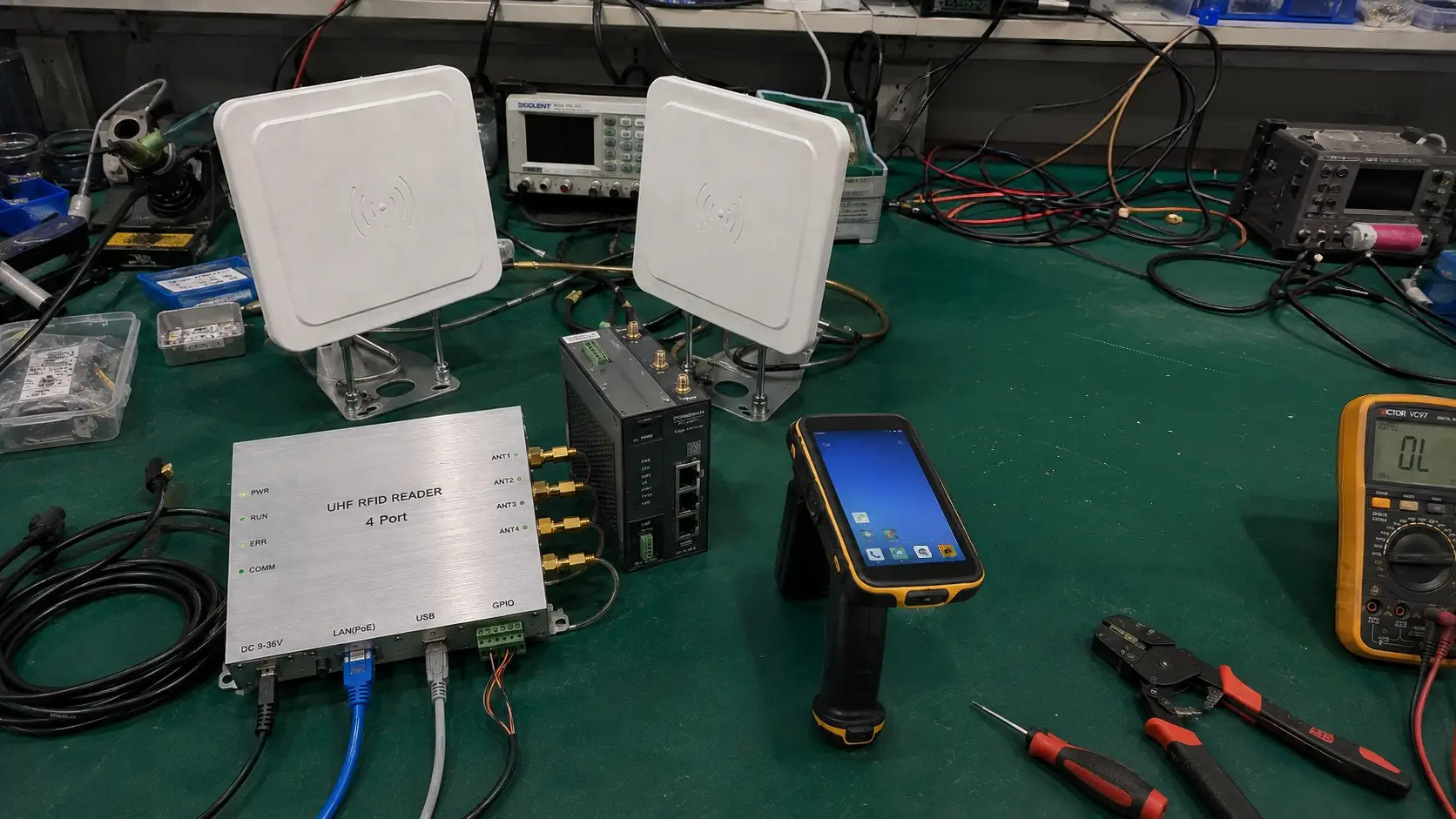
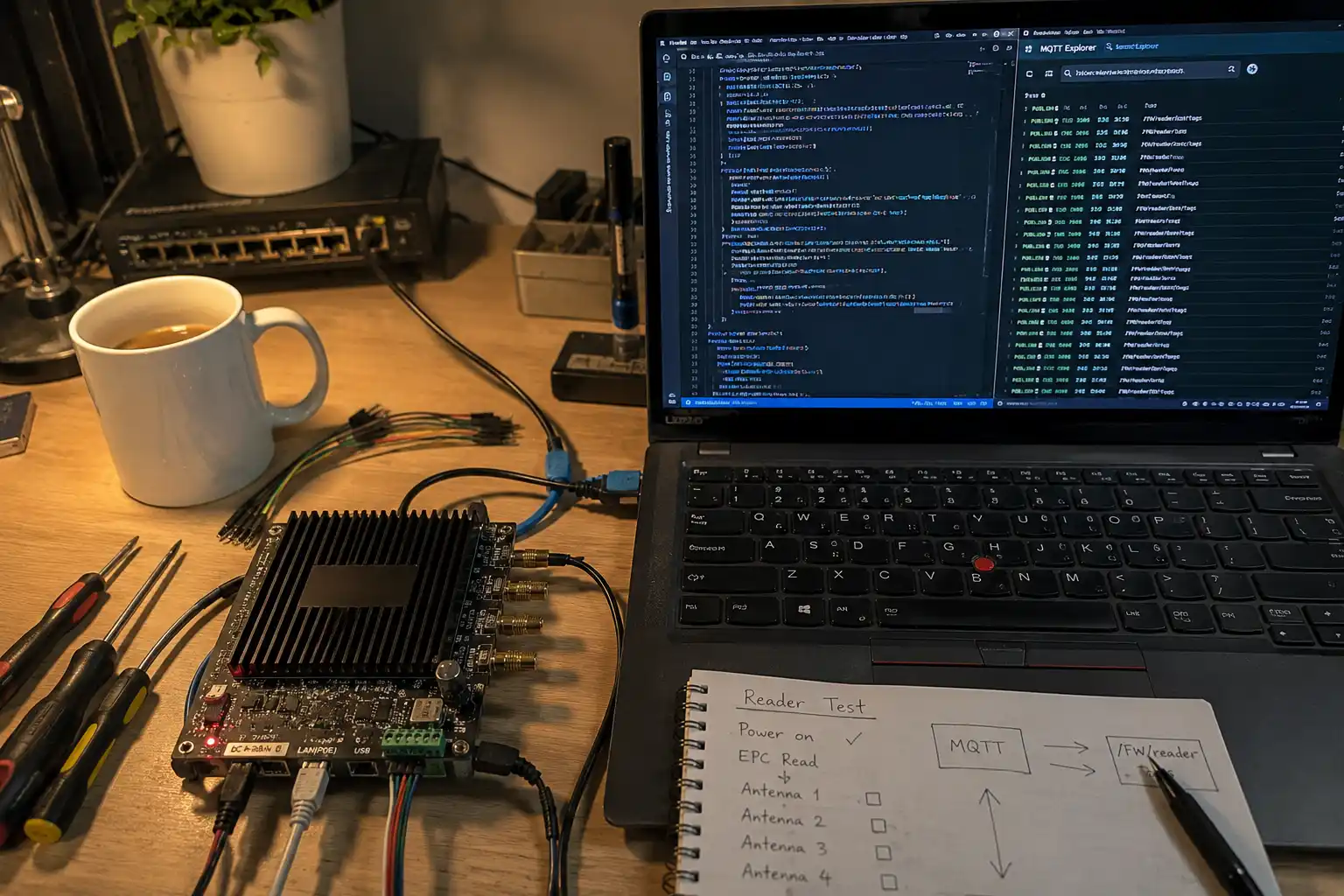
In a factory the PLC world runs Modbus TCP or OPC-UA, and pushing RFID events there directly avoids a middleware hop. In a distribution center the WMS lives on IT's network and expects TCP/IP or a virtual COM bridge. A reader that exposes both, like a four-port UHF reader with 4 SMA ports, 500 reads per second, and -80 dBm sensitivity over RS232 or TCP/IP, lets you serve both worlds from one bill of materials. For kiosk-class work where the bus is a PC, the desktop vs embedded kiosk integration guide covers the same decision at smaller scale.
Reader Spec Mapping
Turn the tiers into a shortlist. Map the load to the port count and the buffer you need, then confirm the bus.
- Light tier: single-port desktop or embedded module, edge filter on.
- Moderate tier: single fixed reader, RSSI gating enabled.
- Heavy tier: 4-port fixed reader, firmware buffer, Dense Reader Mode.
- Extreme tier: synchronized multi-reader, OPC-UA push to MES.
For the buyer-side view, our guide to choosing a UHF reader for industrial efficiency complements this spec work with a procurement checklist.
The RFID reader buying guide sets this spec mapping against budget and environment, so the reader you choose fits the event load from day one.
A Worked Sizing Example
Numbers make the tier model concrete, and they stop a client from underspecifying to save a few dollars. Take a bottling line moving 1,200 bottles per minute, with four tags per case and cases grouped six to a pallet at the out-feed portal.
A line like this lands in the heavy tier, not the moderate one, because the out-feed portal sees a stacked field of 24 plus tags every few seconds. Spec a 4-port fixed reader with firmware buffering and Dense Reader Mode, not a single-port unit, or you will miss cases during the peak and corrupt the shipment record.
Walk the math. At 1,200 bottles per minute and four tags per case, that is 4,800 tag events per minute from cases alone, roughly 80 per second, before any pallet tags enter the field. Add the pallet reads and the in-flight stack waiting at the curtain, and the sustained load clears 150 events per second, squarely in the heavy tier of the table above. A moderate-tier reader without a buffer would forward duplicates and saturate the line PLC, which then stalls the conveyor to protect itself.
The same formula applies to your site. Count tags in the read field at the busiest instant, not the average, and convert to events per second including re-reads. If that number is above 150, you need the heavy tier and a reader that buffers. Below 20, a single embedded module is enough. The port count and the buffer are not upgrade options you add later. They are the spec you set on day one, and getting them wrong means replacing the reader, not tuning it.
Conclusion
Size by events per second, demand EPC Gen2v2 and ISO 18000-6C, filter and buffer at the edge, and pick the bus that matches the plant. That is how complex collection stays reliable under load.
Most of these failures trace back to the three implementation mistakes we see most often in the field.
If you are scoping a high-velocity line and want the reader spec mapped to your event tier, contact Fongwah.
Q: What is edge filtering and why does it matter for RFID?
A: Edge filtering lets the reader report a state change, such as tag entered zone, once instead of streaming every raw read. It cuts network load and gives the host a clean event log instead of duplicate pings that bury real data.
Q: Which protocols should an industrial RFID reader support?
A: For UHF, specify EPC Gen2v2 and ISO 18000-6C, plus the HF standards your cards use if both run on one portal. Dense Reader Mode is also needed so adjacent antennas on one reader do not jam each other.
Q: When does an RFID reader need an internal buffer?
A: When the event tier is 150 reads per second or higher, or whenever the network can dip during load spikes. A firmware buffer holds events through a brief link loss and forwards them on recovery instead of dropping them.
Q: How do I size a reader for event velocity?
A: Estimate sustained events per second at the busiest portal, not peak tag count. Map that to the tier table: up to 20 is light, 20 to 150 moderate, 150 to 500 heavy, 500 plus extreme, then pick port count and buffer accordingly.