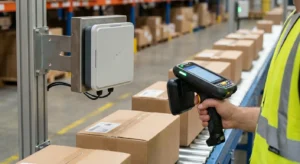
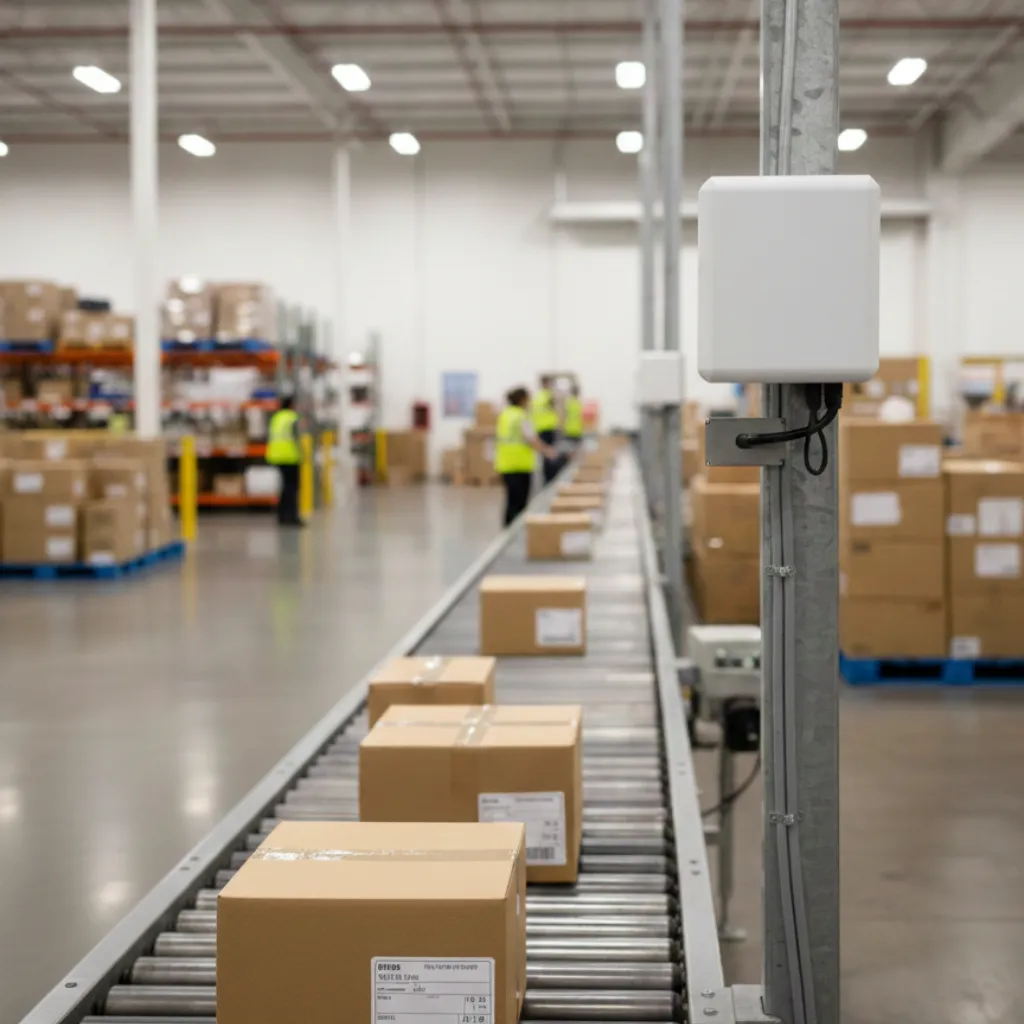
Metal environments ruin standard RFID signals and destroy inventory accuracy. You are losing money on lost assets right now because your current setup cannot handle the interference.
To succeed in metal-rich environments, you must ignore standard datasheet ranges and focus on interference rejection. You need specialized anti-metal tags, readers with robust anti-collision algorithms like the Fongwah U6, and geometric antenna placement. This approach eliminates the dead zones that cause critical scanning failures in industrial warehouses.

Most managers buy the cheapest reader with the highest promised range. Then they fail. Do not make that mistake. Read this guide to understand the physics of the problem before you spend your budget.
Why Is Metal Considered the Ultimate Nightmare for Industrial RFID?
Your readers beep, but the system records nothing. This invisible barrier disrupts operations and forces your team to revert to slow manual counting.
Metal acts as a shield and a reflector for UHF signals. It creates eddy currents that detune tags, rendering them silent, and causes multipath reflection that confuses the reader with its own signal echo.

I started my career on the production line. I saw engineers panic when multimillion-dollar systems failed. The problem is physics. When a standard RFID tag touches metal, the metal surface acts as a ground plane. It sucks the energy out of the antenna. We call this "detuning." The tag does not wake up. It is dead.
Furthermore, metal creates a "Hall of Mirrors" effect. The reader sends a wave. The metal beam reflects it. The forklift reflects it again. The reader receives its own signal back, but out of phase. This cancels out the real tag signals. This is called multipath interference.
Below is a breakdown of how metal impacts standard equipment versus specialized gear:
| Factor | Standard Environment (Cardboard/Plastic) | Metal-Rich Environment (Industrial) |
|---|---|---|
| Signal Behavior | Penetrates materials easily. | Reflects and bounces (Multipath). |
| Tag Tuning | Stays at 860-960 MHz. | Shifts frequency (Detunes) and fails. |
| Read Zone | Predictable sphere. | Unpredictable with many "dead spots." |
| Required Gear | Generic inlays. | Ceramic/PCB Anti-metal tags. |
If you do not respect these physical laws, you will fail. You cannot code your way out of bad physics.
How Do You Select the Right Hardware Beyond the Datasheet?
Datasheets lie about performance in real environments. You need hardware built for noise, not just hardware that claims a long reading distance in an open field.
Select a reader like the Fongwah U6 which prioritizes dense reader mode and signal filtering over raw power. You must pair this with ceramic or flexible anti-metal tags designed to use the metal surface as an amplifier.
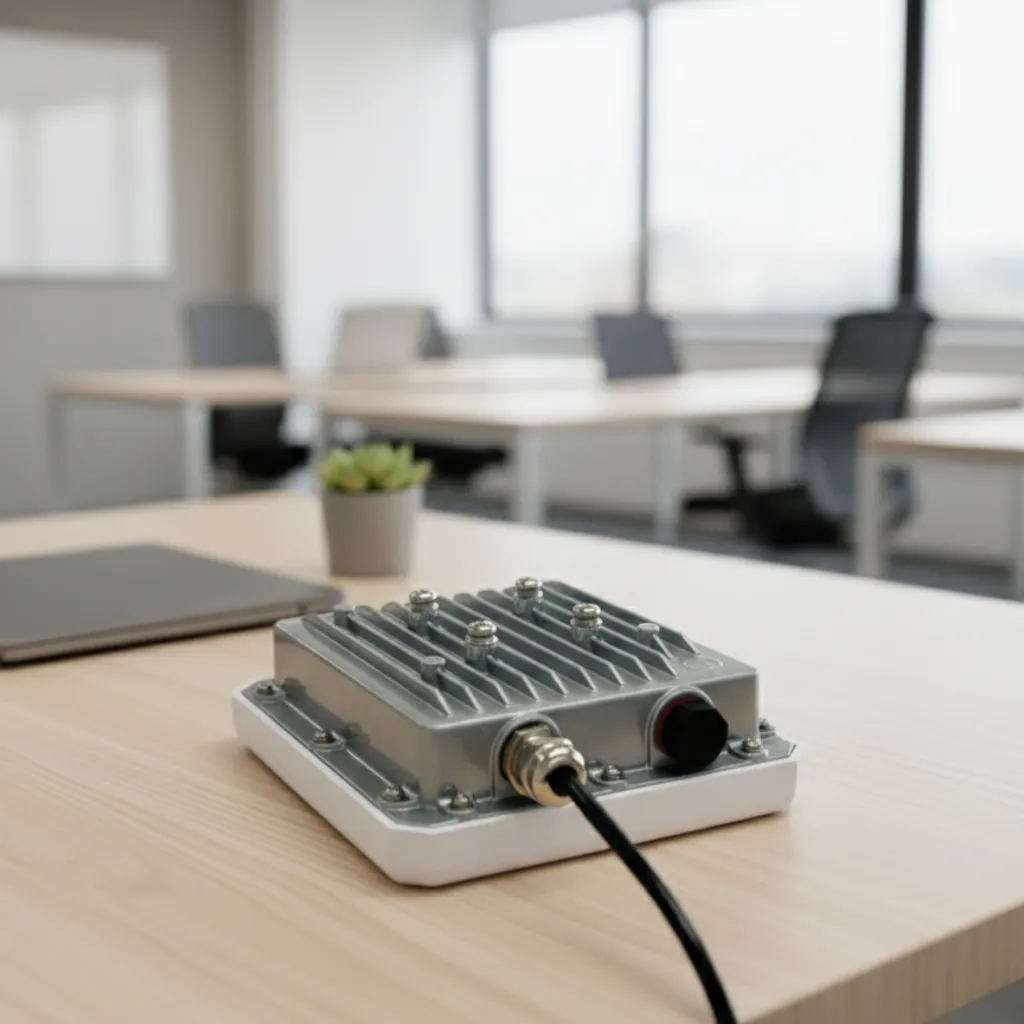
I argue with purchasing managers often. They see a reader that costs $200 less. They say, "Jay, this spec sheet says it reads 10 meters, just like yours." I have to explain that the test was done in an empty room. In your warehouse, that cheap reader will get overwhelmed by its own echo.
As an engineer, I recommend the Fongwah U6 reader for these scenarios. We did not just boost the power. We improved the processor's ability to filter noise. It distinguishes between a tag signal and a metal reflection.
You also need the right tag. Do not use a paper label. You need a tag with a spacer or a ceramic core.
- PCB Tags: distinct and durable (Hard).
- Flexi-Anti-Metal: follows the curve of a pipe or cylinder.
These tags isolate the antenna from the metal. Sometimes, they even use the metal object to extend the read range. This turns your "nightmare" into an asset. This is the difference between a toy and an industrial tool.
What Is the Art of Avoiding Dead Zones Through Antenna Placement?
Bad positioning creates invisible holes in your coverage. Even the most expensive reader cannot read a tag if the physics of the wave never touches it.
Avoid placing antennas at ninety-degree angles to flat metal surfaces to stop direct reflection jamming. Instead, angle antennas to create a cross-hatched zone that covers the object from multiple sides as it moves.

Placement is where the real engineering happens. I have visited sites where the client mounted the antenna directly facing a metal wall. The wave hits the wall. It bounces straight back into the antenna. The reader blinds itself. This is Standing Wave Ratio (SWR) failure.
Here is the practical fix we use at Fongwah:
- The 45-Degree Rule: Never aim perpendicular to metal. Angle your antennas down or sideways. Deflect the interference away from the source.
- Circular Polarization: Use circular polarized antennas. Linear antennas miss tags if the orientation is wrong. Circular antennas spin the signal. They catch the tag regardless of how the metal pallet is sitting.
- The Choke Point: Do not try to flood the whole room. Metal makes that impossible. Create "gates" or "tunnels." Shield the sides of the gate with absorbing material. Read the item only when it passes through this controlled zone.
This is not magic. It is geometry. If you control the angles, you control the data.
How Did a 2026 Automotive Plant Achieve 99.9% Accuracy?
A major car parts supplier was losing inventory daily. Their manual scans were slow, and their metal bins made previous RFID trials fail completely.
We deployed a pilot system using U6 readers and specialized ceramic tags on the metal bins. The system achieved near-perfect accuracy by utilizing the filtered read zones, eliminating manual counting labor entirely.
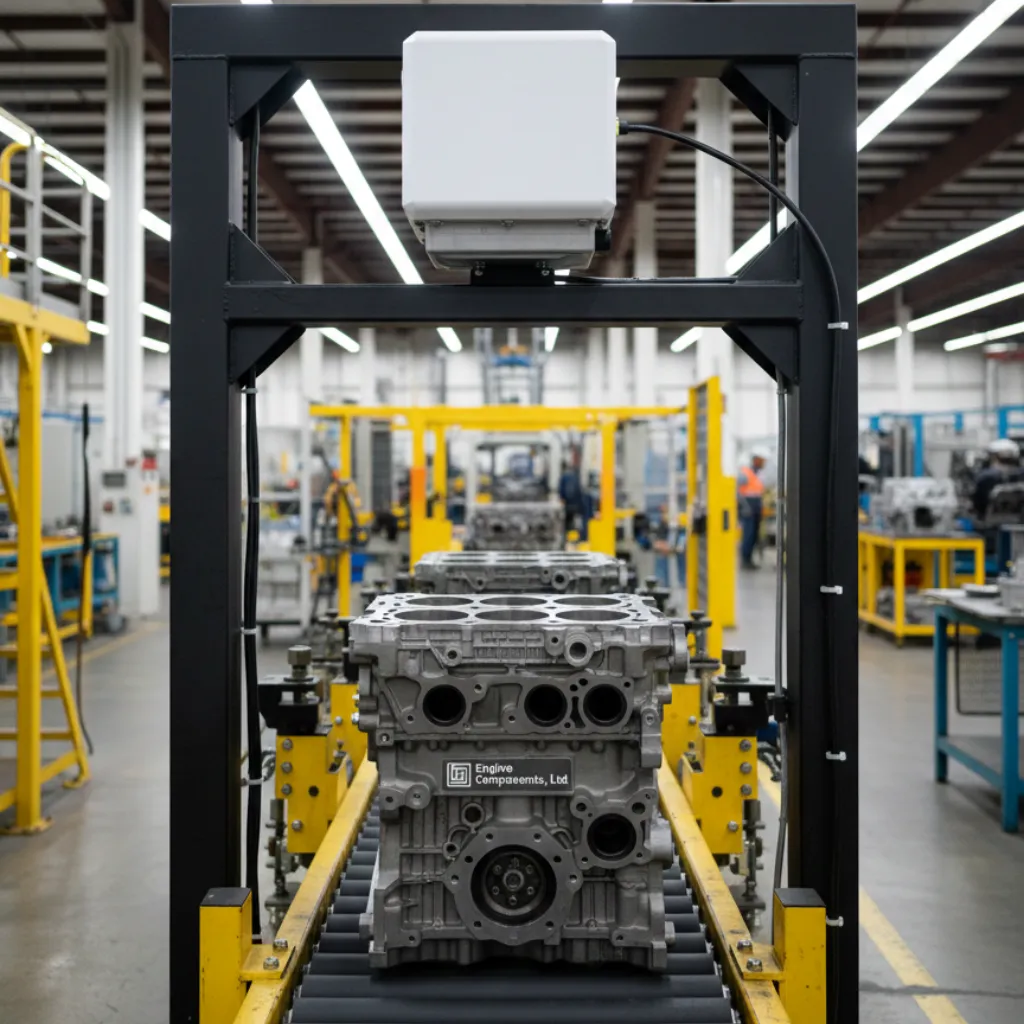
Let me share a story from a project I consulted on recently. The client manufactures engine blocks. Everything is metal. The parts are metal. The shelves are metal. The transport bins are metal.
They tried handheld scanners first. The workers hated it. The signals bounced everywhere. They were scanning bins in the next aisle by mistake. Inventory accuracy was stuck at 82%.
We changed the approach. We installed Fongwah U6 fixed readers on the conveyor belts and forklift entries. We used high-dielectric ceramic tags on the bins. The result? The mental "barrier" disappeared. The ceramic tag used the engine block to boost the signal. The U6 reader filtered out the cross-aisle echoes.
Within three months:
- Inventory accuracy hit 99.9%.
- Labor costs for counting dropped to zero.
- The system paid for itself in 14 weeks.
This proves that the environment is not the problem. The hardware selection is the problem.
Conclusion
Metal environments are difficult but not impossible. You need quality hardware like the Fongwah U6 and an engineering mindset. Contact me today to request your environment assessment or test kit.
---