
Many business owners confuse RFID and NFC technologies. This confusion leads to wasted budget and inefficient systems. I will explain the differences so you do not make these mistakes.
RFID (specifically UHF) is best for tracking many items from a long distance, like in a warehouse. NFC is designed for short-range, secure interactions, like mobile payments. Your choice depends entirely on whether you need distance and speed or security and smartphone compatibility.
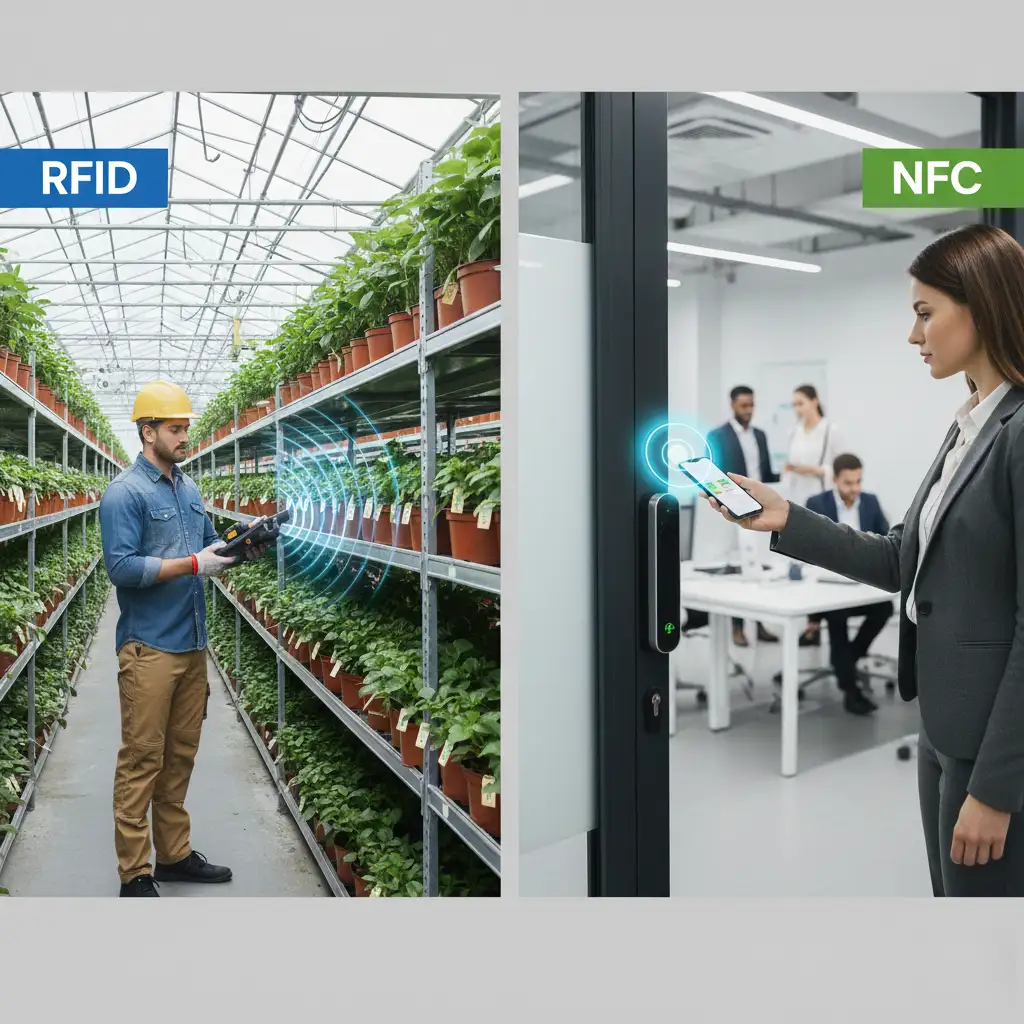
You might think you know the answer, but the specific technical limitations of each can ruin a project if ignored. Keep reading to see exactly how these specs impact your daily operations.
What Are the Core Technical Differences?
Reading a spec sheet can be boring and confusing. If you miss one small detail about frequency, your whole system might fail.
The main difference lies in frequency and range. RFID operates at Ultra High Frequency for long distances, while NFC uses High Frequency for very close contact.
To truly understand which hardware to buy, you must look at the physics behind the tags. At Fongwah, we deal with these chips every day. I started my career as a production line operator five years ago. I remember trying to scan a pallet of goods with a standard High Frequency reader. It was a disaster. We had to scan every box individually. It took hours.
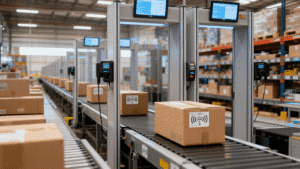
Later, when I became an engineer, I learned why UHF RFID is superior for that job. UHF operates between 860 and 960 MHz. This allows the signal to travel up to 12 meters. More importantly, it supports "bulk scanning." You can read hundreds of tags in seconds. NFC, on the other hand, operates at 13.56 MHz. Its range is less than 10 centimeters. It is slow and usually reads one tag at a time. However, NFC has a superpower: two-way communication. It can talk back to the reader securely. This makes it safer than standard UHF RFID.
Below is a technical breakdown. I created this table to help technical teams see the hardware limits immediately.
Table 1: Technical Specifications
| Feature | RFID (Specifically UHF) | NFC (Near Field Communication) |
|---|---|---|
| Standard Frequency | 860 - 960 MHz (Ultra High Frequency) | 13.56 MHz (High Frequency) |
| Read Range | Long (Up to 12 meters+) | Very Short (Typically < 10 cm) |
| Read Speed | Very Fast (Supports bulk scanning of hundreds of tags) | Slower (Usually one tag at a time) |
| Communication Mode | One-way (Tag responds passively) | Two-way (Supports Reader/Writer, Peer-to-Peer) |
| Security | Basic encryption, focuses on tracking | Advanced encryption, for payments/anti-counterfeiting |
Which Business Scenarios Fit Each Technology?
Technology is useless if it does not solve a business problem. You need to know exactly where to deploy these tools to get a return on investment.
RFID is the king of logistics and automated tracking. NFC is the leader in customer engagement and secure payments.
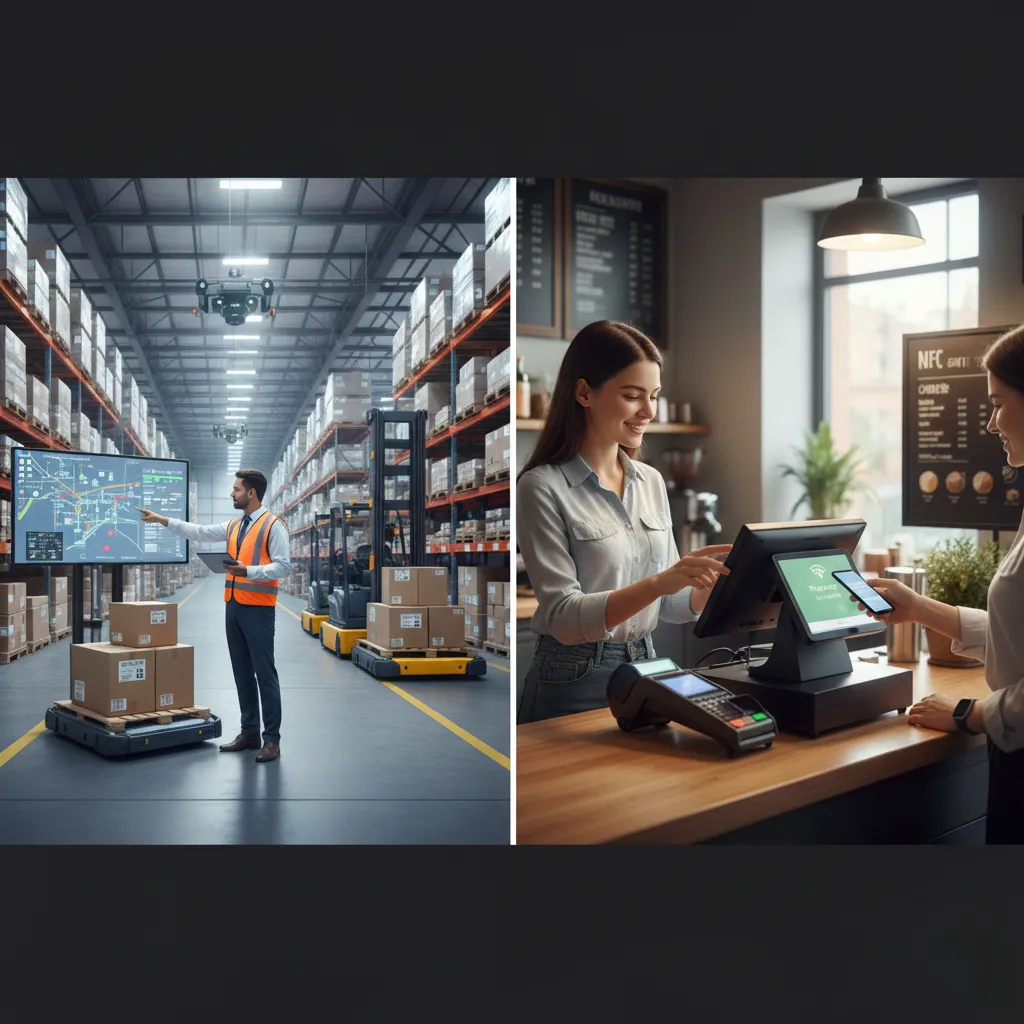
When I moved into marketing at Fongwah, I had to explain these use cases to clients constantly. A client once asked to use UHF RFID for a payment system. I had to stop them. I explained that UHF signals can be intercepted from a distance. That is not safe for credit cards.
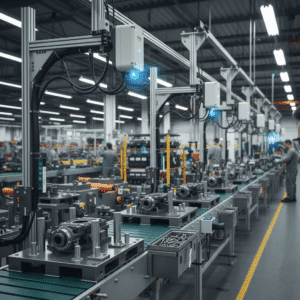
For asset tracking, RFID is the clear winner. If you manage a warehouse, you need to know where every pallet is without walking up to it. RFID allows for automated vehicle access and assembly line tracking. It is about speed and volume.
However, if your goal is customer interaction, you must choose NFC. Why? Because every modern smartphone is an NFC reader. You do not need to buy expensive handheld devices for your customers. They just tap their phone to a product label to see authenticity or get a coupon. This is vital for marketing. Also, for personal identity, like door access or employee badges, the short range of NFC is actually a benefit. It ensures the person is physically present at the door.
Here is a guide to help you match your business needs to the right technology.
Table 2: Typical Business Use Cases
| Business Needs | Recommended Technology | Examples |
|---|---|---|
| Mass Inventory Counting | RFID | Warehouse logistics, Pallet tracking, Apparel retail counting |
| Consumer Interaction & Marketing | NFC | Scanning for coupons, Product manuals, Anti-counterfeit checks |
| Contactless Payments | NFC | Credit cards, Apple Pay, Transit cards |
| Automated Asset Entry | RFID | Vehicle access control, Automated assembly line tracking |
| Personal Identity Verification | NFC | Access control cards, Hotel room keys, Employee badges |
How Do You Make the Final Decision?
You have seen the specs and the use cases, but you might still feel stuck. Making the wrong choice now means ripping out hardware later.
Ask yourself what your primary goal is. If you need speed and distance, choose RFID; if you need security and phone compatibility, choose NFC.
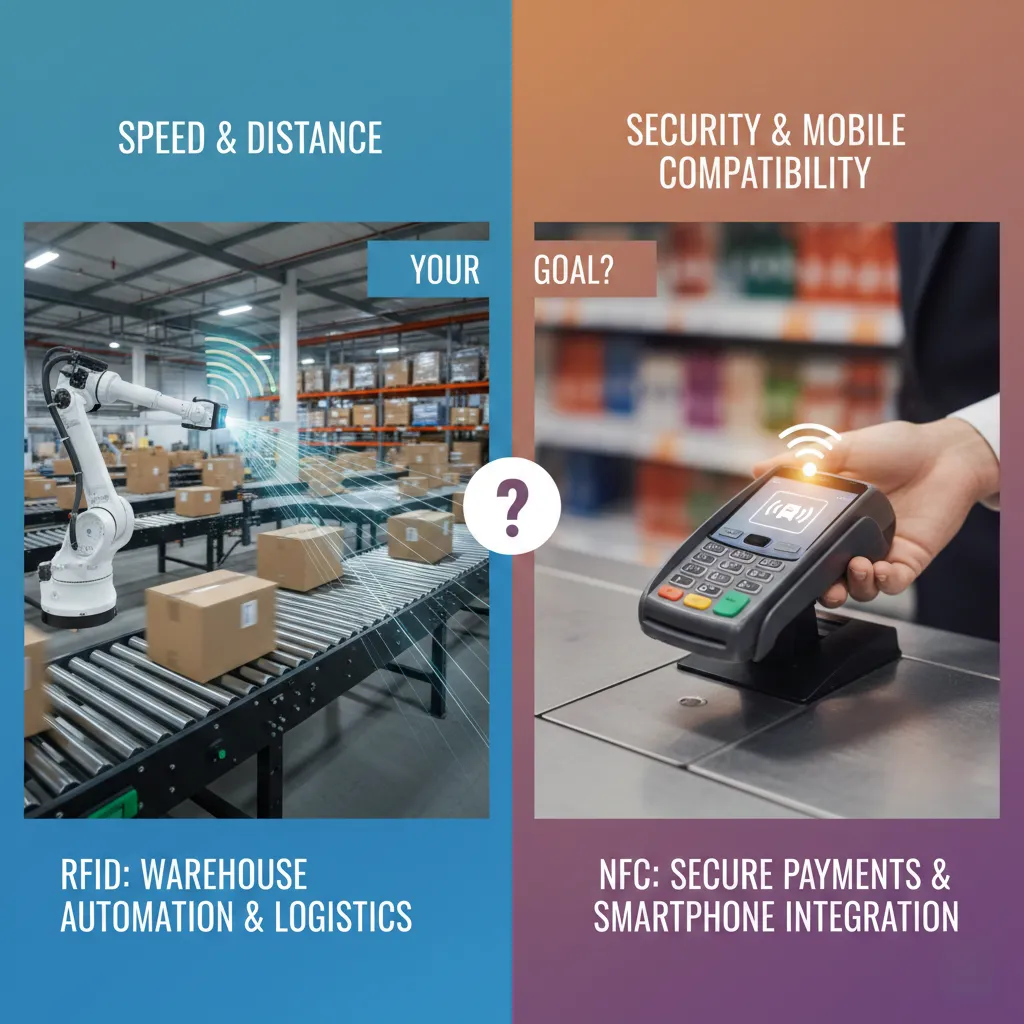
This is the most important part of your decision-making process. I call this the "Decision Matrix." In my years working with global clients, I found that stripping away the technical jargon helps. We need to focus on the "why."
If a client tells me, "I want to scan a whole box of goods in one second," the answer is simple. Only UHF RFID can do this because of its anti-collision algorithms. NFC physically cannot separate the signals fast enough.
Conversely, if a client says, "I want customers to verify my product is real using their phone," the answer must be NFC. UHF RFID requires a special reader that consumers do not own.
Another factor is environment. If you want to track containers in a yard, you cannot ask a worker to climb every container to tap a tag. You need the 12-meter range of UHF. But if you are building a secure payment terminal, that long range is a liability. You want the card to be millimeters away from the reader to prevent theft.
Use the table below. It addresses the specific complaints and desires I hear from customers every day. It guides you to the product that solves the specific pain point.
Table 3: The Decision Matrix
| If your requirement is... | Then you should choose... | Why? (Reasoning) |
|---|---|---|
| "I want to count a full box of goods in one second" | UHF RFID | UHF helps you scan groups of tags instantly. It is the king of efficiency. |
| "I want customers to check authenticity with their phone" | NFC | NFC works with all modern smartphones. You do not need extra devices. |
| "I want to track containers in harsh outdoor environments" | RFID | UHF has a long read range. Humans do not need to get close to dangerous areas. |
| "I want to build a highly secure payment system" | NFC | Short-range signals and strong encryption stop hackers from stealing data. |
Conclusion
RFID offers speed and distance for inventory, while NFC provides security for personal interactions. Choose the one that matches your specific workflow needs.
---