
A buyer screening a Chinese RFID tag supplier faces two equally expensive outcomes: pay a trading company's margin for product it does not make, or lock a yearly PO with a factory that cannot hold tolerance.
Evaluate a Chinese tag manufacturer with a five-dimension scorecard covering chip authorization, inlay sourcing, QC yield, IP and compliance, and engineering support. A supplier that fails two or more dimensions is a sourcing risk, not a cost saving.
Red Flag 1: No Verifiable Chip Authorization
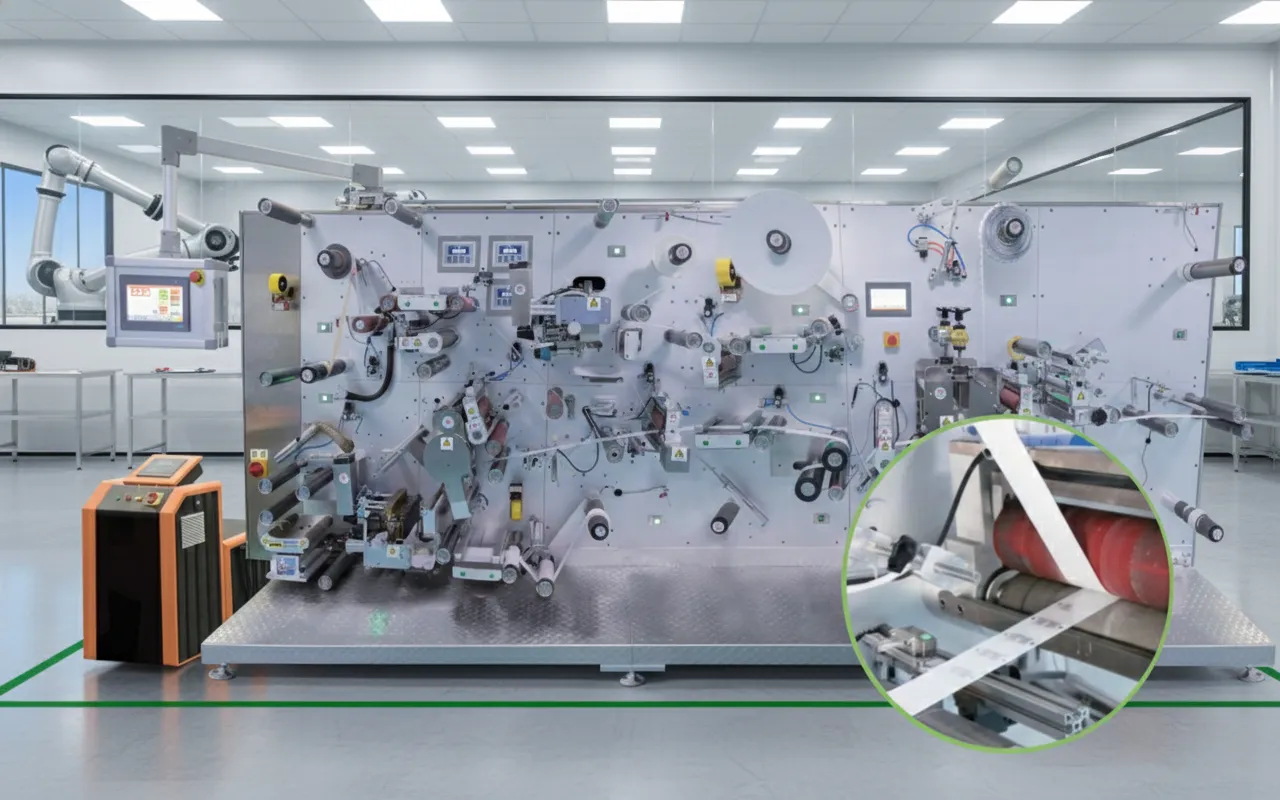
A tag is only as trustworthy as the silicon inside it. Suppliers who cannot show authorization are shipping silicon of unknown provenance.
Demand a current NXP or Impinj chip authorization letter before you quote. Without it, the inlay may carry clone or recycled dies whose memory fails weeks after commissioning, and your field failure rate becomes someone else's problem.
NXP and Impinj license their UHF and HF silicon to approved convertors. A real factory shows the authorization on request and names the exact chip, for example UCODE 9 or Monza 4. A trader answers with genuine chips guaranteed and no document. The cost of a clone die is not the first read. It is the tag that will not write back its EPC after three months in the field, forcing a re-tag of an entire asset register.
Red Flag 2: Opaque Inlay Sourcing
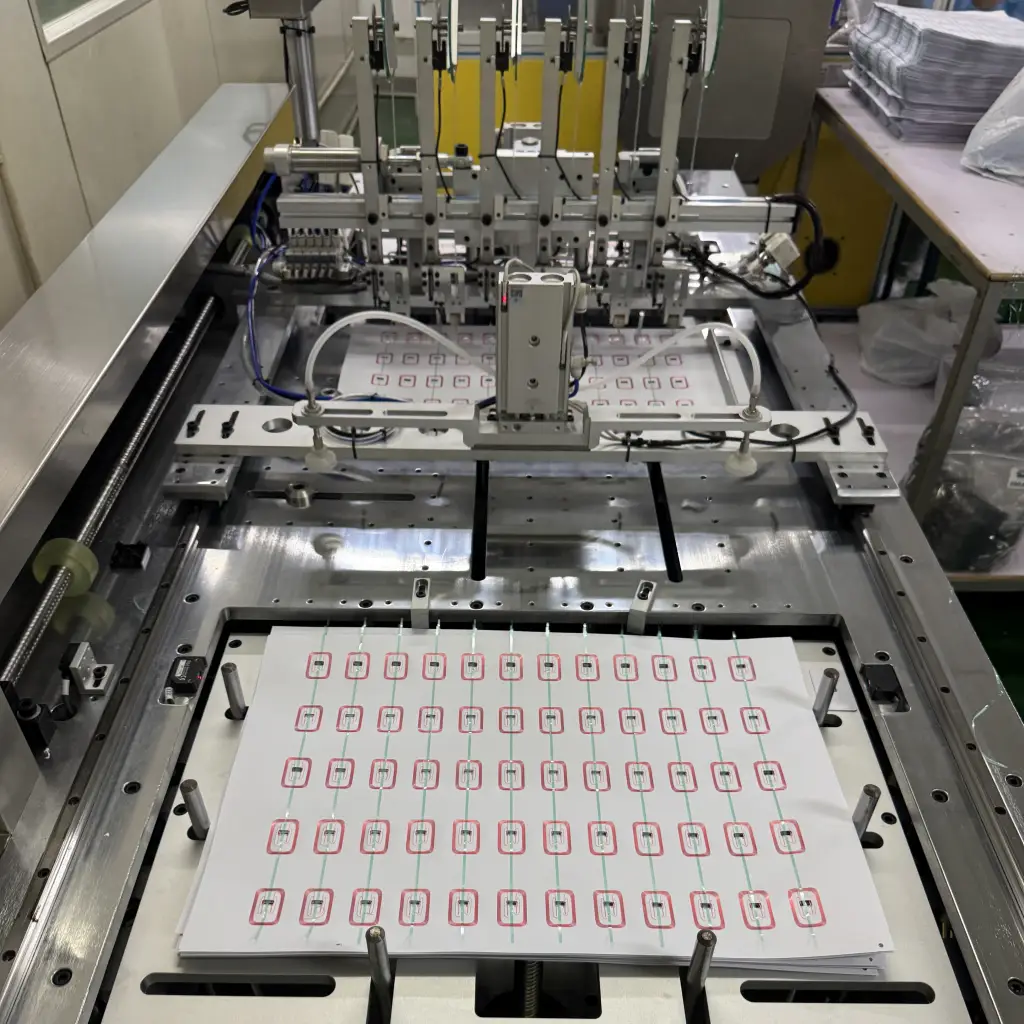
The inlay is the engineered heart of the tag. A supplier that will not name its inlay source is hiding a variable you cannot control.
Ask for the inlay manufacturer and the antenna substrate. Authorized inlays from established convertors keep tolerance across batches, while unknown inlays drift in tune and kill read range on metal or liquid surfaces.
Inlay sourcing decides whether a tag reads at 4 meters or 0.4 meters. If a supplier cannot tell you the inlay part number, assume every bulk order may use a different one. That is the root cause of the classic sample was great, production failed complaint.
Red Flag 3: Weak or Undisclosed QC Yield
QC yield is the only number that predicts your returns. A supplier that reports only pass or fail, with no yield figure, is hiding variance.
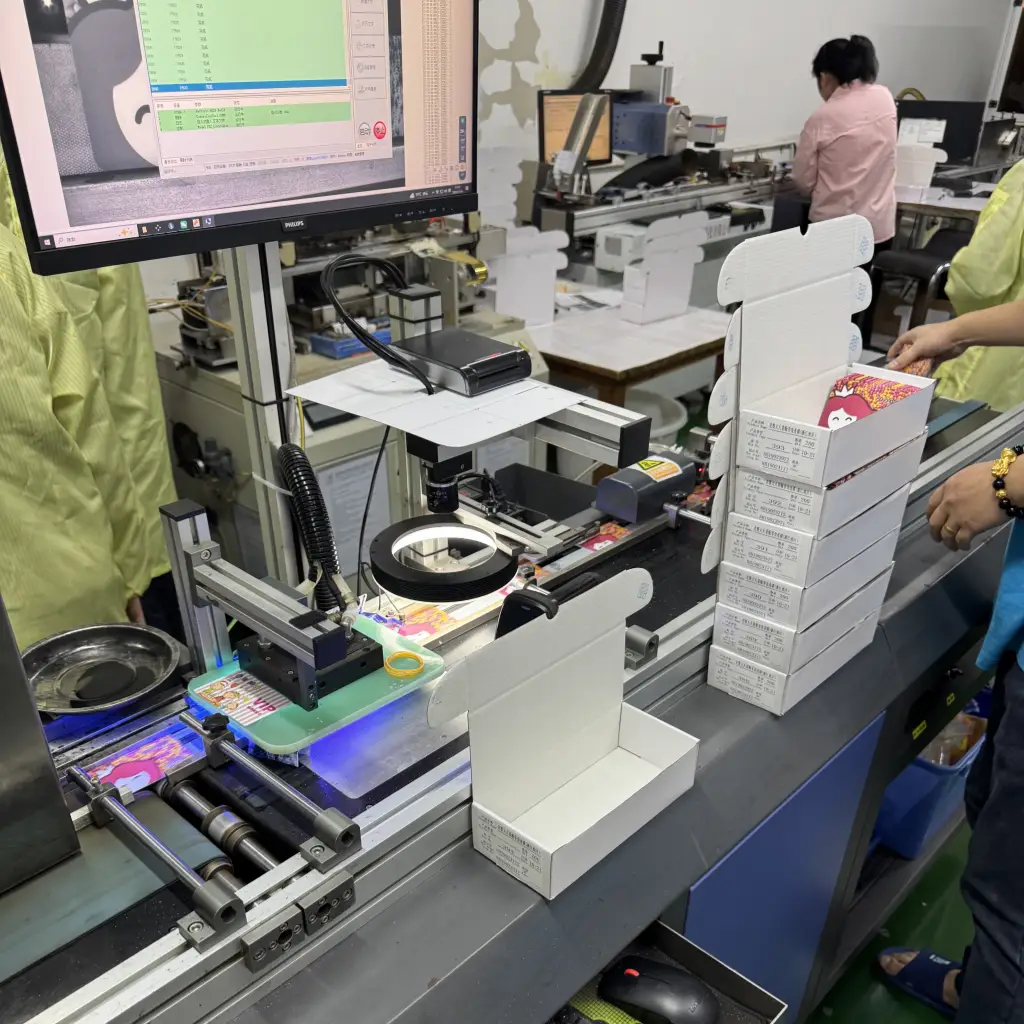
Require a documented QC yield per production lot, measured by automated optical inspection and Voyantic-class equipment. A real factory targets 99 percent plus and ships the test report with the lot, not a vague quality promise.
High volume only matters if the yield holds. Ask for the lot's read-rate curve and the encoding accuracy log. If the answer is we check by hand, your bulk order is being sampled by eye.
Red Flag 4: Missing IP and Compliance Paperwork
Retail and industrial programs turn on certificates you cannot fake at shipment time. A supplier without them will block your own customer's gate.
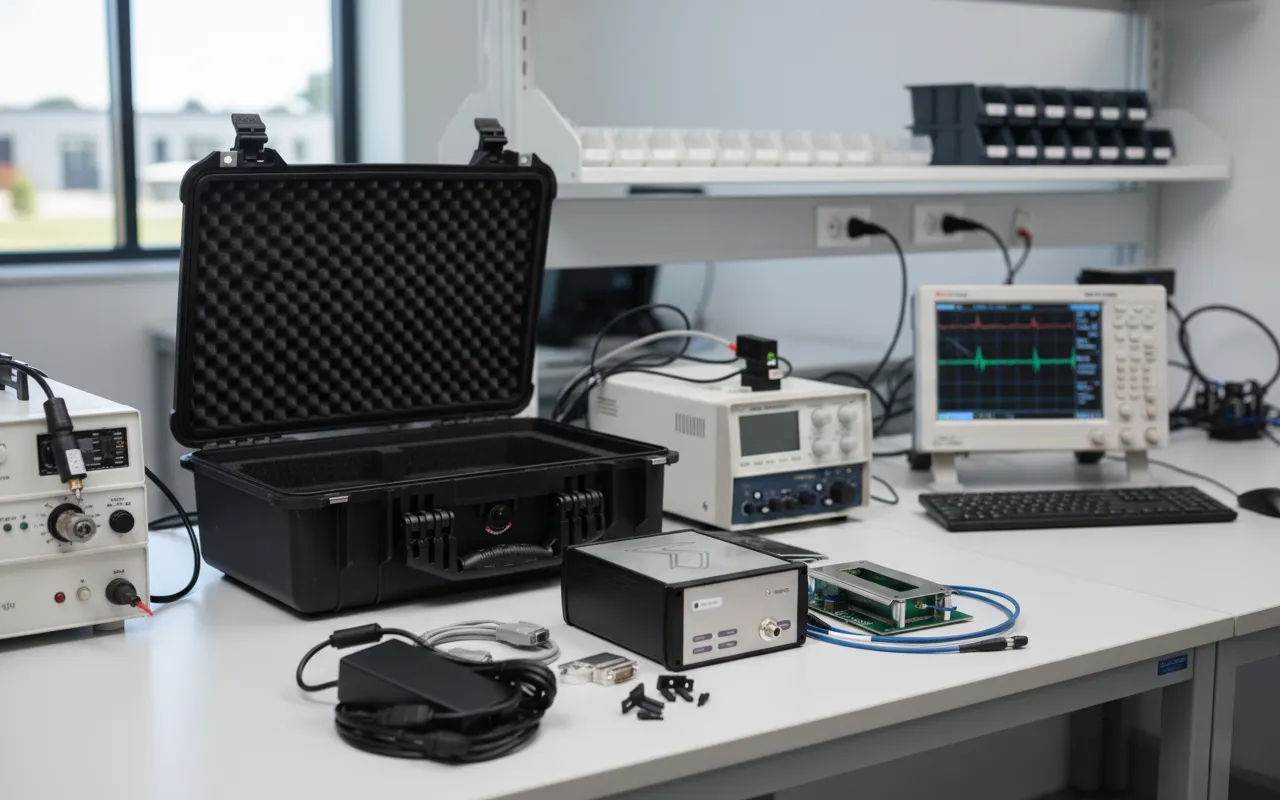
Confirm ARC certification for retail RFID programs and ISO 9001 for industrial quality systems before signing. Missing compliance paperwork means your tags may be rejected at your customer's receiving dock, not yours.
ARC certification, for example ARC Spec Q for apparel, is what major retail mandates require. ISO 9001 is the baseline quality-system proof for industrial buyers. A trading company often does not know what these are, let alone hold them. The downstream cost is a chargeback or a returned container. If your market is retail inventory, our comparison of UHF vs HF tags for retail inventory explains which certification path fits the program.
Red Flag 5: No Engineering Support After the PO
The sale is the start of the relationship, not the end. A supplier with no engineers to answer a detune question leaves you alone at the worst moment.
Choose a manufacturer that offers application engineering on antenna tuning, surface matching, and encoding validation. If the only contact is a sales inbox, you are buying a product with no support path when a deployment goes wrong.
Engineering support shows up as answers, not apologies. When a tag underperforms on a metal tool, you need someone who explains detuning and proposes a ferrite shield, not a replacement quote. For the tag selection logic itself, our guide on how to choose the right RFID tag maps tag type to surface and range, which is the conversation your supplier should be able to join.
The Due-Diligence Scorecard
Score each dimension from 1 to 5. A total under 18, or any single zero, is a stop condition.
| Dimension | What to request | Pass score (4 to 5) |
|---|---|---|
| Chip authorization | NXP or Impinj letter, named die | Current document on file |
| Inlay sourcing | Inlay part number, substrate | Named, stable source |
| QC yield | Lot test report, AOI + Voyantic | 99 percent plus, shipped |
| IP and compliance | ARC, ISO 9001 certificates | Valid, program-matched |
| Engineering support | Tuning, encoding, surface help | Direct engineer access |
For choosing between passive and active for the asset itself, see our breakdown of passive vs active RFID tags for asset tracking, since the manufacturer question sits on top of the tag-type question.
The Factory Audit Checklist
If you can visit, walk this list. If you cannot, require evidence for each item over video.
- Live video of the bonding and encoding lines running, not a brochure tour.
- Named equipment, for example Mühlbauer bonders and Voyantic test stations.
- A sample lot test report with read-rate and encoding-accuracy numbers.
- The actual ARC and ISO 9001 certificates, with dates.
- An engineer on the call who answers a detune question without escalation.
- A written change-control policy so glue and substrate cannot shift silently between orders.
The RFID reader buying guide treats tag and reader as one system, so qualifying the tag supplier is the same discipline as qualifying the reader. Do both before you commit.
Reading the Quote, Not Just the Price
A low price is not a saving if the lot fails. The scorecard exists because the number on the PO hides the cost that shows up later.
Compare quotes by total risk, not unit price. A supplier that is 8 percent cheaper but fails two scorecard dimensions will cost more in re-tags, chargebacks, and engineering time than a factory priced fairly with documentation in hand.
A practical check is to ask for a reference account in your own region and product type. A real factory names one; a trader deflects. The reference also tells you whether batch consistency held over a year of reorders, which is the only proof that matters for a recurring PO. If the reference has run the same tag on the same surface for twelve months without a yield complaint, you have the evidence a certificate cannot give you.
Conclusion
Screen with the five-dimension scorecard, audit the line, and never accept a supplier that cannot show chip authorization or yield data. The right factory protects your field performance and your customer relationship.
If you want a second opinion on a supplier shortlist or help specifying tags for your surface and range, contact Fongwah.
Q: How do I verify an RFID tag manufacturer is authorized to use NXP or Impinj chips?
A: Request the current authorization letter naming the exact chip die, such as UCODE 9 or Monza 4. A trading company replies with a vague guarantee and no document, while a real factory shows the license on request.
Q: What QC evidence should I ask for before a bulk tag order?
A: Require a per-lot test report from automated optical inspection and Voyantic-class equipment, including read-rate curve and encoding-accuracy log. A real factory targets 99 percent plus yield and ships the report with the lot.
Q: Should I buy from an OEM factory or a trading company?
A: Buy from an OEM factory when you need engineering support, stable inlay sourcing, and accountability. A trading company adds margin and cannot tune antennas, answer detune questions, or hold change control on the bulk order.
Q: Which certifications matter for RFID tags sourced from China?
A: ARC certification for retail RFID programs such as apparel, and ISO 9001 for industrial quality systems. Without them your tags may be rejected at your customer's receiving dock, which is a cost you inherit, not avoid.