
A 200,000 square foot plant loses more hours to where is the asset than to any machine downtime. Enterprise tracking pays for itself only when the architecture scales past the first pilot.
Build the system on a multi-port UHF backbone with native SDK integration, roll it out in phases from pilot to zone to site, and source direct from an OEM to cut the total cost of ownership. The hardware is the easy part; the architecture is the project.

A real enterprise asset tracking rollout needs readers, modules, and issuers working as one architecture. The plan below is how to scope it with your integrator.
The Multi-Port UHF Backbone
A single-port reader cannot bracket a dock door without blind spots. Enterprise coverage starts with port count, not range claims.
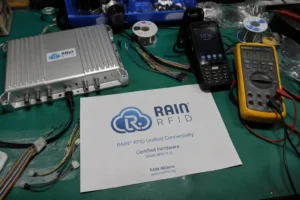
Deploy 4-port fixed readers at chokepoints so multiple antennas cover one zone from different angles. A reader at 500 reads per second with -80 dBm sensitivity catches weak signals bouncing off metal assets that a basic unit drops.
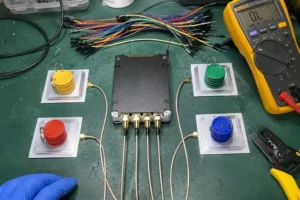
A 4-port fixed UHF reader carries 4 SMA ports and sustains 500 reads per second at -80 dBm, talking RS232 or TCP/IP. Bracket a dock door with four antennas and you remove the null a single patch leaves behind a forklift. For the multiplexing math behind sharing ports across zones, our multi-port RFID multiplexing guide covers how to extend coverage without multiplying readers.
This backbone is the capture layer. Everything else, the SDK, the database, the phased rollout, hangs off it. The guide to the 4 core components of an industrial RFID system puts antenna, reader, tag, and software in one picture so the backbone is specified completely.
Native SDK Integration to Your Asset Database
Your CMMS or open-source platform is the system of record. A reader locked behind undocumented middleware makes every sync a project.
Integrate through a fully documented native SDK so your developers write EPC and asset ID straight to the database, bypassing proprietary middleware. C# or Java bindings turn issuance and sync into a script, not a service contract.
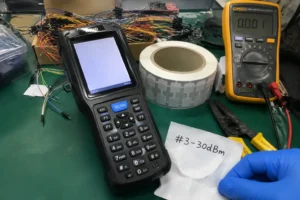
A desktop issuer sits on the admin desk for exactly this. Its 3dBi ceramic antenna reads tags across a controlled 0 to 100 cm range at 100 reads per second, and supports both keyboard emulation and full SDK write. Your script places a tag, commands the hardware to write the asset ID to the EPC bank, and the database updates without a third-party license. For the kiosk-class version of the same SDK thinking, the desktop vs embedded kiosk guide shows issuance at smaller scale.
The integration rule is simple: if you cannot see the API, you do not own the data flow. Native SDK access is what lets a phased rollout add zones without renegotiating middleware.
Phased Rollout: Pilot, Zone, Site
Big-bang enterprise rollouts fail because the first surprise lands on the whole estate at once. Sequence the risk instead.
Roll out in three stages: pilot one chokepoint, then expand to one zone, then replicate to the site. Each stage has a read-rate and exception gate, so a problem is contained and cheap to fix before it scales.
Stage one is a single pilot portal with the U8 and a sample of real assets. Prove 99 percent read rate over two weeks. Stage two extends to one functional zone, for example the receiving dock, with the U6-IE-02 integrated reader where a wall-mounted unit fits better. The U6-IE-02 packs an 8dBi circular polarized antenna for up to 8 m range at 250 reads per second, so you bolt it, run one TCP/IP cable, and it reads. Stage three replicates the proven zone template across the site, reusing the same SDK and BOM.
The phased model also protects the budget. You spend on the pilot's lessons, not on reworking a full-site install that inherited a design flaw.
TCO of Direct OEM Sourcing
The hardware quote is the smallest number in the total cost of ownership. Distribution markup and integration time dominate the rest.
Source direct from an OEM to remove distributor margin and gain engineering access, which lowers TCO through cheaper hardware and fewer integration hours. Certified CE, FCC, and RoHS units with native SDKs avoid the hidden cost of middleman middleware.

A distributor adds a margin on every reader and cannot touch the firmware when a bug appears. Direct OEM sourcing gives you the hardware at factory cost, the SDK, and a technical account contact who answers the firmware question. The TCO win is two-sided: less spend per reader across a multi-site build, and fewer engineer-weeks patching a black box. For the kiosk and embedded side of the same sourcing logic, see the desktop vs embedded guide already linked above.
Architecture Checklist
A complete enterprise build pairs a 4-port fixed reader at chokepoints with a desktop issuer on the admin desk and a native SDK writing straight to the asset database.
- Capture layer: 4-port U8 at dock and yard chokepoints.
- Issuance: U6-CU-91 desktop on admin desk, SDK write to EPC.
- Zone units: U6-IE-02 integrated where wall mounting fits.
- Integration: native SDK, C# or Java, direct to asset DB.
- Rollout: pilot gate, zone gate, site replication.
- Sourcing: direct OEM, CE/FCC/RoHS, documented SDK.
The RFID reader buying guide ties this architecture to the purchasing decision, so the backbone, the SDK, and the rollout plan are set before you buy the first reader.
Worked Example: One Plant, Three Stages
A number makes the phased model real. Take a 200,000 square foot plant with a receiving dock, a yard gate, and 14 internal zones.
Stage the build as pilot, zone, site: prove the U8 at the receiving dock, extend the U6-IE-02 to the yard gate, then replicate the template across the 14 zones. The pilot's lessons, not a guess, decide the site BOM, and that is what keeps rework near zero.
Start the pilot with one U8 and a sample of 200 real assets. Two weeks of 99 percent reads earns the zone gate. Add the yard gate with a U6-IE-02 integrated reader, because the longer 8 m range suits vehicle transit better than a portal bracket. Once both gates pass, the 14 internal zones copy the template: same SDK, same antenna rules, same exception log. The direct OEM relationship means the firmware question during replication goes to an engineer, not a ticket queue, so a site-wide rollout that would take a distributor months ships in weeks. The TCO difference is not the reader price. It is the integration hours you did not spend and the rework you never had. For a plant half this size, collapse the zone stage and go pilot to site, but keep the gate discipline so a flaw still surfaces early.
Conclusion
Build on a multi-port UHF backbone, integrate through a native SDK, and roll out in pilot, zone, site stages sourced direct from the OEM. That sequence keeps read accuracy high and total cost low.
If you are scoping an enterprise asset tracking rollout and want the hardware, SDKs, and rollout plan reviewed, contact Fongwah to discuss it.
Q: Do I need multi-port readers for enterprise asset tracking?
A: Yes, at chokepoints like dock doors where a single antenna leaves blind spots. A 4-port fixed reader brackets the zone from several angles and sustains 500 reads per second at -80 dBm, catching weak signals a basic single-port unit drops.
Q: What is the right phased rollout for an RFID asset system?
A: Pilot one chokepoint and prove read rate, expand to one zone such as the receiving dock, then replicate the template across the site. Each stage has a gate, so a design flaw is contained and cheap before it scales.
Q: Which SDK should I use to integrate RFID readers with my database?
A: Use the manufacturer's native SDK with C# or Java bindings so you write asset IDs to the EPC bank directly, bypassing proprietary middleware. Documented APIs let your developers own the data flow instead of renting it.
Q: How does direct OEM sourcing lower the total cost of ownership?
A: It removes distributor margin on every reader and gives engineering access to the firmware, cutting both hardware spend and integration hours. Certified CE, FCC, and RoHS units with native SDKs avoid the hidden cost of middleman middleware.