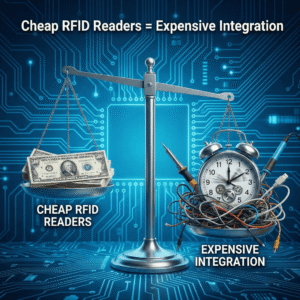

Budgets are tight, and your clients demand top-tier security for less money. If you buy cheap, low-quality hardware, you face failure rates that destroy your profit margins. You need a strategy to balance cost and quality.
Sourcing directly from a specialized RFID Reader Manufacturer allows you to lower the overall RFID Access Control System price while accessing enterprise-level specs. You must focus on technical metrics like anti-collision algorithms and standard wiring protocols to ensure these affordable units perform like expensive Western brands.
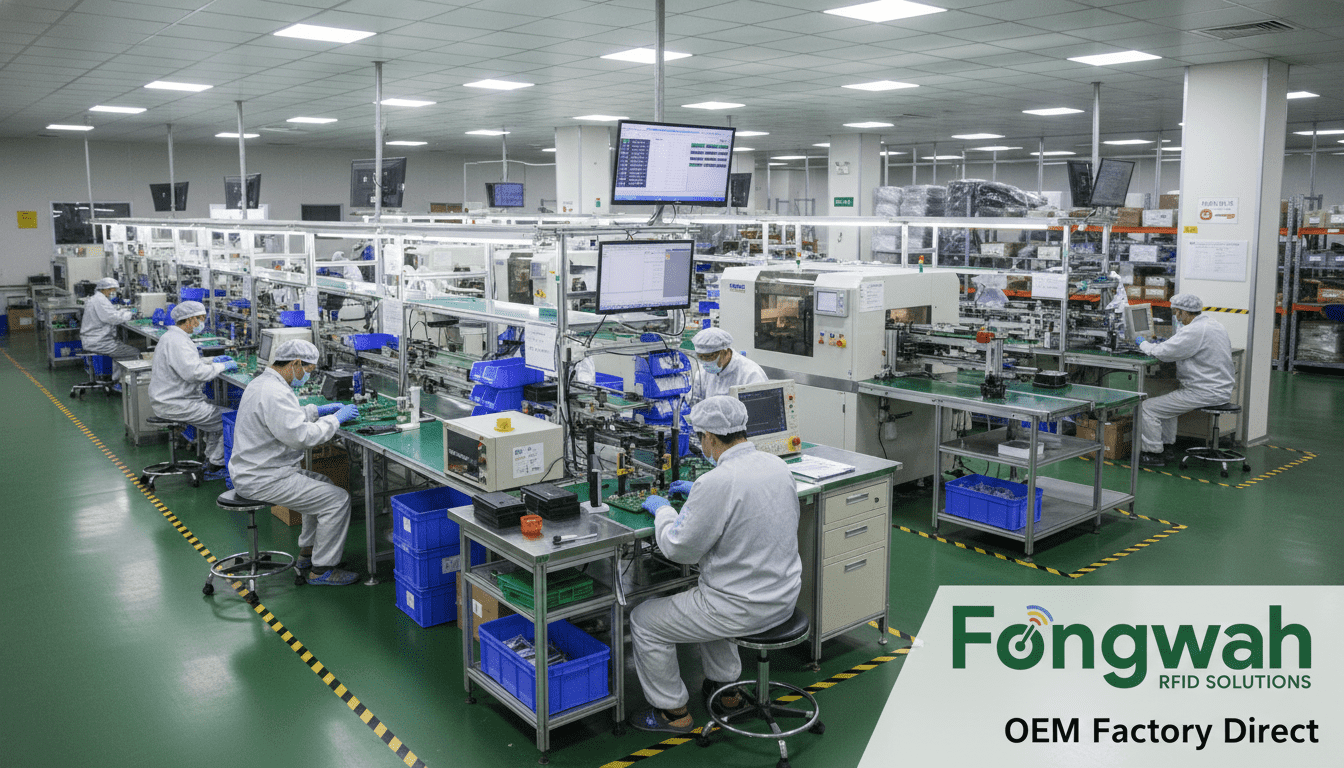
I have worked in this industry for five years, moving from the production floor to the management office. I have seen the difference between a "cheap" product and a "cost-effective" product. A cheap product fails in three months. A cost-effective product, like the ones we build at Fongwah, works for years but costs less because we control the manufacturing. I want to show you how to find these hidden gems to improve your Return on Investment (ROI).
How do you define high performance in a commercial RFID door lock environment?
Speed is the first thing a user notices. If an employee has to wave their card three times to open a door, they will complain, and your client will blame you.
True performance is defined by the read rate and the anti-collision algorithm. High-quality RFID door lock commercial systems must process multiple tags simultaneously without signal interference, ensuring smooth traffic flow during shift changes.
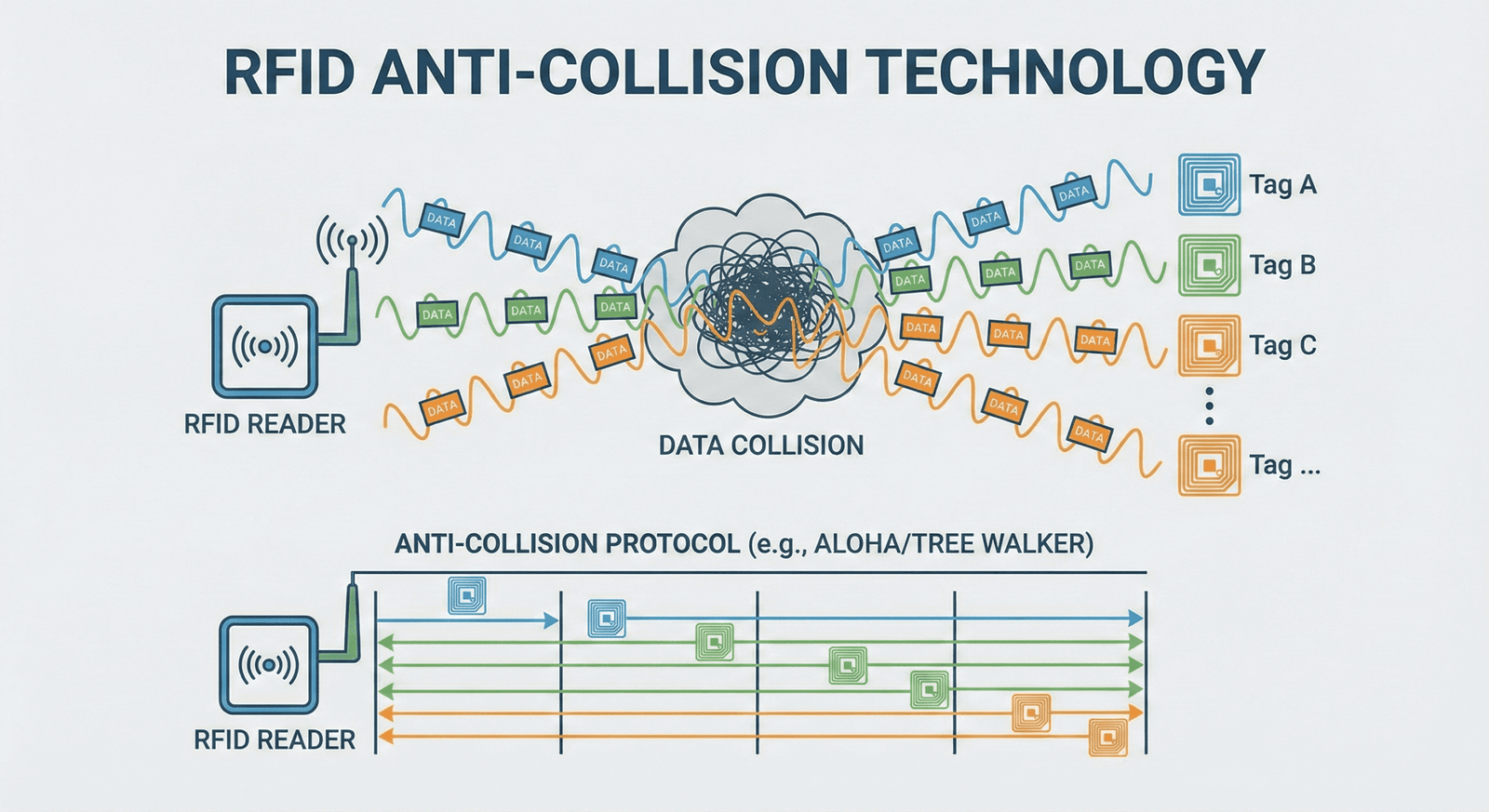
When I was a Quality Assurance engineer, I spent days testing readers. We had a test called the "Shift Change Simulation." We would take a handful of 20 cards and throw them in front of the reader at the same time. Many generic readers failed. They would beep once and get confused. They could not distinguish one signal from another. This is called "collision." In a real-world scenario, this is a disaster. Imagine a bus entrance or a factory gate at 8:00 AM. Ten people try to badge in. If the reader freezes, you have a line out the door.
High-performance readers use specific algorithms to talk to tags one by one, very quickly. For 13.56 MHz (HF) systems, look for ISO 14443A compliance that supports fast data transfer. For UHF systems, look for the "Q-algorithm" capability in the Gen2 standard. We design our readers to handle this traffic. We use high-sensitivity antenna modules. Even if the tag is in a wallet or near keys (which causes metal interference), our reader pushes through the noise.
When you look at a spec sheet from a Chinese factory, do not just look at the "Read Distance." Look at the "Read Speed" and "Anti-collision" capability. A reader that reads at 10 meters but takes 2 seconds to process is useless. A reader that reads at 5 meters but processes in 50 milliseconds is a winner. Prioritizing these metrics ensures your client is happy with the system's responsiveness.
What factors truly drive the RFID Access Control System price?
You might think the price difference between brands is just marketing. Often, it is. However, the real cost driver is the supply chain and the technology inside the box.
The RFID Access Control System price drops significantly when you cut out the middlemen. By partnering directly with an OEM factory, you pay for the hardware components—chipsets, antennas, and casing—rather than paying for a distributor's brand name.
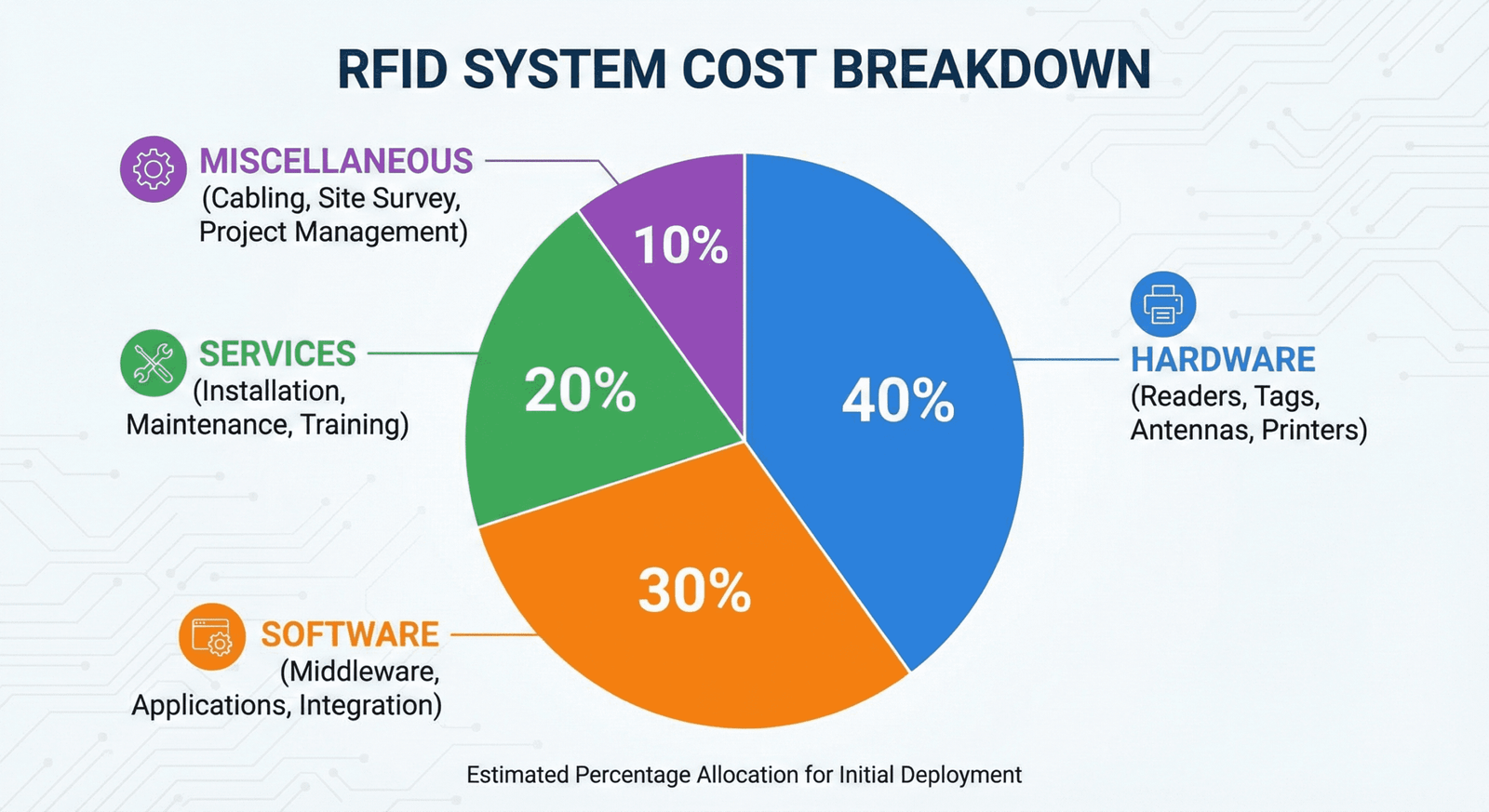
Let's break down the money. I talk to procurement managers every day. They are shocked when they see our prices compared to big European brands. They ask, "Is something missing?" Nothing is missing. The traditional supply chain looks like this: Factory -> Chinese Trading Company -> Global Distributor -> Regional Reseller -> You. Everyone adds 30%. At Fongwah, we are the factory. You talk to me, and I talk to the production line.
But you must also understand the cost of the technology itself. There are different tiers of hardware for different scenarios:
- Office Buildings (High Frequency / NFC): These use Proximity cards or Key Tags. The readers are smaller and cheaper. The technology is mature. This is the most cost-effective solution for standard doors.
- Logistics and Gates (UHF): These readers are larger and more expensive. They need powerful antennas and complex tuning.
Here is a quick comparison to help you budget:
| Feature | Proximity (125kHz) | HF / NFC (13.56MHz) | UHF (900MHz) |
|---|---|---|---|
| Reader Cost | Lowest | Medium | High |
| Tag Cost | Low | Medium | Lowest (in bulk) |
| Security | Poor (Easily cloned) | High (Encrypted) | Moderate |
| Best Application | Basic Entry | RFID door lock commercial | Parking / Warehouse |
By partnering directly with a specialized RFID Reader Manufacturer, B2B clients can access factory-grade pricing while maintaining enterprise-level performance. You can choose the right tech for the right zone. Use the cheaper HF readers for internal office doors and spend your budget on the powerful UHF readers for the parking garage. This mix-and-match strategy maximizes your ROI.
Is the RFID Access Control Wiring Diagram complicated for your installers?
Labor is the most expensive part of any installation. If your technicians spend hours figuring out which wire goes where, any savings you made on hardware purchase price will disappear instantly.
A clear, standard RFID Access Control Wiring Diagram is the mark of a professional product. Readers that utilize standard interfaces like Wiegand 26/34, RS232, or RS485 ensure that your team can hook up the system to any standard controller in minutes, not hours.
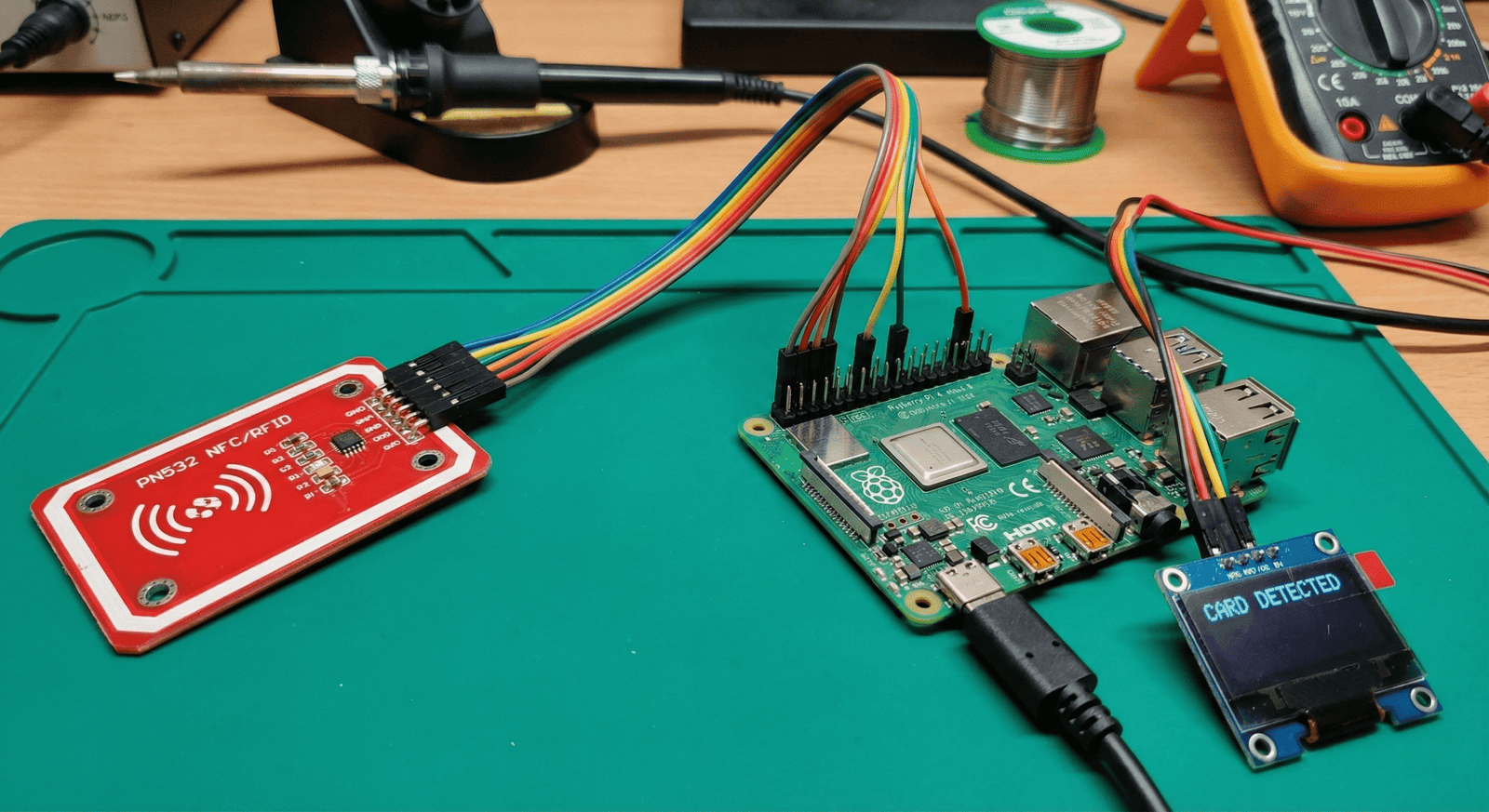
I have been on installation sites. I know the frustration. You are on a ladder. It is dark. You are holding a reader in one hand and a screwdriver in the other. You look at the wires. They are all black. Or the label is in Chinese. You have to call support. You wait. You lose money.
Wiring & Integration: Simplified for Installers
One of the biggest headaches for onsite engineers is unclear wiring documentation. At Fongwah, we distinguish clearly between our Installation Readers (for doors) and Desktop Readers (for card issuance/enrollment) to prevent installation errors.
Every Fongwah product ships with a detailed datasheet and a color-coded wiring diagram to ensure rapid deployment.
Standardization vs. Plug-and-Play It is crucial to note the pinout differences based on your application:
For Fongwah Desktop Enrollment Readers (USB Interface): For your front-desk provisioning, our desktop readers utilize a standardized 5V USB interface for direct PC connection:
Red: +5V DC (USB Power)
Black: GND (Ground)
Green: USB Data + (Communication)
White: USB Data - (Communication)
Integrator Note: All Fongwah desktop units are strictly tested for signal integrity on the Data+ and Data- lines, ensuring stable data transmission during batch card programming.
When you source from China, ask for the datasheet and the wiring diagram before you buy. Send it to your head engineer. Ask him, "Can we install this easily?" If the diagram is clear, the product is likely good. If the diagram is a mess, the firmware inside is probably a mess too. We provide these diagrams on our website and in the box. We want your installation to be "Plug and Play," not "Plug and Pray." This efficiency is a massive part of your ROI.
Technical FAQ for System Integrators
Q1: Why is the price difference so significant between major US brands and Chinese RFID readers?
Answer: The gap in RFID access control system price often comes from brand premiums and multi-layer distribution markups, not component quality. As an OEM manufacturer, we eliminate the middlemen. Our readers use the same high-grade silicon chips and undergo rigorous QC testing, allowing you to access enterprise-level performance at a factory-direct cost.
Q2: What is the difference between "Commercial" and "Industrial" RFID door locks?
Answer: RFID door lock commercial systems (often used in offices) prioritize aesthetics and compact design (typically NFC/HF). Industrial readers (for warehouses or gates) prioritize IP65/67 ruggedness, long-range UHF detection (up to 10m), and high read rates. We provide specialized hardware for both scenarios to ensure you don't overpay for unnecessary features.
Q3: How do I ensure the readers won't interfere with each other in a high-density installation?
Answer: High-performance sourcing involves checking "Anti-collision" specs. Our readers feature advanced Anti-collision algorithms, which prevent frequency interference when multiple readers are installed close together—crucial for busy logistics centers or multi-lane parking lots.
Conclusion
Optimizing ROI is not about buying the cheapest junk you can find. It is about sourcing smart. By choosing a manufacturer that offers transparent specs, direct pricing, and standard wiring, you get high security and high margins.
---