Buyers can quote a tag price to the cent but go quiet when asked for the reader's receive sensitivity. That silence is where supply chain RFID fails. The tag is a passive reflector. The reader is the system's brain, and when it is under-specified, every downstream record is built on missed reads. reader performance, not tag cost, decides whether a deployment hits 99 percent or collapses at peak.
The sections below explain the reader specs that actually move the needle: sensitivity, anti-collision, and edge filtering. For receiver selection specifically, our guide to choosing the best RFID receiver for your warehouse goes deeper on the hardware.

Why is the reader the bottleneck, not the tag?
Tags are dumb reflectors. They cannot initiate, filter, or decide, so the entire burden of detecting, decoding, and de-conflicting thousands of replies falls on the reader.
The reader is the bottleneck because it alone must detect faint tag backscatter, run the anti-collision protocol, and deliver clean data, while the tag only reflects energy, so a weak reader starves even the best tag of a chance to be seen. A premium tag in front of a weak reader still gets missed. The reader's radio front end, processing power, and firmware determine the real read rate. Upgrading tags on a weak reader yields almost nothing. Upgrading the reader lifts every tag at once.
This is why we tell buyers to spec the reader first and treat the tag as a commodity matched to that reader. The four core components of an industrial RFID system show the reader sitting at the center of the architecture, not the tag.
What receiver sensitivity should you spec?
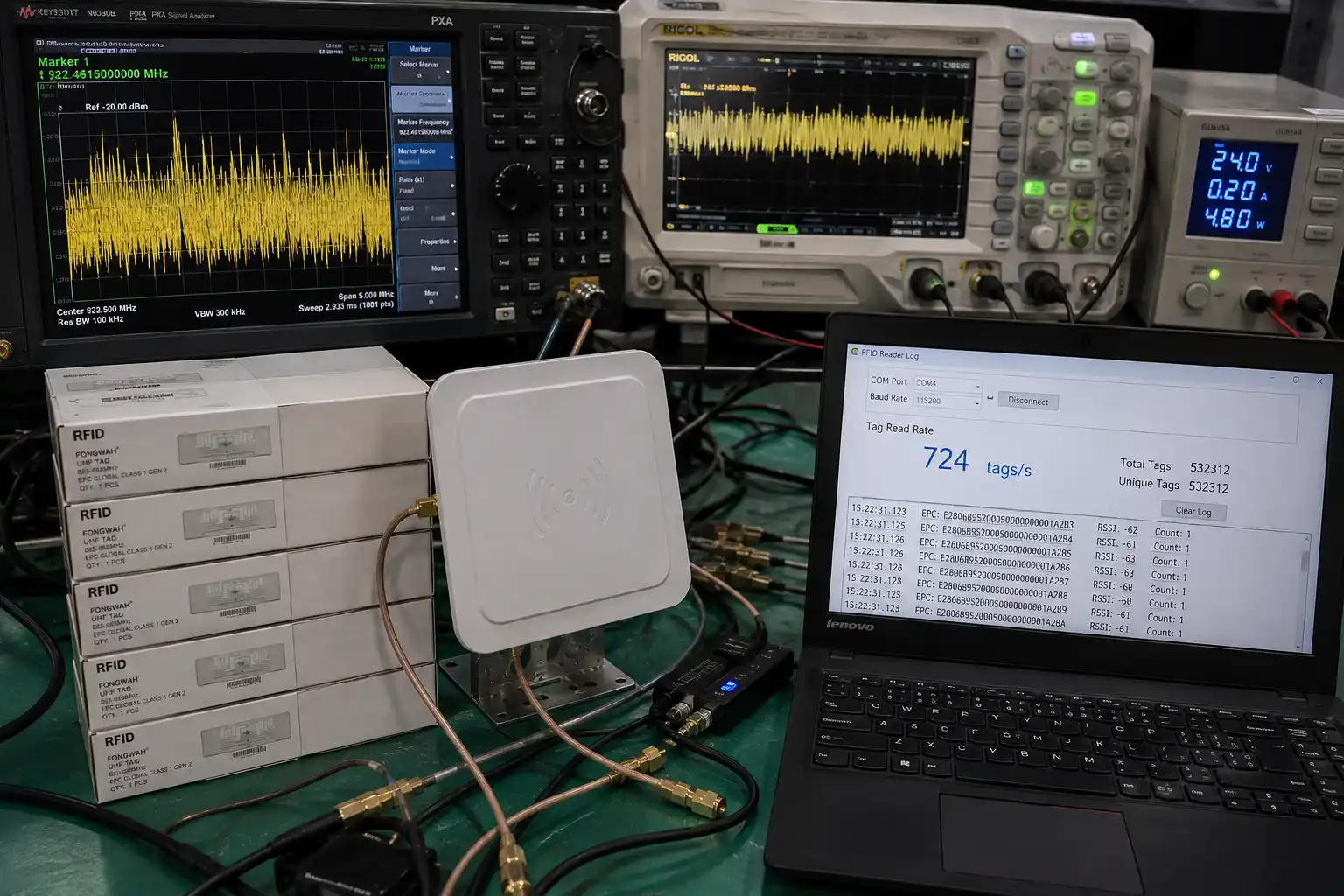
Sensitivity is the reader's ability to hear a weak reply. It is the single most important number most buyers never check.
Spec a receiver sensitivity in the -80 to -90 dBm class, because a reader that hears down to -85 dBm can recover tags that a -70 dBm receiver misses entirely, directly raising read rates in noisy dock-door and conveyor environments. The dBm value is negative, and more negative is better: -90 dBm hears fainter signals than -70 dBm. A -85 dBm class reader picks up the weak backscatter from a tag partially blocked by a metal strut or a liquid pallet, where a marginal receiver sees nothing.
Do not confuse sensitivity with transmit power. Blasting more power at a problem usually makes it worse by creating multipath echoes off metal. The disciplined approach is a sensitive receiver with controlled transmit power and well-placed antennas. The components of an RFID reader explain where the receiver stage lives and why it sets the floor on performance.
When evaluating a reader, ask the vendor for the sensitivity figure and the test condition. A number quoted without a standard is marketing. A number quoted in dBm with a defined tag and distance is engineering.
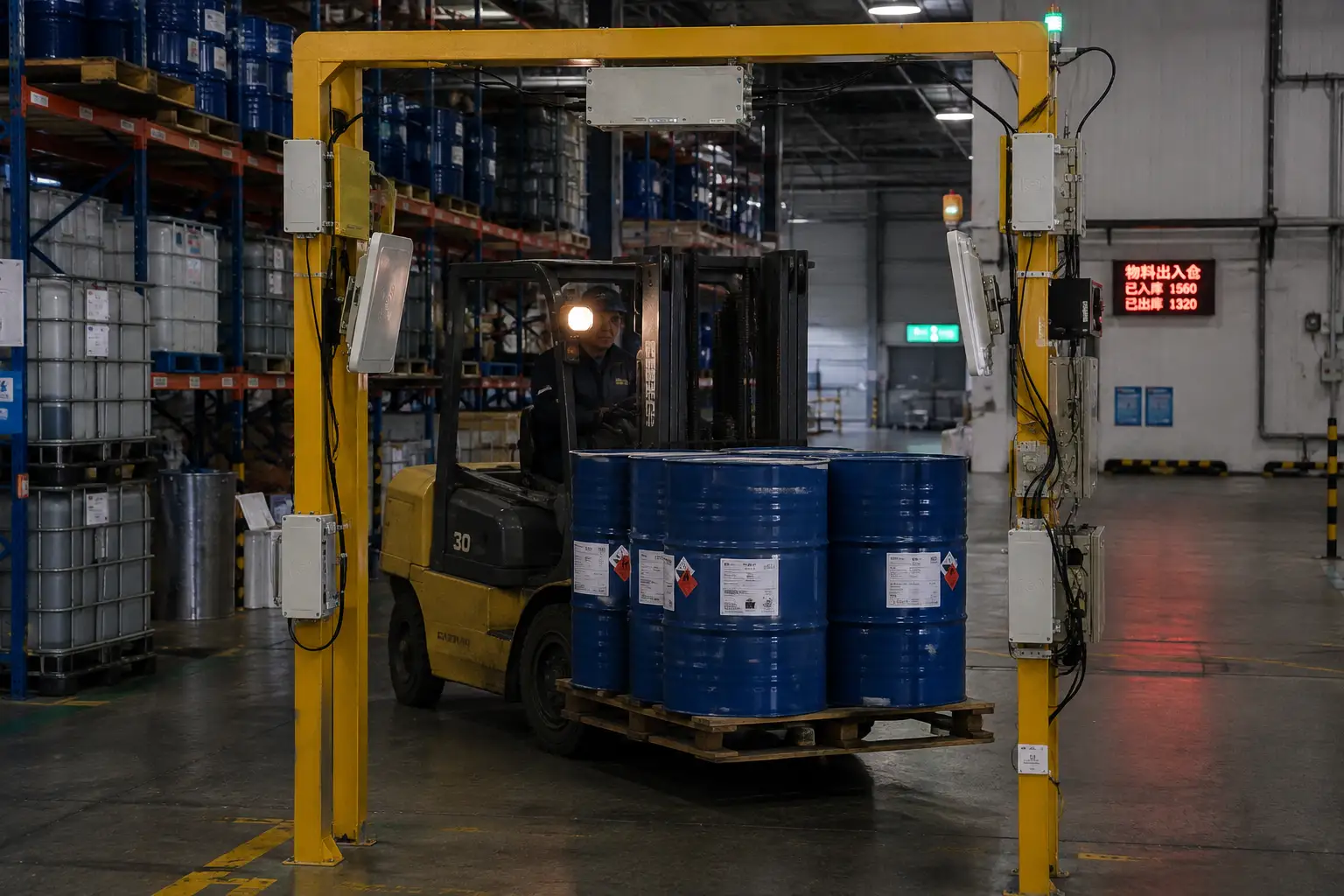
At a dock door, hundreds of tags reply at once. Without a protocol to sort them, the reader hears noise. Anti-collision is the math that turns the noise into a list.
Anti-collision uses a slotted protocol where the reader instructs tags to reply in managed time slots, identifies each, then silences the known ones so the rest can respond, sustaining dense-tag read rates in the hundreds of tags per second rather than a slow sequential crawl. The EPC Gen2 air interface defines this behavior. A strong reader runs the inventory round fast enough that a pallet of hundreds of cartons is fully read in the seconds it takes to pass the portal.
The math matters because read rate is not just speed, it is completeness. A reader that reads fast but drops tags in the middle of the stack is worse than useless, it feeds false confidence. Dense Reader Mode and adaptive slotting let the reader keep pace with a conveyor moving at speed. This is the gap between an entry-level box that chokes above 100 tags per second and an industrial reader that holds several hundred.
What is edge filtering and why do it before the WMS?
Raw reads are messy. The reader sees stray tags, duplicate reads, and partial passes. Shipping that noise to your WMS buries the signal.
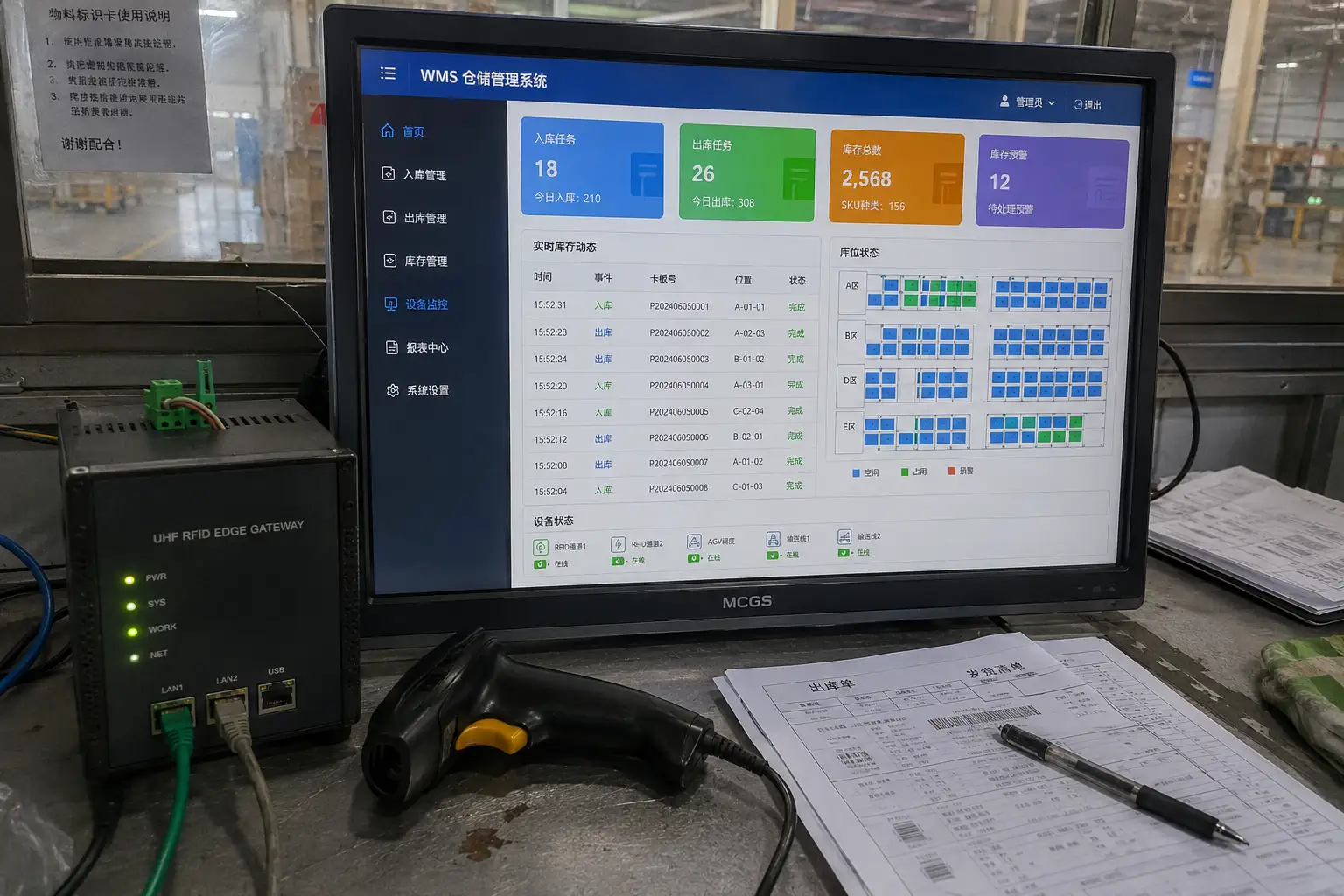
Edge filtering means the reader processes reads at the network edge, de-duplicating and applying rules before forwarding only clean, relevant records to the WMS, which prevents your database from filling with duplicates and phantom events. The reader becomes an IoT edge device, not just a radio. It can suppress reads outside a defined zone, collapse repeated scans of the same tag into one event, and format the output as JSON or XML for direct ingestion.
This shift removes the old middleware PC that translated reader language into system language. Clean data lands in your ERP as a stock movement, not as a line in a log file. The RFID receiver guide for warehouses covers the connectivity side of this, but the principle is the same: filter close to the source. The further raw reads travel before cleanup, the more bandwidth and CPU they waste.
How do you turn these specs into a buying decision?
Translate the three specs into a minimum bar, then match it to your volume and environment. The bar rises with throughput and interference.
Set a minimum bar of -80 to -90 dBm sensitivity, several hundred tags per second anti-collision, and built-in edge filtering, then select the reader class that meets it for your peak volume and interference profile. Low-volume sites can relax the bar. High-volume dock doors cannot. A reader that meets the bar at your worst-case scenario will hold up at average load with margin to spare.
Use the RFID reader buying guide to map these specs to concrete reader classes and antenna counts. The guide frames the trade between ports, sensitivity, and cost so you do not over-buy or under-buy.
How do you validate a reader before you commit to a purchase?
Spec sheets lie by omission, and a demo in a quiet room never matches a live dock door. Prove the reader in your conditions before the purchase order is signed.
Validate the reader with a pilot at your busiest door using your real tags and interference profile, measuring read rate under peak load rather than trusting a vendor bench number, because only a live test exposes multipath and sensitivity limits. Run the candidate reader for a full shift at the highest throughput day, with the same pallet mix you ship. Capture the missed-read rate and the duplicate rate. If either breaks your threshold, the reader is wrong for the site regardless of its datasheet.
Treat the pilot as a specification tool, not a sales event. A reader that holds 99 percent in the bench demo but drops to 90 percent at your dock door is not a marginal miss, it is a different product than the one you were sold.
Conclusion
Stop obsessing over the tag and start engineering the reader. Sensitivity in the -80 to -90 dBm class, real anti-collision in the hundreds of tags per second, and edge filtering before the WMS are what separate a system that scales from one that falls over at peak. These are spec problems with known fixes. To match reader performance to your throughput and environment, begin with our RFID reader buying guide. For help sizing sensitivity, anti-collision, and filtering to your deployment, contact Fongwah.
Frequently Asked Questions
Q: Why does the reader matter more than the tag in supply chain RFID?
A: The tag only reflects energy. The reader must detect faint backscatter, run anti-collision, and deliver clean data. A weak reader misses even premium tags, while a strong reader lifts every tag at once, so reader spec sets the real read rate.
Q: What receiver sensitivity should I specify?
A: Spec a receiver in the -80 to -90 dBm class. More negative is better: a -85 dBm receiver recovers tags a -70 dBm receiver misses, raising read rates near metal and liquid at dock doors and conveyors.
Q: How does anti-collision let a reader handle dense tags?
A: The reader assigns tags to managed time slots, identifies each, then silences the known ones so the rest reply. This sustains hundreds of tags per second instead of a slow sequential read, so a full pallet is captured as it crosses the portal.
Q: What is edge filtering and why do it before the WMS?
A: Edge filtering de-duplicates and applies rules at the reader, forwarding only clean records to the WMS. It stops your database filling with duplicates and phantom events and removes the need for a separate middleware PC.