
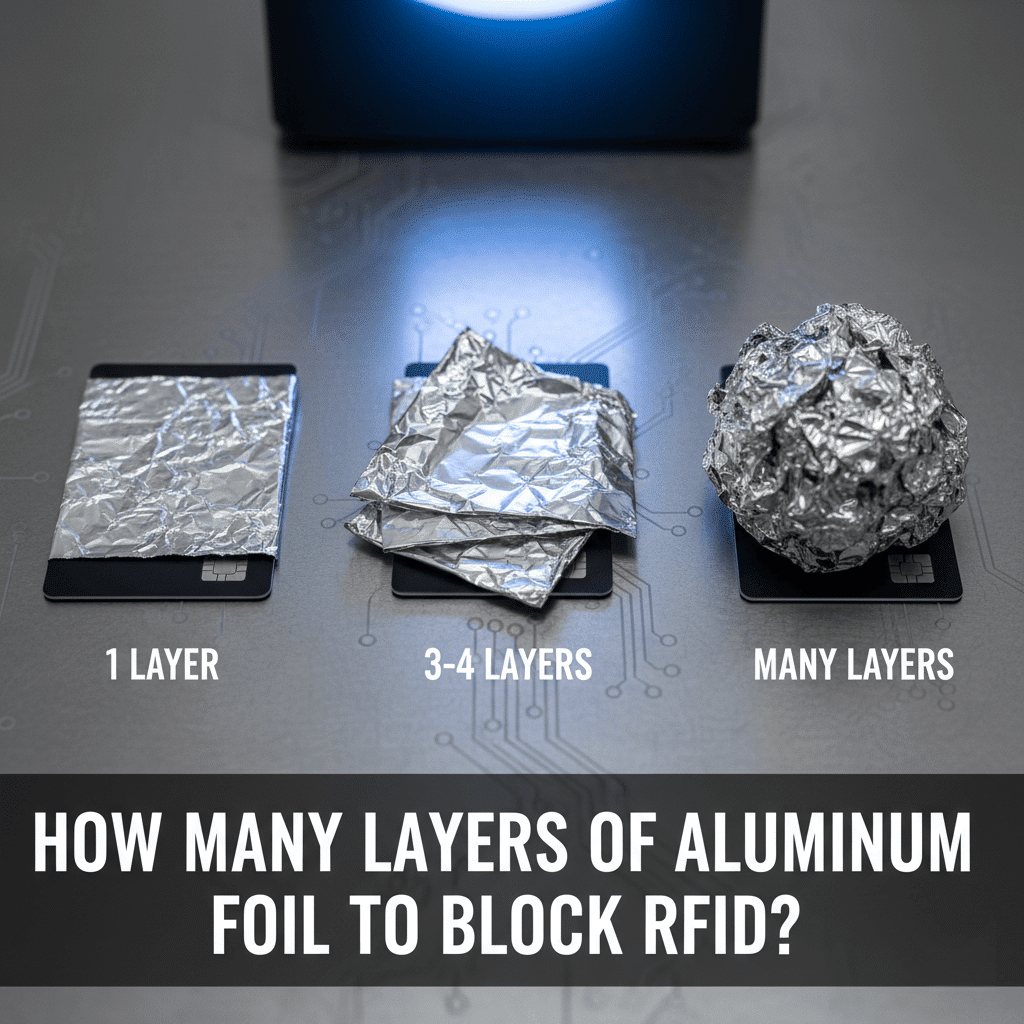
Your RFID cards hold sensitive data. People say foil protects them, but can you trust a kitchen item with your security? Let's see how much foil is actually needed.
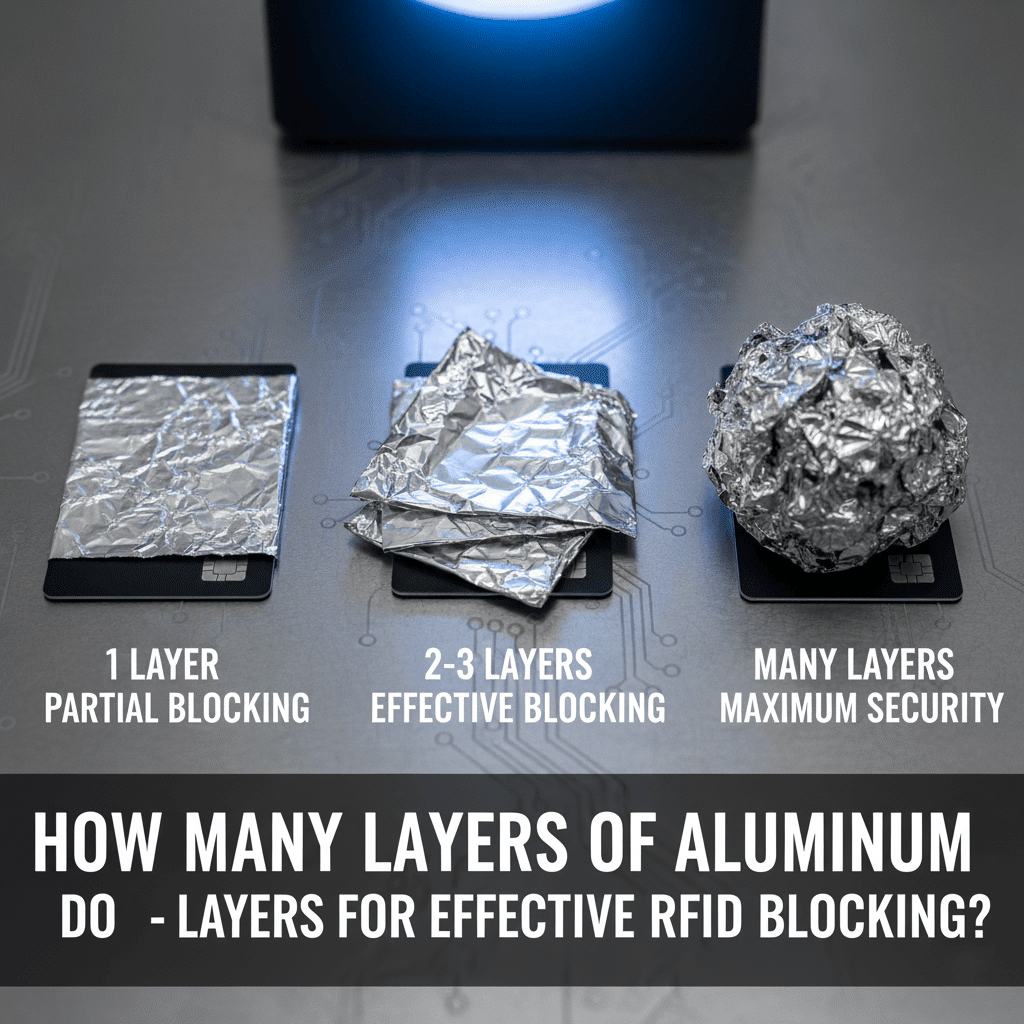
To effectively block most common RFID signals1 (13.56 MHz), you generally need at least two or three layers of standard household aluminum foil. However, effectiveness varies greatly depending on the signal frequency, foil quality, and how well the card is wrapped.
 ss
The short answer gives a general idea. But as a buyer for industrial projects, I know details matter. My 20 years in RFID manufacturing taught me that lab theory and real-world application can be very different. We need to dig deeper to understand the "why" and "how" behind blocking RFID signals1. This knowledge is crucial when you are sourcing solutions for a critical project. Let's break it down.
ss
The short answer gives a general idea. But as a buyer for industrial projects, I know details matter. My 20 years in RFID manufacturing taught me that lab theory and real-world application can be very different. We need to dig deeper to understand the "why" and "how" behind blocking RFID signals1. This knowledge is crucial when you are sourcing solutions for a critical project. Let's break it down.
Does one layer of foil really work?
You want a quick fix for RFID security. But just one layer of foil seems too simple. Will it fail and expose your data or disrupt your inventory process? Let's check the facts.
A single layer of aluminum foil is unreliable. It might block a weak reader sometimes. But it often has tiny tears or gaps that let RFID signals1 pass through, making it an insecure option for consistent blocking.
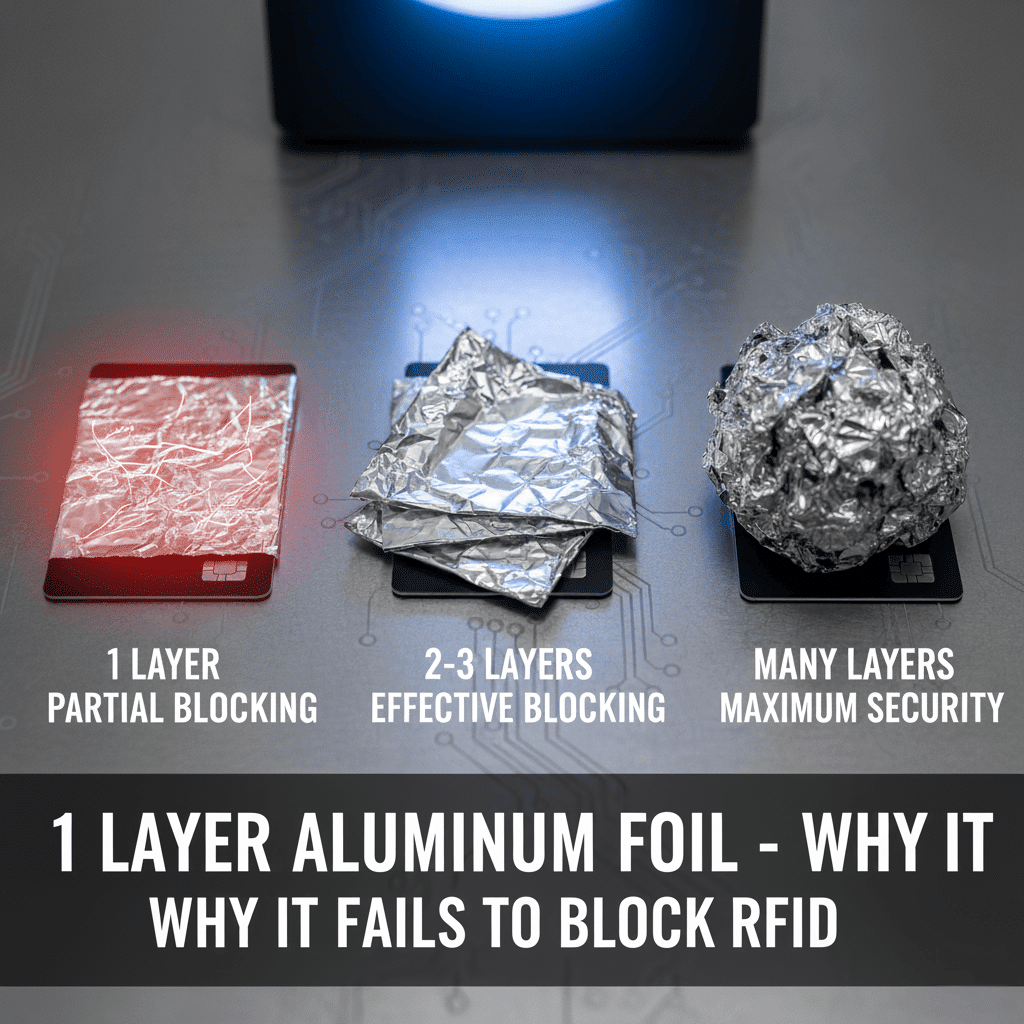
In my early days as an engineer, I learned about Faraday cages. A Faraday cage is a complete enclosure made of a conductive material. It blocks external electromagnetic fields. Aluminum foil works by trying to create a makeshift Faraday cage around your RFID card. The foil's conductive surface reflects and absorbs the reader's radio waves. This prevents the RFID tag's chip from powering up and transmitting its data.
However, a single layer almost always fails. I remember a client in logistics who tried this. He wanted to separate tagged pallets in his warehouse using single sheets of foil. The readers still picked up stray signals, and it created chaos in his inventory system. The problem is that standard household foil is very thin. It has microscopic pinholes6 and tears easily when you fold it. These tiny gaps are more than enough for RFID signals1 to leak in or out. For a solution to be viable, it must be reliable. A method that only works "sometimes" is a failure in any professional setting. As a buyer, you cannot procure a solution that depends on luck. The cost of one failure, like a data breach7 or a major inventory error, is far greater than the cost of a proper blocking material.
Single Layer vs. Multiple Layers
| Feature | Single Layer Foil | Two or More Layers |
|---|---|---|
| Coverage | Prone to gaps and tears | Provides more complete coverage |
| Signal Attenuation | Low to moderate | High |
| Reliability | Very low | Generally reliable for HF |
| Use Case | Not recommended | Temporary, non-critical tests |
What factors affect the foil's effectiveness?
You've tried using a few layers of foil. Sometimes it works, and sometimes it doesn't. This inconsistency is risky and frustrating when you need a predictable outcome for a project. Let’s look at what makes the difference.
Three main factors are critical. The RFID frequency2 (LF, HF, UHF), the thickness and quality of the foil, and how completely you wrap the object. Even a small gap can compromise the shield and allow the signal to pass.
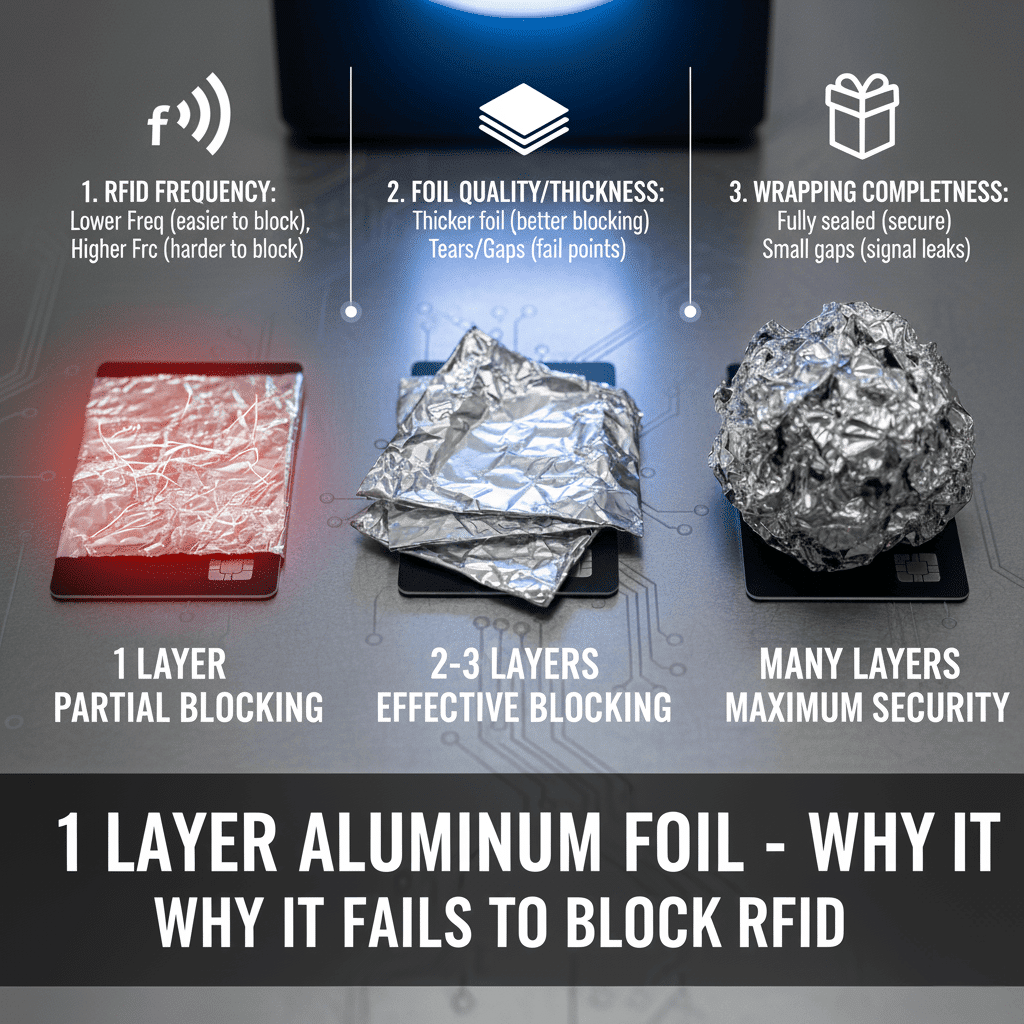
When sourcing materials or planning a project, you have to control your variables. With aluminum foil, those variables are all over the place. First, let's talk about frequency. Low Frequency (LF, 125 kHz) signals are harder to block with foil because they are better at penetrating materials. Ultra-High Frequency (UHF, 860-960 MHz) signals are easier to block but can bounce off surfaces and find their way through small gaps. High Frequency (HF, 13.56 MHz), used in credit cards and passports, is the most common target for foil blocking. Foil works best against HF and UHF.
Second, the foil itself matters. Standard kitchen foil is thin. Heavy-duty foil is thicker, more conductive, and has fewer pinholes. When I advise development teams on quick tests, I always tell them to specify heavy-duty foil. It's a simple change that dramatically increases the chance of success. Third, your wrapping technique is the most critical factor. You must create a completely sealed pouch. Overlap the seams by at least an inch and fold them over twice. I once watched a project team fail for hours because they were simply folding a piece of foil over their tags. The signal leaked out the sides every time. You need a complete, gap-free enclosure.
Key Variables for RFID Blocking
| Factor | Low Effectiveness | High Effectiveness |
|---|---|---|
| RFID Frequency | Low Frequency (LF) | High Frequency (HF) & UHF |
| Foil Quality | Thin, standard kitchen foil | Thick, heavy-duty foil |
| Wrapping | Loose, with gaps | Tight, sealed, overlapping seams |
Are there better alternatives to aluminum foil for professional use?
Aluminum foil is cheap but not practical for business. It tears easily, it's not durable, and it looks unprofessional. You cannot hand a client a device wrapped in foil. You need a durable and reliable solution. Let’s explore some professional options.
Yes, many superior alternatives exist. RFID-blocking wallets, sleeves, and cards are widely available for consumers. For industrial use, specialized RFID-blocking fabrics and enclosures offer durable, tested, and reliable shielding for sensitive applications.
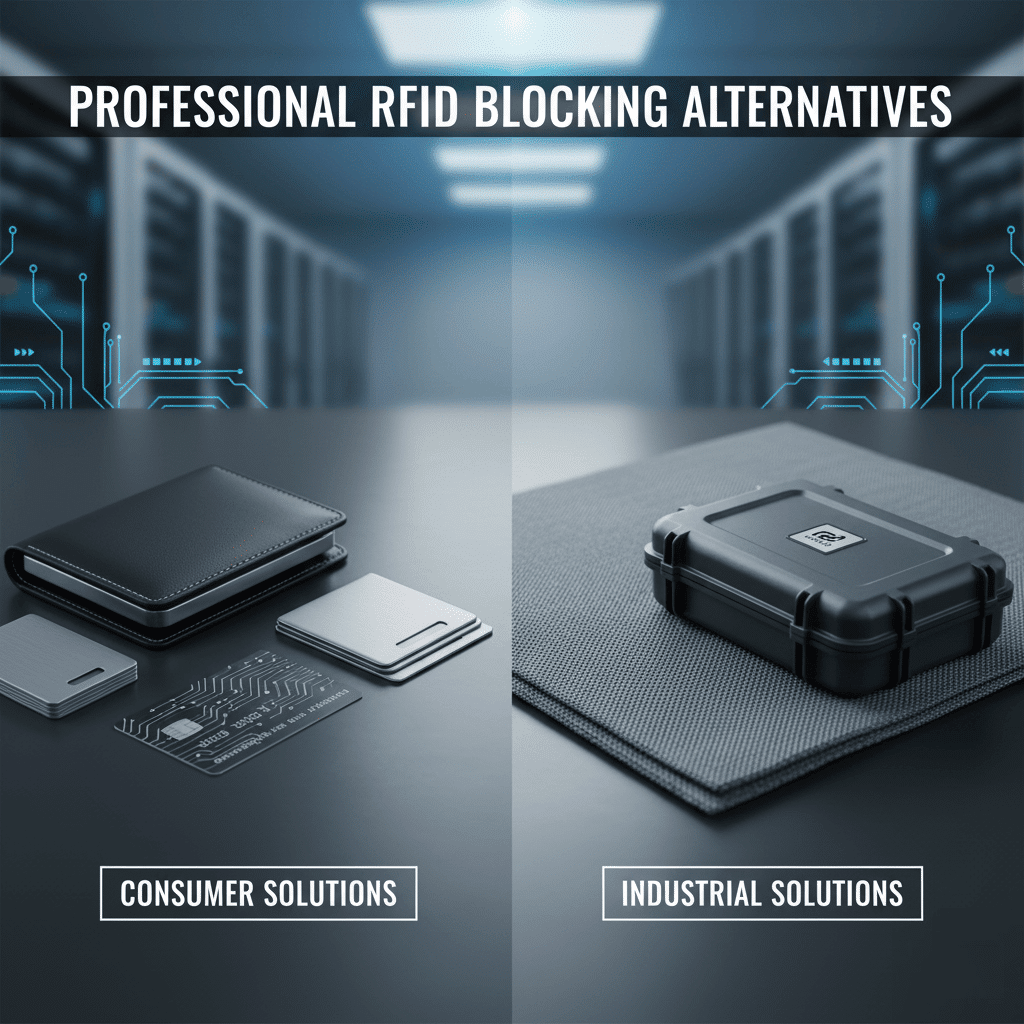
As a buyer or an engineer like William, you need solutions that are tested, certified, and built for purpose. Foil is great for a kitchen, not for a secure facility. For personal use, RFID-blocking sleeves and wallets are an excellent choice. They are made with specialized fabrics, often a nickel and copper blend, that are designed and tested to block signals at specific frequencies. They are durable and convenient.
For industrial applications, the solutions are more robust. I have worked with many companies that use RFID-blocking fabrics. This material comes on a roll and can be used to build custom tents for isolating tagged items or to line entire rooms to create large-scale Faraday cages. We also supply our clients with rigid RFID-blocking enclosures. These are essentially high-tech metal boxes used in labs and on production lines. They allow you to program or test a single RFID tag without any interference from other tags nearby. Another smart solution is the RFID blocking card. You place it in your wallet, and it actively or passively creates a protective field, shielding all the cards around it. The key takeaway is that professional problems require professional solutions. The investment in a proper product guarantees performance and security.
Professional RFID Blocking Solutions
| Solution Type | Description | Best For |
|---|---|---|
| RFID Blocking Sleeves/Wallets | Pre-made consumer products for cards | Personal data protection |
| RFID Blocking Fabric | Conductive fabric sold in rolls | Custom enclosures, shielding rooms |
| RFID Blocking Cards | Active or passive jamming cards | Protecting multiple cards at once |
| Shielded Enclosures | Rigid boxes or containers | Industrial/Lab testing, secure transport |
Conclusion
For quick tests, a few layers of foil might work. But for real security and professional needs, always choose a tested, dedicated RFID-blocking product.
---

---