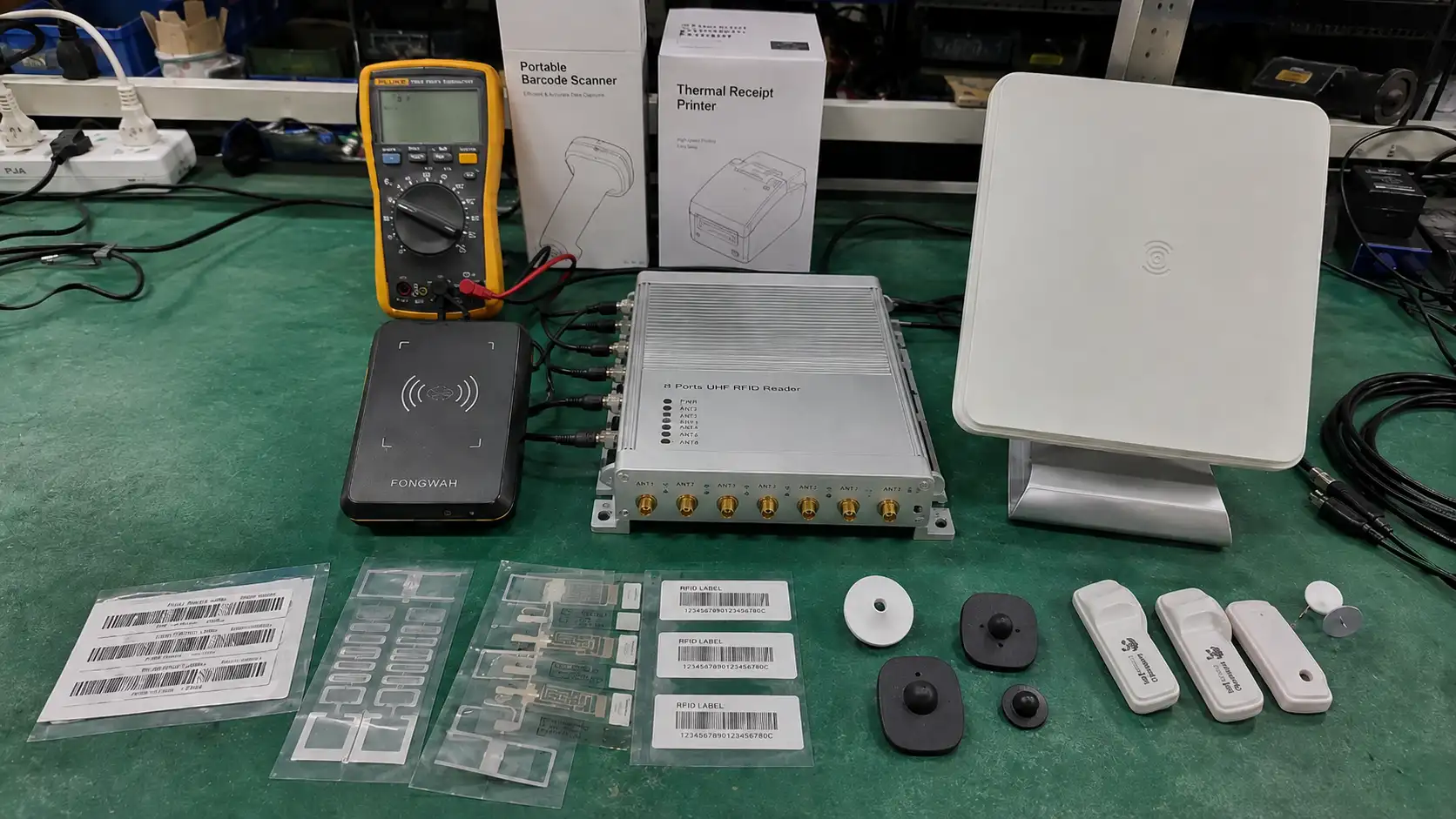
Struggling with slow lines and inaccurate inventory? These problems cost sales and frustrate customers. RFID is a practical way to streamline the entire operation.
RFID simplifies supermarket work by automating key tasks. It uses radio waves to track inventory in real time, speed up checkout, and improve supply chain visibility. That reduces manual errors and frees up staff for customer-facing work.
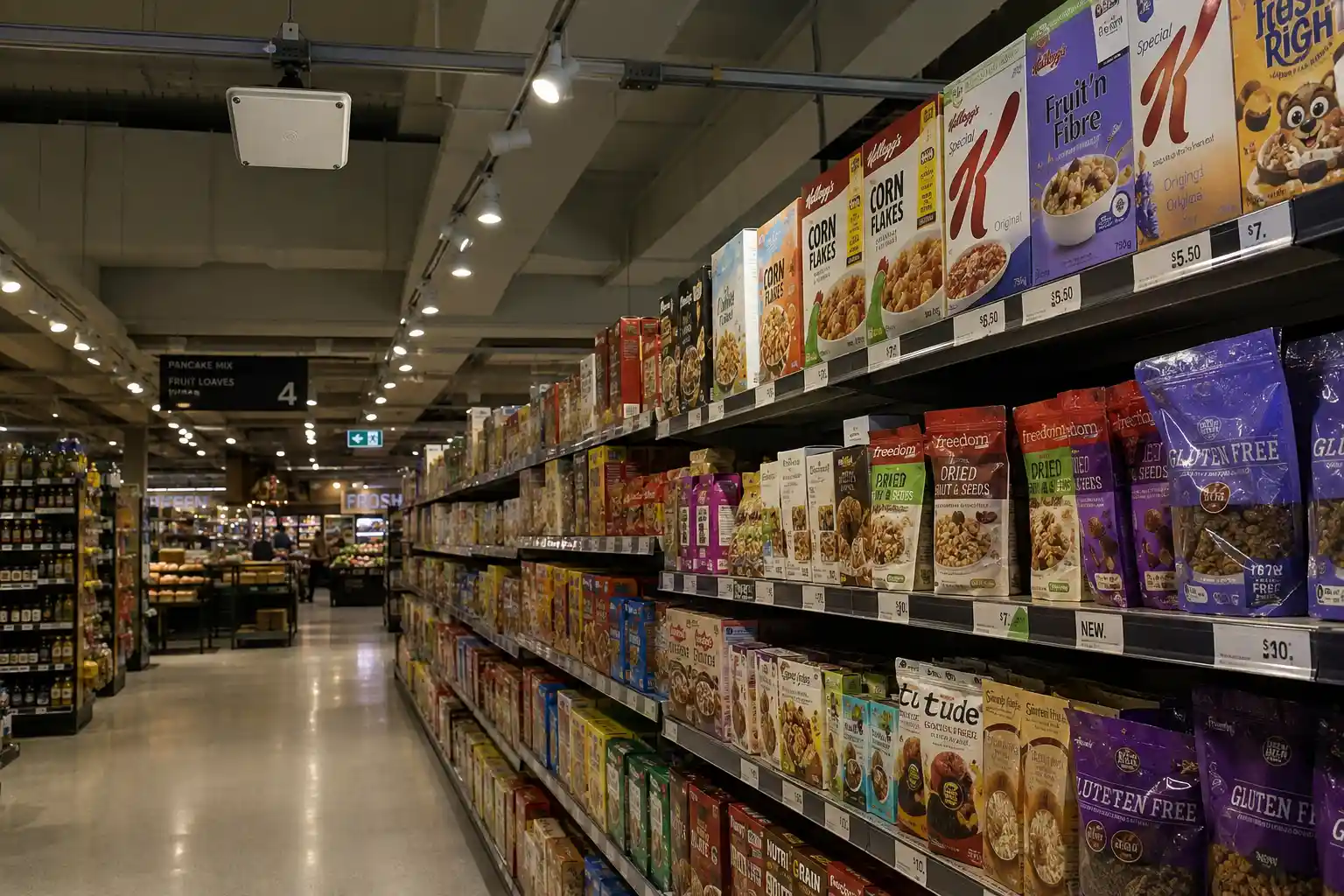
In retail, technology keeps changing the game. For supermarkets and their suppliers, the goal is consistent: build stable, efficient systems—from the warehouse to the store floor—that smooth operations and remove failure points. In practice that means working with proven RFID hardware, such as Fongwah readers and tags, and integrating it into the wider store and back-office systems. Here is how RFID achieves that in a supermarket setting.
To go deeper, see our guide on what RFID technology is.
How does RFID fix inventory management nightmares?
Manual stock counts are slow and error-prone. They lead to empty shelves or overstocked backrooms. What a store needs is accurate data delivered instantly.
RFID fixes inventory problems through rapid, bulk scanning. One employee can count an entire aisle in minutes rather than hours, using EPC Gen2 / ISO 18000-6C UHF tags that respond without a clear line of sight. That delivers accurate, real-time data to prevent stockouts and cut waste.
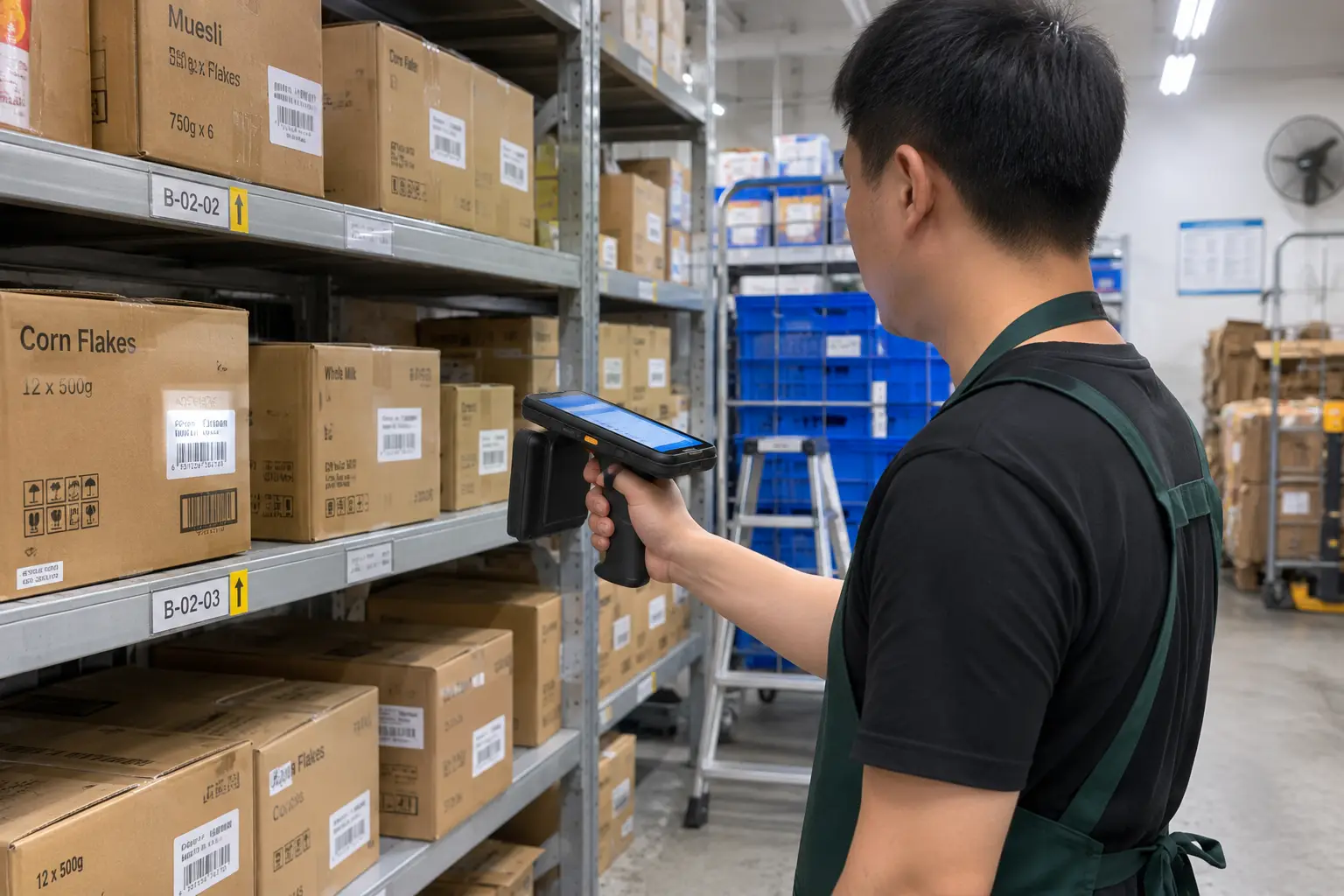
For most retailers, inventory is the biggest headache. Traditional barcode scanning beat paper lists, but it is still a one-by-one process that needs a clear line of sight for every item. One grocery chain's weekly count took a team of six people an entire night—and by morning the numbers were already outdated. With RFID, the picture changes. Tagging high-value items first, a single employee now walks the aisles with a handheld reader. The reader captures hundreds of UHF tags per second without seeing them, and the data uploads to the central system instantly. It is a genuine game-changer.
From Manual Labor to Smart Data
The old method is labor-intensive and prone to human error; a tired employee can easily miss a box or scan the same one twice. RFID removes that risk by simply reading what is there. That accuracy is critical: it lets the store's software place automatic reorders when stock runs low and stop ordering more of an item that is not selling.
Real-Time Insights
Because RFID counts are so fast, they can run daily, giving managers a near-perfect view of stock levels at all times and letting them spot trends as they happen. For example, a store might notice that a certain cereal sells out every Friday morning and adjust its ordering to match. That level of insight was impossible with manual counts.
A Comparison of Systems
To put it clearly, the difference is significant. Barcodes were a step forward, but RFID is a leap.
| Feature | Barcode Scanning | RFID Scanning |
|---|---|---|
| Scan Speed | One item at a time | Hundreds of items per second |
| Line of Sight | Required | Not required |
| Accuracy | Prone to human error | Highly accurate |
| Labor Cost | High | Low |
This technology frees up staff to focus on what matters: helping customers.
Can RFID speed up the customer checkout process?
Long checkout lines are a top complaint for shoppers. Customers get frustrated and may abandon their carts. A faster, more seamless checkout keeps them happy and loyal.
Yes, RFID transforms the checkout experience. Customers place an entire basket on the counter and all items are read instantly, eliminating individual scanning and sharply cutting wait times.
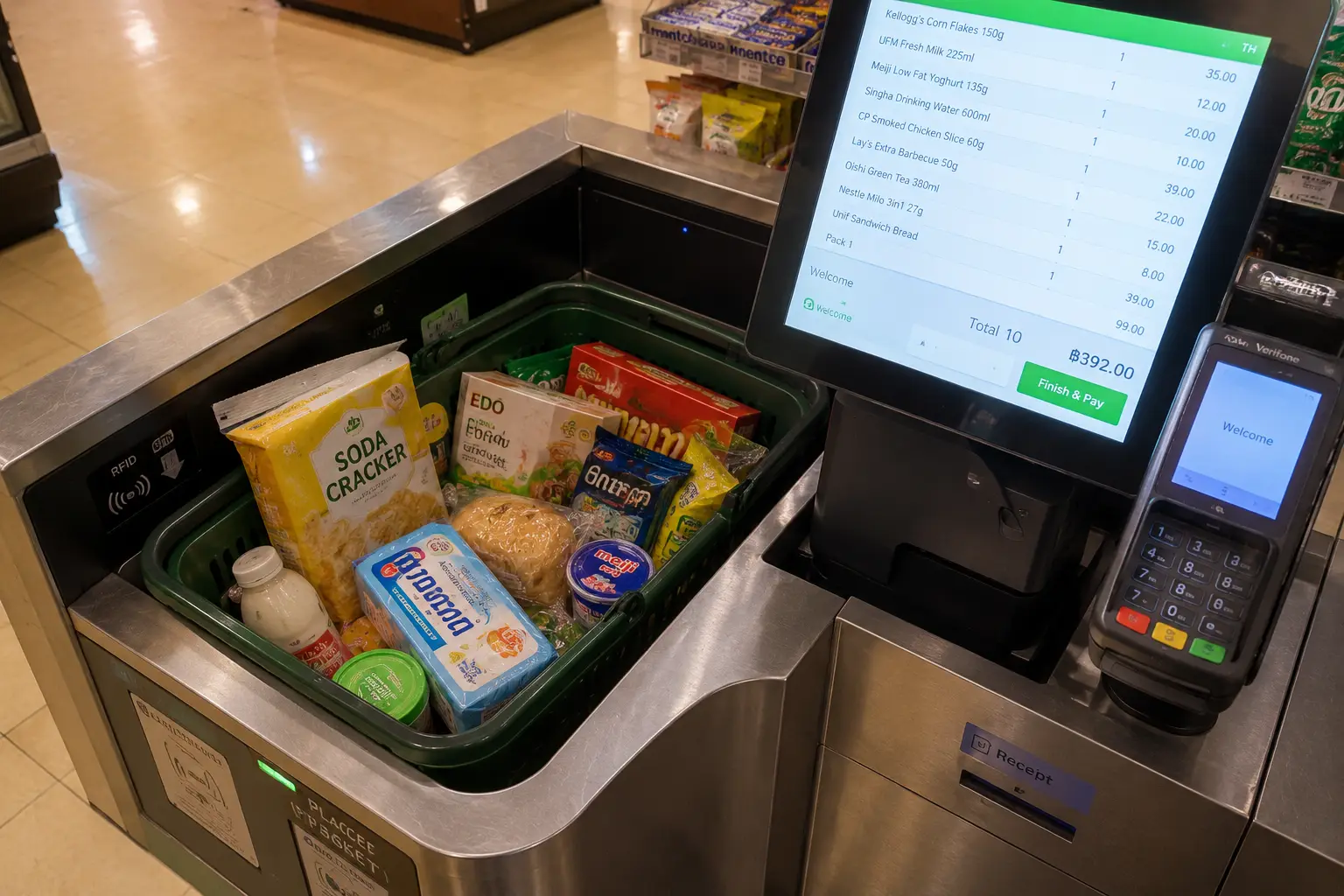
The checkout counter is the final, and most memorable, part of a customer's visit, and a bad one can ruin the trip. The core issue is throughput—how to move more customers through quickly and accurately by removing the bottleneck of scanning one item at a time. Pilot programs for "smart" checkout lanes show the answer: a customer pushes a cart up to the station, and an RFID reader antenna array built into the counter or a tunnel around the conveyor reads every tagged item in the cart in under a second. The total bill appears on screen, the customer pays, and leaves. It is that simple.
The Components of a Smart Checkout
To make this work, a few pieces are needed. First, the products carry RFID tags—typically EPC Gen2 / ISO 18000-6C UHF labels for item- and cart-level reading, with HF/NFC tags appearing at the point of sale for short-range uses. Second, a powerful reader portal reads many tags at once without interference. This is where hardware quality matters most: readers must be reliable and perform under pressure. Third, software connects the RFID reader to the Point of Sale (POS) system to process the payment.
More Than Just Speed
The benefits go beyond saving a few minutes. This system drastically reduces cashier errors, like missing an item or double-scanning it. It also enables new store formats. Think of a "grab-and-go" store where customers walk in, take what they need, and walk out, with payment handled automatically. This format is possible because of RFID.
A Look at Checkout Methods
The evolution of the checkout shows a clear trend towards automation and customer convenience.
| Method | Speed | Labor Involvement | Customer Experience |
|---|---|---|---|
| Traditional Cashier | Slow | High | Dependent on cashier |
| Barcode Self-Checkout | Medium | Low (with supervision) | Can be frustrating |
| RFID Checkout | Very Fast | Very Low | Seamless and modern |
This isn't just about making things faster. It's about creating a better shopping experience.
How does RFID improve the supply chain and reduce theft?
Products get lost, damaged, or stolen between the warehouse and the store shelf. This is called "shrinkage," and it costs retailers billions. A lack of visibility is the core problem.
RFID provides a clear view of the entire supply chain. It tracks cases and pallets from the distribution center to the store's backroom, and the same technology acts as a powerful anti-theft tool at the exit.
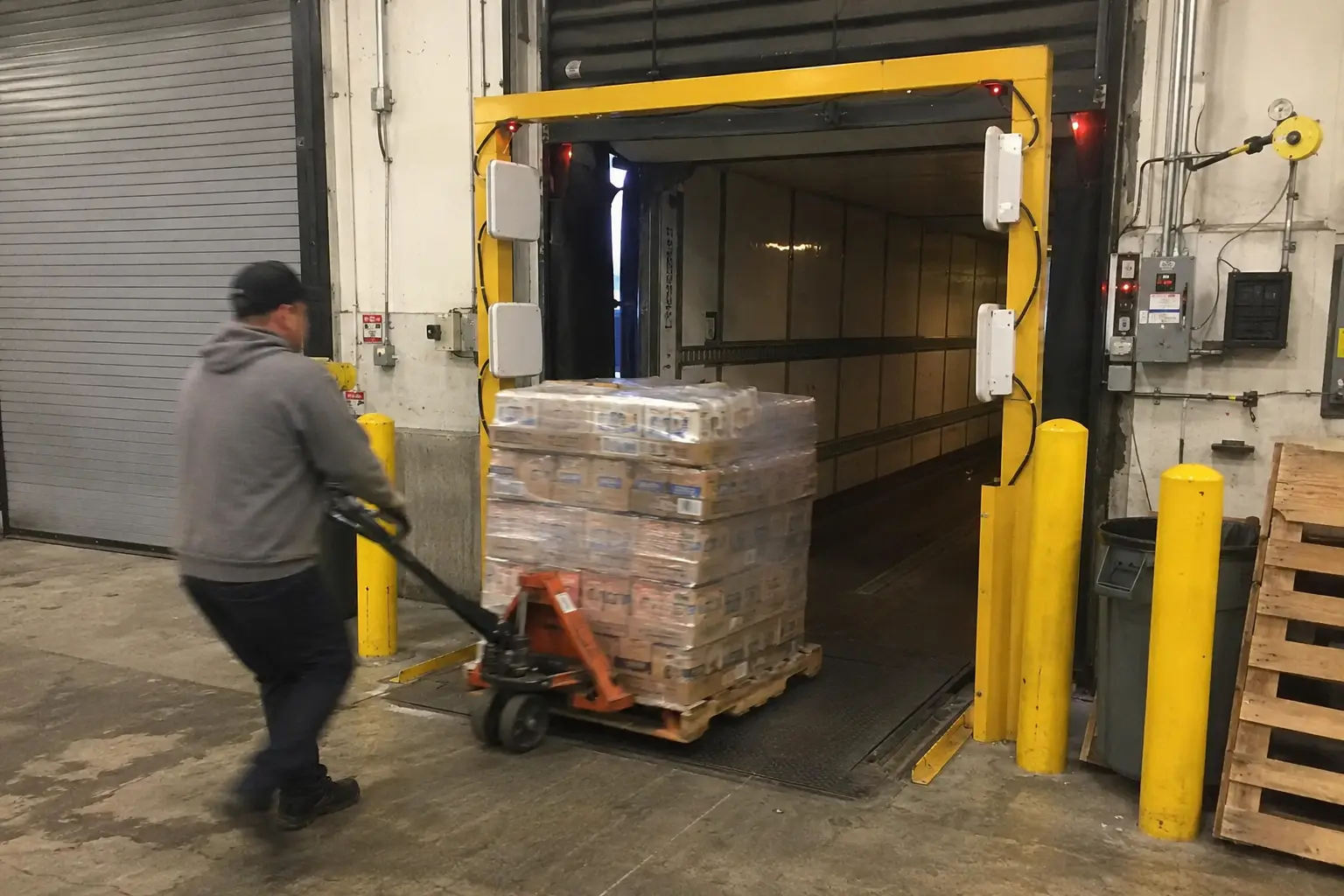
A supermarket's operations do not start at the front door—they start at the distribution center, and a lot can go wrong before a product reaches the customer. Well-designed systems place RFID reader "portals" at key choke points, such as the loading dock doors of a warehouse and the receiving doors of a supermarket. When a pallet passes through, its tag is read automatically. The system logs that the pallet left the warehouse and, later, arrived at the store. There is no paperwork to lose and no barcodes to scan—just an automated, error-free record that confirms deliveries, tracks shipping times, and helps locate missing shipments quickly.
A Smarter Security System
This same tag-and-reader system can be used for loss prevention. It is like the classic security tags everyone is used to, but much smarter. An older EAS (Electronic Article Surveillance) system just beeps. It tells you something is leaving, but not what. With RFID, if a tagged item passes through the exit doors without being paid for, the system can trigger an alarm and tell the staff exactly what item it is. This helps identify theft patterns. For example, if the same high-value product is being stolen every week, the store can take specific action.
Beyond Theft: Quality and Safety
This level of tracking also has powerful implications for food safety. Imagine there is a recall on a specific batch of spinach. With RFID, a supermarket can know instantly which cases from that batch are in their backroom and which are on the sales floor. They can be removed immediately. This precise tracking protects customers and reduces waste from recalling good products unnecessarily.
Tracking Method Comparison
The evolution from paper to RFID shows a clear increase in control and visibility.
| Method | Granularity | Real-time? | Primary Use Case |
|---|---|---|---|
| Manual Paperwork | Very Low (Per shipment) | No | Basic record-keeping |
| Barcode Scanning | Medium (Per case/pallet) | At scan points | Logistics and delivery |
| RFID Tracking | High (Per item/case) | Yes | Full visibility and security |
Ultimately, a secure supply chain is a more profitable and reliable one.
Frequently Asked Questions
Q: How does RFID help supermarkets reduce stockouts?
A: Shelf and back-room tags let staff count stock in seconds, so gaps are spotted and filled before the shelf goes empty, protecting sales and reducing manual checks.
Q: Can RFID speed up supermarket replenishment?
A: Yes. Reading many items at once through packaging shortens receiving and replenishment cycles, so fresh and high-turn stock gets to the shelf faster.
Q: Does RFID improve fresh-food inventory accuracy?
A: It gives a more reliable count of what is actually on hand versus what the system thinks, which matters for fresh items with tight sell-by windows.
Q: What RFID frequency is used in retail supermarkets?
A: UHF is common for item- and case-level retail tagging at range; HF/NFC appears at checkout and for item-level apps where short range is fine.
Q: How much does supermarket RFID cost per item?
A: Passive UHF labels are inexpensive at volume, often a few cents each, with the larger cost in readers, antennas, and integration across stores.
Q: Is RFID worth it for a small grocery store?
A: For a single small store the ROI is weaker than for chains, but it can still pay off for high-shrink or high-volume categories; pilot one category first.
Conclusion
RFID is not just a future concept. It is a practical tool that solves real problems for supermarkets today, improving efficiency from the warehouse to the checkout.