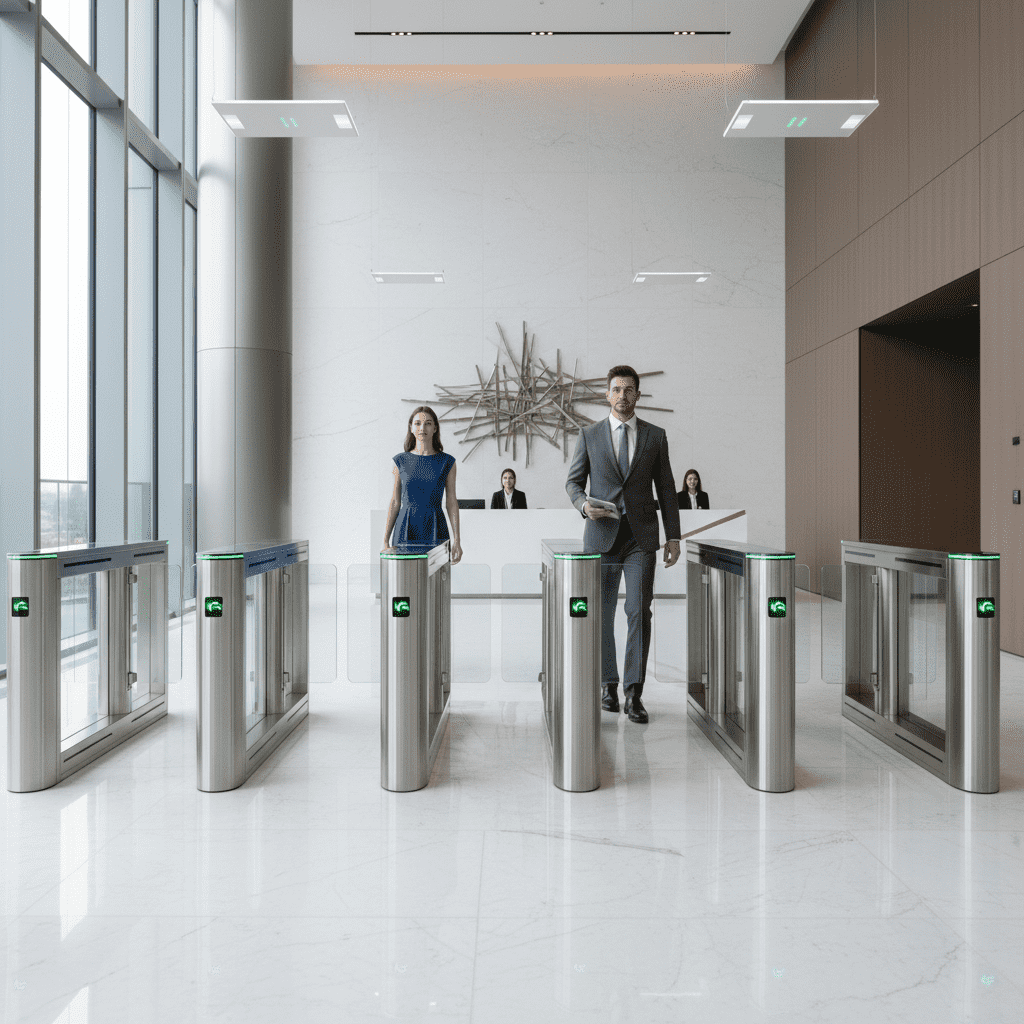
- Trends in Long-Range Identification and Smart Building Integration for 2026
- Moving Beyond the Badge: The Rise of Hands-Free and Mobile Access
- Balancing Convenience and Security in the Next Generation of Entry Systems
Employees hate fumbling for badges while carrying coffee or equipment. It slows down the morning rush and creates frustration at the turnstile every single day. You need a faster solution.
UHF RFID is not replacing proximity cards entirely but is dominating in high-traffic zones like parking and lobbies. It enables hands-free access, while NFC integrates mobile credentials, creating a hybrid ecosystem for the future of secure access that balances speed with strict security requirements.
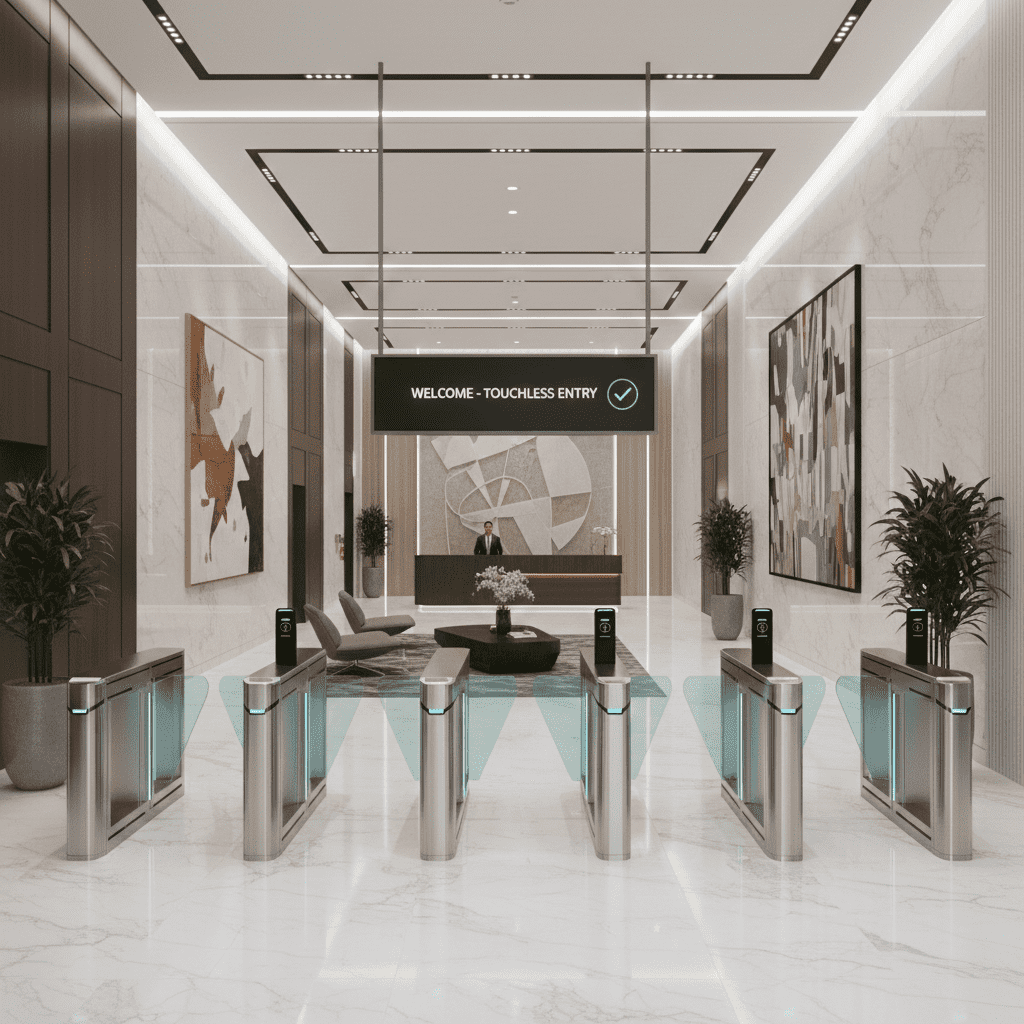
I have seen the industry change slowly, and then all at once. Five years ago, a simple beep at the door was enough. Now, clients want the door to open before they even reach it. This demand for speed is pushing us toward new technologies.
Is the demand for hands-free access driving the adoption of UHF RFID?
Stopping to tap a card creates bottlenecks during shift changes, annoying workers and reducing efficiency. You lose valuable time every morning just getting people into the building.
Hands-free access is the primary driver for UHF adoption. By detecting tags from meters away, businesses eliminate bottlenecks at the RFID Security gate, improving flow and user experience without compromising safety. This technology allows for seamless movement through secure zones.
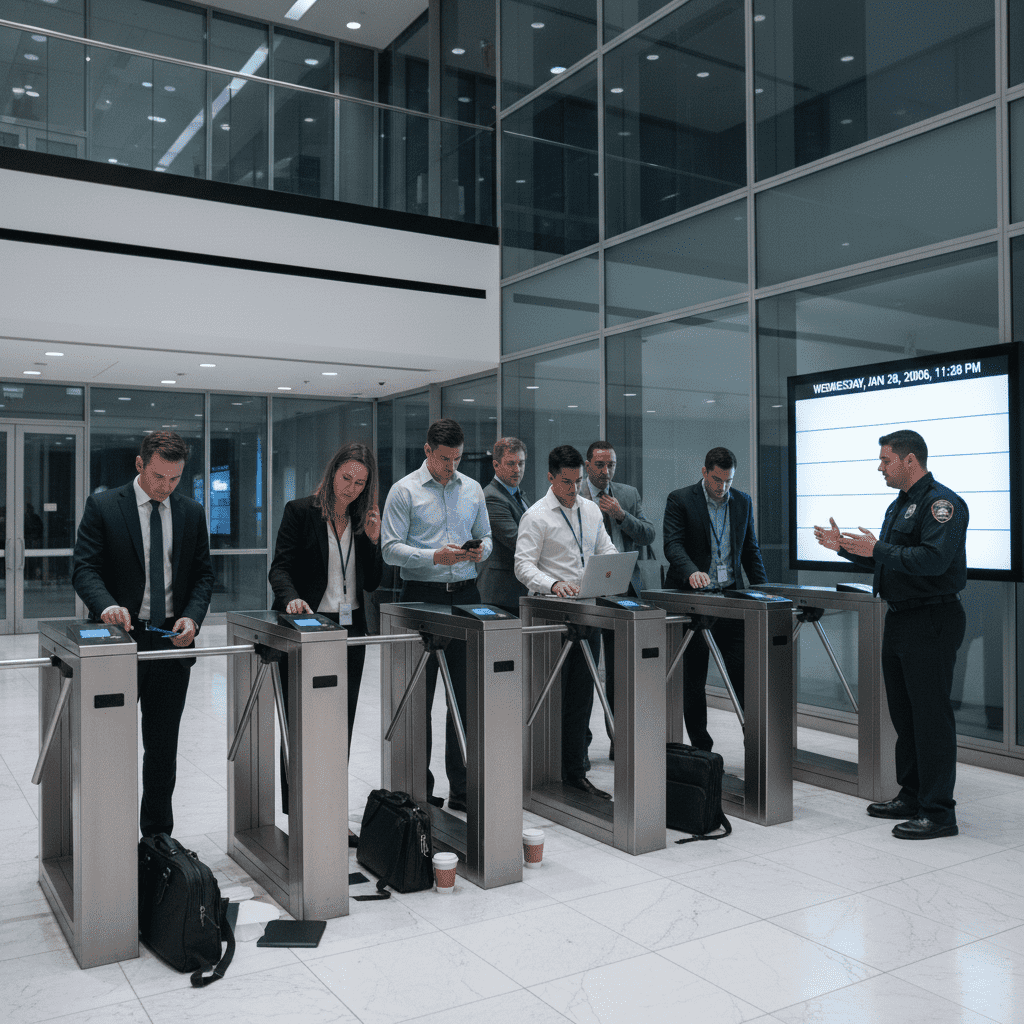
I remember visiting a large corporate headquarters in Shenzhen recently. They had a serious problem. Every morning at 8:50 AM, a long line of employees waited to tap their badges at the turnstiles. It looked like a subway station during rush hour. The managers were unhappy because it wasted time. We suggested a switch to UHF (Ultra High Frequency) technology. Unlike the old proximity cards that require you to touch the reader (or get within 5 centimeters), UHF works from a distance. We call this "Long-Range Identification." You install an antenna above the RFID Security gate. The employee wears a UHF badge on a lanyard. As they walk toward the gate, the reader detects the tag from 3 to 5 meters away. The gate opens automatically. The employee does not stop. They do not put down their coffee. They just walk. This is the shift to "Hands-Free." It is not just about laziness; it is about throughput. However, UHF has challenges. The signal can be blocked by the human body or water. It can also be reflected by metal. This requires careful placement of the antennas. You cannot just slap a reader on the wall and hope it works. You need to tune the power. For a standard office, this might be overkill. But for factories, hospitals, and high-traffic lobbies, this friction-less experience is the future. It changes the entry from a checkpoint into a seamless welcome.
What is an active RFID tag and when should you use it over passive technology?
Managing high-value assets in complex environments is a nightmare when you lose visibility. You cannot rely on short-range scanners to find critical equipment in a massive warehouse or yard.
Active RFID tag vs Passive technology is a choice between range and cost. Active tags use batteries to broadcast signals up to 100 meters for real-time tracking, while passive tags rely on reader energy for shorter-range, maintenance-free access control suitable for most building entries.
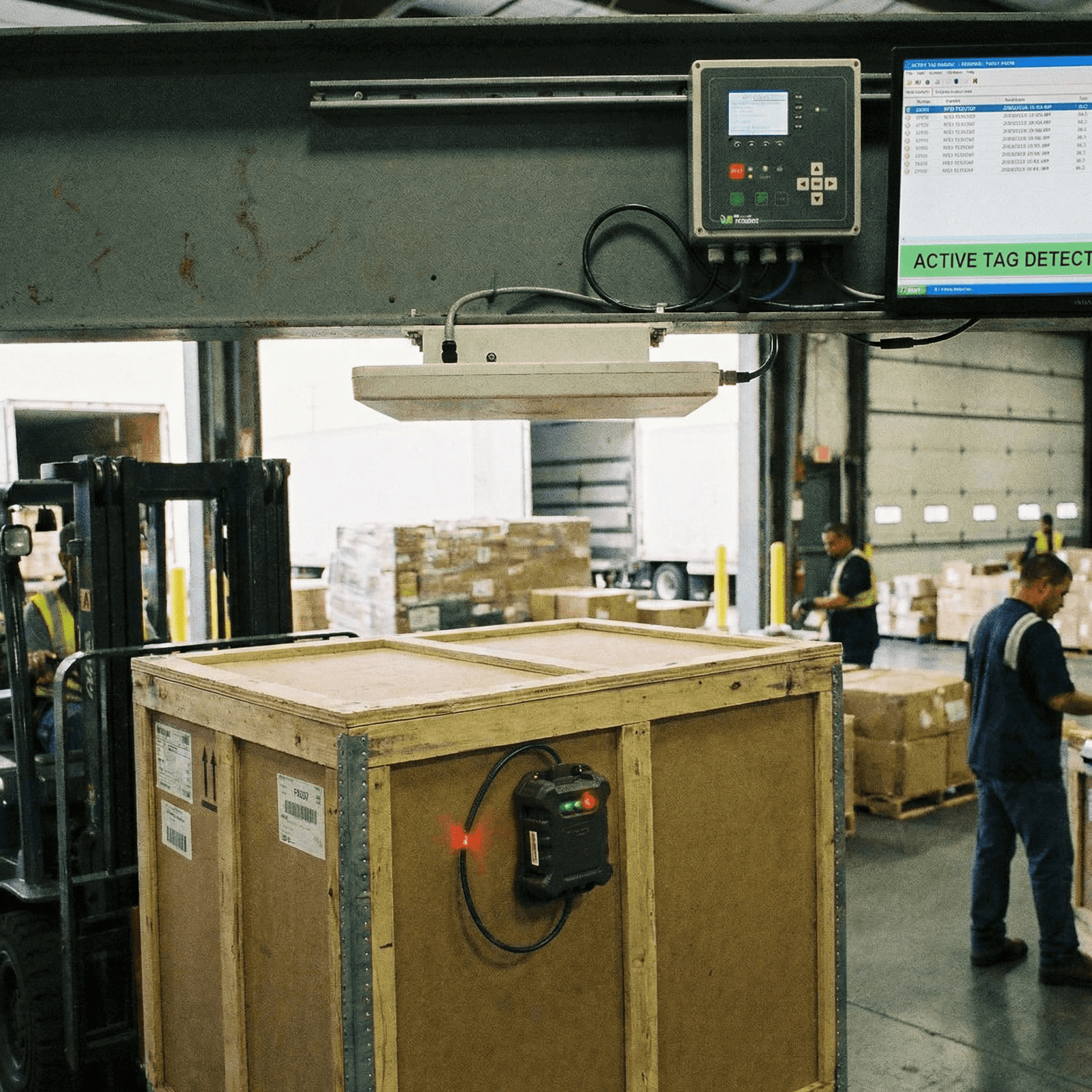
Clients often ask me, "Jay, What is an active RFID tag?" I explain it like this: A passive tag is a mirror. It only shines when you shine a light (radio waves) on it. An active tag is a flashlight. It shines its own light all the time. This difference changes everything about how you plan your security. In the Future of secure access, we see a split. For doors, we stick with Passive UHF or HF. It is cheap. The card costs cents. It lasts forever because it has no battery. But for asset safety, we use Active RFID. Imagine a construction site. You have expensive drills and generators. If someone throws a generator in a truck and drives off, a passive gate reader might miss it if the metal truck blocks the signal. An Active RFID tag on that generator screams "I am here!" constantly. It talks to receivers placed around the perimeter. You can track the item in real-time on a map. Here is a comparison I use to help engineers decide:
| Feature | Passive RFID | Active RFID |
|---|---|---|
| Power | Reader Energy | Internal Battery |
| Range | Short (cm to m) | Long (100m+) |
| Lifespan | Indefinite | 3-5 Years (Battery dies) |
| Signal Strength | Weak (easily blocked) | Strong (penetrates better) |
| Cost | Low | High |
We help our global partners stay ahead of the curve by providing scalable RFID hardware. We advise them to use Active tags only for high-value items where "losing signal" is not an option. For people, passive is usually enough.
Will the NFC access control system eventually kill the physical plastic card?
Carrying a wallet is becoming obsolete as people rely entirely on their smartphones. Forcing staff to carry a separate plastic badge feels outdated and inconvenient in a modern digital workplace.
The NFC access control system leverages the smartphone's built-in secure element, allowing users to unlock doors with a tap of their phone. This converges physical and digital identity, though physical cards remain a necessary backup for those without compatible devices or empty batteries.
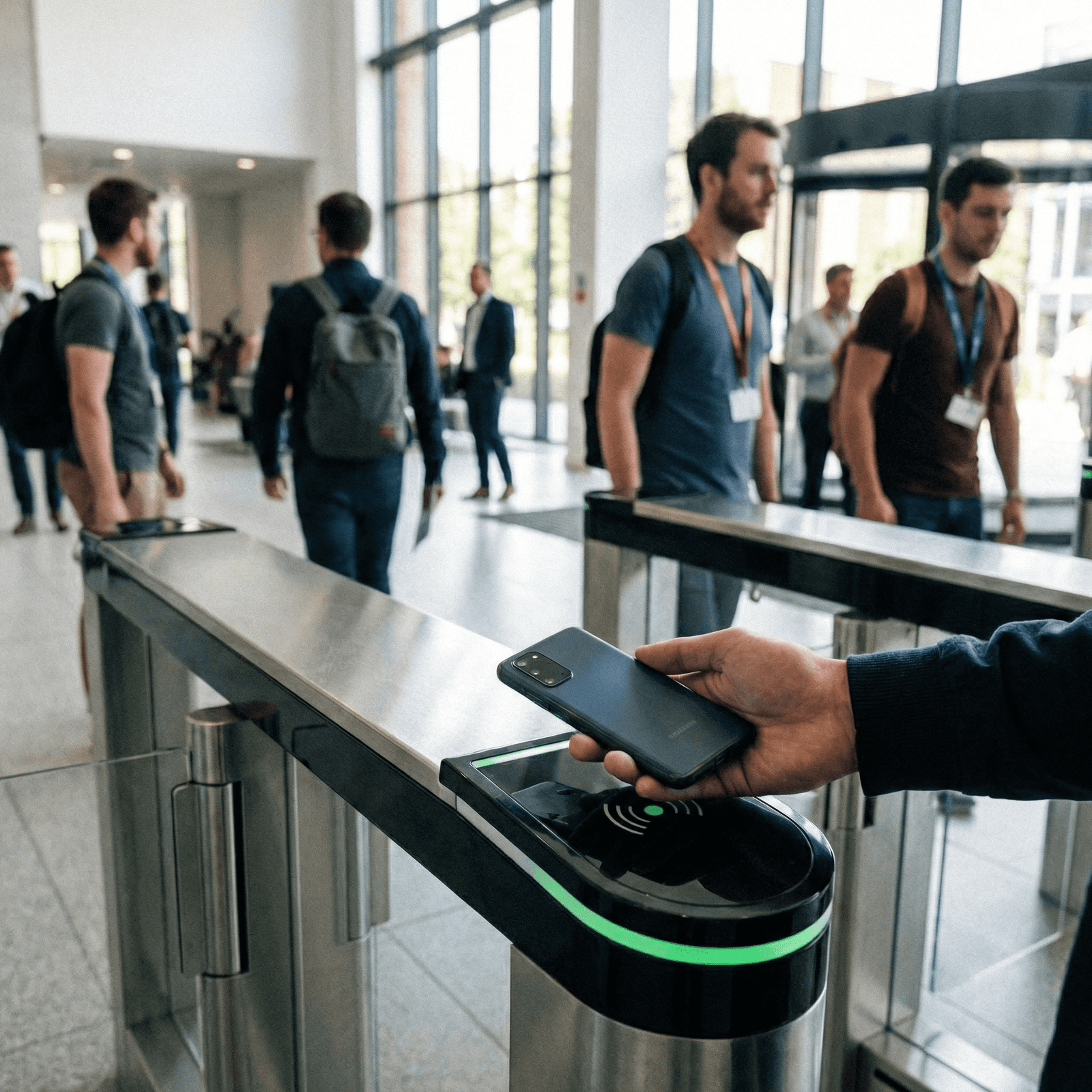
I rarely carry cash anymore. I pay for my lunch with my phone. Why do I still need a plastic card to get into my office? This is the question driving the explosion of NFC (Near Field Communication). NFC is a subset of RFID. It operates at 13.56 MHz. It is the same tech inside your credit card. The trend for 2026 is "Mobile Credentials." Instead of issuing a card, the HR department sends a digital key to the employee's app. The employee walks up to our Fongwah reader. They tap their phone. The reader talks to the NFC chip in the phone. The door opens. This is great for security. People share plastic cards. They rarely share their unlocked smartphones. Also, if an employee quits, you can revoke the digital key instantly over the cloud. You do not need to ask for the card back. But will the plastic card die? I do not think so. I worked with a hotel client who tried to go 100% mobile. It failed. Guests arrived with dead batteries. Older guests did not have smartphones. Some guests just did not want to download an app. The solution is a Hybrid Reader. We build readers that support both standard RFID cards and NFC mobile signals. You offer the convenience of mobile to the tech-savvy users. You keep the reliability of plastic cards for the cleaning staff or visitors. This integration allows you to step into the future without shutting the door on the present. It creates a robust ecosystem where multiple forms of ID work together.
Frequently Asked Questions
Q: What is an active RFID tag, and is it better than UHF for commercial buildings?
A: An active RFID tag has an internal battery that continuously broadcasts signals, offering a very long range (100m+). However, for a typical commercial RFID Security gate, active tags are often overkill and require expensive battery replacements. We recommend Passive UHF (ISO 18000-6C) for most building access projects. It provides a "hands-free" experience (5-10m range) at a fraction of the cost and with zero maintenance, making it the smarter choice for 2026.
Q: Can I upgrade my old proximity system to a modern NFC access control system without rewiring?
A: Yes. The future of secure access is hybrid. Fongwah's multi-frequency readers can read both traditional 125kHz cards and modern 13.56MHz credentials. This means you can implement an NFC access control system allowing employees to use their smartphones as keys, while simply replacing the readers at the door—no need to rip out the cables or change the backend controller.
Q: Will UHF RFID completely replace traditional proximity cards?
A: Not immediately, but the shift is accelerating. Traditional proximity cards (like EM4100) are easily cloned and require users to stop and tap. UHF RFID offers (frictionless access), allowing staff to walk through gates without breaking stride. For high-traffic areas like lobbies and parking garages, UHF is rapidly becoming the standard, while proximity cards remain a budget option for low-security internal doors.
Conclusion
The future of entry is hybrid. We will see UHF for fast, hands-free gates, Active RFID for valuable assets, and NFC for convenience, all working together in one system.
---