Asset tracking is exhausting. Manual counting wastes hours and kills morale. You need a solution that works harder than you do.
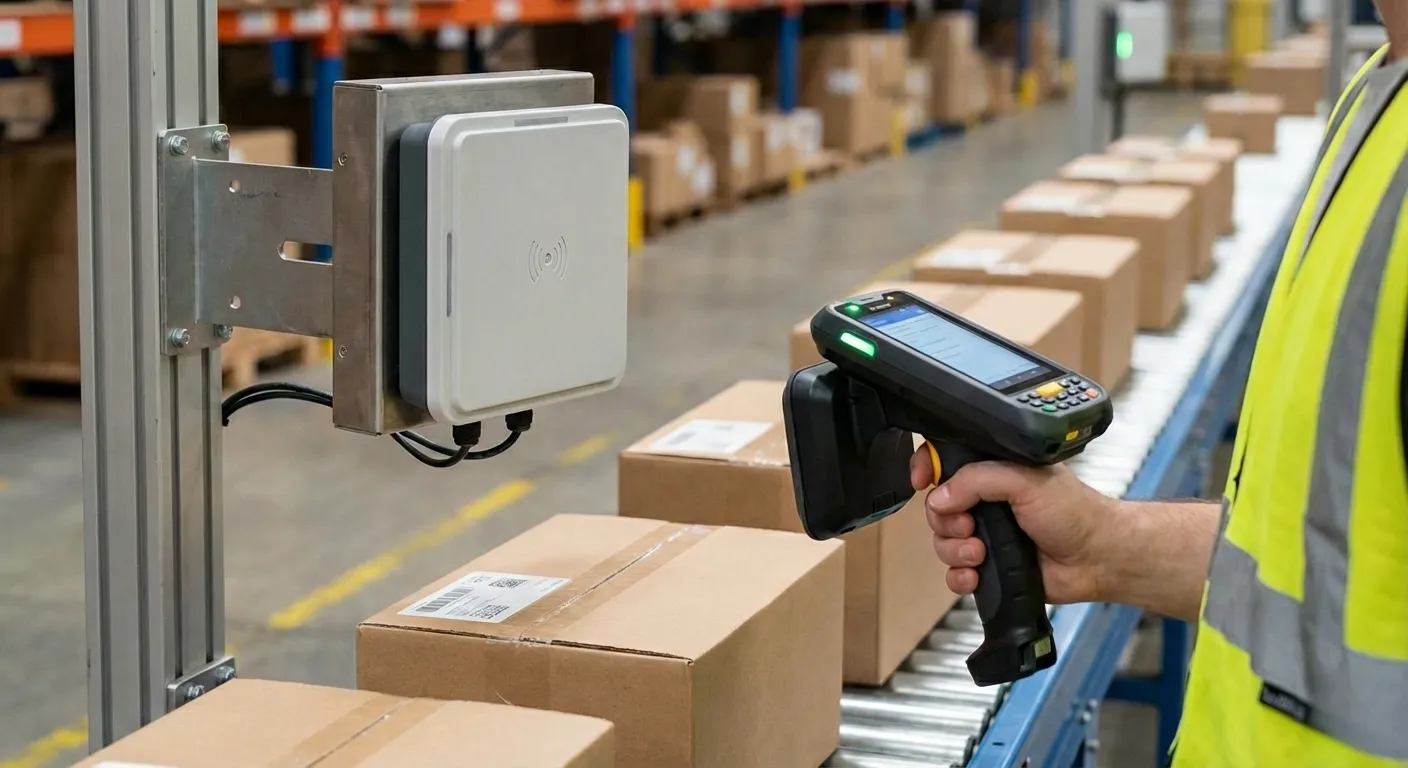
Fixed RFID readers save the most labor in high-volume, automated environments by eliminating manual scanning entirely. Handheld readers are better for flexible, on-demand inventory checks where items are not moving on a conveyor. The best choice depends on whether your assets move to you, or you go to them.
I started my career on the production line at Fongwah Five years ago. I remember the physical pain of manual checks. My team wasted hours every week just counting boxes. We often debate which technology is better, but the answer is rarely black and white. It depends on your specific workflow. Let's dig into the details so you don't make the same mistakes many businesses do.
When is a Fixed RFID Reader the Superior Choice for Automation?
Stopping production to scan items is a nightmare. It creates bottlenecks and hurts your bottom line. Automation is the only way out.
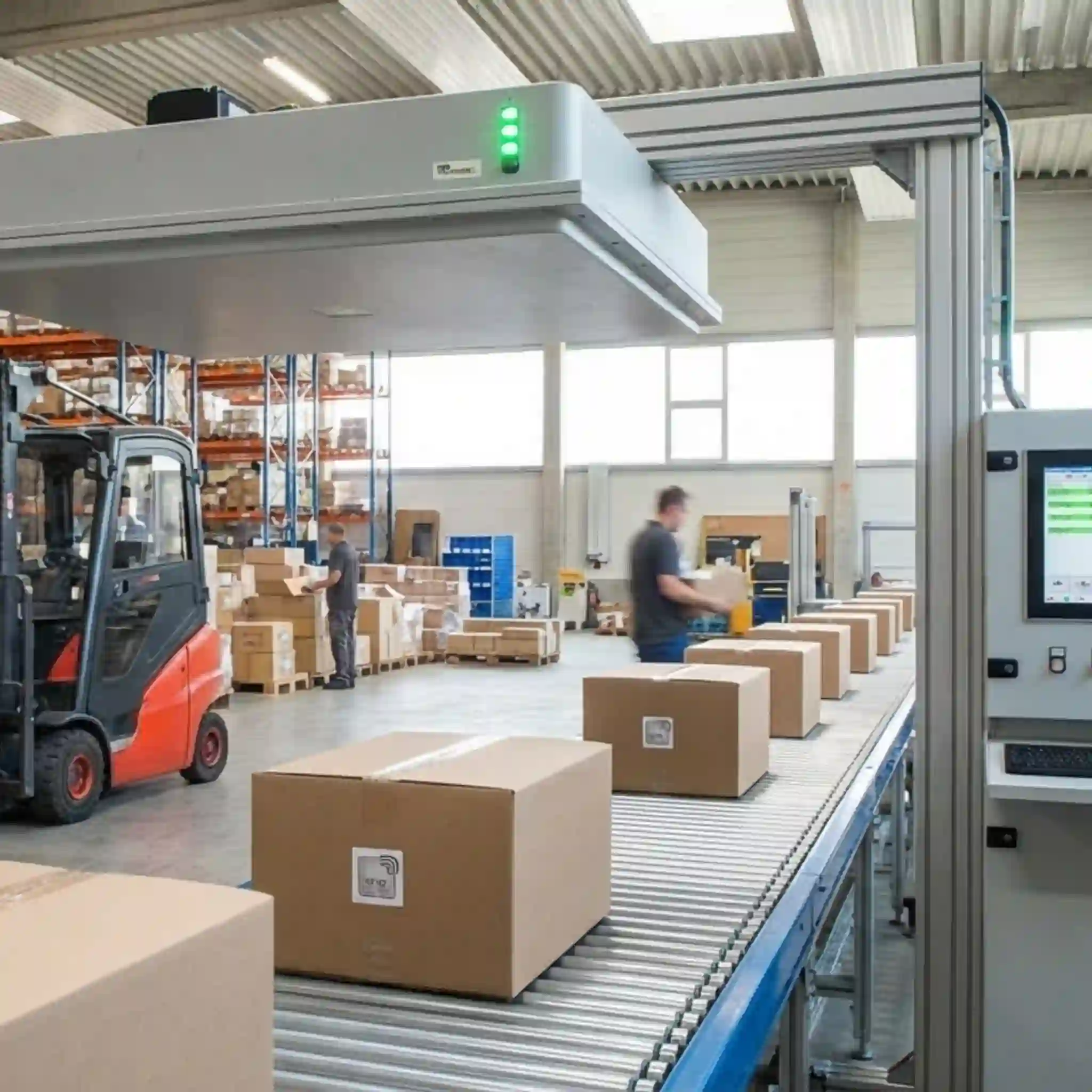
Fixed readers are superior when you have defined choke points, like dock doors or conveyor belts. They read tags automatically as items pass, requiring zero human intervention during the scanning process, which maximizes labor savings in high-volume operations.
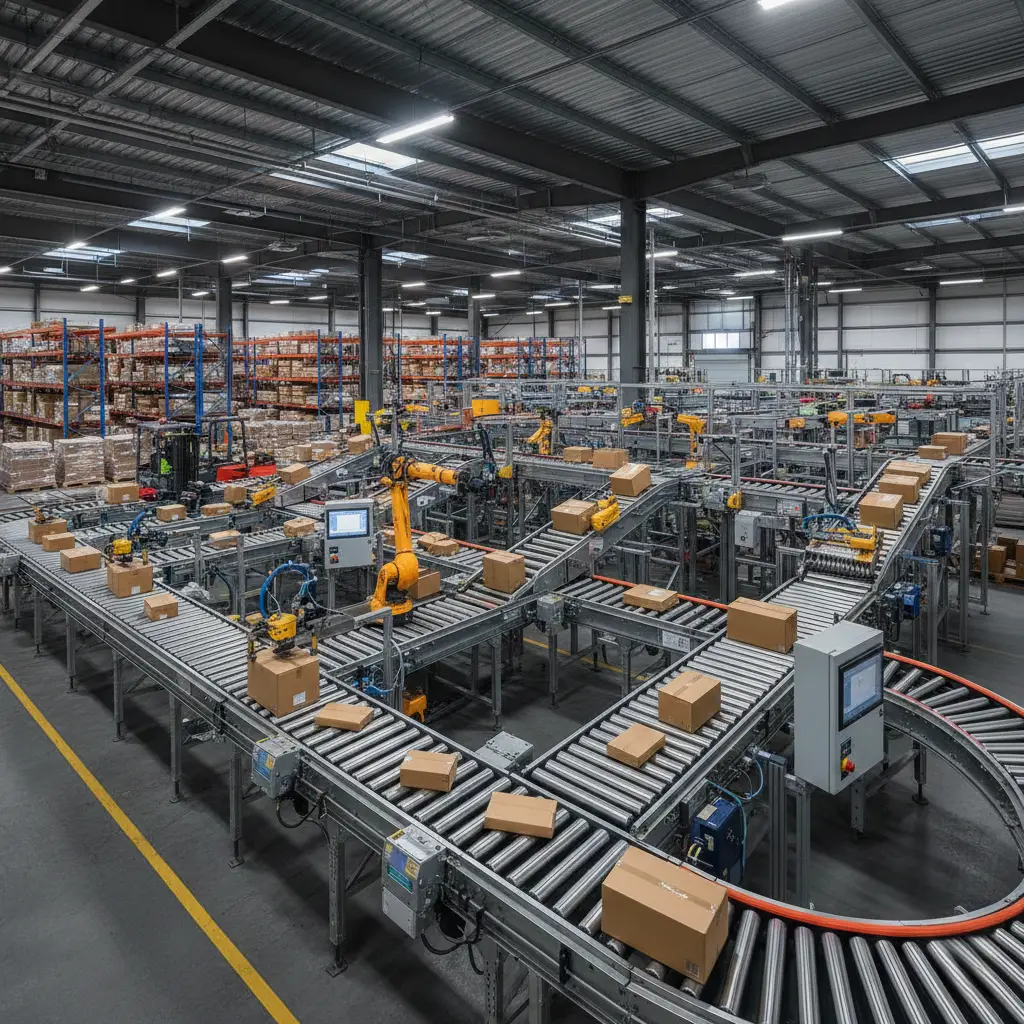
The Power of "Set It and Forget It"
When I worked as an engineer, we installed fixed readers for a logistics client. Before this, they had three people scanning packages all day. After installation, those people moved to quality control. The fixed reader acts like an invisible gatekeeper. It does not sleep, and it does not miss a break.
Critical Analysis of Fixed Reader Labor Savings
To understand where the savings come from, we must look at the workflow integration. Fixed readers are not just scanners; they are part of the infrastructure.
1. Automated Choke Points The primary labor saving comes from "passive tracking." You place antennas at dock doors or along conveyor belts. As pallets move through, the system updates inventory instantly. No worker has to pull a trigger. This saves roughly 5 to 10 seconds per item compared to barcode scanning.
2. Reducing Human Error Labor is not just about time; it is about accuracy. When humans get tired, they make mistakes. Fixing these mistakes takes even more time. Fixed readers provide consistent accuracy, reducing the labor needed for reconciliation handling.
3. Limitations to Consider However, fixed readers are not magic. They cannot see around metal corners easily. If an item is buried deep in a pallet with bad orientation, the reader might miss it. This requires a process change to ensure items are stacked correctly.
| Feature | Fixed RFID Reader | Manual Scanning |
|---|---|---|
| Trigger Mechanism | Automatic (Sensor/Always On) | Human Finger |
| Labor Cost | Near Zero (after setup) | High (ongoing) |
| Throughput | High (Hundreds per second) | Low (One by one) |
| Flexibility | Low (Stationary) | High (Mobile) |
If your process flows in a straight line, the fixed reader is the clear winner. It removes the "human" from the loop entirely.
Does the Flexibility of Handheld RFID Readers Outweigh Speed?
Unreachable assets cause massive headaches. You cannot move heavy equipment just to scan a tag. You need to bring the scanner to the item.
Yes, for dispersed assets. Handheld readers outweigh fixed speed when inventory is static or hidden in corners. The labor saved here comes from avoiding the movement of heavy assets to a reading station, allowing workers to sweep a room quickly.
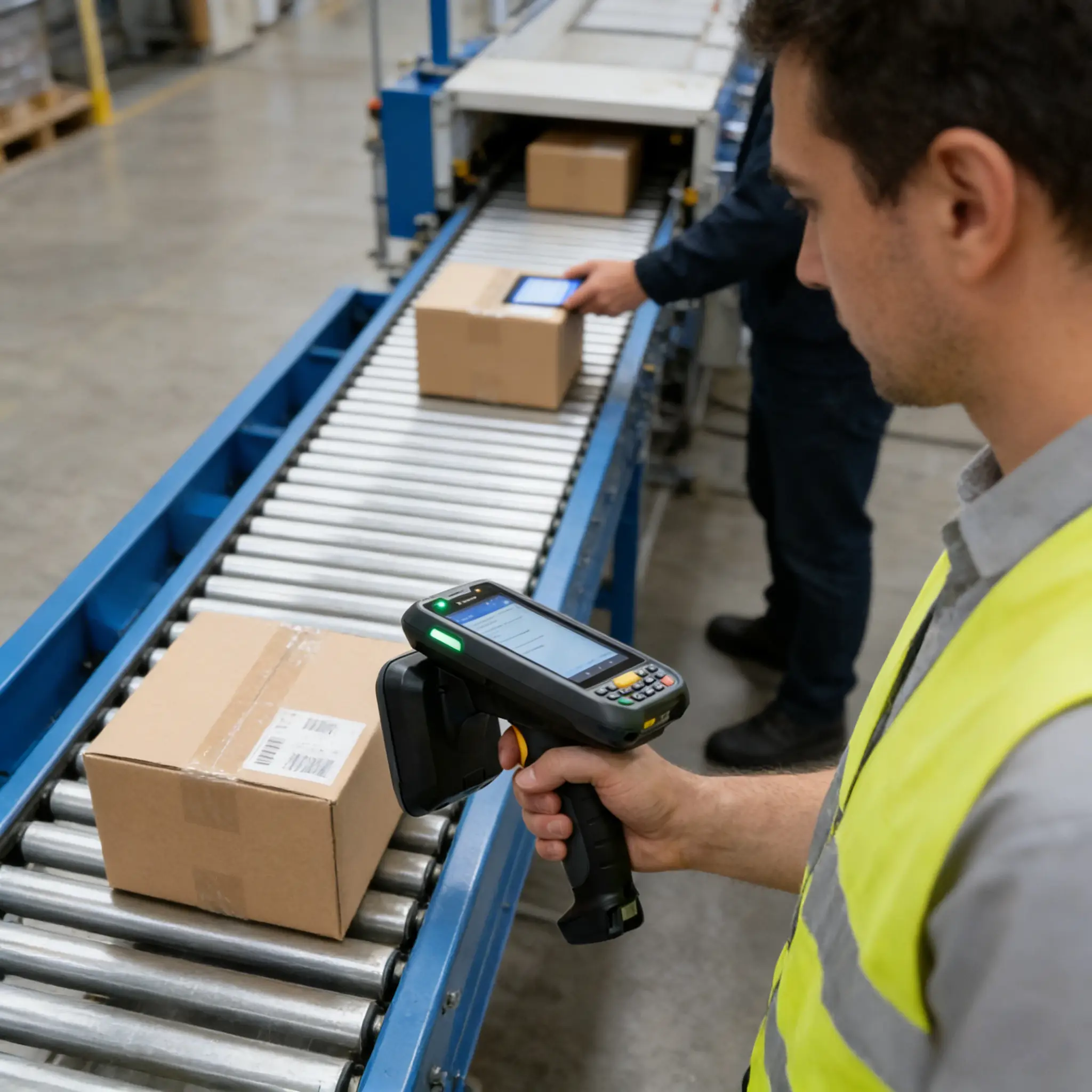
The "Search and Find" Advantage
I once managed a project for a retail store. They had clothes stacked high on shelves. A fixed reader was useless there. The handheld reader allowed the staff to walk down the aisle and capture data in seconds. It turned a weekend inventory job into a two-hour task.
Breaking Down the Flexible Labor Equation
Handheld readers (like the ones we develop at Fongwah) are tools for distinct tasks. They do not replace the worker; they enhance the worker.
1. The Geiger Counter Effect Finding a specific lost item is the biggest time-waster in any warehouse. Handheld readers often have a "Geiger counter" mode. This guides the worker to the exact location of a misplaced item. This feature alone can save hours of searching labor per week.
2. Exception Management Fixed readers handle the bulk flow, but what about the exceptions? Sometimes a box falls off the line, or a tag is damaged. A handheld reader allows a worker to intervene, scan the specific item, and fix the record. This flexibility is crucial for maintaining 100% data integrity.
3. No Infrastructure Labor We must also consider the labor of installation. Fixed readers need mounting, cabling, and tuning. Handheld readers just need a charged battery. For smaller operations or temporary sites, the labor required to set up a fixed system is not justified.
| Scenario | Handheld Reader Advantage |
|---|---|
| Retail Cycle Counts | Workers walk the floor without moving merchandise. |
| Field Service | Technicians scan equipment at customer sites. |
| Search & Rescue | Locating a specific lost asset quickly. |
| Backup | Acting as a failsafe when fixed readers go offline. |
While handhelds require a human to hold them, they save labor by eliminating the need to reorganize your warehouse around the technology.
How Do Integration Costs Impact Your Labor Savings Calculation?
Buying hardware is easy, but installing it is hard. Complex setups can drain your IT team’s time and energy. Don't ignore setup labor in your ROI.
Fixed readers often require significant "setup labor" for cabling and middleware integration. Handhelds have lower integration costs but higher "operational labor." The true saving is calculated by balancing upfront installation effort against daily scanning hours saved over time.
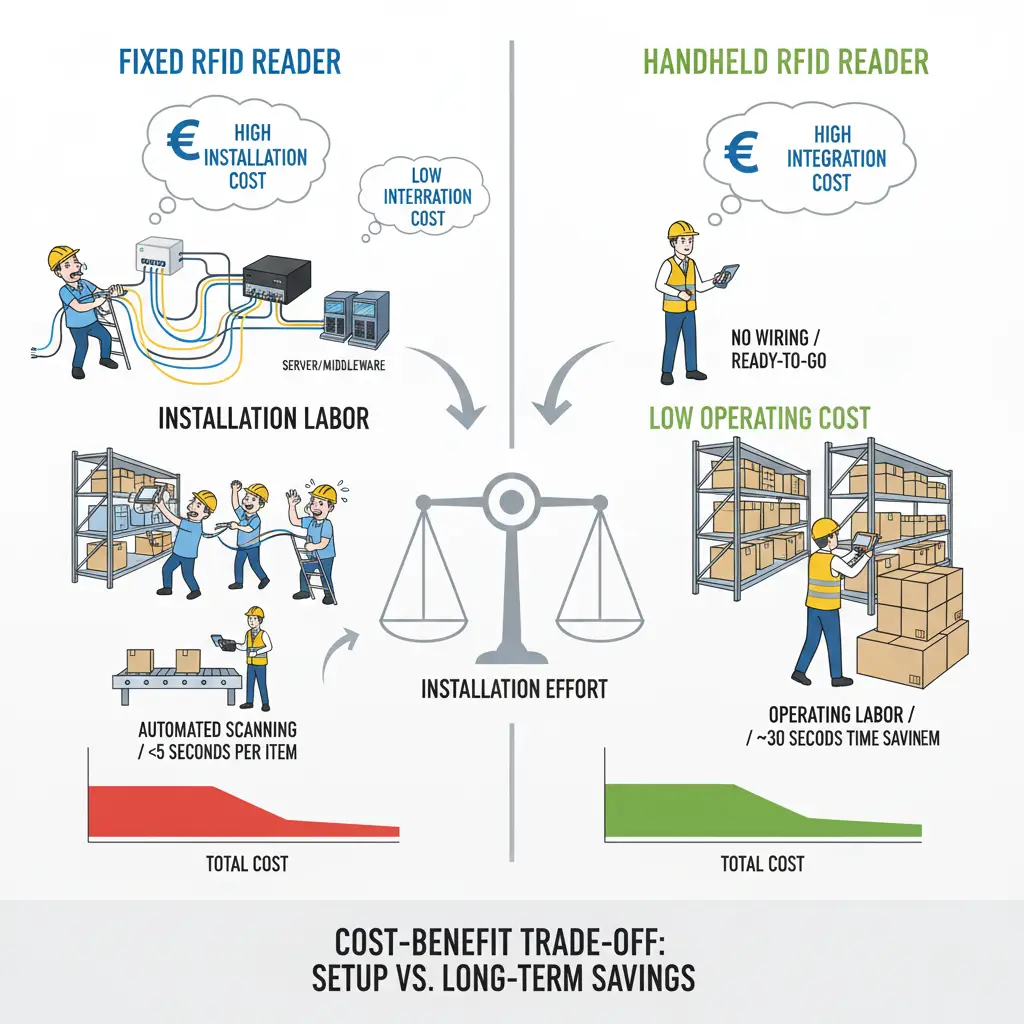
The Hidden Labor of Implementation
As a manager at Fongwah, I often see customers forget the "hidden" labor. They look at the price of the reader but ignore the cost of the electrician. Fixed systems are construction projects; handhelds are just devices.
Analyzing the Total Cost of Labor
We need to think critically about "Labor" in two parts: Deployment Labor and Operational Labor.
1. Deployment Labor (One-time) Fixed readers are demanding. You need to run Ethernet cables (POE), install mounting brackets, and perhaps shield the area with RF absorber material. You also need software engineers to configure the middleware so the reader talks to your database. This is expensive, high-skilled labor.
2. Operational Labor (Recurring) Handheld readers save on deployment but cost you every day in operation. A human must walk, aim, and scan. If you pay a worker $20 an hour, and they spend 2 hours a day scanning, that is $10,000 a year. A fixed reader eliminates this recurring cost.
3. The Break-Even Point You must calculate the volume. If you scan 500 pallets a day, the operational savings of a fixed reader will pay for the high deployment labor very quickly. If you scan 50 pallets a week, the handheld reader is the better choice because you will never recover the deployment costs of a fixed system.
| Labor Type | Fixed Reader System | Handheld Reader System |
|---|---|---|
| IT/Engineering Setup | High (Complex integration) | Low (Plug and Play) |
| Physical Installation | High (Cabling, Mounting) | None |
| Daily Scanning | Low (Automated) | Medium (Manual effort) |
| Maintenance | Medium (Firmware, Calibration) | Low (Charging, Updates) |
There is no free lunch. You either pay with high effort upfront (Fixed) or moderate effort daily (Handheld).
Conclusion
Fixed readers save daily operational labor for high-volume flows, while handheld readers save infrastructure labor and offer flexibility. Choose fixed for flow and handheld for auditing.
---