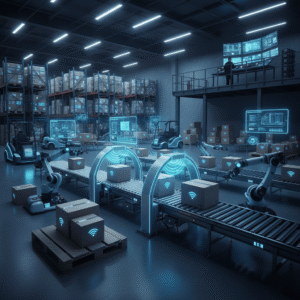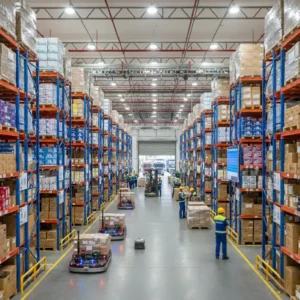
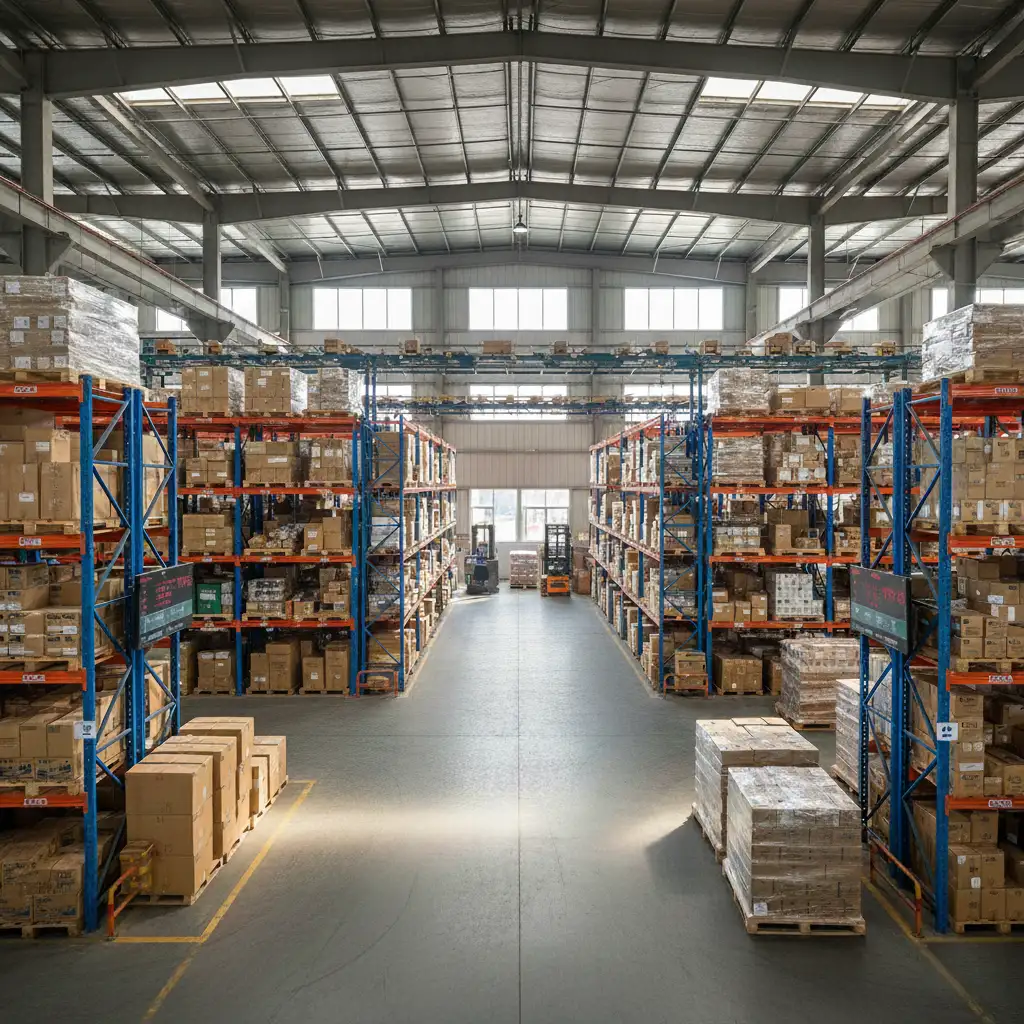
Manual scanning creates bottlenecks that drain your profits every year. You need a faster, automated way to handle rising inventory levels without adding more labor or increasing error rates.
Moving to Fixed RFID Readers solves the "line-of-sight" problem of barcodes. It automates data capture at dock doors and conveyors, ensuring 99.9% accuracy. This shift transforms your logistics, moving you from reactive manual scanning to proactive, real-time asset tracking for better scalability.

I see many warehouse managers struggle with the decision to upgrade their systems. You might think your current process is "good enough," but "good enough" stops growth. The following insights will show you why this change is necessary.
How Does Overcoming the Limitations of Manual Scanning Boost High-Volume Logistics?
While barcodes have served the industry well, manual scanning is the bottleneck of modern logistics. Errors in inventory management cost businesses billions annually. As SKU counts rise, the "line-of-sight" limitation of barcode scanners becomes a liability.
I remember my early days working as a production line operator. My job was simple but exhausting. I had to scan every single box that came down the belt. If a label was wrinkled, torn, or facing the wrong way, I had to stop the line to fix it. This killed our efficiency. In a high-volume warehouse, these small delays add up to hours of lost time every day. Manual scanning relies entirely on human action. Humans get tired, and we make mistakes.
When you switch to RFID vs. Barcodes for Inventory Management, you eliminate the need to see the label. A Fixed RFID Reader can read hundreds of tags in seconds, even if they are inside a box or stacked on a pallet. This capability removes the human bottleneck. It allows goods to flow freely through your facility. We need to stop treating inventory management like a manual chore. It must become an automated flow to handle modern demands.
What Is the Real Return on Investment for Real-Time Inventory Visibility?
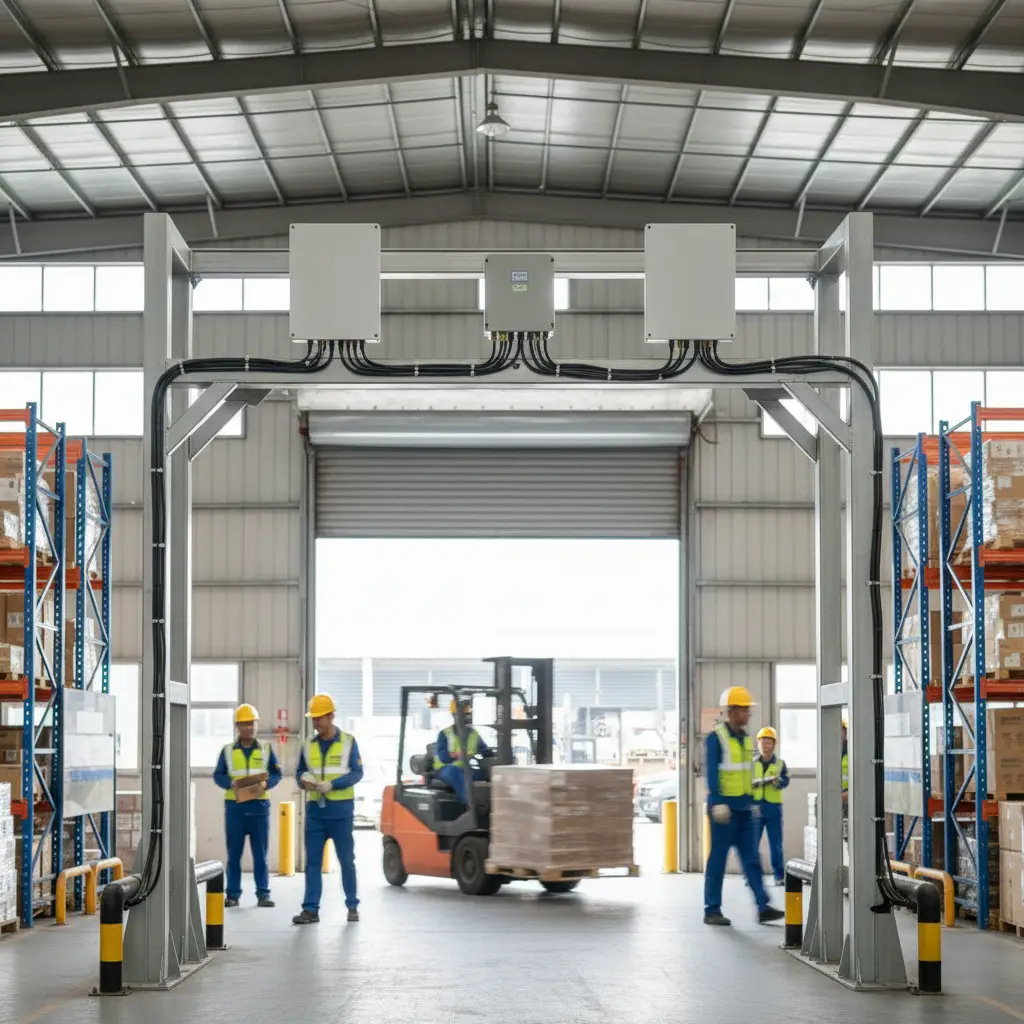
Unlike handheld scanners, an Industrial RFID Reader infrastructure enables real-time location systems (RTLS) capabilities. By deploying Fixed RFID Readers at dock doors and conveyor belts, you achieve automated data capture without human intervention.
Many of my clients at Fongwah hesitate because of the initial cost. They compare the price of a printed label to an RFID tag. However, this is the wrong way to look at the value. The real ROI (Return on Investment) comes from what you save in labor and what you gain in accuracy. With barcodes, you only know where an item "was" the last time someone decided to scan it. With fixed readers, you know where an item "is" right now. This visibility reduces shrinkage, which is the polite word for lost or stolen inventory.
Real-time data allows you to make decisions instantly. If a shipment is incomplete, the reader at the dock door alerts you before the truck leaves. You do not have to wait for a customer to complain about missing items. Below is a breakdown of how the two technologies compare in daily operations:
| Feature | Barcode System | Fixed RFID System |
|---|---|---|
| Scanning Method | One by one, manual | Bulk reading, automated |
| Line of Sight | Required | Not Required |
| Speed | Seconds per item | Hundreds per second |
| Accuracy | Dependent on user | Consistent and high |
| Data Type | Historic (Last scan) | Real-Time |
How Can You Successfully Integrate Fixed RFID Readers into Your WMS?
For enterprises looking to upgrade, selecting the right hardware is key. Our high-performance readers support dense reader modes, ensuring 99.9% accuracy even in metal-heavy environments.
Integrating hardware with your WMS (Warehouse Management System) used to be a nightmare, but it is much easier today. The goal is to create a seamless bridge between the physical world and your digital records. As a former engineer, I know that the hardware is only one part of the solution. The most critical part is the logical setup. You do not want your WMS to be flooded with data. A reader might read a tag 100 times a minute. Your system only needs to know that the tag has arrived.
This is where "middleware" comes in. It filters the raw data from the Fixed RFID Reader before sending it to your WMS. When we help clients set this up, we focus on defining "zones." For example, we place readers at the receiving dock and the shipping dock. The system simply updates the status from "Received" to "Shipped." You must also ensure your WMS can handle APIs or standard data protocols. Taking the time to test this logic prevents system crashes and ensures your inventory counts are actually correct.
Why Is Industrial Grade Hardware Essential for Consistent Accuracy?
The environment of a warehouse is tough on electronics. You have metal racks, metal forklifts, and metal walls. Metal is the enemy of radio waves because it causes reflections.
In my experience solving problems for customers, I often see people trying to use cheap or consumer-grade readers in an industrial setting. This always leads to failure. Using RFID Asset Tracking in a warehouse requires robust equipment. Industrial readers are built to handle "dense reader modes." This means they can operate correctly even when many other readers are nearby. They can also filter out the "noise" caused by metal reflections.
At Fongwah, we promise to offer quality products because we know that downtime costs money. An industrial reader must also resist dust, moisture, and vibration. If a forklift bumps into the mount, the reader must keep working. If the warehouse is humid, the electronics must remain dry. When you choose hardware, you are building the foundation of your system. If the foundation is weak, your data will be wrong. Investing in the right hardware ensures that your 99% accuracy rate stays at 99%, day after day.
What Are the Key Steps to Planning Your Migration from Barcodes to RFID?
Moving from a manual process to an automated one is a journey, not a switch you simply flip. It requires careful planning to ensure your team and your technology work together.
I always advise my clients to start with a pilot program. Do not try to change the whole warehouse in one weekend. Pick one specific pain point. Maybe it is the receiving dock where lines are long. Or maybe it is a specific high-value product line that often goes missing. Install Fixed RFID Readers in that one area first. unique challenges will appear. You might find that certain liquids in your products absorb the signal. Or you might find that the tags get damaged on the conveyor belt.
Solving these small problems early prevents big disasters later. Also, involve your staff. Our lead solutions engineer always emphasizes, always emphasizes that technology must fit the user. Your warehouse team is used to scanners. Show them how the new system makes their job easier, not harder. When they see they don't have to scan every box manually, they will support the change. A phased approach allows you to learn, adapt, and scale up with confidence.
Conclusion
Switching to Fixed RFID Readers removes manual bottlenecks and gives you real inventory visibility. It is the critical step needed to scale your logistics operation efficiently and accurately.
---