You struggle to build loyal customers because you are reselling the same generic equipment as everyone else. Competing solely on price destroys your profit margins.
Private labeling is the answer. By partnering with a dedicated manufacturer to customize Fixed and Handheld RFID readers, you create a unique product line that builds your brand authority and blocks competitors from undercutting you.

Finding a "supplier" is easy, but finding a "manufacturing partner" is hard. I see many distributors fail because they treat hardware like a commodity. They buy a box, put a sticker on it, and hope for the best. This is not a strategy. True private labeling involves deep customization and technical alignment.
Why Is Customization the Key to Beating Generic Resellers?
Selling off-the-shelf products puts you in a race to the bottom. If your customer can find the exact same device cheaper elsewhere, you lose the sale.
Customization allows you to adapt versatile models like the UHF Desktop RFID Reader AZ-R3 to specific market niches. Whether changing the casing color or modifying the firmware, unique features justify a premium price and secure customer loyalty.
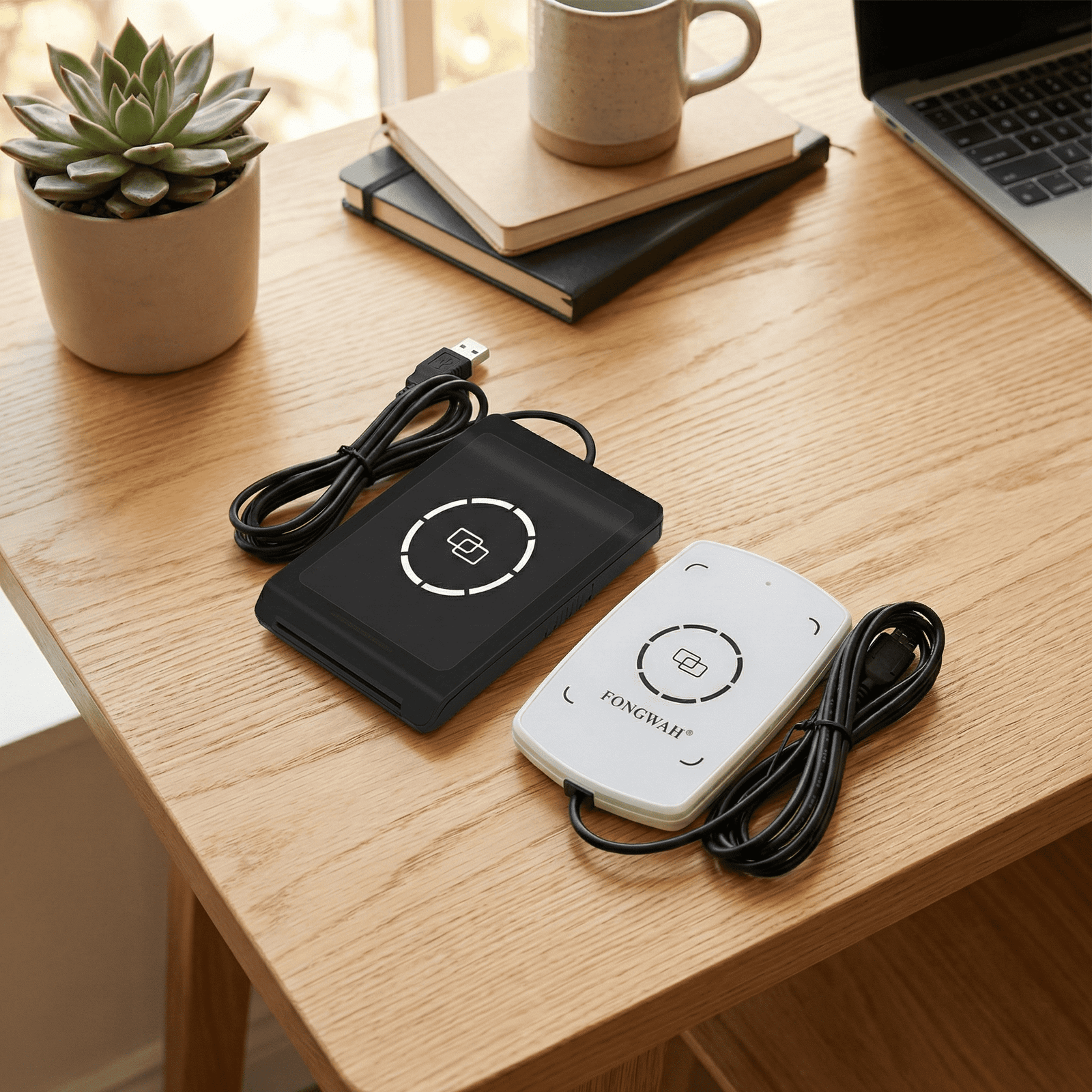
As a Marketing Manager at Fongwah, I often tell clients: "Your brand is your promise." If you sell a generic grey box, your promise is boring. We offer Original Equipment Manufacturing (OEM) and Original Design Manufacturing (ODM) services to change this.
Let's look at the UHF Desktop RFID Reader AZ-R3. This is a workhorse for data encoding. A standard reseller sells it as is. But a smart partner comes to us and says, "Jay, I need this for a library system." We can then customize the firmware so the "beep" sound is quieter (for the library environment) and change the casing to matches the library's branding colors. Suddenly, you aren't selling a "reader"; you are selling a "Library Management Solution."
We can go deeper than just looks. We can modify the Printed Circuit Board (PCB). For example, if you need a specific connection port for an industrial machine, we can engineer that. We can alter the antenna gain on our Fixed RFID Readers to fit a specific conveyor belt width. This level of customization binds the customer to you. They cannot simply switch to a cheaper competitor because the competitor's product literally will not fit the system you designed. This is how you build a defensive moat around your business.
| Customization Level | Description | Impact on Market |
|---|---|---|
| Visual Identity | Logo printing, sticker design, custom packaging. | Builds brand recognition. |
| Hardware Modification | Changing casing color/material, adding mounting holes. | Fits specific physical environments (e.g., outdoor vs. office). |
| Firmware Logic | Adjusting beep volume, LED behavior, data output format. | Improves user experience for specific industries. |
| Deep Engineering | Redesigning PCB, changing antenna modules. | Creates a unique, proprietary product. |
Importing electronics without the right certificates is gambling with your business. Customs can seize your entire shipment, or you could face heavy fines for causing signal interference.
You must ensure your Private Label manufacturer provides certified hardware. A reliable partner ensures all Fixed and Handheld RFID readers meet ETSI (Europe) and FCC (USA) standards before shipping, protecting you from legal liability.
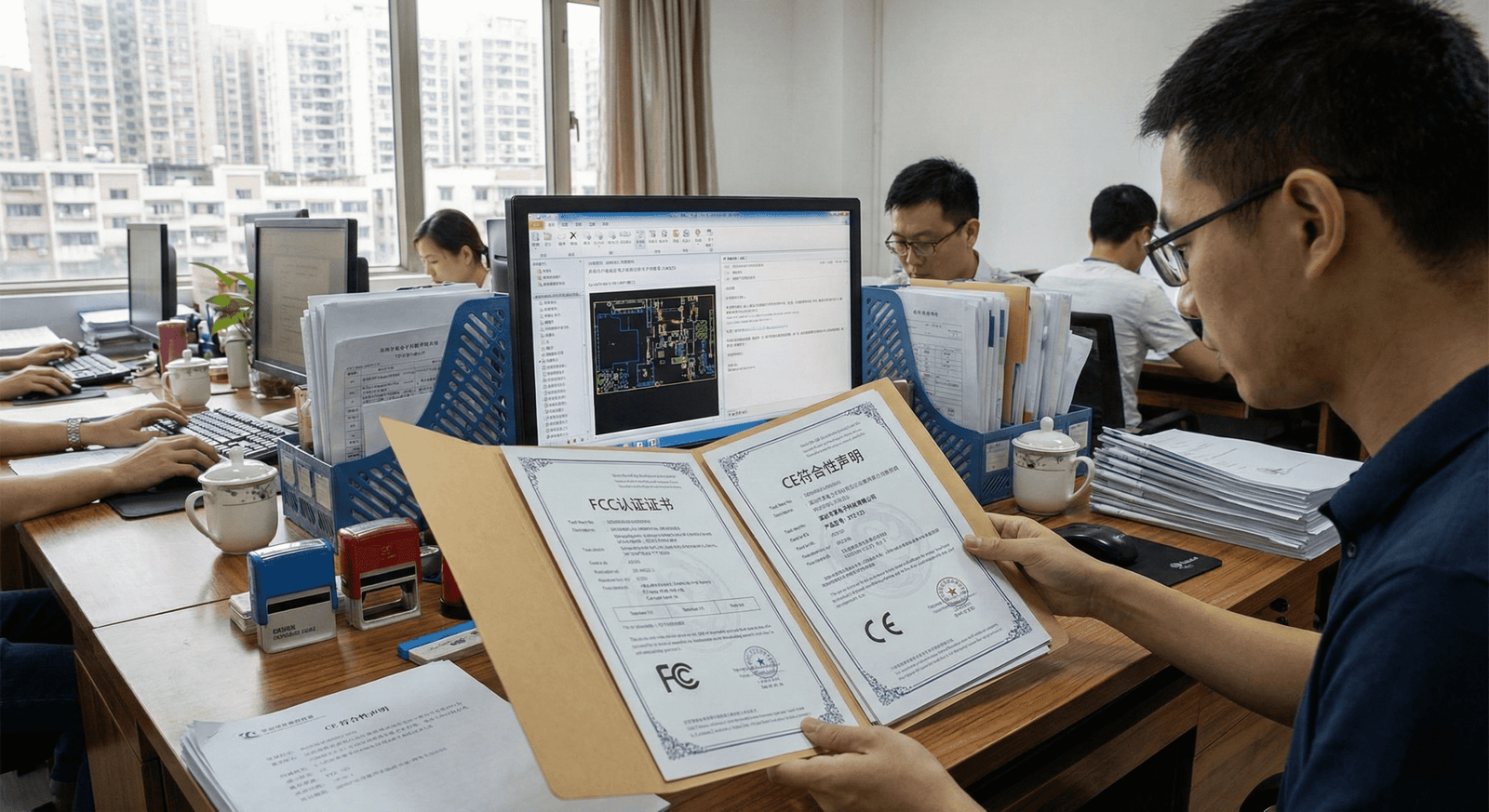
In the world of radio frequency (RFID), rules are strict. I have seen new brands try to save money by using small workshops that do not understand regulations. They import 500 readers into Germany, only to have them blocked at the border because they lack the "CE" mark or the RED (Radio Equipment Directive) test report.
At Fongwah, we understand that "Compliance" is a feature. For the US market, our devices comply with FCC Part 15 regulations. This means our readers will not interfere with police radios or cell towers. For Europe, we adhere to ETSI standards, including the LBT (Listen Before Talk) protocol I mentioned in previous articles.
When you private label our products, you can often "piggyback" on our certifications or we can help you apply for your own ID based on our test reports. This saves you thousands of dollars and months of testing time. If you sell a UHF RFID Reader Writer to a hospital or a government agency, the first thing they ask for is safety and compliance documentation. If you cannot provide it, the deal is dead. Your manufacturing partner must be your compliance expert. Do not accept "it should be fine" as an answer. Demand the certificates.
| Certification | Region | Why it matters? |
|---|---|---|
| FCC | USA | Required by law for all radio devices. |
| CE / RED | Europe | Mandatory for safety and radio standards. |
| RoHS | Global | Ensures the product contains no hazardous materials (lead, mercury). |
| IP Rating | Global | Proves dust and water resistance (crucial for outdoor readers). |
Why Must You Bypass Middlemen to Secure Long-Term Growth?
Buying from trading companies adds a markup and creates a communication wall. When technical issues arise, the message gets lost in translation, delaying your support.
Direct cooperation with a manufacturer guarantees better pricing and direct access to engineering teams. This allows for deep UHF RFID Reader writer software customization, ensuring your SDKs and drivers work flawlessly with your client's ERP systems.
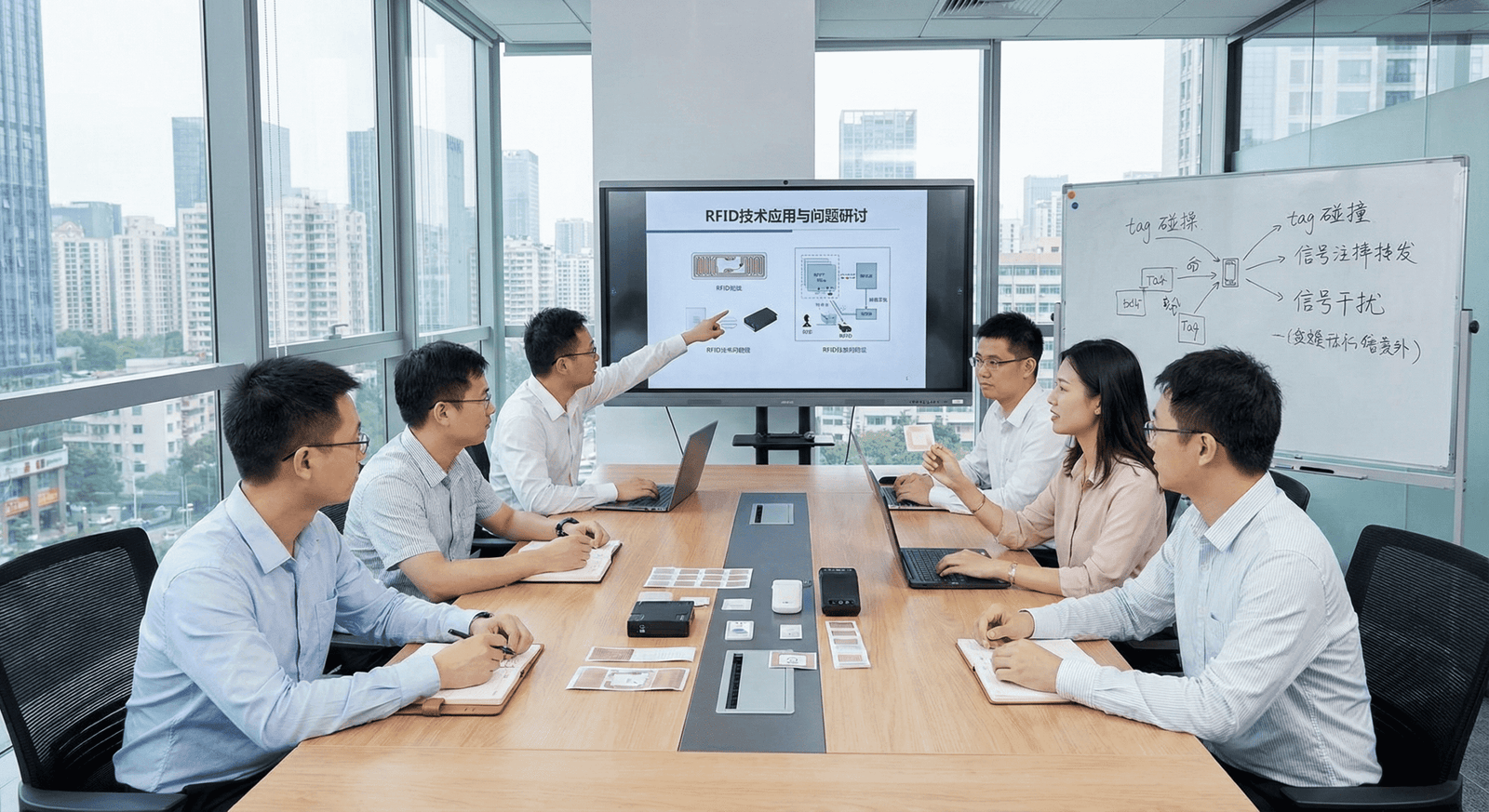
In the B2B hardware game, speed and price are everything. If you buy from a middleman (a trading company on a general marketplace), you are paying a 20% to 30% premium. That eats directly into your profit. But worse than the money is the communication lag.
Imagine you have a big client integrating your readers into a Linux server. The SDK isn't working. You ask the trader. The trader asks the factory. The factory asks the engineer. The engineer replies to the factory. The factory replies to the trader... You get the point. It takes days.
When you partner directly with us at Fongwah, you cut the line. You get a direct channel to the people who built the board. We can provide UHF RFID Reader Writer software customization quickly. If your client needs the reader to output data in a specific hex format, we can patch the SDK in a day.
Furthermore, direct sourcing gives you supply chain stability. We have been in this industry for 20 years. We control our mold production and chip inventory. When the market has a shortage, we have the stock to keep you running. A trading company cannot promise that. We treat our OEM partners as an extension of our own company. Your success is our volume. It is a symbiotic relationship.
| Factor | Trading Company / Middleman | Direct Manufacturer (Fongwah) |
|---|---|---|
| Cost | High (Markup included) | Low (Factory Price) |
| Communication | Slow, non-technical | Direct, Engineer-to-Engineer |
| Customization | Limited or Impossible | Flexible (Hardware & Software) |
| Long-term Support | Unreliable | Guaranteed (20 years experience) |
Frequently Asked Questions
Q: What is the main advantage of private labeling RFID hardware?
A: Private labeling allows you to move away from competing solely on price. By customizing the hardware (casing, firmware, PCB) and branding it as your own, you build brand authority, secure customer loyalty, and prevent competitors from undercutting you with generic products.
Q: Do Fongwah's private label RFID readers meet FCC and CE compliance standards?
A: Yes. Importing non-compliant electronics is a massive legal risk. Our fixed and handheld RFID readers are engineered to comply with strict global standards, including FCC Part 15 for the US and ETSI (CE/RED) for Europe, ensuring safe and legal deployment.
Q: Why is sourcing directly from an OEM manufacturer better than using a trading company?
A: Bypassing middlemen (trading companies) eliminates 20-30% markups and removes communication barriers. Working directly with our Shenzhen factory gives you factory-direct pricing and direct access to our engineering team for rapid SDK customization and technical support.
Conclusion
Sourcing for a private label requires more than just finding a product. You need a partner who offers deep customization, regulatory compliance, and direct engineering support. This is how you build a brand that lasts.
---