You lose money every time a worker manually counts a box because human error is unavoidable. These simple mistakes pile up, destroying your profit margins and frustrating your loyal customers.
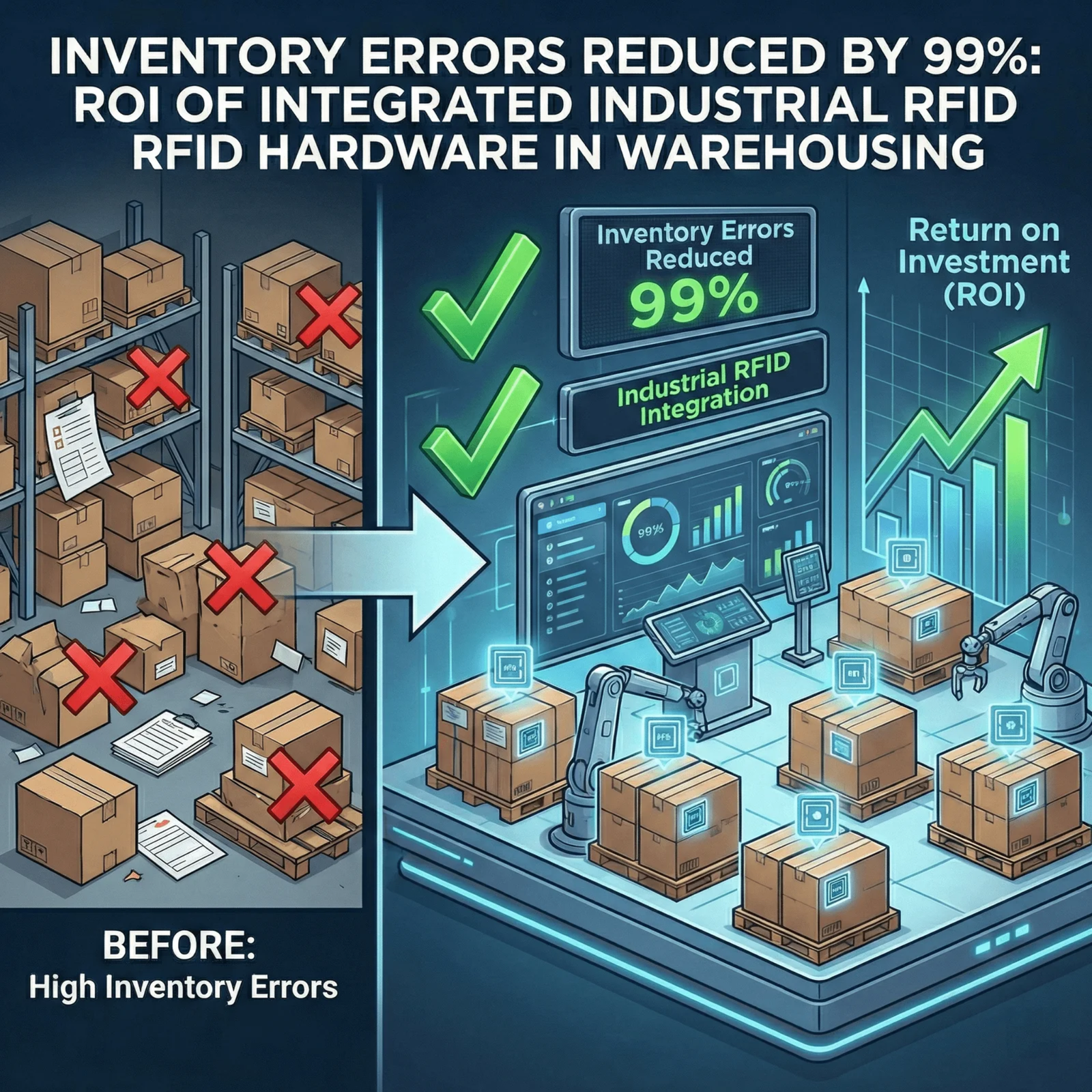
Managing inventory with industrial RFID hardware automates the tracking process, transforming physical stock into digital data instantly. By installing fixed readers at dock doors, logistics companies achieve automatic verification of shipments, virtually eliminating manual counting errors and delivering a massive return on investment through labor savings.
Many managers hesitate to upgrade because they fear the upfront cost, but if you look at the math, remaining stuck in the past is actually the expensive choice.
Why Does Sticking to Barcodes Keep Your Efficiency Low?
Your team wastes hours scanning items one by one. This manual process is the primary bottleneck in your supply chain, preventing you from handling larger volumes of stock.
RFID technology allows for bulk inventory scanning without requiring a direct line of sight. Unlike a barcode gun that needs visual contact, a UHF reader captures hundreds of tags simultaneously, drastically increasing warehouse automation efficiency.
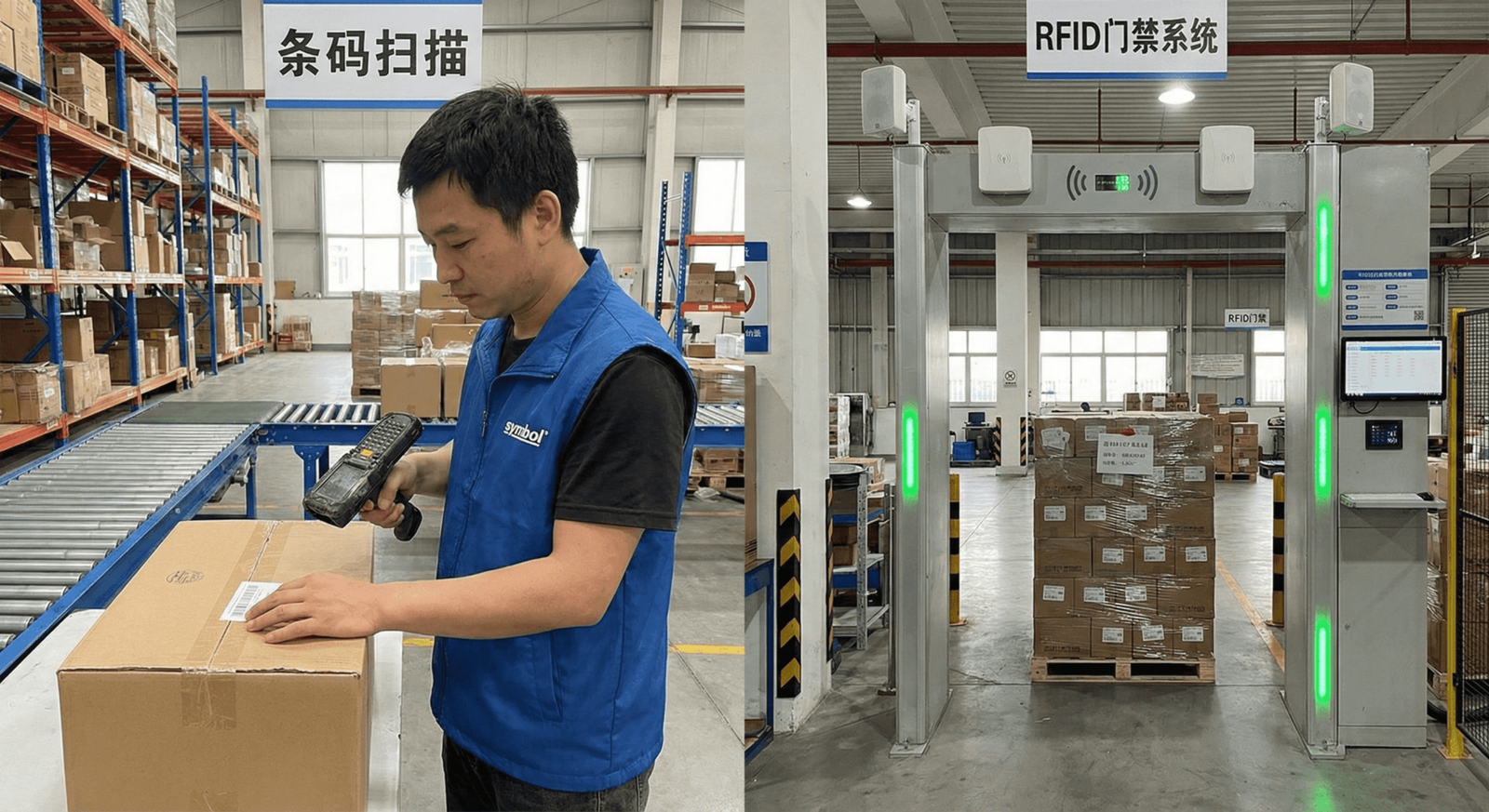
I often see warehouse managers typing "How to manage inventory with RFID tags?" into search engines. They are looking for a miracle, but the answer is just simple physics. A barcode scanner is a flashlight; you must point it at the target. An RFID Reader is a radio; it hears everything in the room at once.
In a traditional setup, a forklift driver stops. He picks up a handheld scanner. He finds the label. He scans it. He repeats this for 50 boxes. This takes ten minutes. With Warehouse automation efficiency tools like our fixed readers, that same driver drives through a dock door. The reader scans all 50 boxes in three seconds without the driver stopping.
We call this Bulk inventory scanning. The speed difference is not just 10% or 20%; it is often 1000%. When you move from serial processing (one by one) to parallel processing (all at once), your labor costs drop immediately. Your workers stop counting and start moving goods. This is where the RFID operational cost reduction becomes visible on your balance sheet. You are not paying people to read labels; you are paying them to manage logistics.
| Metric | Traditional Barcode | Industrial UHF RFID |
|---|---|---|
| Scanning Method | Line-of-sight (Optical) | Radio Frequency (Non-visual) |
| Speed | 1 tag per scan | 100+ tags per second |
| Human Labor | High (Manual aiming) | Low (Automated/Passive) |
| Accuracy | Prone to missed scans | 99% with proper setup |
| Data Type | Product Type only | Unique Item ID (Serialized) |
Can You Get Tier 1 Performance Without the Tier 1 Price Tag?
Big Western brands charge high markups for standard technology. You burn your budget on their marketing and logos rather than paying for the actual hardware inside the box.
Partnering with a specialized Chinese OEM allows you to access Tier 1 Performance at Competitive Manufacturing Costs. We use the same high-end chips as the famous brands, ensuring your system performs perfectly while keeping your ROI positive in months, not years.
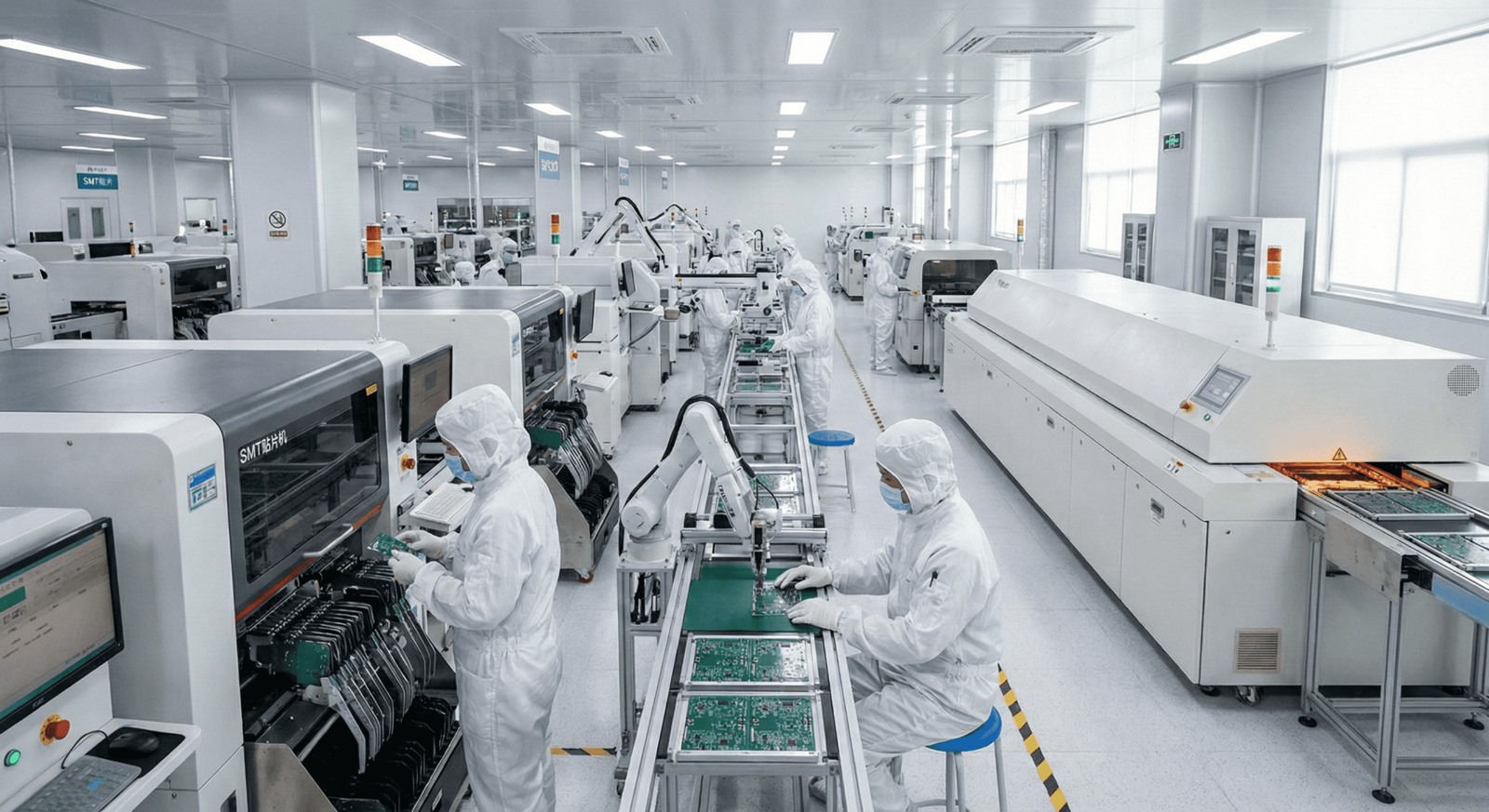
I have worked in the RFID manufacturing sector in Shenzhen for five years. I know the secrets of this industry. Many "famous" European or American readers are actually built in factories very similar to ours. When you buy from them, you pay a "brand tax."
At Fongwah, our philosophy is different. We promise Tier 1 Performance at Competitive Manufacturing Costs. We use top-tier RFID modules and processors. We do not cut corners on the internal components that matter. However, because we control the manufacturing line and strip away the expensive marketing layers, our price point is significantly lower.
This lower entry cost changes the ROI calculation for you. If a reader costs $2,000, you need a huge volume of savings to break even. If a reader with the exact same performance costs you significantly less, your project starts making a profit much sooner. We enable you to cover every dock door in your facility for the price of covering just two doors with a big-name brand. This density of hardware is what gives you total visibility. You do not need to choose between quality and budget; you just need to choose the right manufacturing partner.
| Cost Component | Major Western Brand | Fongwah (China OEM) |
|---|---|---|
| Core Chip/Module | High Quality | High Quality (Same Standard) |
| R&D Cost | High | Efficient |
| Marketing Overhead | Extremely High | Low |
| Middleman Markup | High (Distributor layers) | None (Factory Direct) |
| Final Price | $$$$ | $$ |
Is Buying Cheaper Consumer Hardware Actually More Expensive in the Long Run?
Consumer-grade plastic readers fail quickly in hot, dusty warehouses. The cost of downtime when a cheap device breaks is far higher than the money you saved buying it.
Industrial devices differ from extensive plastic toys because of their rigorous IP ratings and heat dissipation designs. This durability ensures your operation never stops, making the hardware a long-term capital asset rather than a disposable expense.
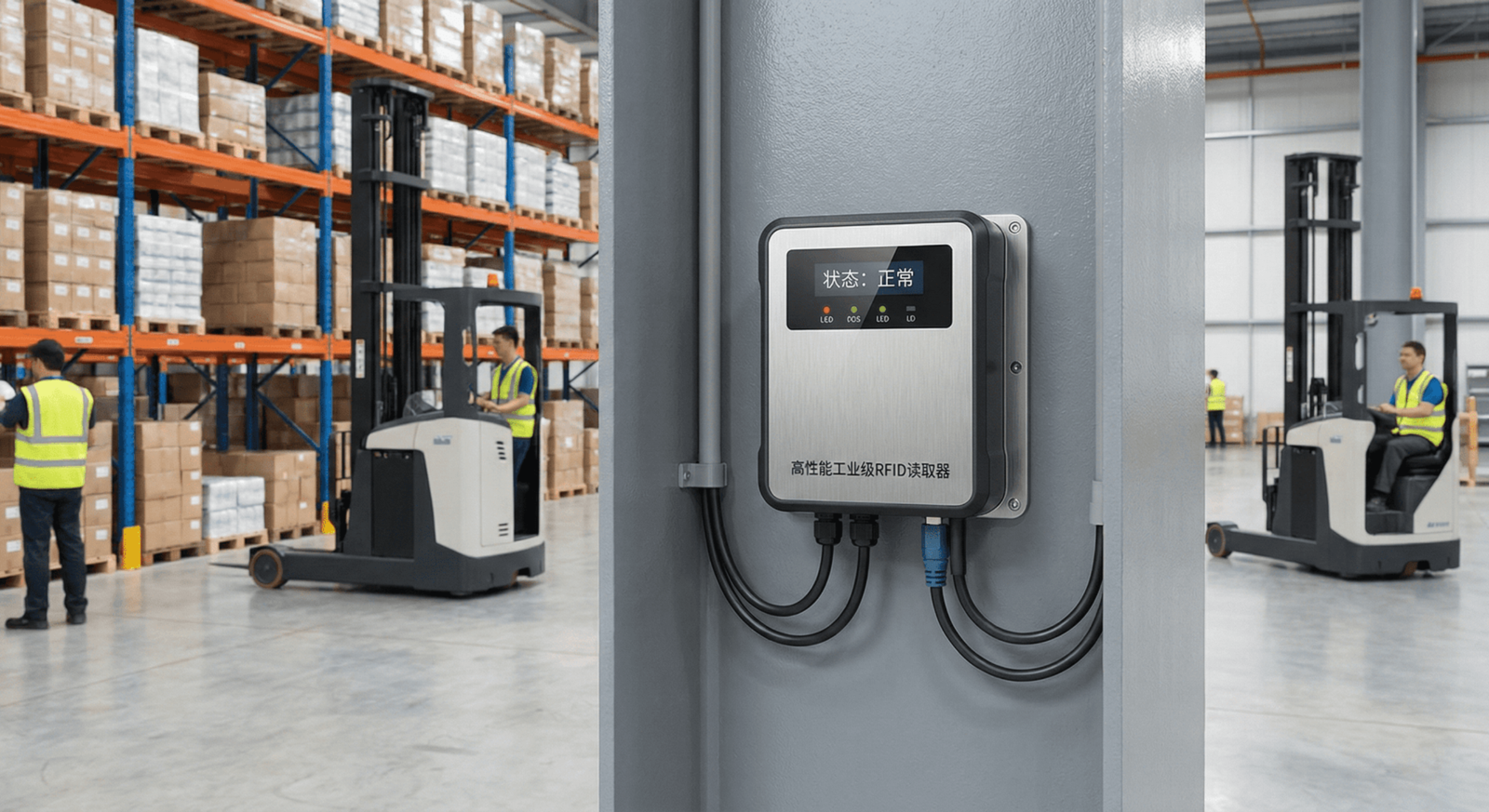
A warehouse is a hostile environment for electronics. There is dust. There is vibration from forklifts. In the summer, the temperature near the ceiling can reach 40°C or 50°C. I have seen clients try to use cheap, plastic desktop readers in this setting. The result is always the same: the reader overheats and shuts down.
When a reader stops, your truck stops. When the truck stops, your shipment is late. That delay costs you thousands of dollars. This is why Industrial RFID Hardware is built differently. We focus heavily on heat dissipation. Our industrial readers use aluminum alloy casings that act as heat sinks. They keep the internal chips cool even when running 24/7.
We also focus on IP ratings (Ingress Protection). An IP65 or IP67 rating means dust cannot get inside to short-circuit the board, and water splashes won't kill it. You install it once, and it works for years. This reliability makes the hardware a true asset. You are investing in infrastructure, like buying a good conveyor belt or a solid truck. Do not treat data collection tools as disposable items. Stability is the foundation of automation.
| Feature | Consumer/Desktop Reader | Industrial Fixed Reader |
|---|---|---|
| Casing Material | Plastic | Aluminum Alloy |
| Heat Management | Passive Air (Overheats) | Metal Heat Sink Body |
| IP Rating | IP50 (Dust prone) | IP65/IP67 (Dust/Water proof) |
| Port Design | Standard USB | Rugged Aviation/Ethernet |
| Lifespan | 1-2 Years | 5-10 Years |
Frequently Asked Questions
Q: Why is RFID faster than traditional barcode scanning for warehouse inventory?
A: Unlike barcode scanners that require a direct line-of-sight and manual aiming for each item, an industrial UHF RFID reader uses radio frequencies to capture hundreds of tags simultaneously (bulk scanning). This parallel processing reduces scanning time from minutes to seconds, eliminating the primary bottleneck in your supply chain.
A: No. By partnering directly with a specialized Chinese OEM manufacturer like Fongwah, you get the exact same top-tier RFID modules and processing chips used by major Western brands. You bypass the extreme marketing markups and middleman costs, leading to a much faster ROI for your warehouse automation project.
Q: Why shouldn't I just use cheaper consumer-grade RFID readers in my warehouse?
A: Warehouses are harsh environments with high heat, dust, and vibrations. Cheap plastic readers lack proper heat sinks and quickly overheat or short-circuit, causing costly logistics downtime. Industrial RFID hardware features aluminum alloy casings for heat dissipation and IP65/IP67 ratings to block dust and water, ensuring years of continuous, reliable operation.
Conclusion
You can reduce inventory errors by 99% not by working harder, but by switching to industrial RFID readers that offer speed, durability, and a realistic price point.
---