Warehouse managers are drowning in labor costs while blindly clinging to 1980s barcode technology. You are losing thousands of dollars a week in manual scanning hours, lost assets, and bottlenecked loading docks just to save pennies on hardware.
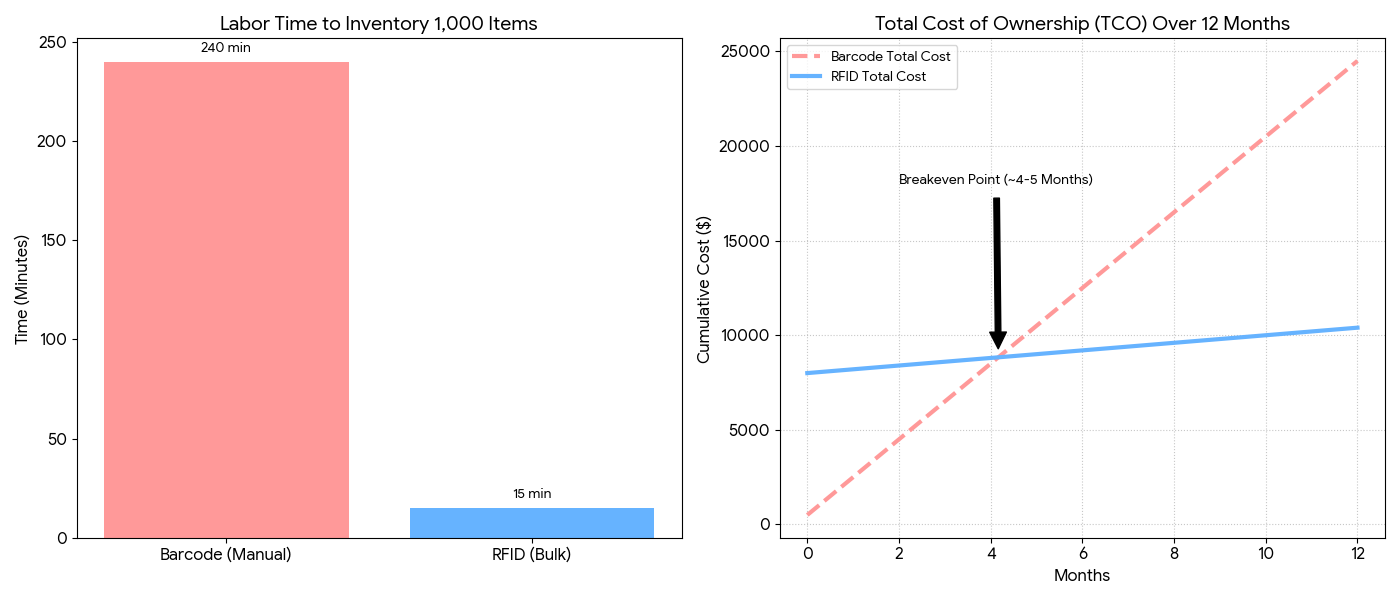
The true cost of an RFID reader is offset by massive labor savings. While barcodes require line-of-sight and 4 hours to inventory 1,000 items, RFID bulk-reads the same volume in 15 minutes. The RFID asset tracking cost breaks down to a rapid six-month breakeven for high-throughput logistics.
Let’s drop the outdated assumptions and calculate the brutal mathematical reality of modern warehouse efficiency.
4 Hours vs. 15 Minutes: Can You Afford the Labor Cost of Barcode Scanning?
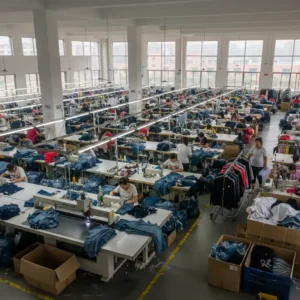
Project managers mistakenly believe barcodes are "good enough" for asset tracking. They ignore the silent operational bleed of employees walking aisles, hunting for laser line-of-sight on dirty, scratched labels.
Barcodes process one asset per second linearly. UHF RFID utilizes the ISO 18000-6C air interface protocol to process hundreds of tags simultaneously via anti-collision algorithms. Shifting to RFID eliminates the line-of-sight limitation, turning a multi-hour manual audit into an instantaneous automated read.
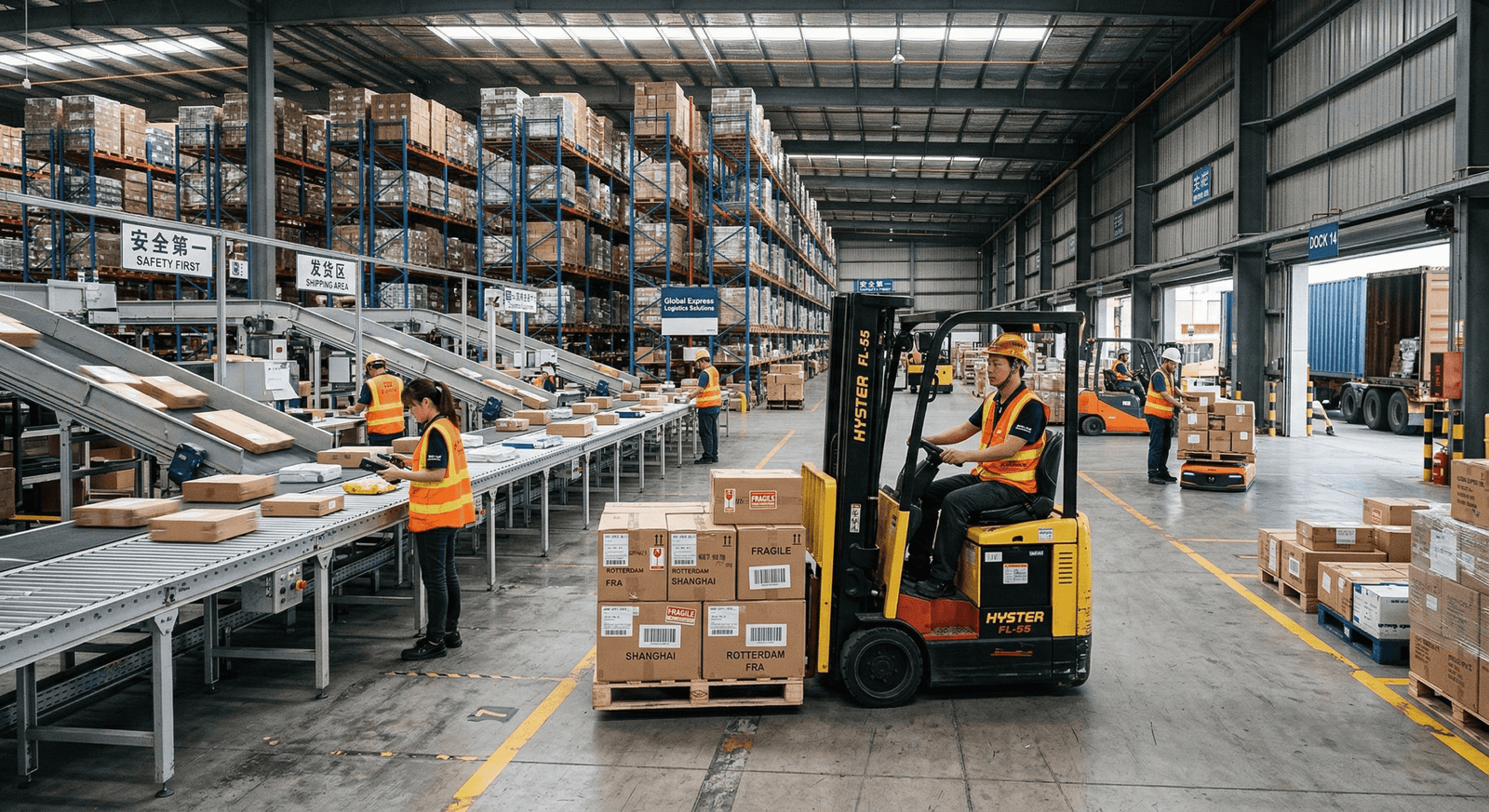
William, let's talk about the 1,000-item inventory experiment. I ran this test last month with a 3PL logistics provider who was terrified of the cost of RFID tags vs barcodes.
A warehouse operator with a premium 2D barcode scanner (costing $800) takes roughly 4 hours to locate, align, and scan 1,000 individual boxes on mixed pallets. If that operator makes $25/hour, every cycle count costs you $100 in labor alone, not factoring in the opportunity cost of an occupied dock door.
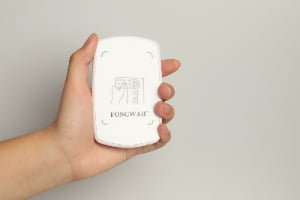
We installed the Fongwah U6-IE-02 Integrated Reader above the dock door. It features an 8dBi circular polarized antenna, creating a solid 8-meter read zone. As the forklift drives through the portal, the U6-IE-02 processes 250 reads/sec.
The U6-IE-02 supports multiple communication interfaces, including optional TCP/IP. This means your IT team can run a single Ethernet cable to the dock door, seamlessly pushing data directly to your central server.
The same 1,000 boxes are logged, verified against the ASN (Advance Shipping Notice), and updated in the WMS in under 15 minutes with zero manual intervention. You aren't buying a reader; you are buying back 3.75 hours of human labor per pallet. If your facility processes 50 pallets a day, the hardware pays for itself by Friday.
Is the Upfront Cost of an RFID Reader Killing Your Asset Tracking ROI?
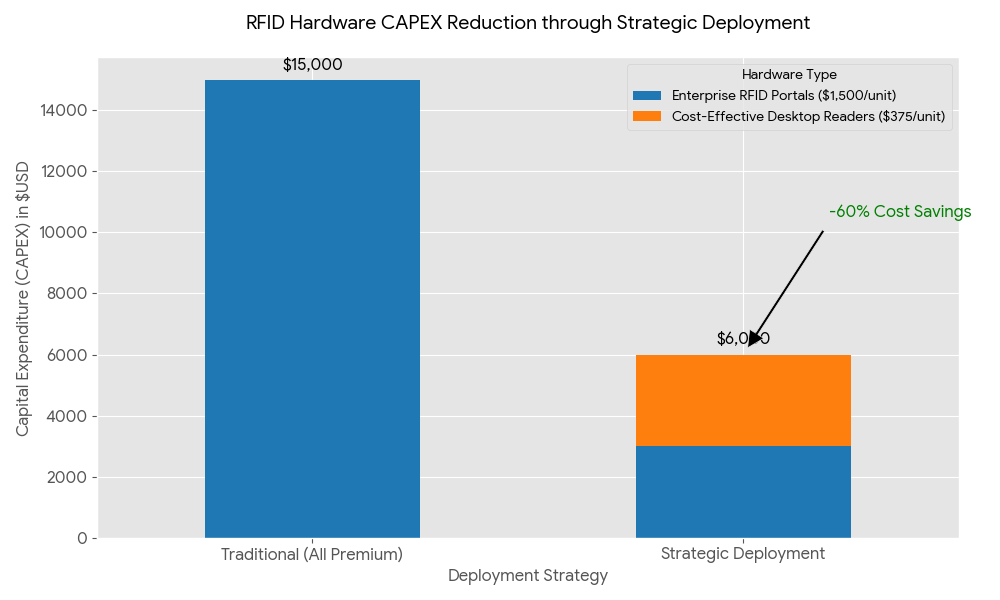
Buyers get sticker shock comparing a $30 barcode scanner to a $1,500 enterprise RFID portal. They wrongly assume every node in the facility requires over-specced, premium-tier hardware.
You drastically reduce the RFID cost of implementation by strategically deploying hardware. Use high-performance fixed readers at choke points, but utilize cost-effective desktop UHF readers for the initial tag issuing and data initialization stations, cutting your total hardware CAPEX by up to 60%.
The biggest mistake I see system integrators make is over-engineering the simple tasks. William, you don't need a four-port industrial fixed reader to assign a tracking ID to a laptop at the IT helpdesk.
When calculating the total RFID asset tracking cost, you must right-size the hardware for the specific workstation.
The Initialization Gateway
To get assets into your database cheaply, you need a dedicated "Write Point." This is where the Fongwah U1-CU-71 Desktop Reader destroys the barcode ROI model.
- The Spec: It utilizes a 1dBi ceramic antenna. It doesn't read 10 meters; it reads a highly controlled 0-50cm range.
- The Throughput: It handles 30 reads/sec, which is more than enough for a human operator placing a tag on an asset and initializing it.
- The TCO: It's a low-cost, high-reliability USB device that eliminates the "barrier to entry" for RFID encoding.
By mixing the U6-IE-02 at your warehouse choke points and the U1-CU-71 at your packing desks, your blended hardware cost drops significantly, shifting the ROI math heavily in favor of RFID.
| Operational Node | Legacy Barcode Hardware | Optimal Fongwah RFID Hardware | Performance Outcome |
|---|---|---|---|
| Data Entry / Tagging | Desktop 2D Scanner ($200) | U1-CU-71 Desktop Writer | Instant, zero-contact 50cm EPC encoding |
| Dock Door Verification | Rugged Mobile Scanner ($1,500) | U6-IE-02 (8dBi Antenna) | 250 reads/sec bulk capture at 8 meters |
| Inventory Audit Time | 4 Hours per 1,000 items | 15 Minutes (Zero Line-of-Sight) | 90%+ Labor Reduction |
| 3-Year TCO Strategy | High Labor, Low Hardware | Low Labor, Scalable Hardware | Breakeven in < 6 Months |
How Does the RFID Cost of Implementation Drop When You Stop Fighting Buggy SDKs?
Integrators think generic readers save money, but they forget that software development hours are the most expensive line item. A cheap reader with zero documentation destroys your ROI instantly.
Hardware is a one-time cost; software integration is an ongoing risk. Fongwah desktop readers support both Keyboard Emulation for instant Excel entry and native SDKs (C#/Java). A proven API prevents your senior developers from wasting weeks reverse-engineering hex codes, securing your 6-month breakeven target.
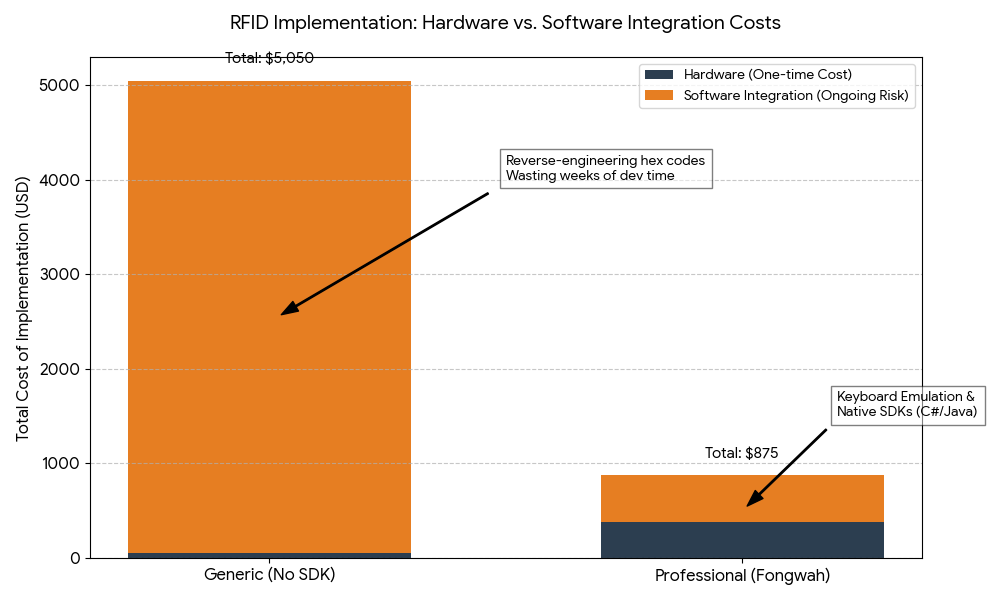
Here is the uncomfortable truth: The actual RFID cost of implementation isn't calculated on the purchasing manager's spreadsheet; it's calculated in your developer's IDE.
If you buy a cheap, unbranded UHF reader off Alibaba because it was $50 cheaper, your integration team will spend two weeks trying to figure out why the serial communication drops packets every time it tries to write a custom user memory bank.
At a conservative $100/hour for an internal software engineer, a two-week delay just added $8,000 to your implementation cost. You didn't save money; you set it on fire.
The Software Fast-Track
When you deploy a Fongwah U6-CU-91 desktop reader or our larger integrated portal readers, you aren't just getting the physical hardware. You are getting a highly refined integration path.
- Phase 1 (Day One): Use the built-in Keyboard Emulation to prove the hardware works. Scan a tag, watch the EPC populate in Notepad. Zero code required.
- Phase 2 (Day Two): Open our provided C# or Java SDK. Copy the initialization string, connect to your local ERP database, and start writing complex business logic.
We handle the messy RF air interface protocols (ISO 18000-6C) so your software team can focus on what they do best: building the tracking application. When your deployment timeline shrinks from three months to three weeks, the barcode vs. RFID argument is officially over.
Expert Q&A: Optimizing Warehouse RFID Costs
Q: How does the U6-IE-02 integrated reader handle fast-moving forklifts?
A: The Fongwah U6-IE-02 features an 8dBi circular polarized antenna and processes up to 250 reads per second. This high-speed anti-collision capability ensures that even pallets carrying hundreds of tags are captured instantly as a forklift passes through the 8-meter read zone.
A: No. Over-engineering is a common mistake. For tag initialization at a workstation, the Fongwah U1-CU-71 desktop reader is optimal. It features a 1dBi antenna for a controlled 0-50cm read range, keeping your hardware CAPEX low while preventing accidental reads of nearby tags.
Q: Does Fongwah hardware require custom software development from scratch?
A: No. To reduce your RFID cost of implementation, Fongwah readers like the U6-CU-91 support Keyboard Emulation for instant data entry. For advanced ERP integrations, we provide comprehensive SDKs containing configuration tools, DLL files, and demo code (C#/Java) .
Conclusion & CTA (Call to Action): Stop bleeding engineering hours on cheap hardware. With nearly 20 years of OEM and ODM experience since 2005, Fongwah ensures your software team isn't left in the dark. The true cost of an RFID reader is integration time. Prioritize robust SDKs and industrial stability to protect your actual project margins. Stuck on integration or sick of buggy DLLs? Ping me on WhatsApp. I'll send you a working C# sample code snippet right now.
---