
- Ensuring your RFID inventory meets Part 15 regulations to avoid customs seizures and market recalls
- Understanding the Technical Differences Between Global and US Frequency Standards
- Why Partnering with a Compliant OEM Protects Your Business from Legal Liability
Imagine your container arrives at the Port of Long Beach. You have pre-sold the inventory. Then, you get a call. Customs has seized the shipment because the devices lack valid certification.
FCC Part 15 compliance is mandatory for all Radio Frequency Devices imported into the USA. It ensures your RFID readers do not interfere with licensed communications. Failing to verify this certification can lead to immediate customs seizures, massive fines, and a permanent ban on your company’s import privileges.
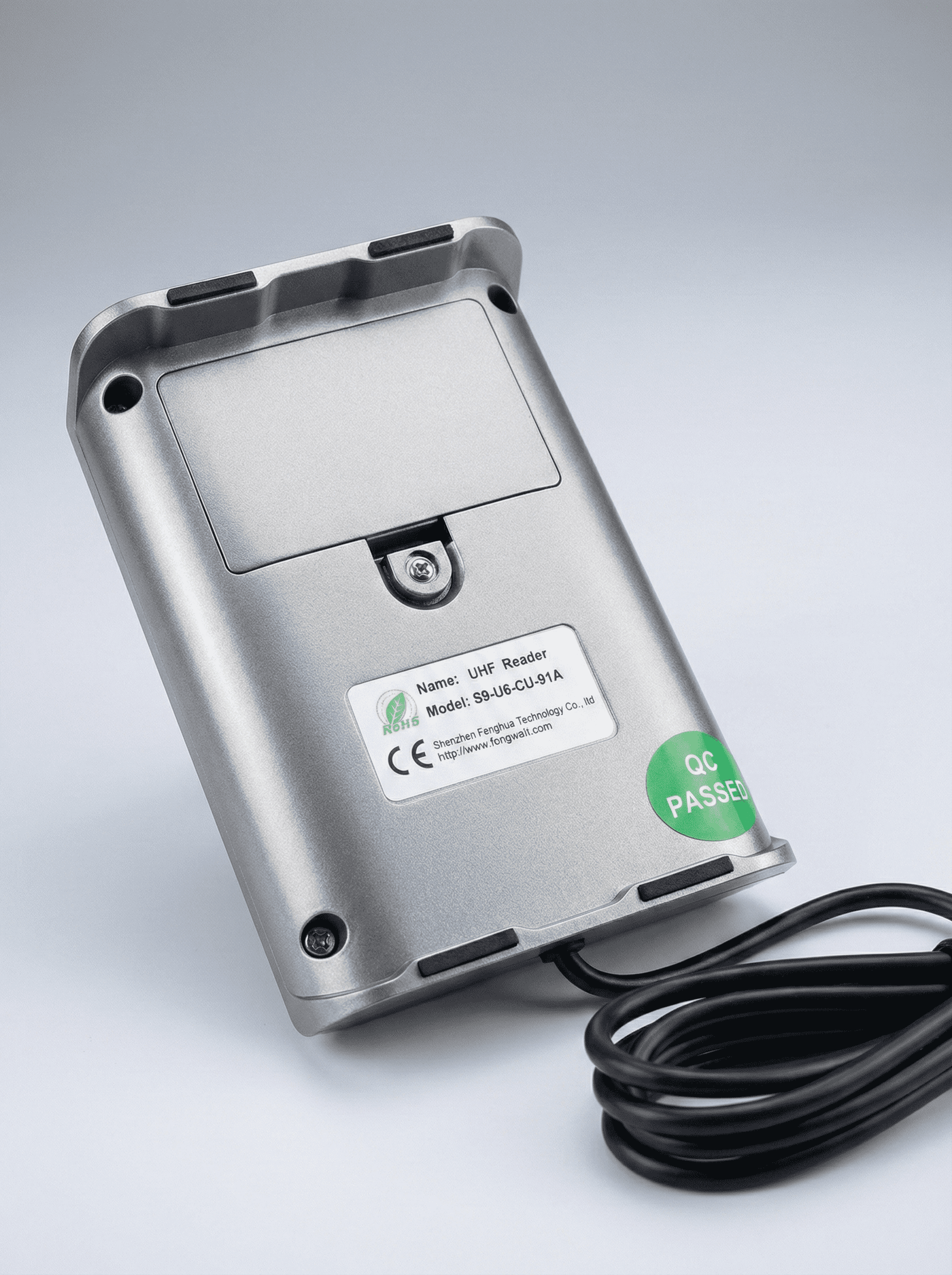
I have seen this nightmare scenario happen to good companies. They found a "cheap" factory online. The sample worked fine. But when the bulk order arrived, the paperwork was missing, or worse, the testing data was faked. The Federal Communications Commission (FCC) does not play games. As a distributor, you are the "responsible party" in the eyes of the law. At Fongwah, we ensure you never have to worry about this. We design for compliance from day one.
What exactly is FCC Part 15 and why does the frequency matter?
Many importers think "RFID is RFID." They buy a reader from a random website, plug it in, and unknowingly break federal law because the device broadcasts on a banned frequency.
FCC Part 15 governs low-power transmitters. For UHF RFID, the US operates strictly on 902-928 MHz. If you import a European standard (865-868 MHz) device, you are broadcasting on illegal frequencies, risking interference with emergency services and incurring heavy penalties.
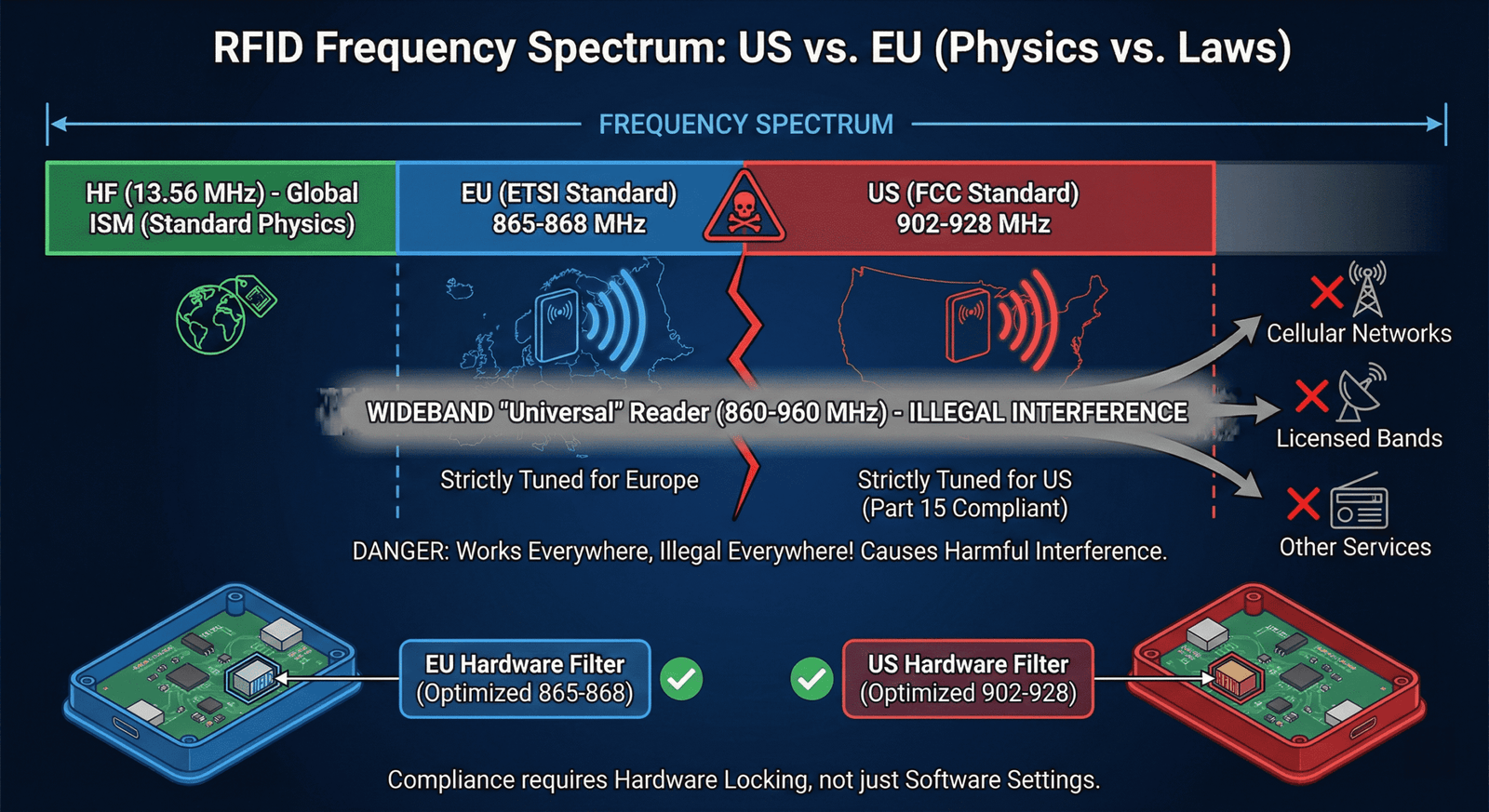
Let's look at the physics for a moment. I work closely with William, our technical expert, on this. He always reminds me: "Radio waves do not respect borders, but laws do." In the world of RFID, there are two main frequency blocks. There is High Frequency (HF/NFC) at 13.56 MHz. This is an ISM (Industrial, Scientific, and Medical) band. It is mostly the same globally. If you import our NFC readers, compliance is usually straightforward because the physics is standard. However, UHF (Ultra High Frequency) is a minefield. In Europe (ETSI standard), readers "talk" on 865-868 MHz. In the US (FCC standard), readers "talk" on 902-928 MHz. Here is the danger: A European reader will work in the US. It will read tags. But it is operating illegally. It interferes with cellular networks and other licensed bands. Some cheap factories use a "wideband" antenna that covers everything from 860 to 960 MHz to save money on tuning. They tell you, "It works everywhere!" This is a lie. It works everywhere, but it is illegal everywhere. To pass Part 15, the device must be hardware-locked or strictly controlled to stay within the 902-928 MHz band. We ensure our US-bound units are tuned specifically for this range. We do not just change the software setting; we optimize the hardware filter to suppress noise outside this band.
How does Fongwah ensure compliance before the product even leaves the factory?
Certification is expensive and time-consuming. Many factories skip it to save money, hoping you won't check. Or they provide a Photoshop-edited certificate that isn't worth the paper it's printed on.
Compliance isn't an afterthought at Fongwah. Our 13.56 MHz and UHF readers are engineered to operate strictly within permitted frequency bands, ensuring seamless certification processes for our private-label partners in the US market. We provide the necessary technical data to help you list the product under your own brand.
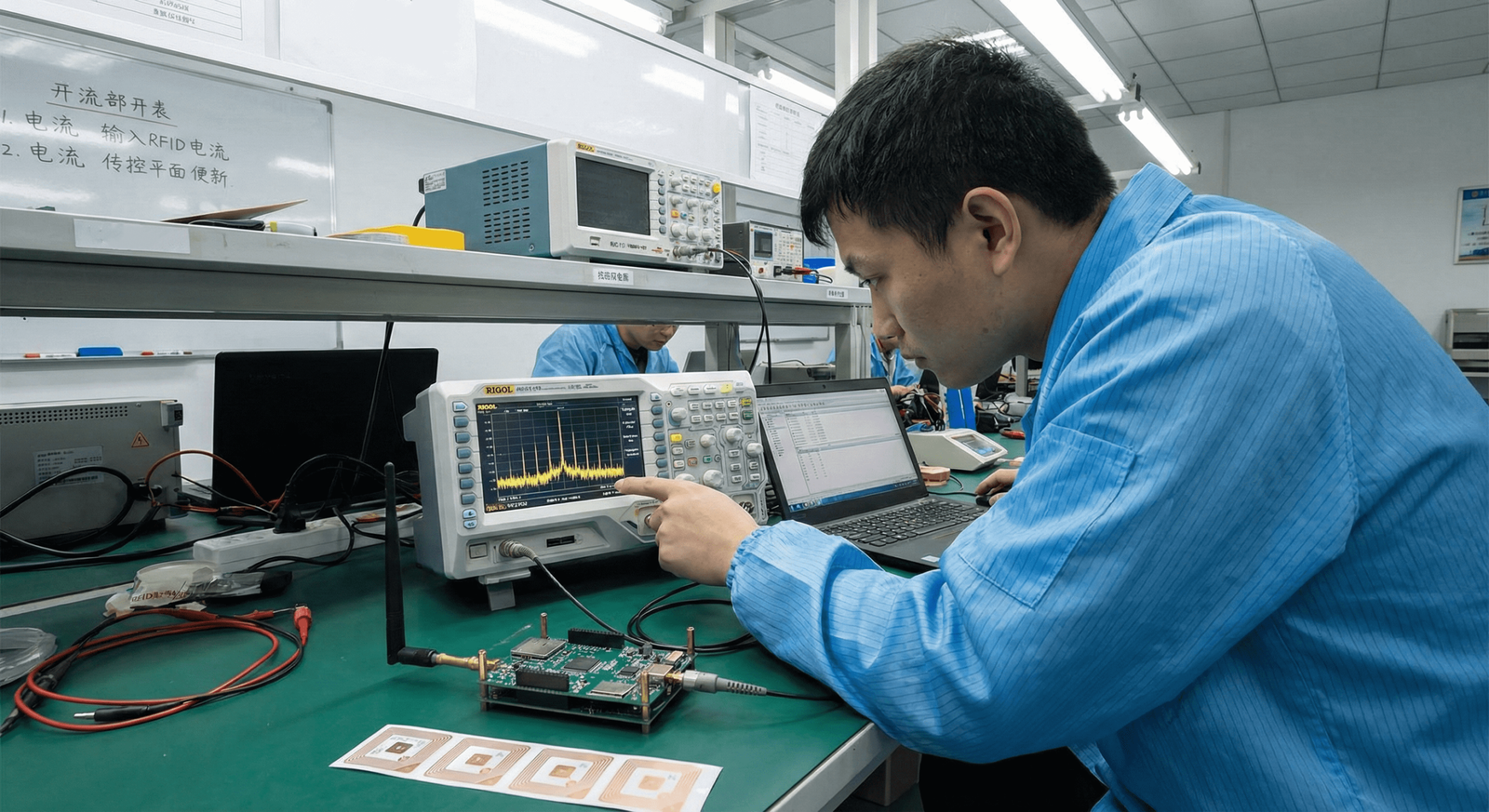
When we develop a new reader, we do not just test if it reads a card. We test how "clean" it is. Every electronic device emits "noise" (electromagnetic interference). If you have ever heard a buzzing sound in your speakers when your phone rings, that is interference. The FCC sets strict limits on how much noise a device can make. At Fongwah, we use a spectrum analyzer in our lab. We look for "harmonics." If a reader transmits at 900 MHz, it might accidentally transmit a "shadow" signal at 1800 MHz. This is a harmonic. If this shadow signal is too strong, you fail the test. Cheap readers fail this constantly because they remove filter components (capacitors and inductors) from the PCB to save $0.50 per unit. We keep those components in. For our OEM partners, this is critical. If you want to sell our reader under your brand name (Private Label), you need your own FCC ID or a "Change of ID." We provide the block diagrams, the schematics, and the original test reports. This turns a 3-month certification nightmare into a 2-week paperwork process.
| Feature | Generic "Cheap" Factory | Fongwah Standard |
|---|---|---|
| Frequency Control | Software only (Easily broken) | Hardware Filter Tuned |
| Harmonic Suppression | Poor (Components removed) | High (Full filtering) |
| Documentation | Fake or Missing | Full Schematics Available |
| Risk Level | High (Seizure/Fines) | Low (Guaranteed Pass) |
You see a reader on a marketplace for $5 less than ours. It looks the same. You think you found a bargain that will increase your profit margins.
The "Grey Market" trap involves buying devices that lack proper shielding or valid FCC IDs. While cheaper upfront, these devices expose you to legal liability. If a competitor reports you, the FCC can issue a "Cease and Desist" order, forcing you to recall every unit you ever sold.
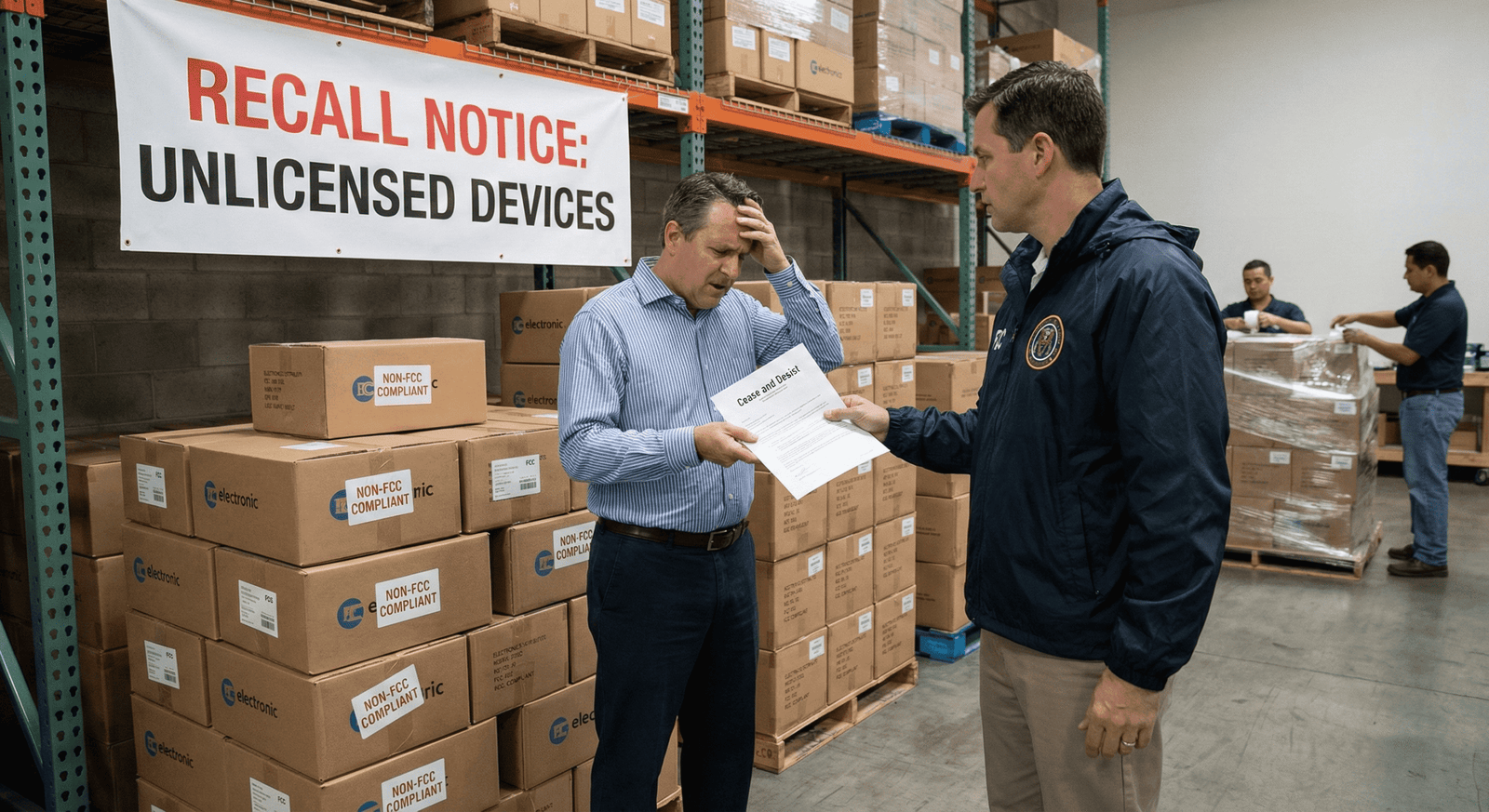
I want to share a story about "Liability." A few years ago, a US integrator bought non-certified UHF readers from a trading company. They installed them in a hospital for asset tracking. The readers were "noisy." They leaked RF energy all over the spectrum. The hospital's Wi-Fi network started dropping connections. Medical telemetry equipment started acting strange. The hospital hired an expert to find the source. They found the cheap RFID readers. The integrator was sued. They had to rip out the entire system and replace it at their own cost. They went bankrupt. This is the hidden cost of non-compliance. When you import hardware, you are the manufacturer of record. If the device causes a fire or interferes with a police radio, the FCC comes for you, not the factory in China. By choosing Fongwah, you are buying insurance. We use high-quality shielding. We use stable power regulators. We ensure that the device behaves predictably. We protect your reputation so you can focus on selling, not on fighting lawsuits.
Frequently Asked Questions about FCC Compliance & Importing
Q1: How is the FCC certification handled? Do I need to apply for my own ID?
Answer: We offer flexible options to match your business model. For Standard Imports: You are fully authorized to use our existing FCC certification immediately—no extra paperwork required. For Private Label (OEM): If you prefer to certify under your own brand, we streamline the process. We provide the necessary test samples and original technical documentation to help you secure your own FCC ID smoothly.
Q2: I want to sell your reader under my own brand. How do you help with the FCC ID?
Answer: We simplify the process through a "Change of ID" application. Since our hardware is already certified, you do not need to pay for expensive full-lab testing again. We provide the original Test Reports, Schematics, and Block Diagrams required by the TCB (Telecommunication Certification Body), turning a $10,000+ process into a simple paperwork filing.
Q3: What happens if Customs seizes my shipment due to missing certification?
Answer: It is a nightmare scenario. The shipment is typically held indefinitely or destroyed at your expense. You may face fines from the FCC, and your company will be flagged for "Intensive Exam" on all future imports, delaying your supply chain for years. The only way to prevent this is to work with a manufacturer like Fongwah that provides valid FCC IDs on the commercial invoice.
Conclusion
Do not risk your business for a few dollars of savings. Partnering with a manufacturer like Fongwah who understands FCC Part 15 ensures your supply chain is safe, legal, and reliable.
---