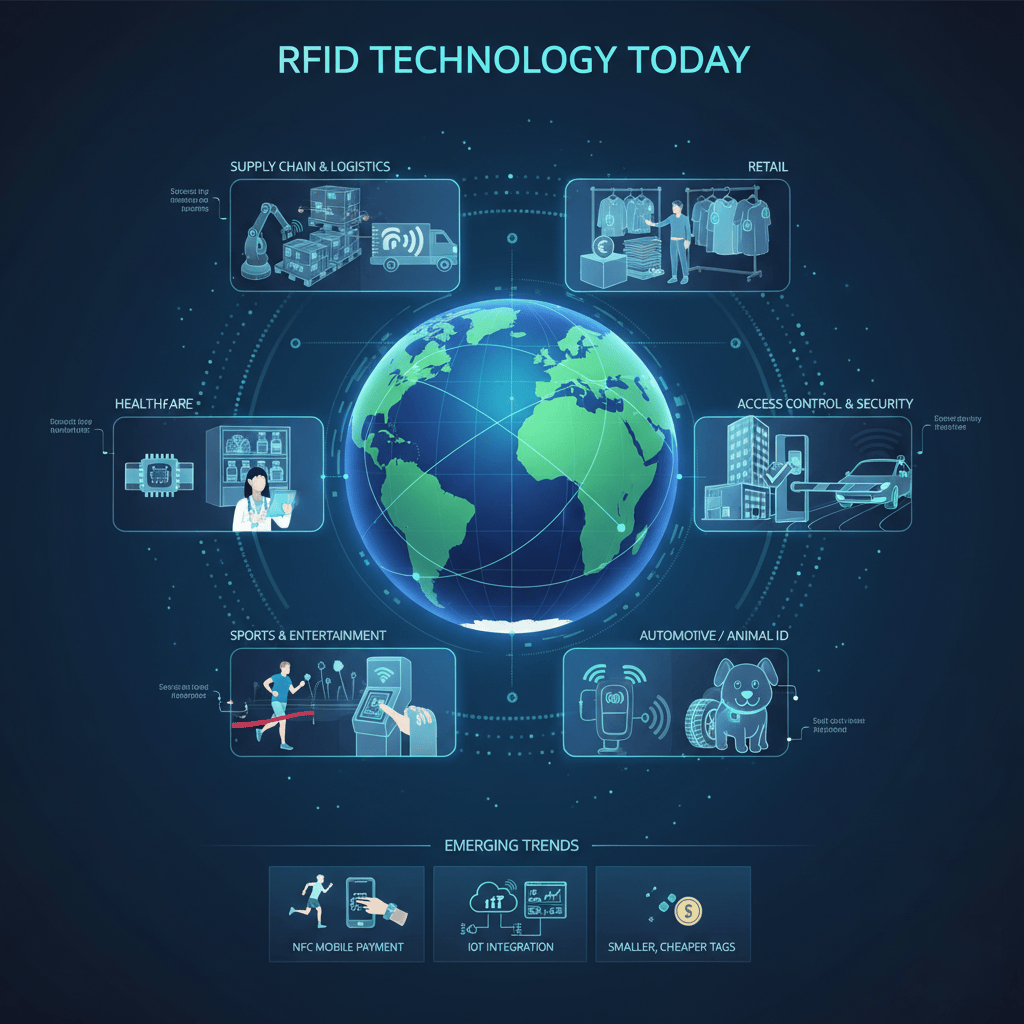
Your projects are delayed. Your hardware is failing. You’re wondering if RFID is worth the trouble.
RFID technology1 is mature, reliable, and deeply integrated with IoT. The focus has shifted from basic functionality to robust, real-world performance. Success now depends on choosing industrial-grade components2 and an experienced partner.
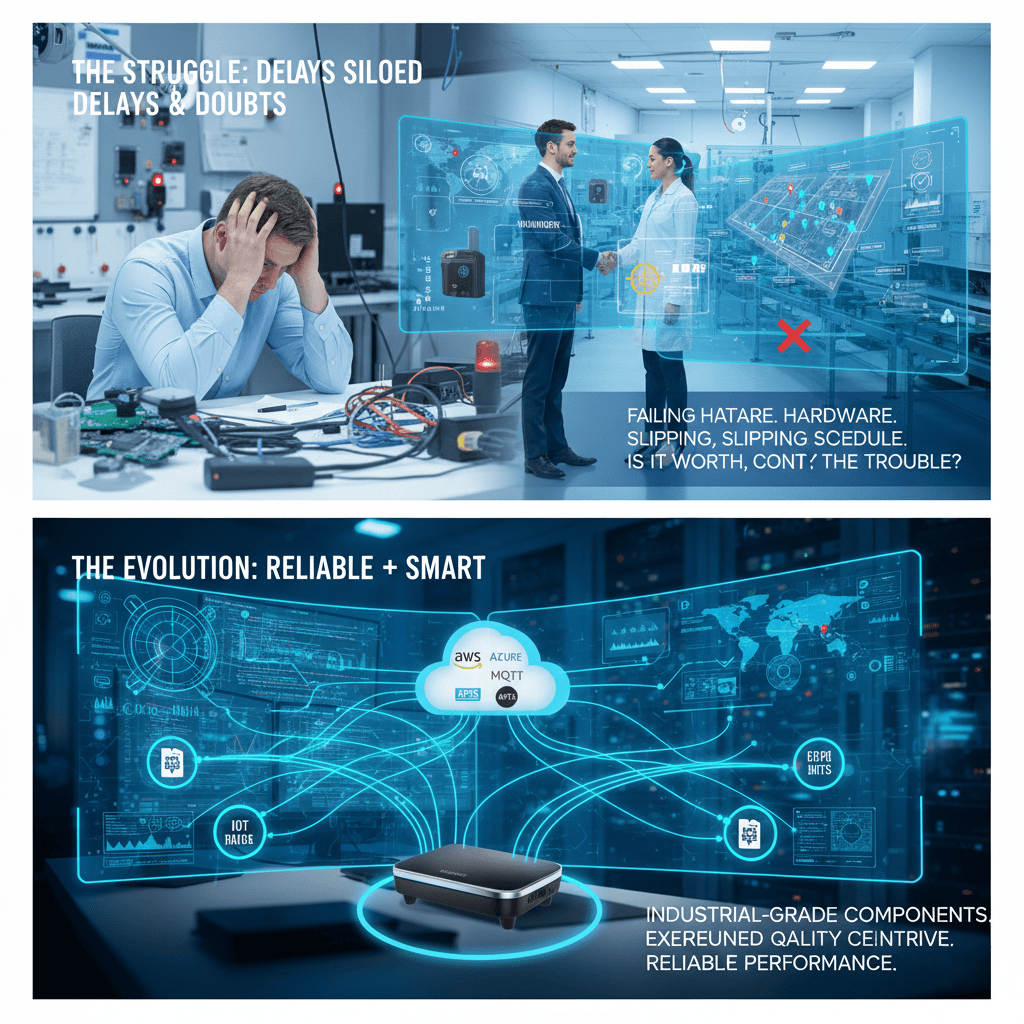
Over my eight years as an RFID systems integrator3, I've seen it all. I’ve been on projects that soared and projects that crashed and burned. The difference, I’ve learned, often comes down to the small things: the quality of a tag's casing4, the reliability of a reader's firmware, and the expertise of the supplier you trust. The promise of RFID is real, but the path to achieving it is paved with good decisions about hardware and partners. It’s not just about a chip and an antenna anymore. It’s about building a resilient system that works day in and day out.
Has RFID hardware finally become reliable enough for critical operations?
You are frustrated with failing tags and readers. Your project deadlines are slipping because of hardware issues. There is a solution that starts with better manufacturing and smarter partnerships.
Yes, hardware reliability has improved dramatically. The key is to select vendors who prioritize industrial-grade durability5 and rigorous quality control over simply having the lowest price. This ensures long-term, stable performance.

I've learned this lesson the hard way. I remember one early project for a logistics company in Houston. The humidity was brutal. We used some standard, low-cost tags to track metal containers. Within six months, read rates plummeted. The adhesive failed, moisture got into the casings, and the entire system became useless. The client was furious, and my reputation took a hit. We had to replace thousands of tags, which destroyed the project's budget and timeline.
After that disaster, I changed my approach. I stopped looking for the cheapest component. I started looking for a real partner. That's how I found Fongwah. On my next major project, tracking high-value tools on a construction site, their team didn't just sell me tags. They asked about the environment: dust, rain, impact risk. They recommended a specific overmolded hard tag. Two years later, those tags are still performing with a 99.9% read rate. The success of a project isn't in the technology itself; it's in the application and the durability of the components. You need a supplier whose team understands this, a team backed by decades of experience that acts like armor for your project.
Comparing Hardware Grades
| Feature | Low-Cost Generic Hardware | Industrial-Grade Hardware (e.g., from Fongwah) |
|---|---|---|
| Casing Material | Basic ABS plastic | Impact-resistant PC/ABS, Overmolded design |
| Sealing (IP Rating) | Often unrated or low (IP54) | High rating (IP67, IP68), fully waterproof |
| Operating Temperature | Limited range (e.g., 0°C to 50°C) | Wide range (e.g., -40°C to 85°C) |
| Quality Assurance | Basic batch testing | 100% individual component testing |
| Supplier Support | Sales-focused, limited tech help | Engineering support for development & integration |
How has RFID integration with IoT6 and cloud systems evolved?
You are struggling to connect RFID data to your business systems. Your data feels trapped inside a proprietary silo. Modern RFID speaks the language of the cloud and integrates easily.
RFID is no longer a standalone island. Modern readers have built-in APIs, MQTT support, and connect directly to cloud platforms like AWS7 or Azure. This makes data accessible and actionable in real-time across your entire enterprise.
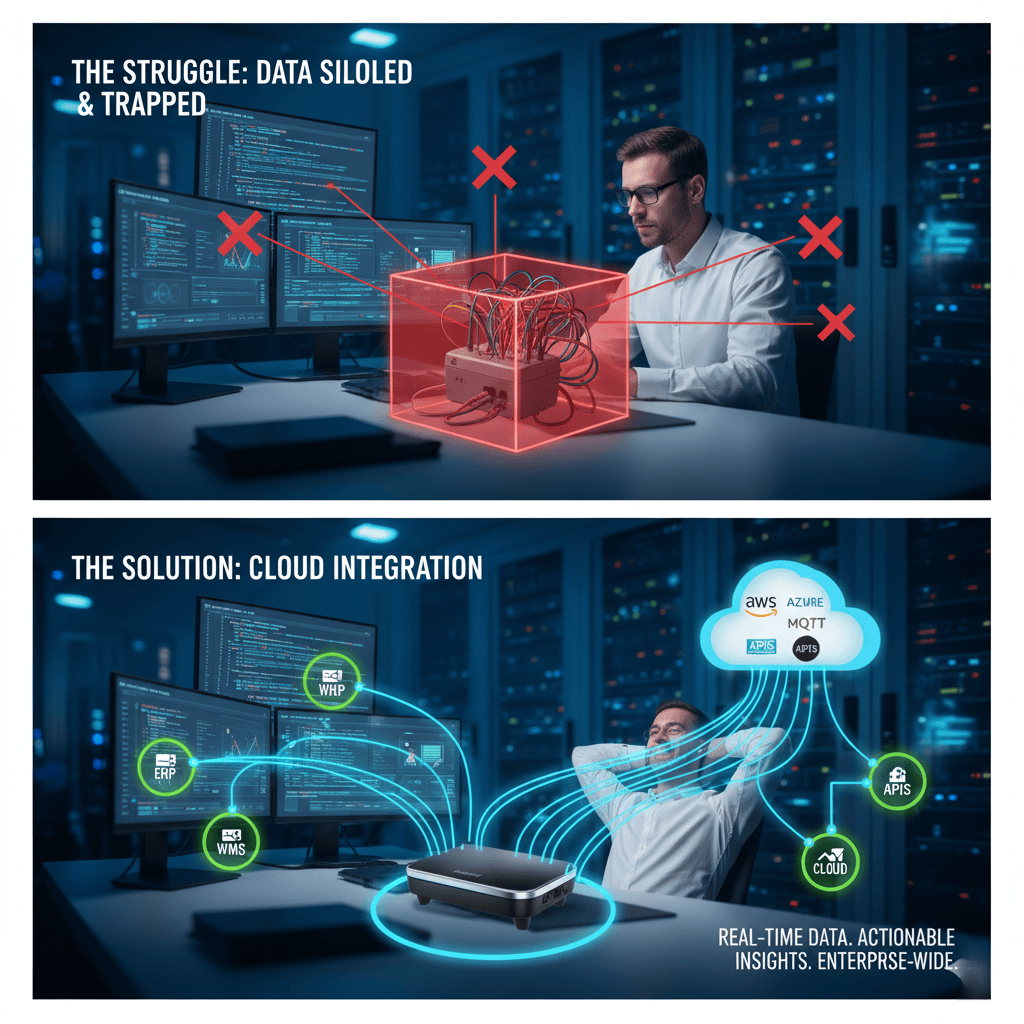
In the past, integration was my biggest headache. We needed specialized middleware, custom drivers, and days of coding just to get a reader to talk to a local server. The data was always one step removed from where it needed to be. It was slow and expensive. I worked on a system for a manufacturing plant where the data was polled from the readers every 15 minutes. By the time management saw a problem on their dashboard, the production line had already been running with the issue for too long.
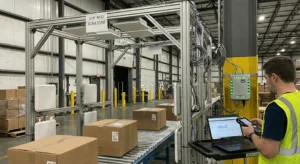
Now, things are completely different. For a recent project tracking rental equipment, I used UHF RFID readers that had MQTT and HTTP POST capabilities built-in. During setup, I just configured the reader with the cloud server's address and my security credentials. The moment a tagged item passed through the gate, the reader sent the data directly to an AWS IoT Core endpoint. From there, it was immediately available on a web dashboard that the client could access from their phone. We went from raw data to a business insight in seconds, not hours. This is where quality hardware shines again. A good reader comes with a solid SDK and clear documentation, making my job as an integrator much, much easier.
Evolving Integration Methods
| Aspect | Legacy Integration Method | Modern IoT Integration Method |
|---|---|---|
| Data Protocol | Custom, proprietary serial/TCP | Standard protocols (MQTT, HTTP, AMQP) |
| Architecture | Reader -> Middleware -> Server | Reader -> Cloud / Edge Device |
| Development Effort | High, requires specialized skills | Low, uses common web technologies |
| Data Latency | Minutes or hours | Seconds or milliseconds |
| Scalability | Difficult, requires more servers | Easy, leverages cloud infrastructure |
Are advanced RFID applications like Real-Time Location Services (RTLS)8 now practical?
You think precise indoor tracking is too complex or expensive. You are worried about the difficult setup and questionable accuracy. New technologies are making RTLS more accessible than ever.
Yes, RFID-based RTLS9 is increasingly practical and affordable. Advances in technologies like UWB-RFID10 and phase-array antennas, combined with smarter algorithms, have made it accurate and cost-effective for tracking critical assets and people.
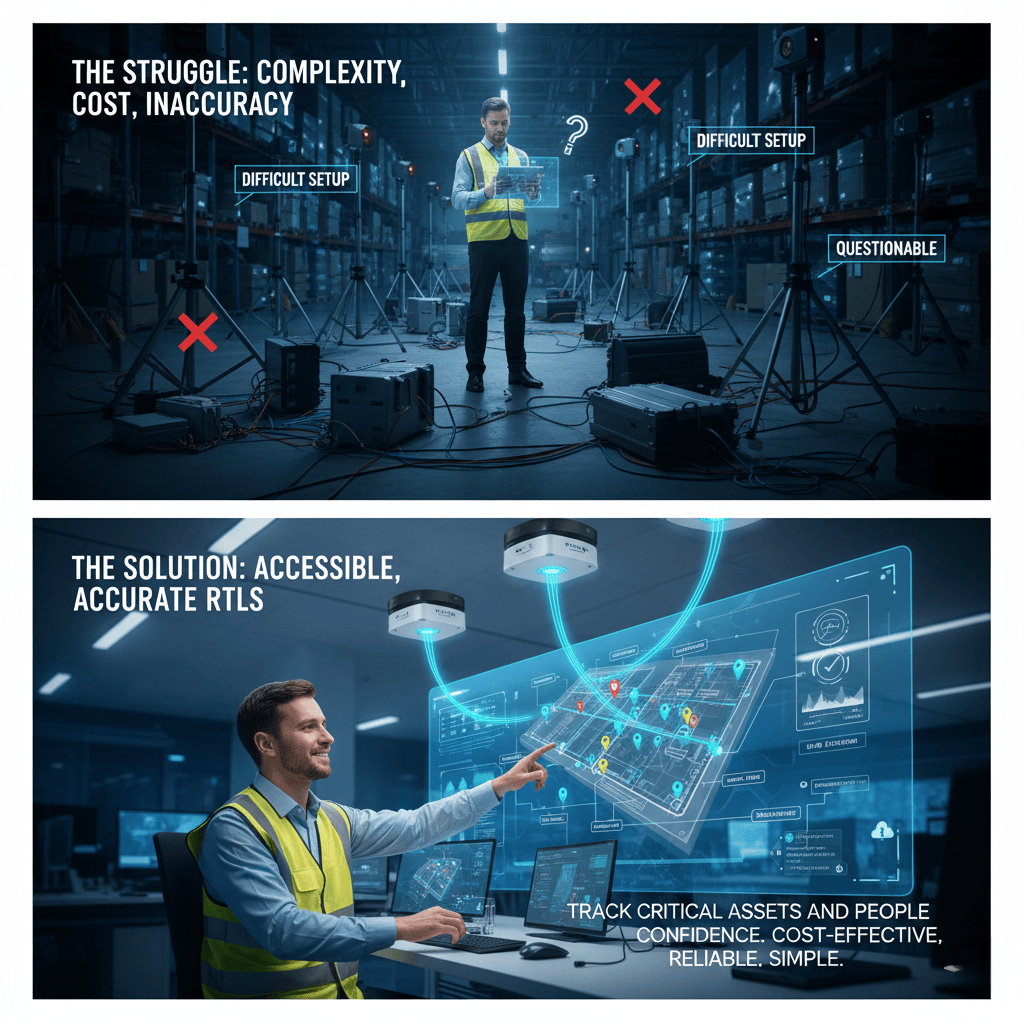
For years, clients would ask me for "GPS-like tracking, but indoors." It was a tough conversation. Traditional RFID gave you zone-level accuracy at best. We could tell you an asset was in a specific room or near a doorway, but not its exact position. The systems that offered better precision were incredibly expensive and a nightmare to install and calibrate.
However, the technology has made a huge leap. I recently consulted for a large hospital that was constantly losing expensive portable medical devices like infusion pumps and mobile EKG machines. We designed an RTLS system using a combination of UHF RFID for long-range identification and Bluetooth Low Energy (BLE) / Ultra-Wideband (UWB) for precision. We installed a grid of fixed readers in the ceilings. The readers don't just read the tag ID; they analyze the signal's angle of arrival11 and strength. The system's software uses this data to triangulate the tag's position on a digital map, often with sub-meter accuracy12. Nurses can now find the nearest available pump in seconds using a tablet. The initial investment was significant, but the hospital calculated it would achieve a full ROI in under 18 months by reducing asset loss and improving staff efficiency. It's still complex, but it's no longer science fiction.
Comparing RFID Tracking Capabilities
| Feature | Standard RFID (Presence) | RFID-based RTLS9 (Position) |
|---|---|---|
| Primary Goal | Identify what passed a point | Identify where something is continuously |
| Typical Accuracy | Zone-level (e.g., in a room) | Positional (e.g., within 1-3 meters) |
| Core Technology | UHF/HF readers at chokepoints | Reader arrays, angle-of-arrival13, UWB |
| Infrastructure Cost | Low to medium | High |
| Best Use Case | Inventory, Access Control, Logistics | High-value asset tracking, safety, workflow optimization |
Conclusion
RFID technology1 is powerful and ready. Your success now depends on choosing durable hardware and a knowledgeable partner who can help you navigate the complexities of real-world deployment.
---Explore the advantages of RFID technology and how it can enhance efficiency in various industries. ↩
Learn about the importance of industrial-grade components for reliability and performance in RFID systems. ↩
Discover the role of RFID systems integrators and how they can ensure successful project implementation. ↩
Understand how the quality of a tag's casing affects performance and longevity in RFID applications. ↩
Explore what industrial-grade durability means and why it matters for long-term RFID performance. ↩
Learn about the seamless integration of RFID with IoT and its impact on data accessibility. ↩
Discover how cloud platforms enhance RFID data management and real-time insights. ↩
Explore the benefits of RTLS and how it revolutionizes asset tracking and management. ↩
Discover how RFID-based RTLS systems provide accurate indoor tracking solutions. ↩
Learn about UWB-RFID technology and its role in enhancing tracking accuracy for critical assets. ↩
Understand the significance of the signal's angle of arrival in improving RFID tracking accuracy. ↩
Learn about the advancements in RFID technology that allow for sub-meter accuracy in tracking. ↩
Understand how angle-of-arrival technology improves the precision of RFID tracking. ↩