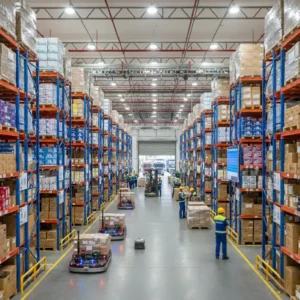
The terms RFID scanner and RFID reader are often used as if they describe two completely different products.
In practice, the terminology is much less consistent.
One manufacturer may call a rugged Android handheld an "RFID scanner," while another sells almost the same type of device as a "handheld RFID reader." Both may support UHF RFID, barcode scanning, SDK access, and even tag writing.
So the safest way to buy RFID equipment is not to rely on the word printed in the product name.
Instead, compare the device by form factor, RFID capability, interfaces, software access, and the workflow it is designed to support.
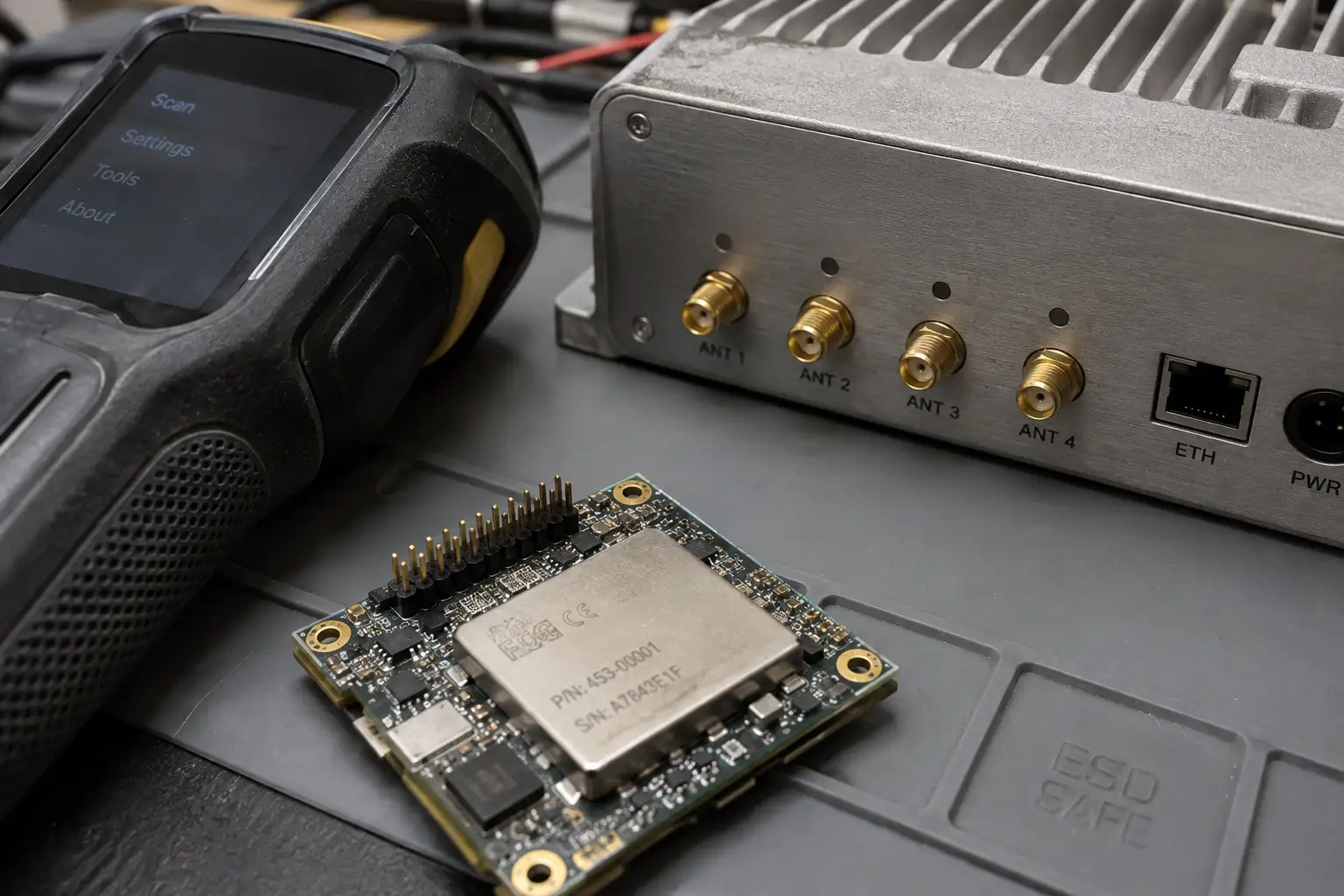
For most buyers, RFID reading hardware falls into three practical groups:
- handheld RFID terminals or handheld readers
- fixed RFID readers
- embedded, desktop, or reader modules
Understanding those three categories is more useful than trying to enforce a strict scanner-versus-reader definition.
For the underlying RFID communication between the reader and tag, see how RFID tags work.
Is an RFID Scanner the Same as an RFID Reader?
Sometimes yes, depending on how the manufacturer uses the terms.
"RFID reader" is the broader technical description for equipment that communicates with RFID tags.
"RFID scanner" is often used commercially for a handheld product designed around scanning, inventory, or field work, especially when the same device also contains a barcode scanner.
But there is no universal industry rule that says:
scanner = read-only
and
reader = programmable or read/write
A handheld device sold as an RFID scanner may still expose an SDK, write EPC or user memory, connect to enterprise software, and perform advanced RFID functions.
Likewise, a product called a handheld RFID reader may include a screen, Android operating system, barcode engine, Wi-Fi, battery, and a complete inventory application.
For buyers, the product name is therefore less important than the actual capabilities.
| What to compare | Questions to ask |
|---|---|
| Form factor | Handheld, fixed, desktop, or embedded? |
| RFID band | LF, HF/NFC, or UHF RAIN RFID? |
| Tag operations | Read only, or read/write/lock and other supported commands? |
| Antenna | Integrated or external? How many antenna ports? |
| Host interface | Android app, USB, Ethernet, Wi-Fi, Bluetooth, serial, SDK, or API? |
| Barcode | Is 1D/2D barcode scanning integrated? |
| Operation | Does a person carry it, or does it run unattended? |
| Integration | Standalone app, WMS/ERP connection, PLC, GPIO, or custom software? |
The answers to these questions tell you much more than whether the product page calls the device a scanner or a reader.
What Is a Handheld RFID Terminal?
A handheld RFID terminal combines RFID capability with a portable computing platform.
It commonly includes:
- integrated UHF RFID antenna
- battery
- display
- operating system
- Wi-Fi or cellular connectivity
- trigger or RFID control button
- enterprise application support
Many enterprise handheld terminals also include a 1D/2D barcode engine.
That combination is useful in warehouses because not every item necessarily uses RFID.
An operator may read RFID tags during an inventory sweep and scan a barcode when a product, location label, or exception still uses traditional identification.
Where Does a Handheld RFID Device Fit Best?
Handheld RFID is particularly useful when the reader needs to move to the asset.
Typical applications include:
- inventory counts
- shelf audits
- locating missing stock
- tool and equipment checks
- asset inspections
- exception handling
- field service
- cycle counting
An operator can walk through racks or storage areas while the handheld collects tags within its usable RF field.
Actual read distance varies considerably with the reader, antenna, tag type, tag orientation, transmit power, mounting surface, and surrounding environment.
For that reason, a manufacturer's maximum range should not be treated as the distance every tag will achieve in a working warehouse.
The more useful question is:
Can the handheld reliably read the actual tagged products in the way employees will use it?
That is something a pilot should verify.
Can a Handheld RFID Scanner Write Tags?
Some can.
Write capability depends on the RFID hardware, firmware, SDK, and application rather than on whether the manufacturer calls the product a scanner or reader.
A capable UHF handheld may support operations such as:
- reading EPC memory
- writing EPC data
- reading or writing user memory
- accessing TID information
- locking supported memory areas
- other tag commands supported by the reader and tag
However, the fact that the hardware can perform an operation does not mean the standard user application exposes it.
For example, a warehouse inventory app may intentionally allow employees only to read tags even though the underlying handheld SDK supports writing.
If tag encoding is part of the workflow, confirm both:
hardware capability
and
application capability
before purchasing the device.
What Is a Fixed RFID Reader?
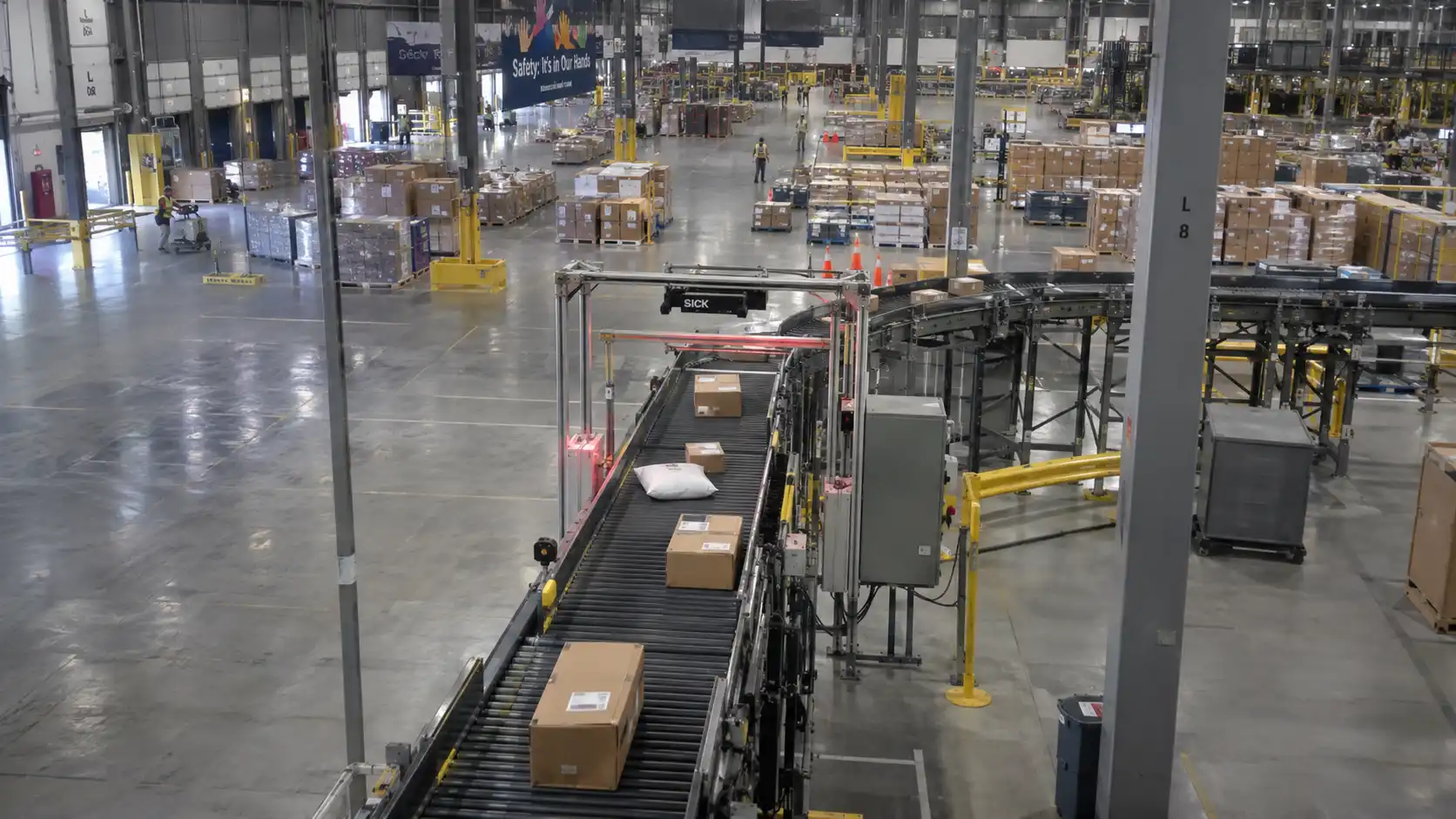
A fixed RFID reader is installed at a defined physical read point and normally operates without somebody holding it.
Common locations include:
- dock doors
- conveyor lines
- production stations
- warehouse gates
- access points
- smart cabinets
- automated sorting systems
Instead of taking the reader to the tag, the tagged asset moves through the reader's RF field.
That makes fixed RFID suitable for automatic event capture.
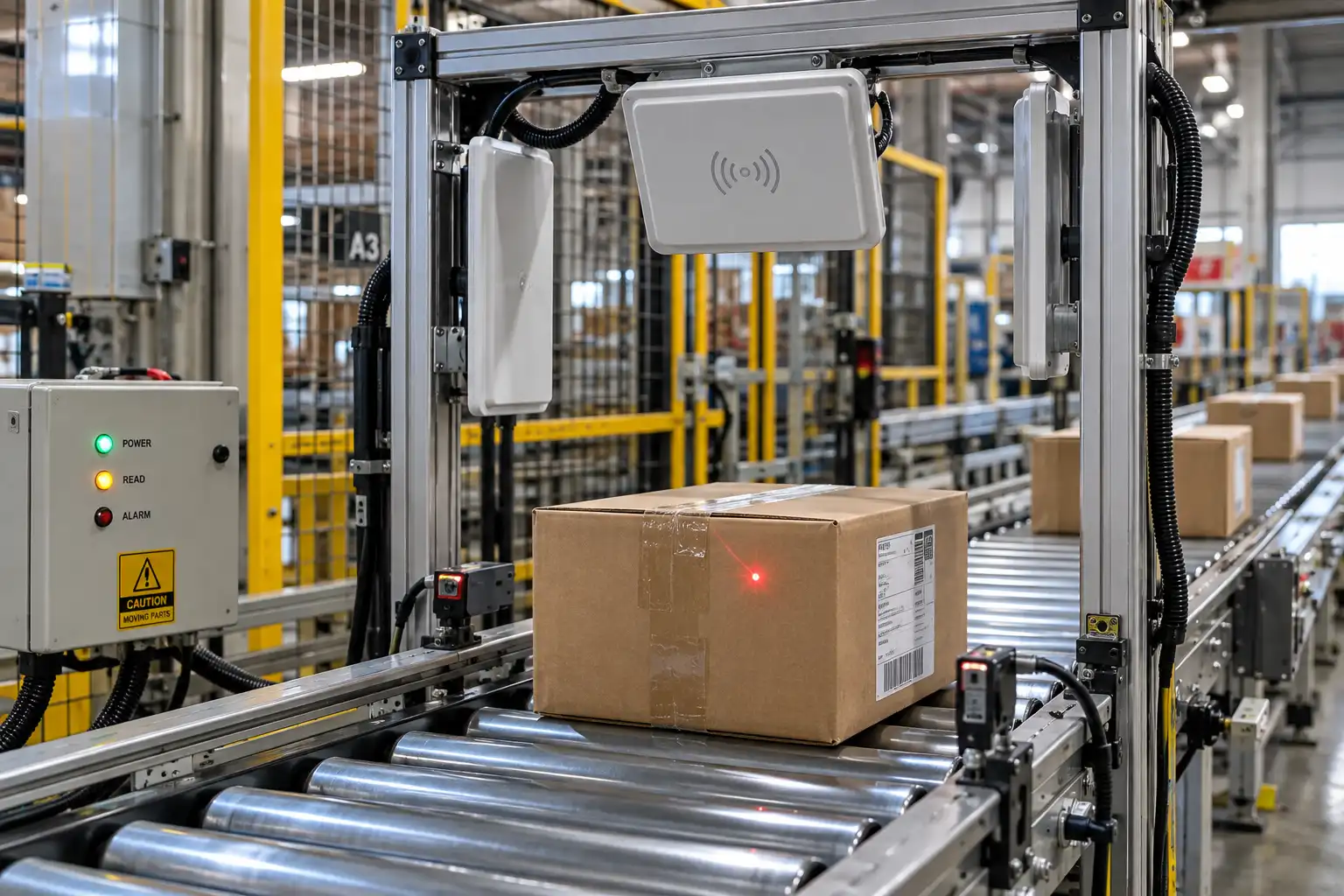
A fixed reader may connect to one or more external antennas positioned around the required read zone.
Depending on the model, it may provide:
- multiple antenna ports
- Ethernet
- PoE or DC power
- GPIO
- serial interfaces
- reader SDK
- REST or network APIs
- local filtering
- industrial control interfaces
For example, a reader installed beside a conveyor can detect a tagged carton when a sensor confirms that the carton has entered the station.
The resulting RFID event may then be sent to a WMS, MES, PLC, or middleware platform without requiring an operator to trigger the read manually.
That is the main difference in workflow:
Handheld RFID follows people and assets.
Fixed RFID becomes part of the process itself.
For a deeper explanation of reader functions, see what RFID readers do.
What Is an Embedded RFID Reader or Reader Module?
An embedded RFID reader provides the RFID engine without necessarily providing the complete user-facing product around it.
It may be installed inside:
- kiosks
- smart cabinets
- vending systems
- medical equipment
- industrial machines
- access-control equipment
- custom terminals
- automated production equipment
The OEM or system developer builds the rest of the product around the module.
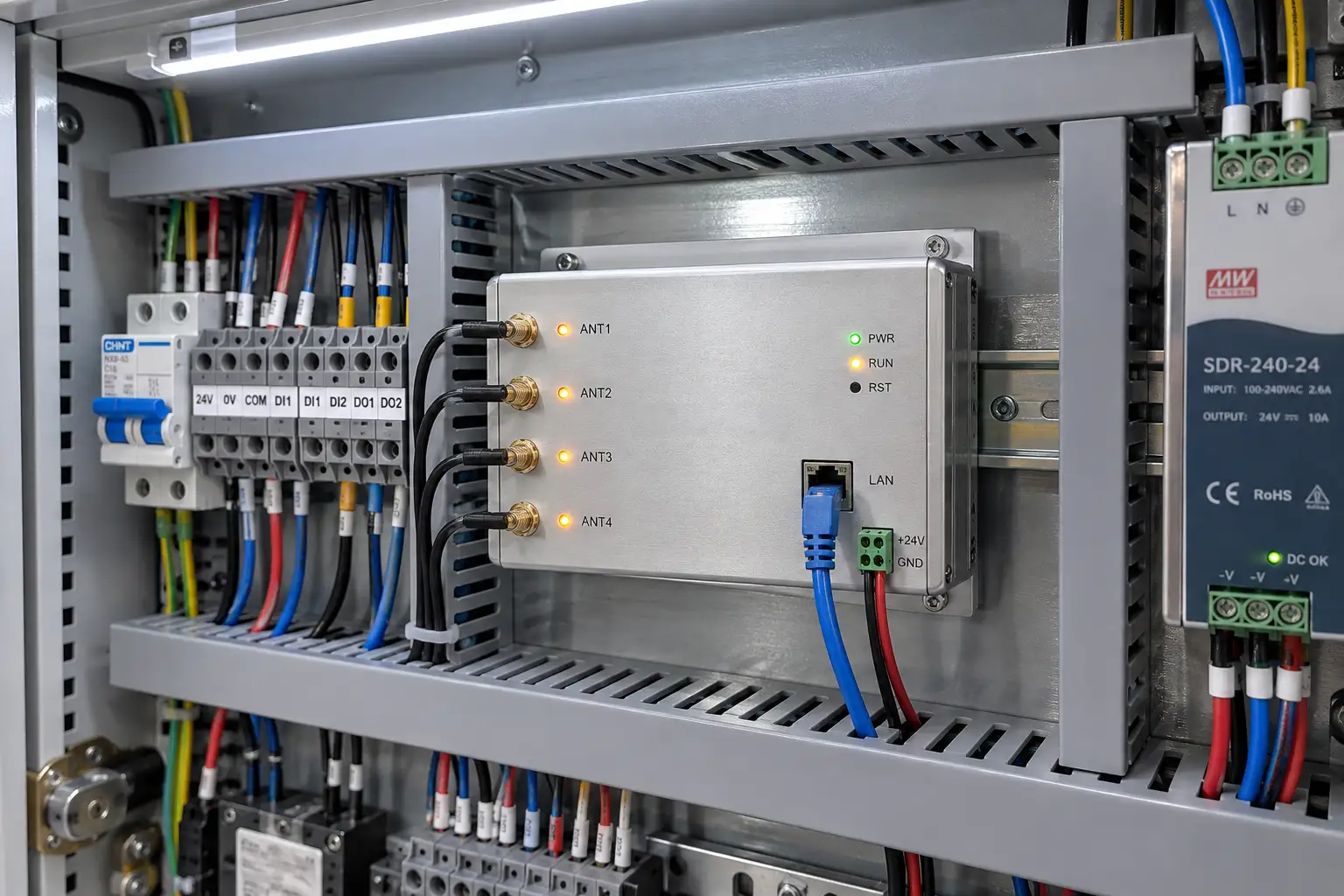
Depending on the design, an embedded reader may expose interfaces such as:
- UART
- TTL
- USB
- Ethernet
- RS-232 or RS-485
- GPIO
- SDK or API commands
This category is where the original idea of a "programmable RFID engine" makes the most sense.
The module provides RFID communication, while the surrounding equipment provides the enclosure, interface, power architecture, business logic, and user experience.
Embedded readers are therefore particularly useful when RFID needs to become one function inside a larger product rather than a standalone device.
For the internal architecture, see the components of an RFID reader.
Does a Handheld RFID Terminal Replace a Fixed Reader?
Usually not.
They solve different operational problems.
Imagine a warehouse that needs to know every time a pallet leaves through the shipping door.
A handheld could technically read the pallet.
But that would require somebody to be present for every shipment and remember to perform the scan.
A fixed reader can make that event automatic.
Now imagine the same warehouse needs to locate one missing carton somewhere across thirty rack aisles.
A fixed portal at the shipping door cannot solve that problem.
A handheld reader can.
That is why many RFID deployments use both.
| Workflow | Handheld RFID | Fixed RFID |
|---|---|---|
| Shelf inventory | Strong fit | Limited unless infrastructure covers shelves |
| Search for missing item | Strong fit | Poor fit outside installed read zones |
| Dock-door movement | Possible but manual | Strong fit |
| Conveyor automation | Poor fit | Strong fit |
| Exception handling | Strong fit | Limited |
| Continuous unattended operation | Usually not primary role | Strong fit |
| Mobile asset inspection | Strong fit | Poor fit |
| PLC or automated machine trigger | Possible with custom system | Common fixed-reader use |
| Temporary deployment | Easy | Requires more installation |
| Permanent process checkpoint | Possible but labor-dependent | Strong fit |
The better question is therefore not:
"Which one has longer range?"
It is:
"Should the reader move to the asset, or should the asset move through a permanent read point?"
Do RFID Read Distances Differ Between Handheld and Fixed Readers?
They can, but device category alone does not determine read range.
Fixed systems often use larger external antennas, carefully selected mounting positions, and permanent power, which can make longer or more controlled read zones practical.
Handheld readers use compact integrated antennas designed around portability.
But the final range depends on many variables:
- reader output
- receiver sensitivity
- antenna gain
- polarization
- tag design
- tag orientation
- mounting surface
- cable loss
- metal
- liquid
- regulatory limits
- surrounding RF conditions
This is why a fixed reader advertised for long-range operation should not automatically be assumed to read every UHF tag across the same distance.
Likewise, a handheld can perform very well in a warehouse when the tag and environment suit the application.
Test read performance on the real asset rather than buying from the largest range number on a data sheet.
How Do Barcode and RFID Fit Into the Same Handheld?
Many enterprise RFID handhelds also contain a barcode engine.
That can be valuable during a transition from barcode to RFID or in operations where both technologies remain necessary.
For example, a warehouse employee may use RFID to count many tagged cartons without aiming at each label individually.
The same handheld can then scan a 1D or 2D barcode when:
- an item does not have RFID
- a rack location uses a barcode
- a serial number must be confirmed visually
- an exception requires manual verification
The two technologies solve different identification problems.
RFID can identify multiple compatible tags without optical line of sight, while a barcode scanner reads the visible symbol it is aimed at.
A hybrid handheld allows the employee to use both without carrying two separate devices.
However, barcode capability is not universal.
Confirm whether the specific handheld includes the required 1D/2D imaging engine instead of assuming every RFID handheld has one.
How Should the Device Type Affect Your Budget?
Compare the complete system rather than the price of the RFID electronics alone.
A handheld terminal may appear expensive because one device already includes:
- RFID reader
- antenna
- display
- battery
- operating system
- wireless connectivity
- rugged enclosure
- sometimes a barcode engine
A fixed or embedded reader shifts some of those functions elsewhere.
A fixed installation may also require:
- external antennas
- RF cables
- mounting hardware
- Ethernet
- power or PoE
- sensors
- integration
- installation
- commissioning
An embedded module may require even more engineering because it becomes one component inside another product.
Neither model is automatically cheaper.
The correct comparison is total deployment cost for the workflow.
For mobile workers, an integrated handheld may reduce the amount of custom hardware and software needed.
For an automated dock or conveyor, fixed RFID may remove recurring manual scanning labor.
For an OEM product, an embedded module may offer the lowest unit cost once the integration work has already been completed.
The RFID reader buying guide covers the wider hardware-selection framework.
How Do You Pilot Before Buying a Fleet?
A small pilot is one of the safest ways to choose between handheld and fixed RFID.
Do not test only the equipment on an empty desk.
Use the real tags, products, shelves, pallets, operators, and environment.
For a handheld pilot, measure:
- inventory time
- missed tags
- repeat sweeps
- operator comfort
- battery performance
- barcode usage if relevant
- software usability
- network synchronization
For a fixed-reader pilot, measure:
- intended read rate
- unwanted reads outside the zone
- performance at normal movement speed
- tag orientation sensitivity
- behavior around metal or liquid
- integration with the business system
If the current image really shows warehouse receiving inspection or RFID workflow testing, it can be used here:
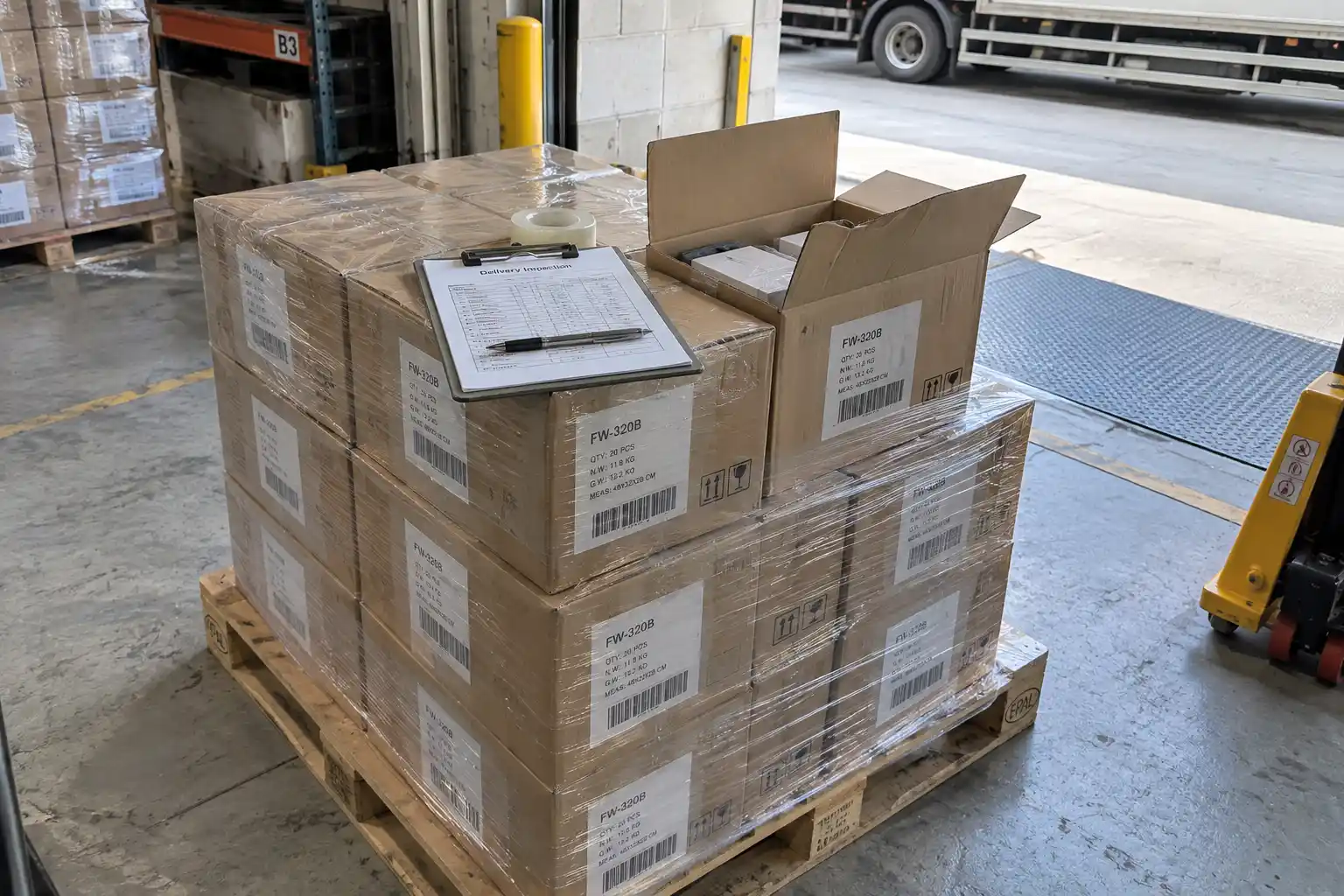
If the actual image does not show an RFID pilot, receiving inspection, or device evaluation, replace it rather than forcing it into this section.
The purpose of the pilot is not to prove that RFID works.
It is to discover which device architecture works best for your workflow before buying many units or installing permanent infrastructure.
Quick Buying Checklist
Before ordering an RFID device, ask the supplier:
What form factor is it?
Handheld terminal, fixed reader, desktop reader/writer, or embedded module?
Which RFID frequencies and standards does it support?
Confirm that the device matches the tags and the regulatory region where it will be used.
If you need encoding, confirm exactly which memory operations are supported through both the hardware and software.
Does it include a barcode scanner?
Do not infer barcode capability simply because the product is described as a scanner.
How does it connect to software?
Check the available SDK, API, operating system, Ethernet, USB, Wi-Fi, Bluetooth, serial, or other interfaces.
Does it require an external antenna?
For fixed and embedded devices, confirm antenna ports, connector type, supported antenna count, and installation requirements.
Can the vendor provide the SDK or integration documentation before purchase?
This matters if the reader will be controlled by your own application.
A specification sheet cannot reproduce the effect of your product materials, tag placement, metal, liquid, shelving, or workflow.
FAQ
Is an RFID Scanner the Same as an RFID Reader?
The terms are often used interchangeably.
"RFID reader" is the broader technical term, while "RFID scanner" is often used for handheld products intended for scanning and inventory workflows.
Do not use the product name alone to determine capability.
Check whether the device is handheld, fixed, or embedded and whether it supports the RFID operations, software interfaces, and workflow you need.
Can an RFID Scanner Write Tags?
Some handheld RFID devices can write tags.
Whether the function is available depends on the reader hardware, firmware, SDK, tag, and application.
If writing EPC or user memory is required, confirm the capability explicitly before purchase.
Do All RFID Handhelds Include Barcode Scanning?
No.
Many enterprise handheld RFID terminals combine UHF RFID with a 1D/2D barcode imager, but it is not universal.
Check the exact model configuration.
When Should I Choose a Fixed RFID Reader?
Choose fixed RFID when tagged assets repeatedly pass through predictable locations and the read should happen automatically.
Typical examples include dock doors, conveyor lines, gates, production stations, and automated cabinets.
When Should I Choose a Handheld RFID Reader?
Choose handheld RFID when the operator needs to move around the facility to inventory, inspect, search for, or verify assets.
Handhelds are particularly useful when the read location changes frequently.
What Is an Embedded RFID Reader?
An embedded reader or reader module provides RFID functionality for integration into another device or system.
It may be installed inside a kiosk, cabinet, machine, medical device, access terminal, or another OEM product and controlled through a hardware interface, SDK, or API.
Which RFID Device Has the Longest Read Range?
There is no reliable answer based only on whether a device is called a scanner or reader.
Range depends on the RFID band, antenna, tag design, mounting surface, reader power, receiver performance, orientation, environment, and regulatory limits.
Test the actual device and tag combination in the intended environment.
Conclusion
The difference between an RFID scanner and an RFID reader is not as clean as many product names suggest.
The terms overlap, especially in the handheld market.
For purchasing, a better approach is to identify the form factor and capability you actually need.
Choose a handheld RFID terminal when the reader needs to travel with the operator.
Choose a fixed reader when tagged goods repeatedly move through a defined location and the RFID event should happen automatically.
Choose an embedded reader module when RFID needs to become part of another machine or product.
Then compare read/write capability, antenna design, barcode support, software interfaces, integration requirements, and real-world tag performance.
That approach avoids buying the wrong device simply because one supplier called it a "scanner" and another called nearly the same technology a "reader."
For a broader comparison of RFID hardware requirements, start with the RFID reader buying guide.
If you need help matching a handheld, fixed, desktop, or embedded RFID reader to a specific workflow, contact Fongwah.