Struggling with manual tracking and costly errors? This inefficiency wastes time and money, frustrating both your team and your customers. RFID offers a simple, automated solution for instant accuracy.
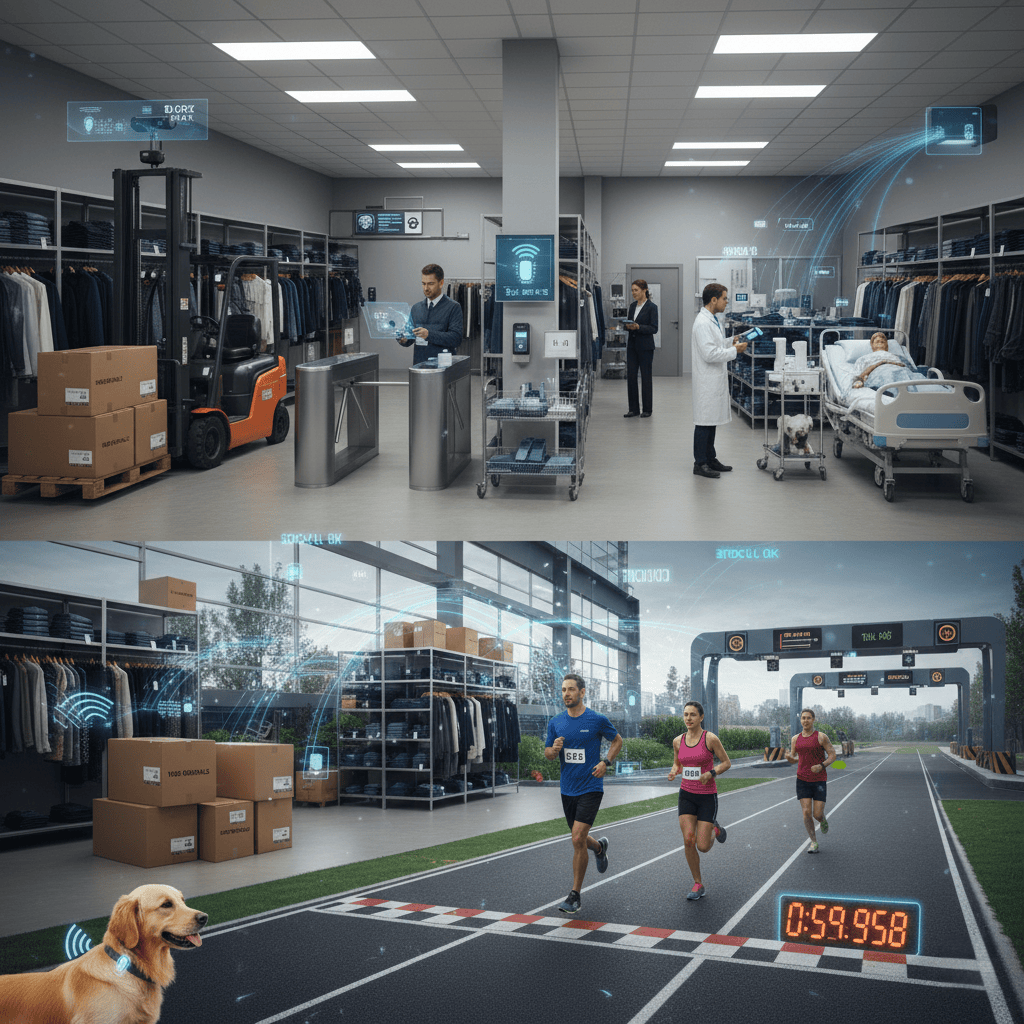
RFID tags1 have many uses. They are key for inventory management2, logistics tracking3, access control4, and smart retail5. These tags help businesses improve efficiency, reduce errors, and cut costs by automating data collection6.
<sup id=](https://fongwahrfid.net/wp-content/uploads/2025/10/scenarios-for-RFID-tags-2.png%22) 1 being used in different industries like retail, logistics, and healthcare" />
1 being used in different industries like retail, logistics, and healthcare" />
But knowing the general uses is one thing. Seeing how it solves real-world problems is another. As a system integrator, I'm always looking for practical solutions that deliver real value. It’s not just about the technology; it’s about solving a specific business challenge7. I often talk with suppliers and other engineers to understand what really works. Let’s look at some common challenges and see how RFID provides a solid answer.
How can RFID create a low-cost smart warehouse8?
Warehouse costs are high. Manual inventory counts are slow and full of mistakes. This wasted labor and inaccurate stock data directly hurts your bottom line, making it hard to compete.
RFID creates a low-cost smart warehouse8 with inexpensive tags on items and pallets. Readers at key points, like dock doors, automatically track everything. This removes manual scanning, cuts labor costs, and makes your inventory data highly accurate.
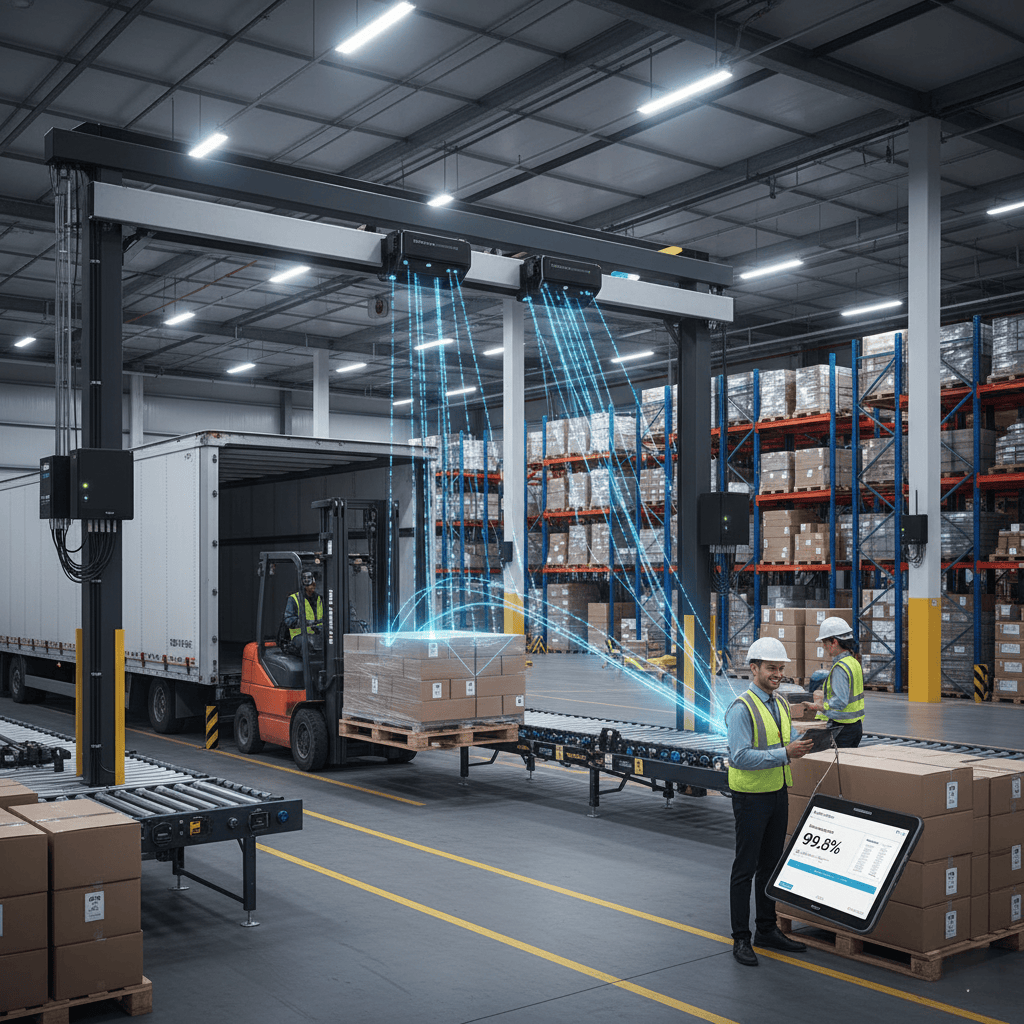
When I first started exploring smart warehouse solutions, my main concern was the budget. Many of my clients are medium-sized businesses and can't afford a massive overhaul. They need systems that pay for themselves quickly. I was talking about this with Jay from Fongwah, and he shared a case study that made sense. The key is to start simple. You don't need readers everywhere. By focusing on the most critical points, a low-cost system becomes very achievable. The goal is to get the biggest impact with the smallest investment.
Key Components for a Budget-Friendly System
The foundation is passive UHF RFID tags9s](https://rainrfid.org/rfids-role-in-managing-inventory-for-medical-devices-and-critical-supplies/)%%%FOOTNOTE_REF_1%%%. These don't need batteries and are very cheap in bulk, sometimes just a few cents each. You pair these with fixed readers at "choke points"—places where all goods must pass, like receiving and shipping docks. For tasks like cycle counts or finding specific items, a handheld reader is perfect. This combination gives you 80% of the benefits for 20% of the cost of a fully automated system.
The Cost-Benefit Breakdown
The real value comes from replacing manual tasks with automated ones. Think about the time it takes for an employee to scan every single box on a pallet. With RFID, a reader scans the entire pallet in seconds as it passes by. This is not just a small improvement; it's a game-changer for efficiency.
| Task | Manual Method | RFID Method | Benefit |
|---|---|---|---|
| Receiving | Scan each box barcode manually | Pallet passes through an RFID reader gate | Drastically faster, 99%+ accuracy |
| Put-away | Scan item and shelf location | System automatically logs location | Reduced errors, real-time inventory |
| Picking | Use paper list or handheld scanner | Handheld reader guides to correct item | Faster picking, fewer wrong-item shipments |
| Inventory Count | Close warehouse, scan all items | Walk through with a handheld reader | From days to hours, no operational stop |
This approach makes a smart warehouse accessible, not just a dream for large corporations.
How does RFID build an intelligent logistics platform10?
Packages get lost. Shipments get delayed. Your supply chain has blind spots. This lack of visibility is risky. It damages your reputation with customers and leads to costly searches for missing goods.
RFID builds an intelligent logistics platform10 by putting tags on parcels or assets. As items move through checkpoints, readers update a central system with their location. This provides complete, real-time visibility from end to end.

One of my biggest projects involved a logistics company that was losing thousands of returnable plastic totes each year. These totes are expensive, and losing them was a huge operational cost. The problem was simple: they had no way to track a tote once it left their distribution center. They tried barcodes, but they got damaged easily and required line-of-sight scanning, which was impractical. This is a classic logistics problem where RFID is the perfect fit. We needed a system that was automatic, durable, and could provide data for a central platform that tracked the entire lifecycle of each tote.
Real-Time Visibility in Action
Imagine a tote leaving the warehouse. An RFID reader at the dock door logs it as "out for delivery." When it arrives at the customer's site, a handheld reader used by the driver confirms its delivery. When the empty tote is picked up, it's scanned again. This creates a complete digital history for every single asset. The logistics platform shows not just where the totes are, but how long they've been there. This data is gold. It helps you identify bottlenecks and customers who are slow to return assets.
Choosing the Right Tag
The environment in logistics can be tough. Tags need to withstand rain, impacts, and extreme temperatures. For the tote project, we chose a durable hard tag from Fongwah that could be riveted directly to the plastic. The choice of tag is critical for the success of the system.
| Tag Type | Best Use Case | Read Range | Cost |
|---|---|---|---|
| Passive UHF | Pallets, cases, returnable assets | Up to 15m | Low (¢) |
| Active RFID | High-value containers, global tracking | Up to 100m+ | High ($$) |
| NFC | Last-mile delivery, user interaction | Very Short | Medium ($) |
By integrating this tracking data into their main system, the company built a truly intelligent platform. They cut asset loss by over 90% in the first year.
Can RFID improve a parking management system?
Managing access to a parking garage is often slow. It requires guards or clunky keycard systems. This creates long lines during peak hours and a frustrating experience for drivers every single day.
Yes, RFID dramatically improves parking systems. A small tag on a car's windshield is read by an antenna at the gate. The system instantly verifies the vehicle and opens the barrier, creating a fast, hands-free, and seamless entry.

I remember visiting a corporate client's campus. Every morning and evening, there was a huge traffic jam at their parking garage entrance. Employees had to stop, find their access card, and hold it up to a reader. It was slow and inefficient. This was a perfect opportunity to show the power of RFID for access control. The goal was simple: make entry and exit completely frictionless while maintaining high security. We needed a solution that was fast, reliable, and easy for thousands of employees to use without any training.
The User Experience
The magic of an RFID parking system is that the user does almost nothing. A small, passive UHF RFID tag is placed on the inside of the car's windshield. A long-range reader, mounted near the gate, can read this tag from several meters away as the car approaches. The gate opens before the car even has to stop. It feels seamless. This completely eliminates queues and makes the whole process stress-free. For employees who use the garage every day, this small improvement in their daily routine has a huge positive impact.
System Security and Management
Beyond convenience, RFID provides better security. Each tag has a unique ID tied to a specific vehicle and employee in the management software. This prevents unauthorized access from lost or stolen cards. The system also logs every entry and exit, providing a complete audit trail.
| Access Method | Speed | Security | User Convenience |
|---|---|---|---|
| Keycard | Slow | Medium | Low |
| Barcode/QR | Slow | Low | Low |
| RFID | Very Fast | High | Very High |
Setting up this system for the corporate campus was straightforward. The main task was distributing the windshield tags. But once it was running, the feedback was immediate. The traffic jams disappeared overnight. It was a clear, visible success.
Conclusion
RFID is more than just technology. It’s a practical tool that solves real business problems, cutting costs, and boosting efficiency across many industries, from the warehouse to the parking lot.
---Explore how RFID tags enhance inventory management efficiency and accuracy. ↩
Learn about the transformative impact of RFID on inventory management. ↩
Discover how RFID technology streamlines logistics tracking and reduces errors. ↩
Find out how RFID improves security and efficiency in access control. ↩
Understand how RFID technology is revolutionizing the retail industry. ↩
Explore the advantages of automating data collection processes using RFID. ↩
Learn how RFID addresses various business challenges effectively. ↩
Learn strategies for implementing a cost-effective smart warehouse using RFID. ↩
Discover the features and benefits of passive UHF RFID tags in various industries. ↩
Discover how RFID technology builds intelligent logistics platforms for better tracking. ↩