
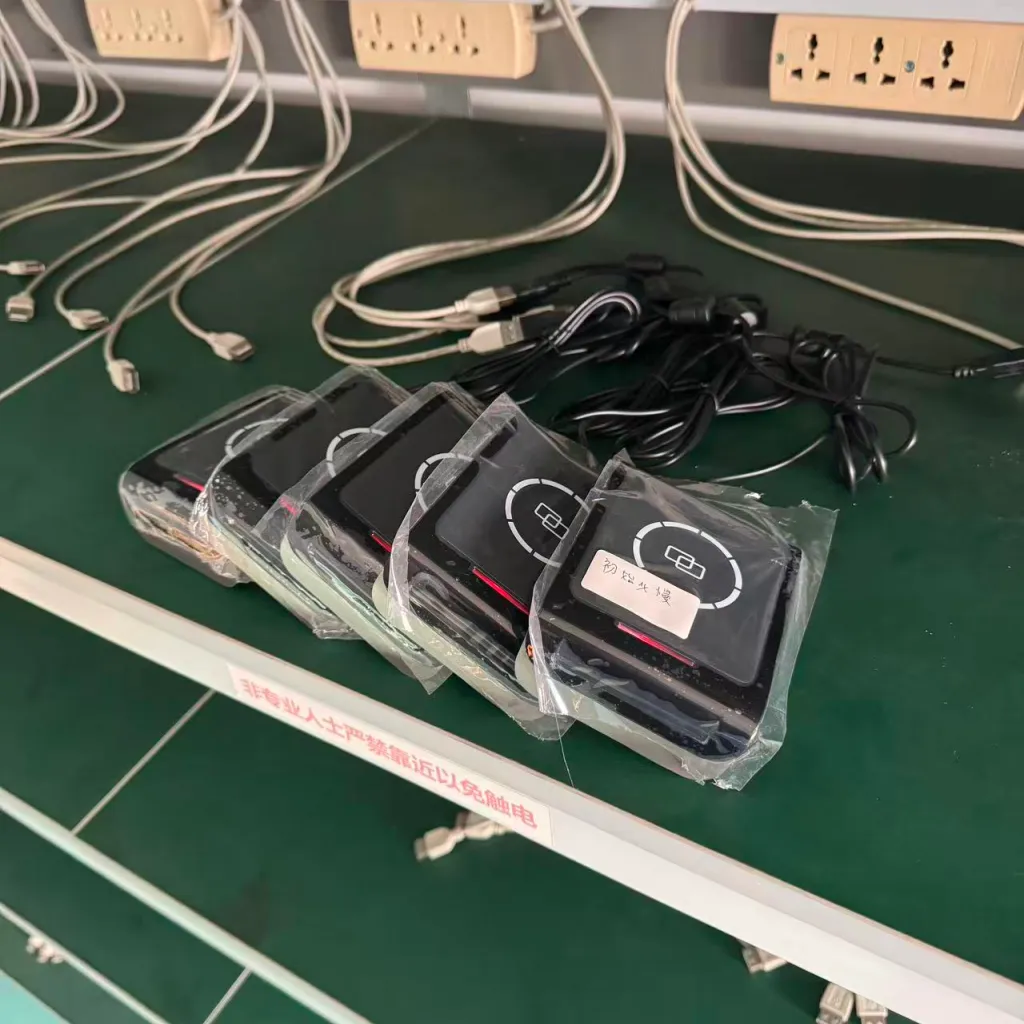
You stick a standard tag on a steel pipe, and the signal vanishes instantly. It is frustrating to watch your expensive RFID system fail because of a two-cent sticker.
Standard wet inlays and thin labels failed completely because metal surfaces cause detuning and absorb RF energy. Only hard shell PCB tags and flexible tagswith a specialized ferrite layer or thick dielectric spacers maintained a readable signal during our rigorous industrial testing.
If you are looking for the cheapest sticker to slap on your expensive assets, you should stop reading now. I am an engineer, not just a salesman. I know that physics does not care about your budget cuts. If you want a solution that actually works for the next five years, keep reading.
Why Do Most Standard Inlays Stop Working the Moment They Touch Steel?
You assume a tag that reads at ten meters in the air will read on a forklift. You place it on the metal chassis, and suddenly, your reader is blind.
The metal surface acts as a ground plane that disrupts the electromagnetic field of the tag. Without a specialized spacer or ferrite shield, the metal creates eddy currents that cancel out the tag's response, making it invisible to the reader.

The Physics of Detuning
I have seen this happen hundreds of times during my years as a production line engineer. A client buys a roll of standard UHF labels. They stick them on metal shelving. The system fails. Here is why.
RFID antennas are tuned to a specific frequency, usually around 860-960 MHz. They rely on "impedance matching" to catch energy from the reader. Metal changes the environment near the antenna. It alters the capacitance. This shifts the resonant frequency of the tag away from the reader's frequency.
It is like trying to tune a radio station, but someone keeps moving the dial.
In our test of 10 tags, the standard paper and PET inlays offered zero read range on steel. We tested some "semi-metal" tags with thin foam. They failed too. They only worked when we used tags with a ceramic core or a PCB (Printed Circuit Board) backing. These materials provide the necessary "dielectric constant." They create a buffer zone. This buffer prevents the metal from killing the signal. Below is the data from my bench test.
| Tag Construction | Spacer Material | On-Metal Result | Why it Happened |
|---|---|---|---|
| Standard Paper Inlay | None (Adhesive only) | 0 cm | Complete signal absorption and detuning. |
| Thin Foam Label | 0.5mm PET Foam | 15 cm | Spacer was too thin to prevent interference. |
| PCB Hard Tag | FR4 Board | 650 cm | The board acts as a strong dielectric barrier. |
| Ceramic Tag | Ceramic Block | 400 cm | High dielectric constant enables small size but good range. |
You cannot cheat physics. You need physical separation or high-permeability materials to make this work.
Can Cheap Adhesives Survive the Thermal Expansion of Industrial Metal Assets?
Your tag reads perfectly on day one. A month later, you find the tag lying on the concrete floor, and your asset is lost again.
Metal expands and contracts significantly when temperatures change in a warehouse or yard. Rigid tags with standard aggressive glue cannot flex with the metal, causing the bond to shear and the tag to pop off.

The Hidden Killer: Shear Stress
When I was a team supervisor, I had to explain to a very angry logistics manager why 200 of his tags fell off his trucks. It was not the RFID chip. It was the glue.
We tested tags in a thermal chamber. We cycled the temperature from -20°C to +60°C. This mimics a typical Canadian winter and summer. Metal moves during these cycles. A steel beam that is 10 meters long can expand several millimeters.
If your tag is rigid, like a hard plastic shell, and your glue is rigid, something has to break. Usually, it is the adhesive bond.
Cheap tags use standard transfer tape. It dries out and becomes brittle. In our test, three of the "budget" on-metal tags fell off after just 50 thermal cycles. The tags that survived used VHB (Very High Bond) acrylic foam tape or epoxy.
The foam tape is critical. It is viscoelastic. This means it can flow and stretch. When the metal expands, the foam stretches to absorb the movement. It does not transfer the stress to the tag.
I also recommend mechanical fixation for permanent assets. Screws or rivets do not fail due to heat. If you are tracking metal pallets that go into ovens or freezers, do not trust a sticker. I have scraped enough failed tags off containers to know that "peel and stick" is comfortable, but "drill and screw" is permanent.
Mounting Recommendations for Longevity
- Indoor Office: Foam tape is acceptable.
- Outdoor Yard: VHB Tape or Epoxy.
- Industrial Processing: Rivets or Screws only.
Do The Manufacturer Specs Actually Match Real-World Read Ranges?
You buy a tag because the data sheet promises a 12-meter read range. You install it, and you barely get 4 meters.
Lab tests are performed in anechoic chambers with the tag floating in free space or perfectly positioned on a metal plate. In a real warehouse, reflections, nearby metal objects, and reader orientation drastically reduce the actual performance distance.

Theoretically Perfect vs. Reality
I learned early in my career as an engineer that data sheets are marketing tools. They represent the "best case scenario."
In our test, we looked at how orientation affects range on metal. Metal surfaces reflect radio waves. This creates "multipath" interference. Sometimes the waves combine to help you. Sometimes they cancel each other out. This creates "null spots" or dead zones.
We tested a popular 10-meter rated on-metal tag. When the reader was directly perpendicular (90 degrees) to the tag, we got 9 meters. That is decent. However, when we walked to the side, at a 45-degree angle, the range dropped to 2 meters.
Why?
Many on-metal tags use a "patch antenna" design. This design directs energy narrowly, like a flashlight beam. If you are not in the beam, you do not read the tag.
Standard dipole tags (the floppy stickers) have a doughnut-shaped field. They read from many angles. On-metal tags are often directional.
If you put these tags on a metal bin, and your forklift driver approaches from a sharp angle, he will miss the read. We found that tags with a "3D" antenna structure or cross-polarization performed better in real environments.
Furthermore, we saw that the size of the metal object matters. A tag tuned for a large shipping container might work poorly on a small metal tool handle. The metal object actually becomes part of the antenna. If the object is too small, the antenna is incomplete.
When choosing a tag, you must test it on the actual asset. Do not trust the spec sheet blindly.
Conclusion
Standard labels and cheap adhesives fail on metal. You must use tuned PCB tags, thick foam spacers, and industrial bonding for reliable tracking.
---