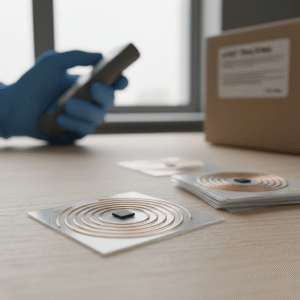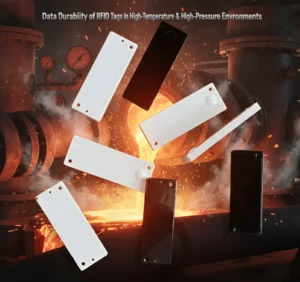

Struggling with failed RFID scans1? Signal blockage is a frustrating problem. Let's identify the culprits and find the right solutions for your system.
The main materials that block RFID signals are metals and liquids2, especially water. Metal reflects radio waves3, causing interference. Water absorbs radio wave energy, weakening the signal. Other dense materials4 and radio frequency interference5 can also disrupt RFID performance6.
Now that you have the basic answer, let's explore each issue in more detail. As a buyer and system designer, understanding the why behind these failures is the most important step. It helps you select the right products from the start. Over my 20 years at Fongwah, I've seen that a little knowledge here saves a lot of money and frustration later. Let's break it down.
Why Do Metals Interfere with RFID Signals?
Placing a standard RFID tag on a metal surface? You will likely get zero reads. This simple mistake can completely derail an asset tracking7 project.
Metal surfaces reflect the radio waves3 sent by an RFID reader. This creates signal chaos, preventing the tag's antenna from powering on and transmitting its data back to the reader.

Metal is the biggest challenge in the RFID world. The issue comes down to two main asects: reflection and detuning. When a reader sends out a signal, a metal surface acts like a mirror, bouncing the waves in all directions. The tag gets hit with messy, out-of-sync energy and can't power itself on. Also, the metal surface effectively "detunes" the tag's antenna, changing its properties so it no longer works at its designed frequency.
I remember a project years ago when I was still an engineer. A client was tracking metal tool carts in a large warehouse. They bought thousands of standard RFID tags and spent a week applying them. Nothing worked. I flew out to their site, and we discovered the problem in minutes. They were placing the tags directly on the steel frames. We solved it by switching to on-metal tags. These tags have a special foam insulation layer and a unique antenna design that uses the metal surface to its advantage, actually boosting the signal. This experience taught me a valuable lesson: always ask about the mounting surface first. It's the most critical question in any RFID project.
Tag Performance on Different Surfaces
| Tag Type | Mounting Surface | Expected Read Performance |
|---|---|---|
| Standard UHF Tag | Plastic Bin | Excellent |
| Standard UHF Tag | Wooden Pallet | Good |
| Standard UHF Tag | Metal Shelf | None to Very Poor |
| Anti-Metal Tag | Metal Shelf | Excellent |
Can Liquids and Other Dense Materials Block RFID Waves?
Are you tracking items that contain liquids, like beverages or chemicals? You might find that your read rates are surprisingly low. This can make inventory management a huge challenge.
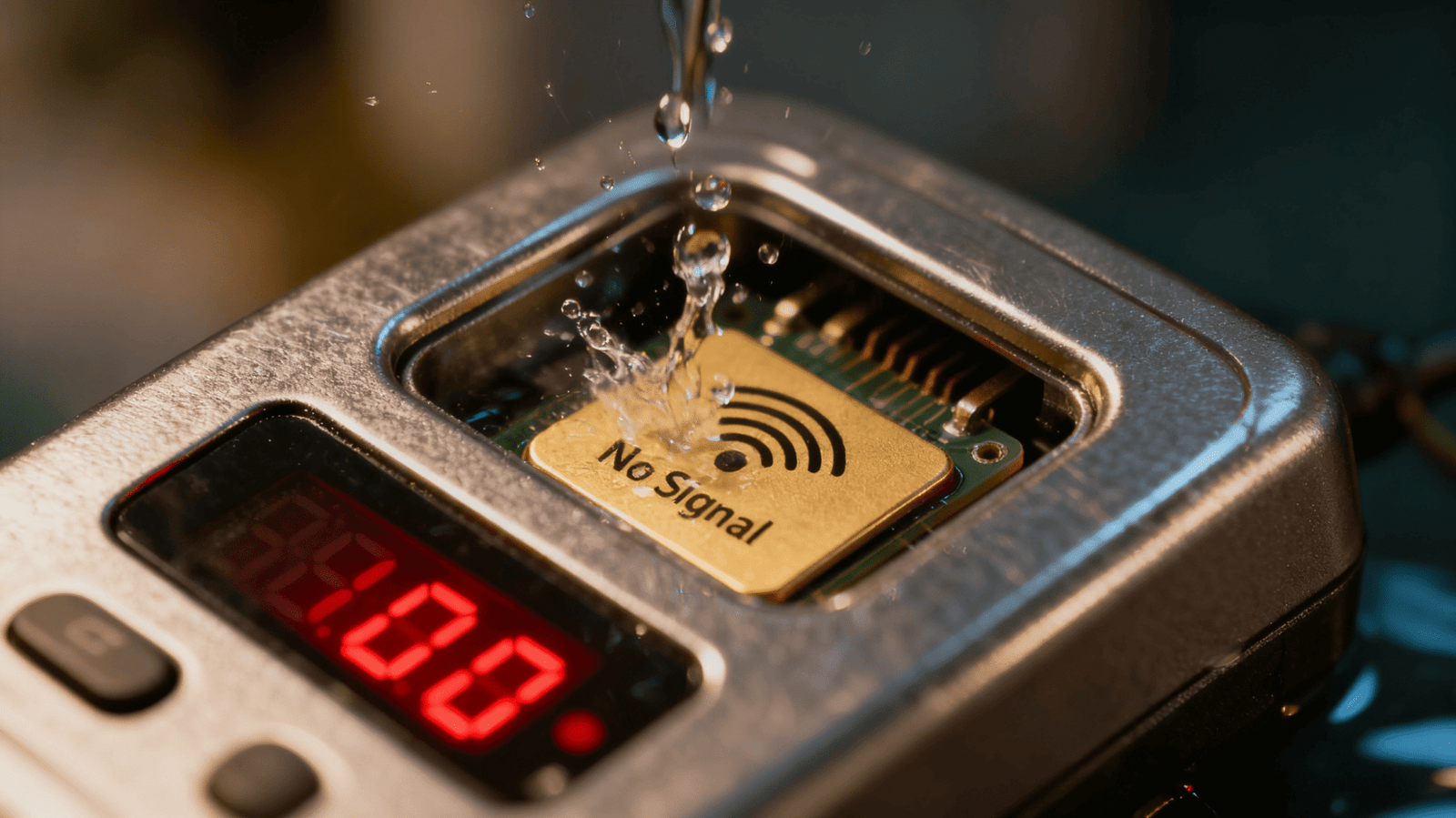
Yes. Liquids with high water content are very effective at blocking RFID signals. They don't reflect the signal like metal, but instead absorb its energy, greatly reducing the read range.

The science here is simple. UHF RFID operates at frequencies that are easily absorbed by water molecules. The radio waves3 from the reader hit the liquid, and their energy is converted into tiny vibrations in the water molecules. This leaves very little energy to power the RFID tag. The result is a much shorter read range, or no read at all. This is why tracking cases of water bottles can be difficult, but tracking cases of oil is much easier. Oil has a very low water content and does not absorb RFID signals in the same way.
Other dense materials4 can also cause issues. For example, thick stacks of paper or dense wood can have a dampening effect on the signal. However, their impact is usually much less than that of water. When designing a system for products with liquids, the solution is about choosing the right tag and testing its placement. Sometimes, a tag specifically designed for "liquid-rich" environments is needed. Other times, simply placing the tag on the outside of a case with a small air gap is enough to get a reliable read.
Signal Impact of Various Materials
| Material | Primary RFID Frequency | Effect on Signal |
|---|---|---|
| Water / Aqueous solutions | UHF (860-960 MHz) | High Absorption (Severe) |
| Water / Aqueous solutions | HF (13.56 MHz) | Low Absorption (Minimal) |
| Oils / Fats | UHF (860-960 MHz) | Very Low Absorption (Minor) |
| Dense Wood / Paper | UHF (860-960 MHz) | Low to Medium Absorption |
Are There Other Factors That Can Disrupt RFID Performance?
Your tags aren't on metal or liquids, but scans are still failing. This unseen interference can be confusing and hard to diagnose in your environment.
Definitely. Tag orientation, distance from the reader, and interference from other radio frequency (RF) devices can all disrupt performance. A perfectly good tag can fail if it is not positioned correctly.
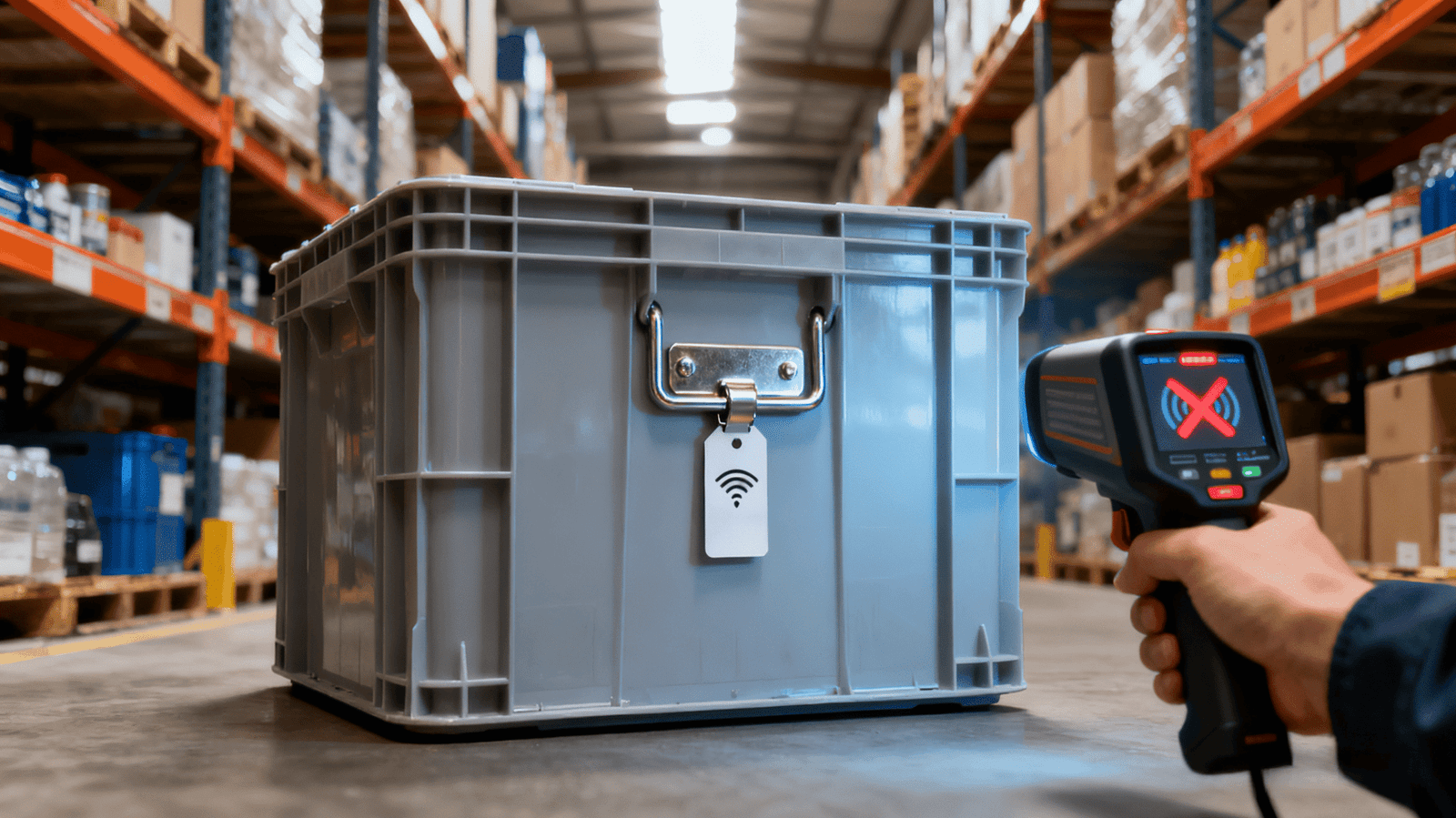
Beyond a tag’s immediate surroundings, several environmental and application-specific factors can ruin your read rates. As a buyer, you need to be aware of these during the planning stage to avoid performance issues after installation.
Tag Orientation
The antennas inside the reader and the tag must be aligned to some degree. Think of it like trying to have a conversation in a loud room; you need to face the person you're talking to. If a tag is facing the wrong way relative to the reader's antenna, the signal transfer will be poor, and the tag may not be read, even if it's very close.
Radio Frequency Interference (RFI)
Your facility is full of radio signals. Wi-Fi routers, cellular networks, and even large electric motors can create "noise" in the RF spectrum. If this noise is strong enough in the RFID frequency band, it can drown out the weak signal coming back from a tag, causing the reader to miss it.
Reader-to-Tag Distance and Obstructions
This is an obvious one, but it's still a factor. Every RFID system has a maximum read range. The signal gets weaker the farther it travels. Any physical obstruction between the reader and the tag, even if it's not metal or liquid, will reduce this range. A successful system design always includes a site survey8 to test ranges in the actual environment.
Common Environmental Troubleshooting
| Factor | Problem Description | Common Solution |
|---|---|---|
| Orientation | Tag antenna is not aligned with the reader antenna. | Test different tag placements and angles. |
| RFI | Other devices create RF noise, disrupting the signal. | Conduct a site survey8; use shielded readers or cables. |
| Tag Collision | Too many tags in the reader's field at once. | Lower reader power; use a reader with good anti-collision algorithms. |
Conclusion
Understanding what blocks RFID is the first step. By choosing the right tags and designing your system carefully, you can build a reliable and effective RFID solution.
---Explore this link to understand the challenges and solutions related to RFID scans. ↩
Discover the impact of different materials on RFID signal performance. ↩
Gain insights into the nature of radio waves and their role in RFID technology. ↩
Explore how various dense materials can disrupt RFID signals. ↩
Understand the concept of RFI and its impact on RFID systems. ↩
Gain insights into the various factors that can affect RFID system performance. ↩
Find effective strategies for successful asset tracking using RFID technology. ↩
Find out how a site survey can enhance your RFID system's effectiveness. ↩