
Your reputation depends on system reliability. Choosing the wrong hardware causes data loss and client dissatisfaction. You must select readers that handle complex environments without breaking the budget.
The right Industrial RFID Reader balances sensitivity, processing speed, and stability. Success in RFID integration requires hardware that filters redundant data at the edge. This guide explores technical specs and cost-effective alternatives to help you maximize project margins while ensuring robust performance.
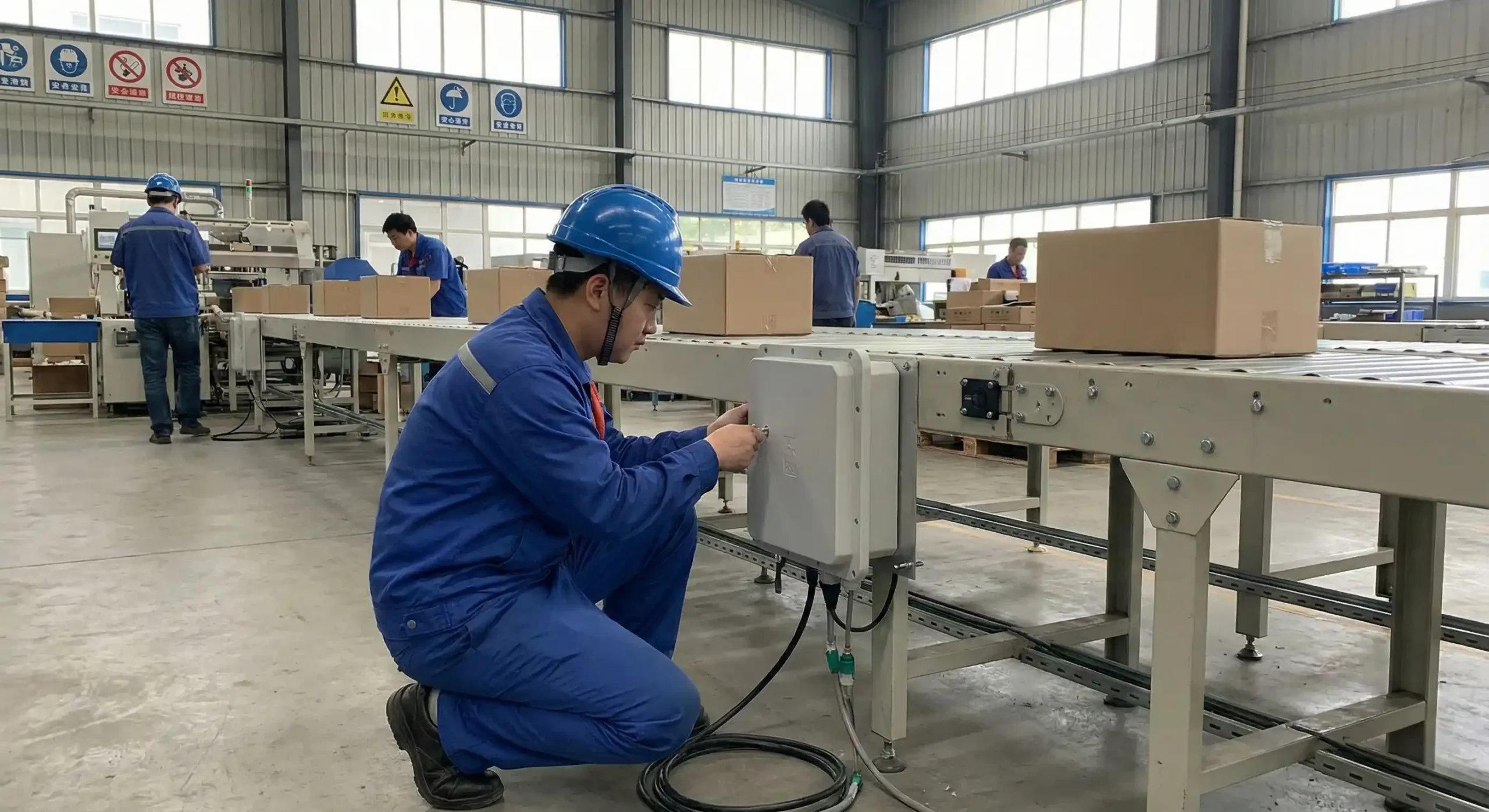
I talk to many integrators who feel trapped by the high costs of big brands. They need reliable hardware to scale their solutions. However, finding a device that keeps promises on the datasheet is hard. Let’s explore how to choose the right tools.
What Key Parameters Like Sensitivity and Read Rates Determine Success?
Specs on a sheet can be misleading. You need to know how the reader performs under real pressure with thousands of tags available.
Effective RFID Data Collection hinges on the reader's ability to process tag collisions effectively. When evaluating an Industrial RFID Reader, look beyond the spec sheet. You need a device that handles edge computing and filters redundant data before it hits your server.
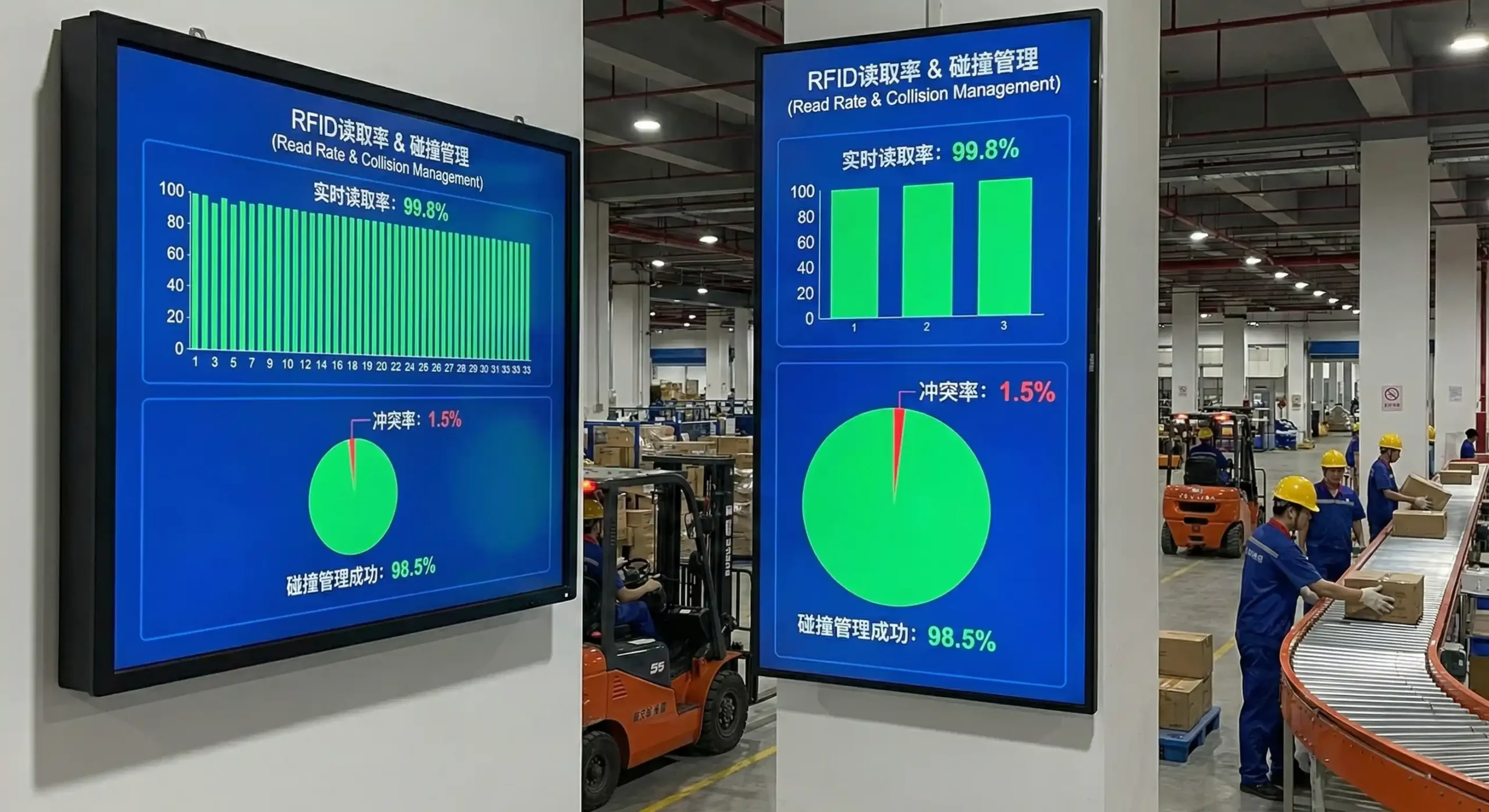
As a former engineer who moved into management, I have seen many projects fail because the hardware could not handle the data flow. A reader might claim to read 800 tags per second, but that number is meaningless if the reader crashes after ten minutes. The most critical parameter is how the reader handles "tag collisions." In a busy warehouse, hundreds of tags "shout" at the reader at the same time. If the reader's processor is weak, it will miss tags.
Start by looking at the sensitivity. A sensitivity of -85dBm tells you the reader can hear faint signals. But you also need to look at the "Dense Reader Mode" capabilities. This feature allows multiple readers to work near each other without interference. Also, think about data processing. You do not want to send every single read to your database. That will kill your bandwidth. You need a reader capable of edge computing. This means the reader filters the data itself. It only tells your software when a tag enters or leaves, not every time it sees the tag. This makes your RFID integration much smoother.
| Parameter | What Marketing Says | What You Actually Need |
|---|---|---|
| Read Rate | "Up to 1000 tags/sec" | Sustained processing without overheating |
| Sensitivity | "-85dBm" | Ability to filter background noise |
| Connectivity | "Wi-Fi / Ethernet" | Stable PoE (Power over Ethernet) support |
| Processing | "High Speed CPU" | Edge filtering logic inside the firmware |
How Do You Ensure Stability When Deploying in Harsh Industrial Environments?
A warehouse is not a lab. Dust, heat, and vibration are constant threats to your installed hardware.
An Industrial RFID Reader must survive where consumer tech fails. You need IP ratings and robust casing to prevent environmental factors from corrupting your critical data streams.

I started my career on the production line. I know firsthand how dirty and hot these places get. I have seen forklift drivers accidentally hit equipment. I have seen readers covered in a thick layer of dust within a week. If you put a plastic, office-grade reader in this environment, it will fail. It is not a question of if, but when.
When you choose hardware for a client, you need to look at the IP rating. IP65 or IP67 is usually necessary. This ensures dust cannot get inside the electronics. It also protects against water splashes. Heat dissipation is another huge factor. RFID readers generate heat when they transmit power. If the casing is plastic, that heat stays inside and cooks the chips. An aluminum casing acts as a heat sink, keeping the system cool. I remember one project where a client used cheap readers. They worked fine in the winter. But when summer came, the warehouse reached 40 degrees Celsius, and the readers started shutting down every afternoon. We had to replace all of them. Do not make that mistake. Stability is the foundation of trust.
Why Is "Long Range" Not the Only Metric That Matters for Your Project?
Clients always ask for maximum range first. Real professionals know that accuracy and defined zones are much more important.
Focusing only on range causes cross-reads and data pollution. Controlling the RF field creates precise read zones, ensuring you track the right assets, not the whole warehouse.
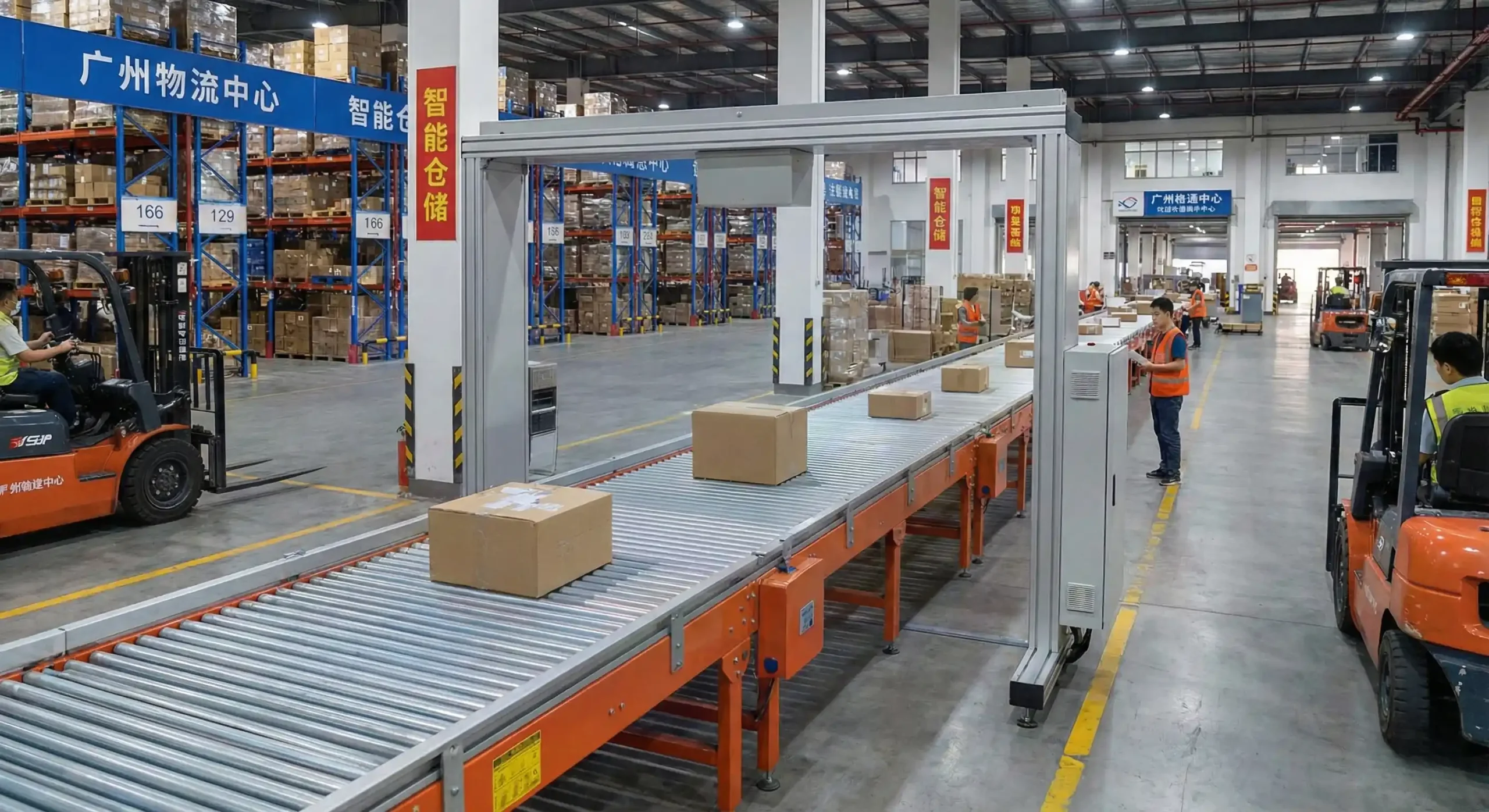
My core philosophy is solving practical problems. One of the most common problems is reading too much. A client might ask for a reader that can see 10 meters away. But if you have two dock doors next to each other, a 10-meter range is a disaster. Door A will read the tags from Door B. This creates false data. Your system will think inventory is moving when it is actually sitting still.
To fix this, we need to stop obsessing over range and start thinking about "zone control." This involves using the RSSI (Received Signal Strength Indicator) values. A good Industrial RFID Reader allows you to set filters. You can tell the reader to ignore any tag that has a weak signal. This effectively creates a digital wall. You also need to choose the right antennas. Sometimes, a low-gain antenna is better than a high-gain one because it keeps the field contained. System Integrators need to educate their clients. Explain that accuracy comes from control, not from raw power. It is better to read 100% of the tags on the correct pallet than to read 110% by accidentally scanning the pallet next to it.
How Can System Integrators Improve Margins with Cost-Effective Alternatives?
Your software is unique, but hardware costs eat your profit. Relying on famous brands often leaves you with very little margin.
Many integrators struggle with the high costs of brand-name hardware like the FX7500 Fixed RFID Reader. Partnering with a specialized manufacturer allows for custom firmware adaptation and significantly better margins for your project.

At Fongwah, we work with many software companies who are tired of the "brand tax." When you buy a famous brand reader, you are paying for their marketing budget. The Zebra RFID Scanner Price or similar big-brand costs can consume 60% or 70% of your total project budget. This leaves you with very little room for your own services and software.
System Integrators often need flexibility. Maybe you need the reader to behave in a very specific way. Maybe you need a custom protocol like MQTT to talk directly to your cloud. Big brands rarely change their firmware for small or medium projects. They sell you what they have, and you have to deal with it. Working with a specialized manufacturer like us is different. We can modify the firmware to fit your needs. We can help you integrate the reader at a deeper level. This partnership model allows you to offer a complete solution that is both cheaper for your client and more profitable for you. You get a reliable, industrial-grade device, but you also get the support to make it do exactly what you want. This is how you build a scalable business in the RFID industry.
Conclusion
Choosing the right reader requires balancing technical specs with project economics. The right partner maximizes your software's potential and secures your long-term business growth.Want to see how much margin you can reclaim? Send me your last Zebra BOM (Bill of Materials), and I'll show you the Fongwah equivalent price.
---