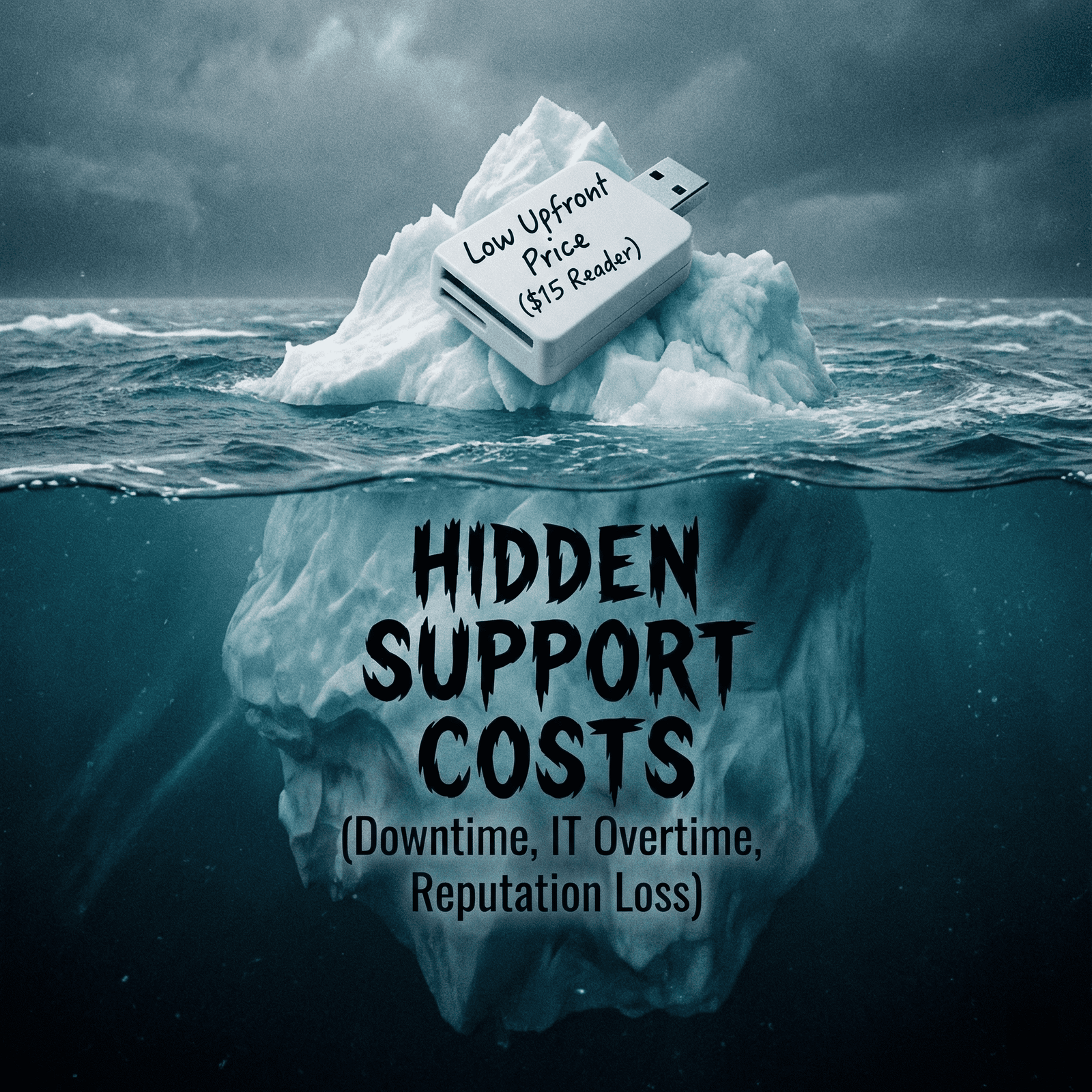
- A procurement manager’s guide to analyzing TCO (Total Cost of Ownership) versus upfront unit price
- Why "Good Enough" Hardware is Bankrupting Your Support Team
- The Hidden Metrics: Read Speed, Thermal Stability, and Driver Integrity in Mass Operations
Your finance team is pushing you to cut hardware costs by 15%. You see a generic RFID writer on Alibaba that fits the budget, but your engineering team is screaming "No." Who is right?
The true cost of an RFID writer is not the invoice price; it is the Total Cost of Ownership (TCO). A $10 generic reader becomes expensive if it lacks driver stability or developer support. Fongwah balances competitive manufacturing costs with robust, industrial-grade performance, minimizing downtime for your end-users.
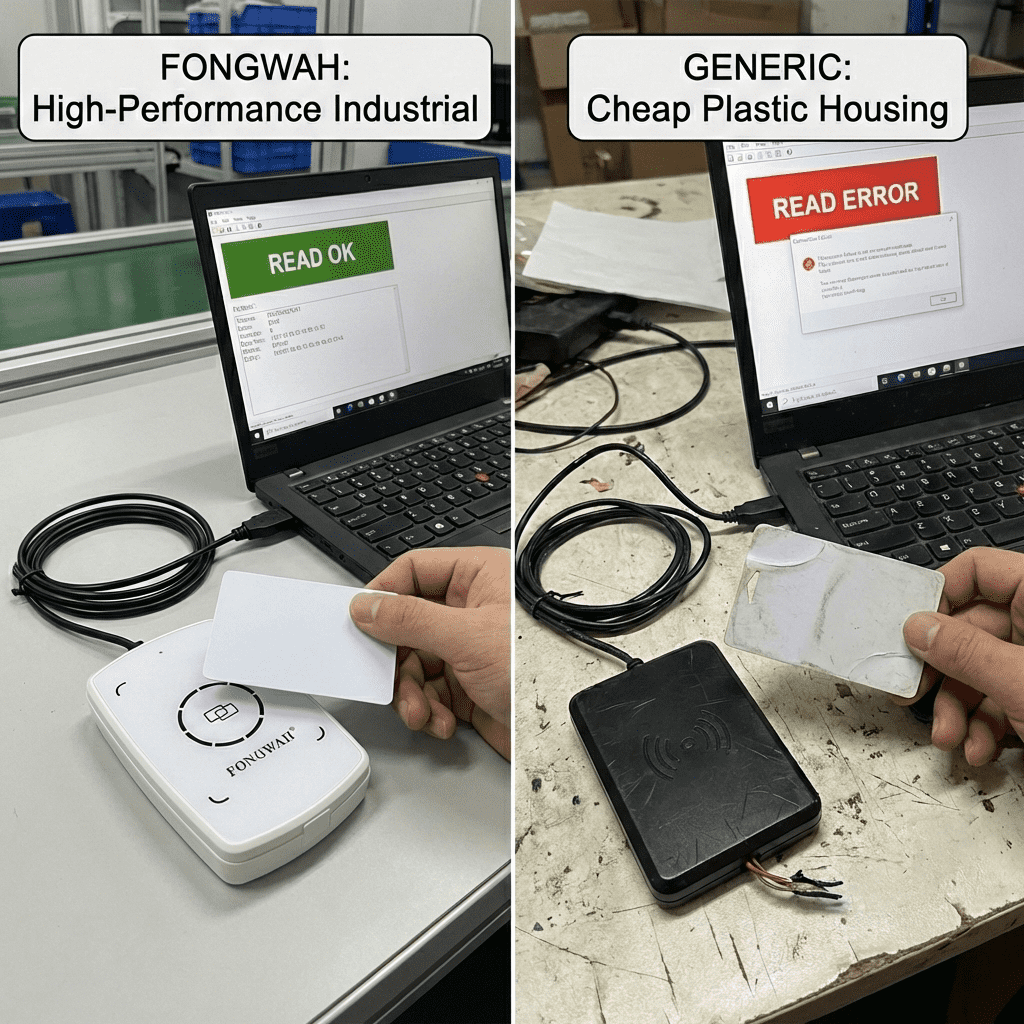
I have been in this industry for 5 years. I started on the production line, and now I manage marketing. I see both sides. I see how we build quality, and I see what happens when customers try to save pennies and lose dollars. Buying cheap is easy. Buying smart is hard. Here is how to buy smart.
Is a $10 saving per unit worth a $100 support ticket?
It looks good on a spreadsheet. You save $10,000 on a batch of 1,000 units. Then the phone starts ringing. The USB ports are loose. The drivers are crashing Windows 10.
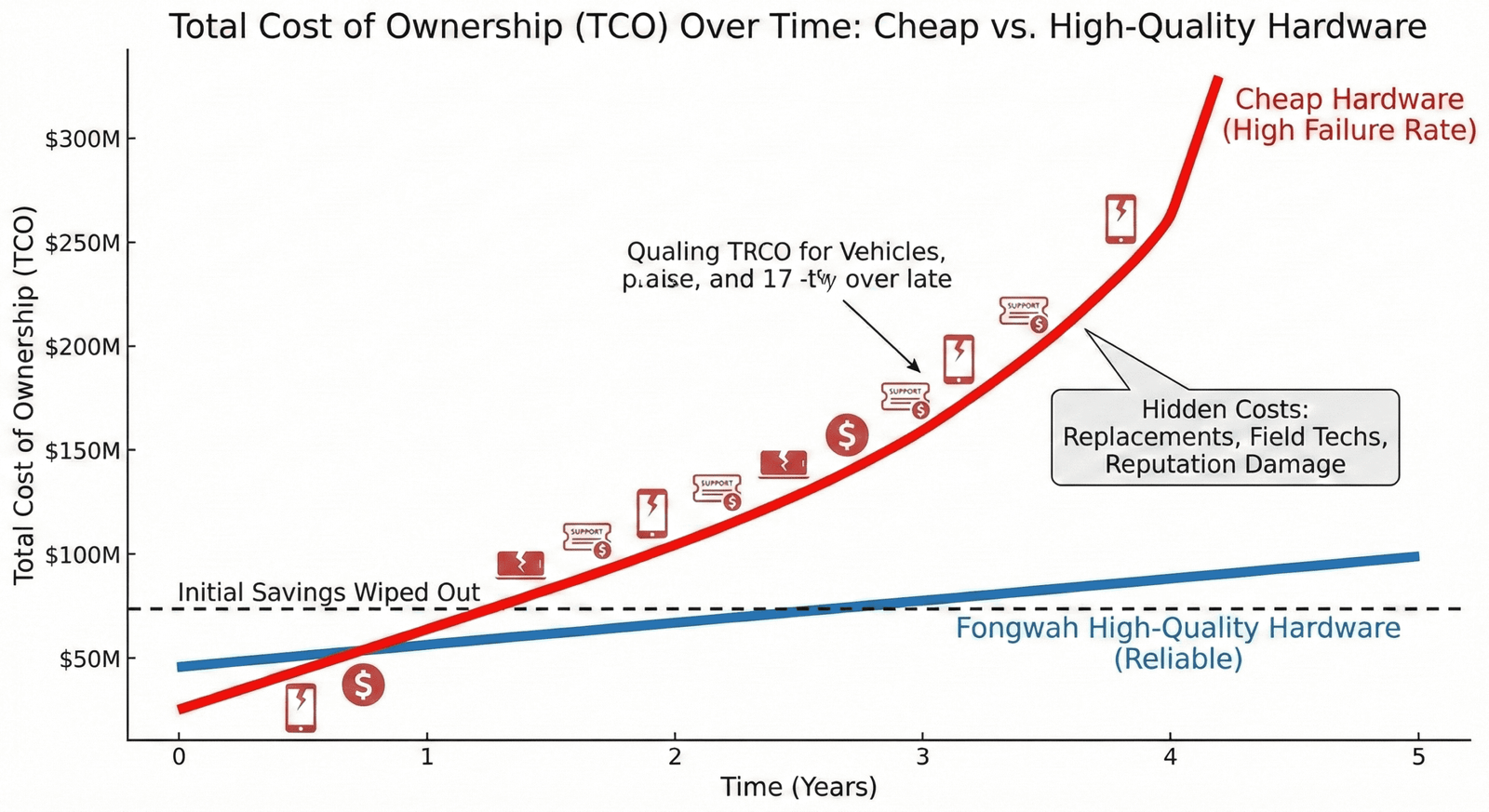
Failure rates drive TCO up faster than any other factor. In mass deployment scenarios, a 5% failure rate from a "bargain" supplier forces you to maintain expensive replacement stock and deploy technicians to the field, wiping out any initial savings instantly.
I recall a case involving a major ticketing company in Europe that managed access for music festivals. They chose to buy 500 cheap NFC writers from a random trading company for their box office staff because the price was amazing—just $15 per unit.
The festival started. It was raining. The humidity rose.
The cheap readers had poor soldering on the antenna matching circuit. As the humidity changed, the tuning drifted. Suddenly, the readers stopped writing to the wristbands.
Lines grew long. People got angry. The staff had to manually type in codes. The festival organizers demanded a refund from the ticketing company.
That $15 reader cost them a client worth $50,000.
At Fongwah, we focus on the "Hidden BOM" (Bill of Materials). We use higher-grade capacitors. We use USB connectors rated for 10,000 insertions, not 1,000.
When you buy 1,000 units from us, you might pay a little more upfront. But you sleep at night.
We calculate TCO like this:
TCO = (Unit Price) + (Integration Cost) + (Failure Rate × Replacement Cost) + (Reputation Damage)
If you do the math, "Cheap" is actually the most expensive option.
| Cost Factor | Generic "Budget" Reader | Fongwah Industrial Reader |
|---|---|---|
| Upfront Price | Low | Moderate |
| Driver Stability | Low (Generic/Cracked) | High (Signed/Official) |
| Failure Rate | 3% - 5% | < 0.5% |
| Support Cost | High (Constant troubleshooting) | Low (Plug and forget) |
| Real Cost (1 Year) | $$$$ | $$ |
A demo unit on your desk only reads one card every few minutes. It stays cool. But what happens when your factory worker needs to encode 5,000 tags in an 8-hour shift?
Thermal stability and Read/Write speed are the true differentiators in mass production. Fongwah readers utilize efficient heat dissipation designs and optimized firmware to ensure consistent performance during high-volume encoding sessions, preventing data corruption that cheap plastic units suffer from.
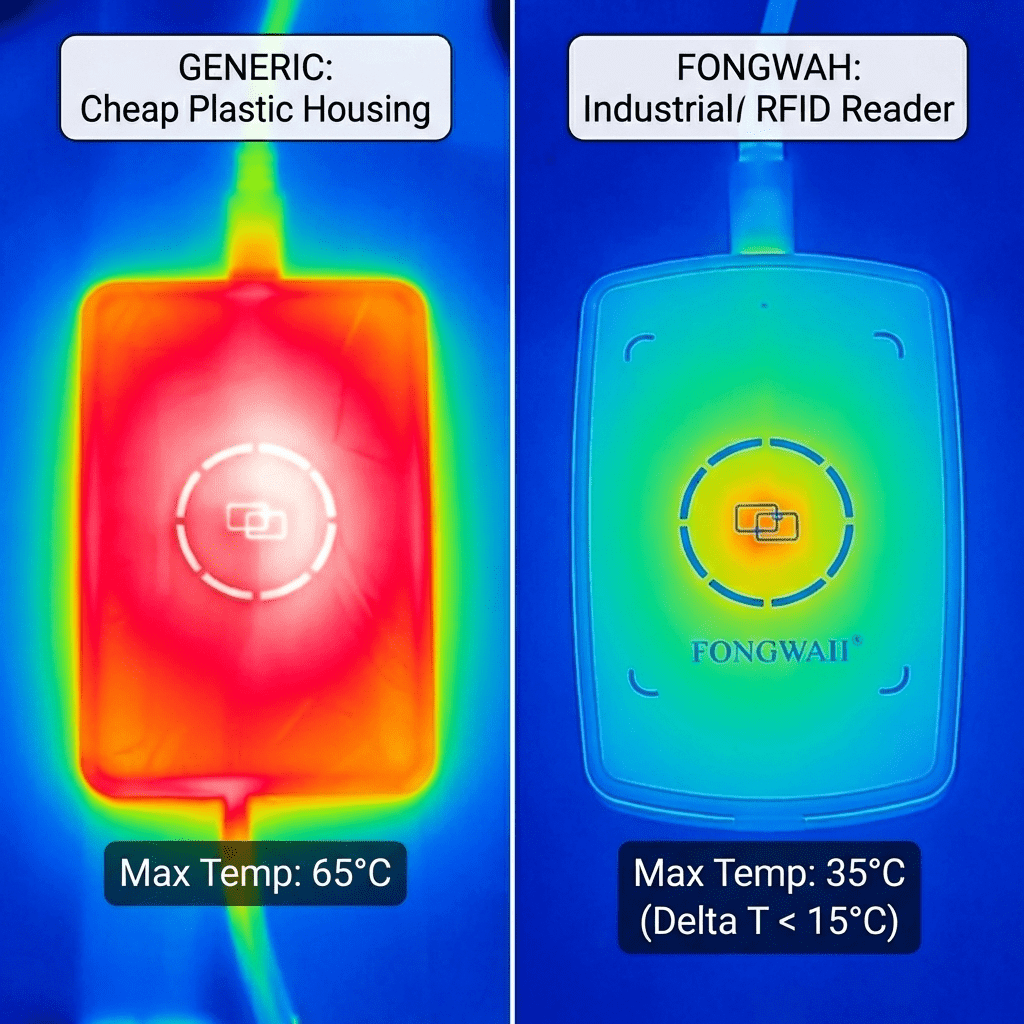
Let's talk about heat. RFID chips require energy. When a reader is "Writing," it is pumping RF energy into the air. This creates heat.
Cheap readers use small, plastic enclosures with no ventilation and poor PCB layout. When they get hot, two things happen:
Frequency Drift: The oscillator shifts frequency. The reader is no longer tuning to 13.56 MHz or 915 MHz perfectly. The range drops.
Throttling: The chip protects itself by slowing down.
I have tested competitors' devices. After 500 consecutive writes, their success rate drops from 100% to 85%. This means your operator has to try twice or three times to encode one tag. If you are paying an operator $20 an hour, you are burning money on wasted time.
Fongwah readers are designed for "Stress." While generic plastic housings often trap heat—causing the chip to hit 60°C+ and throttle—our industrial heat dissipation design keeps the internal temperature rise (Delta T) below 15°C, even during continuous writing.
We test our devices in burn-in chambers. We run them at max power for 24 hours. We verify that the 10,000th tag reads just as fast as the 1st tag.
Efficiency is not just about the hardware; it is about the firmware algorithm. We optimize the "handshake" between the reader and the tag. We cut out milliseconds of delay. Over a million tags, those milliseconds add up to days of saved labor.
Are you paying your developers to fix your supplier's bad code?
Hardware is just a paperweight without software. If your developers have to spend weeks reverse-engineering a Chinese manual or fixing a buggy DLL, your project budget is dead.
The hidden cost of cheap hardware is integration time. Fongwah provides mature, documented SDKs and active technical support, allowing your team to integrate the device in days, not weeks, effectively lowering the overall project cost.
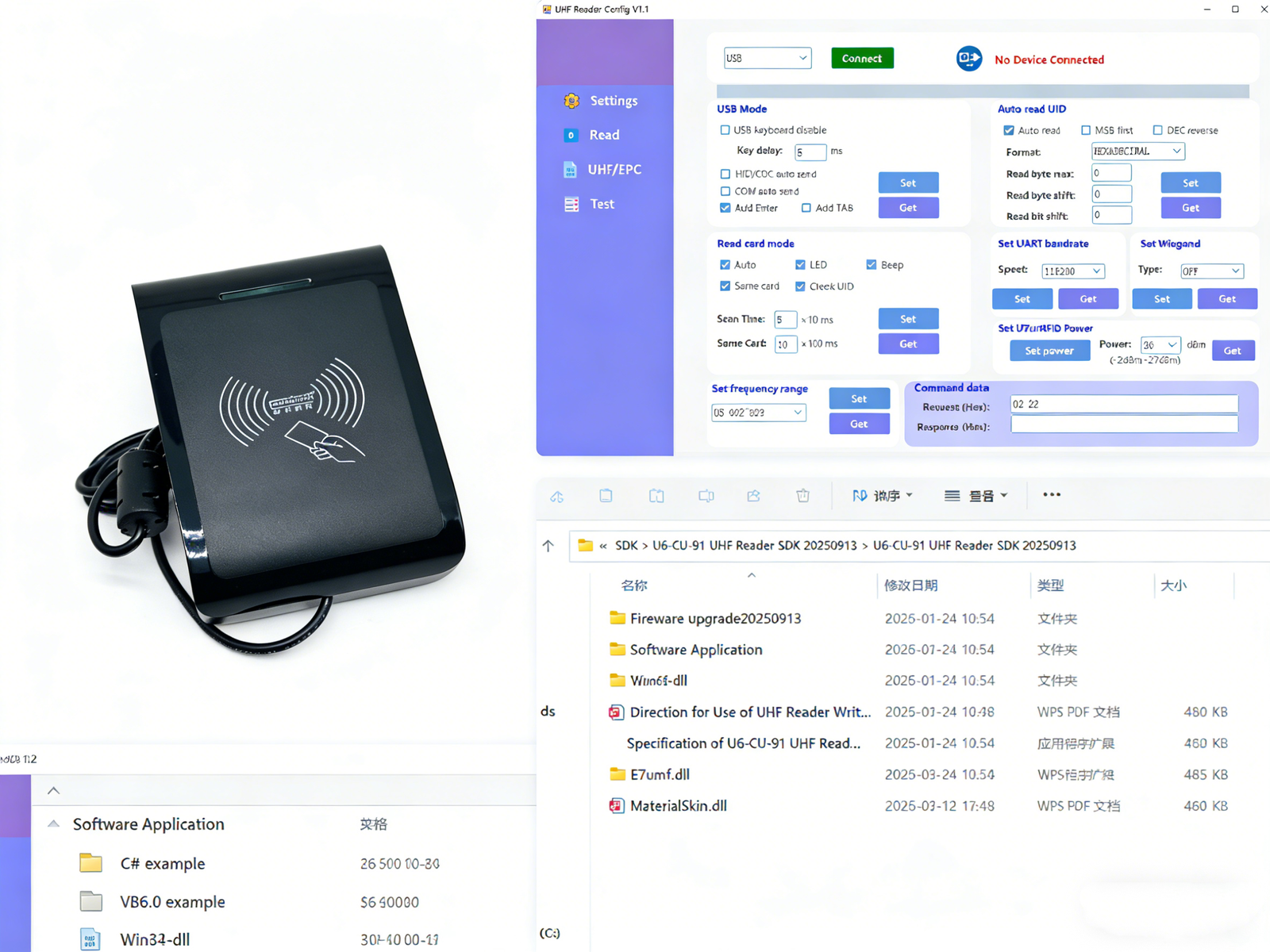
My colleague William often helps clients who are migrating to us from other suppliers. The number one complaint is not hardware failure. It is "Software Frustration."
A client recently told me: "We bought these readers, but the SDK is a folder of random files. The function names are in Chinese Pinyin. There are no examples for C#."
This is a disaster for a US company. Your developers are expensive resources. You pay them to build your application, not to figure out how to open a COM port. If a developer spends two weeks fighting with a bad SDK, that costs you $3,000 or $4,000 in salary. You just wiped out all your hardware savings.
At Fongwah, we treat our SDK as a product. We code for the global standard. Our documentation is in native English, and our function naming follows standard conventions (e.g., rf_init_com, uhf_write_epc), not obscure internal jargon.
We offer standard interfaces. We have clean, commented code examples for Java, C++, Python, and C#. We support Android, Windows, and Linux.
If you have a bug, you don't email a "no-reply" address. You email me or William. We look at your logs. We reply with a solution.
We recently helped a logistics company integrate our desktop UHF reader into their web-based WMS. They used our "Keyboard Emulation" tool initially, but wanted to switch to API control. We gave them a custom DLL within 48 hours.
That is the difference between a "Vendor" and a "Partner." A Vendor sells you a box. A Partner helps you build a solution.
Frequently Asked Questions about RFID Sourcing
Q1: How do I test if an RFID writer can handle mass production?
Answer: Don't just read one card. Perform a "Stress Test." Set up a script to continuously write data for 2 hours. Monitor the device for thermal throttling (speed drops) or frequency drift (range drops). Fongwah readers are designed to maintain 100% efficiency even under continuous 24-hour loads.
Q2: Why does the SDK matter if the hardware is cheap?
Answer: Hardware is useless without software. Cheap readers often come with poorly documented SDKs or generic drivers that crash modern Windows systems. Fongwah provides signed drivers and a mature SDK with code examples in C#, Java, Python, and C++, saving your developers thousands of dollars in integration time.
Q3: What is the difference between a consumer NFC reader and an industrial one?
Answer: It's in the "Hidden BOM" (Bill of Materials). Industrial readers like ours use high-grade capacitors for stable tuning and USB connectors rated for 10,000+ insertions. Consumer-grade units often use cheaper components that degrade quickly under humidity or frequent use, leading to high failure rates in the field.
Conclusion
Stop looking at the price tag and start looking at the bottom line. Cheap hardware is expensive. High-performance hardware from Fongwah pays for itself in reliability, speed, and developer happiness. Ask us for a sample and stress test it yourself.
---