Liquids kill UHF signals1. It creates a nightmare for inventory accuracy2. Don't let simple absorption physics ruin your entire tracking system’s performance.
The optimal result is achieved by creating separation between the tag and the liquid. Using flag labels, placing tags on the bottle neck, or utilizing specialized liquid-tolerant 3D inlays mitigates RF absorption3 and maintains read range stability.
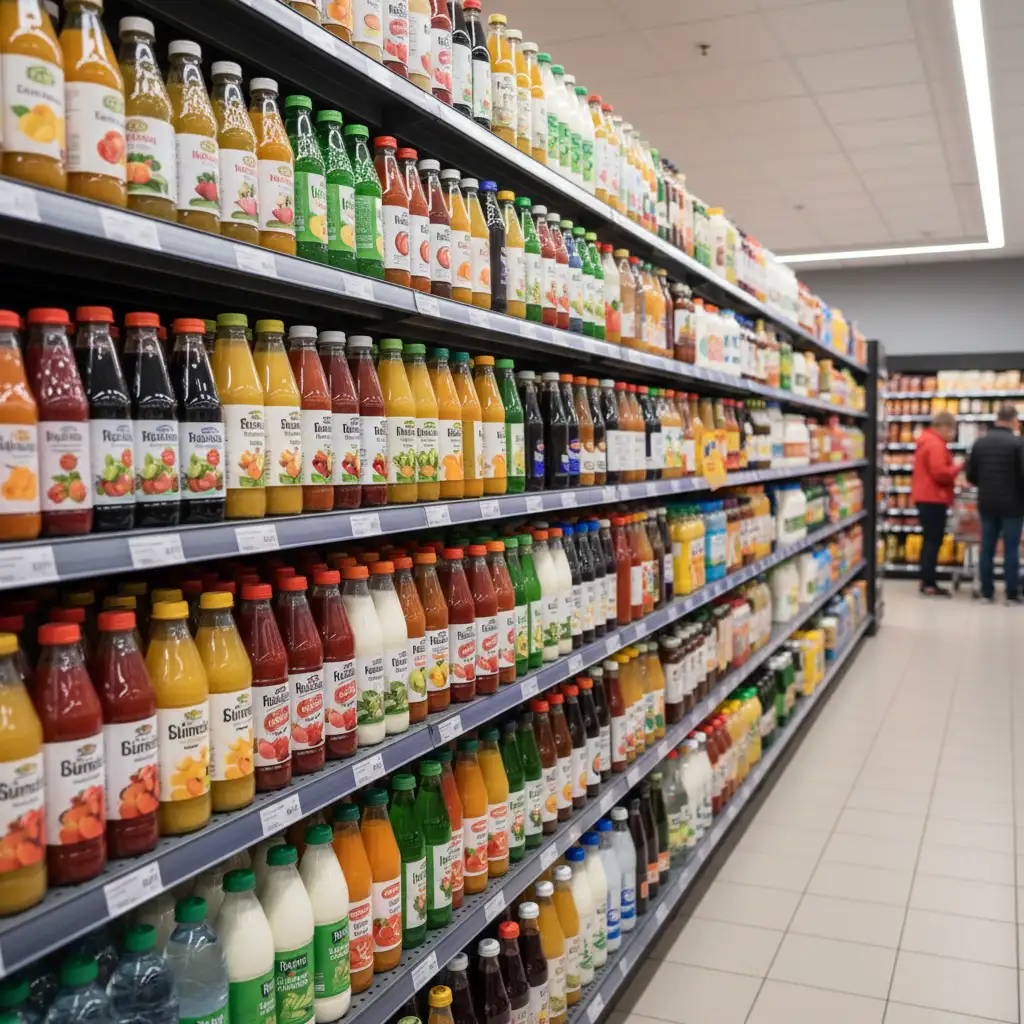
I remember staring at a failed test batch of wine bottles in our Shenzhen lab years ago. The reader was blinking, but the data was empty. It was frustrating. The fix was simple physics, not magic. You do not need to change your reader. You just need to change how you think about the bottle. Read on to master specific placement strategies.
Why does liquid interfere so heavily with UHF RFID performance?
Water absorbs energy. Your expensive reader becomes useless instantly. We must understand the physics to fix the problem and stop losing valuable data.
Liquids, especially water and alcohol, act as high-dielectric materials. They absorb the electromagnetic waves from the reader before they can power the tag. This changes the impedance, detuning the antenna and effectively causing the tag to go silent.
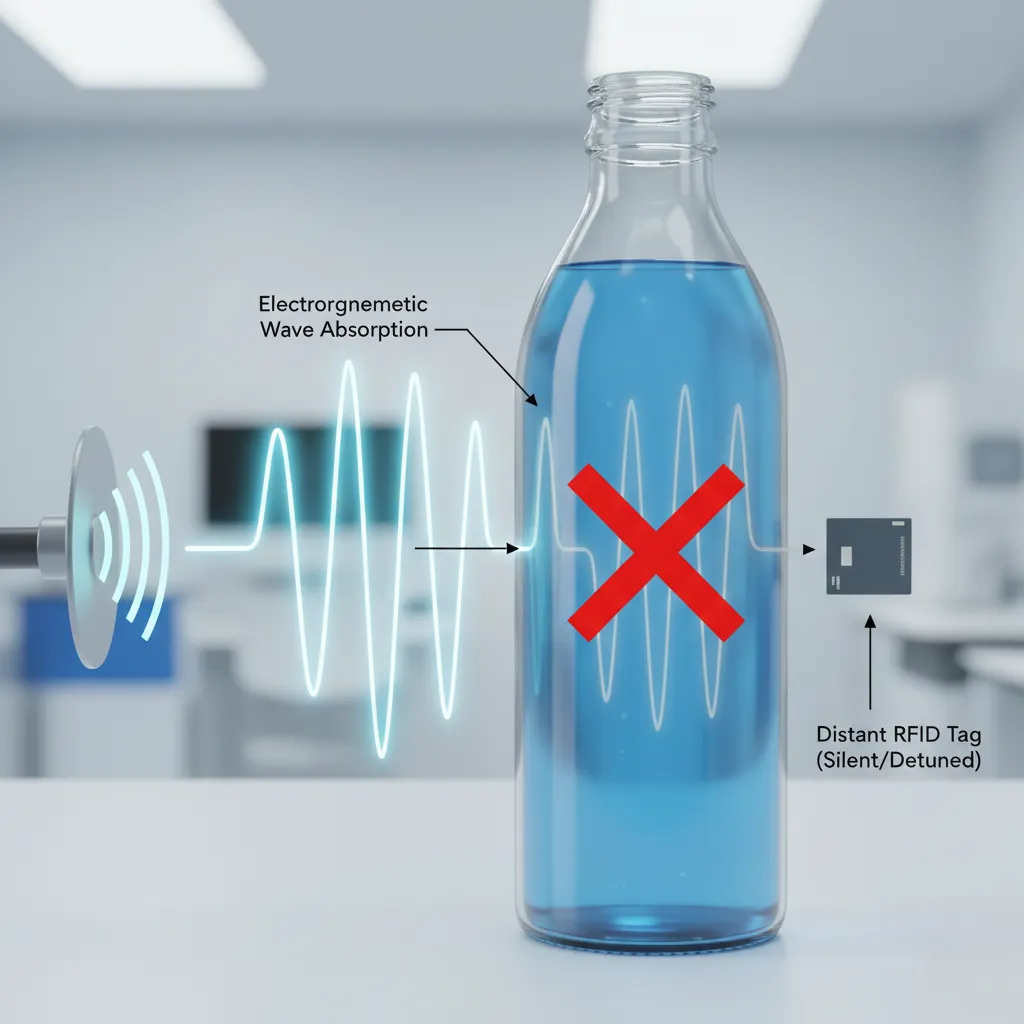
Understanding the Physics of Absorption
When I worked as an engineer, I learned that water is the natural enemy of UHF. The scientific reason is permittivity. The dielectric constant of water is roughly 80, while air is roughly 1. This massive difference destroys the tuning of a standard tag.
When you place a standard dipole antenna directly against a liquid container, two things happen. First, the liquid typically absorbs the RF energy. It turns the energy into heat rather than current for the chip. Second, the proximity to the liquid changes the antenna's electrical length. This is called detuning. The tag is no longer listening at 915 MHz or 860 MHz. It has shifted, and the reader cannot hear it.
At Fongwah, we test this often. A tag that reads at 8 meters in the air might read at 0 meters on a water bottle. We have to look at the specific properties of the liquid too. Alcohol acts differently than saline solution.
Dielectric Properties Comparison
We can see the difference clearly in the table below. Lower conductivity is better for RF transparency.
| Material Type | Dielectric Constant | Conductivity | Effect on RFID |
|---|---|---|---|
| Air | ~1.0 | Low | Excellent (Base) |
| Plastic (PET) | ~2.5 | Low | Good (Transparent) |
| Distilled Water | ~80 | Medium | High Absorption |
| Saline Solution | ~75 | High | Severe Signal Loss |
You cannot fight physics. But you can work around it by understanding these material properties.
Sticking tags on the body often fails. You lose data. We need to find the "dry spots" or create physical space to ensure reliability.
While the neck is optimal due to the air gap above the liquid line, flag tags that project outward are also effective. The goal is creating a minimum separation distance of 3-5mm to restore antenna resonance.
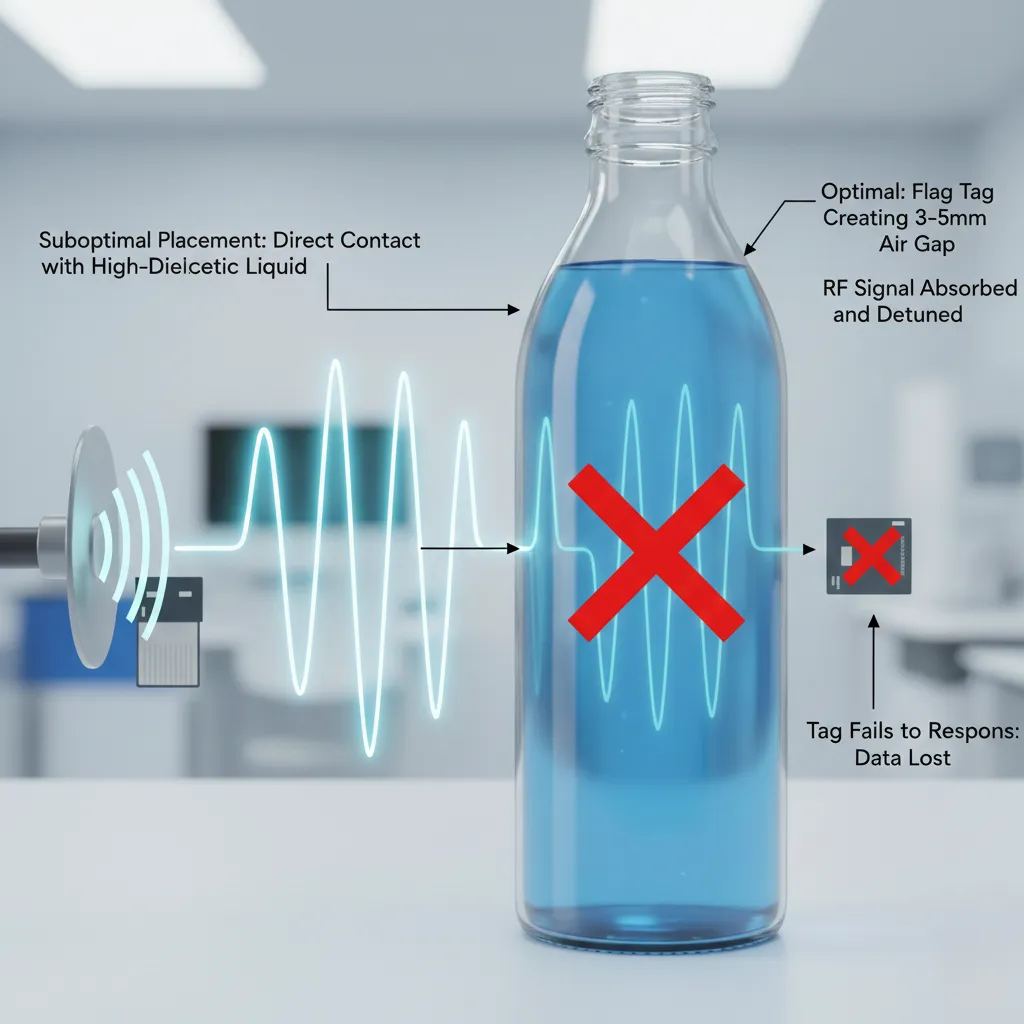
The Power of Separation
I always tell our clients: distance is your friend. The most reliable method I have used involves the "Flag Tag." This is a label that sticks to the bottle but limits the adhesive area. A part of the tag sticks out like a flag. This creates an air gap. Even 3 millimeters of air can save the signal.
However, many marketing teams hate flag tags. They look messy on the shelf. This brings us to the bottle neck. If the bottle is not filled to the very top, the neck is mostly glass and air. Placing a small tag here is very effective. It keeps the antenna away from the bulk of the liquid.
We also test "standoff" spacers. These are foam-backed tags. The foam is full of air bubbles. It acts as a buffer. It is not as good as a flag, but it is better than a flat sticker.
Placement Strategy Effectiveness
We must weigh performance against aesthetics. Here is how different placements rank based on my experience.
| Placement Method | Visual Appeal | Read Range Stability | Manufacturing Cost |
|---|---|---|---|
| Direct on Body | High | Very Low (Unstable) | Low |
| Bottle Neck | Medium | High (If air gap exists) | Medium |
| Flag Tag (Protruding) | Low | Very High | Low to Medium |
| Foam Standoff | Medium | Medium | High |
I recall a project for a luxury olive oil brand. They refused flag tags. We moved the tag to the cap. The plastic cap provided enough separation from the oil to get a 3-meter read range. It saved the project.
Do specific tag designs mitigate liquid absorption better than others?
Standard inlays fail here. You waste money using them. Specialized "liquid-friendly" tags are the often the only viable path forward for challenging liquids.
Yes, tags with specific antenna loops and 3D form factors use the liquid's surface to help waves travel. Chips like the Impinj Monza series combined with interference-tolerant antenna designs perform significantly better than generic dipoles.
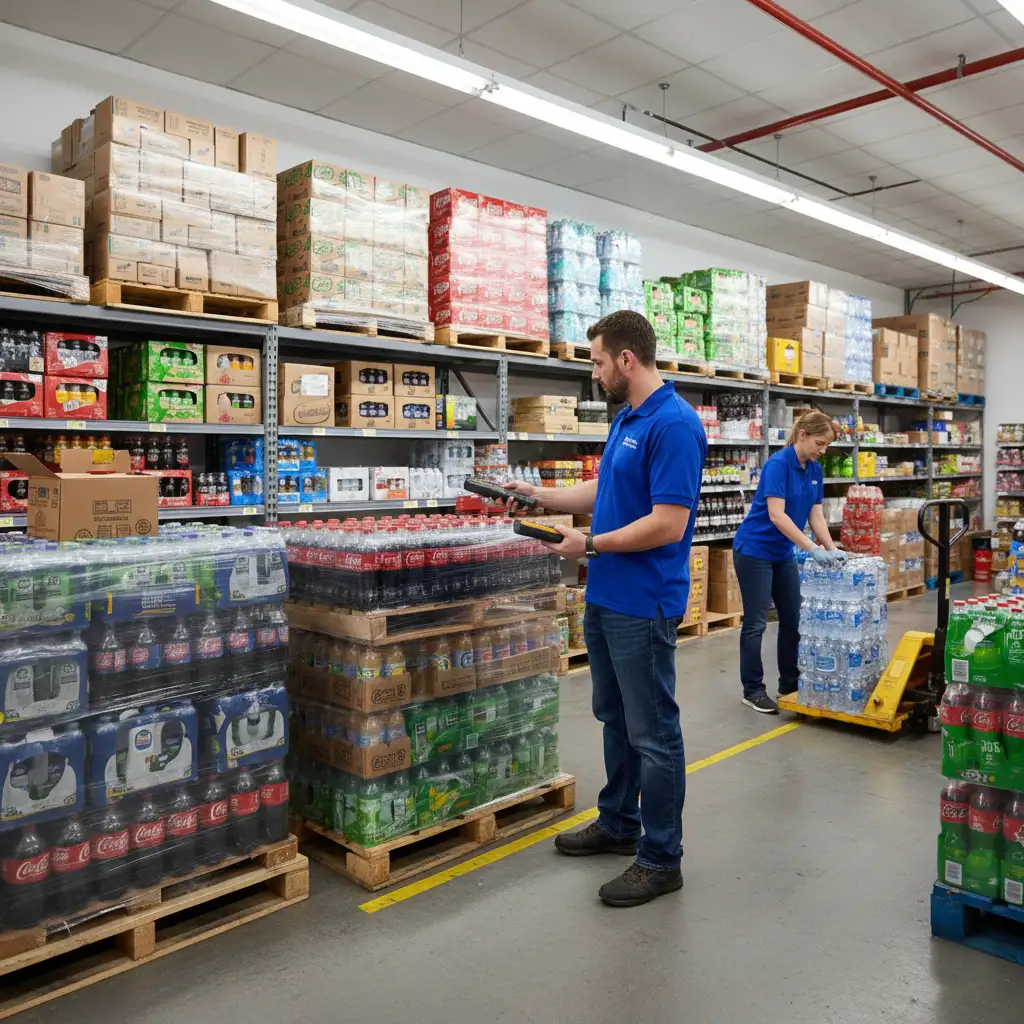
Choosing the Right Hardware
Not all RFID labels are created equal. In my early days at Fongwah, I tried to save money by using standard "Dogbone" inlays on shampoo bottles. It was a mistake.
Today, we use specific designs. There are "Loop" antennas. These designs are less sensitive to detuning. They rely on magnetic near-field coupling more than electric far-field coupling. This helps close to liquid.
There are also chips designed with "Auto-Tune" features. The NXP UCODE series and Impinj M700 series are great examples. They can adjust their internal capacitance slightly to match the environment. It is not perfect, but it helps.
Another option is the 3D inlay. This tag has antenna structures that fold over the edge of a bottle. It looks at the reader from multiple angles. This is vital when bottles are packed tightly in a box. The liquid in one bottle can block the tag on the bottle behind it. A 3D tag helps the signal find a path out.
Tag Performance Matrix
I often refer to this matrix when William or other engineers ask for recommendations.
| Tag Technology | Best Use Case | Resistance to Detuning | Cost Factor |
|---|---|---|---|
| Generic Dipole | Dry Cardboard | None | $ |
| Near-Field Loop4 | Water/Pharma | High | $$ |
| 3D Orientation | Palletized Liquids | High | $$$ |
| On-Metal/Liquid Hard Tag | Reusable Containers | Very High | $$$$ |
If you are tracking cases of water, do not buy the cheapest inlay. You will pay for it later in failed scans. Invest in a tag designed for high-dielectric environments.
Conclusion
Liquid tracking is difficult but entirely solvable. You must use physical spacing, place tags on the neck, or use tuned antennas to guarantee accurate data reading.
---Understanding UHF signals is crucial for optimizing RFID systems and improving inventory accuracy. ↩
Explore strategies to enhance inventory accuracy, ensuring efficient tracking and management. ↩
Learn about RF absorption to better understand its impact on RFID performance and solutions. ↩
Understand how Near-Field Loop technology improves RFID performance in liquid environments. ↩