
High heat destroys standard RFID tags, causing critical data loss in your supply chain. You need specialized durability strategies to stop this financial bleeding immediately.
To ensure data durability in extreme environments, select tags with PPS1 or PEEK2 casings and high-retention chips. Utilize wire-bonding technology3 for chip connection and demand IP69K-rated encapsulation4. Always verify durability through rigorous thermal cycle testing5 before deployment.

Many experienced buyers focus purely on the initial cost of the tag. This is a dangerous mistake. I learned this lesson hard when I worked as a production line operator years ago. We bought cheap tags, and they melted after one cycle. It cost us days of work to fix the mess. To avoid this, we must look at the foundation of the tag. Let us start with the materials you choose.
Which materials provide the best protection for RFID chips?
Plastic melts fast. Your assets become untraceable ghosts in the oven. You must choose materials that fight back against extreme thermal stress.
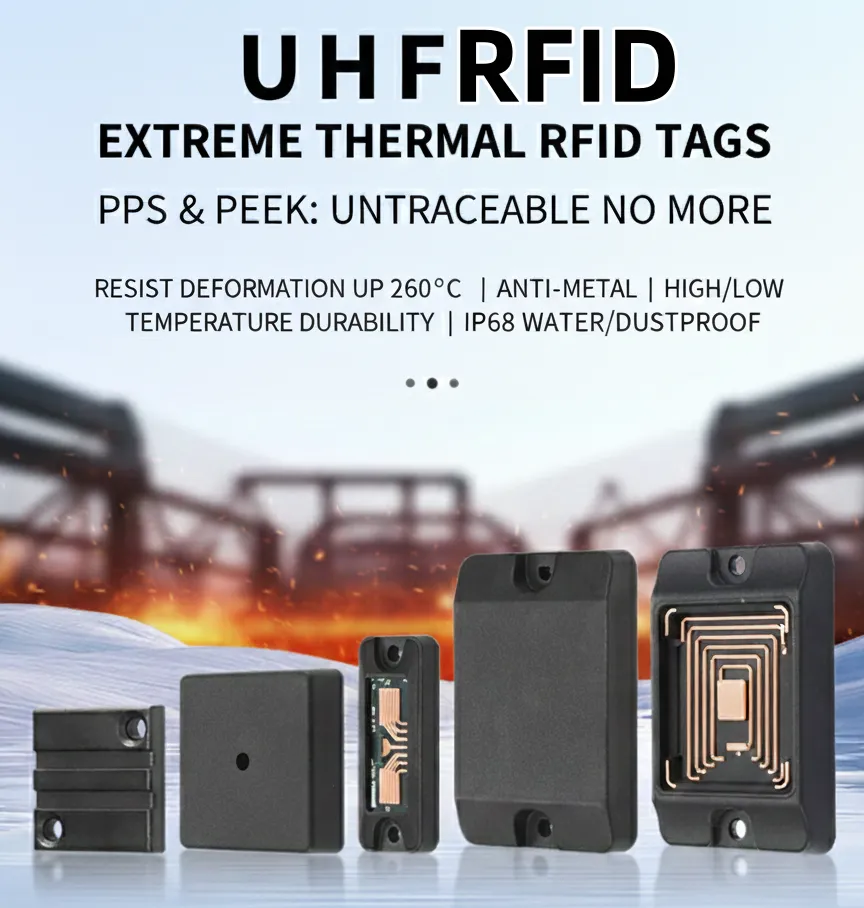
Choose Polyphenylenesulfide (PPS) or Polyetheretherketone (PEEK) for the tag housing. These thermoplastics resist deformation up to 260°C. For the antenna, prioritize etched copper over printed ink to maintain conductivity under high pressure.
Analyzing Material Properties
When I advise clients at Fongwah, I always start with the housing material. This is the first line of defense. Standard plastics like ABS or PVC are useless here. They soften around 100°C. Once the housing softens, the pressure crushes the chip inside. You need engineering thermoplastics.
My top recommendation is usually PEEK. It is expensive, but it is incredibly tough. It handles continuous temperatures of 260°C. It is also resistant to harsh chemicals used in cleaning processes. If your budget is tighter, PPS is a solid alternative. It also withstands high heat but is slightly more brittle than PEEK.
The Internal Components
The housing is not the only factor. You must look at the antenna material. In cheap tags, manufacturers print the antenna with conductive ink6. Ink breaks when the tag expands in the heat. You must insist on etched copper antennas7. Copper stretches and does not break easily. Also, consider the chip itself. Some chips are designed for room temperature. You need chips with high-temperature data retention8 capabilities.
Material Comparison for Buyers
| Material | Max Temp (Continuous) | Chemical Resistance | Cost Level | Recommended Use |
|---|---|---|---|---|
| ABS | ~80°C | Low | Low | Office/Retail |
| Epoxy | ~150°C | Medium | Medium | Light Industrial |
| PPS | ~200°C | High | High | Sterilization/Auto |
| PEEK | ~260°C | Very High | Very High | Oil & Gas/Medical |
You must match the material to your specific environment. Do not overpay for PEEK if PPS works. But never use ABS in a pressure chamber.
Why does the packaging method matter more than the chip itself?
Chips detach under pressure. Your reader gets zero signal. This silence costs money. You need robust bonding to keep connections alive during expansion.
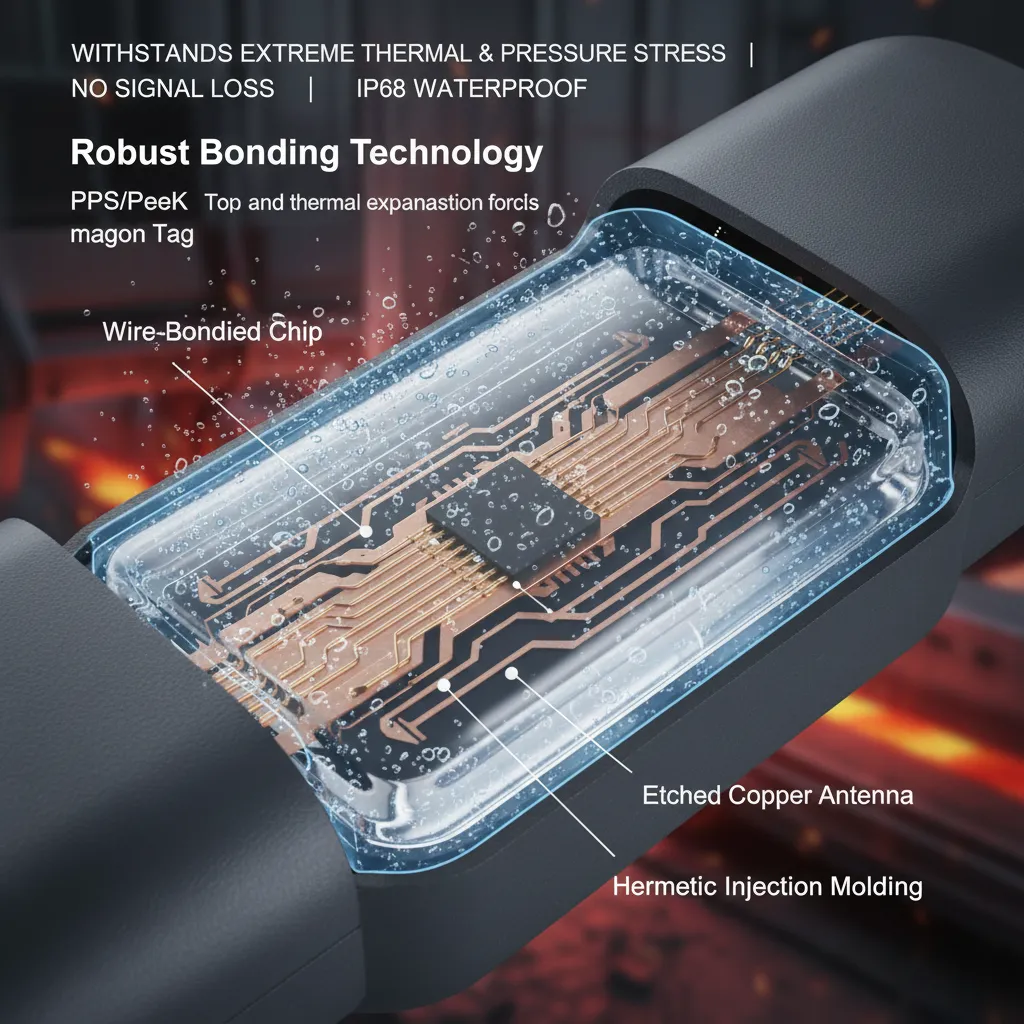
Use wire-bonding technology3 directly onto the lead frame rather than flip-chip adhesion. Combine this with injection molding to create a hermetically sealed unit. This prevents moisture ingress and protects internal connections from thermal expansion9 stress.
Understanding Thermal Expansion
I have seen many "rugged" tags fail even with good materials. The issue is usually inside. Materials expand when they get hot. The silicon chip expands at one rate. The copper antenna expands at a different rate. This difference creates stress.
If the chip is glued with conductive paste (flip-chip), the glue shears off. The connection breaks. The tag is dead. In my career as an engineer, I found that wire bonding is superior for high heat. We weld gold or aluminum wires to connect the chip. These wires are flexible. They handle the movement without breaking.
The Importance of Over-molding
Another critical factor is air. You cannot have air inside your tag. In a high-pressure environment, like an autoclave, air pockets are dangerous. The external pressure compresses the air, or the heat makes it expand. This bursts the tag.
You need an over-molding process10. This means we inject liquid plastic around the chip and antenna. It fills every gap. The result is a solid brick of material. There is no space for water to enter. There is no air to expand. When I inspect tags for our Canadian clients, I always check for this solid construction. It is the only way to reach an IP69K rating.
Bonding Technologies Overview
| Feature | Flip-Chip Assembly | Wire-Bonding Assembly |
|---|---|---|
| Connection | Conductive Glue | Metal Weld (Gold/Al) |
| Durability | Low to Medium | Very High |
| Shock Resistance | Poor | Excellent |
| Cost | Lower | Higher |
If you are buying for oil and gas or medical sterilization, refuse flip-chip tags. Insist on wire bonding.
How do you validate performance before full deployment?
Datasheets often lie. You trust them, and your system crashes. You must verify claims personally. Real-world testing is the only way to ensure safety.
Conduct thermal shock tests11 by cycling tags between extreme hot and cold temperatures. Perform high-pressure soak tests in an autoclave environment12. Only approve tags that show 100% read rates after at least 50 cycles of stress testing.

rigourous Testing Protocols
Never trust the spec sheet blindly. I traveled to many factories, and I know that testing standards vary. A "High Temp" rating might mean it survives heat for ten minutes. You might need it to survive for ten hours.
You need to perform a Thermal Shock Test. Take the tag to its maximum temperature. Hold it there. Then, immediately drop it into freezing water. This rapid change shocks the materials. If the seal is weak, water will suck inside. If the bonding is bad, the chip will snap off. I do this test with every new prototype at Fongwah.
Data Retention Verification
Physical survival is not enough. The data must survive too. Heat affects the electrical charge in the chip's memory.
Here is a test you should do:
- Write a unique code to the tag.
- Put it through your high-pressure or high-temp cycle.
- Take it out and read the code.
- Repeat this 50 to 100 times.
If the tag reads "successful" but the data is corrupted, it is a failure. I once helped a client who thought his system was broken. It turned out the tags were resetting their memory in the heat. We switched to high-retention user memory chips13, and the data stayed safe.
Recommended User Test Plan
| Test Type | Method | Pass Criteria |
|---|---|---|
| Thermal Soak | Oven at max temp for 24 hours | Housing intact, reads 1m+ |
| Thermal Shock | +200°C to -20°C (rapid transfer) | No cracking, 100% read |
| Pressure Test | Autoclave (3 bar) for 30 mins | No water ingress |
| Cycle Test | Repeat process 50 times | Zero data errors |
Do not skip these steps. Spending a few weeks on testing saves you years of headaches.
Conclusion
Select PEEK2 or PPS1 materials, demand wire-bonding construction, and enforce rigorous thermal cycle testing5. This combination guarantees your RFID data survives even the harshest industrial conditions.
---Explore how PPS enhances RFID durability and performance in extreme conditions. ↩
Learn why PEEK is a top choice for high-temperature RFID applications. ↩
Discover how wire-bonding improves RFID tag reliability under stress. ↩
Understand the importance of IP69K ratings for protecting RFID tags. ↩
Find out how thermal cycle testing ensures RFID tag durability. ↩
Learn about the limitations of conductive ink in high-stress RFID applications. ↩
Learn why etched copper antennas outperform printed ink in RFID applications. ↩
Explore options for RFID chips that maintain data integrity in heat. ↩
Learn about the impact of thermal expansion on RFID tag reliability. ↩
Discover how over-molding enhances RFID tag durability and moisture resistance. ↩
Understand the significance of thermal shock tests in validating RFID performance. ↩
Find out how autoclave testing ensures RFID tags withstand extreme conditions. ↩
Explore the benefits of high-retention memory chips for data integrity. ↩