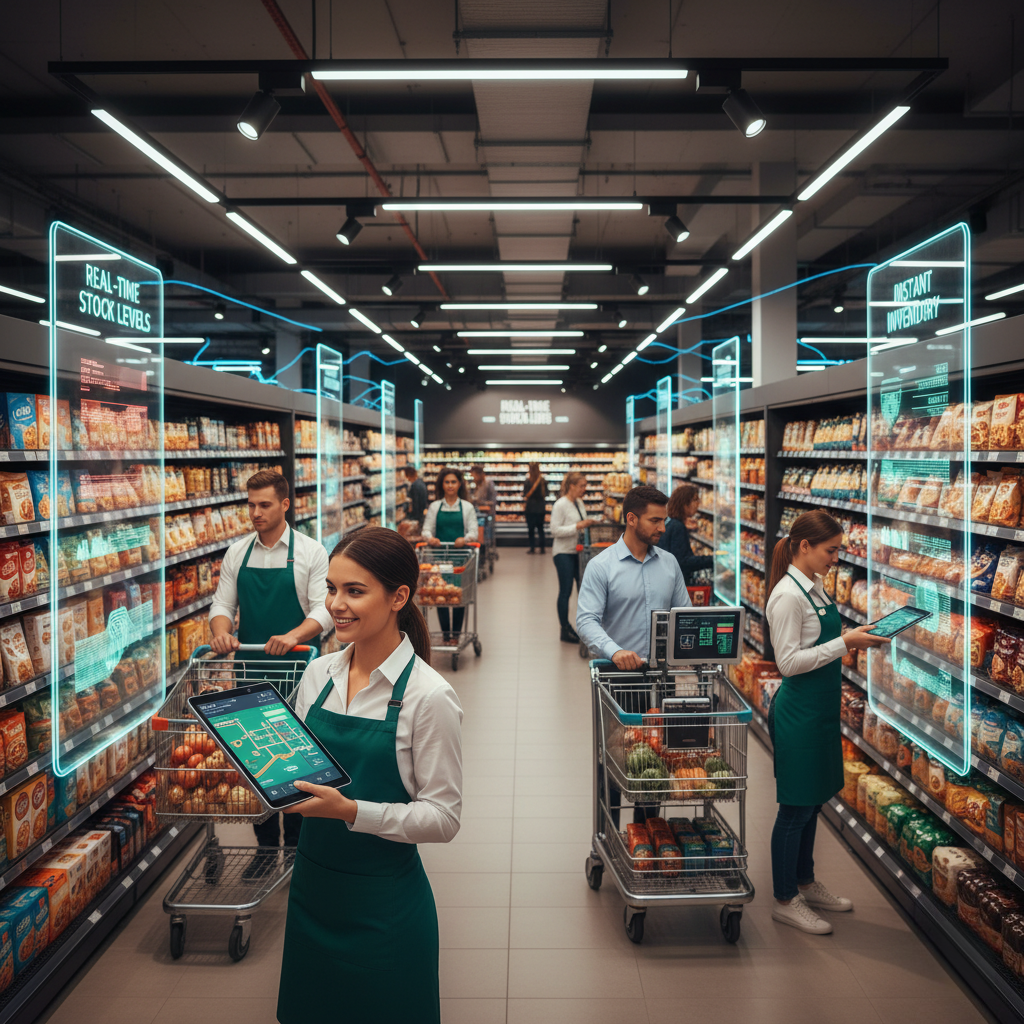
Struggling with slow lines and inaccurate inventory? These problems cost you sales and frustrate customers. RFID technology1 is the solution to streamline your entire operation.
RFID simplifies supermarket work by automating key tasks2. It uses radio waves to track inventory in real-time, speed up customer checkout, and improve supply chain visibility3. This reduces manual errors and frees up your staff.
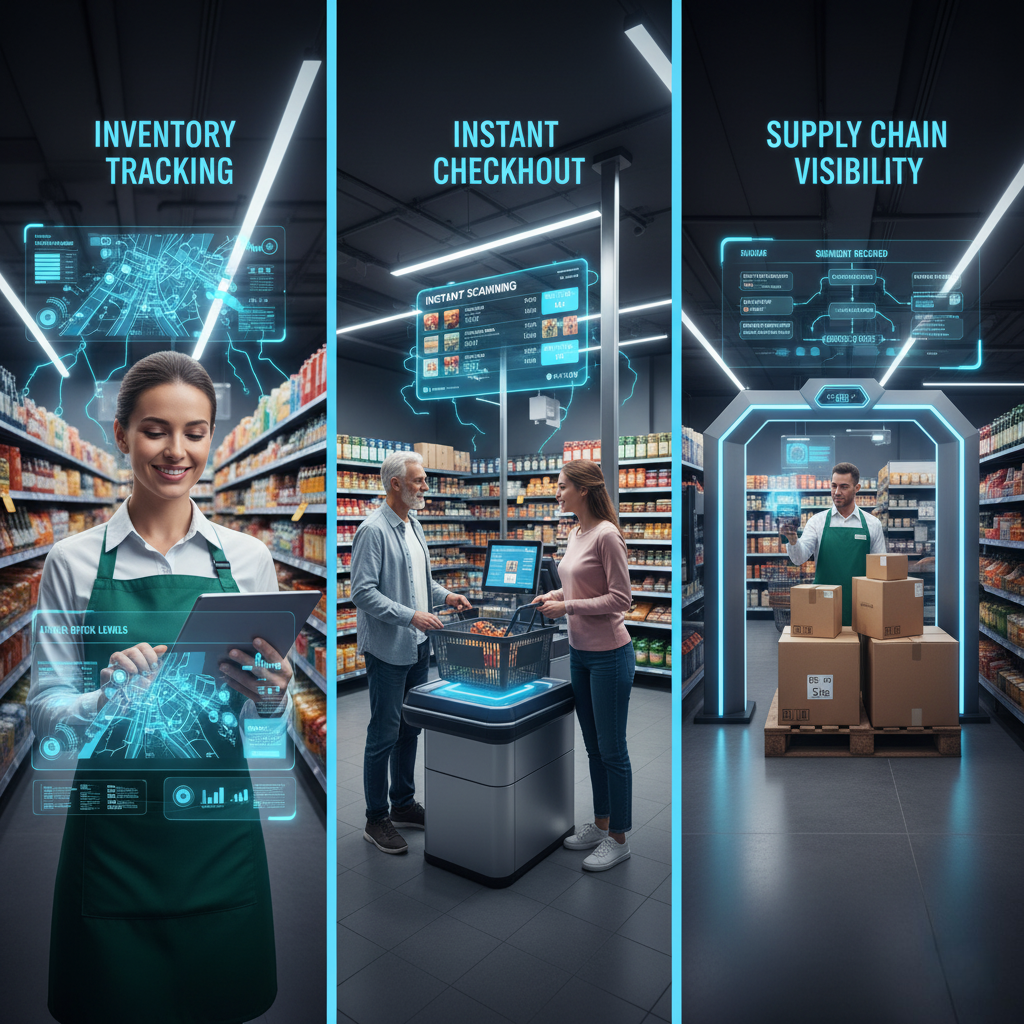
As a systems integrator with over nine years of experience, I've seen technology change the retail game. My job is to design stable, efficient systems for businesses, from warehouses to store floors. I spend my days working with hardware, like RFID readers from companies like Fongwah, and integrating them into larger systems. The goal is always the same: make the operation smoother and reduce failure points. Let's look at how RFID achieves this in a supermarket setting.
How does RFID fix inventory management nightmares4?
Manual stock counts are slow and full of errors. This leads to empty shelves or overstocked backrooms. You need a system that gives you accurate data instantly.
RFID technology1 fixes inventory problems by enabling rapid, bulk scanning5. An employee can count an entire aisle in minutes, not hours. This provides accurate, real-time data6 to prevent stockouts and reduce waste.
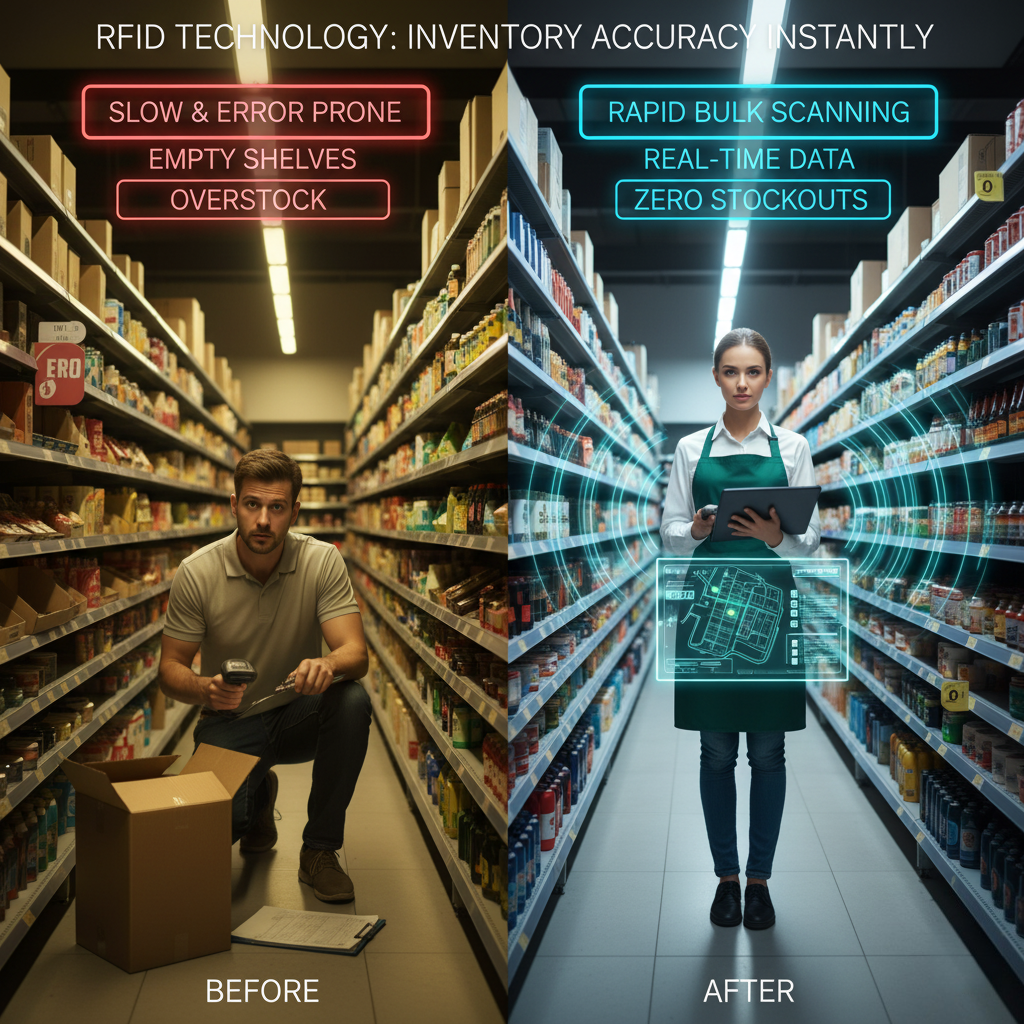
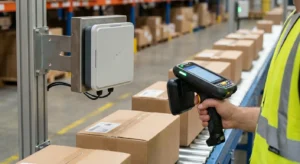
In my experience, inventory is the biggest headache for retailers. Traditional barcode scanning is a huge improvement over paper lists, but it's still a one-by-one process. You need a clear line of sight for every single item. I remember one project with a grocery chain where their weekly inventory took a team of six people an entire night. And by morning, the count was already outdated. With RFID, we changed everything. We helped them tag their high-value items first. Now, a single employee walks down the aisles with a handheld reader. The reader picks up the signals from hundreds of tags per second, without needing to see them. The data uploads to the central system instantly. This is a game-changer.
From Manual Labor to Smart Data
The old method is labor-intensive and prone to human error. A tired employee can easily miss a box or scan the same one twice. RFID removes that risk. The system simply reads what’s there. This accuracy is critical. It allows the store’s software to automatically place reorders when stock gets low. It stops you from ordering more of something that isn't selling.
Real-Time Insights
Because the counts are so fast, they can be done daily. This gives managers a near-perfect view of their stock levels at all times. They can see trends as they happen. For example, they might notice that a certain brand of cereal sells out every Friday morning. They can then adjust their ordering to meet that demand. This kind of insight was impossible before.
A Comparison of Systems
To put it clearly, the difference is significant. Barcodes were a step forward, but RFID is a leap.
| Feature | Barcode Scanning | RFID Scanning |
|---|---|---|
| Scan Speed | One item at a time | Hundreds of items per second |
| Line of Sight | Required | Not required |
| Accuracy | Prone to human error | Highly accurate |
| Labor Cost | High | Low |
This technology frees up staff to focus on what matters: helping customers.
Can RFID speed up the customer checkout process?
Long checkout lines are a top complaint for shoppers. Customers get frustrated and might abandon their carts. A faster, more seamless checkout keeps them happy and loyal.
Yes, RFID completely transforms the checkout experience7. Customers can place their entire basket of goods on a counter, and all items are read instantly. This eliminates individual scanning and dramatically reduces wait times.
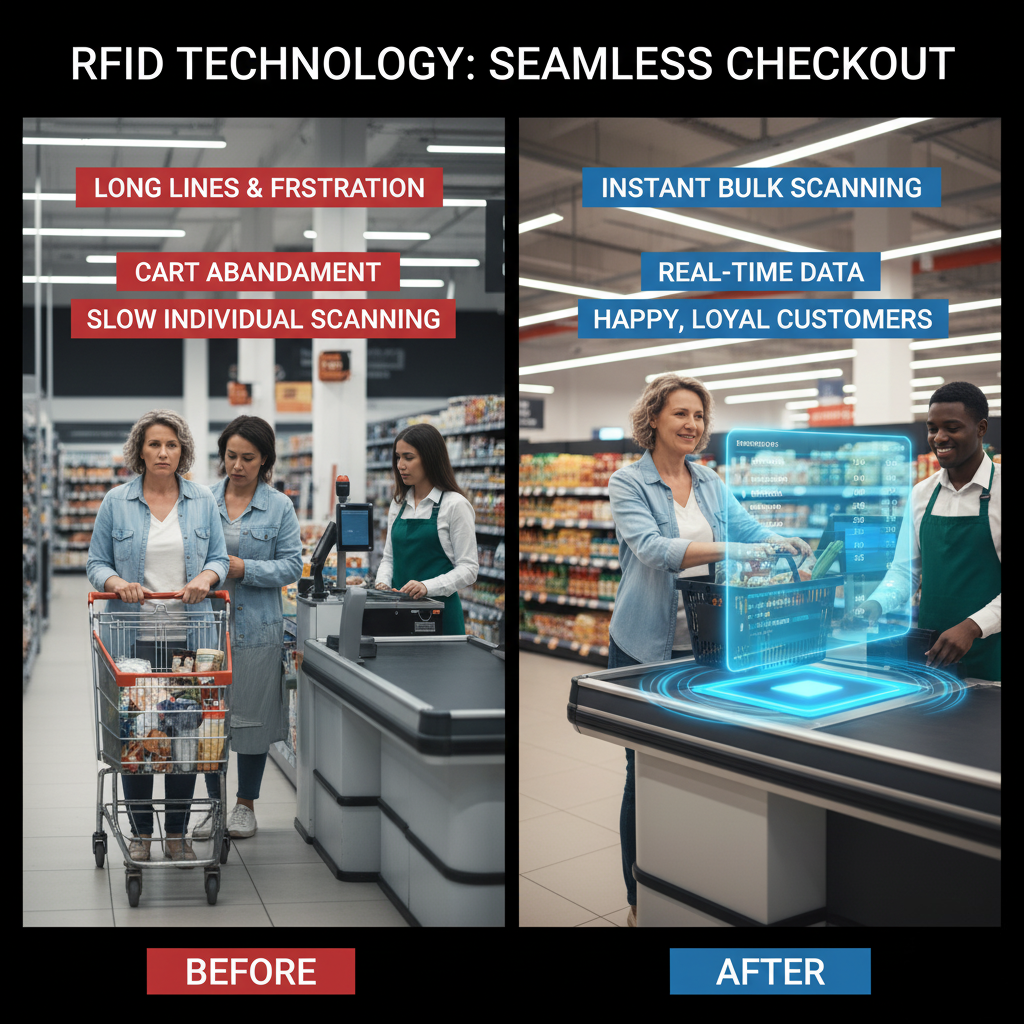
The checkout counter is the final, and most memorable, part of a customer's visit. A bad experience here can ruin everything. As an integrator, I see the checkout as a throughput problem. How do we get more customers through the process, accurately and quickly? The solution is to remove the bottleneck: scanning one item at a time. I've worked on pilot programs for "smart" checkout lanes. A customer pushes their cart up to the station. An RFID reader antenna array inside the counter or in a tunnel around the conveyor belt reads every tagged item in the cart in less than a second. The total bill appears on the screen. The customer pays and leaves. It's that simple.
The Components of a Smart Checkout
To make this work, you need a few key pieces. First, the products need RFID tags. Second, you need a powerful reader portal that can read many tags at once without interference. This is where hardware quality is essential. We need readers that are reliable and perform under pressure. And third, you need software that connects the RFID reader to the Point of Sale (POS) system8 to process the payment.
More Than Just Speed
The benefits go beyond saving a few minutes. This system drastically reduces cashier errors9, like missing an item or double-scanning it. It also enables new store formats. Think of a "grab-and-go" store where customers can walk in, take what they need, and walk out, with the payment handled automatically. This future is possible because of RFID.
A Look at Checkout Methods
The evolution of the checkout shows a clear trend towards automation and customer convenience.
| Method | Speed | Labor Involvement | Customer Experience |
|---|---|---|---|
| Traditional Cashier | Slow | High | Dependent on cashier |
| Barcode Self-Checkout | Medium | Low (with supervision) | Can be frustrating |
| RFID Checkout | Very Fast | Very Low | Seamless and modern |
This isn't just about making things faster. It's about creating a better shopping experience.
How does RFID improve the supply chain and reduce theft?
Products get lost, damaged, or stolen between the warehouse and the store shelf. This is called "shrinkage10," and it costs retailers billions. A lack of visibility is the core problem.
RFID provides a clear view of the entire supply chain. It tracks cases and pallets from the distribution center to the store's backroom. This same technology also acts as a powerful anti-theft tool11 at the exit.
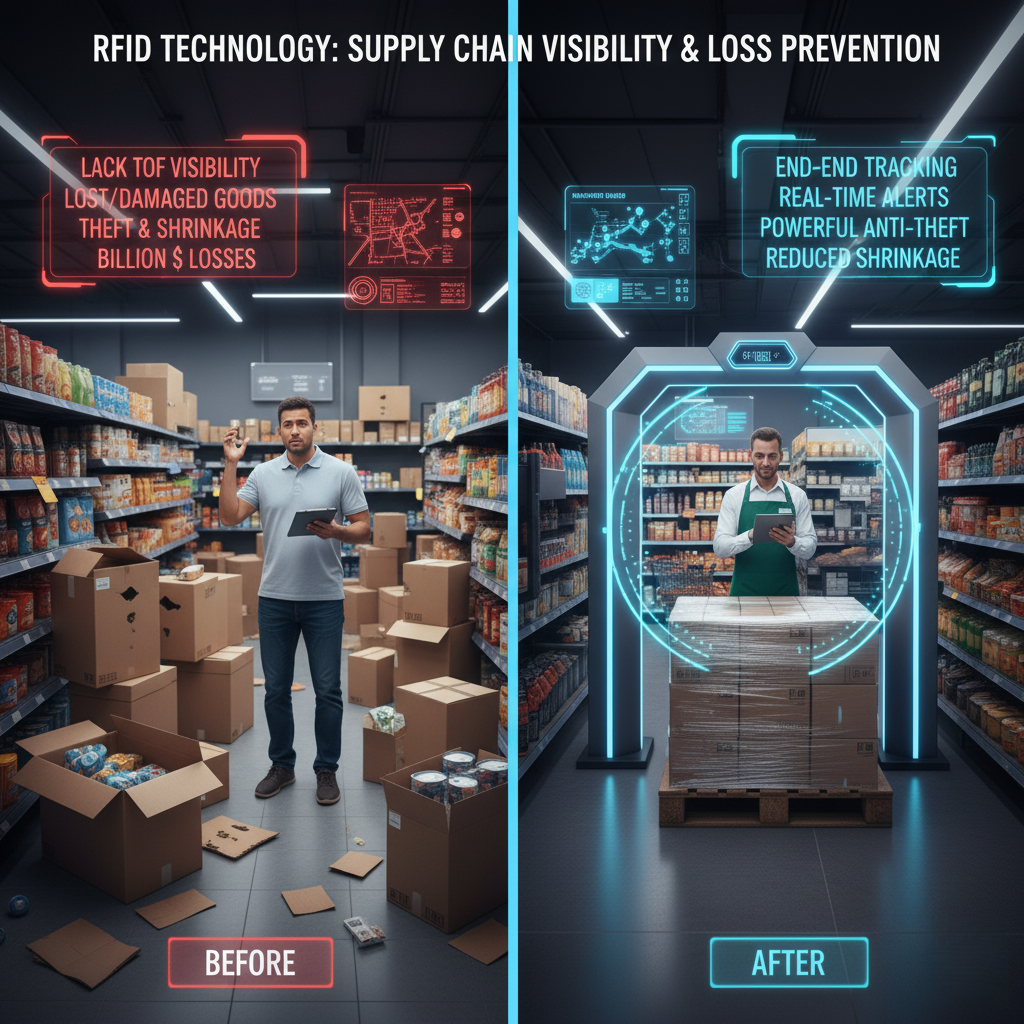
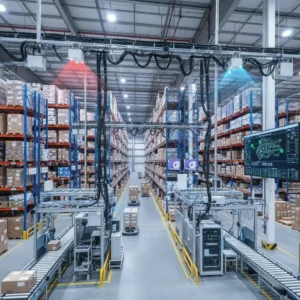
A supermarket's operations don't start at the front door. They start at the distribution center. A lot can go wrong before a product ever reaches a customer. I've designed systems that place RFID reader "portals" at key choke points, like the loading dock doors of a warehouse and the receiving doors of a supermarket. When a pallet of goods passes through, its tag is automatically read. The system logs that the pallet has left the warehouse and, later, that it has arrived at the store. There is no paperwork to lose and no barcodes to scan. It’s an automated, error-free record. This confirms deliveries, tracks shipping times, and helps locate missing shipments quickly.
A Smarter Security System
This same tag-and-reader system can be used for loss prevention. It’s like the classic security tags we are all used to, but much smarter. An older EAS (Electronic Article Surveillance) system just beeps. It tells you something is leaving, but not what. With RFID, if a tagged item passes through the exit doors without being paid for, the system can trigger an alarm and tell the staff exactly what item it is. This helps identify theft patterns. For example, if the same high-value product is being stolen every week, the store can take specific action.
Beyond Theft: Quality and Safety
This level of tracking also has powerful implications for food safety12. Imagine there is a recall on a specific batch of spinach. With RFID, a supermarket can know instantly which cases from that batch are in their backroom and which are on the sales floor. They can be removed immediately. This precise tracking protects customers and reduces waste from recalling good products unnecessarily.
Tracking Method Comparison
The evolution from paper to RFID shows a clear increase in control and visibility.
| Method | Granularity | Real-time? | Primary Use Case |
|---|---|---|---|
| Manual Paperwork | Very Low (Per shipment) | No | Basic record-keeping |
| Barcode Scanning | Medium (Per case/pallet) | At scan points | Logistics and delivery |
| RFID Tracking | High (Per item/case) | Yes | Full visibility and security |
Ultimately, a secure supply chain is a more profitable and reliable one.
Conclusion
RFID is not just a future concept. It is a practical tool that solves real problems for supermarkets today, improving efficiency from the warehouse to the checkout.
---Explore how RFID technology can revolutionize retail operations and enhance efficiency. ↩
Learn about the advantages of automation in streamlining supermarket workflows. ↩
Discover the importance of supply chain visibility in improving operational efficiency. ↩
Explore common inventory challenges and how RFID technology can solve them. ↩
Find out how bulk scanning can enhance inventory accuracy and efficiency. ↩
Discover the significance of real-time data in optimizing inventory control. ↩
See how RFID technology transforms the checkout process for a better customer experience. ↩
Learn about the integration of RFID with POS systems for seamless transactions. ↩
Learn how RFID technology minimizes errors and enhances transaction accuracy. ↩
Understand shrinkage and explore strategies to mitigate its impact on profits. ↩
Learn how RFID technology enhances security and reduces theft in stores. ↩
Explore the role of RFID in ensuring food safety and quick recall processes. ↩