
Keeping up with technology is a full-time job. Fall behind, and you risk losing projects. Here are the key trends I'm watching for 2025 as an integrator.
In 2025, RFID1 will focus on smarter, more integrated systems. The main trends are deeper IoT fusion2, AI-driven analytics3 for predictive insights4, and a major push toward sustainable, eco-friendly tags. These shifts are fundamentally changing how we design and build solutions for our clients.

As a system integrator with over 8 years in this field, I know big-picture trends are just the start. The real test is how they affect our daily work. We constantly think about the hardware we choose, the stability of our systems, and the client's budget. It's my job to connect these new trends to the real world. Let’s break down what this means for us professionals on the ground. It all comes down to building systems that don't just work, but work reliably for years.
How will AI change RFID1 data analysis?
You have tons of RFID1 data but very few useful insights. This data overload makes systems feel underutilized. AI is the tool that can finally turn that noise into clear actions.
AI will transform RFID1 data from simple location points into predictive insights4. It will enable systems to forecast inventory needs, identify supply chain bottlenecks automatically, and optimize warehouse layouts in real-time. This creates more value from the same hardware we already install.

For years, my job was to make sure our systems could answer "Where is it?" Now, our clients want to know "Where should it be?" and "What will happen next?" This is where AI comes in. We are moving past simple asset tracking. We are building systems that learn. For one of my logistics clients, we are experimenting with an AI model that analyzes RFID1 scan data from loading docks. It predicts potential shipping errors before the truck even leaves. This saves them a fortune in return shipping and customer complaints. But this is only possible if the data is perfect. Bad data leads to bad AI decisions. That’s why the foundation has to be solid.
From Tracking to Predicting
The goal is to move from a reactive to a proactive model. Instead of just reporting that a pallet is in the wrong place, the system should flag it as a risk the moment it deviates from its normal path. This requires a constant stream of clean, reliable data. A single faulty reader or a batch of bad tags can poison the entire AI model, making it useless. This is a huge risk for any integration project5.
Hardware and Software Needs
Implementing this requires more than just a smart algorithm. It requires hardware that we can trust completely. The readers must have near-perfect uptime, and the tags must be durable enough for the environment. I learned this the hard way on a project where we tried to save money on readers. They started failing after six months, and the inconsistent data made our predictive analytics model completely unreliable. Now, I always insist on quality. A partner like Fongwah, who focuses on product durability, understands this. Their 20 years of experience means their hardware is built for the long haul.
| Feature | Traditional RFID1 System | AI-Powered RFID1 System |
|---|---|---|
| Data Usage | Locating and counting assets | Predicting trends, optimizing workflow |
| Core Function | Reactive (reports past events) | Proactive (forecasts future events) |
| Client Value | Inventory visibility | Operational efficiency, cost reduction |
| Key Dependency | Basic scan accuracy | High-quality, consistent data stream |
Our clients are asking for "green" solutions, but traditional RFID1 tags create electronic waste. This puts pressure on us to find eco-friendly options6 that still perform.
Yes, sustainable RFID1 is set to become standard, driven by corporate ESG goals7 and new regulations. Expect more paper-based antennas and biodegradable materials8. The main challenge for integrators will be balancing performance, durability, and cost with these new eco-friendly designs.

The conversation around sustainability is no longer optional. I recently had a major retail client whose primary requirement for a new inventory system was that the tags had to be recyclable. This was a top priority, even over cost. It forced me to research and test a whole new category of products. The market is responding. We are seeing innovative tags made from paper substrates and using printed antennas that contain significantly less metal. These are great for applications like apparel or short-life-cycle products. However, they are not a one-size-fits-all solution.
The Push for Green Tech
This trend is driven by more than just good intentions. In Europe, new regulations are making companies responsible for the entire lifecycle of their products, including the tags. In the US, big corporations are publishing their ESG (Environmental, Social, and Governance) reports. No one wants to be called out for creating mountains of plastic and metal waste. As integrators, we are the ones who have to find solutions that work and meet these new requirements.
Performance vs. Planet
My main concern is always performance. A sustainable tag that can’t be read consistently is worse than useless. I need to know if a paper tag will survive in a humid warehouse or if a biodegradable tag will last long enough for a complex supply chain. This requires rigorous testing. I need to work with suppliers who can provide detailed performance specs and are honest about the limitations of these new materials. I can't risk my project's success on unproven technology. It's a balance, but one we must get right.
| Tag Type | Material | Durability | Best Use Case |
|---|---|---|---|
| Traditional PET | Plastic, Aluminum | High | Industrial, Logistics |
| Paper-Based | Paper, Printed Antenna | Medium | Retail, Apparel |
| Biodegradable | Specialized Polymers | Low-Medium | Short-term, Disposables |
Is seamless IoT integration finally a reality for RFID1?
I've spent years tired of patching together separate systems for RFID1, sensors, and GPS. Managing all those different platforms is a nightmare for development and a headache for maintenance.
Seamless integration is closer than ever. Standardized protocols like MQTT and better SDKs are making it easier to combine RFID1 data with other IoT sensors. The focus is shifting from simply collecting data to creating a single, interactive "digital twin9" of an entire operation.
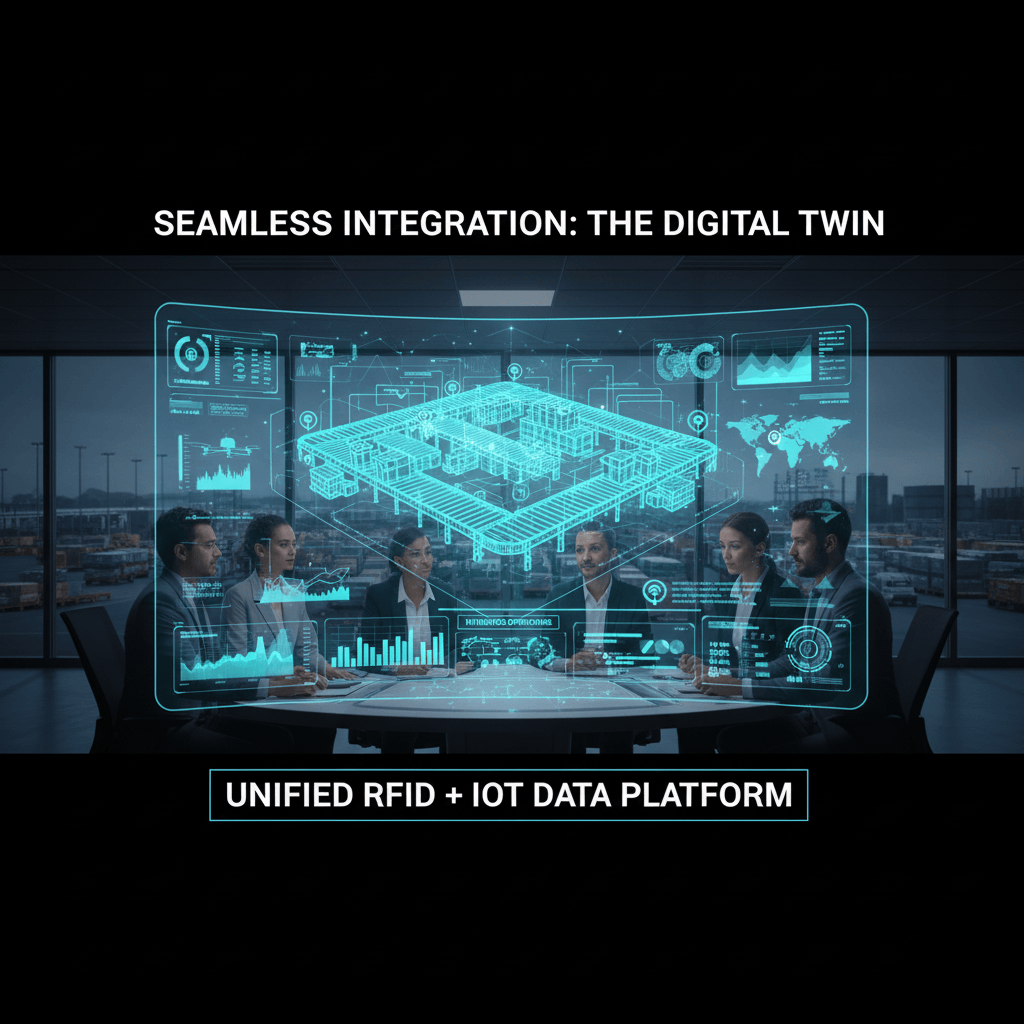
The dream has always been a single pane of glass. One dashboard where a client can see everything. We are finally getting there. Before, RFID1 was its own information silo. Now, we're combining it with other data streams. For an industrial automation project, we integrated RFID1 readers on a conveyor belt with weight sensors and machine vision cameras. The system doesn't just know which part is coming; it knows its weight and checks for defects, all in one seamless process. This level of integration was incredibly difficult just a few years ago. Now, with hardware that supports open standards10, it's becoming much more manageable.
Breaking Down Data Silos
The key is treating RFID1 as just another sensor in a larger IoT ecosystem. When an RFID1 reader uses a standard protocol like MQTT, I can connect it to the same cloud platform as a temperature sensor or a GPS tracker. This eliminates the need for complex middleware, which has always been a point of failure in my past projects. It makes the entire system architecture cleaner, more scalable, and easier to maintain for the client.
The Role of Quality Hardware
This all depends on the hardware and its supporting software. A reader with a poorly documented or buggy SDK can stop an entire integration project5 in its tracks. I've been there. You spend weeks trying to solve a problem that turns out to be a hardware issue. This is why I value a supplier who provides not just a device, but a robust secondary development kit (SDK) and technical support. Good hardware and a good SDK are the foundation. If that foundation is weak, the whole "smart factory11" or "intelligent warehouse12" we promise our clients will collapse.
| Integration Method | Complexity | Scalability | Reliability |
|---|---|---|---|
| Legacy API/Serial | High | Low | Medium |
| Middleware Platform | Medium | Medium | Depends on Middleware |
| Direct IoT (MQTT) | Low | High | High |
Conclusion
The future of RFID1 is smarter, greener, and more connected. For us integrators, success depends on choosing reliable partners and staying ahead of these powerful, game-changing trends.
---Explore the latest advancements in RFID technology to stay ahead in the integration field. ↩
Learn how IoT fusion is transforming RFID systems and enhancing operational efficiency. ↩
Discover the benefits of AI-driven analytics for RFID and how they can optimize your systems. ↩
Understand predictive insights and how they can revolutionize data utilization in RFID. ↩
Understand the challenges of integration projects and how to overcome them for success. ↩
Explore the best eco-friendly options for RFID technology to meet client sustainability goals. ↩
Understand corporate ESG goals and their significance in today's business landscape. ↩
Explore the benefits of biodegradable materials in RFID and their impact on sustainability. ↩
Learn about digital twins and their role in creating integrated IoT solutions. ↩
Explore the role of open standards in technology integration for seamless operations. ↩
Learn what defines a smart factory and how RFID contributes to its success. ↩
Discover the key features of an intelligent warehouse and how RFID enhances its capabilities. ↩