Getting lost in RFID terms? Choosing the wrong device can be a costly mistake. Let’s break down the real differences between RFID scanner1s and readers for you.
An RFID reader2 is the core component3 that reads tags and sends data to a host device. An RFID scanner1 is a complete, often handheld, device that includes a reader, an operating system, and other features like barcode scanning. Think of a reader as the engine and a scanner as the whole car.
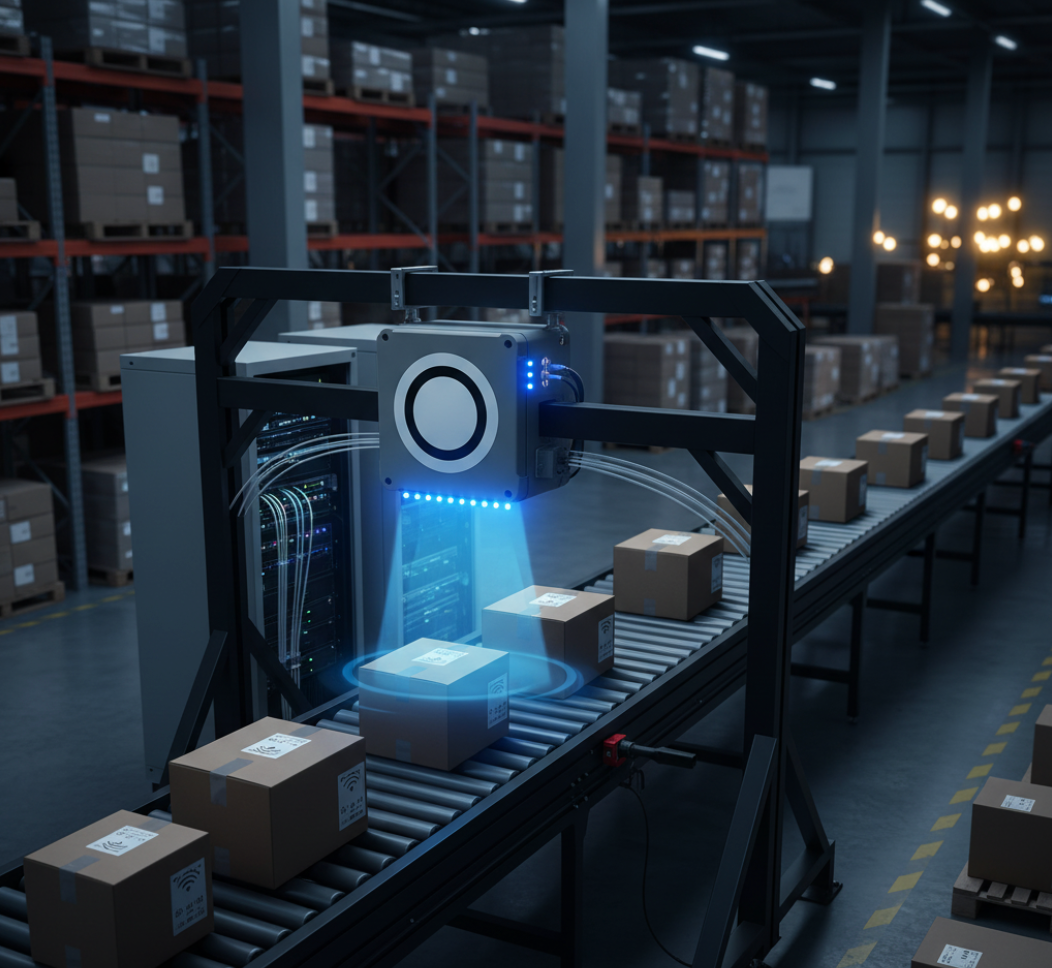
Getting the basic difference is a great start. But the real decision comes down to function, cost, and how you’ll use it. I've worked with both for years, helping clients set up their systems. Let's dive deeper into what really sets them apart, so you can make an informed choice for your next project.
Are They Just Different Tools for the Same Job?
Do you think a reader and a scanner basically do the same job? This common mix-up can lead to buying the wrong equipment for your needs. Let’s clarify their core functions.
No, they are fundamentally different. A reader is a "tool" that just reads data and sends it to a host computer. A scanner is a "mobile workstation4" with its own processing power, display, and software, allowing you to manage data directly on the device.
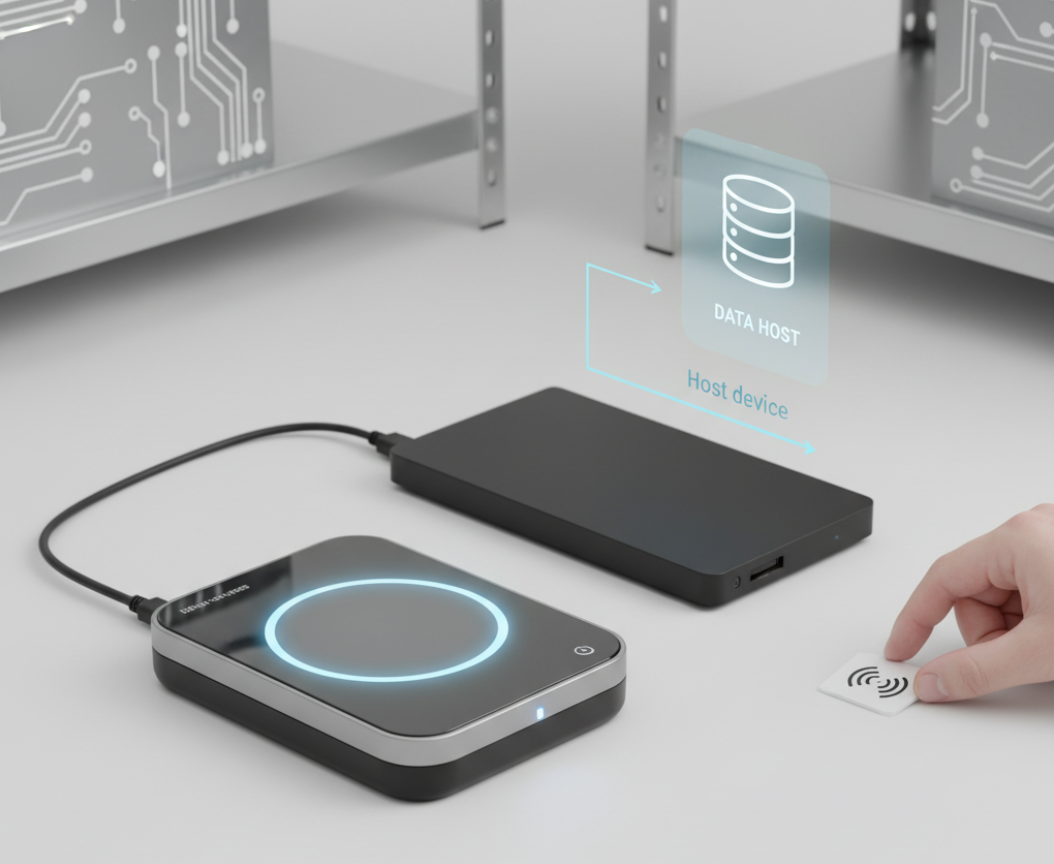
I like to explain it this way: the RFID reader2 is just the engine. You buy an engine to build your own custom car. The RFID scanner1 is the complete car, ready to drive off the lot. A client once bought dozens of simple USB readers for their warehouse staff, thinking they were getting a bargain. They didn't realize they also needed to provide each worker with a laptop to connect the reader to. It was a mess. A scanner, on the other hand, is a self-contained solution. It has the reader (the engine) built-in, but also includes a screen, a battery, an operating system like Android, and connectivity like Wi-Fi. It’s a complete mobile computer. Let’s break it down in a table.
| Feature | RFID Reader | RFID Scanner |
|---|---|---|
| Core Function | Reads RFID tags | Reads RFID tags + Processes data |
| Components | Reader module, antenna | Reader, OS, screen, battery, etc. |
| Data Handling | Sends raw data to a host | Can run apps to process data |
| Analogy | The Engine | The Complete Car |
Does the Price Difference Really Justify the Extra Features?
Is the high price of an RFID scanner1 making you hesitate? The lower price of a reader seems attractive, but it might not be the whole story for your budget.
A basic RFID reader2 is much cheaper upfront. However, a scanner's higher price includes an entire integrated system. When you factor in the cost of a host computer, software, and integration for a reader, the scanner can sometimes be the more cost-effective choice5.
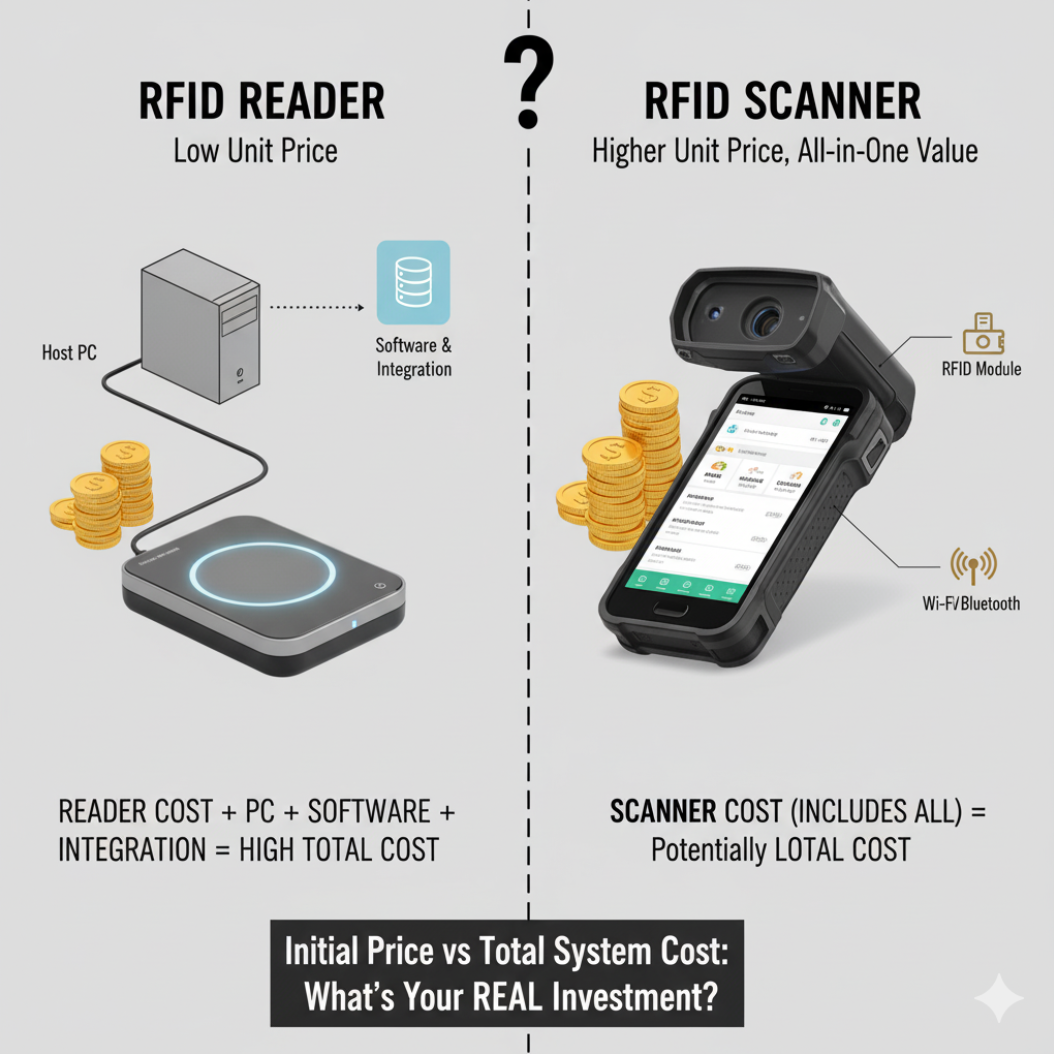
When I started my trading company, I was very budget-conscious. I saw the price of a simple reader module was only a fraction of a full scanner. So, for one of my first inventory projects, I chose the readers. But then came the hidden costs. We needed to buy tablets for each reader, pay a developer to write a custom app to make them work together, and then deal with all the connection issues. The final cost was actually higher than if we had just bought all-in-one scanners from the start. A scanner's price is higher because you're getting a fully functional mobile computer. The hardware and software are already integrated and designed to work together perfectly. You just turn it on and go. Here's a look at the total cost.
| Cost Factor | RFID Reader System | RFID Scanner |
|---|---|---|
| Upfront Device Cost | Low | High |
| Host Device Cost | Required (PC, tablet, etc.) | Included |
| Software Cost | Often requires custom development | Often includes OS & SDKs |
| Integration Effort | High | Low |
| Total Cost of Ownership | Can become high | Often lower in the long run |
How Do You Choose the Right One for Your Work Environment?
Not sure which device is right for your actual workflow6? Using a fixed reader when you need mobility, or a scanner for a simple task, can kill efficiency and frustrate your team.
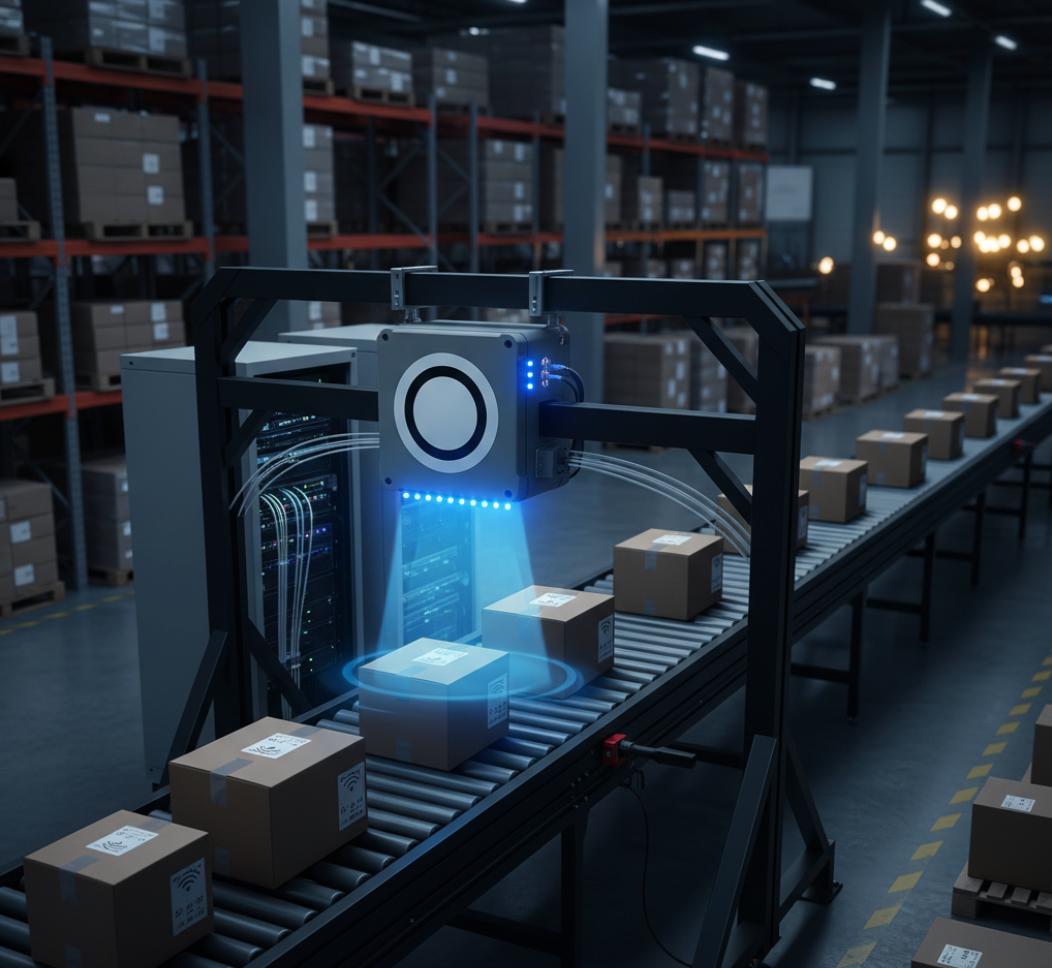
Choose based on your need for mobility. RFID reader2s are best for fixed points7 like conveyor belts, doorways, or desktop stations. RFID scanner1s are built for mobile tasks, like warehouse inventory, asset tracking8 on the move, or field service operations.
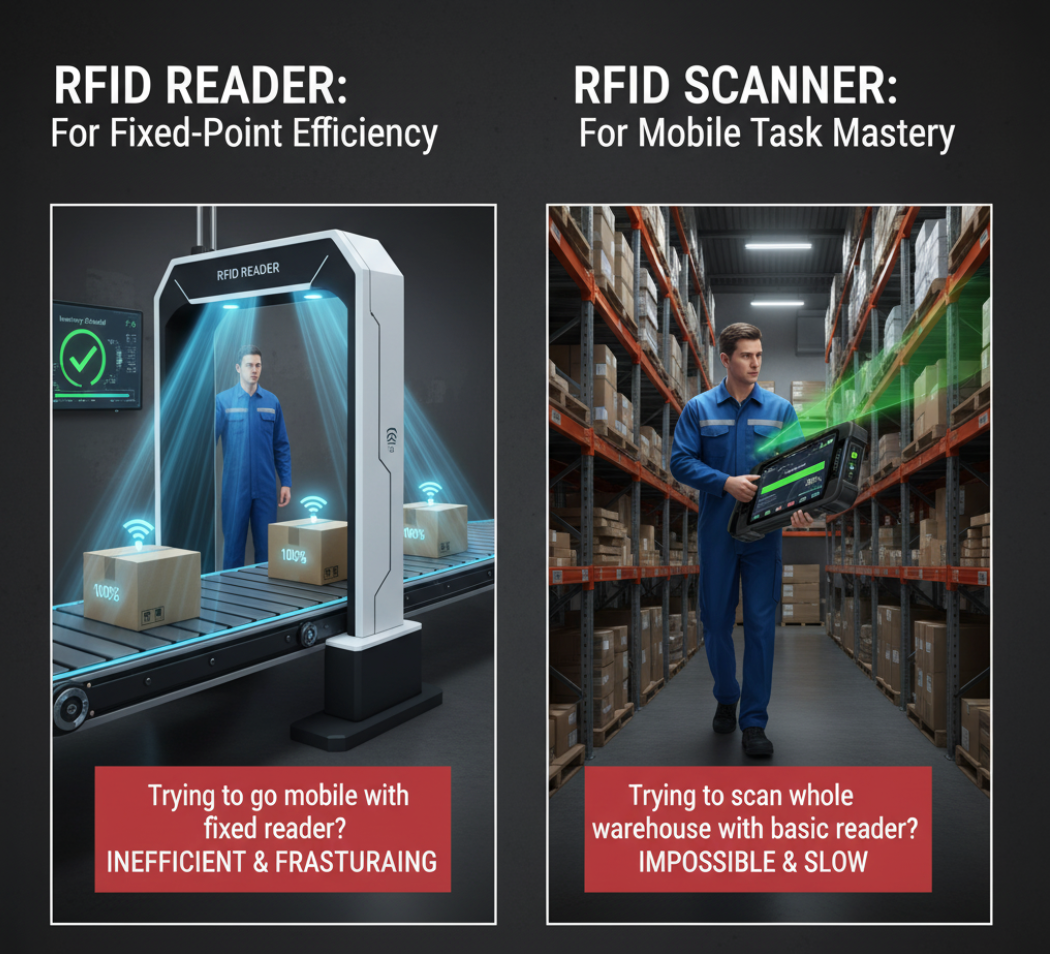
The environment is everything. I've helped clients install fixed readers at the entrance of a tool crib. Every time a tool with an RFID tag passed through, the system automatically logged it in or out. It was a completely automated process using a simple reader connected to a central computer. For another client in a huge warehouse, this wouldn't work. Their team needed to walk the aisles and scan pallets. For them, handheld RFID scanner1s were the only answer. They could scan a whole pallet in seconds, see the results on the screen, and the data was sent to their main system over Wi-Fi. Think about your process: does the item come to the reading point, or does the person need to go to the item? This simple question often gives you the answer.
| Environment | Best Choice | Example Use Case | Why? (Key Feature) |
|---|---|---|---|
| Fixed Point (Doorway) | RFID Reader | Access Control | Automated, no user interaction needed. |
| Desktop (Office) | RFID Reader | Document Registration | Simple, connects to an existing PC. |
| Mobile (Warehouse) | RFID Scanner | Inventory Management | Portability and on-device processing. |
| Field Work (Job Site) | RFID Scanner | Asset Tracking | Durability and all-in-one functionality. |
Conclusion
In short, a reader is a component, while a scanner is a complete mobile solution. Choose based on your project's need for integration, mobility, and your true total budget.
---Exploring RFID scanners can help you choose the right device for mobile data processing. ↩
Understanding RFID readers is crucial for effective inventory management and data collection. ↩
Learn about the core components of RFID to better understand its applications. ↩
Learn how mobile workstations enhance data management in various environments. ↩
Discover the long-term savings of using RFID scanners over basic readers. ↩
Explore the impact of RFID on workflow to enhance productivity in your operations. ↩
Learn about fixed points to determine the best use cases for RFID readers. ↩
Discover how RFID can enhance asset tracking and improve operational efficiency. ↩