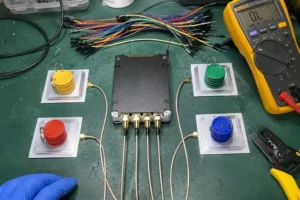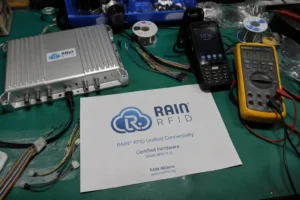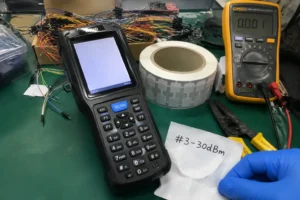

The pilot is going perfectly... for the first twenty minutes. The read range on your new handheld scanner is solid. Then, it starts to shrink. What was reading tags from 2 meters away now struggles at 50cm. Then 10cm. The device is hot to the touch, and your application is timing out. The pilot fails, and your "finished" product is suddenly back on the engineering bench.
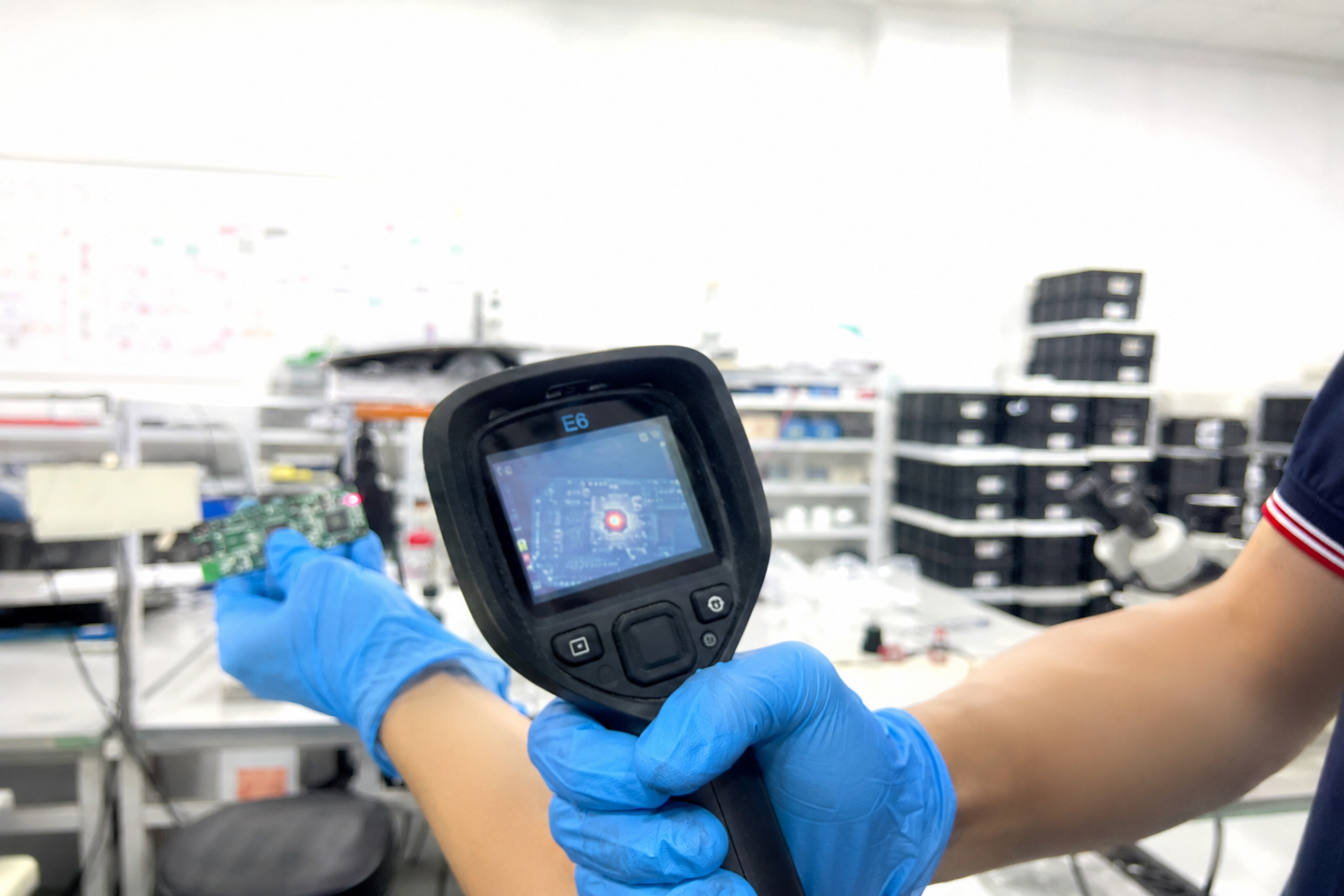
The read rate of a handheld RFID module plummets during extended use because of thermal throttling. Cheap power amplifiers overheat, causing RF power to drop dramatically. A professional module solves this with superior PCB thermal design and firmware that dynamically manages power to prevent overheating in the first place.
Let's be clear: this isn't a software bug or antenna mismatch. It's a fundamental failure of thermal engineering. The cheap RFID module you integrated has no strategy for dissipating the heat generated by its own power amplifier during continuous operation. After a few minutes of high-power transmission, the chip overheats, its efficiency plummets, and your read range collapses. It's a predictable, physical failure.
This is one of the most common—and frustrating—failures I see when integrators try to cut corners on core components.
The Core Technical Trap: Chasing Datasheet Power, Ignoring Thermal Reality
You picked the module based on its datasheet: impressive small size, a low price, and a claimed 30dBm output power. It seemed like the perfect choice for your compact handheld design.
That 30dBm is a "peak" power, achievable for milliseconds in a lab at 25°C. The real spec you need is "thermally stable continuous power," a metric you will never find on a cheap module's datasheet because the number would be embarrassingly low.
The solution is to scrutinize the physical design of the module itself. A module designed for sustained performance looks physically different.
| Feature | Generic "Black Box" Module | Fongwah Engineered Module |
|---|---|---|
| Thermal Design | Minimal PCB copper, no heat sink | Large ground plane, thermal vias, heatsink pads |
| Power Amplifier (PA) | Lowest cost, high heat chip | Low-power architecture, thermally efficient chip |
| Firmware Control | Fixed power, no feedback | Dynamic power adjustment based on temperature |
| Real-world Output | Drops >50% after 15 mins | Stable output for hours of continuous operation |
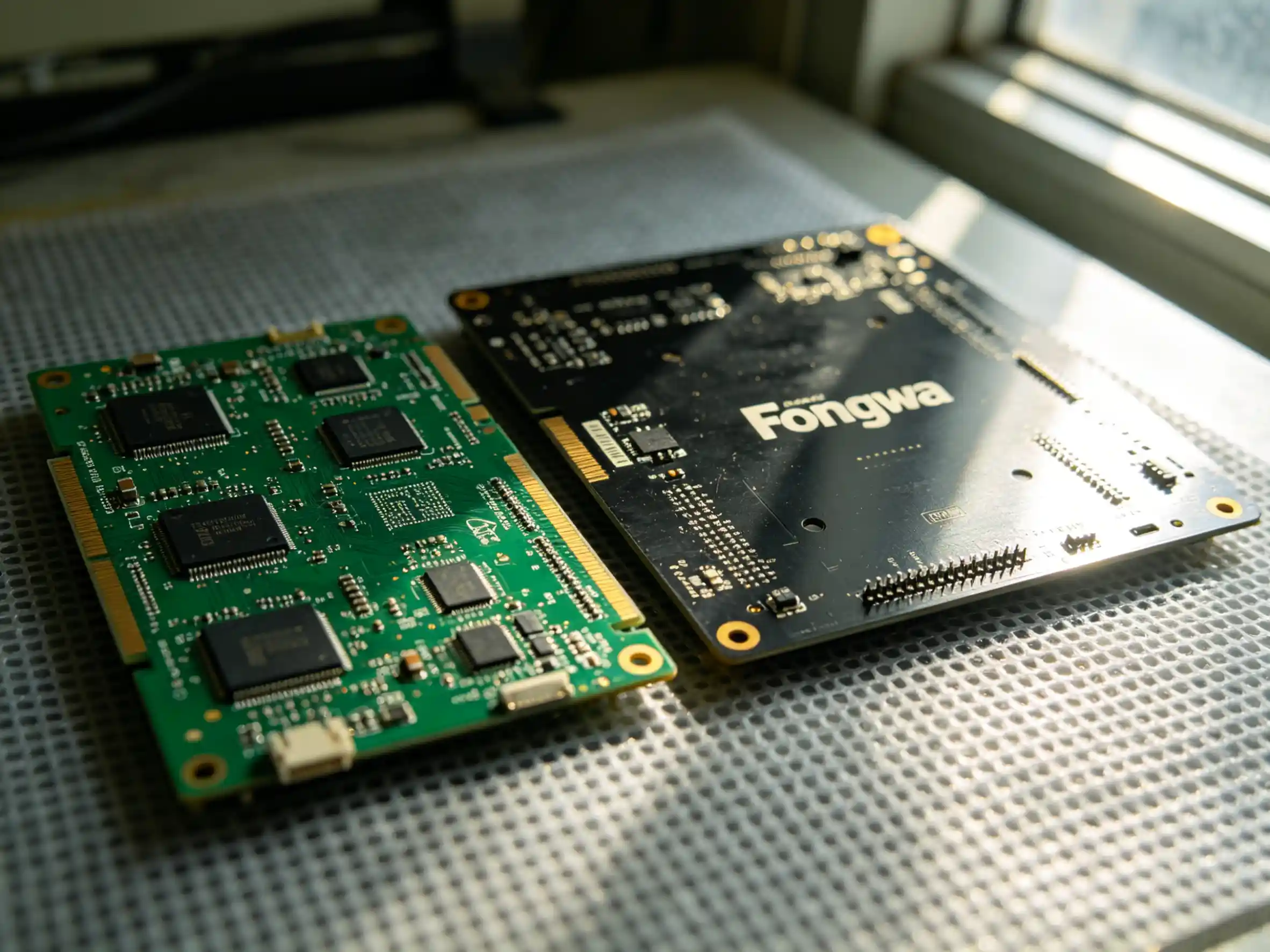
Hardware Teardown: Behind the Datasheet
When we tear down these failed modules in our lab, the story is always the same. The power amplifier (PA) is a tiny black square sitting on a PCB with minimal copper around it. It has no escape path for heat. It's an engine with no radiator. These modules are often designed for applications like a desktop reader or a smart cabinet that perform one read every few minutes. The duty cycle is low, so the chip has time to cool down.
You, however, are putting it in a sealed plastic handheld and asking it to run a marathon of continuous inventory scans. It was built for a 10-meter dash.
Our embedded modules, by contrast, are designed with thermal dissipation as a primary feature. We use thick copper pours that act as built-in heat sinks. We stitch the top and bottom layers of the PCB together with dozens of "thermal vias"—small, plated holes that carry heat away from the PA to the larger ground plane. For you, the system integrator, this means the module can maintain its specified power and read range long after the cheap alternative has throttled itself to death.
Integration Realities: "Max Power" is the Wrong Strategy
The second mistake I see is a "brute force" integration approach. The developer gets the SDK, finds the setPower(level) command, and immediately sets it to the maximum value, thinking this will guarantee the best performance.
This "max power" approach actually guarantees thermal failure. A professional integration uses intelligent firmware to get the job done without cooking the hardware.
The solution is to use a module with a sophisticated SDK and firmware that allows for dynamic control, not just a blunt "on/off" power setting. Before you choose a module, verify its SDK can perform these actions:
- Query PA Temperature: Can your application ask the module for its current operating temperature?
- Set Power Ceilings: Can you programmatically limit the max power to prevent overheating in a hot environment?
- Use Low-Power Sniff Modes: Does the module have a low-power mode to detect tags without running the PA at full blast?
- Dynamic Power Adjustment: Does the firmware automatically reduce power if it senses a critical temperature, preventing a complete shutdown?
A cheap module's SDK will have none of these. A professional one treats them as essential.

Engineer's Insight: What the Specs Don't Tell You
A 'dumb' module forces you to choose between range and stability. A smart one lets you have both. For example, our firmware has advanced logic that's not just for regulatory compliance, but for thermal health. It can detect when it's reading the same tag population over and over in a dense environment and automatically reduce its polling rate and power, knowing it doesn't need to shout to be heard. This not only prevents overheating but also dramatically extends the battery life of your entire handheld device—a huge selling point for your final product. This level of intelligence is the difference between a component and a solution.
Sourcing, Compliance & Risk Mitigation: The True Cost of a "Bargain" Module
That RFID module was only $30, a real bargain. But now you're facing a full product redesign, a delayed launch, and an unhappy client. The true cost of that "bargain" is now in the tens of thousands of dollars.
The risk of field failure is the most expensive part of any hardware project. Sourcing a core component like an RFID module from a partner who understands and designs for thermal, electrical, and environmental stress is how you de-risk your entire project.
We often provide our partners with the thermal data for our modules. This allows them to run simulations before they even build a physical prototype, modeling how the module will behave inside their specific plastic or metal enclosure. A cheap supplier sells you a part in a plastic bag. A true engineering partner helps you design a successful, reliable product from the ground up.

Conclusion: Choosing Reliability Over Risk
Your choice of an embedded RFID module is not a simple component decision based on a datasheet. It's a strategic choice about the reliability and reputation of your final product. You must look past the "peak power" claims and evaluate the module's ability to sustain that performance in the real world. That ability comes from deliberate, professional thermal engineering.
Pre-Order Verification FAQs
If we integrate your thermally stable module into a completely sealed, IP67-rated plastic handheld enclosure without active fan cooling, will we still experience any range drop over an 8-hour shift?
No, you will not experience a range drop, provided the enclosure integration leverages the module’s mechanical design correctly. While our module runs significantly cooler due to its low-power architecture and efficient PCB heat-spreading vias, a completely sealed plastic housing acts as a thermal insulator. To guarantee zero throttling over an 8-hour shift, your mechanical design must thermally bridge the module’s ground pads to an internal metallic frame or a dedicated internal heat sink paste that references the larger internal surface area of the device. We provide full thermal copper-pour profiles and CAD step files so your structural engineers can simulate and design this static heat dissipation path before tooling the plastic injection molds.
The dynamic firmware algorithm is engineered to optimize tag throughput, not just cut power blindly. In dense environments like an apparel pallet, a 'dumb' module constantly blasts maximum RF power, fighting massive tag collisions, which generates severe heat. The Fongwah firmware dynamically monitors both temperature trends and tag backscatter efficiency. If it detects a stagnant, repetitive tag population, it briefly self-optimizes by dropping into a low-power sniff mode or adjusting the carrier wave duty cycle. This prevents the power amplifier from hitting critical thermal thresholds. Because it selectively reduces power only when the local tag population has already been fully inventoried, your effective throughput (real-time unique tags processed per second) remains uncompromised, while the overall thermal profile and battery life of your device improve drastically.
Stop Debugging Hardware with Software
Are you designing a new handheld device and worried about thermal performance and battery life? Don't wait for the prototype to fail. Send me your design concept and use case. We can provide the thermal data for our modules to help you model performance correctly before you build anything. At Fongwah Technology, we help you engineer failure out of your system from day one. Check out our line of thermally-stable embedded modules at https://fongwahrfid.net/.