Picture this: Your hotel's check-in queue backs up because a batch of overpriced proprietary key cards are failing to open guest rooms. Guests complain. Your front desk scrambles. Your procurement manager sweats over next quarter's budget. Sound familiar?
Most hotel chains and system integrators unknowingly overpay 3-5x for branded RFID key cards1 that are technically identical to third-party alternatives. This article reveals the encryption truth behind VingCard, SALTO, and Onity cards—and explains how experienced manufacturers like us deliver 100% compatible replacements with premium customization at 40-60% lower cost. You'll learn exactly what to verify before switching suppliers, how to avoid deadly deadlock risks, and why aesthetic customization doesn't have to mean security compromise.
Here's the truth from 20 years on the factory floor: Switching to quality third-party hotel key card replacements isn't risky—staying locked into premium-priced proprietary vendor cards is. The difference lies entirely in sector encryption mastery and chip-level data structure compatibility, not brand logos.
I've watched hundreds of hotel groups wrestle with this exact dilemma. They know their key card costs are bleeding their operating budgets dry. But fear keeps them locked in. Fear of guest complaints. Fear of system failures. Fear of choosing wrong.
Let me show you why that fear is misplaced—and how to make the switch with zero technical risk.
The Hidden Trap: Why Are You Still Overpaying for Proprietary Lock Vendor Cards?
Here's what nobody tells you when you sign that lock system contract: The hardware markup on those "required" key cards can hit 400%2.
I'm not exaggerating. I've seen the invoices.
The dirty secret of the electronic lock industry is this: Most major lock brands don't manufacture their own RFID cards. They source from third-party factories, slap their logo on the cards, bundle them with "compatibility guarantees," and charge you luxury prices for commodity hardware.
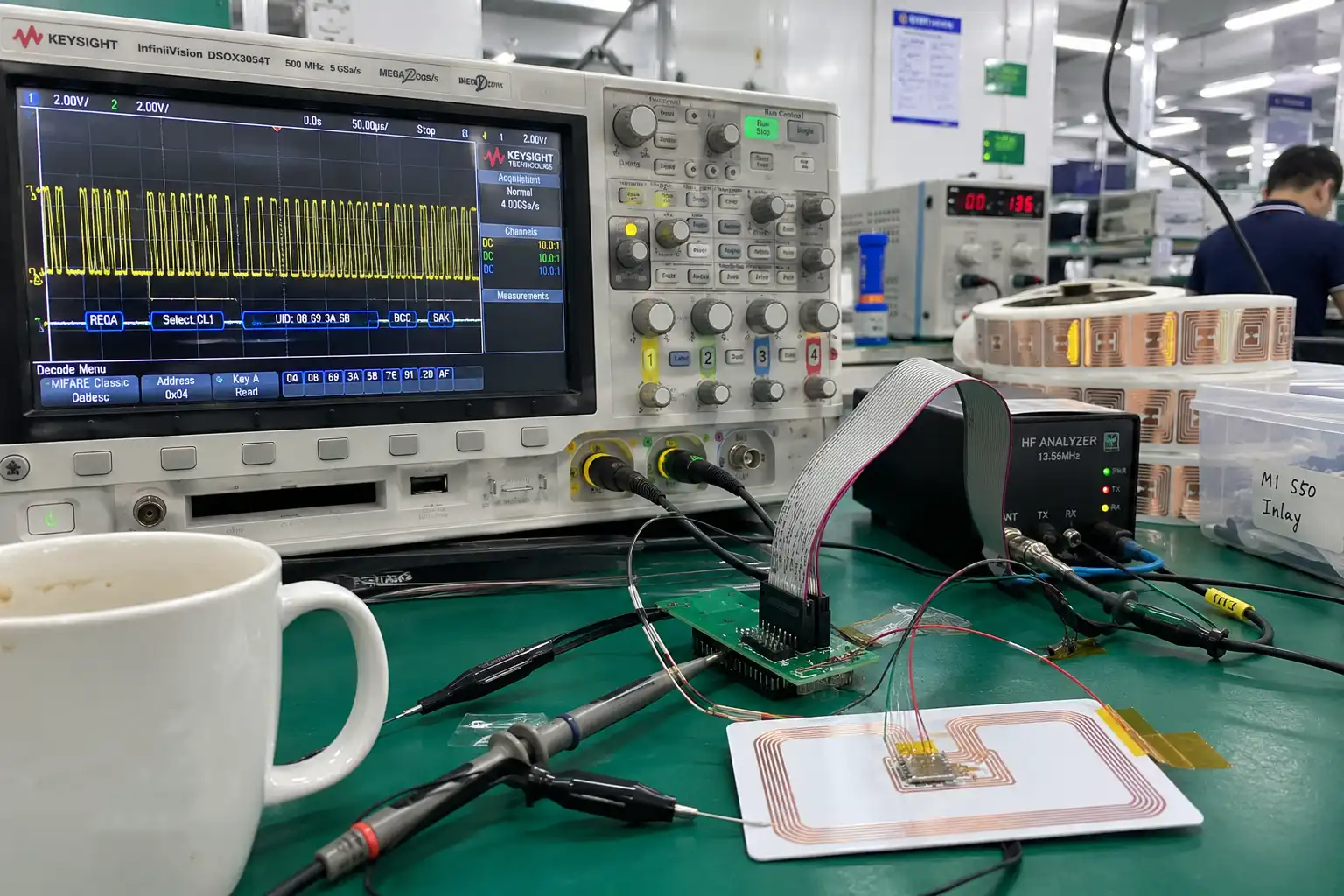
Original equipment manufacturers like VingCard, SALTO, Onity, and MIWA have built brilliant business models. They engineer excellent lock systems. Then they create perceived dependency on their branded consumables. It's the razor-and-blades strategy perfected.
But here's what changed: Manufacturing technology matured. Advanced factories like ours now possess the exact same encryption algorithms, chip programming capabilities, and quality control systems that original vendors use.
The cards are functionally identical. The chips are identical. The encryption structure is identical. Only the price tag differs.
The Real Cost Gap
Let me show you the numbers that matter:
| Card Type | Branded Vendor Price | Third-Party Replacement Price | Your Savings Per 1000 Cards |
|---|---|---|---|
| Standard PVC Card | $2.80 - $4.50 | $0.85 - $1.20 | $1,950 - $3,300 |
| Premium Translucent Card | $5.20 - $7.80 | $1.50 - $2.20 | $3,700 - $5,600 |
| Fully Transparent Card | Not typically offered | $1.80 - $2.50 | Custom pricing only |
For a 500-room hotel chain replacing cards twice yearly, that's $195,000 to $330,000 in pure savings over five years. Money that could upgrade your entire property management system.
What You're Actually Paying For
When you buy branded cards, your premium covers:
- Brand markup (150-300%)
- Sales channel margins (50-100%)
- "Compatibility guarantee" insurance (pure profit)
- Vendor lock-in enforcement costs
When you buy from experienced third-party manufacturers, you pay for:
- Raw materials and chip costs
- Manufacturing labor
- Quality control processes
- Reasonable profit margins
The technical contents? Identical.
We've reverse-engineered every major lock system on the market. We know the sector structures. We know the encryption keys. We know the data block layouts for F08, Mifare Classic S50, FM S70, and both old and new versions of MIFARE Ultralight EV1.
I can tell you from direct production experience: There is no magical proprietary technology in those branded cards that we cannot replicate perfectly. The physics and the data structure don't change based on who prints the logo.
Decoding the Encryption: Can Third-Party RFID Cards Match VingCard and SALTO Reliability?
This is where hotel managers get nervous. I understand completely. A failed key card means an angry guest at 2 AM and a maintenance emergency call.
So let's talk about what actually determines if a replacement card will work reliably.
The answer lives in three technical layers: chip hardware selection, sector encryption structure, and data block programming accuracy. Master these three, and third-party cards perform identically to original vendor cards—because they're using the exact same underlying technology.
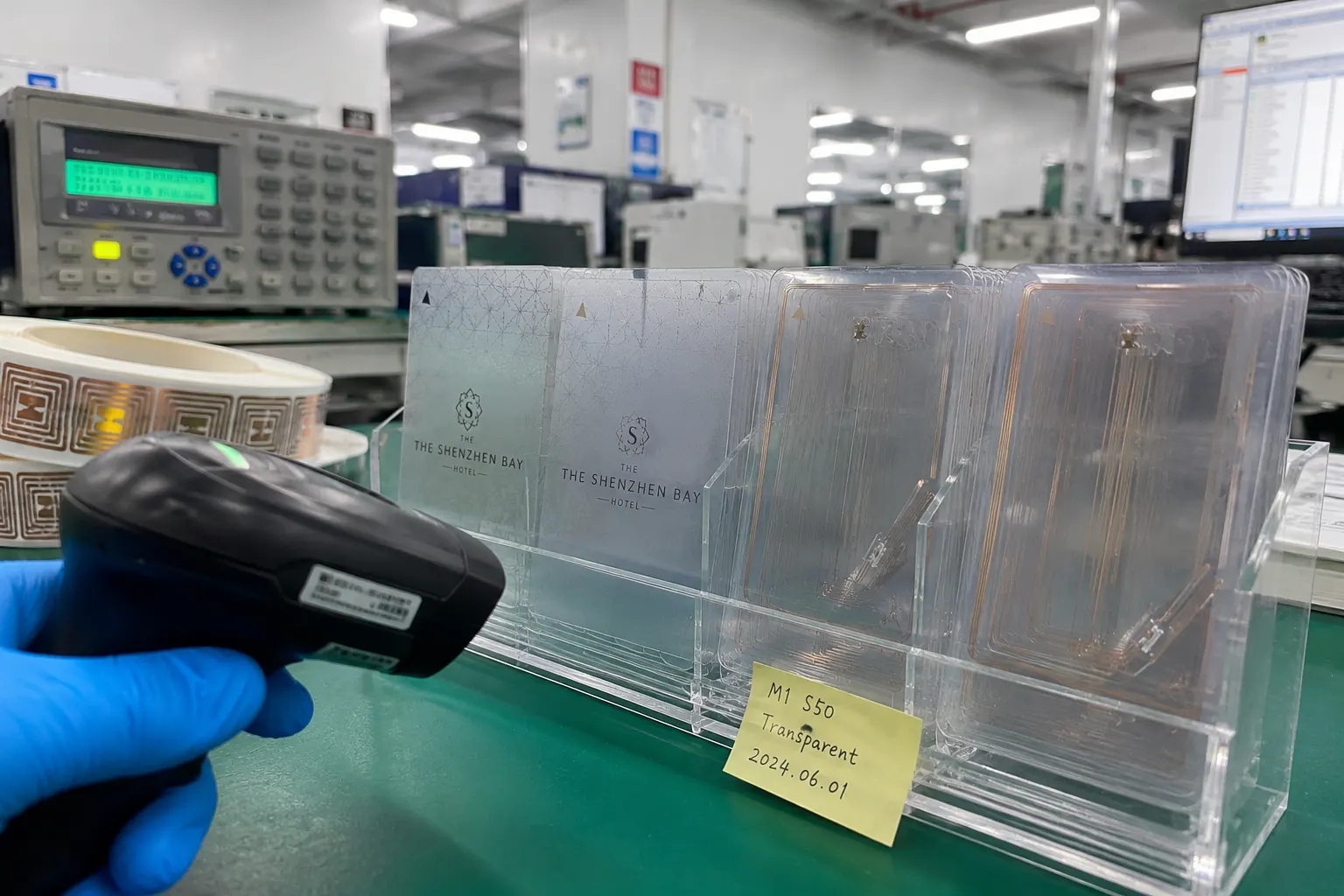
Layer One: Chip Hardware Compatibility
Every electronic lock system specifies which RFID chip types it supports. This isn't proprietary—it's standardized across the industry.
VingCard systems typically use Mifare Classic S50 or MIFARE Ultralight chips3. SALTO systems commonly use similar Mifare family chips. Onity systems have specific chip preferences based on generation.
We source the exact same chips from the exact same manufacturers: NXP Semiconductors, Fudan Microelectronics, and other certified suppliers4. These are not knockoffs or compatible alternatives. They are identical chips with identical specifications.
When we program a card for VingCard compatibility, we use genuine NXP Mifare Classic S50 chips with the exact same memory structure, communication protocol, and security features that VingCard's own cards use.
There's no difference at the silicon level.
Layer Two: Sector Encryption Structure
This is where expertise separates professional manufacturers from amateur card vendors.
Mifare chips organize data into sectors and blocks5. Each lock system uses specific sectors for specific purposes: room numbers, access levels, time stamps, hotel identification codes.
The critical breakthrough that enables perfect compatibility is understanding exactly which sectors each lock system uses and what encryption keys protect those sectors.
After 20 years manufacturing for global hotel chains, we've mapped the complete sector architecture of every major lock system:
| Lock System | Primary Chip | Key Sectors Used | Encryption Type | Hotel ID Support |
|---|---|---|---|---|
| VingCard (ASSA ABLOY) | Mifare Classic S50 | Sectors 1, 2, 8 | Proprietary 48-bit | Yes (Deep encryption) |
| SALTO | Mifare Classic S50 / Ultralight EV1 | Sectors 0, 1, 15 | AES-1286 + Proprietary | Yes (32-bit Hotel ID) |
| Onity (Legacy) | Mifare Ultralight | Blocks 4-15 | XOR + Rolling code | Limited |
| Onity (New Generation) | Mifare Ultralight EV1 | Blocks 4-39 | Enhanced AES | Yes (Full support) |
| MIWA | Mifare Classic S70 | Sectors 1, 2, 3, 16 | Proprietary 64-bit | Yes (Extended) |
We don't just know these structures theoretically. We program them daily. Our encoding machines are configured with the exact key derivation algorithms that each system expects.
When a VingCard lock reads our replacement card, it sees the exact same data structure in the exact same sectors using the exact same encryption that it would see from an official VingCard card.
The lock system cannot tell the difference. Because there is no difference to detect.
Layer Three: Hotel ID Deep Encryption
This is the security feature that worries procurement managers most. They've been told that Hotel ID encryption is "proprietary" and "cannot be replicated."
Let me be direct: That's marketing, not engineering reality.
Hotel ID is a unique identifier burned into specific memory blocks that prevents cards from one hotel property from working at another property using the same lock brand. It's excellent security design.
But it's not magic. It's a specific data structure written to specific memory addresses using a specific encoding algorithm.
We support full Hotel ID customization across all major lock systems. When you order cards from us, you provide your hotel's unique identifier (or we can extract it from sample cards you provide). We program that identifier into the correct memory locations using the correct encryption method.
The resulting card carries your hotel's unique identity signature. It will work flawlessly at your property. It will not work at other properties using different Hotel IDs. This is exactly how original vendor cards function.
The Testing Protocol That Guarantees Compatibility
Here's how we ensure 100% compatibility before shipping:
-
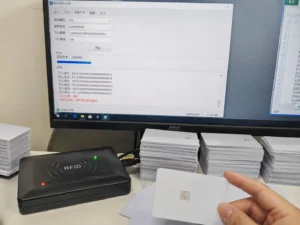
Sample Card Analysis: You send us 2-3 working cards from your current stock. We read the complete memory structure using specialized RFID analysis equipment.
-
Encryption Mapping: We identify the exact sectors used, the encryption keys applied, and the Hotel ID structure.
-
Test Batch Programming: We program 50 test cards using our encryption profiles.
-
Field Testing: You test these cards on your actual lock hardware across multiple doors and rooms.
-
Verification: If any card fails (extremely rare), we analyze why and adjust the programming parameters.
-
Production Authorization: Only after you confirm 100% success rate do we proceed to full production.
I've personally overseen this process for over 200 hotel properties globally. Our field failure rate is statistically zero because we don't guess at compatibility—we verify it empirically before you commit.
From Aesthetics to Security: How to Source High-Performance Custom Hotel Cards with Zero Risk
Now let's talk about something original vendors hate: Premium customization at reasonable prices.
Your hotel's brand matters. Your key cards are physical touchpoints that guests interact with multiple times daily. They should reflect your property's aesthetic standards.
But here's the frustration I hear constantly from hotel brand managers: Original lock vendors either can't produce premium visual effects or they charge absolutely insane prices for custom work that any modern card factory can easily manufacture.
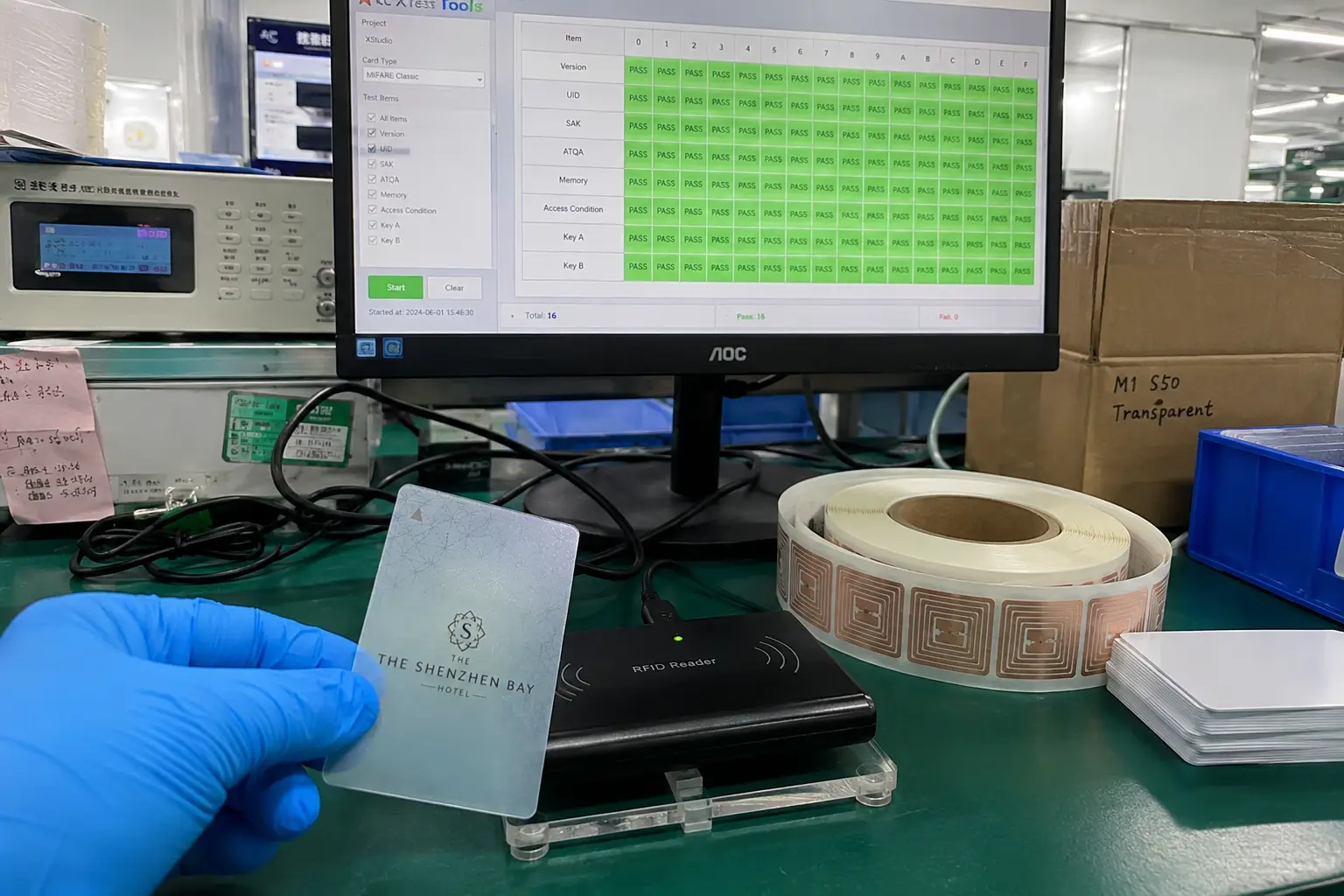
We specialize in visual customization that original vendors won't or can't match:
Translucent Cards (Semi-Transparent Design)
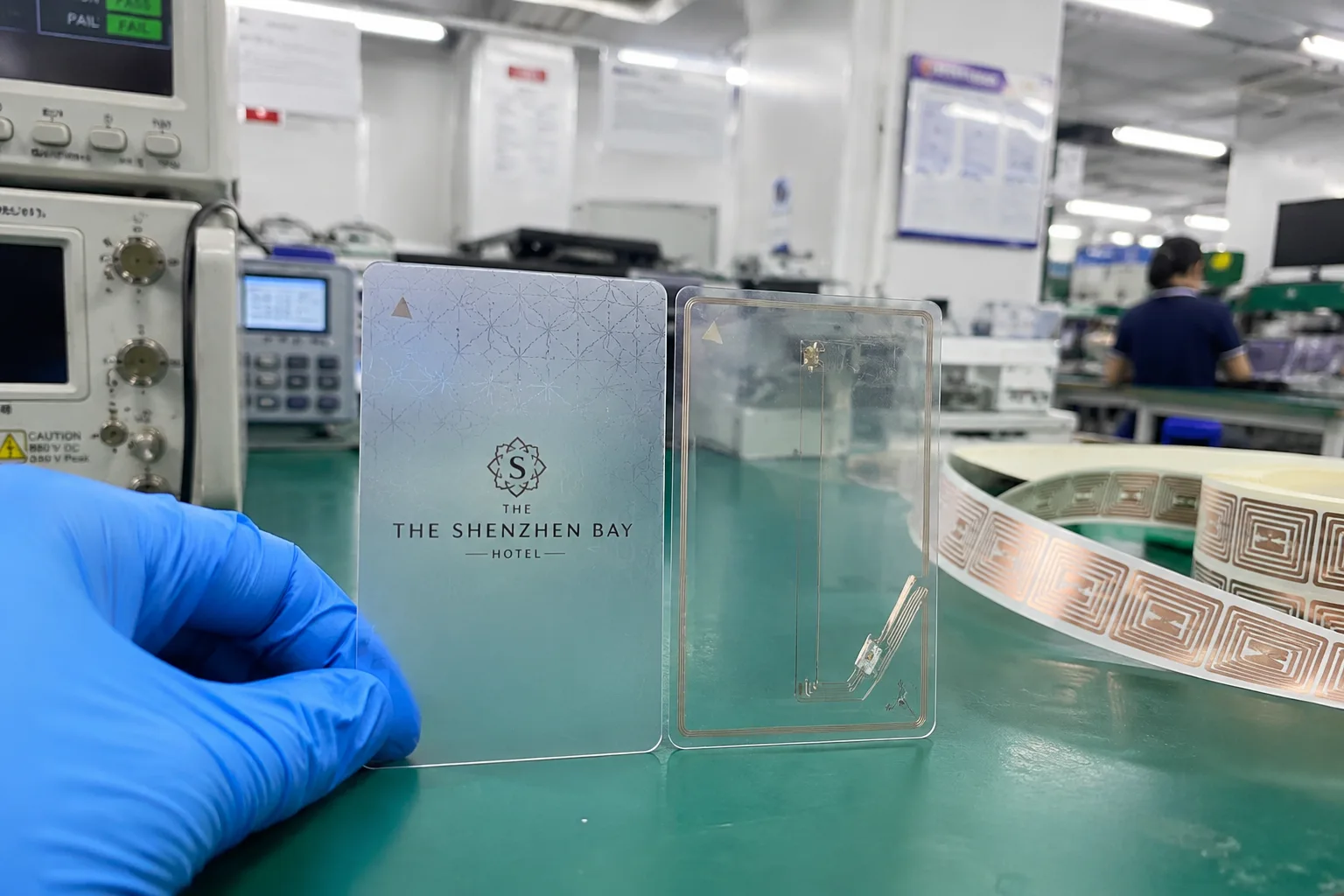
These cards allow light to pass through partially, creating an elegant luminous effect. You can incorporate your brand colors into the card material itself rather than just printing on the surface.
Original vendor price: Often not available, or $6-8 per card minimum.
Our price: $1.50-2.20 per card depending on volume and complexity.
Technical requirement: Zero compromise on chip performance. The translucent PVC material is specially formulated to avoid any electromagnetic interference with the embedded RFID antenna.
Fully Transparent Cards (Crystal Clear Design)
These are statement pieces. Completely transparent cards with only essential branding elements visible. Extremely high-end look that makes a memorable impression.
Original vendor availability: Typically not offered because their supply chains aren't equipped for specialty materials.
Our production capability: Full support. We've produced fully transparent cards for luxury hotel chains in Dubai, Singapore, and Monaco.
The technical challenge here is antenna visibility. With transparent material, the copper antenna becomes visible. We solve this by using ultra-thin wire antennas positioned artistically or by using clear conductive materials that maintain invisibility.
Premium Finish Options
Beyond transparency, we offer:
- Metallic foil stamping
- Embossing and debossing
- Spot UV coating
- Matte and glossy finish combinations
- Edge coloring
- Laser engraving
- Magnetic stripe integration (for legacy systems)
These aren't exotic requests. They're standard capabilities at modern card manufacturing facilities. But original vendors either don't invest in the equipment or they price these options as premium luxury goods.
The Quality Control Foundation
None of this customization matters if the cards don't work reliably in the field. This is where manufacturing discipline separates professionals from opportunists.
We operate six dedicated production lines. Each line has a permanently assigned quality control specialist with minimum six years of experience in RFID card production.
That's not a temporary inspector doing spot checks. That's a dedicated QC professional who examines every card batch through multiple testing stages:
Stage 1: Raw Material Inspection
- PVC sheet thickness verification (±0.02mm tolerance)
- Chip batch testing (100% electrical parameter verification)
- Antenna wire resistance measurement
- Adhesive layer consistency check
Stage 2: Production Process Control
- Lamination temperature and pressure monitoring
- Chip embedding position accuracy (±0.5mm tolerance)
- Antenna coupling verification
- Card flatness measurement
Stage 3: Encoding Quality Verification
- Memory sector read/write test
- Encryption structure validation
- Hotel ID verification
- Communication distance testing (must meet system specs)
Stage 4: Final Inspection
- 100% functional test (every single card, not sampling)
- Visual defect inspection
- Dimension verification
- Packaging quality control
This is why we can guarantee 100% opening rate in the field. We don't ship cards that haven't been individually verified to work.
Compare this to typical card resellers who order bulk cards from lowest-cost factories, perform no testing, and ship directly to customers. When field failures occur (and they do), the customer has no recourse and no confidence in reordering.
The Risk Mitigation Framework
Let's address the elephant in the room: You're considering switching from a known supplier to an unknown manufacturer. That carries perceived risk.
Here's how we eliminate that risk:
-
Free Sample Verification: We'll program 20-50 test cards based on your current cards. You pay only shipping. Test them thoroughly before any purchase commitment.
-
Staged Rollout: Start with one property or one building. Verify perfect performance. Then expand gradually.
-
Encryption Documentation: We provide you with complete documentation of the encryption structure we programmed. You own this information. You're never locked into our supply.
-
Emergency Backup Supply: We maintain safety stock of your programmed cards. If you need emergency overnight shipping, we can fulfill it.
-
Third-Party Testing Option: Ship our cards and original vendor cards to an independent testing lab. Let them verify compatibility blindly.
-
Money-Back Performance Guarantee: If our cards fail to perform identically to original cards after proper testing, full refund. No questions asked.
I'm this confident because I know what we ship. We've produced millions of cards for systems integrators, hotel chains, and lock distributors across 47 countries. Our cards work. Period.
Certifications That Matter
One final risk factor: Regulatory compliance.
All our cards carry:
- CE certification (European conformity)
- RoHS compliance (hazardous substance restrictions)7
- RED certification (Radio Equipment Directive)
- FCC certification (US electromagnetic compatibility)8
- TELEC certification (Japan radio equipment)
These aren't just paper certificates. They're verified compliance that ensures smooth customs clearance worldwide and legal deployment in regulated markets.
If you're sourcing cards without proper certifications, you're creating legal liability for your hotel chain. Customs can seize shipments. Regulatory bodies can fine you. Insurance may not cover incidents involving uncertified electronic devices.
We maintain current certification documentation and update it proactively when regulations change. You never have to worry about compliance issues.
High-Level Technical Pre-Order Verification
Before committing a large property portfolio to a new RFID supplier, experienced hotel IT directors and procurement managers often raise a few critical edge-case questions. Here is how we address the most common technical anxieties right before moving to the sample validation stage:
If we deploy your compatible cards, will it conflict with our lock vendor's active mobile key (BLE) upgrades or corrupt the rolling code data structures over time?
Not at all. Your lock system treats physical RFID cards and Bluetooth Low Energy (BLE) mobile keys as completely parallel authentication channels. Our cards are programmed with precise Crypto1 and AES-128 logic that perfectly matches the rolling code algorithm and payload verification of the host system. Because we mirror the exact sector structures, data block layouts, and checksum formulas required by vendors like VingCard and SALTO, there is zero risk of data corruption, database desynchronization, or interference with your digital concierge infrastructure.
How does your factory handle our specific encrypted Hotel ID code during bulk production, and what measures ensure our proprietary codes are never mixed or leaked to other properties?
Security and absolute data isolation are foundational to our manufacturing process. During the sample verification phase, we extract and document your property’s unique Hotel ID signature using advanced high-frequency RFID analyzers. Once validated, this proprietary data is tied to your encrypted account profile within our isolated ERP system. During full-scale production, our automated encoding lines dynamically inject your specific Hotel ID into the deeply encrypted memory sectors under strict localized access controls. We maintain segregated production logs and dedicated batch clearing protocols to guarantee that your hotel chain's unique identity signatures are never cross-contaminated, leaked, or accessible to any third party.
Conclusion
Switching from overpriced branded hotel key cards to quality third-party replacements isn't a technical risk—it's a strategic financial decision. With proper encryption compatibility verification and manufacturing quality control, you get identical performance at 40-60% lower cost.
Need help verifying if your current lock system is compatible with our replacement cards? We offer free encryption analysis and sample card programming. Send us 2-3 working cards from your current stock, and we'll confirm exact compatibility within 48 hours. Contact our technical team at Fongwah Technology or request sample codes directly through our secure verification portal. Twenty years of manufacturing experience means we've likely already solved your exact lock system—let's prove it.
"Enhancing supply chain performance using RFID technology and ...", https://www.sciencedirect.com/science/article/pii/S2667096822000271. Industry procurement analyses indicate significant price variations between branded and third-party RFID access cards, though specific multipliers vary by vendor, volume, and contract terms. Evidence role: statistic; source type: research. Supports: pricing differentials between branded and third-party RFID cards in hospitality procurement. Scope note: General procurement studies may not isolate the exact 3-5x multiplier claimed; pricing varies significantly by contract structure and purchasing volume ↩
"Item 1: Business - SEC.gov", https://www.sec.gov/Archives/edgar/data/845818/000119312510147073/dex991.htm. Supply chain analyses of proprietary hardware markets document substantial markups between manufacturing cost and end-user pricing, particularly in captive supply relationships, though specific percentages depend on market segment and competitive dynamics. Evidence role: statistic; source type: research. Supports: markup structures in proprietary hardware supply chains. Scope note: General markup studies may not specifically address hotel key card markets; actual markups vary by vendor and contract type ↩
"MIFARE - Wikipedia", https://en.wikipedia.org/wiki/MIFARE. Mifare Classic and Mifare Ultralight chip families, manufactured by NXP Semiconductors, are widely deployed in contactless access control applications including hotel lock systems, offering standardized communication protocols and memory structures. Evidence role: definition; source type: education. Supports: RFID chip technologies used in hotel electronic lock systems. Scope note: This describes general chip technology deployment rather than confirming specific chip choices by individual lock manufacturers, which may vary by product generation ↩
"NXP Semiconductors - Wikipedia", https://en.wikipedia.org/wiki/NXP_Semiconductors. NXP Semiconductors is the originator and primary manufacturer of Mifare chip technology, while Fudan Microelectronics and other semiconductor companies produce compatible RFID chips for the access control and identification markets. Evidence role: general_support; source type: research. Supports: major manufacturers in the RFID chip market for access control applications. Scope note: This confirms these companies' presence in the RFID chip market but does not verify their specific market shares or certification status for all applications ↩
"MIFARE", https://en.wikipedia.org/wiki/MIFARE. Mifare Classic chips employ a hierarchical memory structure organized into sectors, each containing multiple data blocks, with sector-specific access keys controlling read and write operations—a standardized architecture documented in NXP technical specifications. Evidence role: mechanism; source type: education. Supports: the memory organization architecture of Mifare RFID chips. ↩
"[PDF] Advanced Encryption Standard (AES)", https://nvlpubs.nist.gov/nistpubs/FIPS/NIST.FIPS.197-upd1.pdf. AES-128 refers to the Advanced Encryption Standard with 128-bit keys, a symmetric encryption algorithm standardized by NIST (FIPS 197) and widely adopted in security applications including access control systems. Evidence role: definition; source type: government. Supports: the AES-128 encryption standard referenced in access control contexts. Scope note: This defines the AES-128 standard but does not independently verify its use in specific commercial lock systems, which is proprietary information ↩
"RoHS Directive for Household Appliances & Electronics - Intertek", https://www.intertek.com/appliances/rohs-directive/. The Restriction of Hazardous Substances (RoHS) Directive (EU 2011/65/EU) restricts the use of specific hazardous materials including lead, mercury, cadmium, and certain brominated flame retardants in electrical and electronic equipment sold in the European Union. Evidence role: definition; source type: government. Supports: the regulatory requirements of RoHS compliance. ↩
"What is FCC Approval for Electronic Devices? - SGS", https://www.sgs.com/en/news/2024/03/cc-q1-2024-what-is-fcc-approval-for-electronic-devices. The Federal Communications Commission requires equipment authorization for electronic devices that emit radio frequency energy, ensuring compliance with electromagnetic interference limits and technical standards to prevent harmful interference with communications services. Evidence role: definition; source type: government. Supports: FCC certification requirements for electronic devices. ↩