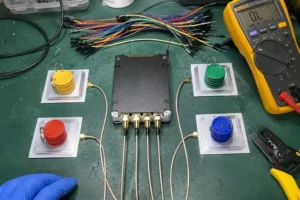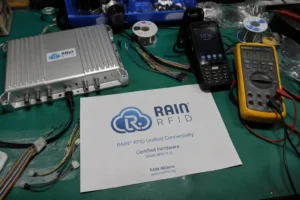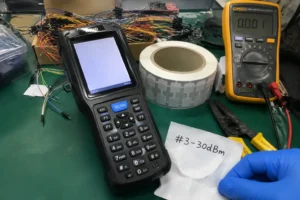

Metal interference is the silent killer of inventory tracking. Scanners fail, data drops, and expensive tools vanish. Having spent five years optimizing RFID from the production line to final deployment, I’ve seen bad physics destroy great software. Let's fix it.
You can maximize RFID tracking distance on metal tools by pairing high-gain UHF antennas with specialized on-metal tags featuring dielectric spacers. Combined with anti-collision algorithms and adjustable transmit power up to 33 dBm, this overcomes RF reflection to achieve read ranges exceeding 15 meters industrially.
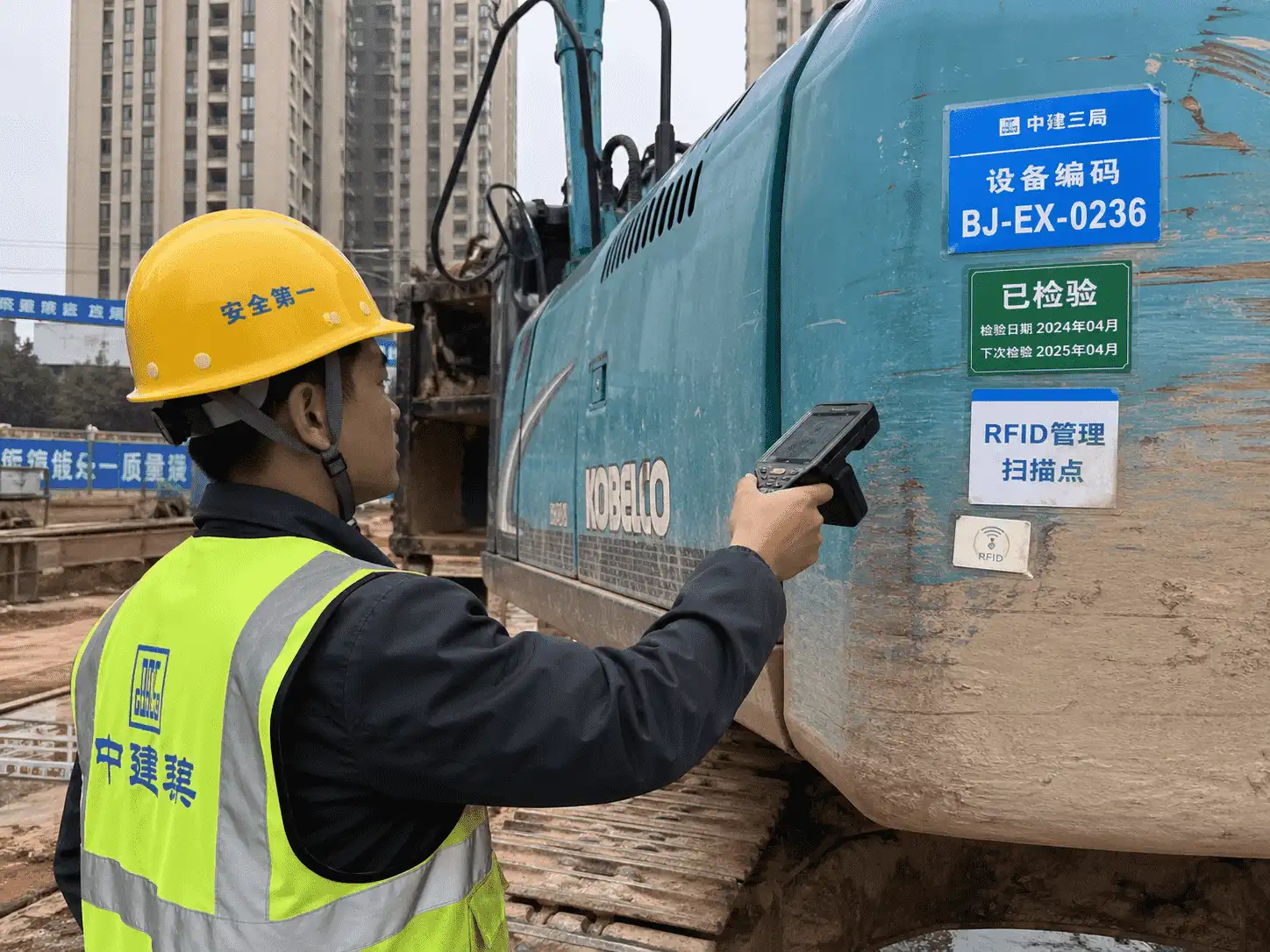
Let’s break down the exact hardware configurations needed to blast through severe environmental interference.
Why Does Metal Destroy Standard RFID Tracking Distance?
Engineers often think stated read ranges apply universally. The reality? Slapping a standard UHF dipole tag onto a steel wrench instantly detunes the antenna, bouncing the RF signal into oblivion.
We solve this by engineering the reader’s transmit power and antenna gain to punch through the noise. By pushing a clean 30-33 dBm output through a 9dBi circular polarized antenna, we force RF penetration even when metal surfaces scatter signals.
| Specification | Standard Logistics Tag | Fongwah Anti-Metal Tag | Impact on Equipment Tracking |
|---|---|---|---|
| Read Range (Free Air) | 10+ Meters | 8-12 Meters | Similar baseline performance |
| Read Range (On Steel) | < 10 Centimeters (Fails) | 8+ Meters | Critical for heavy equipment |
| Dielectric Spacer | None (Paper/PET) | Ceramic / High-temp FR4 | Isolates antenna from metal |
| Reader TX Power Needed | Low (20-25 dBm) | High (30+ dBm / PoE+) | Requires robust infrastructure |
The Power of PoE+ and High Output
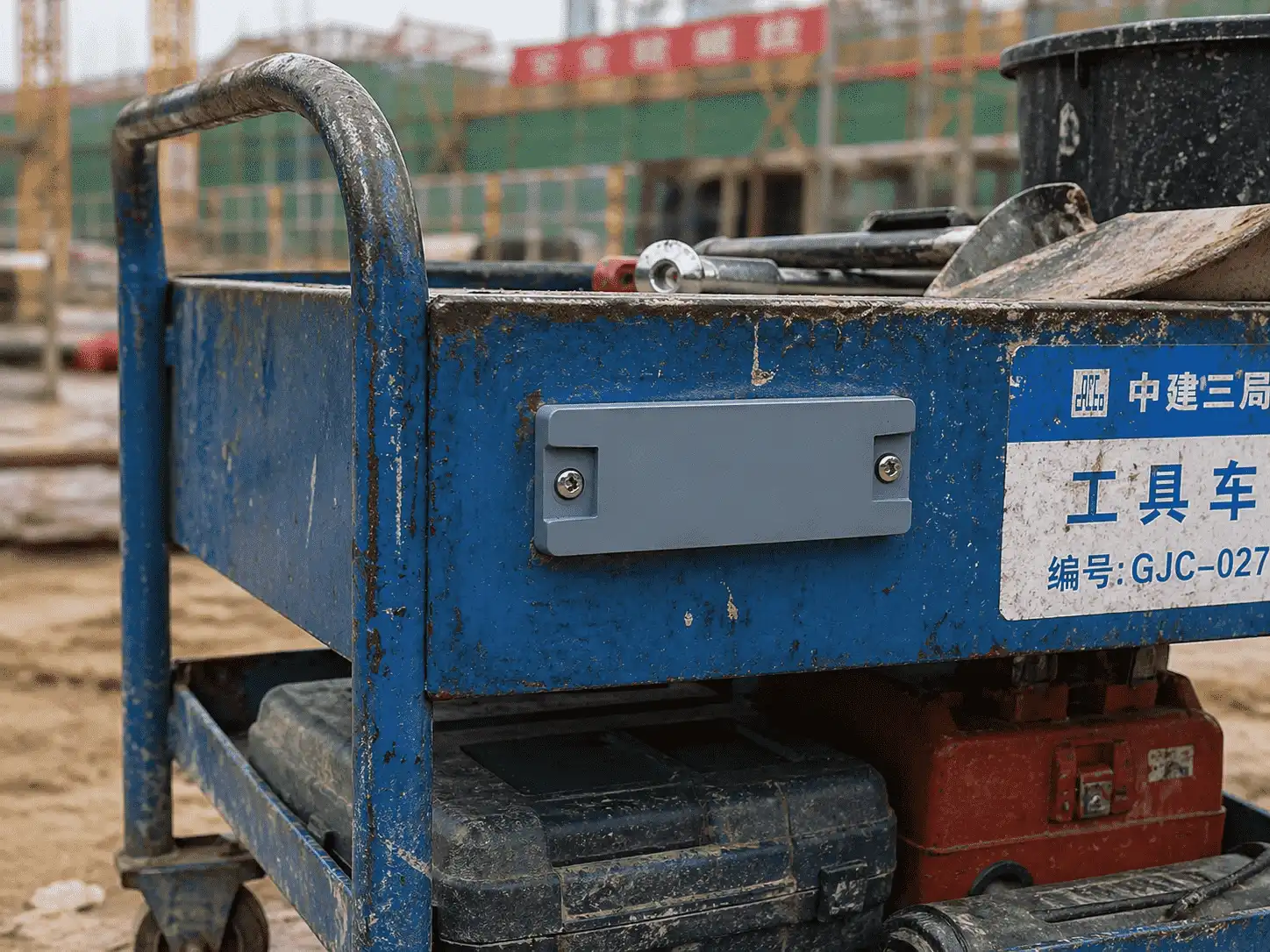
As any seasoned system integrator knows, when RF waves hit a massive steel chassis, you face a severe issue: multipath interference. The metal acts as a reflector, creating blind spots where the phase simply cancels out. This is why standard tags fail miserably for equipment tracking.
To combat this, your system architecture needs raw, stable power. At Fongwah, we don't just rely on the tag; we optimize the reader. Driving a reader at 33 dBm requires serious power stability, which is why our industrial fixed readers utilize robust PoE+ (802.3at) configurations. We ensure that the RF energy output remains completely flat and consistent, giving the backscatter a fighting chance to return to the receiver.
Listen Before Talk (LBT) Compliance
Furthermore, pumping out maximum power means you risk flooding the channel. This is where LBT (Listen Before Talk) compliance becomes non-negotiable for Canadian and European deployments. Our readers dynamically scan the environment for competing frequencies before transmitting. This ensures your high-powered signals blast through the noise to find your tools without violating local telecommunications regulations. It’s about smart, compliant power, not just raw output.
How Do You Choose the Right RFID Tags for Tools?
Procurement teams love buying cheap paper tags, only to wonder why their heavy equipment goes missing. You cannot track complex metal geometries with flat, generic PET inlays.
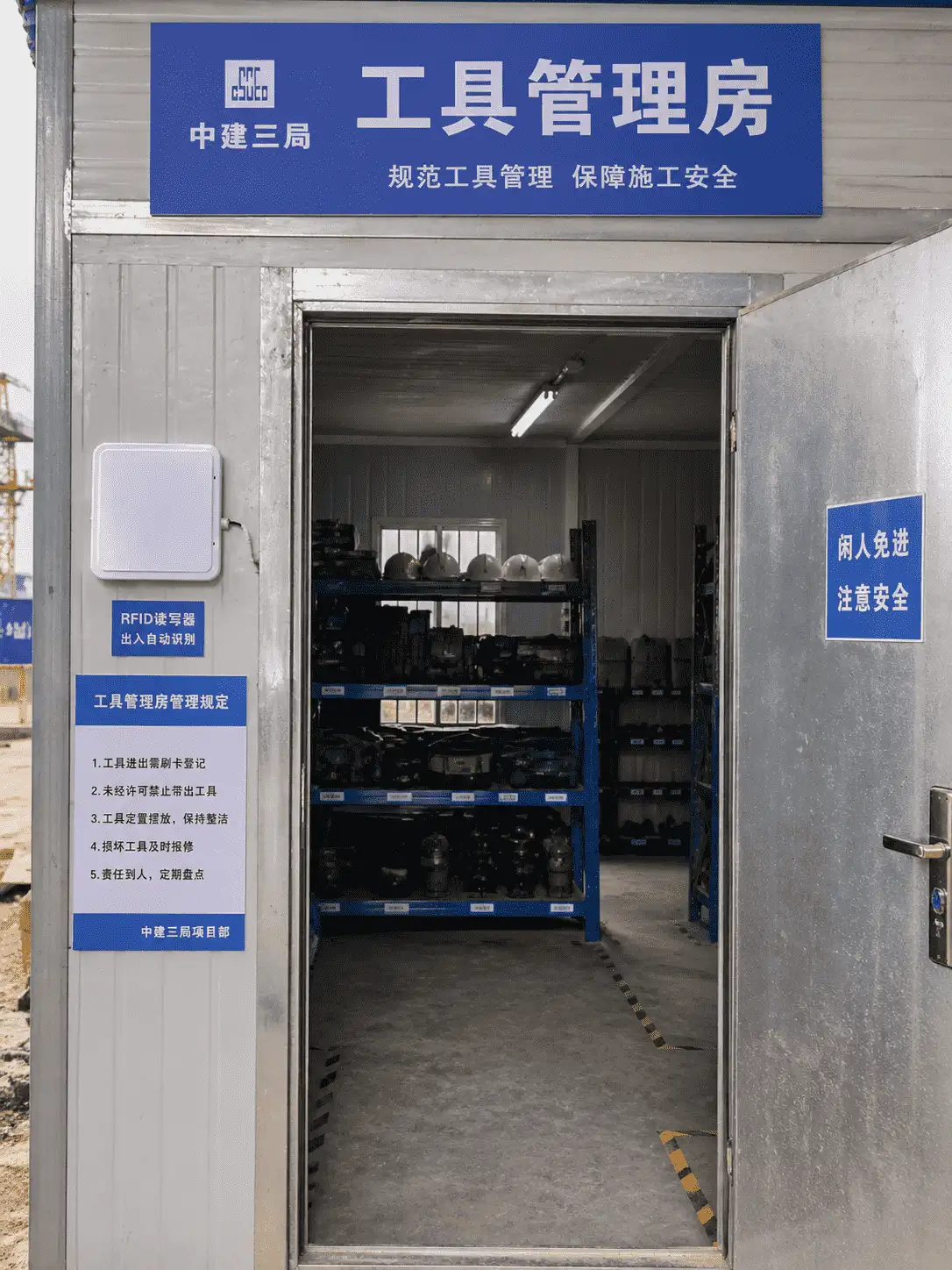
To track hand tools and heavy machinery, you must deploy ruggedized anti-metal tags. These feature ceramic or high-density FR4 substrates that create a dielectric gap, preventing the tool's metal body from absorbing the RF energy entirely.
| Tag Characteristic | Generic PET Inlay | Fongwah Ceramic Anti-Metal | Fongwah Flexible On-Metal |
|---|---|---|---|
| Form Factor | Flat, easily torn | Hard, screw/epoxy mount | Flexible, foam-backed |
| Tool Geometry Fit | Flat cardboard only | Flat metal (Server racks) | Curved metal (Pipes/Wrenches) |
| Environmental Rating | IP54 | IP68 (Chemical/Heat proof) | IP67 (Waterproof) |
| Cost-to-Failure Ratio | High (Fails instantly) | Low (Outlasts the tool) | Medium (Perfect for hand tools) |
The Dielectric Gap Explained
Let's talk real-world integration success rates. When outfitting an oil rig or a construction site, you aren't just scanning cardboard boxes on a conveyor belt. You are tagging curved wrenches, oily drill bits, and massive steel scaffolding.
Look at the table above. The reason a cheap PET inlay fails is capacitance. The tool itself becomes part of the antenna, shifting its resonant frequency completely out of the 900MHz UHF band. Our Fongwah ceramic and FR4 RFID tags for tools utilize a specifically engineered dielectric spacer. This physical gap isolates the copper trace from the steel, keeping the antenna tuned perfectly to 902-928 MHz.
Form Factor Matters
For flat surfaces like heavy machinery chassis, rigid ceramic tags bolted directly into the metal provide extreme durability. But for small, curved hand tools, rigid tags simply won't stick. That’s why we developed flexible on-metal tags using specialized RF-friendly foam. You can wrap them around a power drill handle, and the anti-collision algorithm on our reader will still pick them out from a dense pile of 50 other tools in milliseconds. This is how you achieve 99.9% inventory accuracy.
Can High UHF RFID Reader Performance Actually Lower Costs?
Integrators often over-deploy cheap readers to cover dead zones, ballooning their infrastructure costs. More hardware doesn't equal better read rates; superior receiver sensitivity does.
Investing in Fongwah’s high-performance UHF readers with -85 dBm receiver sensitivity allows a single device to cover 400 square meters. By maximizing the tracking distance per node, you drastically reduce cabling, switch ports, and the overall asset tracking cost associated with your RFID tags.
| ROI Variable | Budget Reader Setup | Fongwah High-Sensitivity Setup | Cost Impact |
|---|---|---|---|
| Receiver Sensitivity | -70 dBm (Deaf to weak signals) | -85 dBm (Hears micro-backscatter) | Requires fewer readers per zone |
| Anti-Collision Power | ~100 tags/sec | 400+ tags/sec (Impinj E710 core) | No missed tools during scans |
| Infrastructure Needs | 4 Readers + 16 Antennas | 1 Reader + 4 High-Gain Antennas | 70% reduction in cabling / labor |
| Total Ownership Cost | Spikes due to maintenance | Predictable and highly scalable | Dramatically improved ROI |

Receiver Sensitivity is King
Any veteran engineer knows that the actual hardware cost is only a fraction of the total project budget. The real killer is the integration labor: pulling Cat6 cable, mounting brackets, and configuring switch ports for an oversized network.
When competitors talk about UHF RFID reader performance, they only brag about transmit power. But when you are dealing with anti-metal tags, the backscattered signal returning to the reader is incredibly weak. If your reader has poor sensitivity (like -70 dBm), it simply won't "hear" the tag. Our Fongwah industrial readers operate at an ultra-sensitive -85 dBm. We can hear a whisper in a hurricane.
Slashing Asset Tracking Cost
Because our hardware can accurately read heavy equipment at 15 meters, you don't need to grid your entire warehouse ceiling with dozens of cheap readers. You can funnel bottlenecks using just one high-performance 4-port reader. Coupled with a rock-solid SDK, your C# or Java backend will process hundreds of tool movements a second without choking. By optimizing the reader's "ears," you slash your overall RFID asset tracking costs, delivering a leaner, more profitable system integration to your end client.
Real asset security requires hardware engineered to defeat bad physics. By matching high-sensitivity readers with anti-metal tags, you eliminate blind spots and safeguard heavy equipment. But hardware is only half the battle—your software needs to process that data flawlessly. Stuck on the software side? Reach out to our engineering team today for a free C# sample code snippet to accelerate your integration.
RFID Tracking for Heavy Equipment
Metal acts as a reflector for UHF radio waves, creating multipath interference. The tool's surface alters the tag's capacitance, shifting its resonant frequency out of the 900MHz band and causing the signal to cancel out entirely.
How do you achieve long RFID tracking distances on metal tools?
You must use ruggedized anti-metal tags with a specifically engineered dielectric spacer (like ceramic or FR4) to isolate the antenna. Combine these tags with an industrial fixed reader operating at high receiver sensitivity (e.g., -85 dBm) to reliably capture weak backscatter signals.
Does deploying high-power RFID hardware increase total project costs?
No, it actually lowers integration costs. A single high-sensitivity reader can cover a much larger zone, drastically reducing the need for excess readers, Cat6 cabling, switch ports, and installation labor. For a technical evaluation of your specific site, contact our engineering team directly.