Struggling with RFID terms? It's tough to buy the right gear if you don't know the basics. Let me make it simple for you.
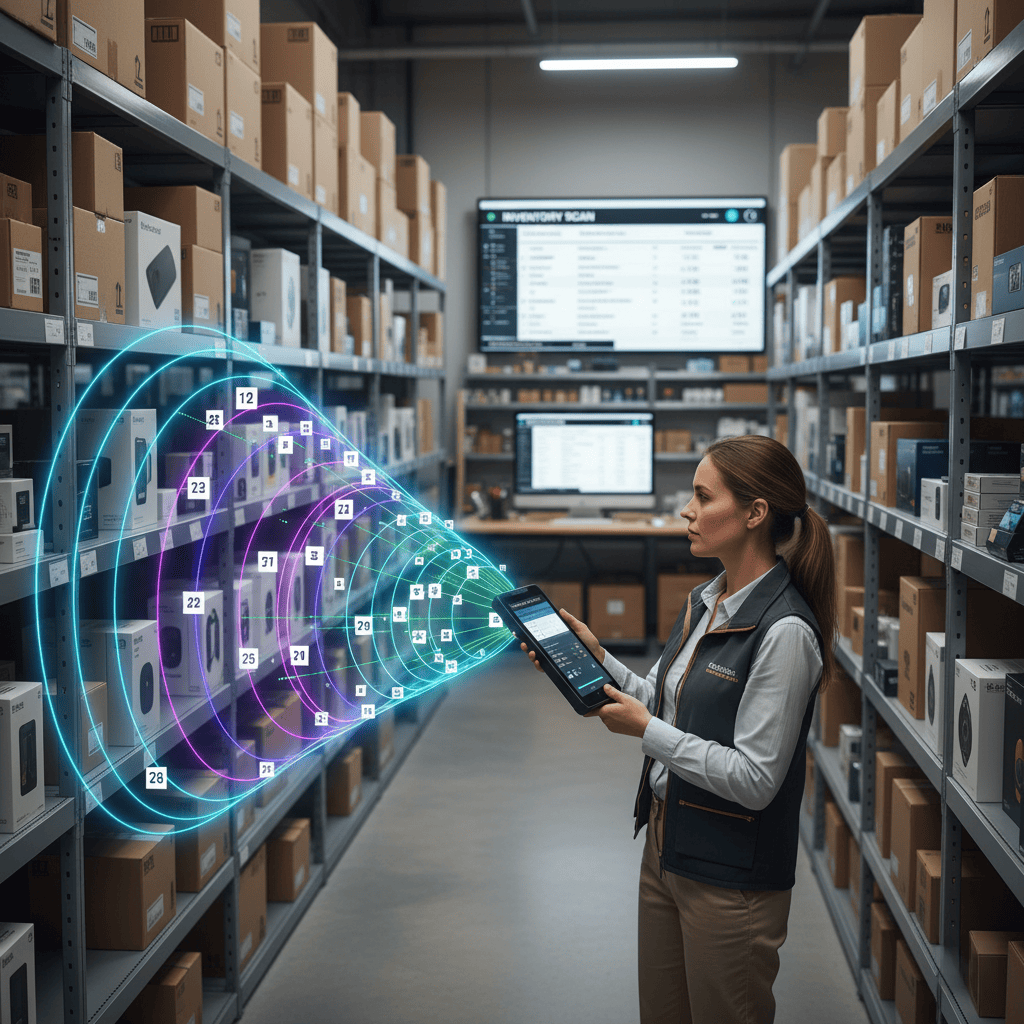
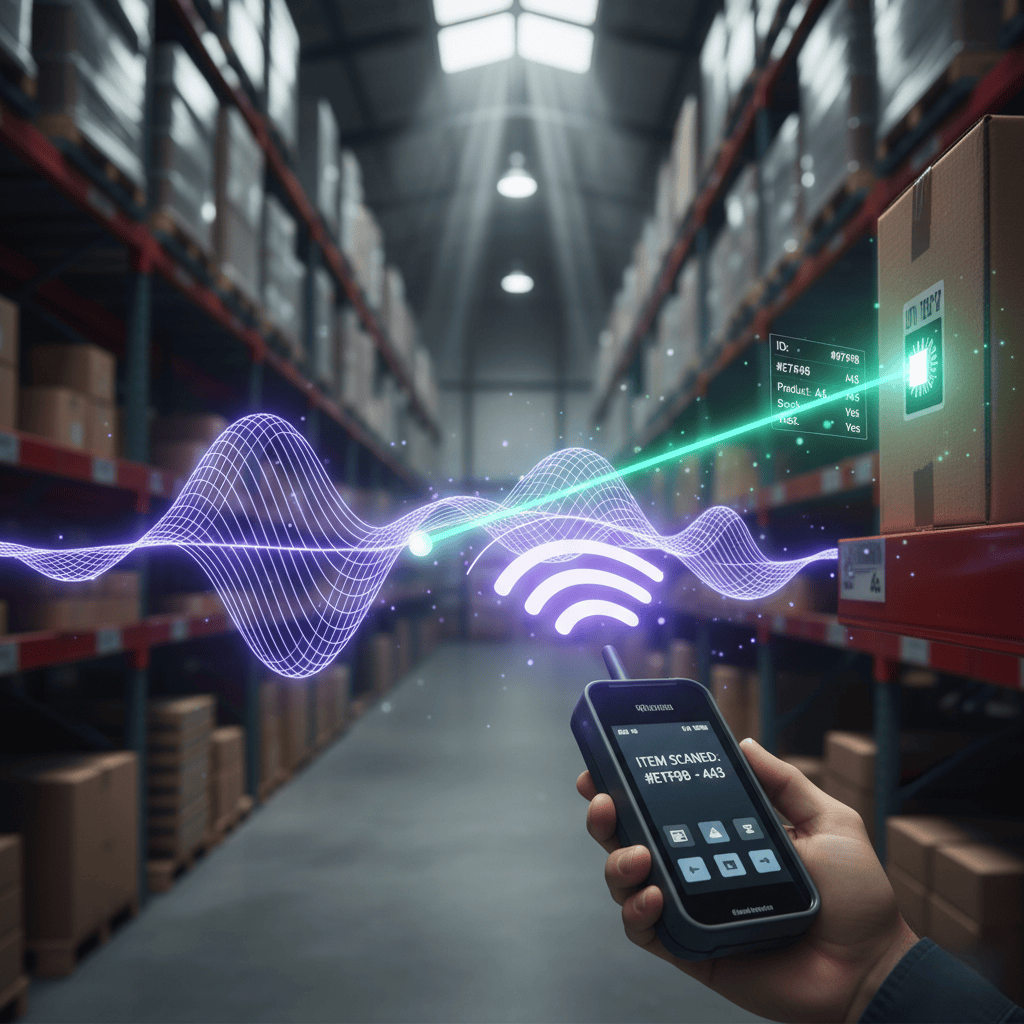
RFID uses radio waves to send information between a tag and a reader. The reader sends a signal, which powers the tag. The tag then sends back its unique data. It’s a wireless conversation.
That’s the big picture. I've spent years in this industry, from the factory floor to my current role, and I’ve seen how this simple concept solves complex problems. But to make smart purchasing choices for your own project, you need to understand the individual parts of that conversation. It's not just about a tag and a reader. There's more to it, and getting the details right is what separates a successful project from a frustrating one. Let's break down the essential components you'll be looking at.
What are the core components of an RFID system?
Feeling lost in all the RFID parts available? Choosing the wrong one can kill your project's budget. Let’s focus on the three main components you need to know.
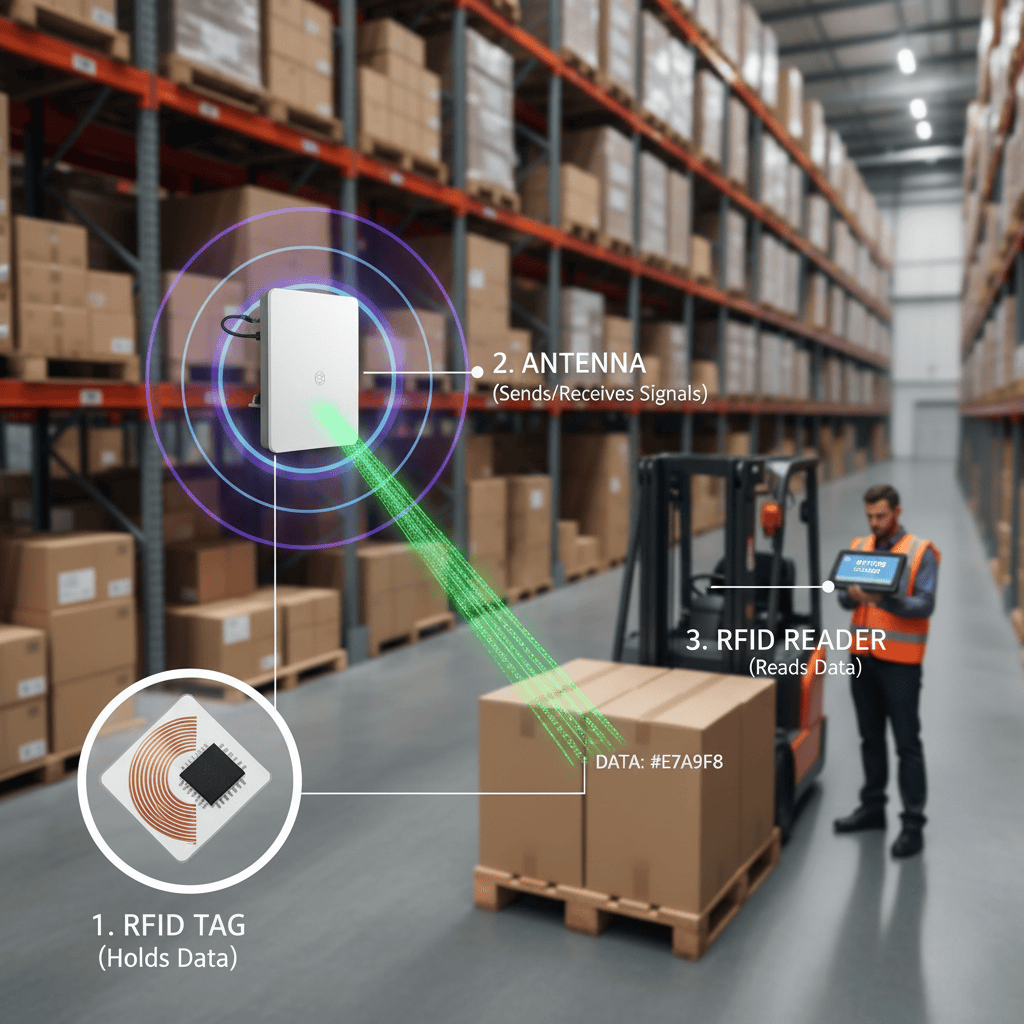
An RFID system has three main parts: the RFID tag1, the RFID reader2 (or interrogator), and the antenna. The tag holds the data, the reader reads it, and the antenna sends and receives the radio signals.
When I was first starting out on the production line at Fongwah, I physically handled thousands of these components every day. I learned quickly that even though they seem simple, each one plays a critical role. Think of it like a team. If one member isn't right for the job, the whole team fails. As a buyer, your job is to pick the right team for your specific goal. I’ve seen clients buy the most expensive reader but pair it with a cheap, mismatched antenna, and then wonder why the system doesn't work. It's a common mistake. Understanding each component's job helps you avoid that.
The Tag (Data Carrier)
The tag is the heart of your data collection. It's a small microchip attached to an antenna, usually on a label or inside a hard case. Its only job is to store a unique identifier and send it when asked.
The Reader (The Brain)
The reader is the brain of the operation. It generates the radio waves that the antenna sends out. It then listens for the tags' responses, decodes the data, and sends it to a computer or other system.
The Antenna (The Messenger)
The antenna is the bridge between the reader and the tag. It converts the reader's electrical signal into radio waves and broadcasts them. It also captures the faint radio waves coming back from the tag.
| Component | Primary Function | Key Buying Considerations |
|---|---|---|
| RFID Tag | Stores and transmits a unique ID | Memory size, physical form, environment resistance |
| RFID Reader | Powers tags and reads their data | Fixed vs. mobile, connectivity options, power output |
| Antenna | Transmits and receives radio waves | Frequency, polarization, physical size, and gain |
How do RFID tag1s get their power?
Not sure which tag type to choose for your project? The wrong one leads to bad performance or dead batteries. It all comes down to their power source.
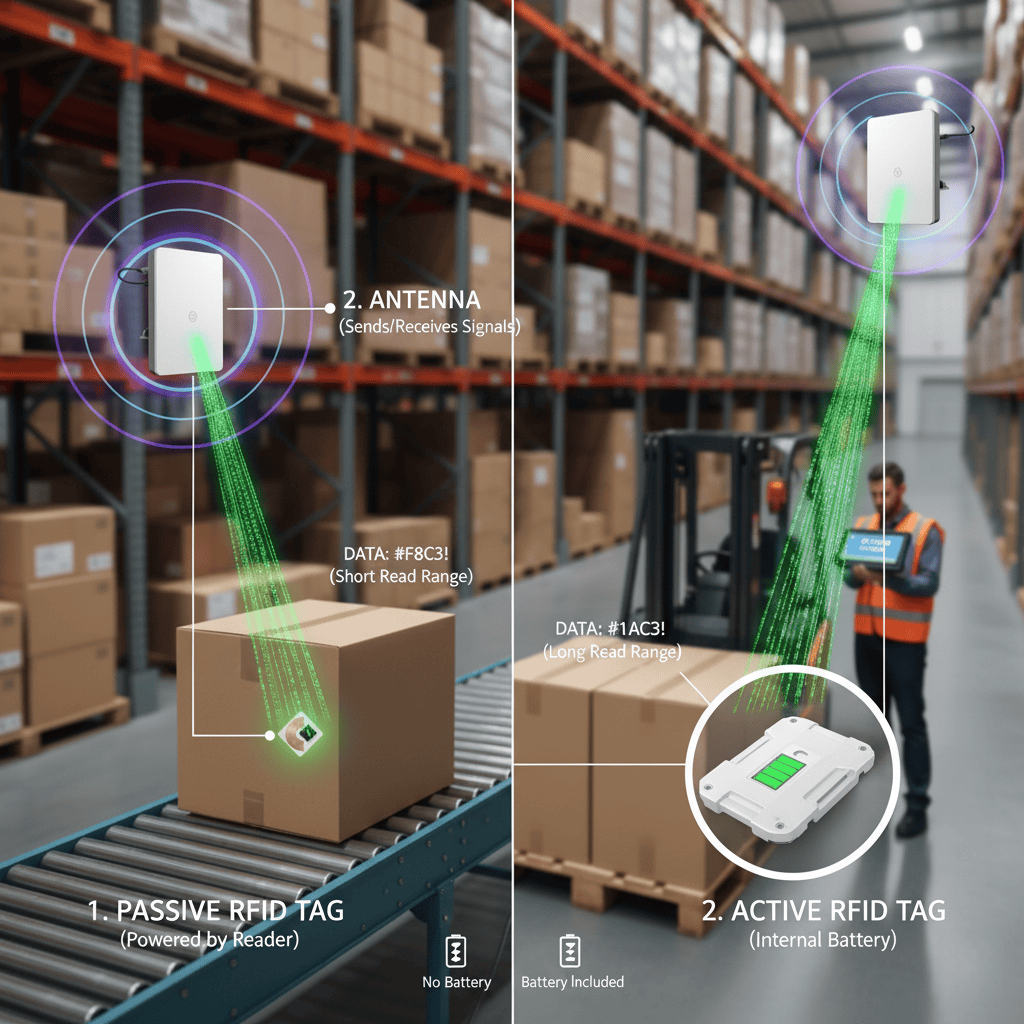
RFID tag1s get power in two main ways. Passive tags3 are powered by the reader's radio waves. Active tags4 have their own internal battery. This difference is critical for determining a tag's read range and cost.
I remember a client who came to me completely frustrated. They had purchased a system to track large equipment in a massive storage yard. The problem was, their tags were only reading from a few feet away. They had bought passive tags for a long-range application. It was an expensive mistake that could have been avoided by understanding this one fundamental difference. Your application and your budget will almost always point you directly to the right choice. Don't pay for a long-range active tag if all you need to do is scan items at a checkout counter.
Passive Tags
These are the most common and cheapest tags. They have no internal power source. They wait for a signal from a reader. The reader's signal is strong enough to momentarily power the tag's chip, which allows the tag to send back its information.
Active Tags
These tags have their own battery. Because they have an internal power source, they can broadcast their signal over a much longer distance. They are larger, more expensive, and have a limited lifespan because the battery will eventually die.
Semi-Passive (BAP) Tags5
There is also a hybrid category. A semi-passive tag, or Battery-Assisted Passive (BAP) tag, uses a battery. But the battery is only used to power the chip, perhaps for a sensor. The tag still uses the reader's signal to communicate back. This gives them a longer read range than passive tags but a longer battery life than active tags.
| Feature | Passive RFID | Active RFID |
|---|---|---|
| Power Source | Harvested from the reader's signal | Internal battery |
| Read Range | Short to medium (inches to ~30 feet) | Long (up to 300+ feet) |
| Cost Per Tag | Very low ($0.05 - $1) | High ($5 - $50+) |
| Lifespan | Very long (20+ years) | Limited by battery (3-10 years) |
| Best For | Retail, supply chain, access control | High-value assets, container tracking, tolling |
What affects the read range and accuracy?
Are you getting inconsistent reads from your system? Unreliable data makes the whole investment worthless. Several key factors can affect your system's performance.
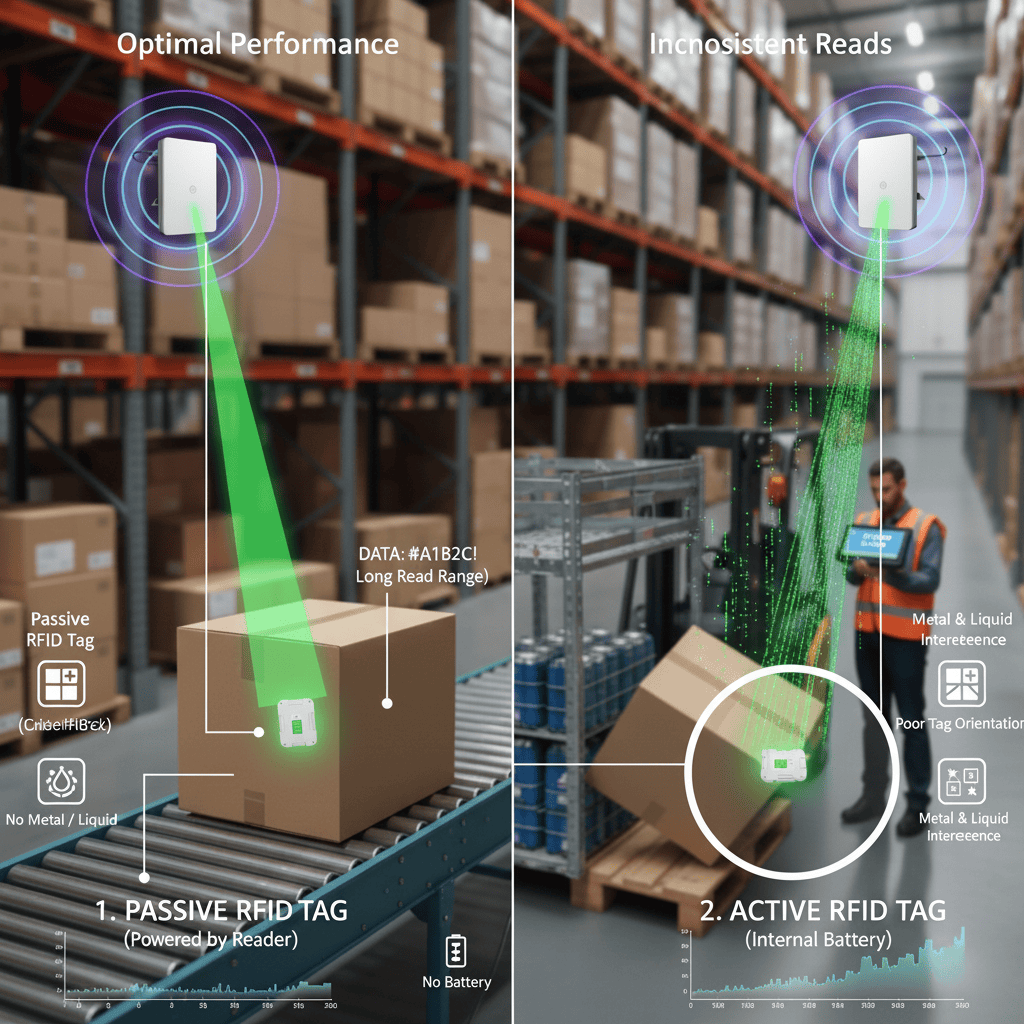
Read range is affected by the tag type (active vs. passive), reader power, and antenna design. Accuracy is impacted by environmental factors like metal and liquids, and by tag orientation. Choosing the right components for your environment is key.
When I was an engineer, one of our biggest challenges was a project for tracking metal industrial parts. The client's initial tests were a complete failure. The radio waves were just bouncing off or being absorbed by all the metal, and the read rate was almost zero. It was a classic environmental problem. We solved it by using special anti-metal tags that are designed to work on these surfaces. This experience taught me that as a buyer, the most important information you can give your supplier is a detailed description of your operating environment. At Fongwah, it's the first thing we ask.
Component Factors
The hardware you choose is the foundation. A powerful reader can't compensate for the wrong tag frequency. UHF (Ultra-High Frequency) gives you a longer read range, but it's more sensitive to interference. HF (High Frequency) has a shorter range but works an inch from metal and water. The antenna's size and polarization also have a huge impact.
Environmental Factors
This is where most projects run into trouble. Metal surfaces will reflect radio waves, creating dead zones where tags can't be read. Water and other liquids absorb radio waves, which can dramatically reduce read range, especially with UHF systems. Even having many tags crowded together can cause "tag collision," where the reader struggles to read them all at once.
| Factor | Impact on Performance | Buyer's Tip |
|---|---|---|
| Frequency (UHF vs. HF6) | UHF has a longer range and faster read speed. HF is better near metals/liquids. | Match the frequency to the items you are tracking and the environment. |
| Metal Surfaces | Reflects and interferes with radio waves, severely reducing read range. | Always use specially designed "anti-metal" or "on-metal" tags. |
| Liquids (Water) | Absorbs UHF radio waves, acting as a barrier. | For liquid items, test thoroughly or consider using HF technology. |
| Antenna Polarization | A mismatch between tag and reader antenna alignment reduces signal. | Use circular polarized antennas when tag orientation is unpredictable. |
Conclusion
Understanding these basics of how RFID works is the first step. Now you can choose the right components for your project with confidence.
---Explore this link to understand the core function of RFID tags and their importance in data collection. ↩
Learn about RFID readers and how they interact with tags to facilitate data transfer. ↩
Find out why passive tags are popular and their advantages in various applications. ↩
Understand the benefits of active tags, including their read range and applications. ↩
Explore the unique features of semi-passive tags and their ideal use cases. ↩
Explore the differences between UHF and HF technologies to make informed choices. ↩