Managing a workforce is difficult when you rely on keys, passwords, and manual logs. You waste hours resetting forgotten passwords or tracking down who entered the parking lot. You need a system that connects every action a worker takes to a single, secure credential.
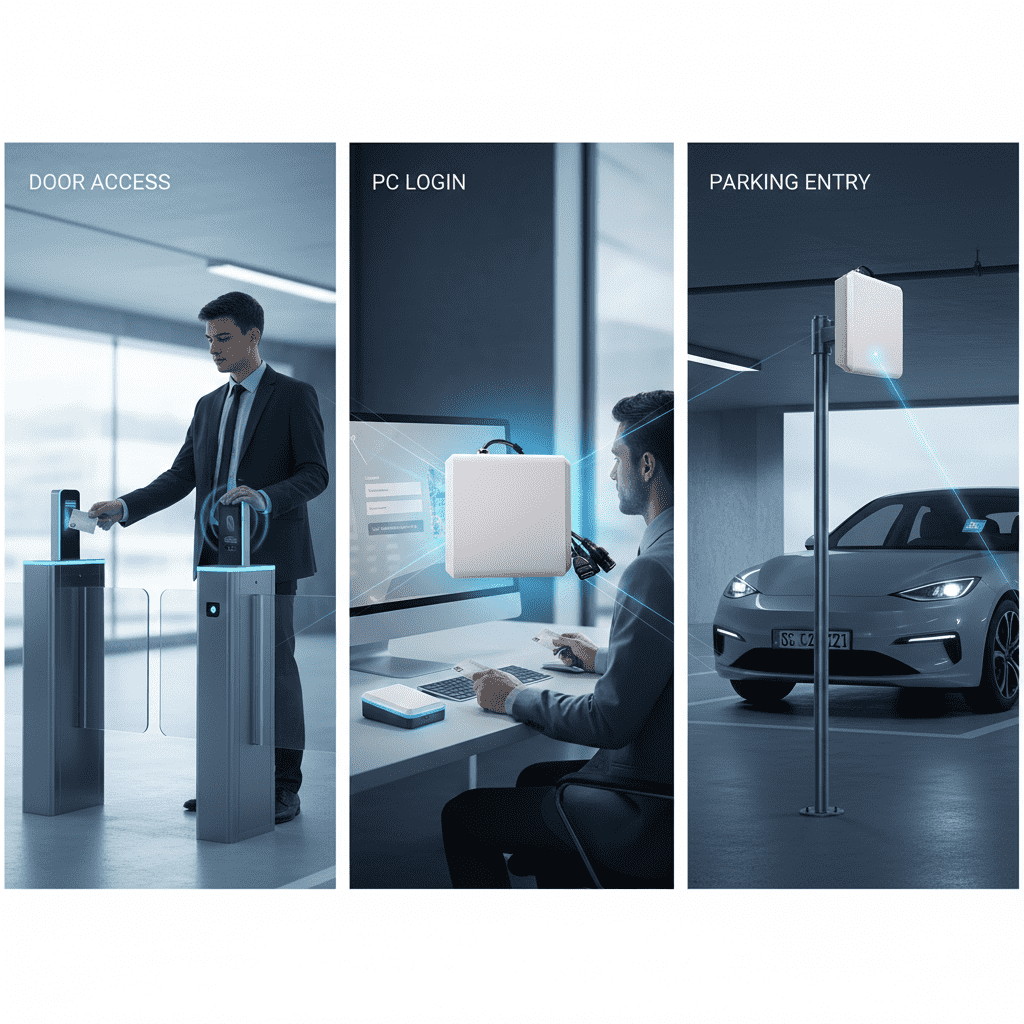
Innovative workforce management integrates RFID technology into time attendance, parking systems, and equipment login. This approach turns a simple door badge into a universal key for both physical spaces and digital assets, streamlining operations and improving security.
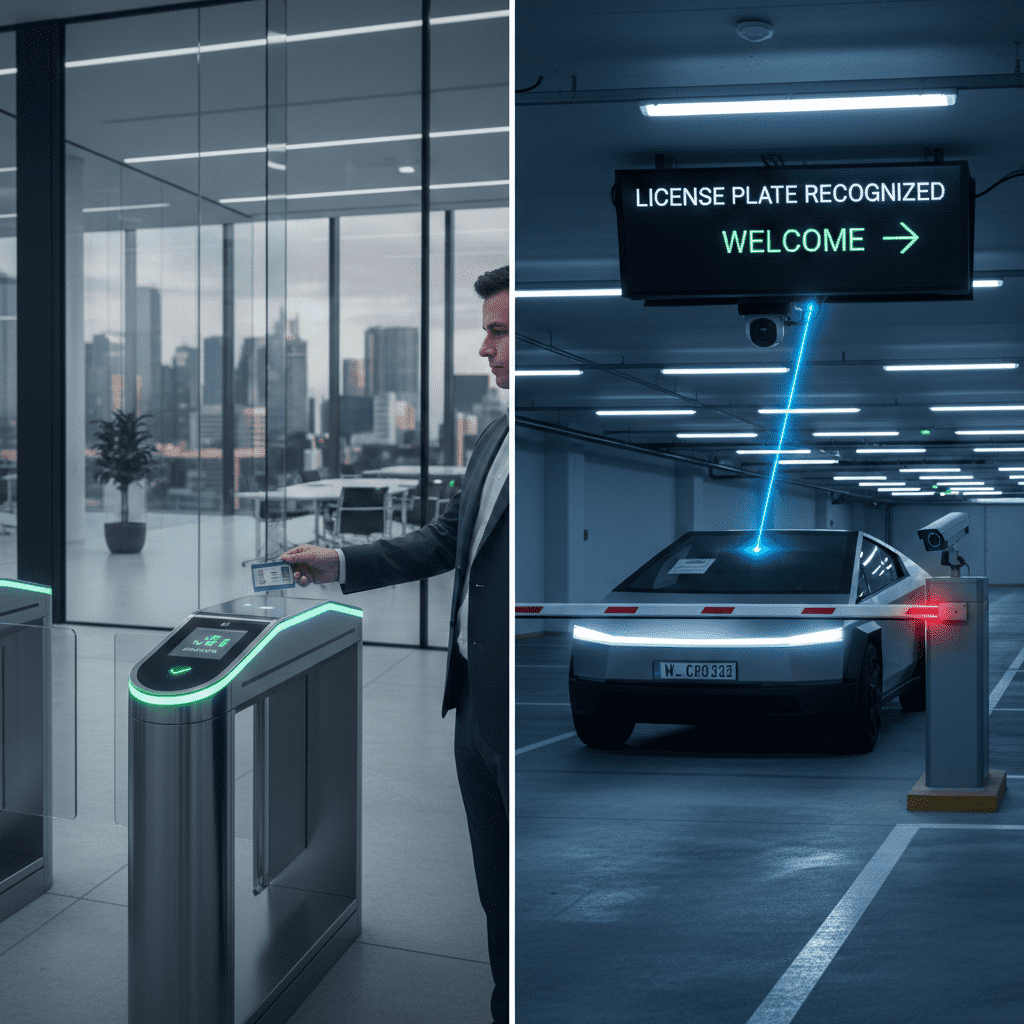
Many people think RFID is just for the front door. I used to think that too. When I started as a production line operator five years ago, my badge only did one thing: it let me into the building. But as I moved into engineering and then marketing, I realized that the plastic card in my pocket was a powerful tool. It contained data that could unlock computers, open gates, and track assets. If you limit your system to just doors, you are wasting 90% of its potential.
When should you choose an active RFID tag over a passive one for your facility?
Parking lots and large warehouses often suffer from traffic jams because standard readers cannot detect tags quickly enough. You might find drivers rolling down windows in the rain because the signal is too weak. You must choose the right frequency and energy source to keep traffic moving.
An active RFID tag has an internal battery that boosts its signal range to 100 meters, making it ideal for tracking high-value assets in real-time. However, for a vehicle RFID Security gate, passive UHF tags are often the smarter commercial choice because they are battery-free and cost effective while still offering decent range.
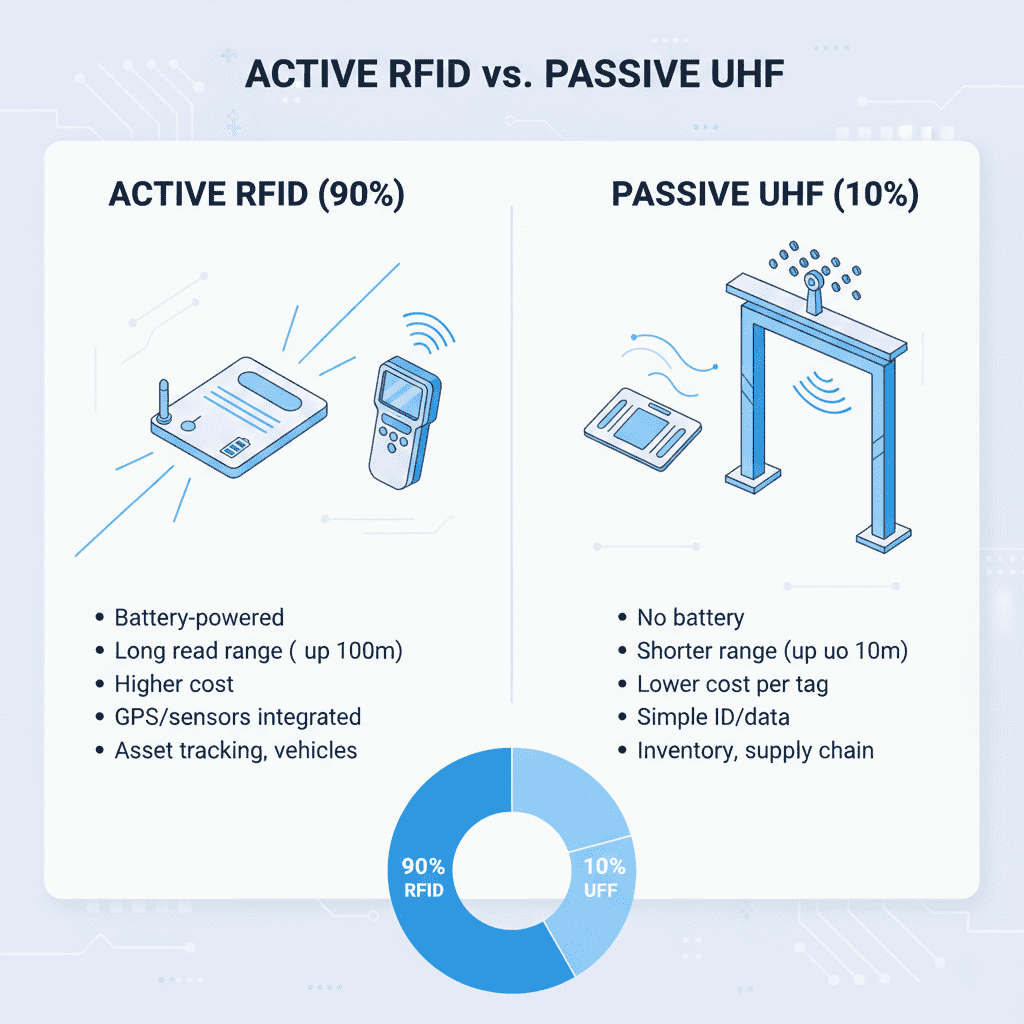
I often see confusion about tag types. A client will ask me, "Jay, do I need an active tag for my parking garage?" To answer this, we must understand the difference. A passive tag has no battery. It wakes up only when the reader "shouts" at it with radio waves. It is cheap and durable. This is what we put on windshields for parking. An active RFID tag is different. It has a battery. It "shouts" its own signal constantly.
In my experience, using active tags for employee parking is overkill. They cost too much to replace. However, I visited a mining site in Canada once. They used active tags on their heavy trucks. Why? Because safety was the priority. They needed to know exactly where every truck was in the huge pit, instantly. For your standard office RFID Security gate, I recommend Long-Range UHF (Passive). It reads from 5 to 10 meters away. The gate opens before the car stops.
Here is how I break it down for my clients:
| Feature | Passive UHF Tag | Active RFID Tag |
|---|---|---|
| Power Source | None (Reader energy) | Internal Battery |
| Range | 1 - 15 meters | 30 - 100+ meters |
| Cost | Low ($0.10 - $1.00) | High ($20.00+) |
| Best Use | Parking, Inventory, Gates | Real-time Location, High-Value Assets |
| Maintenance | Zero | Battery Replacement needed |
You must analyze your budget and your goal. If you want to open a gate, go Passive UHF. If you want to track a forklift moving across a 50,000 sq ft factory, go Active.
How can USB RFID readers bridge the gap between physical and digital security?
Employees hate remembering complex passwords, so they write them on sticky notes. This destroys your cybersecurity efforts. You need a way to log into computers that is as fast as unlocking a door.
Using USB RFID readers enables secure, contactless PC login for healthcare and factory workstations. This provides a seamless bridge between physical security and cybersecurity, ensuring that only the person holding the badge can access sensitive digital files.

Modern access control isn't just about unlocking doors; it's about unlocking digital assets. I remember working with a hospital client. They had a big problem. Nurses had to type a long password every time they went to a computer terminal. They did this 50 times a day. It was slow. Sometimes, they just left the computer logged in. This was a massive privacy risk for patient data.
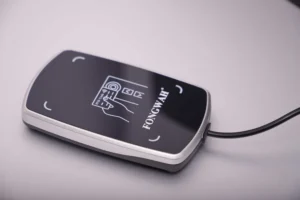
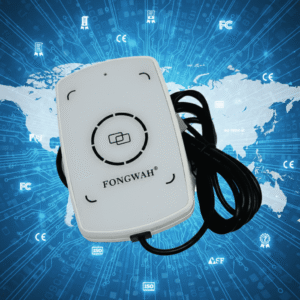
We introduced a simple solution using our Fongwah USB desktop readers. We connected the reader to the USB port. We used software to link the nurse's physical door badge to their Windows account. Now, the nurse walks up. Tap. The computer unlocks. They finish their work. Tap. It locks. It is fast. It is secure. And the staff loves it because they do not have to type.
This works perfectly in factories too. Imagine a CNC machine controller. You do not want an untrained intern changing the settings. You install a reader. Only the senior engineer's card can unlock the control panel. This is where the "Access Control" definition expands. It is not just about who enters the room. It is about who controls the machine. We provide the hardware that speaks the standard languages (HID Keyboard simulation or virtual serial port). This makes it very easy for your IT team to integrate it into your existing software. You do not need to buy a whole new system. You just add the readers.
Can you build a prototype RFID door lock access control system Arduino project easily?
Engineers often struggle to test their ideas because industrial hardware is "locked down" and hard to program. You might have a brilliant idea for a custom system but feel stuck because you cannot easily connect a reader to your microcontroller. You need developer-friendly hardware.
Building an RFID door lock access control system Arduino prototype is straightforward if you use a reader with transparent communication protocols like UART or Wiegand. This allows you to prove your concept quickly before scaling up to mass production with industrial-grade housing.
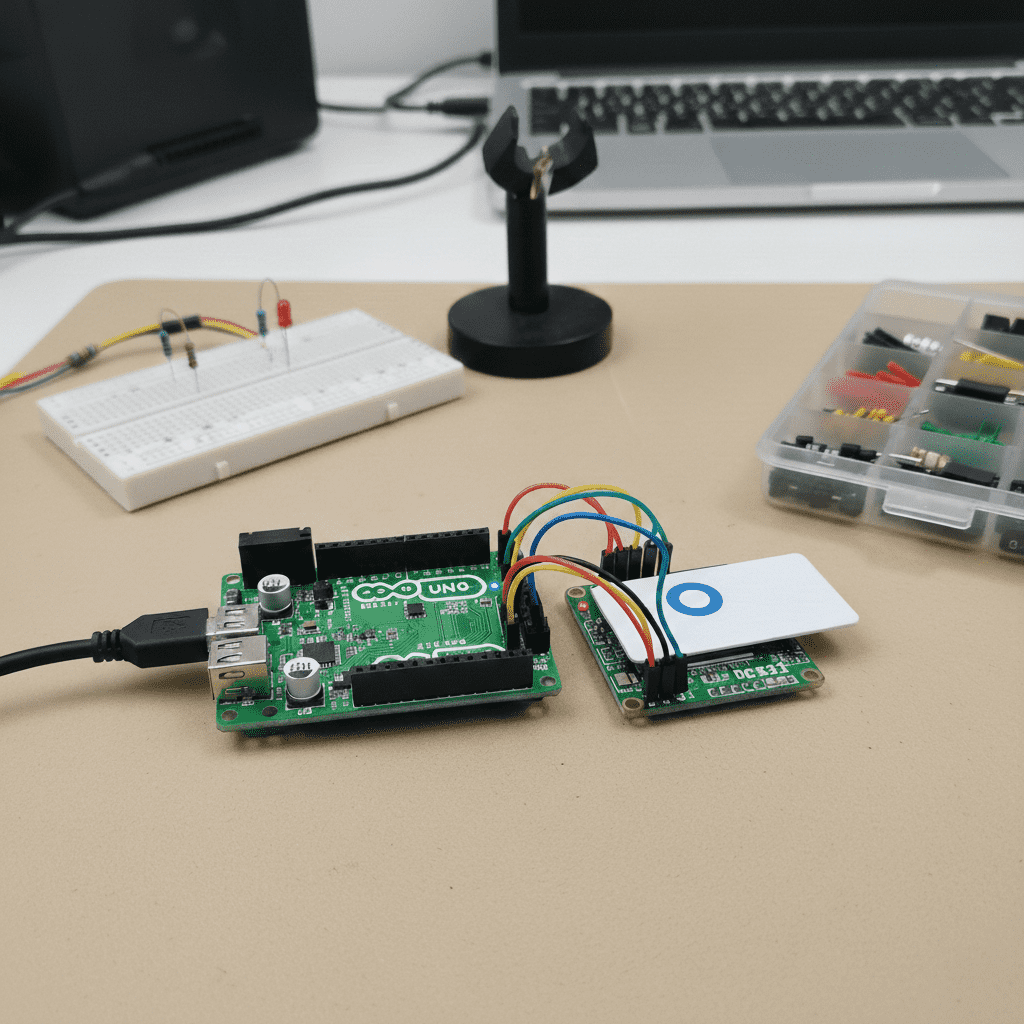
I love talking to engineers. I started as one. I know the feeling of excitement when you have an idea. Maybe you want to build a smart cabinet that tracks who takes which tool. But then you buy a commercial reader, and the manual is a secret. The wires are confusing. You get stuck.
At Fongwah, we support the makers and the prototypers. We know that today's RFID door lock access control system Arduino project is tomorrow's commercial product. We keep our interfaces open. If you pick up one of our modules, you will see standard pins: VCC, GND, TX, RX. You can connect TX and RX to your Arduino or Raspberry Pi. You send a simple command string. The reader answers.
I have seen customers build amazing things starting with just a breadboard and our reader. One engineer built a secure mailbox system for his apartment complex. Another built a time-tracking system for a construction site. They started with a cheap prototype to show their boss. Once the boss said "Yes," they ordered our finished, enclosed industrial readers for the final installation. The code they wrote for the prototype worked perfectly with the final product because the protocol was the same.
We provide the datasheets. We provide the command sets. We do not hide how our technology works. Whether you are a student or a senior R&D engineer, we want you to succeed in building your solution.
Frequently Asked Questions
A: An active RFID tag has an internal battery and broadcasts signals up to 100m, making it expensive and requiring maintenance. Fongwah's UHF passive tags (battery-free) are much more cost-effective. With our high-performance UHF readers, you can still achieve a 5-10m read range, which is perfect for most RFID Security gate and parking applications without the hassle of changing batteries.
Q: Can I use Fongwah readers to build an RFID door lock access control system with Arduino?
A: Yes, absolutely. We love developers! Our OEM modules support standard interfaces like TTL (UART) and Wiegand, making them easy to interface with microcontrollers like Arduino, Raspberry Pi, or ESP32. We provide the necessary pinout diagrams and command sets to help you prototype your own smart lock or time attendance system quickly.
Q: How do your USB readers handle PC Login and Authentication?
A: Our USB desktop readers can emulate a keyboard (HID mode) to input card UIDs directly into login fields, or you can use our SDK to integrate reading directly into your authentication software. This provides a secure, password-free login experience for shared workstations in hospitals, factories, and offices.
Conclusion
Workforce management is an ecosystem that includes parking gates, computer terminals, and custom tools. By using the right mix of Active and Passive tech, and integrating USB readers, you create a seamless, secure environment.