Unsecured RFID tags risk massive data theft1 today. This vulnerability threatens your entire system's integrity. You must understand encryption to solve this now.
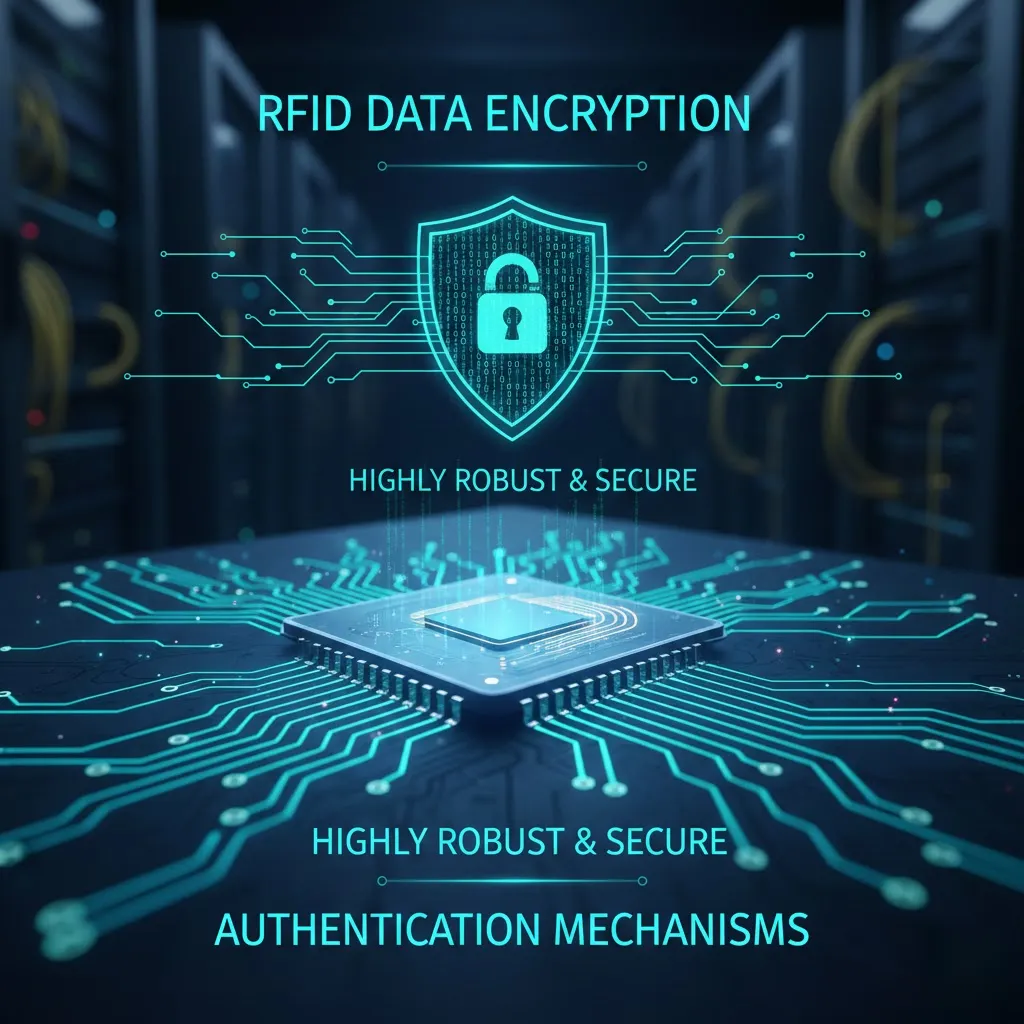
RFID security2 relies on mechanisms like mutual authentication3 and AES encryption4 to protect data. These protocols ensure only authorized readers access tag information. By implementing standard algorithms such as 3DES or AES, systems verify identity and prevent cloning, effectively securing asset management and access control.

I have seen many security failures in my career. Companies often ignore basic protocols. Then, they lose data. We need to stop them. Let us look closer at the specific mechanisms that prevent this.
Which Encryption Algorithms Best Protect RFID Data?
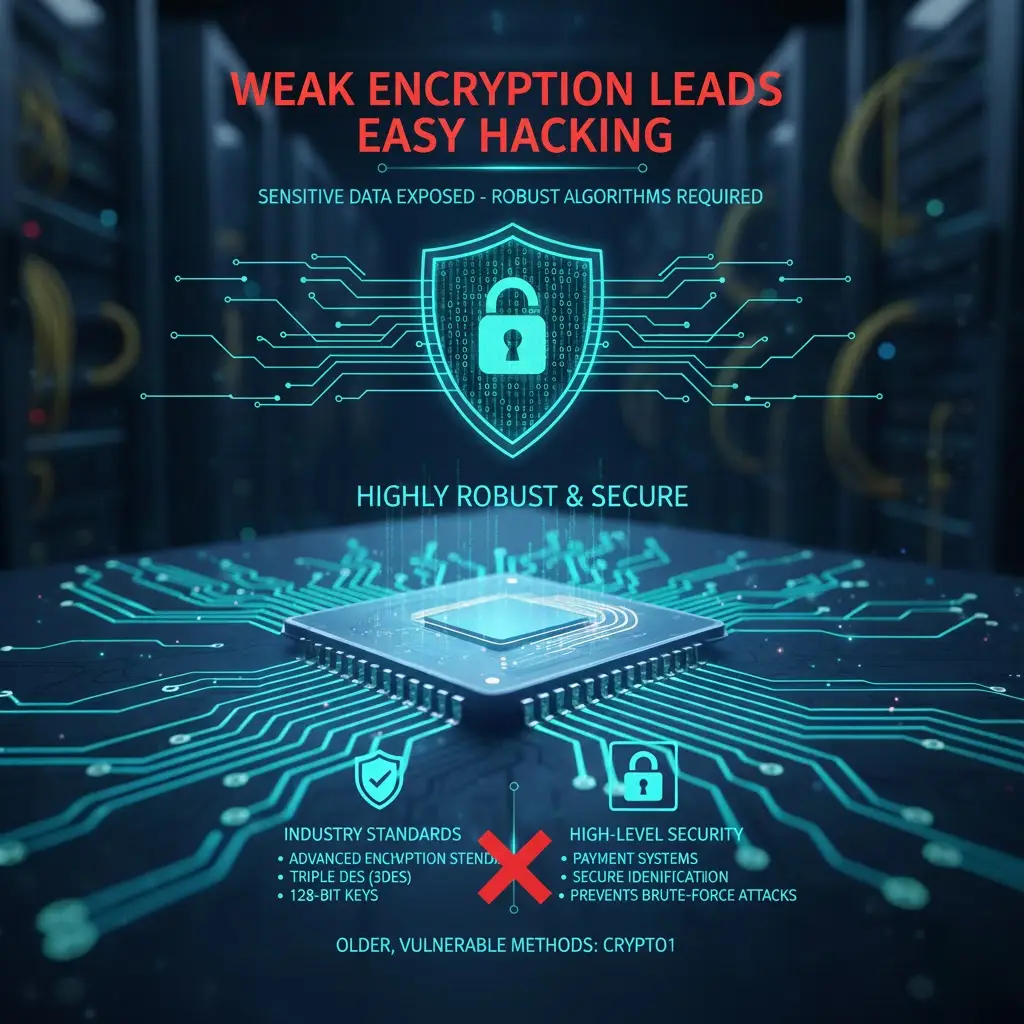
Weak encryption leads to easy hacking. Your sensitive data gets exposed quickly. You need robust algorithms to prevent this.
Advanced Encryption Standard (AES) and Triple DES (3DES) are the current industry standards. They replace older, vulnerable methods like the proprietary Crypto1. Using 128-bit keys makes brute-force attacks nearly impossible, ensuring high-level security for payment systems and secure identification applications.
I remember my early days on the production line at Fongwah. We used simple chips with almost no security. It was easy, but it was risky. Today, the landscape is different. We must use strong logical functions to scramble data. This makes the data look like noise to anyone without the key.
The Shift from Proprietary to Open Standards
In the past, many systems used the Crypto1 algorithm. It is a proprietary stream cipher. Researchers broke it years ago. I tell my clients to avoid it for high-security zones. Now, we rely on open standards like Triple DES (3DES5) and AES (Advanced Encryption Standard). These are trusted globally.
3DES applies the DES algorithm three times to each data block. It is slower but safer than the original DES. However, AES is the gold standard today. It supports key lengths of 128, 192, and 256 bits. Breaking a 128-bit key takes billions of years with current technology.
Balancing Speed and Security
You might think we should always use the strongest encryption. But there is a trade-off. Stronger encryption needs more processing power. This means the tag needs more energy. It also takes more time to read the card. For a subway gate, speed is vital. For a bank vault, security is vital. You must choose the right tool for the job.
We analyze the distinct features of common encryption standards6 below.
| Feature | Crypto1 (MIFARE Classic) | 3DES (DESFire EV1) | AES (DESFire EV2/EV3) |
|---|---|---|---|
| Security Level | Low (Broken) | High | Very High |
| Key Length | 48-bit | 112-bit / 168-bit | 128-bit |
| Processing Speed | Very Fast | Moderate | Fast (Hardware acc.) |
| Typical Use | Legacy hotels, simple ID | Transport, Vending | Gov ID, Secure Access |
I always advise upgrading to AES capable hardware. It provides the best balance for future-proofing your system.
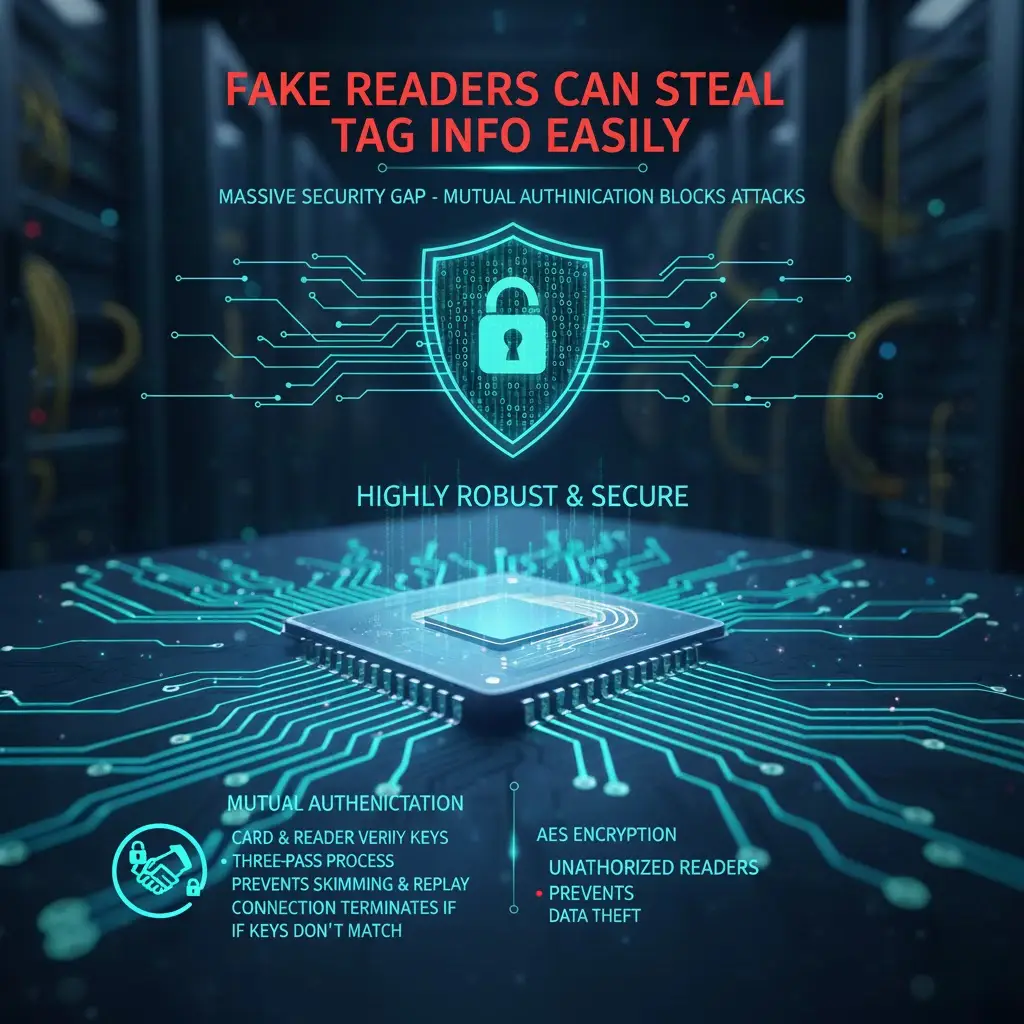
Fake readers can steal tag info easily. This creates a massive security gap in your facility. Mutual authentication effectively blocks these attacks.
Mutual authentication requires both the card and the reader to verify each other’s secret keys before exchanging data. This three-pass authentication process prevents skimming and replay attacks. If the keys do not match, the connection terminates immediately, keeping the data safe from unauthorized readers.
When I entered the engineering team, I learned that encryption is not enough. You can have encrypted data, but if you give it to the wrong person, it is useless. Authentication is about trust. The tag must trust the reader, and the reader must trust the tag.
The Challenge-Response Mechanism
The most common method is "Challenge-Response." It works like a secret handshake.
- Step One: The reader asks the tag for an ID.
- Step Two: The reader generates a random number (Challenge A) and sends it to the tag.
- Step Three: The tag encrypts Challenge A with its secret key. It sends the result back along with its own random number (Challenge B).
- Step Four: The reader decrypts the response. It checks if it matches Challenge A. If yes, the tag is real. Then, the reader encrypts Challenge B and sends it back.
- Step Five: The tag verifies the reader's response. Now, both sides trust each other.
Session Keys and Replay Attacks
A major threat is a "Replay Attack." A hacker records the signal between a card and a reader. Later, they play it back to the reader to open the door. Mutual authentication stops this. Every session uses a legitimate random number. The "handshake" is different every time. The old recording will fail.
I break down the authentication flow below for clarity.
| Step | Action | Direction | Purpose |
|---|---|---|---|
| 1 | Auth Command | Reader -> Tag | Initiates process |
| 2 | Token 1 (RndB) | Tag -> Reader | Encrypted random number from Tag |
| 3 | Token 2 (RndA + RndB') | Reader -> Tag | Reader proves it knows the key |
| 4 | Token 3 (RndA') | Tag -> Reader | Tag proves it knows the key |
| 5 | Access | Bidirectional | Data transfer starts |
This process happens in milliseconds. It ensures that no one can clone your access simply by listening to the radio waves.
Why Is Key Management Critical for Long-Term Security?
Lost keys mean total system failure. Recovering from this is very expensive and difficult. Proper management prevents this disaster.
Encryption is useless if keys are managed poorly. Secure Access Modules (SAM)7 store keys safely within hardware. Diversified keys ensure that if one tag is compromised, the rest of the system remains secure. This hierarchy is essential for robust, large-scale deployments.

During my time as a team leader, I saw clients store keys in a text file on a PC. This terrified me. If a hacker steals that file, they own the building. Hardware security is the only real solution.
The Role of Secure Access Modules (SAM)7
A SAM is like a SIM card for your RFID reader. It holds the master keys. The reader itself does not know the keys. The reader sends the data to the SAM. The SAM does the math and sends the answer back. Even if someone steals the reader, they cannot extract the keys from the SAM easily. At Fongwah, we integrate PSAM slots into our readers to support this high level of security.
Key Diversification
You should never use the same key for every card. If you do, hacking one card breaks the whole system. We use key diversification8. We take a Master Key. We mix it with the card's unique serial number (UID). This creates a unique key for that specific card. The SAM knows the Master Key. When a card approaches, the SAM calculates the unique key on the fly. This way, every card has a different password.
Lifecycle Management
Keys must change over time. You have an "Initialize" key for the factory. You have an "Application" key for the user. If you fire an employee, you remove their key entitlement. Good systems allow you to update keys over the air or through specific update stations.
Here is the comparison between storage methods.
| Method | Security Risk | Cost | Complexity |
|---|---|---|---|
| Host Software | High (Easy to copy) | Low | Low |
| Reader Firmware | Medium (Harder to extract) | Medium | Medium |
| SAM Hardware | Very Low (Tamper-proof) | High | High |
I believe investing in SAM and diversification is mandatory for any serious project. It saves you from catastrophe later.
Conclusion
RFID security2 demands strong encryption, strict mutual authentication3, and secure key management9. We must implement these three layers to prevent data theft1 effectively and maintain system integrity.
---Understand the implications of data theft and how to mitigate these risks in your RFID implementations. ↩
Explore this resource to understand essential practices that can safeguard your RFID systems against vulnerabilities. ↩
Learn how mutual authentication can significantly improve the security of your RFID systems and prevent unauthorized access. ↩
Discover the workings of AES encryption, a critical component in securing sensitive data in RFID systems. ↩
Find out why 3DES is still relevant in today's encryption landscape and how it can protect your data. ↩
Explore the latest encryption standards that can help secure your sensitive information. ↩
Learn about SAMs and their importance in enhancing the security of RFID systems. ↩
Discover how key diversification can protect your RFID system from potential breaches. ↩
Explore the critical role of key management in maintaining the security of encrypted data. ↩