Confused by RFID tag prices1? You see huge differences online. I'll explain the real costs to help you choose the right tag for your project.
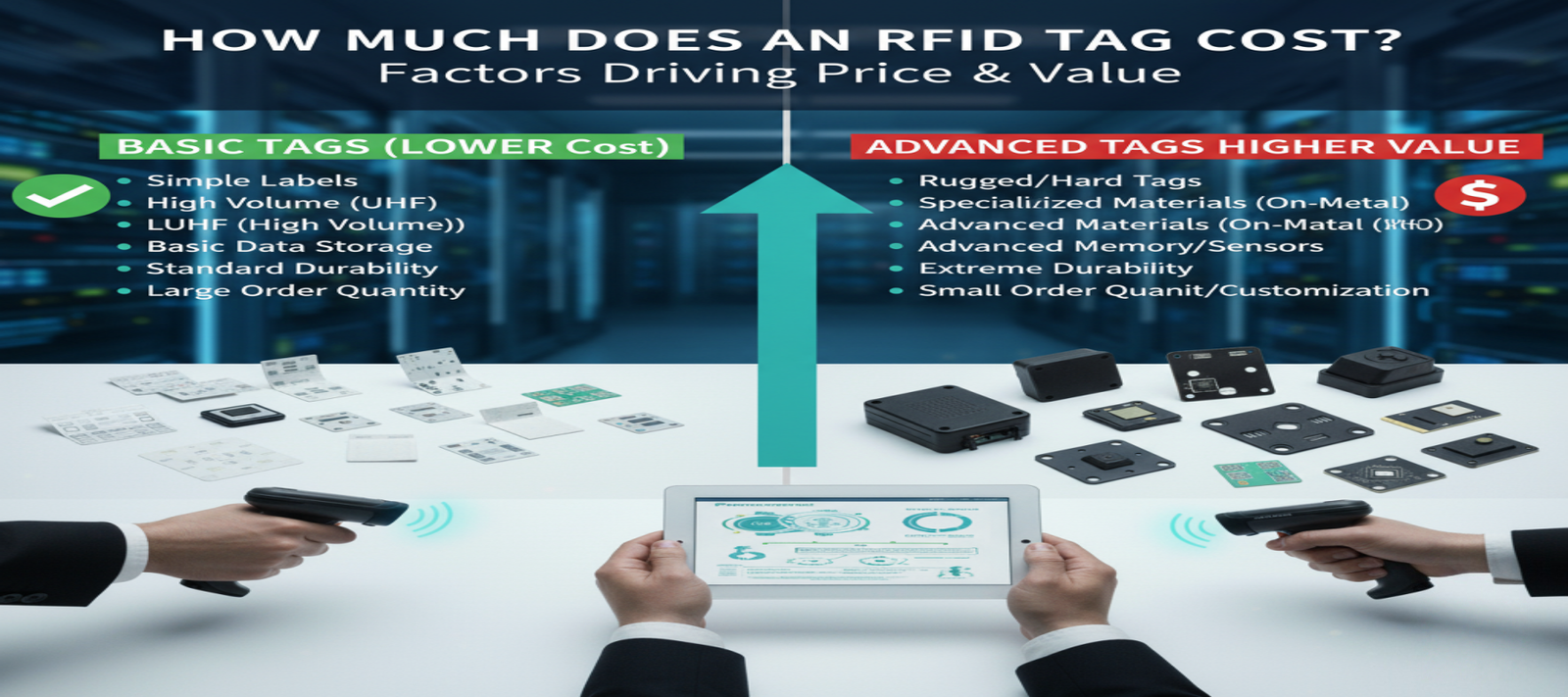
An RFID tag costs from $0.05 for a simple passive label to over $50 for a specialized active tag. The final price depends on the tag type, memory, durability, and the quantity you order. Simple passive tags are the most common and affordable option.
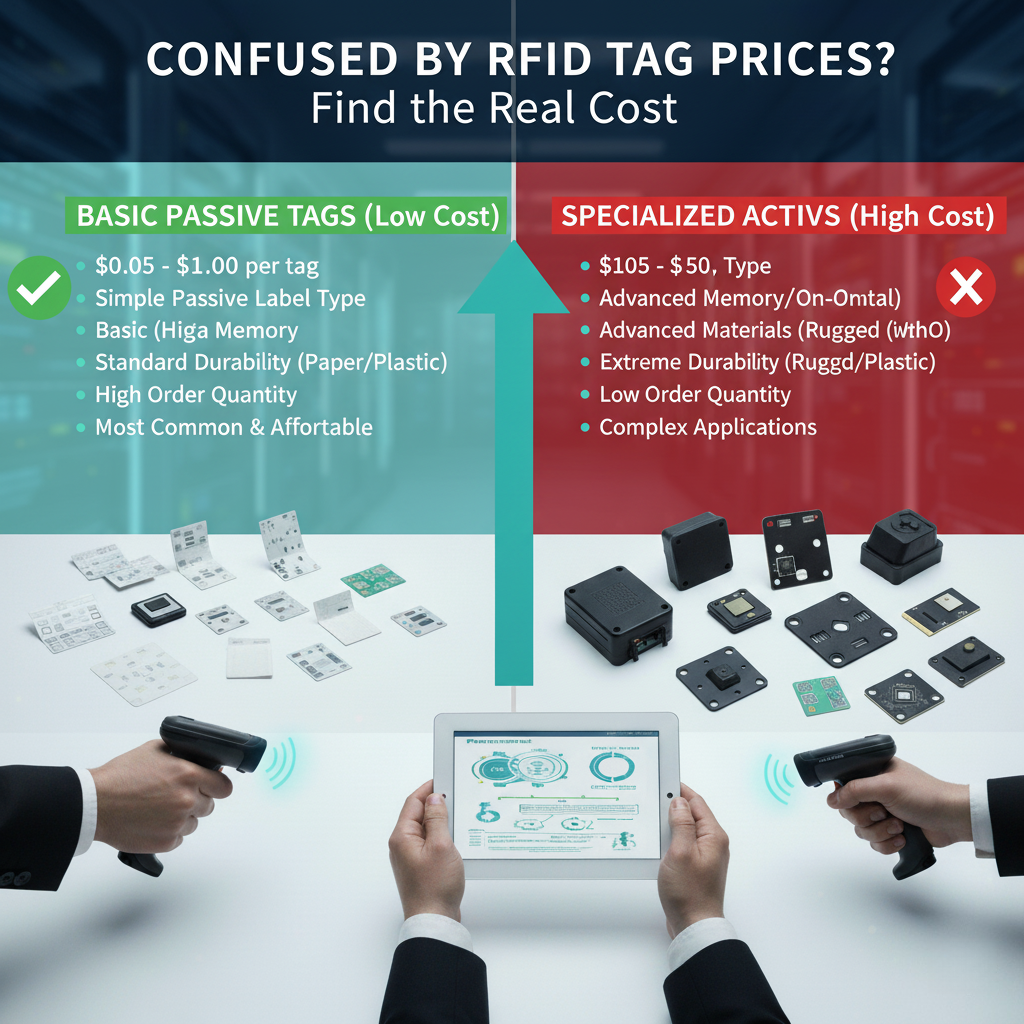
That price range is huge. It's not very helpful, right? The final price depends on many details. As a system integrator, I've learned that just looking at the price per tag is a big mistake. The sticker price tells you almost nothing about the tag's performance or reliability. You have to understand what you are actually paying for. So, let's break down the factors that really determine the cost.
See a tag for $0.10 and another for $20? It's confusing. The biggest reason for this difference is the core technology inside the tag.
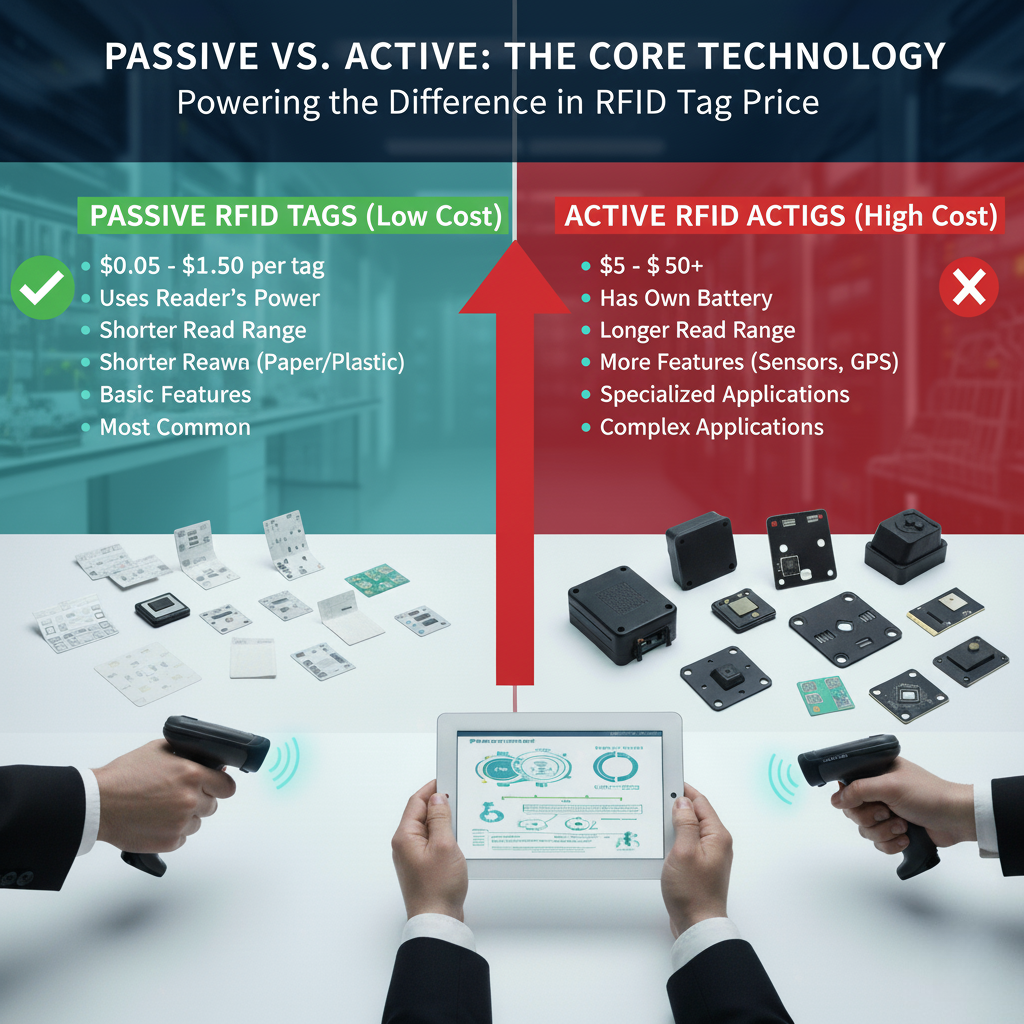
Passive RFID tags are cheap, from $0.05 to $0.50, because they use the reader's power. Active tags have their own battery, costing $5 to $50+, offering a much longer read range and more features.
As an integrator, my first question is always about the application's required read range and environment. This usually points directly to whether a passive or active tag is needed. I learned this the hard way on an early warehouse management project. We wanted to track large pallets as they moved through dock doors. I initially quoted a system using standard passive UHF labels to keep costs down for the client. The tags were only about $0.15 each. But during testing, we discovered the read range was not reliable enough across the wide 15-foot dock doors. The tags on items in the center of the pallet sometimes didn't get read. The project was at risk. We had to switch to larger, more powerful passive tags and eventually used a few battery-assisted passive (BAP) tags for high-value pallets. These cost over a dollar each, a big jump from the original plan. It was a critical lesson: choosing the wrong tech to save a few cents can kill the whole system. Now I always match the tag technology2 to the job first.
Tag Technology Breakdown
Passive tags are simple. They have no internal power source. They wait for a signal from an RFID reader. The reader's signal powers up the tag's chip, which then sends its information back. This makes them very cheap and gives them a very long lifespan. But their read range3 is limited, usually from a few inches to about 30 feet in perfect conditions. Active tags are different. They have a small battery inside. This battery powers their circuit and allows them to broadcast their signal. So, they have a much longer read range3, sometimes over 300 feet. They are more like tiny radio beacons. This makes them ideal for tracking high-value assets over large areas, like a shipping yard or a hospital. The trade-off is their higher cost, larger size, and limited battery life.
Cost and Use Case Comparison
| Feature | Passive RFID Tag | Active RFID Tag |
|---|---|---|
| Price Range | $0.05 - $2.00 | $5 - $50+ |
| Power Source | None (powered by reader) | Internal Battery |
| Read Range | Short (up to ~30 ft) | Long (300+ ft) |
| Lifespan | 20+ years | 3-10 years (battery-dependent) |
| Common Use | Retail inventory, access cards, logistics | Asset tracking, vehicle tracking, personnel monitoring |
Need a tag for a metal container or a harsh outdoor environment? A standard paper label won't work. The tag's body is crucial and directly affects the cost.
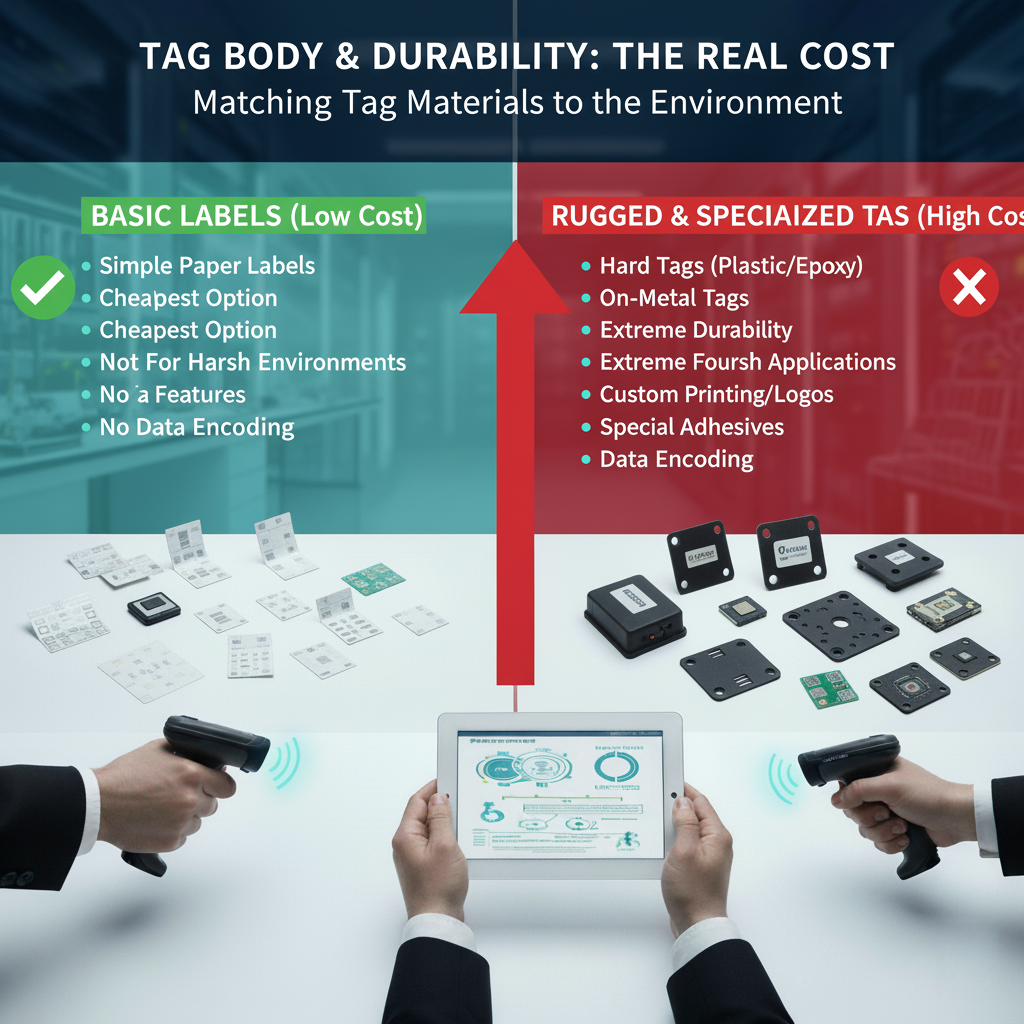
Yes, absolutely. A simple paper label is the cheapest option. A hard tag made of durable plastic or a tag designed to work on metal will cost significantly more. Custom printing, special adhesives4, and data encoding5 also add to the price.
The physical form of the tag is just as important as the chip inside. I remember an industrial client who needed to track metal tool carts in a large manufacturing plant. The environment was tough, with oil, dust, and constant bumps. My first thought was to use a standard hard tag. But when we attached them to the metal carts, the read performance dropped to almost zero. Metal detunes standard RFID antennas. We had to use special on-metal tags6. These tags have a special construction with a foam or plastic spacer and a different antenna design that uses the metal surface to its advantage. They cost about $2.50 each, compared to the $0.80 for the standard hard tags. But without them, the system would have been a complete failure. This experience taught me to always ask about the surface the tag will be on and the environment it will live in. Paying more for the right physical tag is not an extra cost; it's a requirement for the system to work.
How Form Factor Influences Price
The tag's housing, or form factor7, protects the chip and antenna. A simple paper label offers minimal protection and is very cheap. As you add durability8, the cost goes up. A PVC card is more rigid and durable than a paper label. A hard tag encapsulated in ABS or polycarbonate plastic can withstand impact, moisture, and extreme temperatures. These protections add material and manufacturing costs. Speciality tags, like small laundry tags made to survive thousands of wash cycles or tags that can be embedded in concrete, require advanced materials and engineering, which increases the price even more.
Cost Factors Beyond the Chip
| Feature | Description | Cost Impact |
|---|---|---|
| Inlay vs. Label | A bare inlay is the cheapest. Adding a paper or synthetic face for printing increases cost. | Low to Medium |
| Hard Tag | Encapsulating the inlay in a durable material like ABS plastic for protection. | Medium to High |
| On-Metal Tag | Special design to work on metal surfaces, which normally interfere with RFID. | High |
| Customization | Adding a logo, custom text, or a barcode to the tag's surface. | Low to Medium |
| Special Adhesives | Adhesives for high temperatures, rough surfaces, or chemical resistance. | Low |
| Data Encoding | Having the supplier pre-load specific data onto each tag's memory9 chip. | Low to Medium |
Is the cheapest online tag always the best deal?
You found a tag for a very low price on a big marketplace. It seems like a great deal. But choosing that tag can cost you much more in the long run.
No, the cheapest tag is often a big risk. A low price can mean poor quality control10, inconsistent performance, or no technical support11. A single failed tag in the field costs far more to replace than the initial savings.
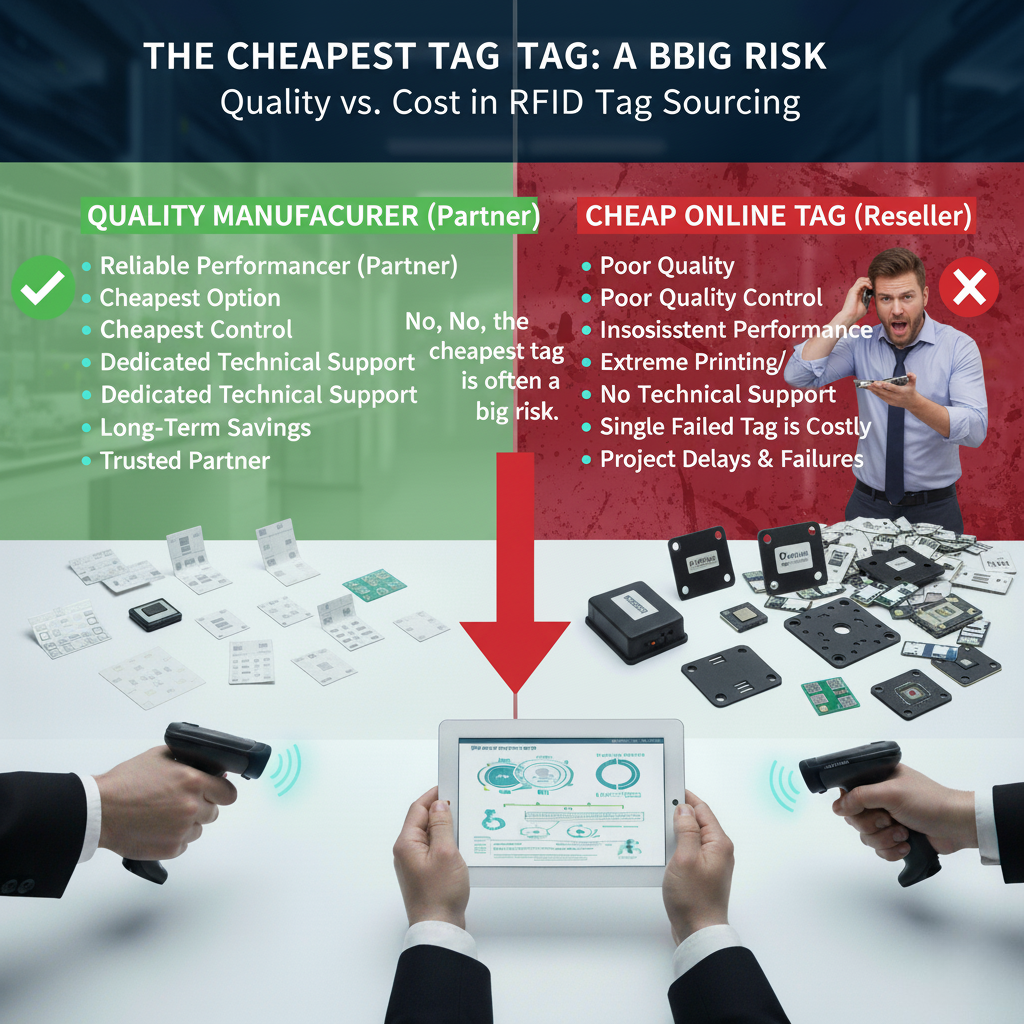
I have a horror story about this. For a mid-sized logistics project12, the client wanted to save money wherever possible. Against my advice, they purchased 20,000 tags from a random seller on an online marketplace. The price was 40% lower than what my trusted manufacturing partner offered. It felt too good to be true, and it was. When the tags arrived, we started quality testing. Our reader could not even detect about 15% of the tags. They were completely dead. Of the tags that did work, their read range3 varied from 5 feet to 15 feet, even though they were all the same model. The project was a disaster. We had to delay the launch by a month, throw out all the bad tags, and order a new batch from a reputable manufacturer. The client ended up paying twice and learned a hard lesson. My takeaway is this: the price per tag is small, but the cost of failure13 is huge. Now, I see my supplier as a partner, not just a seller. Their expertise and quality control10 are part of the price, and it's worth it.
The Risk of Poor Quality
When you buy from an unknown seller, you don't know what you're getting. They might use lower-grade chips or cheaper antennas. The manufacturing process might be inconsistent. This leads to a high failure rate and unreliable performance. A tag that doesn't read is not just a wasted tag; it's a lost asset, a failed inventory count, or a security breach. The cost of that one failure is much higher than the few cents you saved.
Why a Good Partner Matters
An experienced manufacturer is more than just a place to buy tags. They are a partner. They can help you select the right tag for your specific application. They can provide samples for you to test in your own environment. They have strong quality control10, so you know that the 10,000th tag will perform just like the first one. And if something goes wrong, they offer technical support11 to help you solve the problem. This support is invaluable, especially when you are deploying a large, complex system. I've learned that you are not just buying a tag; you are buying a guarantee that the tag will work.
Supplier Comparison: Marketplace vs. Manufacturer
| Factor | Anonymous Marketplace Seller | Reputable Manufacturer |
|---|---|---|
| Initial Price | Very Low | Competitive |
| Quality Control | Unknown / None | High / Documented |
| Performance | Inconsistent | Reliable and Consistent |
| Technical Support | None | Expert Guidance and Support |
| Long-Term Cost | High (due to failures) | Low (due to reliability) |
Conclusion
The price of an RFID tag is not just a number. It reflects the technology, material, and the supplier's quality. Choose wisely to ensure your project's success.
---Understanding the factors influencing RFID tag prices can help you make informed purchasing decisions. ↩
Understanding RFID tag technology is crucial for selecting the right tag for your needs. ↩
Discover how read range impacts the choice of RFID tags for different applications. ↩
Learn about the different adhesives used in RFID tags and their importance for durability. ↩
Explore the significance of data encoding for the functionality of RFID tags. ↩
Discover the importance of on-metal tags for tracking assets in challenging environments. ↩
Understanding the form factor of RFID tags can help you choose the right design for your needs. ↩
Explore how the durability of RFID tags influences their cost and suitability for various environments. ↩
Learn how memory capacity affects the performance and application of RFID tags. ↩
Understanding the role of quality control can help you choose reliable RFID tag suppliers. ↩
Explore the value of technical support in ensuring successful RFID tag implementation. ↩
Explore common challenges in RFID logistics projects and how to overcome them. ↩
Discover the hidden costs of RFID tag failures and why quality matters. ↩