Managing laundry on a large scale is tough. Linens get lost constantly, costing you money. UHF laundry tags1 automate tracking, giving you full control and cutting losses significantly.
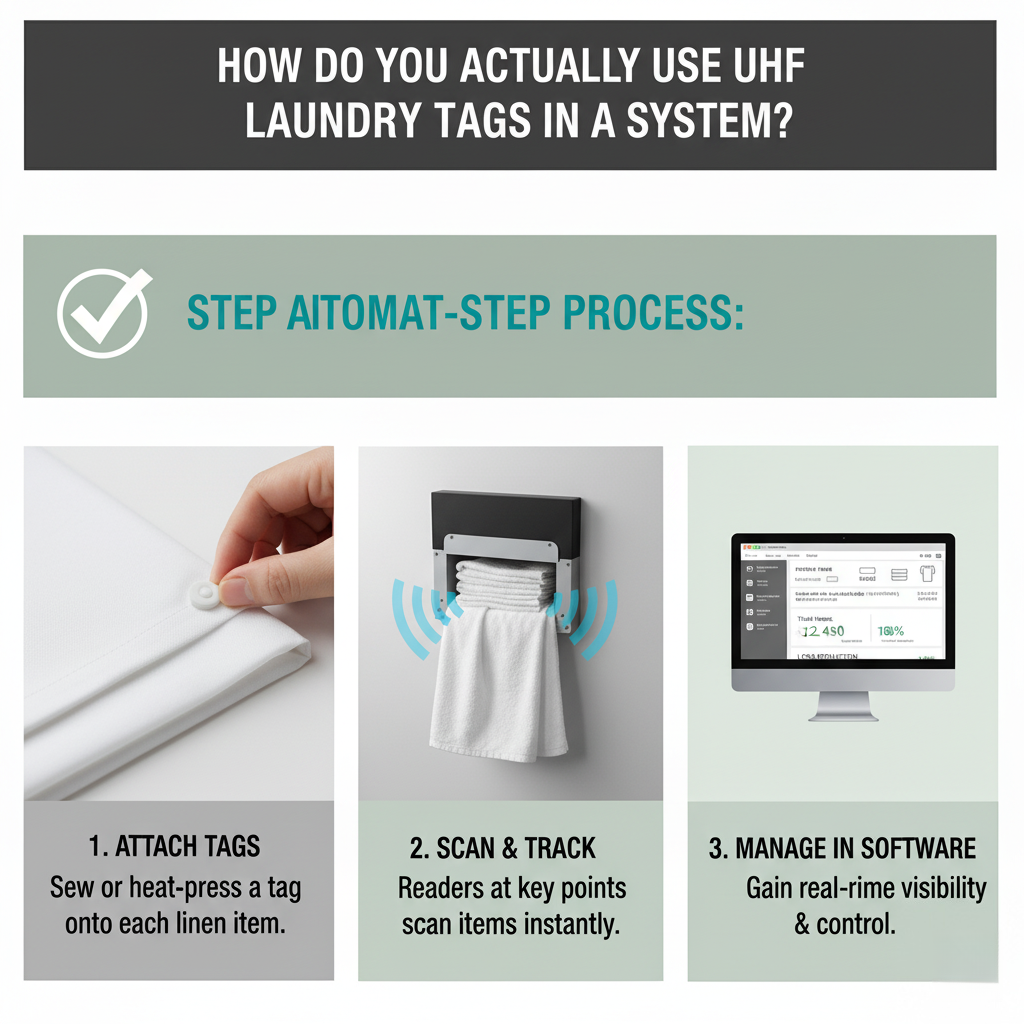
Using UHF laundry tags1 involves three main steps. First, you attach a durable tag2 to each linen item. Second, you install RFID readers3 at key points like laundry chutes or folding stations. Finally, you use software to track the tags as they pass by the readers.
<sup id=](https://fongwahrfid.net/wp-content/uploads/2025/10/UHF-Laundry-Tags-2.png%22) 1 being sorted in a large bin" />
1 being sorted in a large bin" />
As an RFID system integrator4, I've spent years building these systems. My name is John, and I've learned that a successful laundry tracking project isn't just about buying tags. It's about a deep understanding of the whole process. I've seen projects fail because the team chose the wrong tag or attached it incorrectly. I’ve also seen projects succeed brilliantly, saving clients thousands of dollars each month. The difference is in the details. People often ask me where to start. It always begins with choosing the correct components for the job. You have to think about the entire system, from the tag on a bedsheet to the software on your computer.
How do you choose the right UHF laundry tag?
Your textile inventory5 is valuable. But you lose items in the wash cycle. Selecting the correct UHF laundry tag is the only way to build a reliable tracking system.
To choose the right tag, you must analyze your specific laundry process6. Consider the linen's material, the washing temperature, water pressure, and chemicals used. Your tag must survive these conditions for hundreds of cycles. A durable PPS or silicone tag is usually best for harsh environments.
<sup id=](https://fongwahrfid.net/wp-content/uploads/2025/10/UHF-Laundry-Tags-3.png%22) 1" />
1" />
I remember a project for a large hotel chain. They handle thousands of sheets and towels every single day. The client wanted to reduce linen loss, which was a significant operational cost. My first step was to understand their laundry process6. I found they used a high-temperature7, high-pressure tunnel washer with strong detergents. This environment is extremely harsh on electronics. We had to select a tag that could withstand this abuse day after day. A standard, cheap tag would have failed within a few weeks. It's my job to prevent that. I worked with my supplier, Fongwah, to test a few options. We settled on a PPS-encapsulated hard tag. It was small but incredibly tough. The success of the entire multi-million dollar system started with this one small decision.
Key Tag Selection Factors
The choice between different tag materials is critical. You must match the tag's properties to the specific type of linen and the laundry process6 it will endure. A bad match leads to tag failure and system downtime.
| Feature | PPS Tag | Silicone Tag | Woven/Stitched Tag |
|---|---|---|---|
| Durability | Very High | High | Medium |
| Heat Resistance | Up to 220°C (428°F) | Up to 180°C (356°F) | Up to 150°C (302°F) |
| Pressure | Excellent | Good | Fair |
| Flexibility | Low | High | Very High |
| Best For | Flatwork, sheets | Towels, uniforms | Delicate garments |
You have the perfect tag. But if it falls off in the wash, it's useless. Improper attachment is a common point of failure that can ruin your entire RFID investment.
The best attachment method8 depends on the tag and the linen. For most tags, sewing them into a hem or a seam is the most secure option. Some tags can be heat-sealed9 directly onto the fabric. This creates a strong bond that withstands industrial washing.
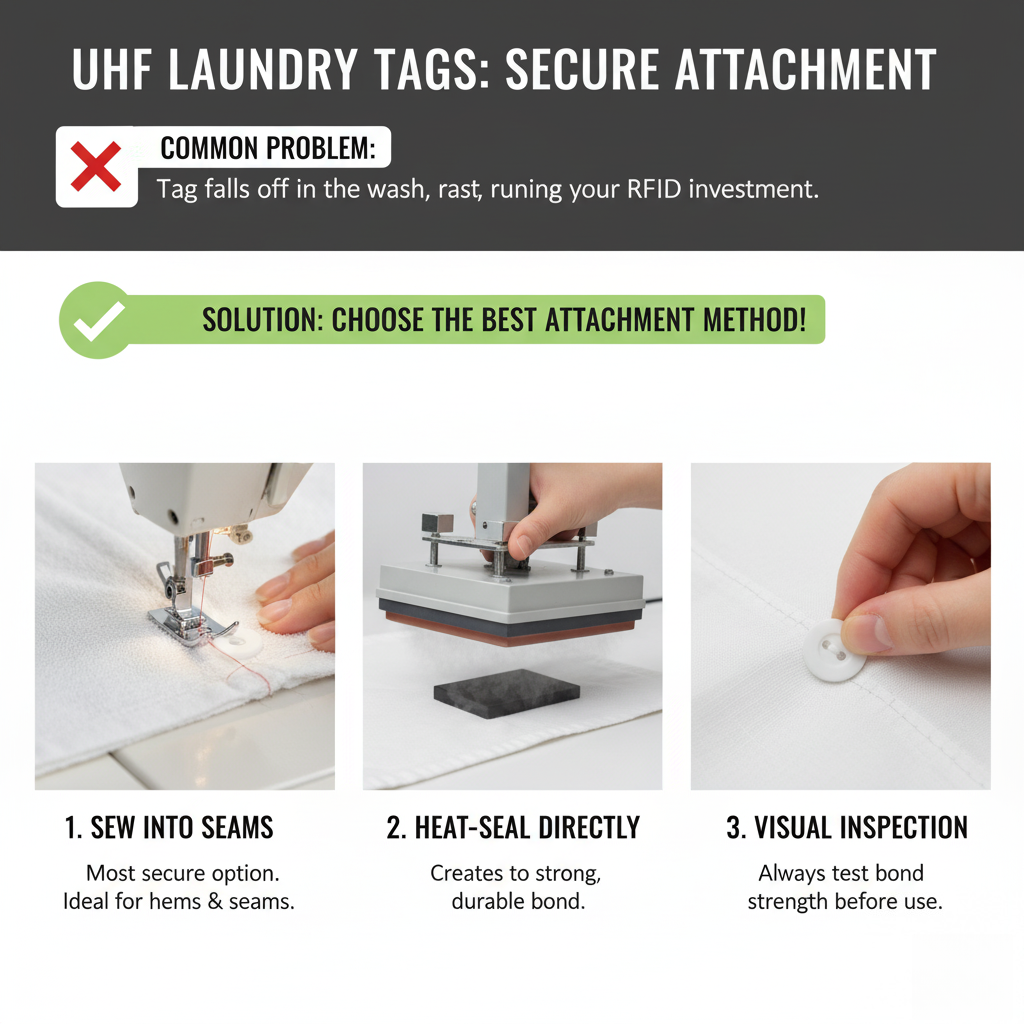
In my experience, you can't rush this step. I once worked with a commercial laundry service that processed uniforms for several local businesses. They invested in a great RFID system but tried to save time on attachment. They used a low-quality heat-seal process. After just a month, tags started coming off in the dryers. Their read rates dropped, and their inventory counts10 became inaccurate. We had to retag thousands of uniforms. This time, we created a small pouch for the tag and stitched it securely into the uniform's inseam. It took more time upfront, but it solved the problem for good. The lesson was clear. The physical connection of the tag to the asset is just as important as the electronic connection to the reader.
Secure Attachment Techniques
You need to think about both security and the integrity of the linen. A good attachment method8 should not damage the fabric but must be strong enough to last the linen's entire life. A strong attachment ensures your data is always available.
| Attachment Method | Durability | Process Speed | Equipment Needed | Best For |
|---|---|---|---|---|
| Sewn-in Pouch | Excellent | Slow | Industrial Sewing Machine | All linen types, especially towels and uniforms |
| Direct Sewing | Very Good | Slow | Industrial Sewing Machine | Tags with sewing holes, flatwork |
| Heat Sealing | Good (with proper patch) | Fast | Heat Press Machine | Flatwork like sheets and pillowcases |
You've tagged your linens correctly. Now, your system is blind without readers. Integrating hardware and software is where you turn physical tags into actionable business data.
You must strategically place RFID readers3 where linens are counted, like chutes, doorways, or folding stations. These readers connect to your network. Then, specialized software interprets the tag data, updating your inventory in real time and generating reports on wash counts and asset location11.
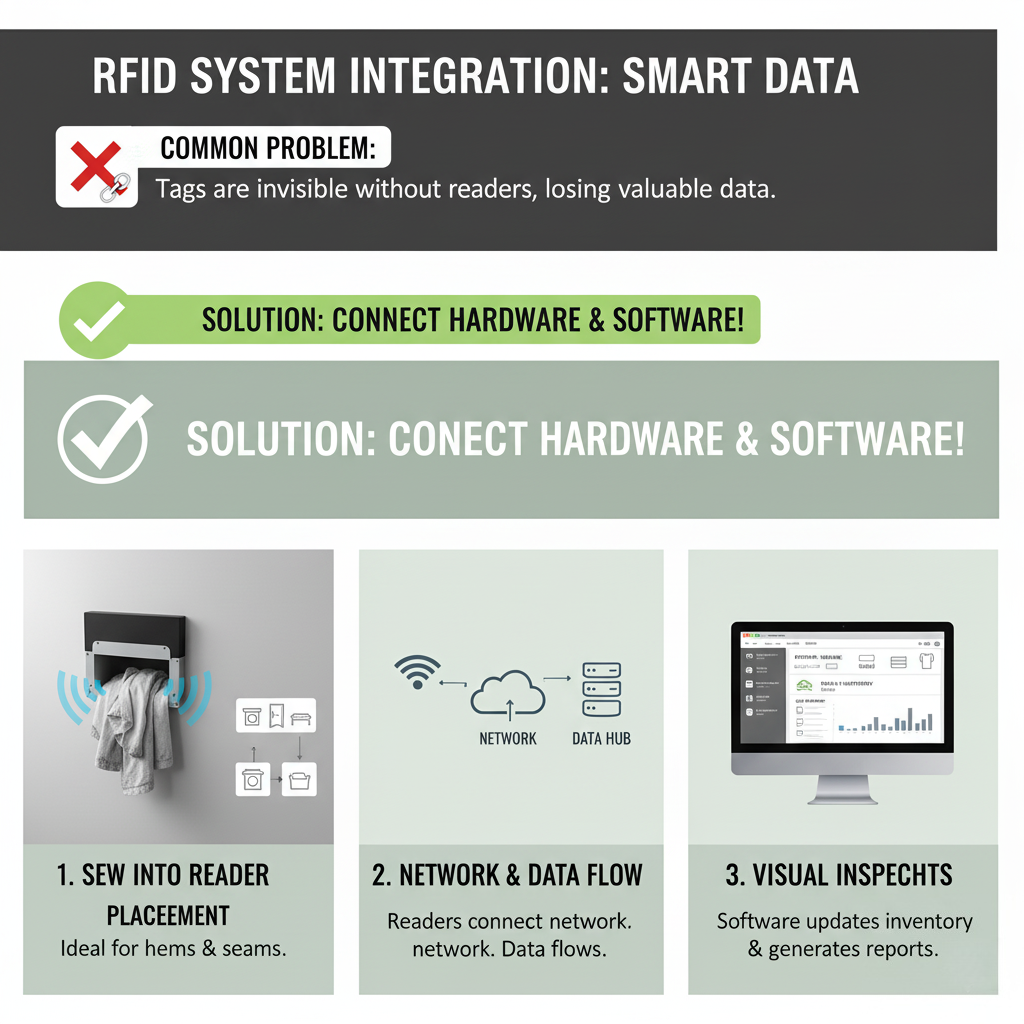
As an integrator, this part is my core job. It's a puzzle of hardware, software, and physics. I was once tasked with building a system for a large hospital. The goal was to track scrubs to reduce loss and manage sterilization cycles. The challenge was getting 100% read accuracy as carts full of scrubs moved quickly through hallways. We couldn't just put one reader on a wall. We had to build a portal with antennas on both sides and on top. This created a dense RFID field that could read every tag, no matter its orientation inside the cart. I used an SDK from Fongwah to write custom middleware12. This software filtered out stray reads and duplicate scans, so the hospital's main system only received clean, accurate data. Turning a stream of raw tag IDs into a simple "Cart 123 contains 50 large scrubs" is the magic of good integration.
System Integration Components
A successful system needs all its parts to work together seamlessly. The reader captures the tag data, the middleware12 cleans and processes it, and the application software presents it to the user in a meaningful way.
| Component | Function | Key Considerations |
|---|---|---|
| RFID Reader | Powers the tags and reads their unique ID numbers. | Read range, frequency (UHF), port count. |
| Antenna | Shapes the radio field to read tags effectively. | Polarization (Linear/Circular), beam width. |
| Middleware | Filters, aggregates, and formats data from readers. | Filtering rules, device management, API for software. |
| Application Software | Manages inventory, tracks cycles, and runs reports. | User interface, reporting features13, database. |
Conclusion
Using UHF laundry tags1 correctly can transform your operations. It involves choosing the right tag, attaching it securely, and integrating the full system to get reliable, actionable data.
---Explore how UHF laundry tags can automate tracking and reduce losses in your laundry operations. ↩
Discover the importance of durability in laundry tags to withstand harsh washing conditions. ↩
Learn about the role of RFID readers in enhancing inventory management and tracking efficiency. ↩
Gain insights into the role of an RFID system integrator in optimizing laundry operations. ↩
Understand the significance of managing textile inventory effectively to minimize losses. ↩
Learn about the key factors that affect the efficiency of the laundry process. ↩
Find out how high temperatures impact the performance and longevity of laundry tags. ↩
Learn about various attachment methods to ensure laundry tags remain secure. ↩
Explore the heat-sealing method and its effectiveness in securing laundry tags. ↩
Discover strategies to enhance accuracy in inventory counts using RFID technology. ↩
Explore how RFID technology can help in tracking the location of assets effectively. ↩
Understand the function of middleware in processing data from RFID readers. ↩
Explore the key reporting features that enhance decision-making in laundry management. ↩