
Metal surfaces are ruining your UHF read range. Your tracking project is failing, and frustration is high. There's a specific solution that works every time.
To fix short read distances on metal, you must use specialized anti-metal UHF tags1s](https://rainrfid.org/wp-content/uploads/2015/07/iros2014_in_home_rfid_deyle_reynolds_kemp.pdf)%%%FOOTNOTE_REF_2%%%. These tags feature unique designs, like a foam layer3, that isolate the antenna from the metallic surface and ensure reliable performance.
I've been in the RFID industry for a long time, working my way up from the production floor to my role today at Fongwah. I remember one of our first big clients who wanted to track thousands of metal tool kits in a large warehouse. They bought standard UHF tags and were shocked when the read range dropped to almost zero. They thought the technology was flawed. But the problem wasn't the technology; it was the application. That experience taught me a crucial lesson: metal is the biggest enemy of standard UHF RFID. Understanding how to defeat this enemy is the key to a successful project. Let's break down how we can solve this together.
You put a standard tag on a metal object, and it just stops working. You probably wonder what is going on. The real answer lies in some basic physics.
Standard UHF tags fail because metal reflects the RFID signal4. This reflection interferes with the tag's antenna. It detunes the antenna so it cannot power up or communicate with the reader properly.
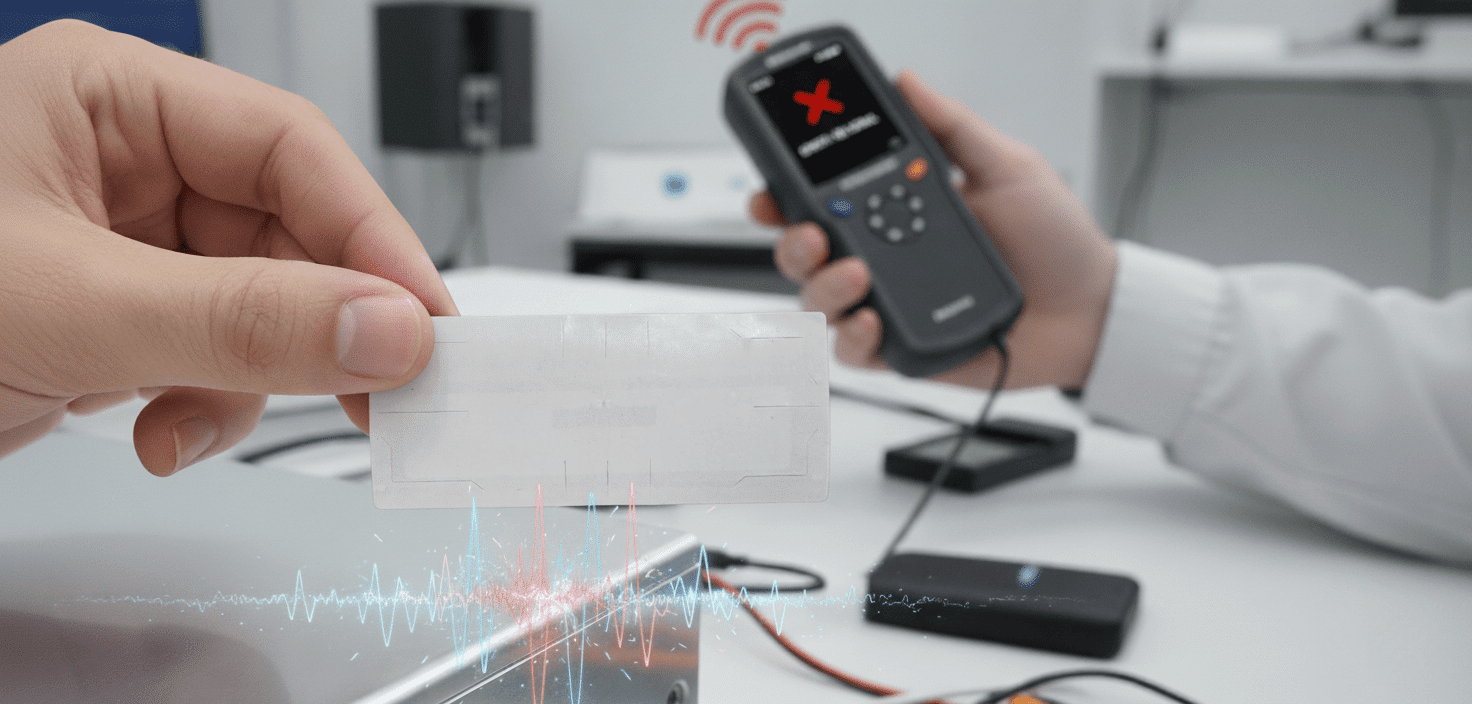
When I first encountered this issue, I had to understand the "why" before I could trust the "how." A standard UHF tag's antenna is precisely tuned to resonate at a specific frequency, usually around 915 MHz in the US or 868 MHz in Europe. It needs to absorb energy from the reader's radio waves to power its chip and send back a signal. But when you place that tag directly on a metal surface, two things happen. First, the metal acts like a mirror and reflects the RF energy away from the tag. Second, the conductive nature of the metal surface effectively short-circuits the tag's antenna. This interaction is called antenna detuning5. The antenna's resonant frequency shifts so much that it can no longer communicate effectively at the reader's frequency. It’s like trying to listen to a radio station when your dial is stuck between two channels.
Understanding Metal's Impact on RFID Signals
To make better buying decisions, it helps to see the contrast clearly. The performance difference is not small; it is a complete failure versus a success. This is why just buying the cheapest tag is often a mistake.
| Feature | Tag in Open Air | Tag Directly on Metal |
|---|---|---|
| Signal Behavior | Signal passes through and around. | Signal is reflected and absorbed. |
| Antenna Tuning | Stays tuned to the correct frequency. | Becomes severely detuned. |
| Performance | Powers up and communicates reliably. | Fails to power up or communicate. |
| Result | Successful Read | Read Failure |
You know you need a reliable solution for your metal assets. You have heard about anti-metal tags but are not sure how they work. It is actually a clever piece of engineering.
Anti-metal tags work by incorporating a spacer, typically foam, to create a gap between the tag's antenna and the metal. This separation prevents antenna detuning5 and signal interference, allowing for strong performance.
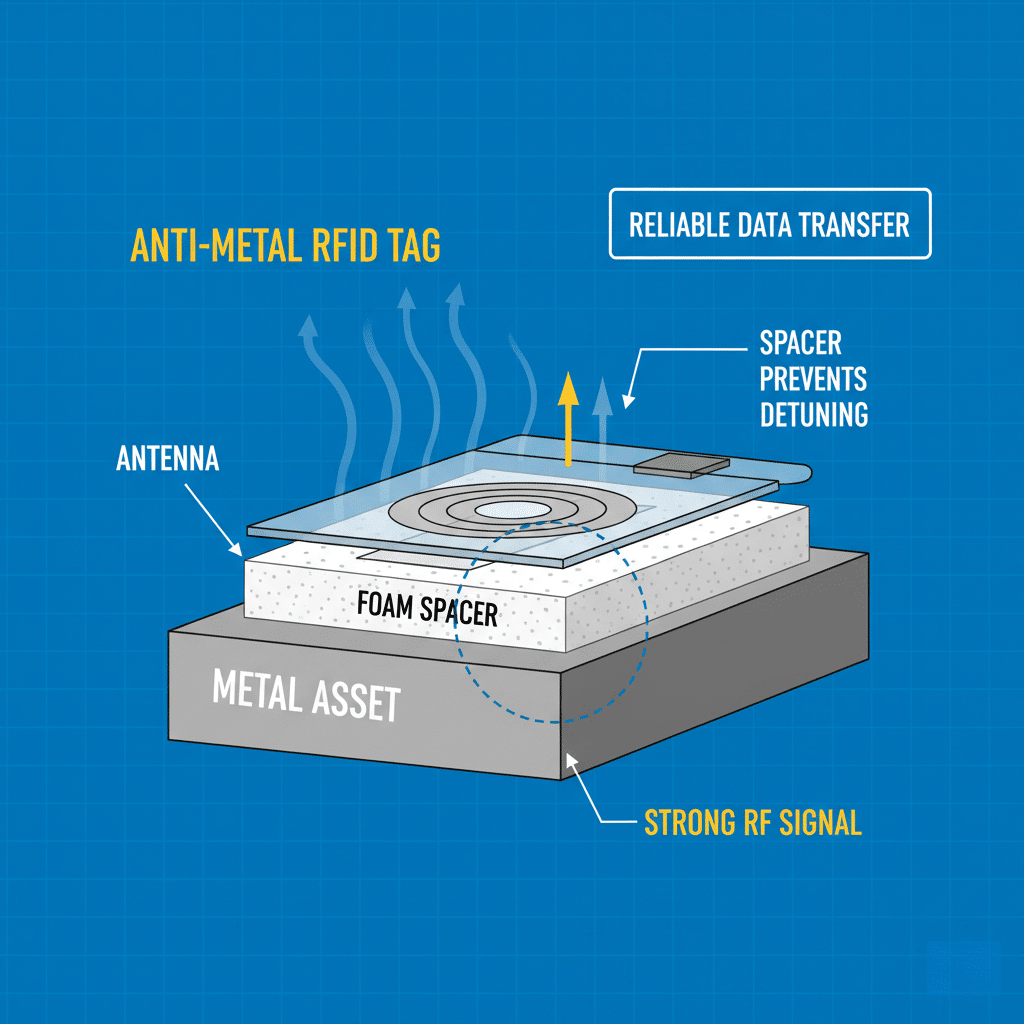
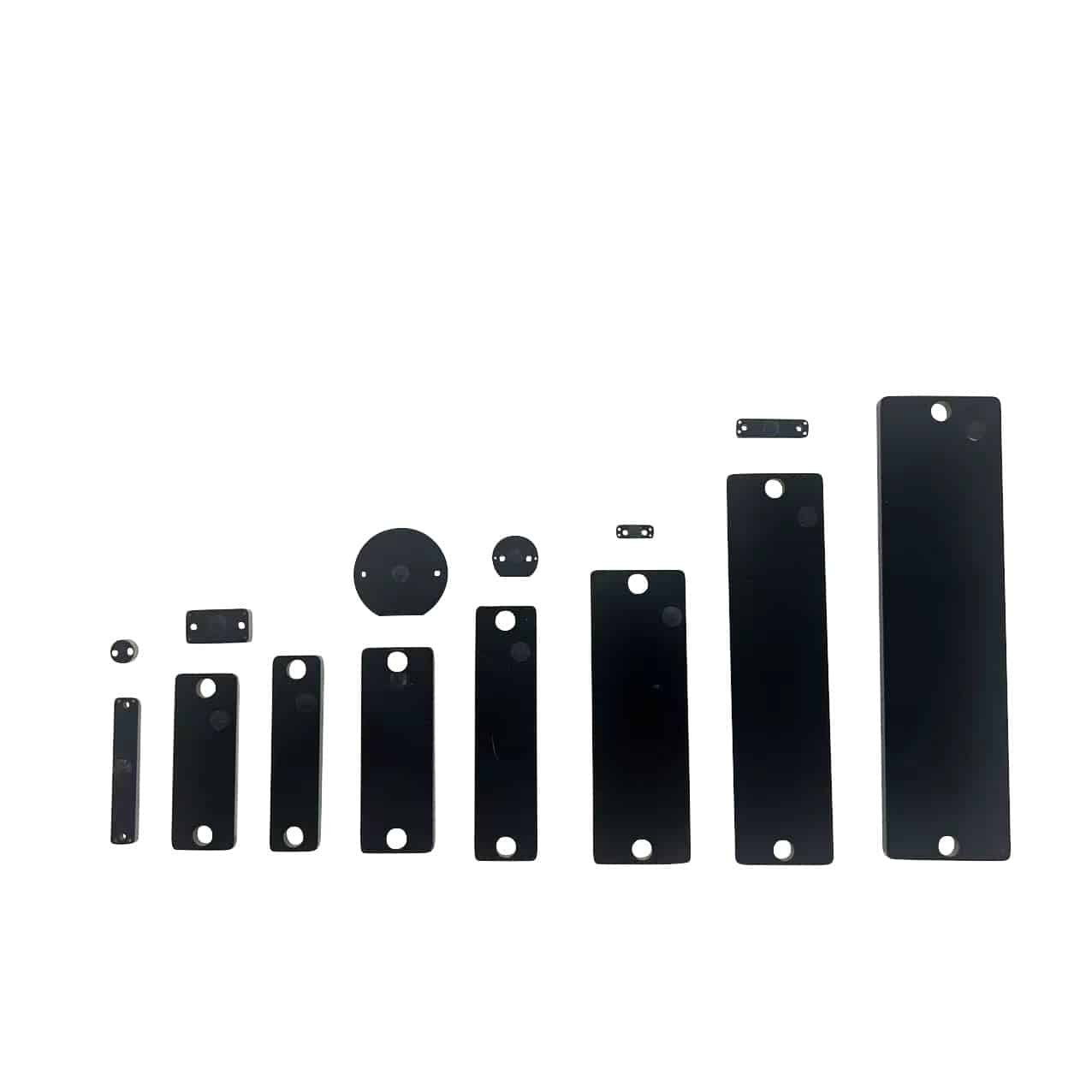
As a buyer, my job is to find a product that works consistently. Anti-metal tags are that product for metallic environments. The most common design uses a layer of foam or plastic to create an air gap. This gap is critical. It moves the tag's antenna far enough away from the metal surface to prevent the detuning effect I mentioned earlier. This allows the antenna to resonate correctly and communicate with the reader. More advanced designs even use the metal surface itself as part of the antenna system, essentially turning a problem into a part of the solution. When I source tags for a project involving metal, I don't even consider standard tags. I go straight to evaluating the different types of anti-metal tags to find the best fit for the specific application, considering factors like durability, size, and the required read range. This is the only way to guarantee success from the start.
Key Designs of Anti-Metal Tags
Choosing the right type is important. Your choice depends on the environment and the asset you are tracking. A tag for an indoor server is very different from one for an outdoor shipping container.
| Tag Type | Construction | Best Use Case | Durability |
|---|---|---|---|
| Foam-Backed Labels | Flexible label with a foam spacer. | IT assets, office equipment, indoor items. | Low |
| Hard-Case Tags | Inlay inside a rugged ABS or plastic shell. | Outdoor equipment, tools, returnable assets. | High |
| Printable Labels | Thin, flexible, with special shielding. | On-demand printing for assets like laptops. | Medium |
Are there other ways to boost performance on metal?
You've got the right anti-metal tags, but performance still is not perfect. You might feel stuck. However, small adjustments to your setup can make a huge difference.
Yes. Beyond using anti-metal tags, you can optimize performance by carefully considering tag placement6. Also, adjust the reader's power settings7 and antenna orientation to find the best signal path and avoid null zones8.
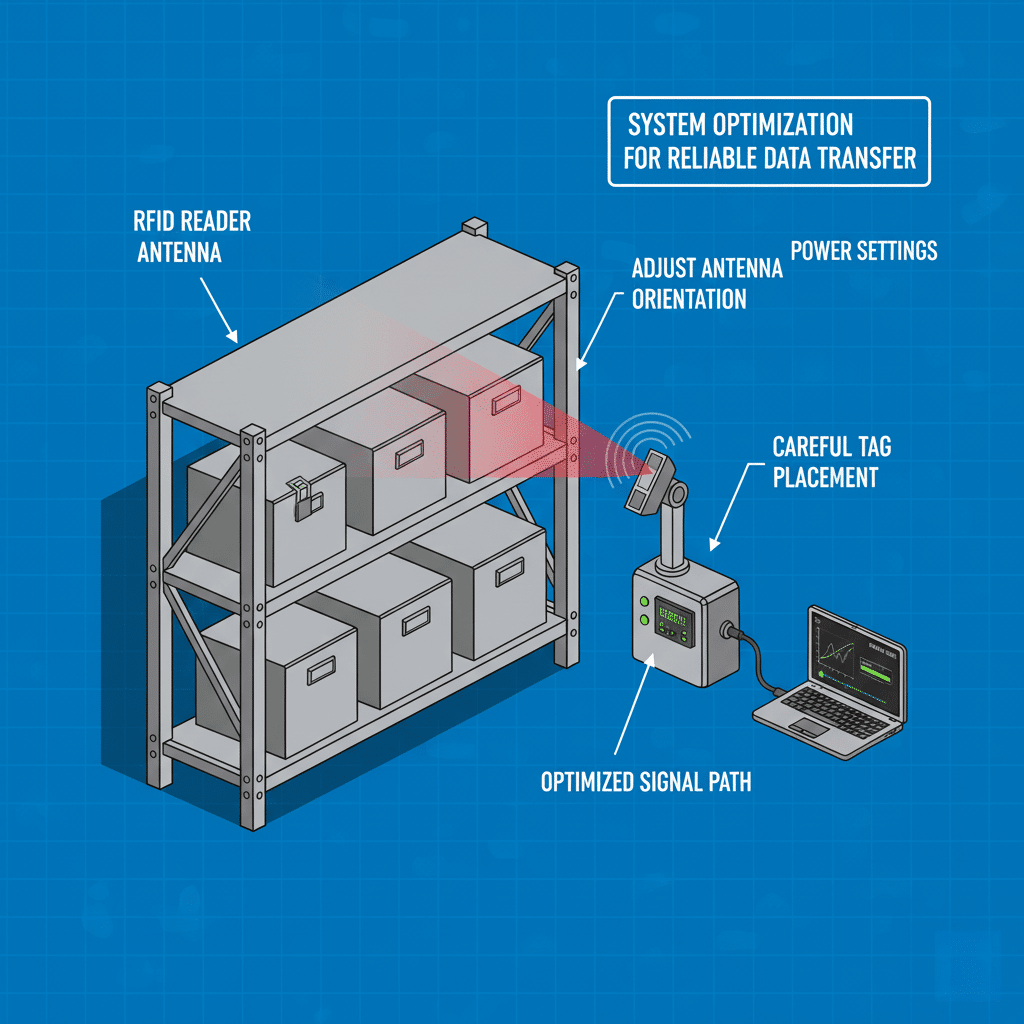
Even with the perfect anti-metal tag, the physics of radio waves in a metal-rich environment are complex. I worked on a project tracking large metal carts. We had the right tags, but some carts were still missed. We discovered that the reader's signal was creating "null zones," or dead spots, where reflected waves canceled each other out. The solution wasn't a better tag, but better technique. We experimented with tag placement6. Moving the tag from the center of a flat surface to a corner or edge drastically improved read rates. We also tried mounting the tag like a "flag," perpendicular to the surface. This little change allows the antenna to catch signals from more directions. We also adjusted the reader. Sometimes, turning the reader power down can help. Less power means weaker reflections and less signal chaos. It is a process of testing and refinement.
Practical Optimization Techniques
Success is about more than just the tag. It's about a complete strategy. When I consult with a client, I give them this checklist to make sure they are covering all the bases for the best results.
| Technique | Description | Why it Works |
|---|---|---|
| Tag Placement | Mount tags on corners, edges, or as a "flag" (perpendicular). | Avoids flat surfaces where reflections are strongest. |
| Reader Power | Start high, then slowly reduce power to find the lowest reliable setting. | Minimizes signal reflections and interference in dense areas. |
| Antenna Angle | Adjust the angle and position of the reader antenna. | Helps to work around null zones and find the best signal path. |
| Use Circular Antennas | Use a circularly polarized reader antenna9 if possible. | Reads tags in multiple orientations, adding flexibility. |
Conclusion
Success with UHF on metal requires the right anti-metal tags, strategic placement, and smart reader configuration. It is a completely solvable challenge.
---Learn why specialized tags are crucial for reliable RFID tracking on metal. ↩
Explore how anti-metal UHF tags can enhance RFID performance on metal surfaces. ↩
Find out how a foam layer helps isolate RFID antennas from metal interference. ↩
Discover how metal surfaces interfere with RFID signals and solutions to overcome this. ↩
Understand the concept of antenna detuning and its impact on RFID performance. ↩
Discover effective tag placement strategies to improve RFID performance. ↩
Learn how optimizing reader power settings can enhance RFID read rates. ↩
Understand null zones and how to optimize RFID setups to avoid them. ↩
Discover how circularly polarized antennas can improve RFID read performance. ↩