
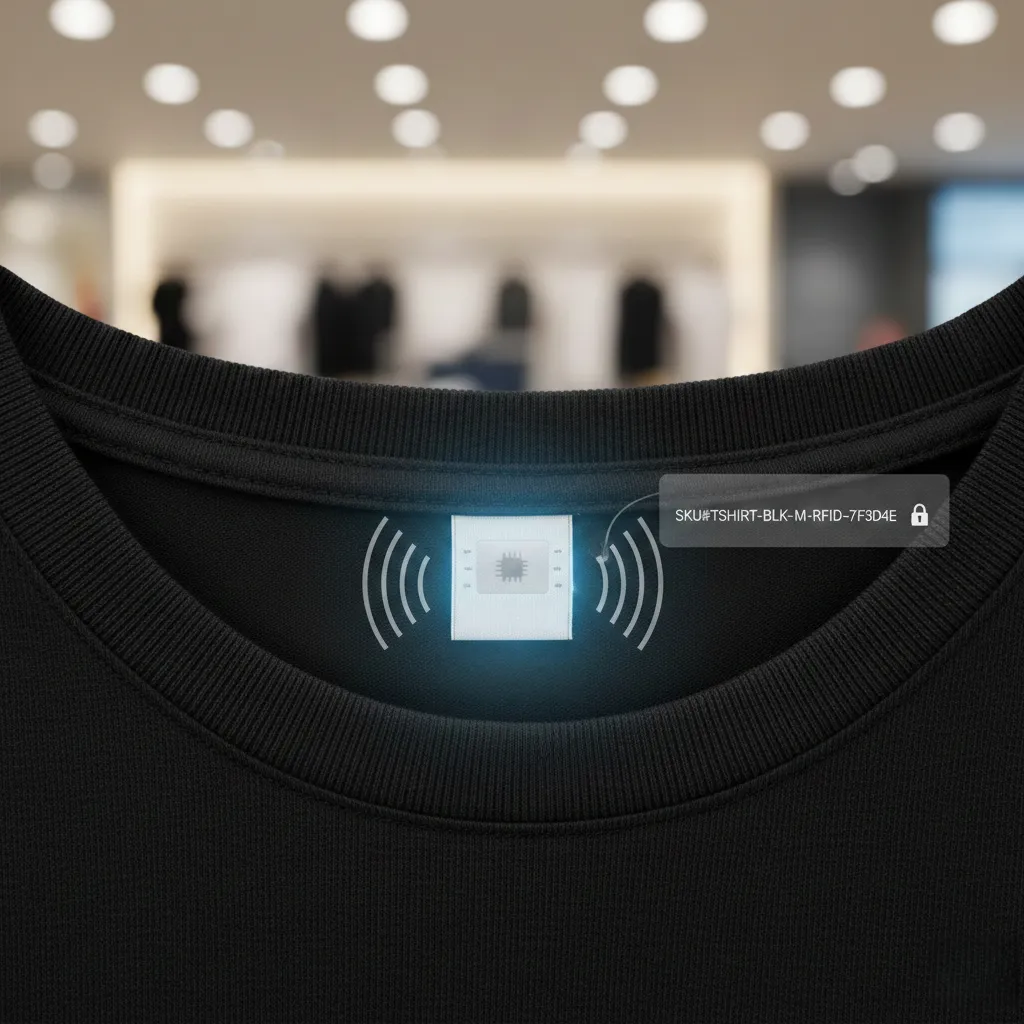
Retail shrinkage destroys hard-earned profits every single day. Old security gates fail to stop sophisticated theft effectively. You need a standardized RAIN RFID deployment to secure your inventory now.
RAIN RFID deployment reduces apparel loss by creating a standardized, real-time tracking ecosystem. By utilizing UHF tags and readers compliant with GS1/EPC protocols, retailers achieve 99% inventory visibility1, enabling immediate theft detection at exits and accurate stock reconciliation without manual counts.

I started my career on a production line making RFID tags. I saw how precision matters. Many shops fail because they skip the basics. Here is the technical breakdown.
Which Hardware Specs Best Suit Retail Entrances?
Weak readers miss stolen items easily. False alarms annoy customers and ruin the shopping experience. You must select antennas with the right polarization and power settings.
For retail entrances, choose circular polarized antennas2 with high gain (8-9dBi) to detect tags in any orientation. Ensure the reader supports the Impinj R2000 or equivalent chip for fast multi-tag reading, functioning strictly within the 860-960 MHz UHF band to meet global standards.

When we design systems at Fongwah, we focus on the physics. You must understand the wave behavior.
Critical Antenna Selection
In apparel retail, clothes move randomly. A thief might hide a shirt under a jacket or in a foil bag. If you use a linear polarized antenna, you will miss the tag if it is not aligned perfectly. Circular polarization is non-negotiable here. It creates a field that catches tags in any position.
Reader Chip Performance
Cheap chips are slow. You need a high read rate3. At a busy store exit, many people walk out at once. The reader must distinguish between a purchased item (killed tag) and a stolen item (live tag) in milliseconds.
| Hardware Component | Recommended Spec | Reason for Choice |
|---|---|---|
| Antenna Type | Circular Polarization | Reads tags in any orientation (horizontal/vertical). |
| Gain Level | 8 dBi to 9 dBi | Balances range with focus to avoid stray reads. |
| Frequency | 860-960 MHz (UHF) | Complies with global RAIN RFID standards. |
| Reader Sensitivity | -80 dBm or lower | Detects weak signals from hidden or shielded tags. |
This hardware foundation4 prevents the system from failing under pressure. Do not cut costs on the chipset.
How Should You Zone the Store for Maximum Security?
Tag pollution creates chaos in your data. It confuses staff when items near the door trigger alarms. You need precise physical zoning to separate tracked inventory from safe zones.
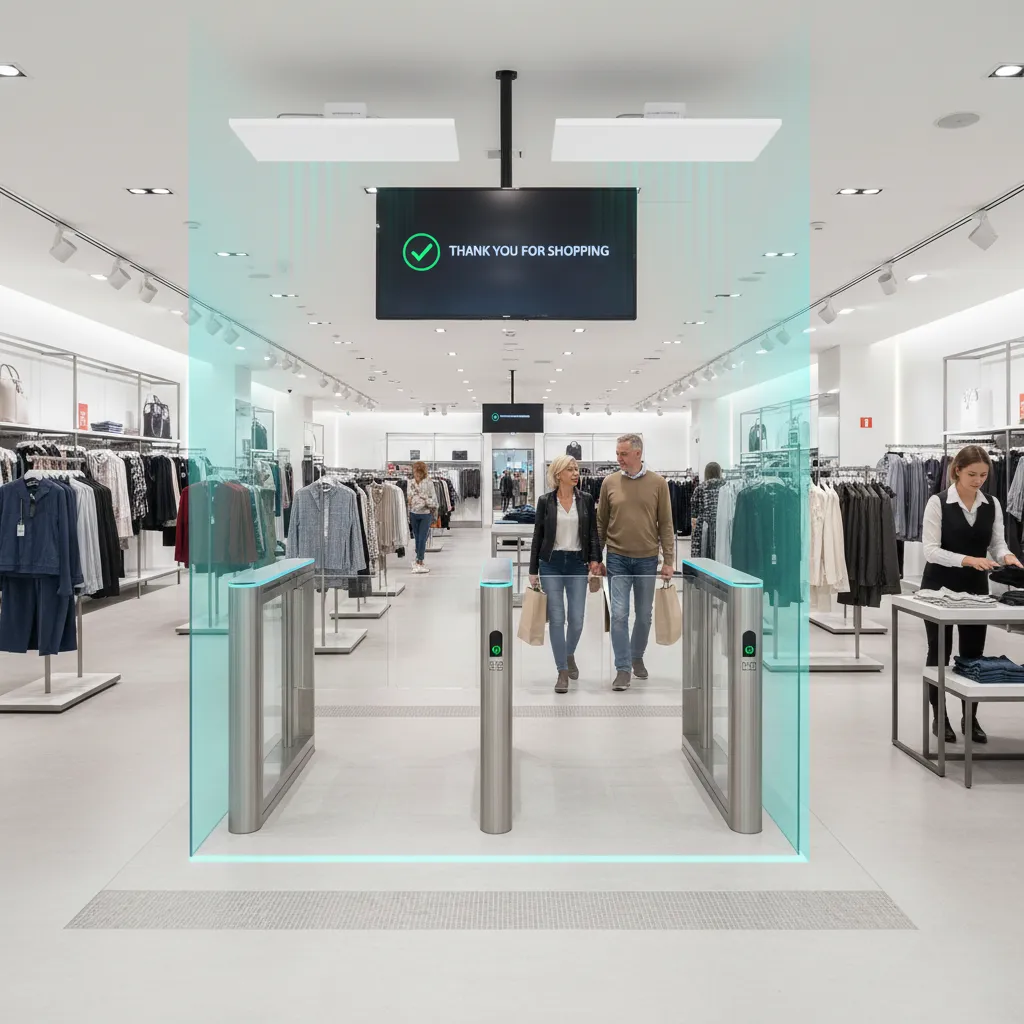
Effective zoning requires a "transition zone" of at least 1.5 meters from the exit gates. Use shielding materials or software-based RSSI filtering to ignore tags on display racks near the door, ensuring only items actually passing through the portal trigger an alert.
I have seen engineers install great readers in bad spots. The machine works, but the physics fails. You must think about space.
The Physics of Stray Reads
UHF RFID waves bounce off walls and floors. This is multipath reflection. If you place a rack of denim jeans too close to the exit gate, the reader will "see" them constantly. The alarm will ring when no one is there. This makes staff ignore the alarm later.
RSSI Filtering Logic
We solve this with software. Every tag signal has a Received Signal Strength Indicator (RSSI). We set a threshold. If a tag is 2 meters away, the signal is weak. If a tag is in the gate, the signal is strong. The system must only alert on strong signals.
| Zone Name | Distance from Gate | Action Required |
|---|---|---|
| Red Zone (Exit) | 0 - 1.5 Meters | Trigger Alarm. High RSSI threshold active. |
| Yellow Zone (Buffer) | 1.5 - 3 Meters | Monitor Only. No alarm. Software filters these reads. |
| Green Zone (Sales) | > 3 Meters | Safe. Items display here. Shielding may be needed. |
By strictly defining these zones, you reduce false positives to near zero.
Why Are GS1 TIPP Standards Crucial for Integration?
Incompatible data formats crash systems and waste money. Your expensive hardware becomes useless if software cannot read the tags. Adopting GS1 TIPP standards5 ensures every device speaks the exact same language.
GS1 Tagged-Item Performance Protocol (TIPP) defines grades for tag readability across different materials. By adhering to these standards, retailers ensure seamless data integration6 between loss prevention systems and inventory management software, regardless of the apparel fabric or packaging type involved.

In my 20 years in this industry, proprietary formats always fail eventually. You need global compatibility.
Understanding Tag Grades
Not all clothes are the same. A silk scarf affects radio waves differently than a stack of wet leather jackets. GS1 TIPP creates grades (like Grade A, Grade M). This tells the reader how much power to use. If you use a Grade A tag on denim, it might not read. You need the right grade for the right fabric.
Data Encoding Formats
The tag must carry a Serialized Global Trade Item Number (SGTIN). This is unique to every single shirt. Standards ensure that a reader from Brand X can read a tag from Brand Y. This allows you to mix hardware if needed to keep costs competitive—something we prioritize at Fongwah.
| Standard Element | Description | Benefit to Retailer |
|---|---|---|
| TIPP Grade | Performance profile (e.g., Grade M) | Ensures reliable reading on specific fabrics. |
| SGTIN-96 | 96-bit encoding format | Provides unique ID for every single item. |
| Air Interface | ISO/IEC 18000-63 | Global communication protocol for interoperability. |
Using these standards future-proofs your investment. It allows easy upgrades later.
Conclusion
Standardized RAIN RFID hardware and logic stop theft and boost accuracy. Use circular antennas, smart zoning, and GS1 protocols. Fongwah delivers these quality solutions at competitive prices.
---Learn about the advantages of achieving near-total inventory visibility for better stock management. ↩
Discover the significance of using circular polarized antennas for effective RFID tag detection. ↩
Find out why a high read rate is essential for effective RFID operations in busy retail settings. ↩
Explore why investing in quality hardware is critical for the success of RFID implementations. ↩
Learn about GS1 TIPP standards and their role in ensuring compatibility in RFID systems. ↩
Learn how seamless data integration can enhance efficiency and reduce losses in retail. ↩