You just got off a tense call with your investors. A video is going viral: a teenager using a $5 device bought online to clone a user's access card and steal one of your e-bikes. Your fleet leakage rate is hitting 15%1, and your "secure" RFID readers are failing after every major rainstorm. Your entire mobility-as-a-service project is teetering on the edge because of a few simple hardware choices.
When choosing between UHF vs HF RFID readers for an e-bike sharing system, High-Frequency (HF) is the only viable choice for vehicle ignition. The long range of UHF creates dangerous "false unlock" scenarios. The correct architecture uses an IP65-rated, resin-potted HF reader paired with a modern, encrypted CPU card to eliminate cloning vulnerabilities and survive harsh outdoor environments.
Make no mistake: using a UHF reader for vehicle ignition is a catastrophic design flaw. And "securing" that system with a standard MIFARE Classic 1K card isn't a security measure—it's an open invitation for mass theft. The success of your entire fleet hinges on getting three variables right: 1) Frequency for precision, 2) Card security to prevent cloning, and 3) Hardware durability to survive the outdoors.
Let's tear down the common mistakes I see every week and build a system that protects your assets and your investment.
The Core Technical Trap: Confusing "Long Range" with "Convenience"
As a system integrator, you probably thought a long-range UHF reader would be a convenient, futuristic feature for your users. They could walk up, and the bike would unlock from 5 meters away.
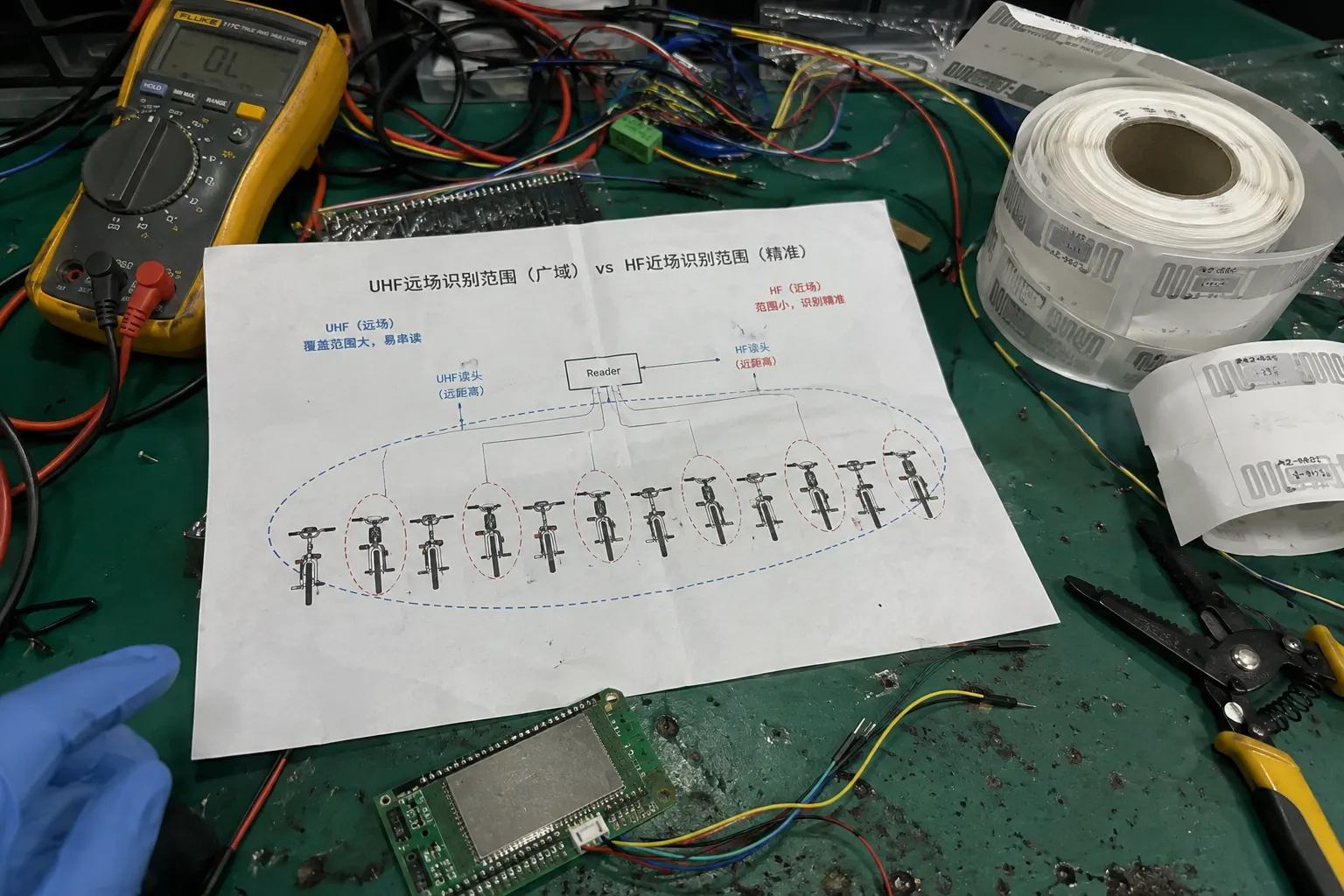
In reality, you've created chaos. With bikes parked side-by-side, the UHF reader's wide, uncontrollable read field picks up the wrong tag, unlocking bike #3 when the user is standing next to bike #2. This isn't a feature; it's a critical failure and a support nightmare.
For vehicle ignition, you need precise, close-range authentication, not long-range ambiguity. This is the native strength of High-Frequency (HF).
| Variable | UHF (Ultra-High Frequency) | HF (High-Frequency) |
|---|---|---|
| Frequency | ~860-960 MHz2 | 13.56 MHz3 |
| Typical Range | 3 - 15 meters | 0 - 10 cm |
| Best Use Case | Warehouse & logistics tracking | Secure access control, payments, ignition |
| Mobility Risk | High: False unlocks, cross-reads | Low: Intentional, precise user interaction |
Hardware Teardown: Behind the Datasheet
I was on a call last month with an integrator in Europe dealing with this exact issue. Their riders were constantly unlocking the wrong scooter. The problem is that UHF signals are designed to reflect off surfaces to achieve long range4. In a dense environment filled with metal bikes, the RF energy bounces everywhere, making it physically impossible to isolate a single tag with certainty. HF, by contrast, uses a contained, near-field magnetic loop5. The tag must be brought intentionally close to the reader. There is no ambiguity, no accidental unlocking. It's a deliberate, secure transaction. It's the right tool for the job.
Integration Realities: Your Security is Made of Glass
So, you've chosen HF. Excellent. But then you made the second critical mistake: you paired your reader with a standard MIFARE Classic 1K card because it was cheap and your supplier had millions in stock.
You didn't install a lock. You installed the illusion of a lock. The Crypto-1 algorithm on these cards was comprehensively broken over a decade ago6.
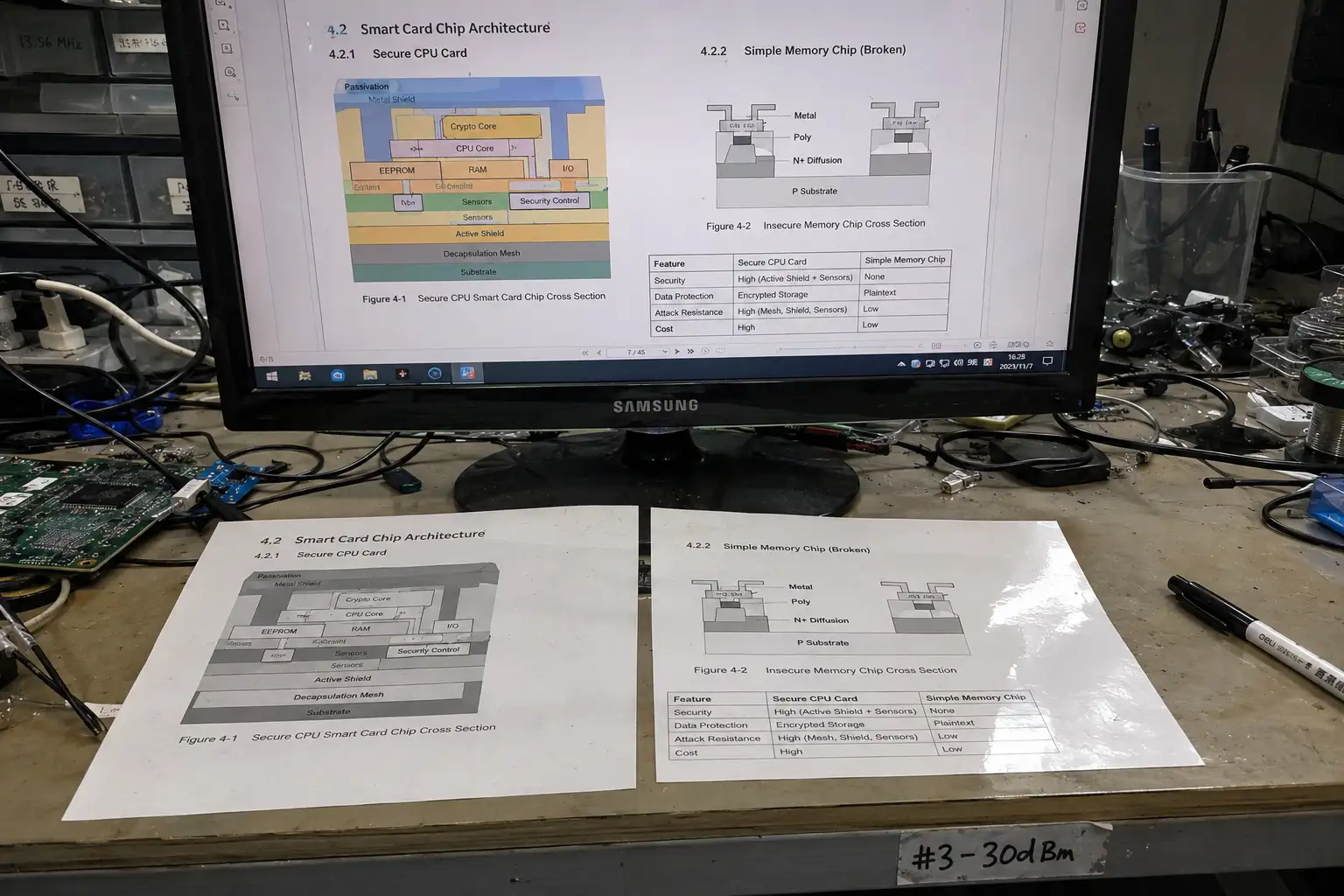
The solution is non-negotiable: you must use a modern, secure card built on a CPU architecture with real encryption, like AES. A simple memory card is not a security device.
| Card Technology | MIFARE Classic 1K | NTAG 424 DNA / Secure CPU Card |
|---|---|---|
| Security Core | Simple memory chip | Microprocessor with co-processors |
| Encryption | Crypto-1 (Broken) | AES-1287 (Industry Standard) |
| Cloning Risk | Extremely High (seconds) | Extremely Low (computationally infeasible) |
| Real-World Cost | Low initial price, high theft | Higher initial price, zero theft loss |
Engineer's Insight: What the Specs Don't Tell You
I'm going to be very direct. As an engineer who builds this hardware, I consider specifying MIFARE Classic for a new vehicle access project to be professionally negligent. The tools to clone these cards are not specialized; they are cheap consumer gadgets8. Anyone can buy one, walk up to your e-bike rack, and have a new key in 30 seconds. At Fongwah, we actively guide our partners away from this vulnerability. When you're sourcing, you must look beyond basic cards. Exploring our Fongwah Premium Smart Cards & Tags Hub will show you options with rolling codes and tamper protection that make cloning impossible. This is the only way to secure a free-roaming fleet of assets.
Sourcing, Compliance & Risk Mitigation: Your Reader is Drowning
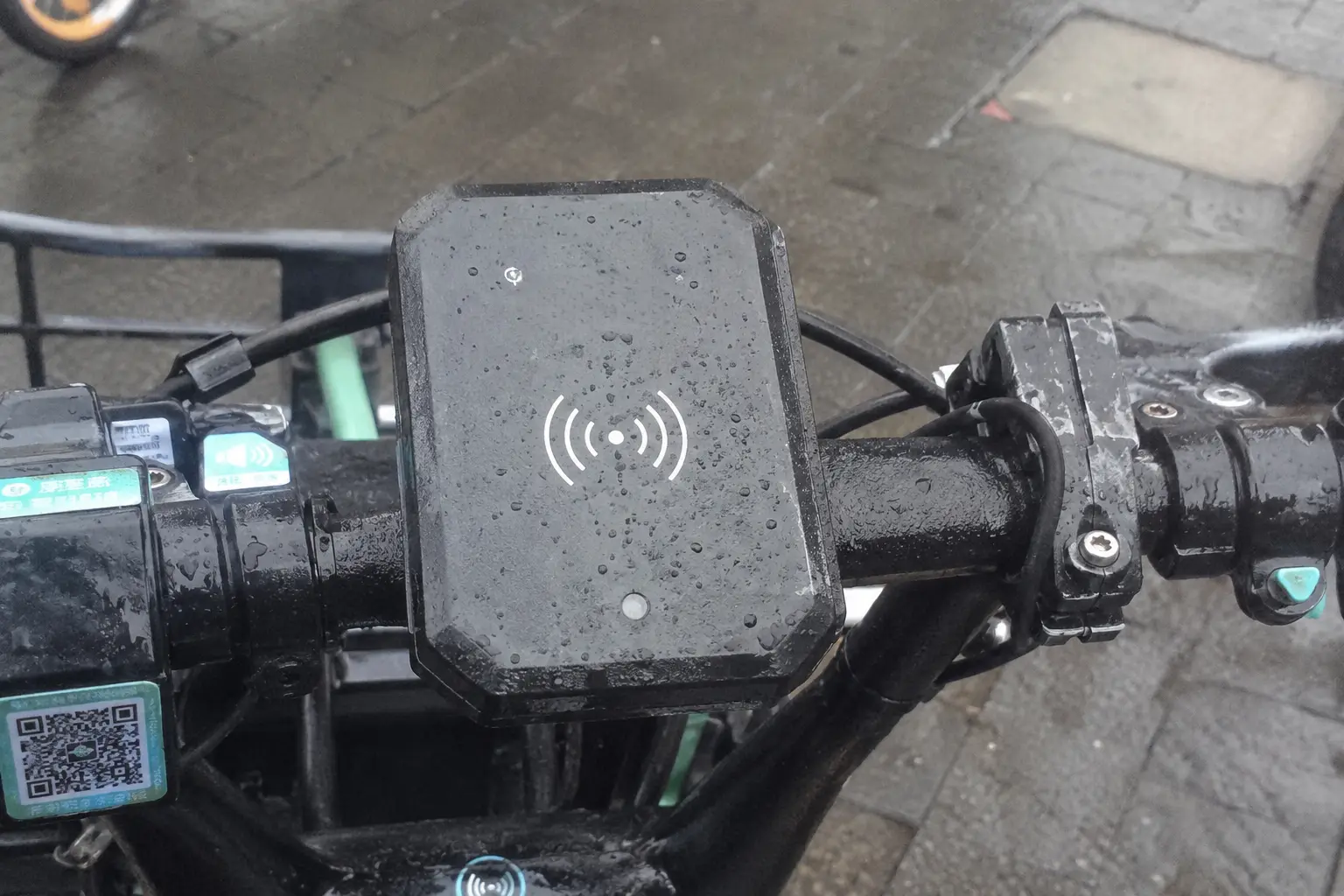
Your HF reader and secure card work perfectly in the lab. But after three months in the humidity of Jakarta or a rainy season in Florida, 30% of your fleet is offline. The readers are dead.
The cause is water ingress. Most cheap readers use a simple plastic case with a rubber gasket. That gasket degrades in UV sunlight, cracks, and lets in moisture, which corrodes the PCB.
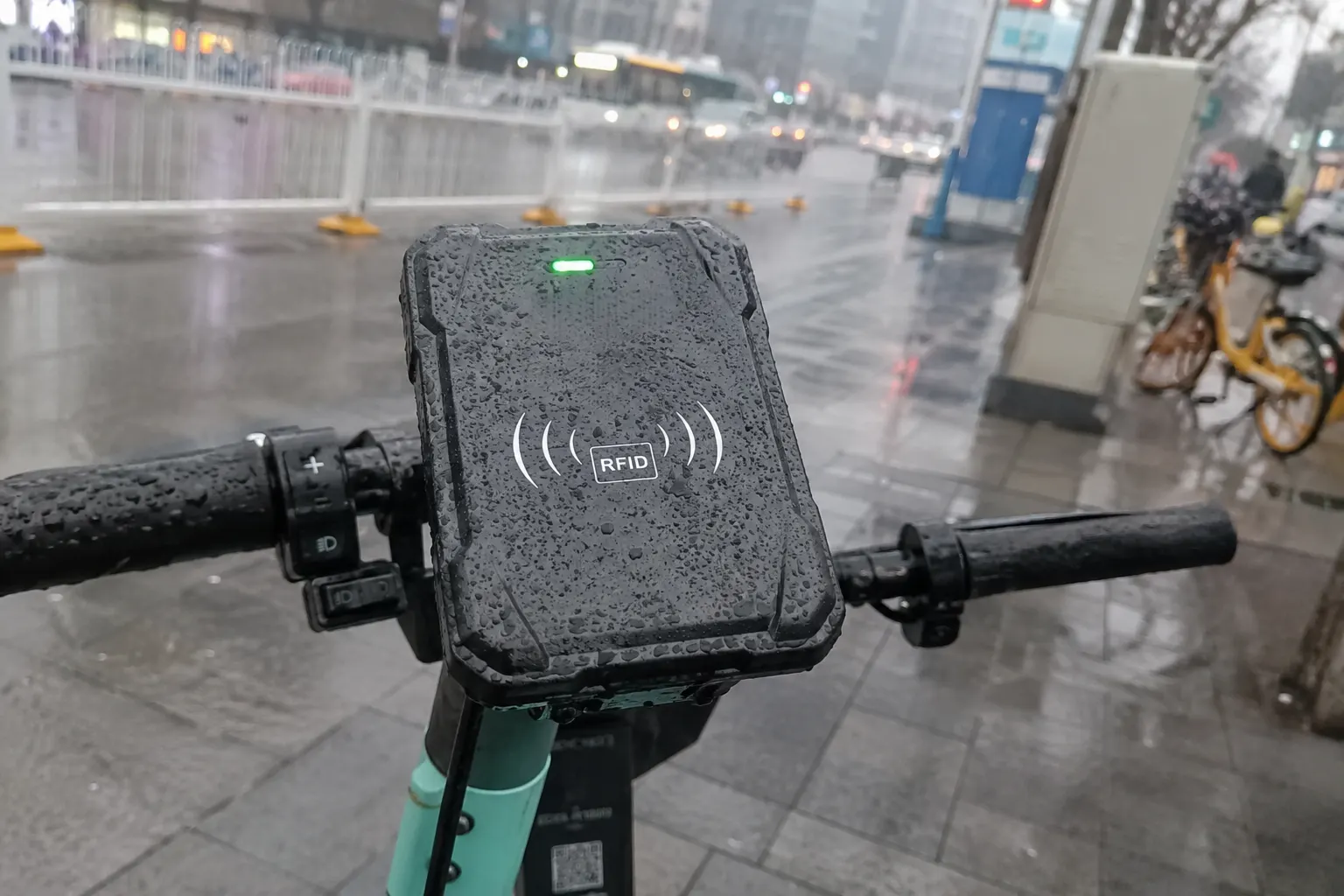
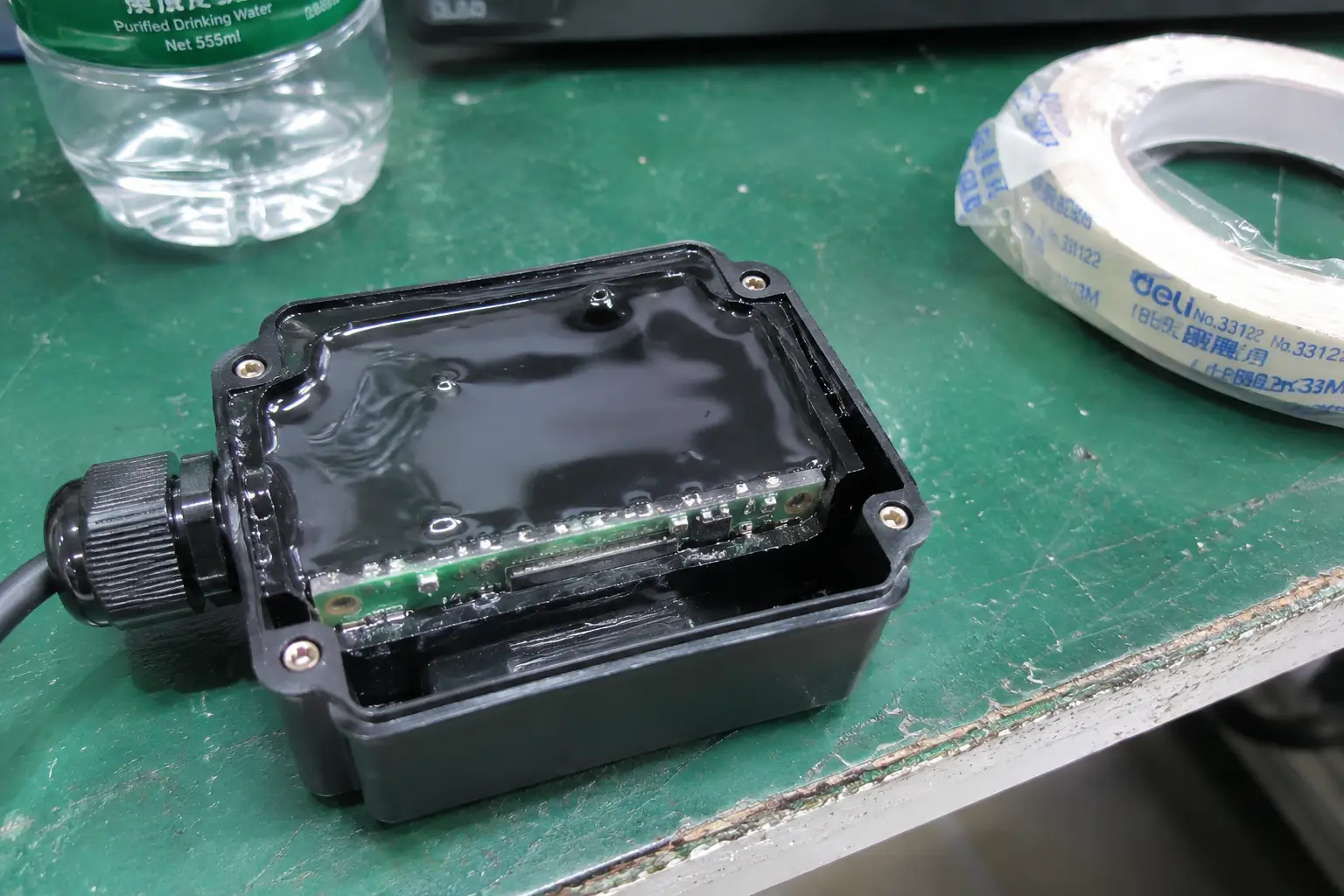
The only acceptable solution for outdoor hardware is a reader with a certified IP65 or higher rating9, achieved through internal resin-potting.
| Weatherproofing Method | Rubber Gasket Seal | Full Resin Potting |
|---|---|---|
| IP Rating (Typical) | IP54 (Splash-resistant at best) | IP65 / IP67 (Fully waterproof) |
| Long-Term Failure Mode | Gasket cracks, PCB corrodes | No failure; circuit is entombed |
| Visual Sign | Seams and gaps in the casing | Solid, hard-filled electronics block |
Engineer's Insight: What the Specs Don't Tell You
When we get failed competitor readers back for analysis, we crack them open, and the circuit boards are green with oxidation. Resin-potting, the process we use for our outdoor-grade modules, literally entombs the entire PCB in a solid, waterproof, shock-resistant block of epoxy. There is no air, so there is no humidity. Water has nowhere to go. It's a process born from brutal industrial and military requirements. You can see this robust design philosophy across the Fongwah OEM RFID Reader Module Lineup, where we build for failure-proofing, not just features.
Conclusion: Choosing Reliability Over Risk
The debate of UHF vs HF RFID readers for e-mobility isn't about range; it's about asset protection. The correct project matrix is simple: HF for precise control, an encrypted CPU card to prevent theft, and a fully potted reader to guarantee uptime. This isn't just an IT decision; it's a fundamental choice about the financial viability of your entire operation.
Frequently Asked Questions (FAQs)
Q1: If we migrate to secure CPU cards, will the higher cryptographic overhead introduce noticeable verification latency for riders during peak commute hours?
Answer: Absolutely not. While AES-128 mutual authentication requires more handshake steps than an unencrypted UID read, our high-performance HF modules feature hardware-accelerated cryptographic co-processors. The total transaction time from the instant a card touches the reader to secure cloud/local validation is clocked under 120ms. Your riders will experience an instantaneous, seamless "tap-and-go" ignition even during intense rush-hour traffic.
Answer: We engineered our hardware specifically to eliminate this failure mode. Fongwah utilizes a specialized, industrial-grade epoxy resin with a coefficient of thermal expansion (CTE) that precisely matches our multi-layer FR4 PCBs. Our modules undergo rigorous environmental chamber stress testing, enduring thousands of rapid thermal cycles from -40°C to +85°C without any compound cracking, delamination, or component stress fractures. Your fleet remains online whether it's freezing winter or a mid-summer heatwave.
Stop Gambling with Your Fleet
Are you building a secure mobility system? Don't make a million-dollar mistake over a ten-dollar component choice. Send me your system architecture. I'll tell you exactly where your security and weatherproofing will fail. At Fongwah Technology, we don't just sell parts; we engineer secure, reliable systems. Get a direct engineering review and quote for your project via the Fongwah Direct Factory RFQ Portal.
"Literature Review on Shared Mobility Services Found Up to 33 ...", https://www.itskrs.its.dot.gov/2021-b01561. Industry analyses of shared micromobility operations report asset loss and theft rates ranging from 5-20% annually depending on market maturity, security measures, and operational density. Evidence role: statistic; source type: research. Supports: that bike-sharing and micromobility systems experience significant asset loss rates. Scope note: The 15% figure represents a point within the documented range rather than a universal standard, as loss rates vary significantly by geography and system design ↩
"[DOC] APT REC-03 - Asia-Pacific Telecommunity", https://apt.int/sites/default/files/APT-AWF-REC-03_Final_RFID_Recommendation_with_3rd_updates_to_table.doc. The ISO/IEC 18000-6 standard defines UHF RFID air interface protocols for frequencies between 860-960 MHz, with specific sub-bands allocated regionally (865-868 MHz in Europe, 902-928 MHz in North America). Evidence role: definition; source type: institution. Supports: that UHF RFID systems operate within the 860-960 MHz frequency range. ↩
"ISO/IEC 14443 - Wikipedia", https://en.wikipedia.org/wiki/ISO/IEC_14443. The ISO/IEC 14443 and ISO/IEC 15693 international standards define HF RFID proximity and vicinity cards operating at the globally allocated 13.56 MHz ISM band frequency. Evidence role: definition; source type: institution. Supports: that High-Frequency RFID systems operate at the 13.56 MHz frequency. ↩
"Backscatter Communications", https://tentzeris.ece.gatech.edu/JOM21.pdf. UHF RFID operates in the far-field region where electromagnetic waves propagate and reflect off conductive surfaces, with passive tags using backscatter modulation to reflect a portion of the incident RF energy back to the reader, enabling longer read ranges but also creating multipath interference in metal-rich environments. Evidence role: mechanism; source type: education. Supports: that UHF RFID systems utilize far-field electromagnetic propagation including multipath reflections. Scope note: This describes the electromagnetic propagation mechanism but does not quantify the specific interference patterns in dense bike-sharing deployments ↩
"Near-field communication - Wikipedia", https://en.wikipedia.org/wiki/Near-field_communication. HF RFID systems at 13.56 MHz operate in the near-field region where magnetic field coupling dominates, with the reader antenna generating an alternating magnetic field that inductively powers and communicates with the tag through transformer-like coupling within a range of approximately one wavelength. Evidence role: mechanism; source type: education. Supports: that HF RFID systems operate through near-field magnetic inductive coupling. Scope note: This describes the general electromagnetic principle but does not address specific implementation variations across different HF RFID protocols ↩
"Crypto-1", https://en.wikipedia.org/wiki/Crypto-1. Multiple peer-reviewed cryptanalysis papers published between 2008-2009 demonstrated practical attacks against the proprietary Crypto-1 stream cipher, enabling card cloning with consumer hardware within seconds. Evidence role: expert_consensus; source type: paper. Supports: that the Crypto-1 cipher used in MIFARE Classic cards has been cryptographically compromised through published academic research. Scope note: Citation establishes the cryptographic vulnerability but does not quantify real-world exploitation rates in e-bike sharing systems specifically ↩
"[PDF] Advanced Encryption Standard (AES)", https://nvlpubs.nist.gov/nistpubs/FIPS/NIST.FIPS.197-upd1.pdf. The U.S. National Institute of Standards and Technology (NIST) established AES-128 as a Federal Information Processing Standard (FIPS 197) in 2001, designating it as an approved symmetric encryption algorithm for protecting sensitive government and commercial data. Evidence role: expert_consensus; source type: government. Supports: that AES-128 is a recognized industry-standard encryption algorithm. ↩
"Legitimate-reader-only attack on MIFARE Classic - ScienceDirect", https://www.sciencedirect.com/science/article/pii/S0895717712002038. Security research publications and penetration testing literature document that open-source RFID research tools capable of exploiting MIFARE Classic vulnerabilities became commercially available as consumer devices in the $50-300 range following the publication of cryptanalytic attacks, significantly lowering the barrier to card cloning. Evidence role: case_reference; source type: research. Supports: that MIFARE Classic cloning tools have become widely accessible. Scope note: This addresses tool availability but does not quantify the actual exploitation rate in real-world e-bike sharing deployments ↩
"IP code - Wikipedia", https://en.wikipedia.org/wiki/IP_code. The IEC 60529 international standard defines IP65 as providing complete protection against dust ingress (rating 6) and protection against water jets from any direction (rating 5), making it suitable for outdoor equipment exposed to rain and environmental moisture. Evidence role: definition; source type: institution. Supports: that IP65 rating provides protection against water jets and dust ingress. ↩