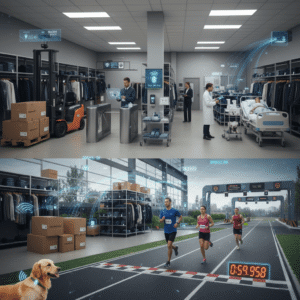
Manually scanning items is extremely slow and causes costly errors1. This constant worry hurts efficiency2. An RFID reader3 uses radio waves4 to identify items instantly and accurately.
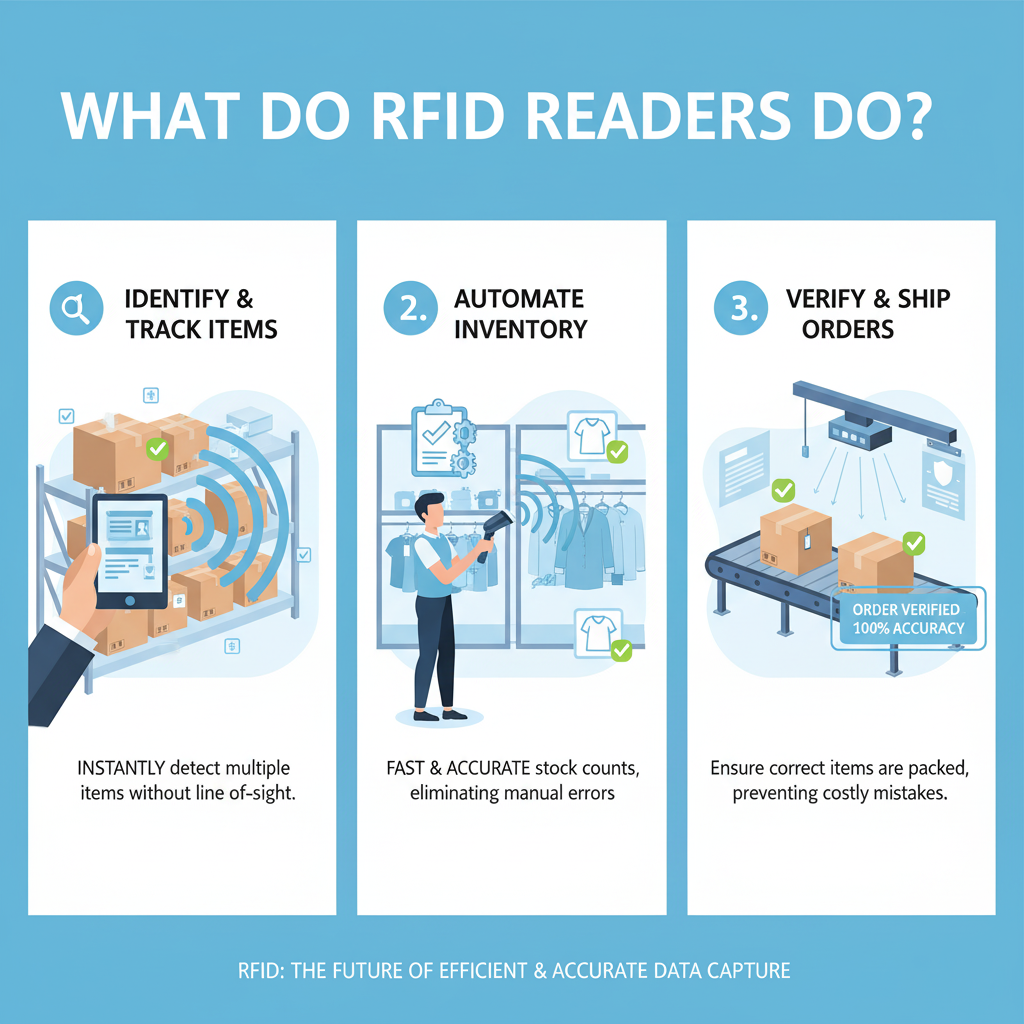
An RFID reader3 uses radio waves4 to automatically identify items. It reads multiple tags at once, even through boxes, without needing to aim. This makes tasks like inventory checks5 and order verification6 incredibly fast, accurate, and efficient, replacing manual barcode scanning7.
<sup id=](https://fongwahrfid.net/wp-content/uploads/2025/10/RFID-1.png%22) 3 scanning multiple items in a box" />
3 scanning multiple items in a box" />
I always thought RFID was some kind of complex, high-end technology reserved for mega-corporations. My job is hands-on; I manage a busy warehouse, and the last thing I need is a complicated system that requires an IT degree to operate. I had heard the term but avoided it because it sounded intimidating. It took a simple, honest conversation with an expert, Jay from Fongwah, to realize I had it all wrong. He explained it in terms that made perfect sense for my daily work. He didn't use confusing jargon; he just told me how it would solve my biggest problems.
How Is an RFID Reader Different From a Barcode Scanner?
Aiming a scanner at every single label is frustrating. A wrinkled tag or bad lighting brings work to a halt. This daily struggle was a huge source of inefficiency2 for my team.
An RFID reader3 uses radio waves4 and does not need a direct line of sight. A barcode scanner uses light and must see the barcode. This is the key difference in performance.
<sup id=](https://fongwahrfid.net/wp-content/uploads/2025/10/RFID-2.png%22) 3" />
3" />
For ten years, my world was defined by the red light of a barcode scanner. I had to pick up an item, turn it over to find the code, and aim the beam. If the label was creased, smudged, or covered by packaging, the process failed. It required me to physically handle every single product, one by one. This was not just slow; it was also physically tiring for my team and me. I assumed this was just the cost of doing business. The breakthrough in my understanding came when I realized an RFID reader3 doesn't need to "see" anything. It uses radio waves4 that pass right through cardboard, plastic, and other packaging materials to read the tag inside. It is the difference between reading a book one word at a time and absorbing an entire page in a single glance.
The Limits of Light
The core problem with barcode scanners is their reliance on optics. They are essentially cameras that decode a visual pattern. This makes them vulnerable to any physical obstruction or damage to that pattern. This limitation directly translates to slower processes and a higher chance of human error8.
The Freedom of Radio Waves
RFID technology is based on radio communication. The reader sends out a signal, and any tag within its range responds with its unique information. This means I can scan an entire box of items without even opening it, which was an impossible concept for me before.
| Feature | Handheld Barcode Scanner | Desktop RFID Reader |
|---|---|---|
| Technology | Optical (Light) | Radio Frequency (RF) |
| Required Action | Aim directly at one barcode | Place item(s) in range |
| Line-of-Sight | Required | Not required |
| Bulk Scanning | No, one item at a time | Yes, many items at once |
| Reliability | Fails with damaged labels | Works with hidden tags |
Can an RFID Reader Actually Speed Up My Warehouse Tasks?
My days were consumed by receiving goods and packing orders. I constantly worried about shipping the wrong item, which would cost us money and a customer's trust. The workload felt endless.
Yes, it dramatically speeds up key tasks. It reads an entire box of goods for receiving in seconds and verifies packed order contents instantly. This eliminates bottlenecks and costly errors1.
<sup id=](https://fongwahrfid.net/wp-content/uploads/2025/10/RFID-3.png%22) 3 verifying an order" />
3 verifying an order" />
Two of my most time-consuming jobs were small-batch receiving9 and final order verification6. For receiving, a box of 30 small items meant 30 individual scans. This was a five-minute job per box, at best. For packing, we had a two-person system where one person packed the order and a second person visually checked it to prevent errors. This was expensive, but shipping mistakes were even more costly. The RFID reader3 transformed both of these processes. Now, a box of 30 items is placed on the reader, and all 30 items are logged in our inventory in about three seconds. For packing, the final step is to place the open box on the reader. The screen instantly flashes green if it matches the order or red if it doesn't. We completely eliminated the second checker, cutting our packing labor costs in half while simultaneously getting accuracy to 100%.
From Minutes to Seconds: Receiving
The time saved during receiving adds up incredibly fast. What used to be an hour-long task of checking in a new shipment is now done in less than ten minutes. This allows my team to move on to more valuable work, like organizing stock and preparing for outbound shipments.
100% Accuracy: Order Packing
The confidence this system gives me is invaluable. I no longer have a nagging worry that a customer is going to get the wrong size or color. This has improved our customer satisfaction10 and reduced our costs for handling returns.
| Warehouse Task | Process with Barcode Scanner | Process with RFID Reader |
|---|---|---|
| Small-Batch Receiving | Scan each item one-by-one | Scan the entire box at once |
| Time per Box | 5-10 minutes | 5-10 seconds |
| Order Verification | A second person visually checks | A single person scans the box |
| Error Rate | Prone to human error8 | Virtually zero |
Is It Complicated to Set Up and Use an RFID Reader?
I was very worried about installing new technology. I do not have an on-site IT team, and the thought of dealing with drivers, complex software, and network settings was a huge barrier for me.
No, it is not complicated. Most desktop readers are simple plug-and-play devices11. You just connect them to a computer with a USB cable, and the basic software is ready in minutes.
<sup id=](https://fongwahrfid.net/wp-content/uploads/2025/10/RFID-4.png%22) 3 connected to a laptop via USB" />
3 connected to a laptop via USB" />
This was my biggest hesitation. In my experience, "new tech" means "new problems." I pictured a large, intimidating piece of equipment that would require a technician to install and a week of training for my team. The reality was completely different. The desktop reader I got from Fongwah was small and compact. It took up less space on my desk than a piece of paper. The setup process12 involved just one step: plugging the USB cable into my computer. The computer recognized it instantly, just like a new mouse. The software was intuitive, with big, clear buttons for the main functions. I was enrolling my first set of RFID tags within 15 minutes of opening the box. There were no confusing manuals or calls to a support line. It was designed for people who need tools that simply work.
The Fear of Complexity
My fear of a difficult installation was based on past experiences with other warehouse systems. This fear often prevents small and medium-sized businesses like mine from adopting technology that could help them grow. We can't afford a week of downtime to integrate a new system.
The Plug-and-Play Reality
The truth is that this technology has become incredibly user-friendly. The hardware is as simple as any other computer peripheral. The focus has shifted from being a tool for engineers to being a tool for everyday users like me, who just need to get the job done faster and more accurately.
| Setup Factor | My Expectation | The Reality |
|---|---|---|
| Required Space | A large, dedicated station | A small corner of a desk |
| Installation Process | Complex software, drivers, IT help | A single USB plug-in |
| Training Time | Several days or a week | Less than 30 minutes |
| Immediate Usefulness | Low, required long setup | High, ready to use in minutes |
Conclusion
An RFID reader3 simplified my entire workflow13. It saves time, prevents expensive errors, and removes the daily stress of manual work, making my warehouse more efficient and reliable.
---Explore how RFID technology can significantly reduce costly errors in logistics and warehousing. ↩
Explore resources that detail the efficiency gains from implementing RFID in warehouse operations. ↩
Explore this link to understand the fundamentals of RFID technology and its applications in various industries. ↩
Learn about the science behind radio waves and their crucial role in RFID systems. ↩
Discover how RFID technology can streamline inventory management and enhance accuracy. ↩
Find out how RFID can transform order verification processes and reduce errors. ↩
Understand the drawbacks of traditional barcode scanning and why RFID is a superior alternative. ↩
Learn how RFID technology minimizes human error and enhances operational reliability. ↩
Learn how RFID technology can make small-batch receiving faster and more efficient. ↩
Find out how RFID can enhance customer satisfaction through better order accuracy. ↩
Discover the convenience of plug-and-play technology and its impact on user experience. ↩
Get insights into the simple setup process of RFID readers and how easy they are to integrate. ↩
Learn how RFID can streamline workflows and enhance productivity in warehouse settings. ↩