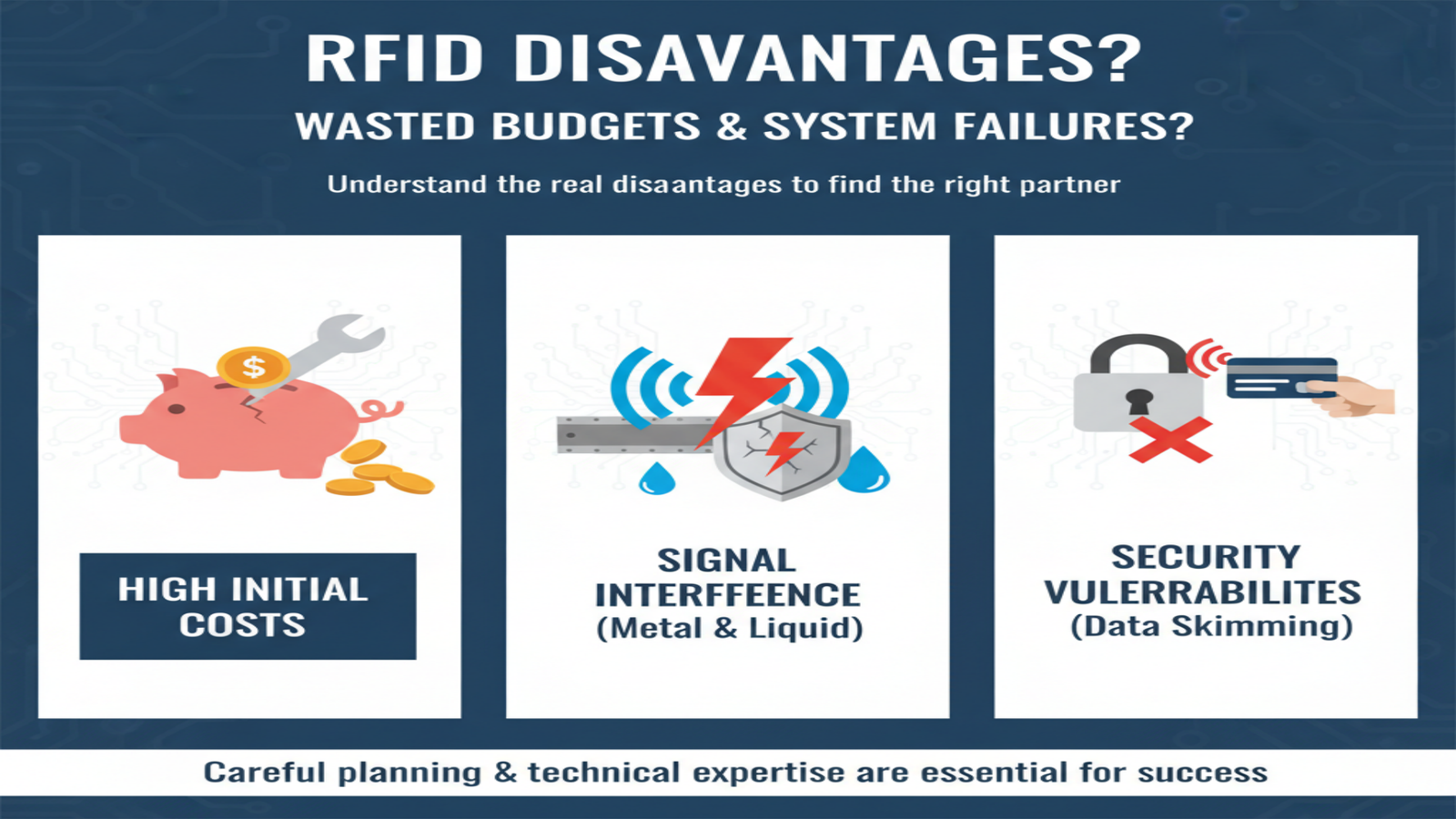
Considering RFID but worried about the downsides? The wrong choice can lead to wasted budgets and system failures. Understand the real disadvantages to find the right partner for your project.
The main disadvantages of RFID tags include high initial costs1, potential signal interference2 from materials like metal and liquid, and security vulnerabilities3 like data skimming4. Careful planning and technical expertise are essential to overcome these challenges and ensure a successful implementation.
I've been working with RFID technology for a long time, and I speak with customers every day. Many are excited about the possibilities, but they also have valid concerns. They ask tough questions about the costs, the reliability, and the security of RFID systems. These are the exact same questions you should be asking. Exploring the disadvantages isn't about discouraging you from using RFID. It's about empowering you to make a smart, informed decision. A successful project starts with understanding the potential hurdles. Let’s walk through the most common challenges I discuss with clients, so you can see them coming and plan a clear path to success.
Is the initial investment for RFID too high?
Worried about the high cost of RFID? A miscalculated budget can stop a project before it starts. Let's break down the real expenses to see if it makes sense for you.
The initial investment for RFID can be high, involving costs for tags, readers, software, and system integration5. However, you must evaluate the long-term Return on Investment (ROI)6 through improved efficiency and reduced errors to get a complete cost picture.
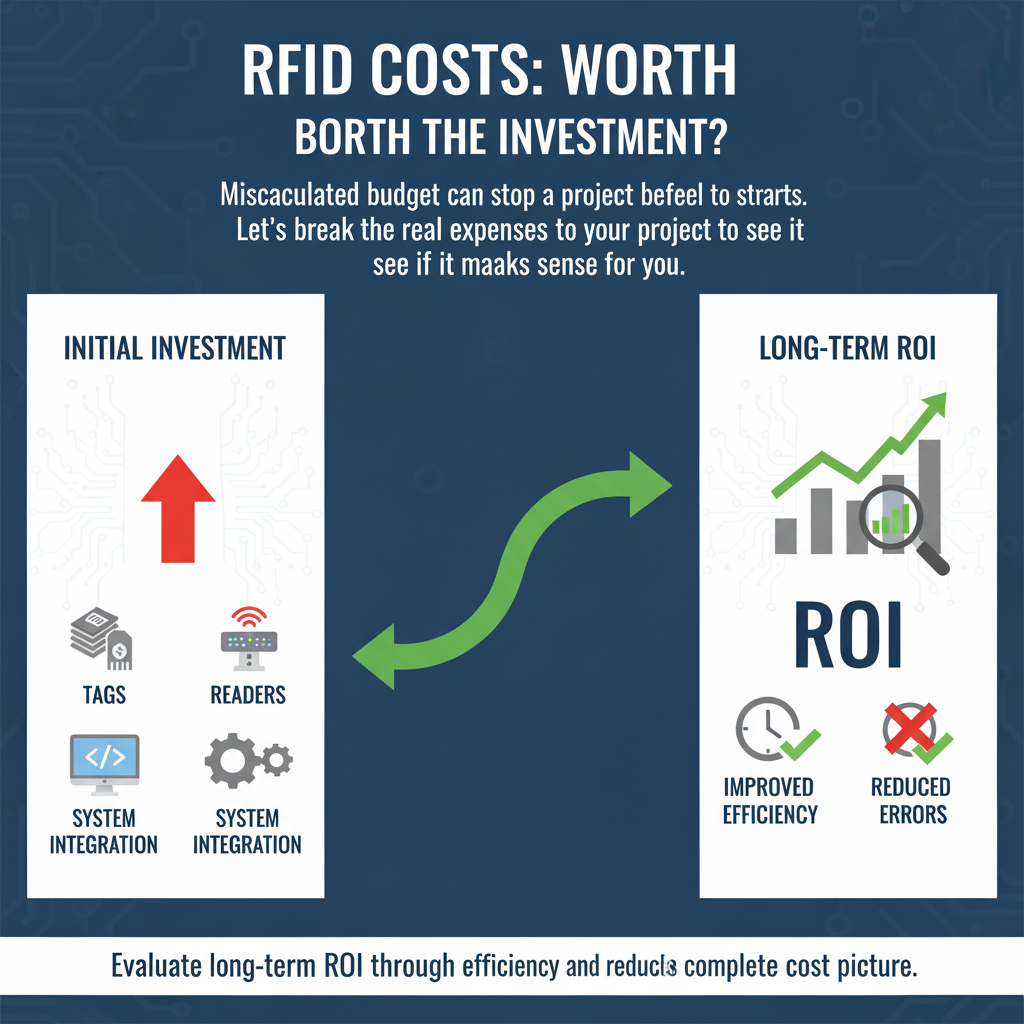
When you first look at implementing an RFID system, the upfront cost is often the biggest barrier. It's not just about buying the tags themselves. You have to consider the entire ecosystem. This includes the hardware, like fixed or handheld readers, and the antennas. It also includes the software needed to manage the data and integrate it with your existing business systems, like your inventory management7 or ERP software. This integration step can sometimes be complex and requires specialized IT knowledge8, adding to the initial expense.
However, thinking only about the initial spend is a common mistake. The true value comes from a long-term perspective. A good RFID system can dramatically reduce labor costs, eliminate human error in data collection, and provide real-time visibility9 that you simply can't get with other methods. To make a fair assessment, you need to analyze the potential ROI.
Cost Component Breakdown
| Component | Description | Cost Factor |
|---|---|---|
| RFID Tags | Passive, Active, or BAP. Cost varies by type, memory, and features. | Low to High |
| Readers/Scanners | Handheld or fixed readers. Price depends on read range and features. | Medium to High |
| Software | Middleware to process data and integrate with your existing systems. | Medium to High |
| Implementation | System design, installation, training, and professional services10. | Medium to High |
I always advise customers to focus on the total cost of ownership11, not just the purchase price. A cheaper, unsupported system can end up costing you far more in the long run through downtime and inefficiency.
Can environmental factors12 disrupt RFID signals?
Is your work environment filled with metal or liquids? These common materials can block RFID signals and cause system failure. Let's look at how to overcome these challenges.
Yes, environmental factors12 can severely disrupt RFID signals. Materials like metal and water absorb or reflect radio waves, which reduces read range and accuracy. This requires careful system design and specific tag selection to ensure reliability.
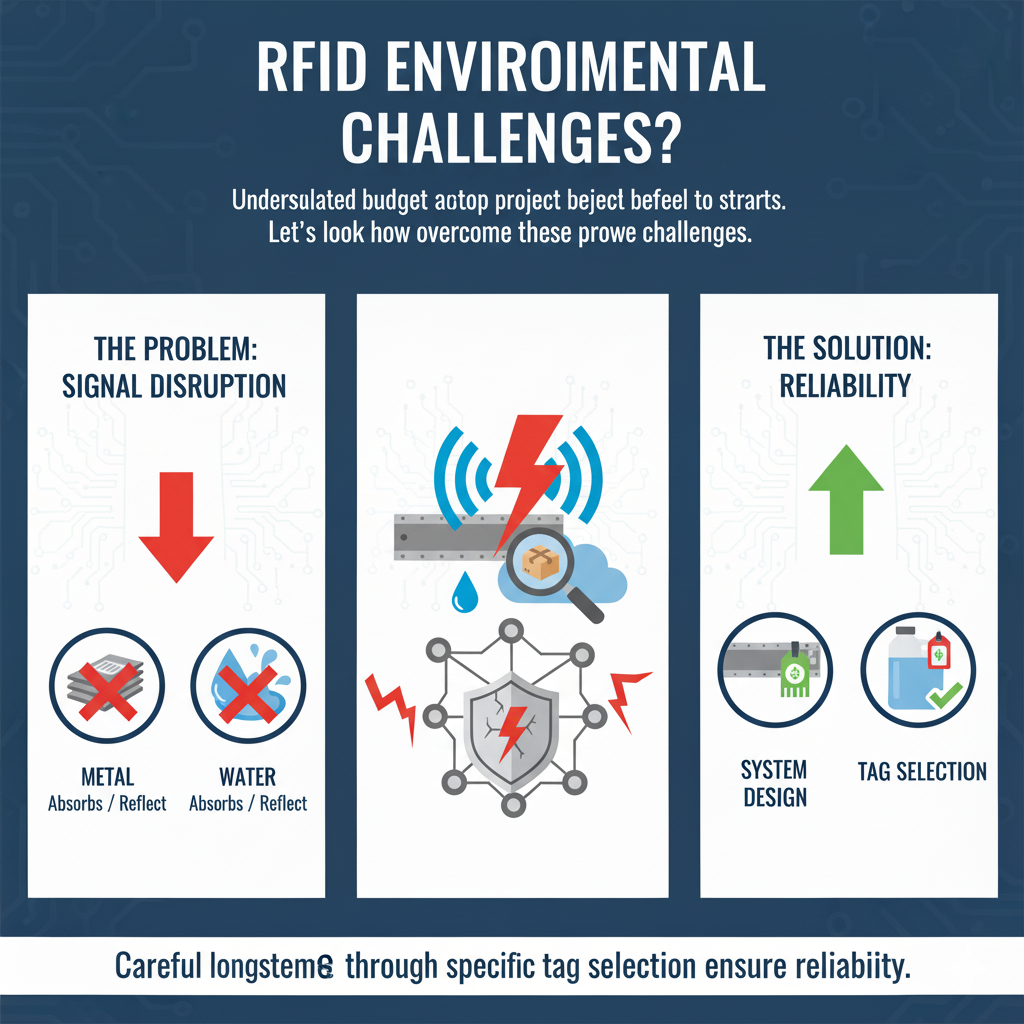
RFID technology works using radio waves, and just like your car radio or Wi-Fi signal, it can be affected by the environment. This is one of the most critical technical challenges to solve. The two biggest culprits are metal and liquids. Metal surfaces can reflect radio waves, creating "dead zones" where tags can't be read. Liquids, including the water in products or even the human body, can absorb radio waves, weakening the signal and drastically reducing the read range. This is a huge concern for industries like manufacturing, logistics, and healthcare.
I once worked with a client who bought a standard RFID system online to track metal tool carts. They were frustrated because the system was completely unreliable. The tags they bought weren't designed to be placed on metal surfaces. The signal was being reflected and absorbed, making the reads inconsistent. They couldn't get support from the original vendor and came to us for help. Unfortunately, the only solution was to replace the tags with specialized anti-metal tags13. It was a costly lesson in the importance of getting expert advice from the start.
Environmental Impact on RFID Frequencies
| Factor | LF (Low Frequency) | HF (High Frequency) | UHF (Ultra-High Frequency) |
|---|---|---|---|
| Metal | Less affected | Moderately affected | Highly affected (needs special tags) |
| Liquid | Less affected | Moderately affected | Highly affected |
| Read Range | Short (inches) | Short (feet) | Long (many feet) |
Choosing the right frequency and tag construction for your specific environment is not optional; it's essential for a system that you can depend on every single day.
Are RFID systems vulnerable to security threats?
Worried someone could secretly scan your products or clone your tags? Unsecured RFID data is a real risk. Let's explore the security challenges and how to protect your system.
RFID systems can be vulnerable to security threats like skimming (unauthorized reading) and cloning14 (copying a tag). Without proper security measures like encryption, sensitive information could be compromised, posing risks to privacy and data integrity.
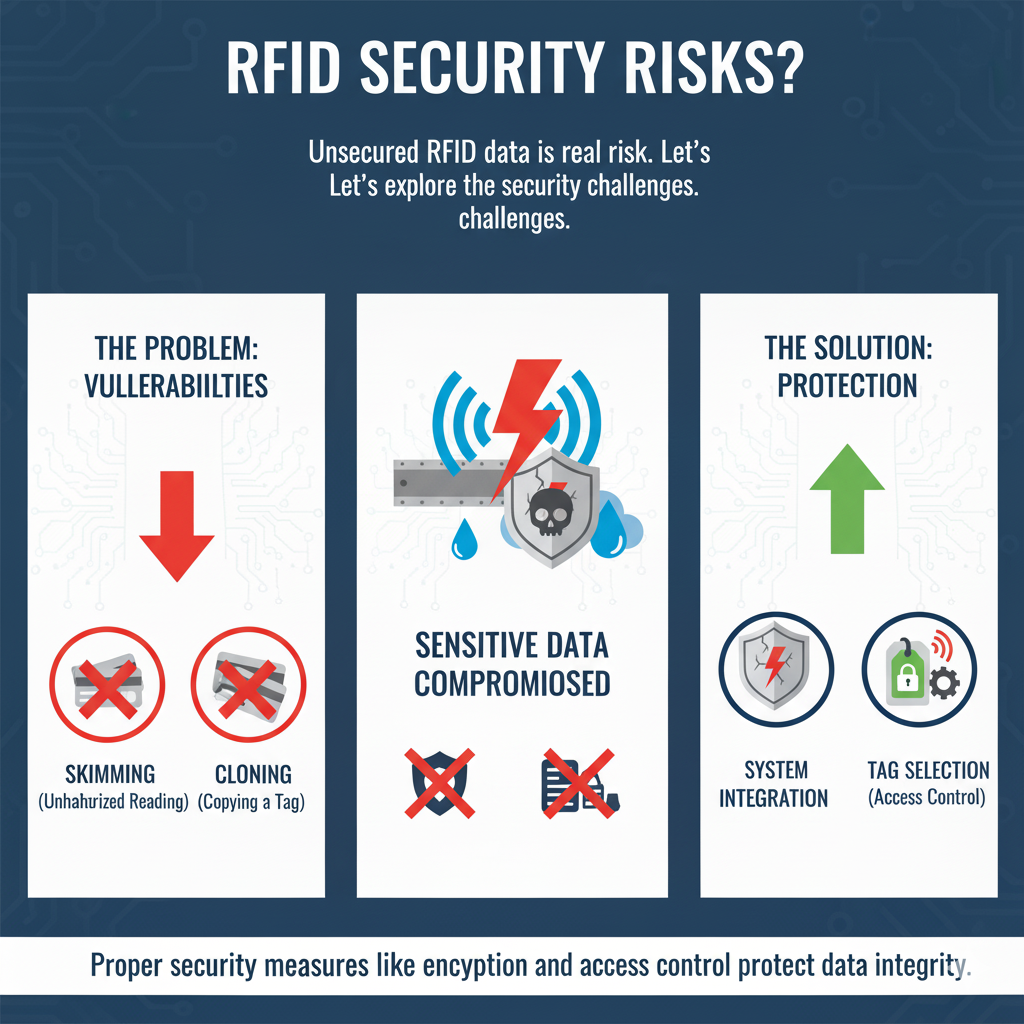
As RFID becomes more common, concerns about security and privacy are growing. Since most basic RFID tags are designed to respond to any compatible reader, it raises a valid question: could someone with a hidden reader "skim" data without your knowledge? For example, they could read the contents of a shopping cart or track the movement of products. Another risk is "cloning14," where an attacker copies the unique ID from one tag to another. This could be used to create counterfeit products or gain unauthorized access to a secure area.
For my client Edley Triumphs, who makes an innovative pet feeder, this was a major concern. His product uses an RFID tag on the pet’s collar to dispense food. What if a neighbor Culd clone the tag to steal pet food? Or what if a stray animal with a similar tag could access the feeder? These scenarios are possible with a basic, unsecured system. That's why we worked together to implement a solution using tags with encrypted data and an authentication protocol. The reader and the tag now perform a secure "handshake" before any action is taken. This ensures that only the authorized pet gets access to their meal, protecting the integrity of his product and his brand's reputation.
Common RFID Security Risks and Solutions
| Risk | Description | Mitigation Strategy |
|---|---|---|
| Skimming | Unauthorized reading of tag data from a distance. | Encrypt the data stored on the tag. |
| Cloning | Copying a tag's ID to a blank tag to create a duplicate. | Use tags with cryptographic authentication15 features. |
| Eavesdropping | Intercepting the communication between a tag and a reader. | Implement secure communication protocols16. |
Security shouldn't be an afterthought. Building it into your RFID system from the beginning is the best way to protect your data, your assets, and your customers.
Conclusion
While RFID has challenges like cost, interference, and security, choosing an experienced partner helps you overcome them. This ensures a successful, long-term implementation for your business and its goals.
---Understanding the costs involved can help you budget effectively and avoid unexpected expenses. ↩
Learn about the factors that can disrupt RFID signals to ensure reliable system performance. ↩
Explore potential security risks to safeguard your data and maintain customer trust. ↩
Understanding data skimming can help you implement necessary security measures. ↩
Understanding integration processes can help streamline your RFID implementation. ↩
Evaluating ROI is crucial for justifying your RFID investment and ensuring long-term benefits. ↩
Learn how RFID technology can optimize your inventory processes and reduce errors. ↩
Expertise can significantly impact the success of your RFID project. ↩
Discover how RFID can enhance operational efficiency through real-time data access. ↩
Accessing professional services can ensure a smoother and more effective RFID deployment. ↩
A comprehensive understanding of ownership costs can prevent future financial surprises. ↩
Identifying environmental challenges helps in designing a robust RFID system. ↩
Learn about specialized tags that can enhance RFID performance in challenging environments. ↩
Understanding cloning risks is essential for protecting your RFID system from unauthorized access. ↩
Explore how cryptographic methods can enhance the security of your RFID applications. ↩
Implementing secure protocols is vital for protecting data integrity in RFID communications. ↩